
Thailand is easier to enjoy when you choose fewer bases. Bangkok rewards several unhurried days; Chiang Mai gives you a different northern rhythm; the southern coast asks a separate question: do you want Phuket’s range of beaches and services, Krabi’s limestone scenery, or a Gulf island such as Koh Samui? This guide helps you make those choices, plan the transfers, prepare the apps that genuinely help, and stay connected without assuming a phone signal will follow every boat.

Where to go in Thailand: choose by the trip you want
For a first visit, Bangkok plus one other region is a satisfying week. With roughly two weeks, add Chiang Mai and one southern base, leaving a real day for each long transfer. Phuket and Krabi are both on the Andaman side, close enough to combine on a longer holiday, but they do different jobs. Koh Samui is on the Gulf side; choose it for the island style you want or when its seasonal pattern fits your dates better. These are planning judgments, not minimum-stay rules.
Bangkok: food, neighbourhoods and the river (allow 3–4 nights)
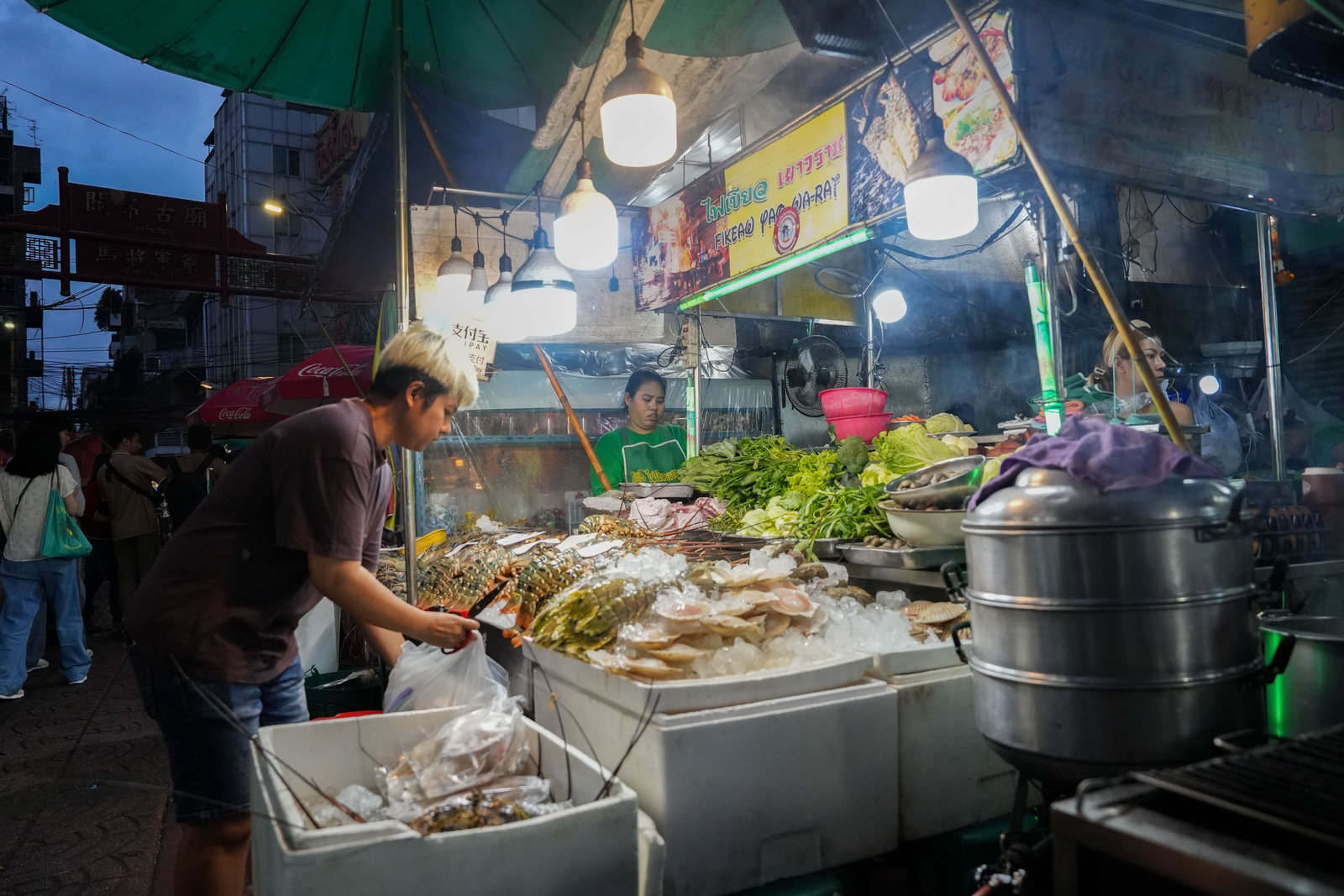
Bangkok is more than a connection. Start along the Chao Phraya: a river boat makes Wat Arun, the Grand Palace area and the older streets feel like parts of one city rather than isolated photo stops. Spend another evening around Yaowarat for Chinatown food; go hungry, then choose a stall where the cooking and prices are clear. Modern Bangkok adds galleries, malls and rooftop views, but do not fill every hour. Heat and traffic make a compact day in one district more pleasant than a cross-city checklist.
Stay near a BTS or MRT station if you expect to move around widely. The rail networks are useful for many modern districts, while the river boats and a short taxi or app-booked car fill gaps around the old city. For a history day, consider Ayutthaya rather than another rushed Bangkok landmark circuit.
Ayutthaya: a history day that deserves daylight (allow 1 day or 1 night)
The former capital’s brick prangs and temple compounds are spread across a river-framed historical landscape north of Bangkok. Pick a few sites, give yourself time to read the setting, and carry water and sun protection. A day trip works; an overnight stay lets you explore before or after the busiest middle of the day. The Tourism Authority of Thailand’s Ayutthaya guide is a useful starting point. Trains are one option; verify the departure station and schedule on the State Railway of Thailand booking site before committing to a same-day return.

Chiang Mai: northern temples, crafts and mountain air (allow 3–4 nights)
Chiang Mai works when you want slower city days with a strong sense of place. Within the old city, Wat Chedi Luang and Wat Phra Singh give a better feel for Lanna architecture than a race through ten temples. Add neighbourhood cafés, markets and the craft shops around the city rather than treating it only as a launchpad for tours. The hilltop Wat Phra That Doi Suthep is a worthwhile half-day; go with time to absorb the site, not simply for a panoramic photograph.
The mountains invite day trips, but winding roads make ambitious loops tiring. Check actual road time before booking a driver or a group tour. Chiang Mai also has a seasonal air-quality issue: smoke haze can affect the north, particularly around the late dry season. If you are travelling then, check live readings on Air4Thai and be prepared to adjust outdoor plans, especially if you are sensitive to pollution.


Phuket: the broadest beach choice and easiest resort logistics (allow 4–5 nights)
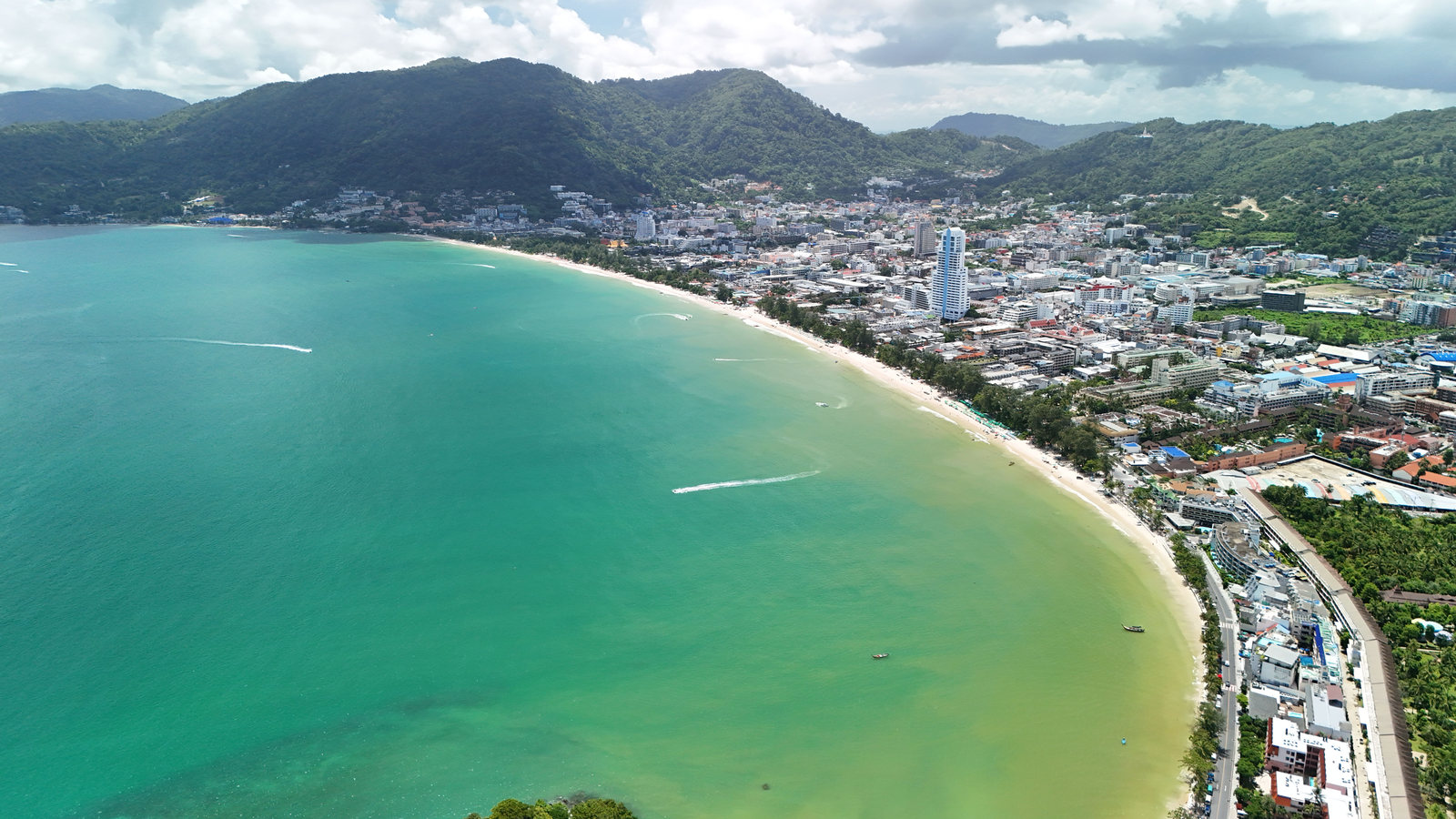
Phuket is a large island, not one beach. Patong suits travellers who want a busy resort strip and nightlife; other beach areas can feel quieter or more family oriented. Base yourself near the beach you will actually use, because crossing the island repeatedly costs time and transport money. Give Phuket Old Town a morning or evening for its Sino-European shophouses and food heritage; it is a meaningful contrast to the shore, not merely a rainy-day backup.
Choose Phuket if you value a wide choice of hotels, dining and excursions, or if its airport fits your flights. Choose a boat trip only after checking the weather and the operator’s pickup point, return time and cancellation terms. Phuket’s convenience does not make every beach or offshore excursion equally easy from every hotel.

Krabi: limestone scenery and boat-led days (allow 3–5 nights)
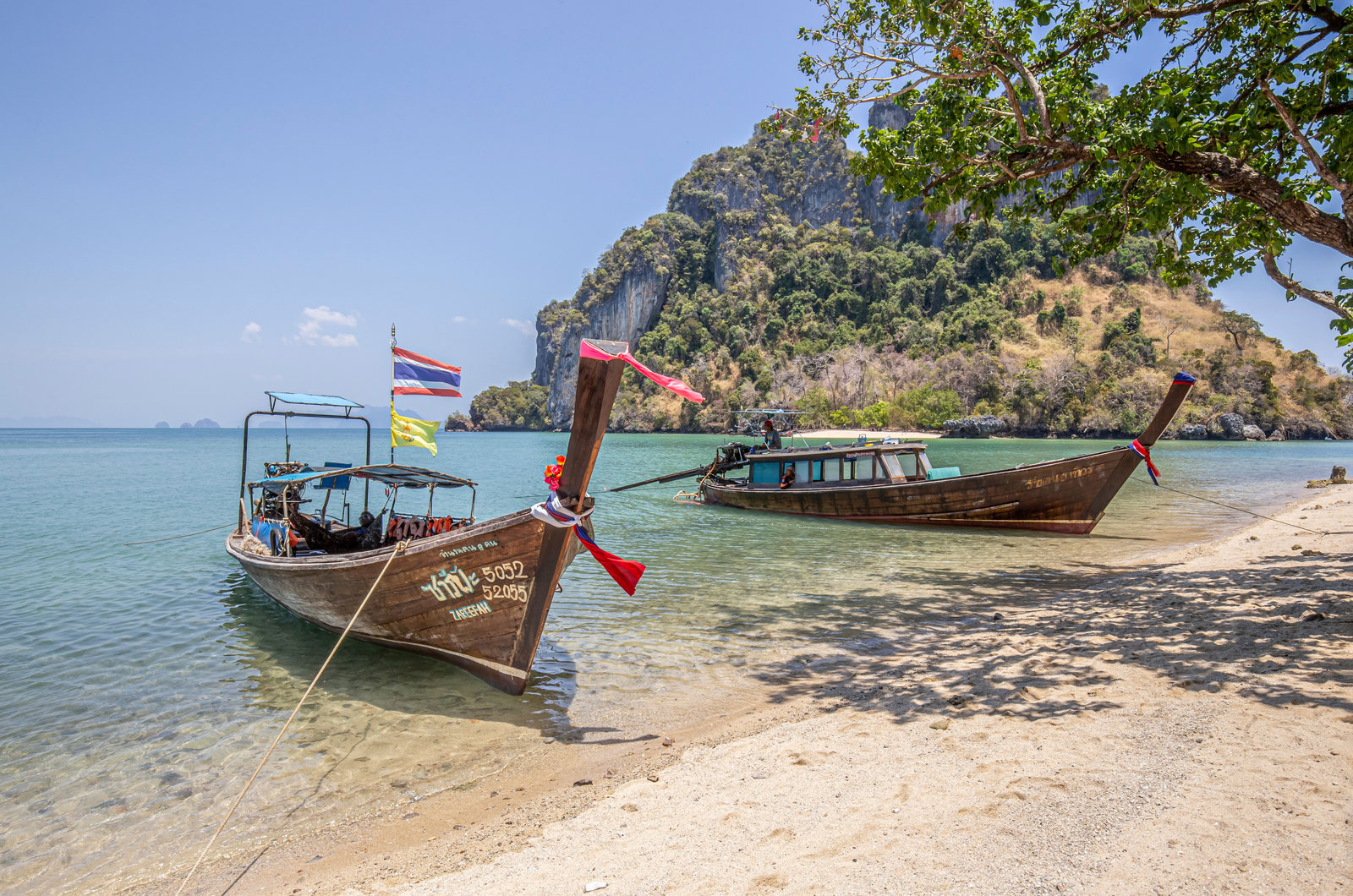
Krabi is the better fit if the image in your head is a longtail boat under sheer cliffs. Ao Nang is a practical base with restaurants, tour desks and boats to Railay and nearby islands. Railay feels more secluded because the final approach is by boat; its beaches and climbing landscape are the draw, while luggage and late arrivals require more planning. The Tourism Authority of Thailand describes Ao Nang as a boat departure point for Railay and nearby islands.
Do not schedule your only must-do boat trip on the final day. Sea conditions can change, especially during the Andaman wet season. Ask where the boat leaves, whether you may need to wade ashore, what is included, and what happens if conditions force a change. Krabi Town can be a pleasant local base, but it is less immediate for beach days than Ao Nang or Railay.

Koh Samui: a Gulf island with an easier resort rhythm (allow 4–5 nights)
Samui is a sensible alternative when you want an island stay with established accommodation, restaurants and onward boats to Koh Phangan or Koh Tao. The island has different beach moods, so choose your area before the hotel: Chaweng is more active, while other bays suit quieter stays. A flight to Samui can simplify a short trip; a mainland flight or train followed by road and ferry takes more coordination. Check the actual terminal, pier and transfer buffer on your ticket. The Tourism Authority of Thailand’s Surat Thani guide places Samui within the Gulf island group.

Two Thailand routes that leave room to travel
Eight or nine days: Bangkok and one coast
Spend three nights in Bangkok, then four or five in either Krabi, Phuket or Samui. Use the spare travel day for the flight, airport transfer and a relaxed first evening. If you love ruins, take one Bangkok day for Ayutthaya; if beaches are the priority, keep it in the city. Trying to add Chiang Mai, Phuket and Krabi to this length of trip turns the holiday into a series of checkouts.
Thirteen or fourteen days: city, north and one beach base
Try three nights in Bangkok, four in Chiang Mai and five on your chosen coast, with the remaining nights or days absorbing transfers and your departure flight. A Bangkok–Chiang Mai train can be part of the experience if you want slower travel; flying preserves more time on the ground. For the southern leg, compare real flight options before fixing the hotel order. If the travel dates favour the Gulf, substitute Samui for an Andaman base rather than adding it as a fourth region.
When to go: match the coast, not a national “dry season”
Bangkok and the north are often more comfortable for walking in the cooler months around November to February, although Thailand never becomes uniformly cool. The Andaman side, including Phuket and Krabi, generally has its better boating window around November to April; southwest monsoon conditions can make seas rougher from roughly May to October. The Gulf side does not follow that pattern exactly. Samui and nearby islands can see heavier rain later in the year, particularly around November to January. These are broad patterns, not promises for a given week: check the Thai Meteorological Department’s forecast and marine outlook before committing to boats.
Chiang Mai needs a second seasonal check: heat and smoke haze can make outdoor days less appealing in the late dry season. Air quality varies by year and day. In any wet period, leave flexibility for mountain roads, waterfalls and island transfers; heavy rain can disrupt them even when the forecast icon looks harmless.
Arrival and getting around: the details that save a day
Before you fly and when you land
Check your passport’s entry rules for your nationality rather than relying on another traveller’s visa experience. Thailand’s official Digital Arrival Card (TDAC) is a free online arrival form for non-Thai nationals; the official site explains the current filing window and exceptions. Save the confirmation with your passport and hotel address. Avoid third-party sites that charge to submit the form.
Bangkok has two major airports: Suvarnabhumi (BKK) and Don Mueang (DMK). Check the code on every connecting ticket; moving between them is a real transfer, not a terminal change. At BKK, the airport lists the Airport Rail Link, official taxi queue and Grab pickup among its transport choices. The airport transport guide also describes a free inter-airport shuttle for eligible connecting passengers with proof of onward travel. At any airport, follow the current signed pickup point in your booking app or the official taxi instructions rather than agreeing to an unsolicited ride inside arrivals.
Within cities and between regions
In Bangkok, pair BTS/MRT with river boats and occasional cars. A ride app can help you see an estimated fare and destination in writing; tolls or surcharges may be extra. Elsewhere, local transport varies considerably by town and beach. Ask your accommodation about the realistic last-mile route, especially when arriving after dark.
For trains, use the State Railway of Thailand’s D-Ticket to inspect current schedules and sleeper availability. Confirm which Bangkok station your train uses; long-distance services may depart from Krung Thep Aphiwat rather than the station you expected. Flights can be sensible for north–south moves, but compare the door-to-door time, baggage rules and airport transfer, not only the flight duration. Long-distance buses can work where rail does not, but choose a reputable operator and keep valuables with you.
For islands, a “ferry ticket” may involve a bus, a specific mainland pier and a separate boat. Read the exact routing and check the operator’s latest schedule—Lomprayah and Seatran publish Gulf services—then leave margin before flights. For Krabi longtails, confirm the return arrangement and weather policy at the pier. Download the route, ticket and hotel address before leaving Wi-Fi; a screenshot is more useful than an email that will not open offshore.
Useful Thailand travel apps: a small, reliable toolkit
- Google Maps: save hotels, piers and stations, then download the relevant map areas on Wi-Fi. Offline maps help with location and driving directions, but transit, walking routes, live traffic and fresh business details need a connection; downloaded areas also need updating.
- Grab: useful for app-booked cars in Bangkok, Chiang Mai, Phuket, Krabi and other listed areas. Check the pickup pin and vehicle class; availability varies by time and location, and tolls or surcharges may sit outside the upfront figure.
- Google Translate: download Thai and your language before departure if the app offers offline packs on your device. Camera and conversation tools can help with menus and addresses, but verify important details with a person; translation is not a substitute for confirming an allergy or medical instruction.
- Booking.com or the app used for your actual reservation: keep hotel messages, cancellation terms and confirmation together. Save the address and voucher as a screenshot as well, especially for late check-in or a pier arrival without signal.
- Thai Weather from the Thai Meteorological Department: use it for local forecasts, radar and warnings, then check the operator or pier for the final boat decision. Forecasts cannot guarantee sailing conditions. For northern air quality, Air4Thai shows official readings.
- Thailand Tourist Police / TPB app: offers multilingual contact with Tourist Police. Save the 1155 hotline too; an app needs a charged phone and a working connection.
What to watch out for, without letting it define the trip
Most travel days are straightforward. The practical habit is to make prices and conditions explicit before they become a dispute. For taxis and tuk-tuks, ask for the meter where appropriate or agree on the fare before boarding; an app booking gives you a written route and fare estimate. If someone approaches you near an attraction to announce that it is “closed” and redirect you to another shop or tour, check the attraction’s official information yourself. The US travel advisory specifically flags excessive transport fares and tour or gem scams.
For scooters, jet skis or other rentals, photograph the condition before use, read the damage terms and do not leave your passport as a deposit. Check that your licence and insurance actually cover the vehicle; a helmet is essential on a motorcycle. The UK travel guidance warns about rental disputes, road injuries and rough-sea boat risks. For boat trips, use an established operator, respect weather cancellations and avoid overcrowded or poorly equipped craft. If you need help, Thailand’s Tourist Police hotline is 1155.
Staying connected in Thailand, realistically
Mobile data is most valuable in the small gaps between bookings: opening the ride pickup map at an airport, showing a Thai-language hotel address, checking a pier change, or messaging a host after a delay. Install your travel data option and download maps while you still have dependable Wi-Fi. Save tickets, hotel details and an emergency contact offline. No mobile plan should be treated as continuous service on boats, remote islands, mountain roads or inside every building.
NXTL is one option for a compatible, unlocked phone: one reusable, data-only eSIM with pay-as-you-go charges from a shared balance across supported destinations and no monthly subscription. You can keep your regular SIM for calls and SMS while using NXTL for data; your home carrier may still charge for those calls, texts or its own roaming. Standard unused NXTL balance remains available while the account stays active, subject to NXTL’s terms.
On the live Thailand page, NXTL currently lists DTAC, AIS and True. In the euro display checked 29 September 2026, the lowest listed rate was $1.12/GB on DTAC; AIS was $1.15/GB and True $5.41/GB. The network your device actually uses determines the charge, so $1.12/GB is a starting rate, not a guaranteed rate for the whole trip. The Thailand page also displayed an initial eSIM purchase of $11.91 including $9.93 balance at that check; currency conversion and offers can change. Compare the live figures with a local SIM or your home plan for your own usage and route.
Thailand trip planning: quick answers
Should I choose Phuket or Krabi for a first trip?
Choose Phuket for the broadest resort and beach choice, an airport that fits many itineraries and more developed nightlife and dining. Choose Krabi when cliffs, longtail boats and Railay are the central reason for going. In either case, pick the actual beach or town base carefully; the province name alone does not tell you your daily travel time.
Is Koh Samui better during the Andaman wet season?
It can be a better fit for some mid-year dates because the Gulf and Andaman coasts have different rain patterns. It is not a weather guarantee. Check the current forecast and the specific island transfer before booking around a boat trip.
Do I need mobile data if I download offline maps?
Offline maps are an excellent fallback, but live ride pickups, hotel messages, changing boat plans and current transport information need a connection. Keep the critical address and confirmation screenshots available offline anyway.