Austria is tailor-made for travelers who believe the journey itself should be as stunning as the destination. Yet many first-time visitors burden themselves by renting cars to tackle complex alpine switchbacks, incurring mandatory highway toll vignette fines, and paying steep parking tariffs in medieval pedestrian centers. The smarter, vastly more relaxing approach is to experience Austria entirely by train. The country’s federal railway, ÖBB (Österreichische Bundesbahnen), operates one of the most punctual and scenic mountain rail networks on earth, slicing through limestone massifs and glacial valleys aboard sleek 230 km/h Railjet expresses.
This realistic 9-day rail itinerary connects Austria’s three defining cultural capitals while weaving in dramatic alpine landscapes: four nights in the imperial grandeur of Vienna, two nights in baroque Salzburg with a deliberate day choice between Hallstatt and Lake Wolfgangsee, and two nights high in the Tyrolean Alps in Innsbruck. Every leg of this route is connected by frequent, center-to-center trains, freeing you from driving stress, icy mountain passes, and highway navigation.
| Day / Stage | Overnight Base | Key Highlights | Transit & Travel Time | Essential Advance Bookings | What to Skip / Save |
|---|---|---|---|---|---|
| Days 1–4: Stage 1 | Vienna (Innere Stadt or Spittelberg) | St. Stephen’s Cathedral (Stephansdom), Hofburg Imperial Palace, Schönbrunn Palace Gardens, Kunsthistorisches Museum, historic coffeehouses | Flughafen Wien to Wien Hbf: 15 min via Railjet ($4.97); city transit via U-Bahn | Schönbrunn Palace Grand Tour timed ticket (reserve 2–3 weeks ahead); State Opera standing room or seat tickets | Skip tourist-trap Mozart costumed ticket touts in Stephansplatz; buy directly from official venues |
| Days 5–6: Stage 2 | Salzburg (Altstadt or Neustadt) | Hohensalzburg Fortress, Mirabell Palace Gardens, Getreidegasse, Day excursion to Hallstatt or Lake Wolfgangsee | Wien Hbf to Salzburg Hbf: 2 hr 22 min via direct ÖBB Railjet (hourly departures) | ÖBB Sparschiene saver ticket + seat reservation; Hallstatt morning regional train or bus 150 to Wolfgangsee | Skip overpriced commercial Sound of Music coach bus tours; walk the historic filming locations freely |
| Days 7–9: Stage 3 | Innsbruck (Altstadt / Inn River) | Golden Roof (Goldenes Dachl), Imperial Court Church (Hofkirche), Nordkette cable car to Hafelekar summit | Salzburg Hbf to Innsbruck Hbf: 1 hr 48 min via direct ÖBB Railjet across the German corridor | Nordkette round-trip cable car pass (book on sunny morning based on live mountain webcams) | Skip rental cars entirely; the Hungerburg funicular departs right from Innsbruck city center |
Audience, Seasonality, and High-Speed Rail Logistics
This 9-day journey is crafted for independent travelers, couples, and culture aficionados who want to experience the Habsburg dynasty’s imperial heritage, world-class classical music traditions, and pristine alpine summits without renting a vehicle. Visiting between May and October offers ideal conditions: lush green alpine meadows, warm sunshine (18°C to 25°C), open mountain hiking trails, and bustling outdoor cafe terraces. Late November and December transform Austria into a festive winter wonderland, as Vienna’s Rathausplatz, Salzburg’s Residenzplatz, and Innsbruck’s historic old town host world-famous Christmas markets beneath snow-dusted peaks.
Austria’s federal railway, ÖBB, operates its premier high-speed service under the brand name Railjet (RJ / RJX). Traveling between Vienna and Salzburg takes just 2 hours and 22 minutes, while the onward journey through the Tyrolean Alps to Innsbruck takes 1 hour and 48 minutes. Railjet trains feature complimentary high-speed Wi-Fi, power outlets at every seat, an onboard restaurant carriage (Bistro) serving Austrian wines and warm dishes, and quiet zones (Ruhezone) dedicated to relaxed travel.
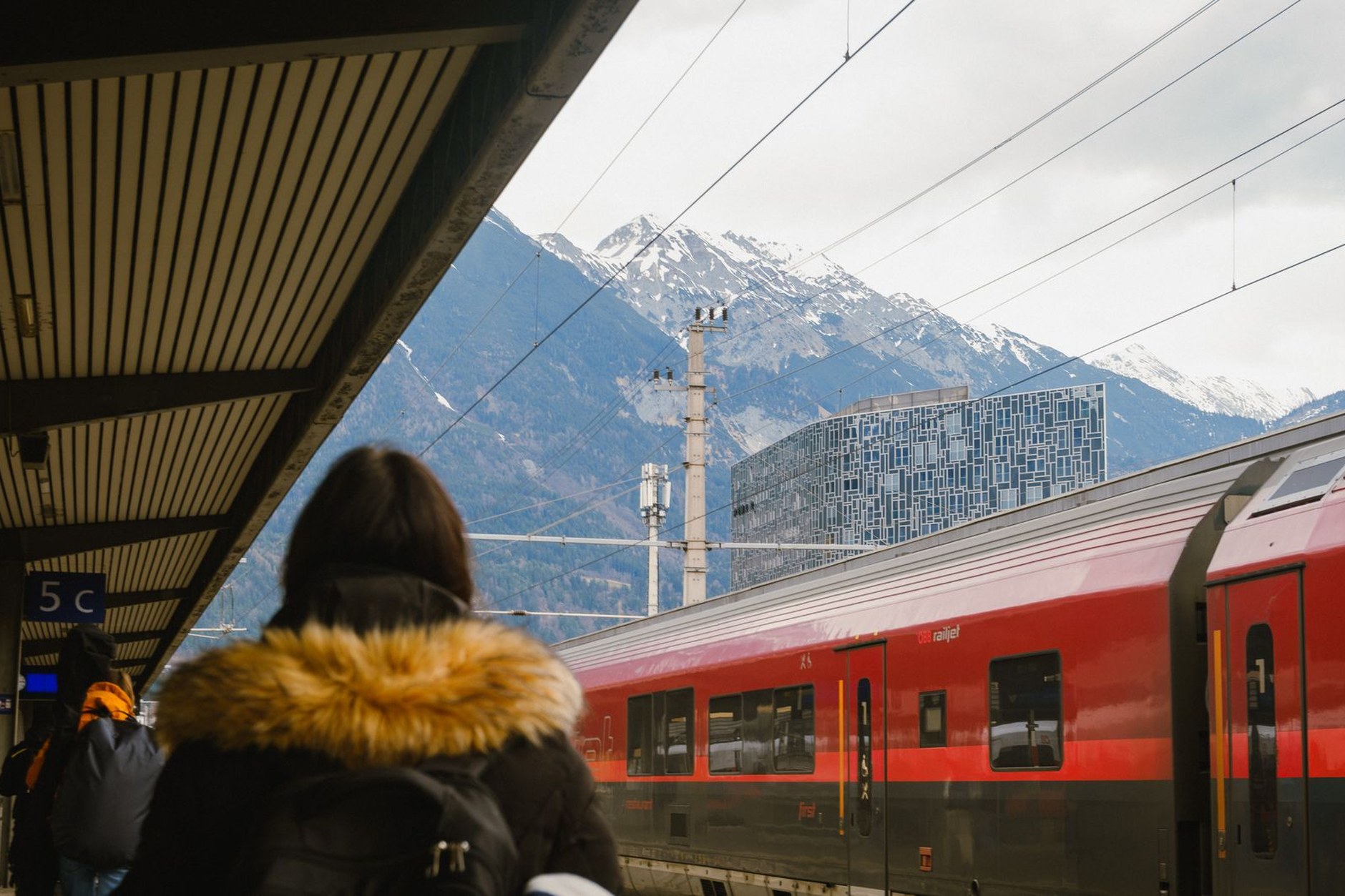
To secure the best fares, book tickets through the official ÖBB website or ÖBB Scotty smartphone app up to 180 days in advance. Scoring an early Sparschiene ticket can cost as little as $22.48 between Vienna and Salzburg, compared to flexible standard walk-up tickets exceeding $67.79. Always pay the small $3.39 supplement for an allocated seat reservation (Sitzplatzreservierung); Railjet trains on the Westbahn corridor are heavily utilized by domestic business commuters and weekend hikers, making unreserved travel unpredictable during peak hours.
Navigating Austrian train stations is exceptionally straightforward. Stations are clean, step-free, and feature clear electronic departure monitors displaying train configurations. With your digital ticket saved in the ÖBB Scotty app, you simply walk straight onto the platform and board your designated coach without passing through turnstiles.
Stage 1: Imperial Grandeur & Coffeehouses in Vienna (Days 1–4)
Upon touching down at Vienna International Airport (VIE), bypass the expensive private airport taxis and the CAT (City Airport Train) marketing booths. Instead, walk five minutes into the underground rail terminal and board an ordinary ÖBB Railjet or S-Bahn train, which carries you directly into Wien Hauptbahnhof in just 15 minutes for a modest local fare of $4.97. Base yourself in the historic heart of the Innere Stadt or in the charming, cobblestoned arts quarter of Spittelberg (Neubau), filled with 18th-century Biedermeier courtyards and independent bistros.
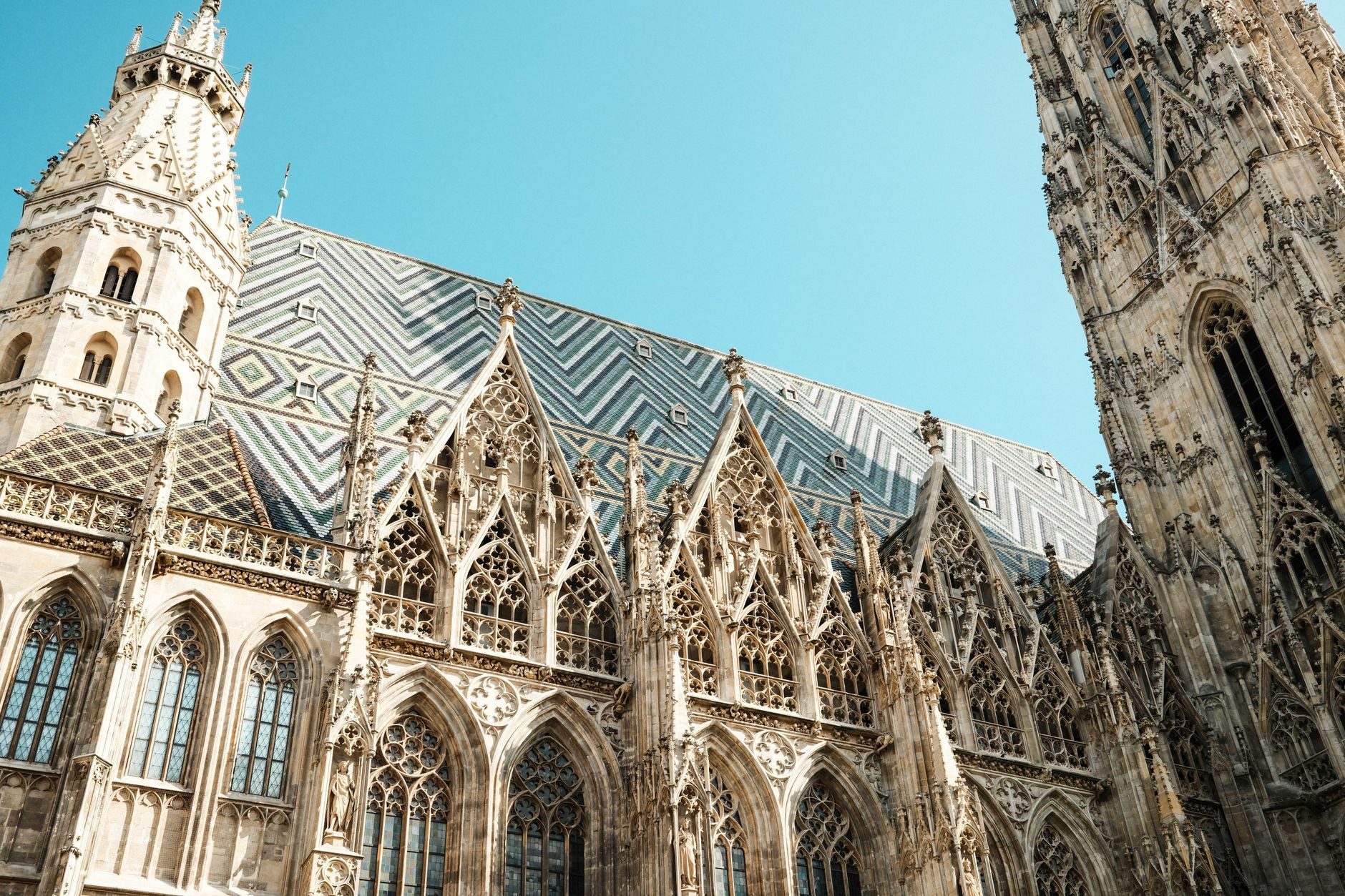
Begin Day 2 inside the Gothic splendor of St. Stephen’s Cathedral (Stephansdom), admiring the 230,000 glazed roof tiles forming the double-headed Habsburg eagle. Stroll along the elegant Graben pedestrian boulevard to the colossal Hofburg Imperial Palace, the winter power center of the Habsburg emperors for over six centuries. Tour the Sisi Museum, the opulent Imperial Apartments, and the Spanish Riding School, where Lipizzaner stallions perform classical equestrian ballet.
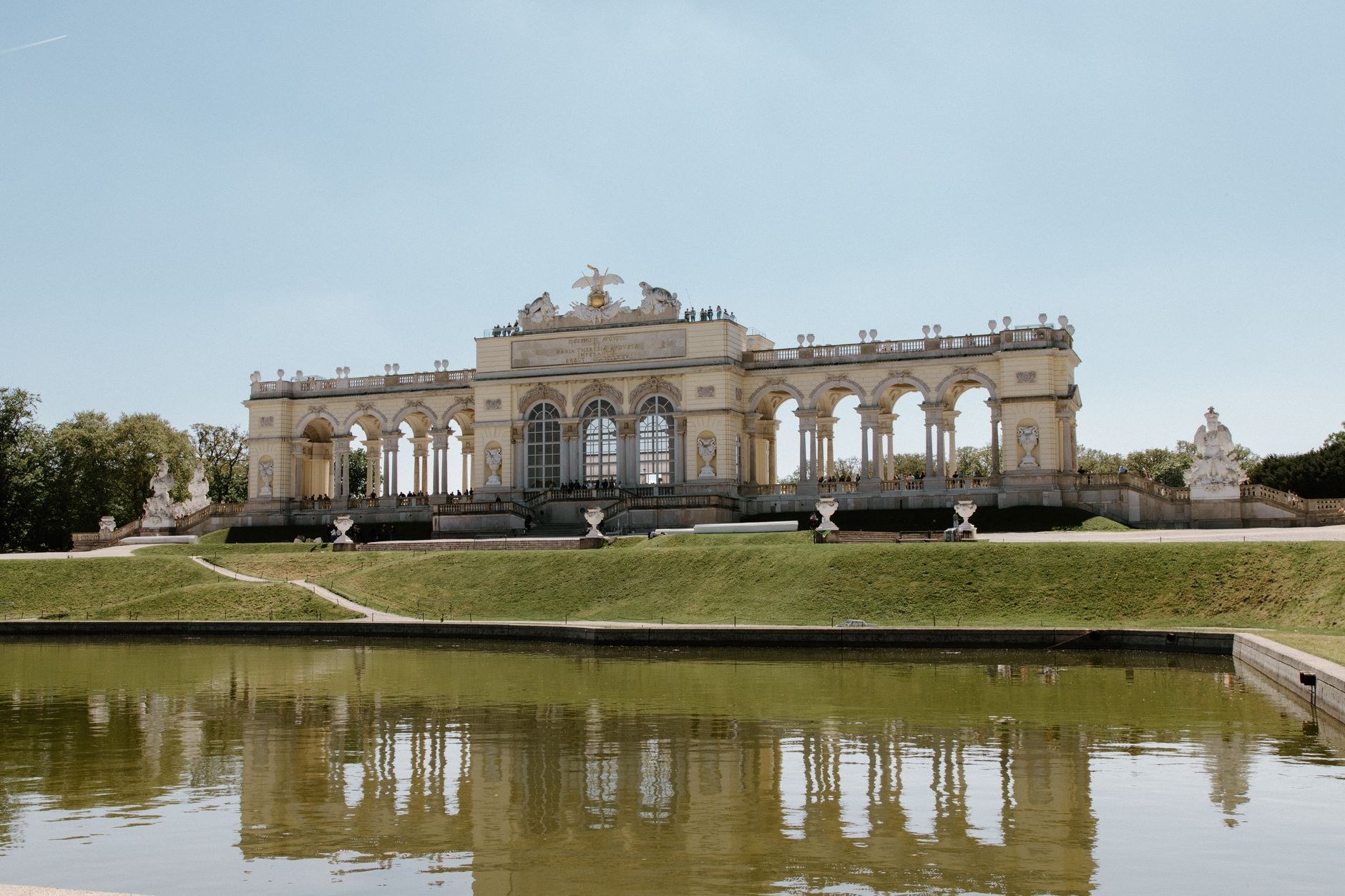
On Day 3, take U-Bahn line U4 southwest to Schönbrunn Palace, the 1,441-room baroque summer residence of Empress Maria Theresa and Emperor Franz Joseph. Tour the Great Gallery and the Hall of Mirrors—where a six-year-old Mozart performed for the imperial court—before climbing the wooded hillside through the manicured French gardens to the Gloriette colonnade for commanding views across Vienna’s skyline.
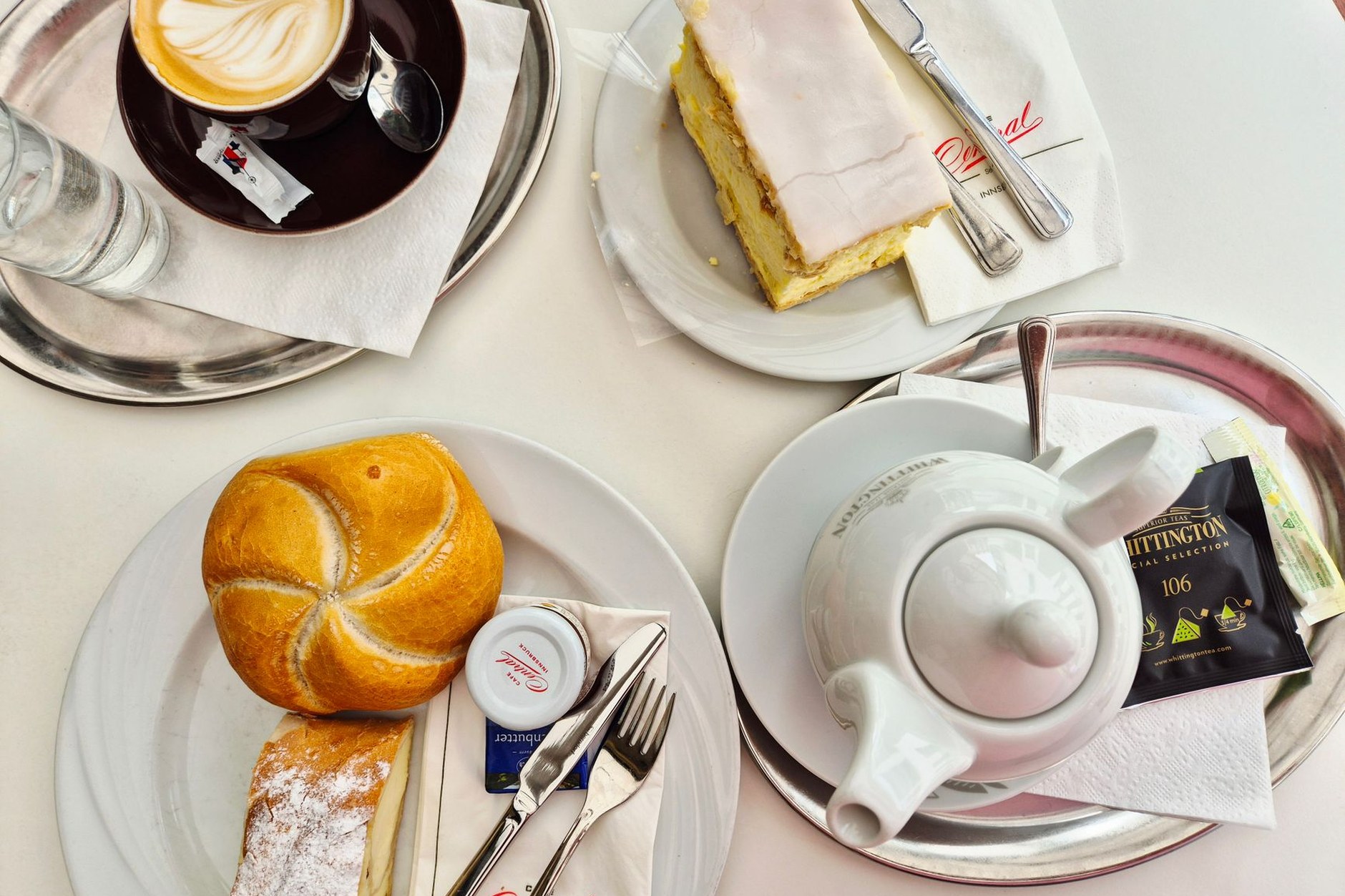
In the afternoon, immerse yourself in authentic Viennese coffeehouse culture, recognized by UNESCO as intangible cultural heritage. Take a wooden booth at historic institutions like Café Central, Café Sperl, or Café Hawelka. Order a Melange (espresso with steamed milk and milk foam) served traditionally on an oval silver tray alongside a glass of cold tap water balanced with an upside-down spoon, paired with a slice of rich chocolate Sachertorte or warm apple strudel (Apfelstrudel).
Dedicate Day 4 to the monumental collections of the Kunsthistorisches Museum, which houses the world’s greatest collection of paintings by Pieter Bruegel the Elder, alongside masterworks by Titian, Caravaggio, and Vermeer. In the evening, attend a world-class opera or symphony performance at the Vienna State Opera (Wiener Staatsoper), or walk through the illuminated Museumsquartier before packing your bags for the train journey to Salzburg.
Stage 2: Baroque Salzburg & The Lake Choice (Days 5–6)
On Day 5, check out of your Vienna hotel and board a morning ÖBB Railjet from Wien Hauptbahnhof. As the train accelerates west across Lower and Upper Austria, the gentle Danube plains give way to the rising limestone crags of the Salzkammergut. Arriving in Salzburg Hauptbahnhof in just under two and a half hours, check into a boutique hotel near the Salzach River in the historic Altstadt or the quieter Neustadt district near Mirabell Gardens.
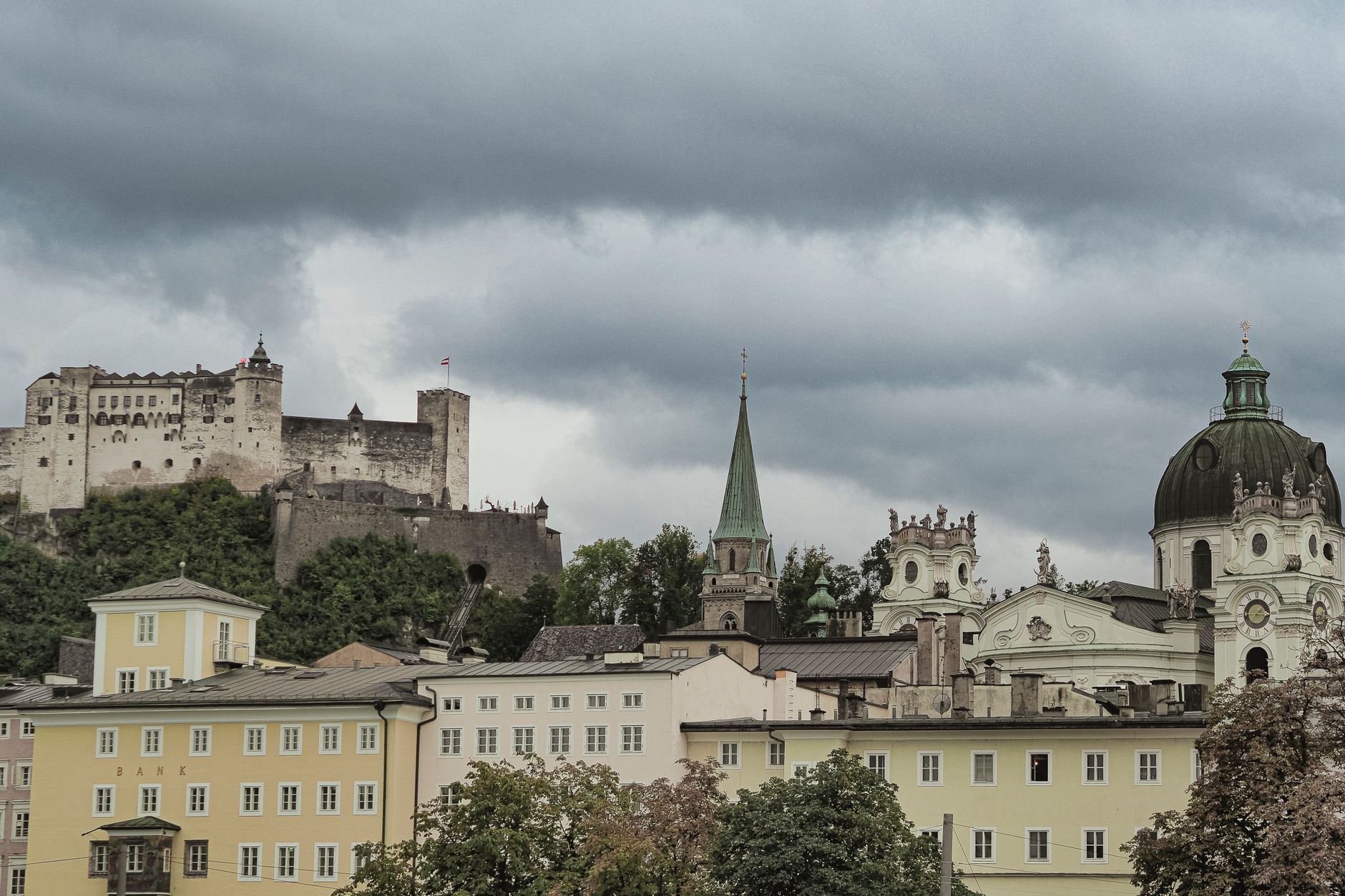
Ride the modern funicular railway (Festungsbahn) up to Hohensalzburg Fortress, one of the largest and best-preserved medieval castle complexes in Europe, built in 1077 by the Prince-Archbishops of Salzburg. Walk the high ramparts for 360-degree panoramas over the copper church domes of the old town framed by the sheer wall of Mount Untersberg. Descend into the narrow, wrought-iron guild-signed lane of Getreidegasse to visit Mozart’s Birthplace (Mozarts Geburtshaus), where the musical prodigy was born in 1756.
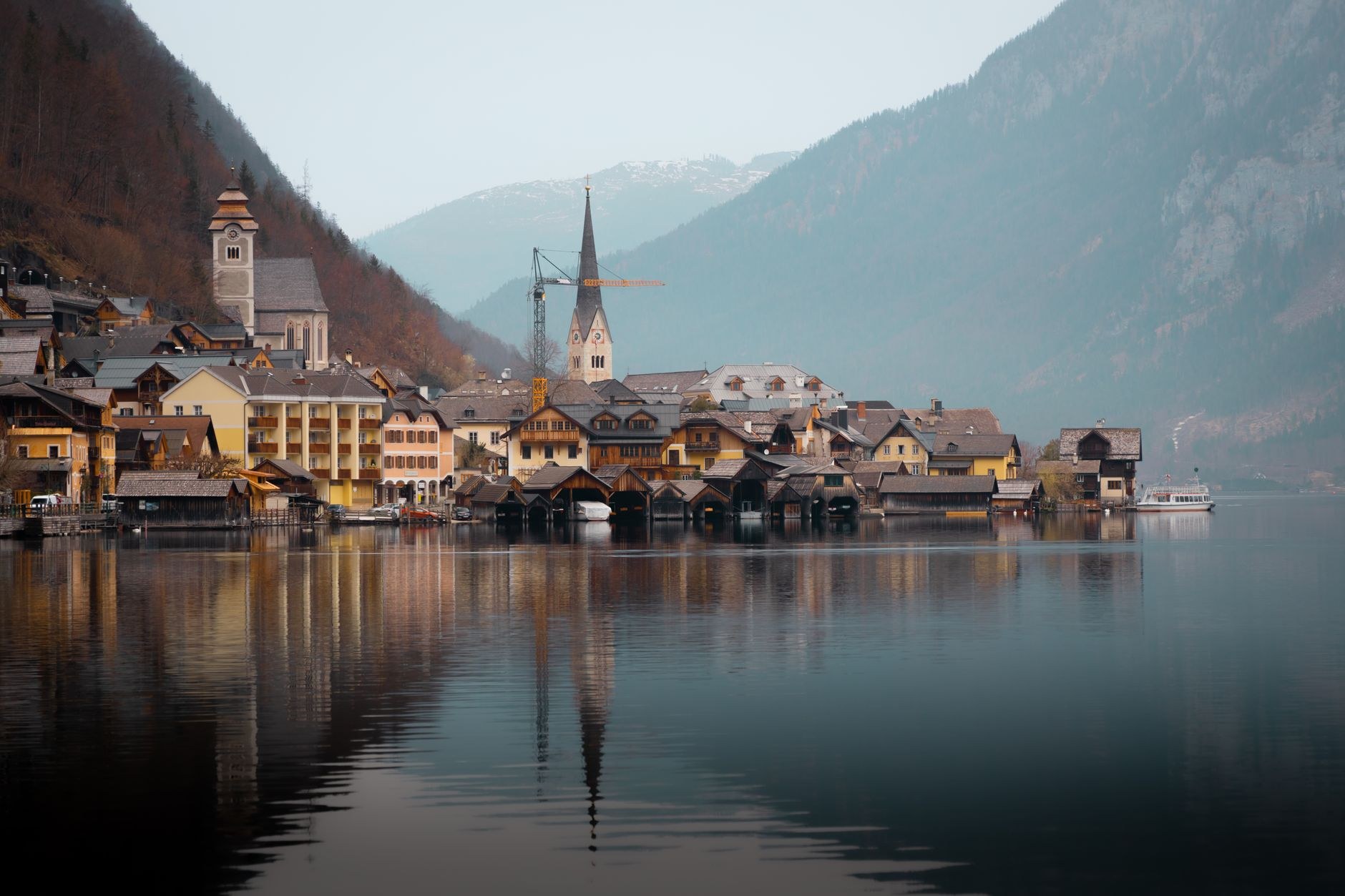
Day 6 presents a crucial planning choice: Hallstatt versus Lake Wolfgangsee. Hallstatt’s wooden alpine boathouses and steep church spires clinging to the edge of the Hallstätter See are globally celebrated, but overtourism can make midday visits feel like a crowded theme park. To enjoy Hallstatt peacefully, board an early regional train from Salzburg via Attnang-Puchheim to Hallstatt station, crossing the lake on the traditional passenger ferry Stefanie to arrive before the tour buses pull in at 10:00.
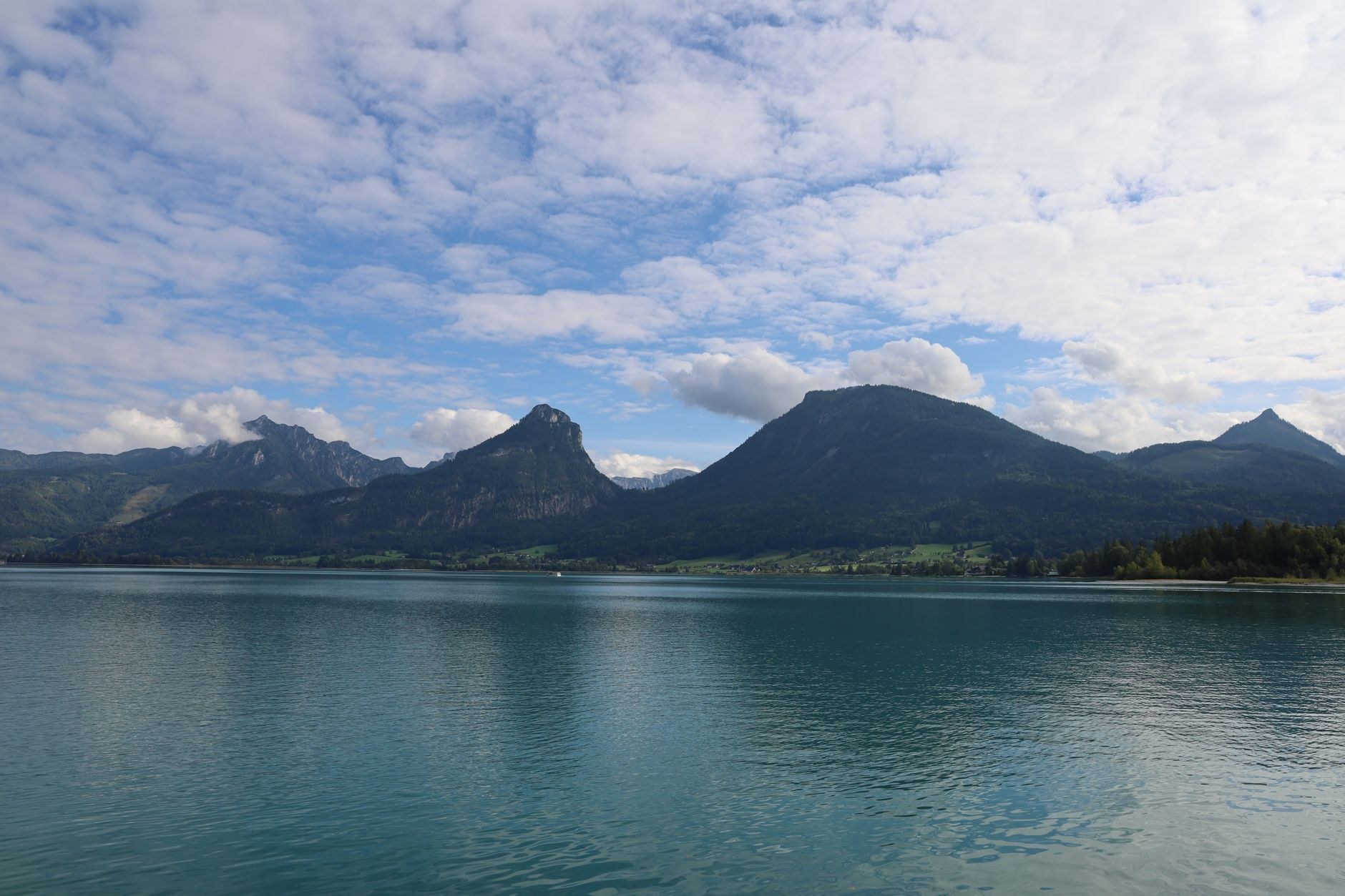
For travelers seeking peaceful alpine waters without tour bus congestion, the superior alternative is Lake Wolfgangsee. Board regional Bus 150 outside Salzburg Hauptbahnhof for an effortless 50-minute scenic ride to St. Gilgen. From there, take a vintage paddle steamer across the turquoise lake to St. Wolfgang, or ride the historic 1893 steam-powered cogwheel railway up the Schafberg mountain for panoramic vistas across seven Salzkammergut lakes.
Return to Salzburg in the evening for a stein of fresh Märzen beer poured from wooden casks into stone steins at the Augustiner Bräu Kloster Mülln, Austria’s largest beer tavern, where locals gather in communal halls under vaulted monastic ceilings.
Stage 3: Alpine Heights in Innsbruck (Days 7–9)
On Day 7, board a morning Railjet heading southwest toward the Tyrol. The train takes the high-speed German transit corridor past Rosenheim before climbing into the dramatic Inn River valley, arriving in Innsbruck Hauptbahnhof in just 1 hour and 48 minutes. Innsbruck represents the ultimate European marriage of urban sophistication and raw alpine nature: towering 2,300-metre limestone walls of the Karwendel range rear up directly behind pastel-colored medieval townhouses.
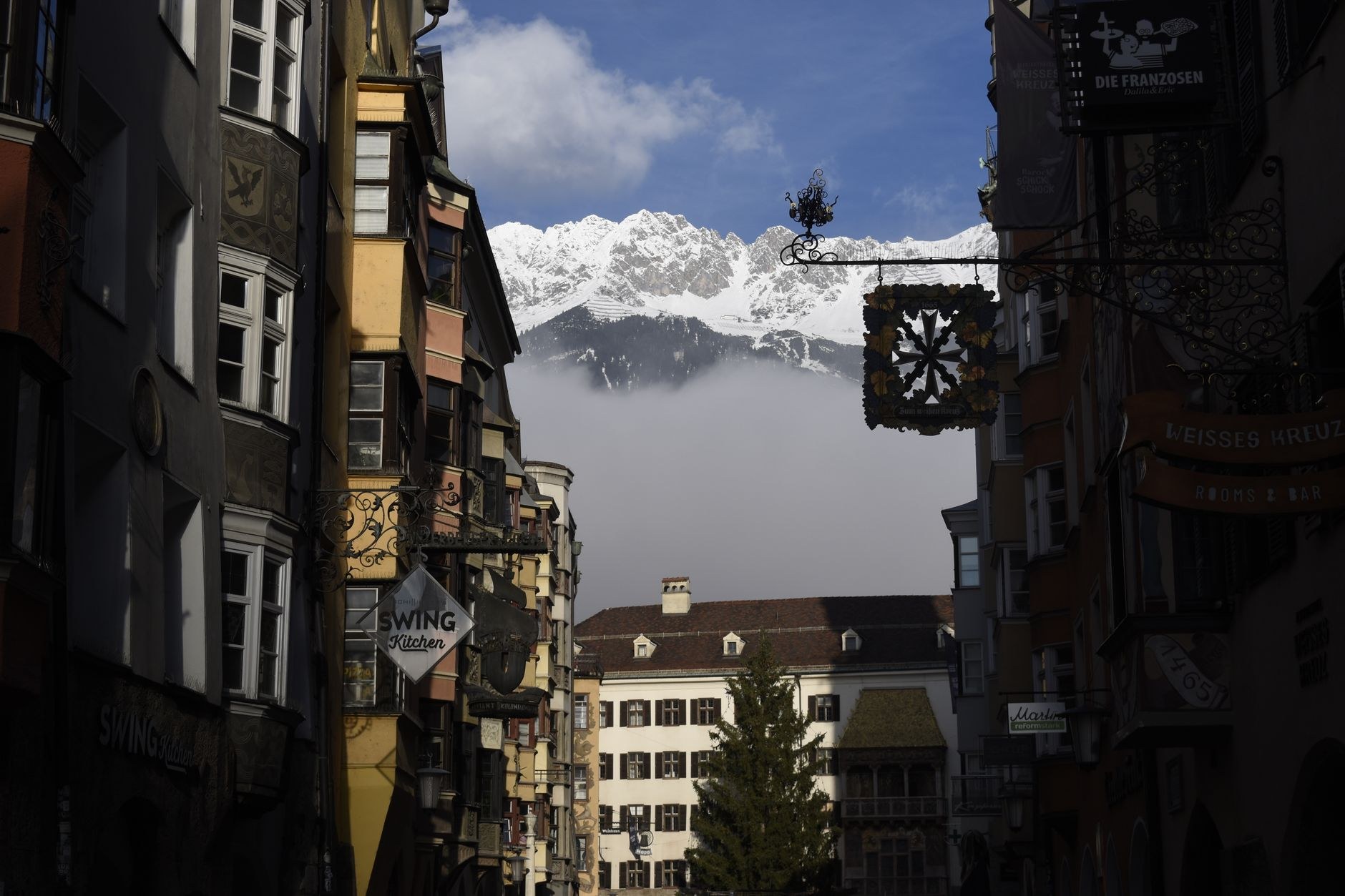
Base yourself in the historic Altstadt within easy walking distance of the Golden Roof (Goldenes Dachl), whose 2,657 fire-gilded copper tiles were installed by Emperor Maximilian I in 1500 to serve as a royal viewing box for knightly jousts in the square below. Visit the Imperial Court Church (Hofkirche) to admire Maximilian’s empty black marble cenotaph guarded by 28 larger-than-life Renaissance bronze statues of ancestors and historic heroes, including King Arthur.
Day 8 delivers Innsbruck’s signature mountain experience: the Nordkette Cable Car. Designed by visionary architect Zaha Hadid, the futuristic Hungerburg funicular departs right from downtown Congress station, sweeping through modern stations that evoke glacial ice formations. Transfer to the cable car at Hungerburg to ascend to Seegrube (1,905 m), and continue to the final summit ridge at Hafelekar (2,256 m) in just 20 minutes from the city pavement.
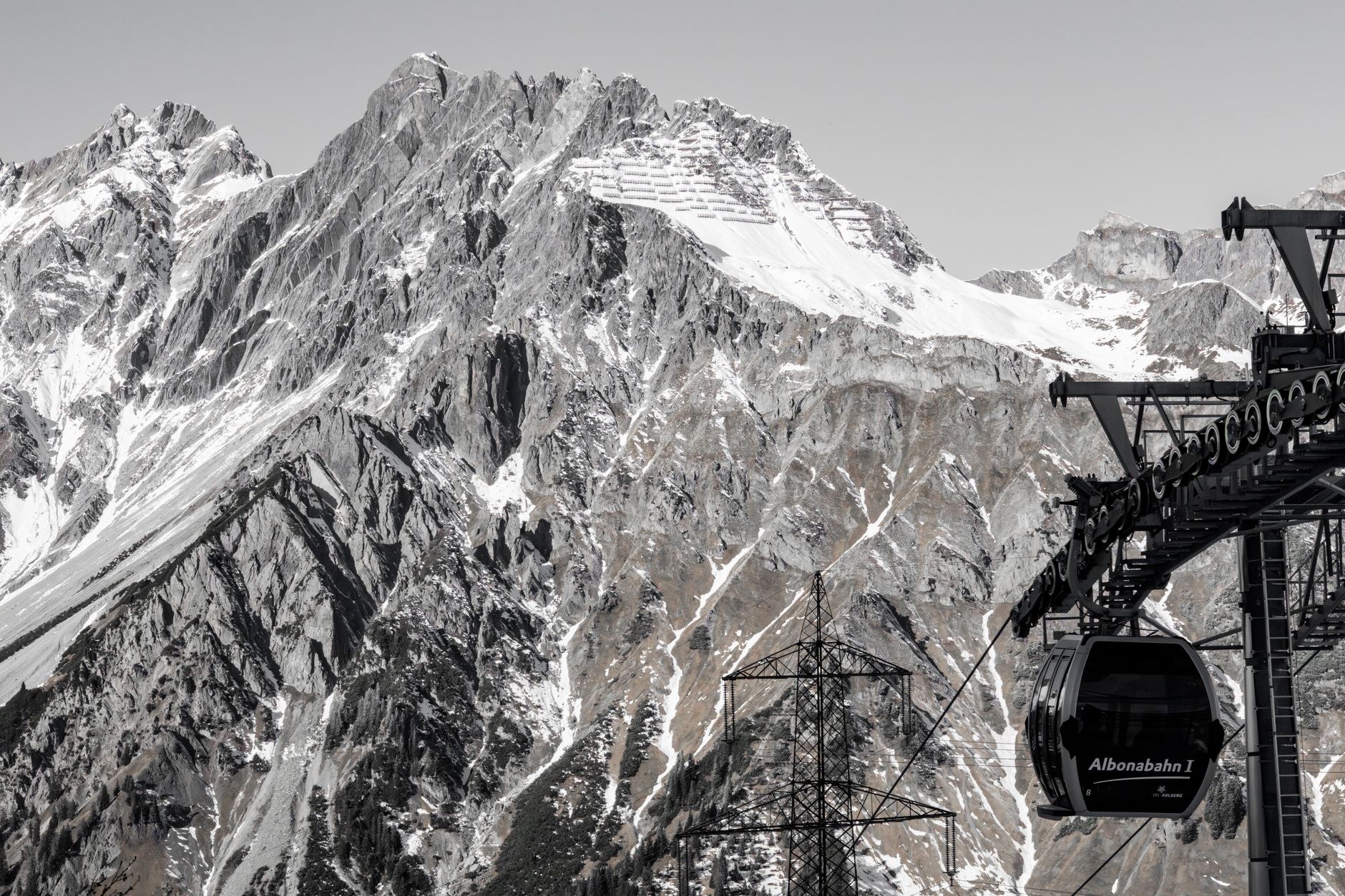
At the Hafelekar summit, standing on the observation ridge lets you look south over Innsbruck spread out in the Inn Valley, while turning north reveals the untamed wilderness of Karwendel Alpine Park stretching toward Bavaria. After hiking the summit trails, descend to Seegrube for a bowl of hearty Tyrolean dumpling soup (Knödelsuppe) on the panoramic sun terrace before heading back to town for a farewell dinner of crispy Wiener Schnitzel with cranberry compote and potato salad.
Street Smarts: Tourist Scams, Overpriced Traps & Transit Hazards in Austria
Austria is one of the safest destinations in Europe, but strict public transportation regulations, clever ticket touts in historic city centers, and unpredictable mountain terrain pose genuine challenges for unprepared travelers. Keep these verified street smarts and practical warnings at the front of your mind:
- The Costumed Mozart Ticket Touts at Stephansplatz & Hofburg: Around St. Stephen’s Cathedral and the Hofburg Palace in Vienna, aggressive promoters dressed in 18th-century powdered wigs and velvet period costumes target tourists, selling tickets for “authentic classical concerts.” Many of these performances are held in small, overheated rental halls rather than historic venues, featuring student ensembles playing abbreviated Sound of Music melodies at steep prices ($56.49 to $90.38). For genuine world-class classical music, buy tickets in advance directly through official box offices at the Vienna State Opera, the Musikverein, or the Konzerthaus.
- The ÖBB Unreserved Seat Rush & Quiet Zone Rules (Ruhezone): Booking an ÖBB train ticket does NOT automatically assign you a seat. If your ticket does not include a paid seat reservation ($3.39), you must search for overhead electronic display screens showing seat segments. If an overhead screen displays “Wien – Salzburg,” that seat is reserved for that segment; sitting in it will require moving mid-journey when the ticket holder boards. Furthermore, if you take a seat in a Railjet “Ruhezone” (Quiet Zone) car, loud conversation, speakerphone usage, and phone calls are strictly prohibited; passengers and conductors will enforce absolute quiet.
- The Autobahn Toll Sticker Trap (Vignette $135.58 Fine): If you rent a car or drive across the border into Austria from Germany, driving on any Austrian motorway (Autobahn) or expressway (Schnellstraße) requires a valid toll sticker called a Vignette (available as a physical windscreen sticker or digital toll registration through ASFINAG). Driving even 500 meters past the border without a valid Vignette triggers automated overhead cameras, resulting in an immediate, non-negotiable $135.58 on-the-spot substitute toll fine (Ersatzmaut), which rises to $338.94+ if unpaid.
- The Viennese Transit Validation Trap (Wiener Linien $118.63 Fine): Like German transit systems, Vienna’s U-Bahn stations and trams have no automated barrier turnstiles. Simply purchasing a single transit ticket or a multi-day pass does not make it valid. You must manually stamp the ticket in the blue box (Entwerter) before boarding. Plainclothes inspectors (Kontrolleure) frequently board between Karlsplatz and Stephansplatz; traveling with an unstamped ticket carries an immediate $118.63 penalty fine.
- Sudden Alpine Weather Reversals & Inadequate Footwear: When riding cable cars to Hafelekar (2,256 m) in Innsbruck or Mount Untersberg in Salzburg, valley temperatures of 25°C can drop to 4°C at the summit within minutes. Alpine weather shifts rapidly: sunny skies can transform into freezing sleet, dense fog, and thunderous storms in less than an hour. Never ascend alpine summits in flip-flops, light sneakers, or shorts without a thermal fleece layer, windproof shell jacket, and sturdy footwear with deep tread.
- The Bread Basket Cover Charge (Gedeck) in Traditional Gasthäuser: In traditional Viennese dining establishments and Austrian mountain Gasthäuser, a basket of fresh rye bread rolls (Semmeln) or pretzel bread and spreads is automatically set on your table. Unlike North American restaurants where bread is complimentary, in Austria this is considered a cover charge (Gedeck) and billed per roll consumed (typically $1.69 to $3.95 each) or as a flat cover charge. If you do not wish to pay for the bread, politely decline when the basket arrives.
Adhering to these local rules ensures that you will enjoy Austrian hospitality with complete confidence, avoiding unnecessary administrative fines and tourist-center headaches.
Staying Connected Across the Austrian Alps
Reliable mobile internet connectivity is vital when traveling through the Austrian Alps. The official ÖBB Scotty app requires continuous data to deliver real-time train tracking, track updates, and platform transfers. Furthermore, alpine safety demands live access to summit weather radars, mountain webcam feeds on the Nordkette, and cloud-based mountain trail maps via apps like Komoot or Bergfex when hiking above Innsbruck.
Austria boasts one of Europe’s most modern cellular telecommunications infrastructures, anchored by top tier-one mobile network operators: A1 Telekom Austria and Magenta Telekom (Deutsche Telekom Group). A1 and Magenta provide ultra-fast 5G speeds across metropolitan Vienna and Salzburg, alongside remarkable 4G/LTE coverage deep inside alpine valleys and along Railjet mountain train tracks. However, purchasing a physical plastic SIM card upon arrival requires undergoing Austrian statutory identity verification (SIM-Registrierung), forcing travelers to present official ID cards at retail shops.
The modern, effortless solution is an NXTL Austria travel eSIM. Your smartphone connects directly to leading tier-one networks like A1 and Magenta at verified transparent rates starting from just $0.75 per gigabyte. There is no physical SIM card swap, no bureaucratic paperwork, and no expiring contracts: you pay only for the exact bandwidth you consume. Here is an estimate of mobile data consumption for a 9-day Austrian rail journey:
| Travel Style & Usage Profile | Daily Online Activities | 9-Day Total Bandwidth | Estimated Data Cost (@ $0.75/GB) |
|---|---|---|---|
| Light Navigator (Schedules & city maps) |
ÖBB Scotty train monitoring, Google Maps walking navigation, WhatsApp messaging, digital ticket display | 3 GB – 5 GB | $2.24 – $3.73 |
| Balanced Explorer (Social sharing & webcams) |
All navigation, mountain webcam checking, museum audio streaming, social media uploads, restaurant lookups | 6 GB – 10 GB | $4.47 – $7.46 |
| Heavy Digital Nomad (Remote work & tethering) |
Laptop tethering on Railjet trains, video calls, cloud photo backups, YouTube/Spotify streaming | 12 GB – 16 GB | $8.95 – $11.93 |
Install your NXTL eSIM profile on your phone before departing for Vienna. When your flight touches down at Vienna International Airport, enable your data line to check live Railjet train departures into central Vienna before you even exit the baggage hall.
Trip Variations: Adjusting for Time and Interests
If You Have Only 6 or 7 Days
If you have less than a week, focus strictly on Vienna and Salzburg. Spend four nights exploring Vienna’s imperial palaces, world-class art museums, and coffeehouses, then take the 2-hour Railjet to Salzburg for two nights to experience Hohensalzburg Fortress and the historic Altstadt. Save the Tyrolean Alps and Innsbruck for a future journey when you have sufficient time to ascend the high summits without rushing.
If You Have 12 to 14 Days
With an extra four to five days, you can expand this itinerary into a comprehensive alpine grand tour. Add two nights in Graz, Austria’s culinary capital and UNESCO City of Design, traveling through the scenic Semmering Railway pass. In the western mountains, continue beyond Innsbruck to Kitzbühel or Zell am See for alpine lake cruises, glacier walks at Kitzsteinhorn, or scenic drives along the Grossglockner High Alpine Road.
Best Times to Visit
Late spring (May to June) brings blooming palace gardens, crisp mountain air, and comfortable walking temperatures (17°C to 23°C). Summer (July to August) is warm and vibrant, ideal for alpine hiking and lake swimming in the Salzkammergut, though cultural venues and Salzburg’s festival season see heavy crowds. Autumn (September to October) is characterized by golden alpine foliage, harvest wine festivals in the Wachau Valley, and quiet museum galleries without summer queues.