Ireland has an uncanny way of looking deceptively compact on a world map. First-time visitors glance at the island, notice it measures barely 480 kilometers from north to south, and draft an impossible itinerary: landing in Dublin, racing north to Belfast and the Giant’s Causeway, cutting southwest across Donegal to Galway, sweeping around the Ring of Kerry, driving past Blarney Castle, and returning to the capital—all within seven days. What this ambitious checklist produces in reality is an exhausting vacation spent staring through windshield wipers at narrow country hedges, navigating harrowing blind single-track corners, and arriving at historic abbeys ten minutes after the admission gates have bolted shut.
The secret to a magical Irish journey is ruthless geographic focus. Rather than exhausting yourself trying to circle the entire republic, the optimal route commits entirely to the spellbinding western littoral—the legendary Wild Atlantic Way. By landing in Dublin, enjoying an initial car-free evening in the capital, picking up your rental vehicle on the morning of departure, and driving directly west toward County Galway, Connemara, the limestone moonscape of The Burren, the soaring Cliffs of Moher, and the rugged ocean fingers of the Dingle Peninsula, you minimize behind-the-wheel fatigue while maximizing time spent exploring coastal ruins, listening to spontaneous traditional fiddle sessions in village pubs, and walking clifftop sheep paths above the Atlantic breakers.
| Day / Stage | Overnight Base | Key Highlights | Transit & Driving Logistics | Essential Advance Bookings | What to Skip / Save |
|---|---|---|---|---|---|
| Day 1: Arrival & Urban Core | Dublin (City Centre) | Trinity College Old Library & Book of Kells, Grafton Street buskers, St. Stephen’s Green, Georgian doors of Merrion Square | Dublin Airport (DUB) to city centre via Dublin Express 782 bus (30 min); strictly avoid renting a car until leaving the city | Book of Kells timed entry slot (morning or late afternoon) | Skip renting a car at the airport on arrival; Dublin parking costs $39.54–$56.49/night and inner-city traffic is notoriously congested |
| Day 2: Crossing to the West | Galway City (Latin Quarter) | Kilbeggan historic whiskey distillery, Galway Latin Quarter street music, Spanish Arch, Claddagh basin walk | Pick up rental car at Dublin city depot; drive M4/M6 motorway to Galway (215 km, 2 hr 30 min smooth dual carriageway) | Galway central hotel parking space; dinner reservation at Ard Bia at Nimmos or The King’s Head | Skip commercial motorway service plazas for lunch; detour 5 minutes into Athlone town to dine beside Athlone Castle |
| Day 3: Connemara Wilds | Galway City or Clifden | Connemara National Park, Kylemore Abbey neo-gothic palace and walled Victorian gardens, Sky Road panoramic coastal loop | Galway to Kylemore via N59 (80 km, 1 hr 30 min); narrow secondary asphalt with grazing sheep; round-trip 170 km | Kylemore Abbey entry ticket (10% online advance discount) | Skip attempting both Connemara and the Aran Islands on the same calendar day; Connemara deserves full daylight exploration |
| Day 4: The Burren & Atlantic Cliffs | Doolin or Lahinch | Dunguaire Castle at Kinvara, glaciated limestone pavement of The Burren, Cliffs of Moher, evening pub session at Gus O’Connor’s | Galway to Doolin via Wild Atlantic Way N67 / coastal R477 (75 km, 1 hr 45 min); dramatic ocean curves around Black Head | Cliffs of Moher visitor ticket (advance booking guarantees designated lot entry); Doolin traditional music pub table | Skip booking commercial bus day tours from Galway; driving yourself allows arriving at the Cliffs at 17:30 after the 50-passenger tour coaches depart |
| Day 5: Kingdom of Kerry & Dingle | Dingle Town (County Kerry) | Shannon ferry crossing from Killimer to Tarbert, Slea Head Drive ocean views, prehistoric Beehive Huts, Dunmore Head walk | Doolin to Killimer (1 hr 15 min); Shannon Ferry car crossing (20 min roll-on); drive Tarbert to Dingle via Conor Pass or N86 (1 hr 40 min) | Shannon Ferries vehicle voucher (saves 10% online); Dingle accommodation (books out months in advance for summer) | Skip the crowded 179 km Ring of Kerry loop coach convoy; the 47 km Slea Head Drive on Dingle offers wilder scenery with a fraction of the commercial traffic |
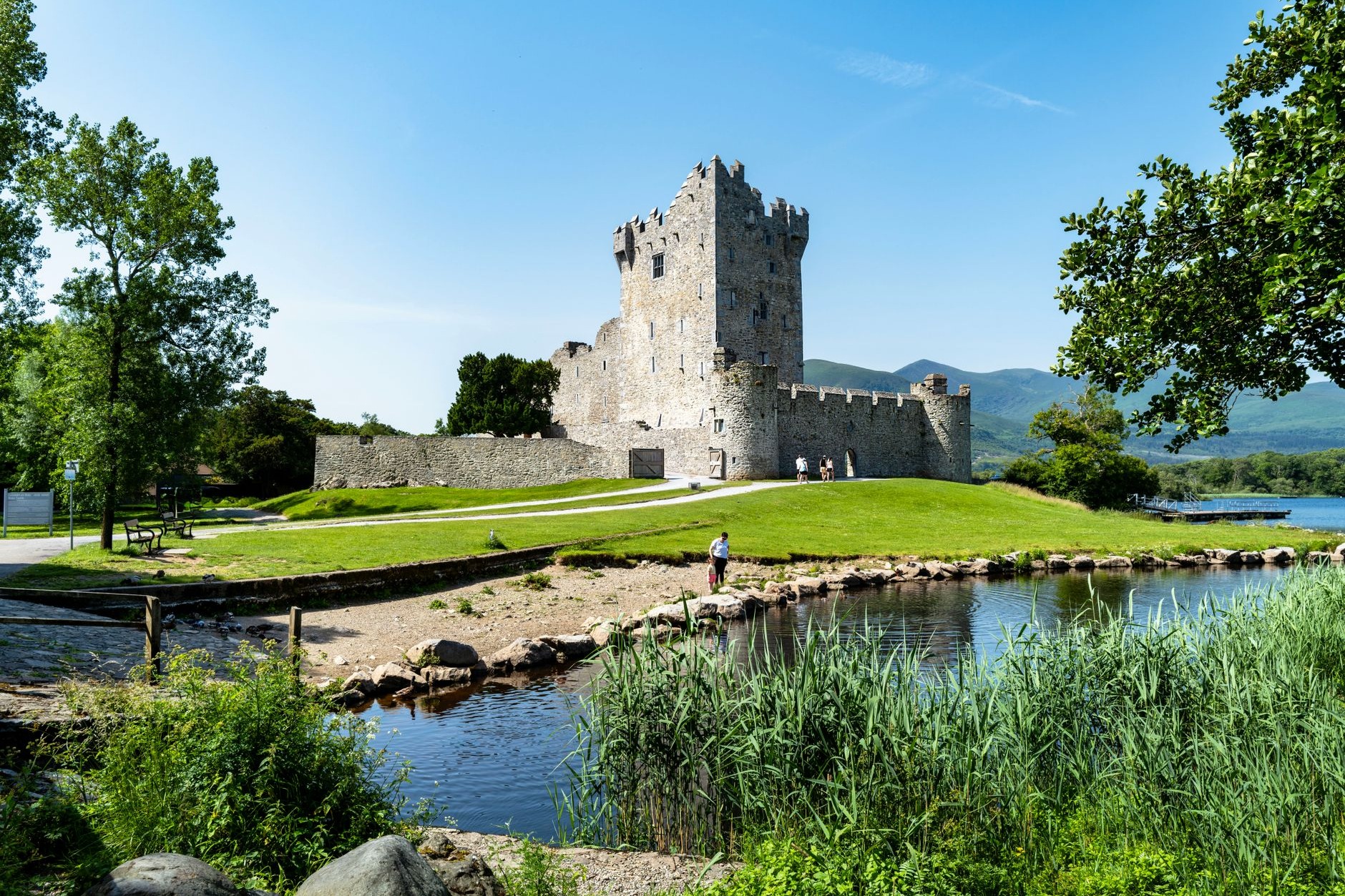
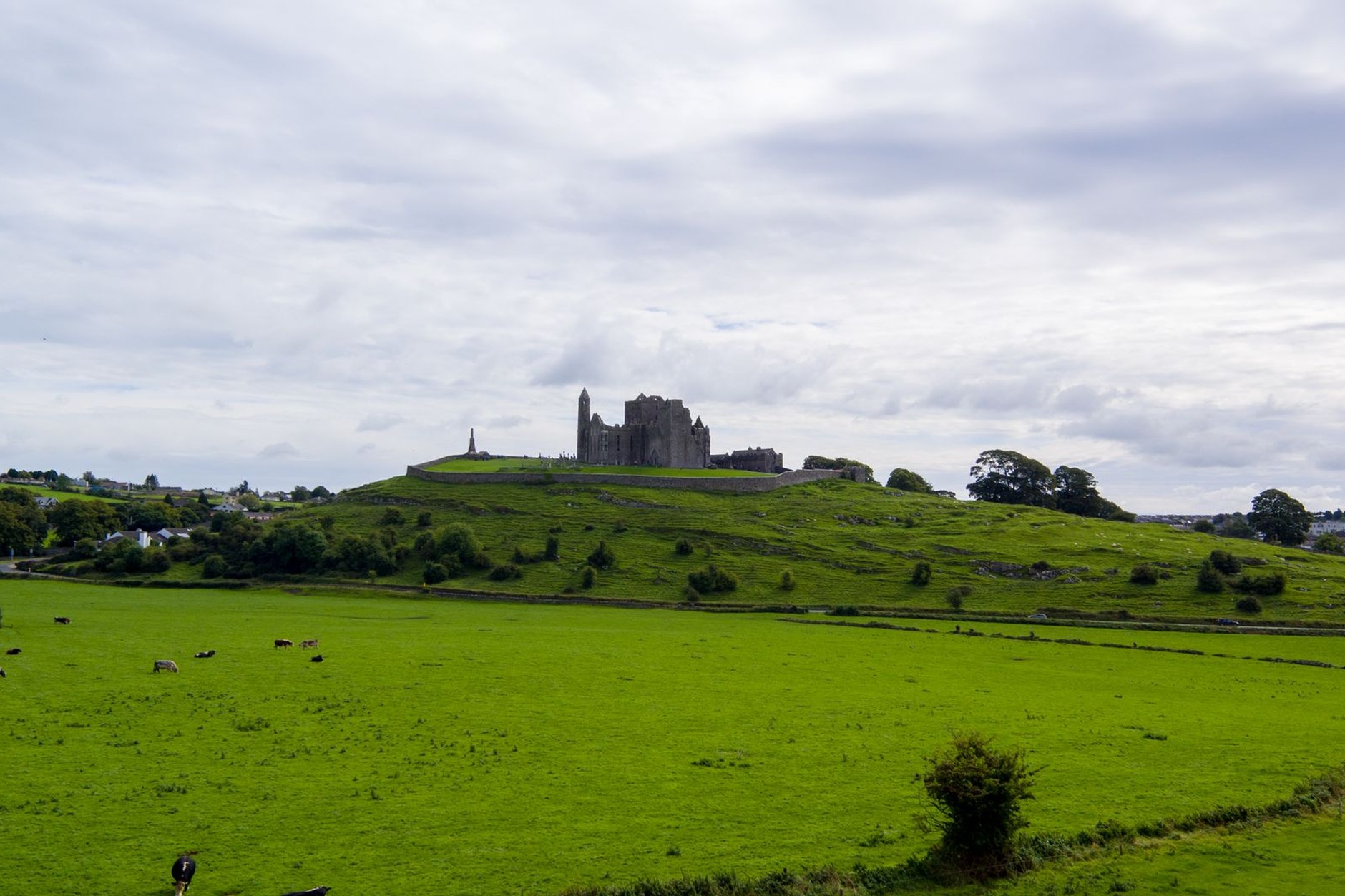
| Day 6: Lakes & Medieval Fortresses | Kilkenny City | Killarney National Park lakes, Ross Castle, Rock of Cashel limestone stronghold, medieval Kilkenny Castle and Black Abbey | Dingle to Killarney (1 hr); Killarney to Cashel via N72/M8 (145 km, 2 hr); Cashel to Kilkenny via R691 (60 km, 50 min) | Rock of Cashel timed admission ticket; Kilkenny Castle interior tour reservation | Skip the over-commercialized Blarney Stone kissing queue; climbing the ramparts at the Rock of Cashel offers genuine 12th-century ecclesiastical splendor |
| Day 7: Medieval Marble City & Departure | Dublin Airport or Departure | Kilkenny Medieval Mile walk, St. Canice’s Cathedral round tower climb, scenic drive across County Kildare to Dublin Airport | Kilkenny to Dublin Airport (DUB) via M9/M50 motorway (135 km, 1 hr 35 min); return rental car directly at airport depot | Dublin Airport Terminal car rental check-in slot; pay eFlow M50 barrier-free toll online before 20:00 next day | Skip stopping in Dublin city centre on your departure day; avoid urban gridlock by driving directly to airport car return depots |
Audience, Seasonality, and the Western Corridor
Timing your arrival and departure around this western corridor allows you to experience the authentic cadence of rural Ireland. Instead of rushing between roadside photograph markers, you establish two-night anchors in Galway and County Kerry, giving you breathing room when Atlantic weather fronts roll ashore with sudden squalls of mist and rain.
Day 1: Arrival & Urban Core
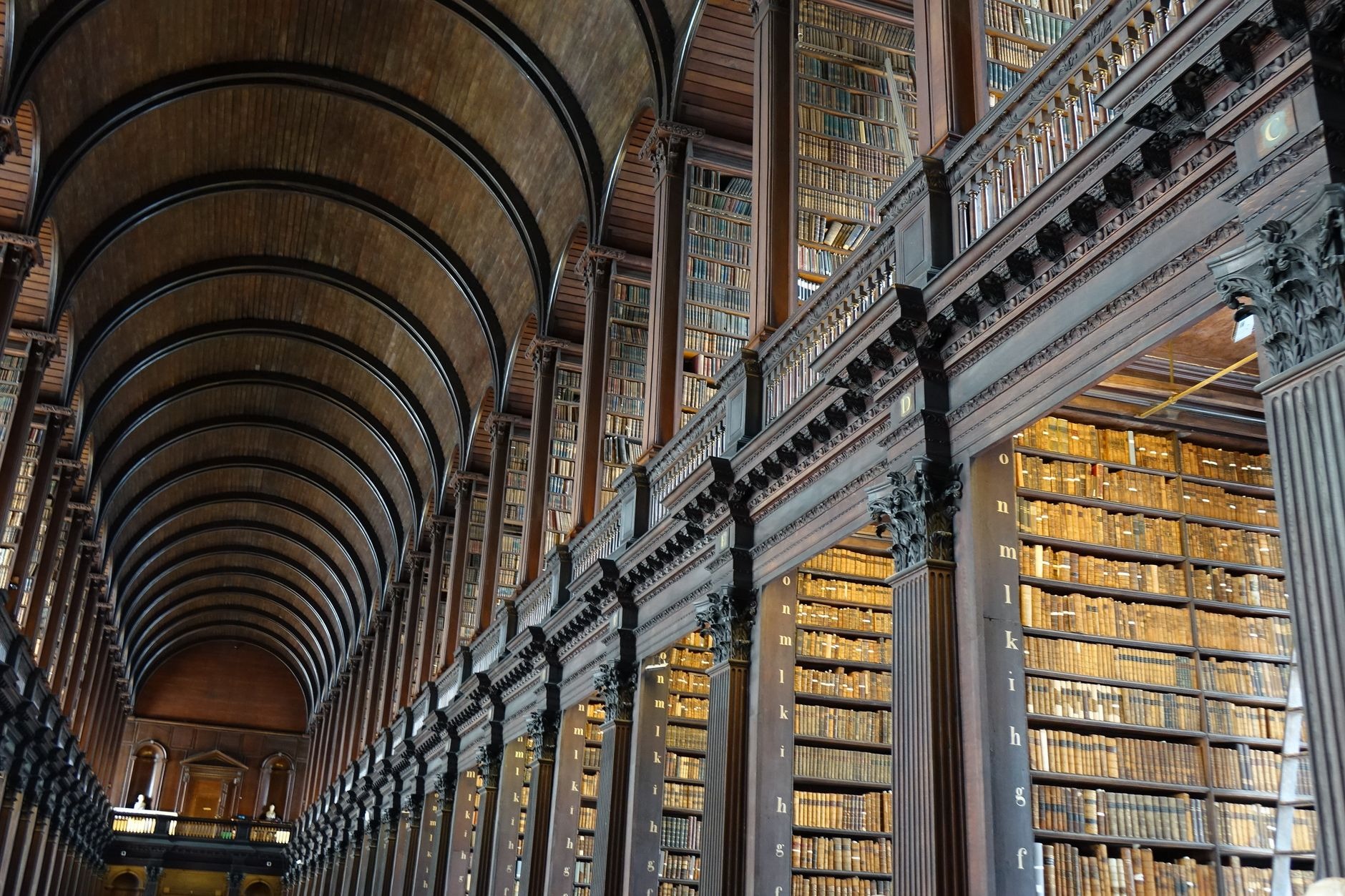
Dublin serves as an ideal urban staging ground, but it demands a disciplined approach. The city center is compact and overwhelmingly pedestrianized, bisected by the River Liffey and navigated far more easily on foot or via the Luas light rail than behind the wheel of an unfamiliar car. Spend your first afternoon wandering through the historic quadrangles of Trinity College Dublin to view the 9th-century illuminated Gospel manuscript of the Book of Kells, followed by a stroll through the Georgian symmetry of Merrion Square.
When evening falls, avoid the temptation to dine exclusively within the hyper-commercialized confines of Temple Bar. While walking through the cobblestone alleys to hear the opening chords of street buskers is an undeniable Dublin ritual, the pints of stout and pub suppers in Temple Bar carry markups of 30% to 50% compared to neighboring districts. Cross Dame Street into the Creative Quarter around South William Street and Drury Street, or walk north toward the historic pubs along Capel Street and Smithfield, where local Dubliners actually gather for pints of stout, artisan cheeses, and freshly caught seafood.
Day 2: Crossing to the West
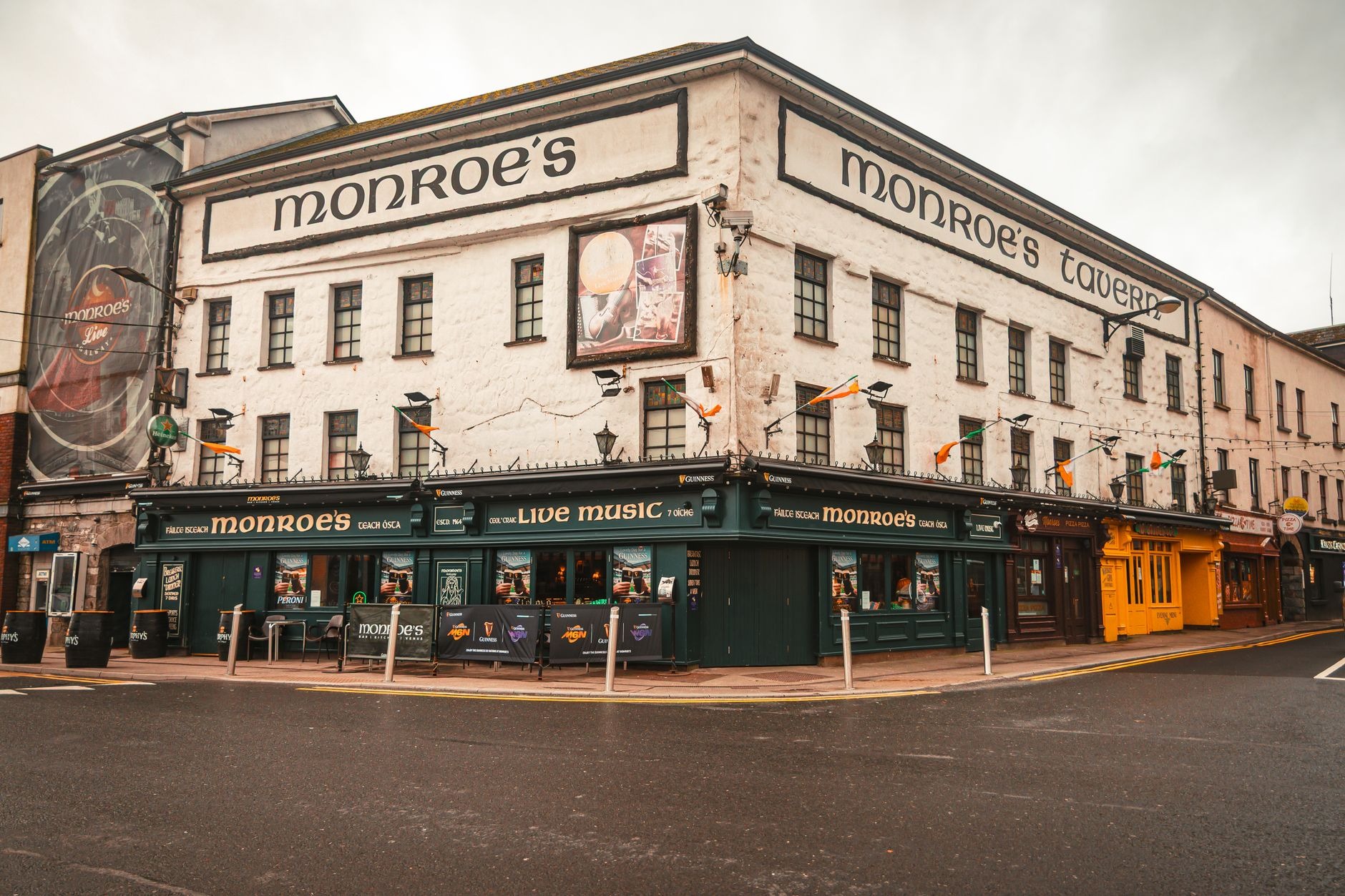
Leaving Dublin on the morning of Day 2 marks the true beginning of your road journey. The modern M4 and M6 motorways slice directly across the central limestone plains of the Irish midlands, delivering you to the Atlantic shores of Galway in roughly two and a half hours of effortless cruising. As the primary cultural capital of the west, Galway pulses with bohemian energy, live accordion music spilling onto medieval cobblestones, and the brisk salty breeze blowing in from Galway Bay.
Base yourself within walking distance of the Latin Quarter for two consecutive nights. Spend your afternoon wandering along the Long Walk toward the historic Claddagh district, where the iconic Celtic ring of two hands clasping a crowned heart was first crafted by local silversmiths. As twilight settles, slip into venerable institutions like Tigh Neachtain or Crane Bar, where spontaneous traditional Irish music sessions—featuring uilleann pipes, tin whistles, and bodhrán drums—begin without fanfare in the cozy snugs around peat-burning hearths.
Day 3: Connemara Wilds
Day 3 takes you northwest into the brooding, romantic wilderness of Connemara. Following the winding N59 highway through Oughterard and Recess, the landscape transitions dramatically from agricultural fields into vast sweeps of rust-colored peat bogs, quartzite mountain peaks known as the Twelve Bens, and shimmering black loughs. This is one of Ireland’s primary Gaeltacht regions, where the Irish language (Gaeilge) remains the everyday tongue spoken in shops, community halls, and rural homesteads.
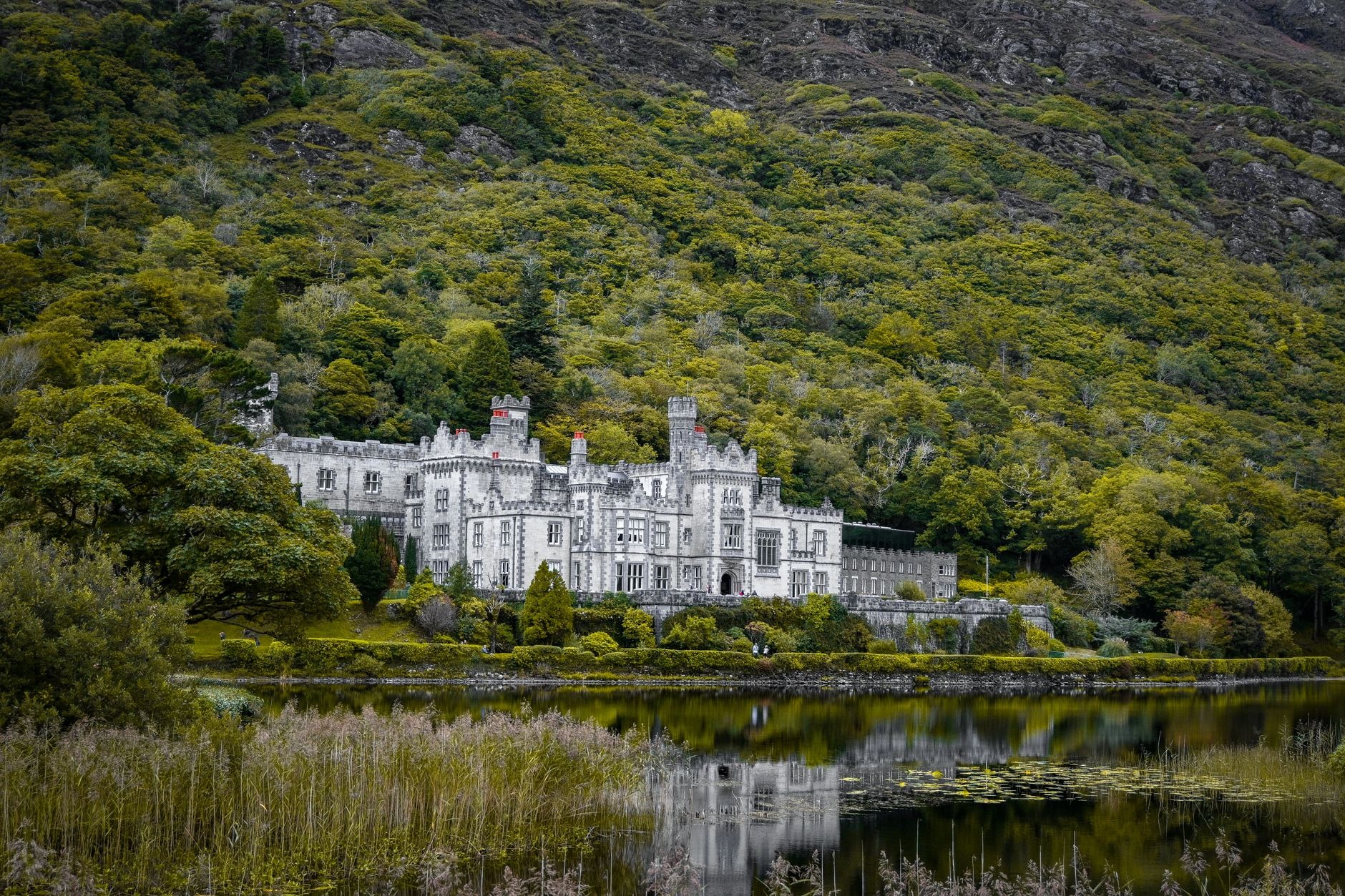
The centerpiece of the morning is Kylemore Abbey, a magnificent 19th-century neo-Gothic castle built as a romantic private estate by Mitchell Henry before becoming a monastery for Benedictine nuns fleeing war-torn Belgium in 1920. Beyond the restored castle reception rooms, dedicate ample time to wandering through the six-acre Victorian Walled Garden, nestled into the mountainside with heated glasshouses and geometric flower displays. In the afternoon, navigate the exhilarating Sky Road loop west of Clifden, where the narrow tarmac rises to clifftops revealing panoramic views of offshore islands and crashing Atlantic swells.
Day 4: The Burren & Atlantic Cliffs
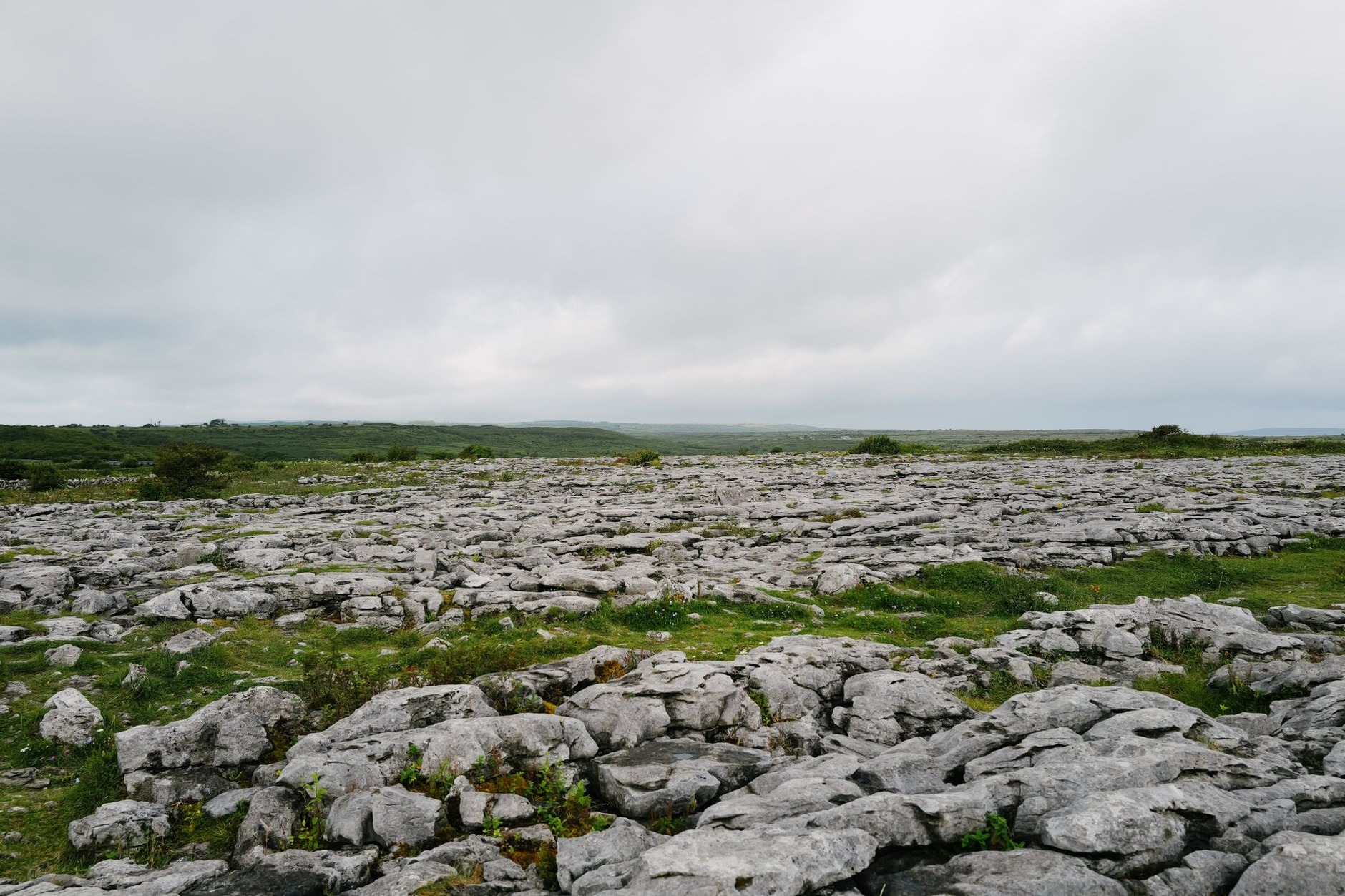
Heading south around Galway Bay on Day 4 brings you into County Clare and the extraordinary geological region known as The Burren. Derived from the Irish word Bhoireann, meaning “rocky place,” this 250-square-kilometer expanse of exposed, glaciated karst limestone looks like an alien moonscape transplanted onto the Atlantic coast. Deep fissures called grykes dissect massive flat limestone slabs (clints), creating microclimates where delicate Arctic, Alpine, and Mediterranean wildflowers flourish side by side in the sheltered crevices.
Pause at the 16th-century Dunguaire Castle near Kinvara before tracking the coastal R477 route as it curves tightly around Black Head. Here, the gray limestone terraces plunge straight down into the churning green waters of the Atlantic, with the silhouettes of the three Aran Islands visible across the sound. Stop at the Poulnabrone Dolmen, a 5,800-year-old portal tomb standing stoically against the Atlantic winds, before descending toward the coastal village of Doolin, universally renowned as the epicenter of traditional Clare music.
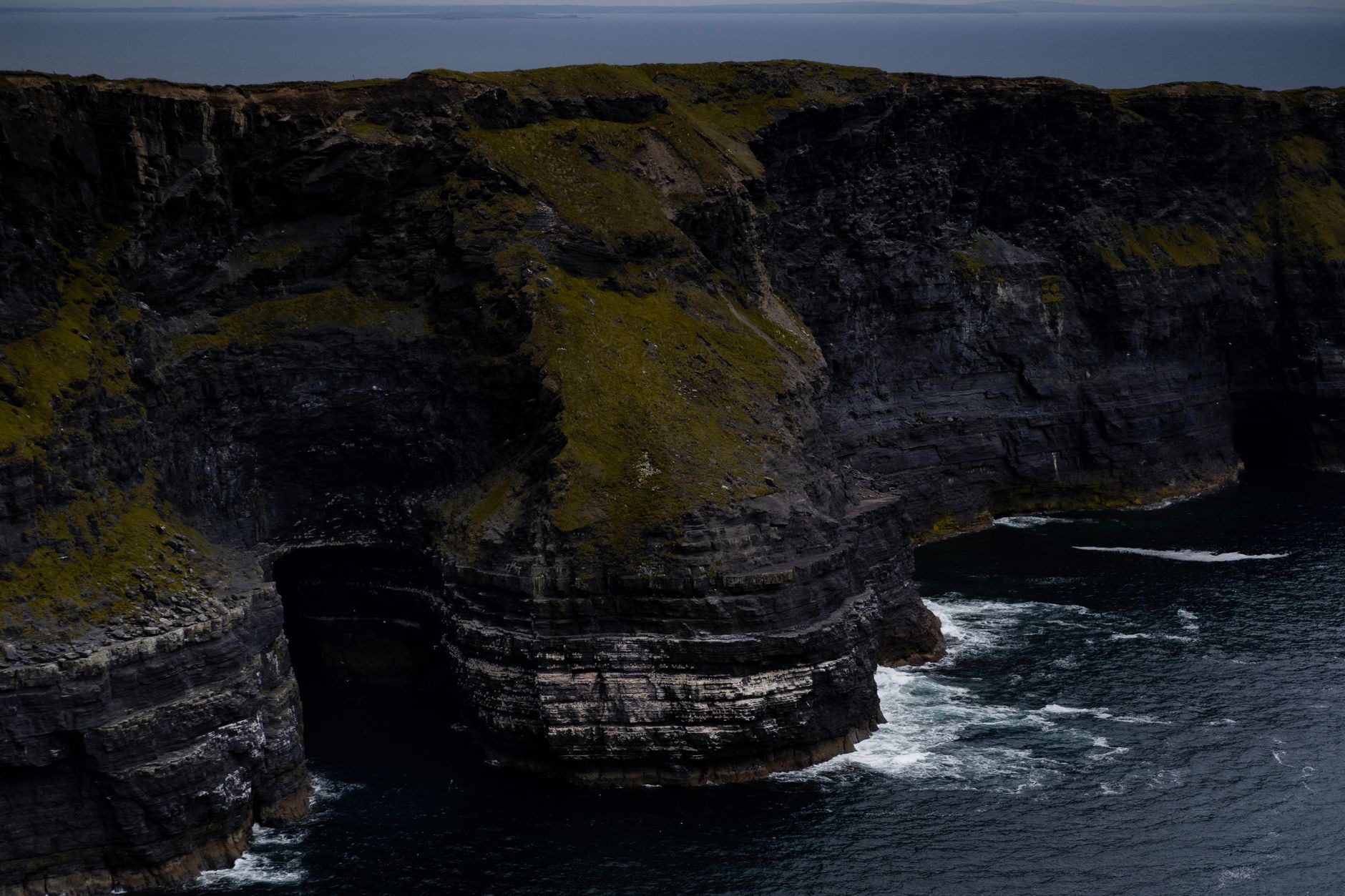
Just five kilometers south of Doolin lie the iconic Cliffs of Moher, stretching for eight unbroken kilometers along the Clare coastline and soaring to a peak height of 214 meters above the crashing surf. While the cliffs are undeniably Ireland’s most famous natural landmark, your timing makes all the difference between an unforgettable communion with nature and a frustrating encounter with tour bus gridlock. Large tour coaches arriving from Dublin and Galway monopolize the main visitor center pathways between 11:00 and 15:30.
By staying overnight in nearby Doolin or Lahinch, you can arrive at the cliffs at 17:30 or take advantage of Ireland’s long summer twilight. At this hour, the parking lots empty, the winds soften, and thousands of nesting seabirds—including puffins, razorbills, and fulmars—wheel across the vertical shale and sandstone ledges against the backdrop of an Atlantic sunset. For an even more immersive perspective, embark on a morning passenger ferry from Doolin Pier, which sails directly along the base of the Great Ravine, looking up at the colossal sheer rock walls from ocean level.
Day 5: Kingdom of Kerry & Dingle
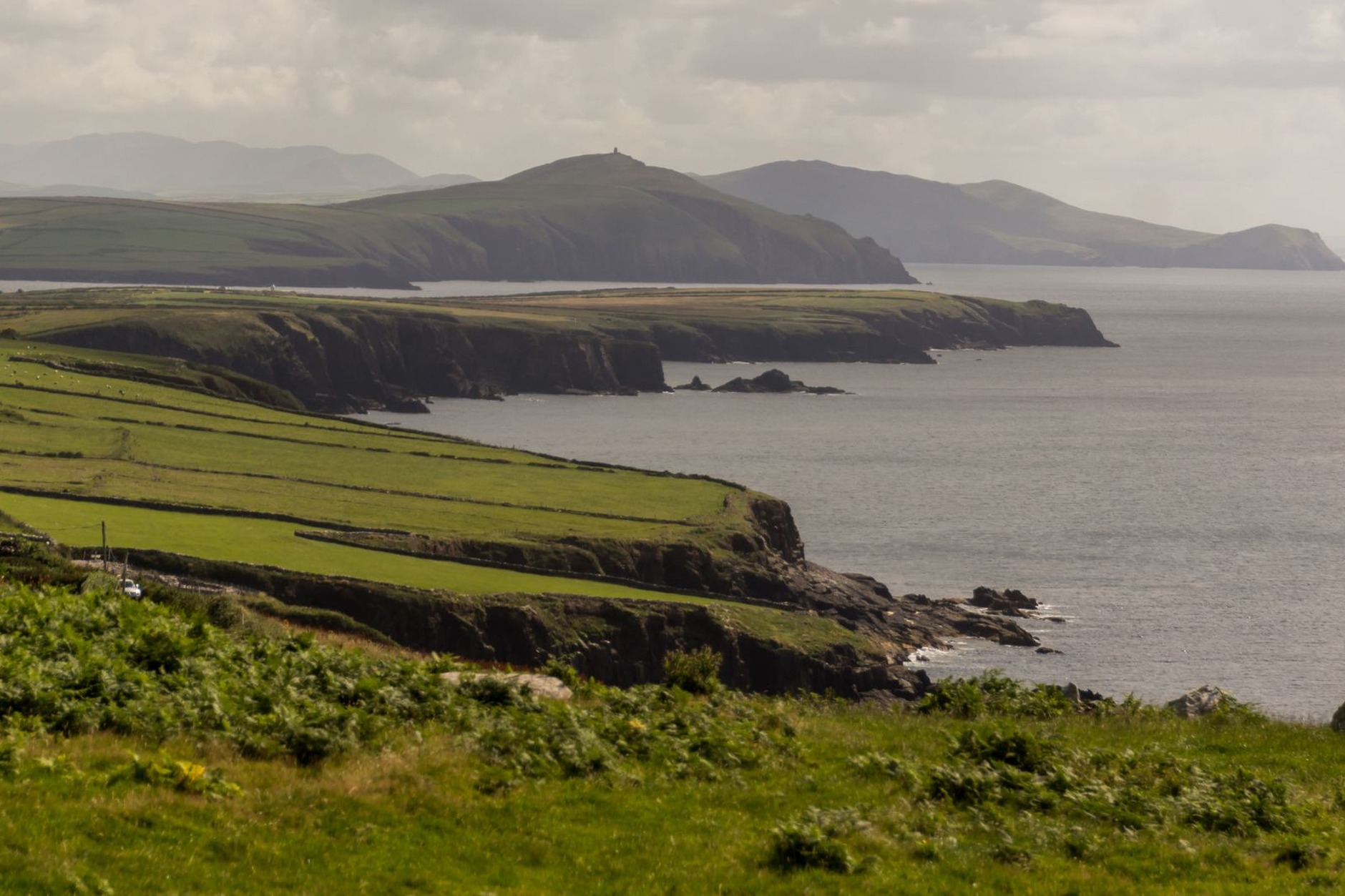
On Day 5, cross the wide estuary of the River Shannon using the convenient Killimer-to-Tarbert vehicle ferry, which shaves nearly 140 kilometers of inland driving off your route to County Kerry. While many travelers reflexively follow the 179-kilometer Ring of Kerry highway, seasoned road trippers know that the neighboring Dingle Peninsula (Corca Dhuibhne) delivers even more spectacular coastal drama with significantly less commercial congestion. The peninsula’s Slea Head Drive (Slí Cheann Sléibhe) wraps around the westernmost tip of mainland Europe, where emerald green farm fields framed by stone fuchsia hedges drop precipitously into turquoise ocean coves.
Along Slea Head, pause to inspect prehistoric drystone beehive huts (clocháin) built by early Christian hermits, and gaze out across the Blasket Sound toward the abandoned Great Blasket Island, evacuated in 1953. In Dingle Town itself, vibrant fishing trawlers unload fresh catches of haddock, monkfish, and crab along the pier. Finish your afternoon with a scoop of sea salt and caramelized brown bread ice cream from Murphy’s, followed by an evening pint at Dick Mack’s or Foxy John’s—unique dual-purpose establishments that operate as working hardware stores and leather craft shops by day, and legendary pubs by night.
Day 6: Lakes & Medieval Fortresses
Heading east on Day 6, make a morning detour through the ancient moss-covered oak woodlands of Killarney National Park. Here, beneath the shadow of Carrauntoohil (Ireland’s highest mountain peak at 1,038 meters), herds of native red deer graze along the lakeshores. Stop to admire the 15th-century stronghold of Ross Castle on Lough Leane, built by the O’Donoghue Mór chieftain, and take a tranquil walk along the forested pathways to Muckross Abbey, where centuries-old yew trees grow inside the roofless cloister courtyard.
From Killarney, drive eastward through the Golden Vale towards County Tipperary, where the landscape flattens into lush, rolling dairy pastures. Rising dramatically above the surrounding plains on a dramatic 60-meter limestone outcrop is the Rock of Cashel, also known as St. Patrick’s Rock. This fortified complex served as the traditional seat of the Kings of Munster for centuries before being gifted to the Church in 1101. The surviving complex features a remarkably intact 12th-century round tower, Cormac’s Chapel with rare Romanesque frescoes, and the soaring, roofless shell of a 13th-century Gothic cathedral whose arched lancet windows frame panoramic vistas of the Tipperary countryside.
Conclude Day 6 in Kilkenny, Ireland’s most atmospheric medieval city. Compact and easily explored on foot, Kilkenny’s historic “Medieval Mile” stretches from the imposing Anglo-Norman stronghold of Kilkenny Castle on the River Nore to the 13th-century Saint Canice’s Cathedral. Climb the 121 steep steps of the cathedral’s adjacent 9th-century Celtic round tower—one of only two in Ireland that visitors are permitted to ascend—for a commanding 360-degree panorama over the city’s slate rooftops, marble limestone lanes, and surrounding green hills.
Day 7: Medieval Marble City & Departure
On Day 7, a straightforward 90-minute drive up the M9 motorway brings you directly back to Dublin Airport. By returning your vehicle at the airport terminal rather than attempting to navigate central city traffic, you avoid urban bottlenecks and save valuable transit time. Settle in for a farewell traditional Irish breakfast or bowl of seafood chowder before boarding your homeward flight, carrying memories of crashing Atlantic swells, warm turf fires, and spontaneous fiddle melodies.
Throughout your coastal journey, navigating remote roads, paying electronic highway tolls, and checking ferry departure schedules requires dependable mobile data. Reliable connectivity ensures you never find yourself stranded on a single-track country lane without mapping or face unexpected administrative penalties after your trip concludes.
Street Smarts & Avoiding Costly Travel Traps
While Ireland is one of the safest and most hospitable countries in Europe, navigating its transportation infrastructure, car rental policies, and popular tourist hubs comes with distinct financial and logistical pitfalls. Being aware of these six common traps will save you hundreds of euros and eliminate unnecessary travel friction:
- The Unregistered M50 Barrier-Free Toll Camera Trap: Dublin’s M50 ring motorway utilizes an all-electronic, barrier-free gantry toll system between Junctions 6 and 7. There are no toll booths to pay with cash or card. Drivers must register and pay the $4.18 toll online at eFlow.ie before 20:00 on the day following the journey. If you fail to pay, eFlow levies an initial $3.95 penalty, followed by an additional $54.23 fine after 14 days, and rental agencies will bill your credit card a non-negotiable $33.89–$56.49 administrative fee on top of the fine. Alternative: Set a recurring phone reminder to pay online at eFlow.ie immediately after passing through the gantry, or confirm that your rental vehicle includes an automated toll transponder.
- Car Rental Super-CDW & Astronomical Security Deposit Extortion: Car rental agencies at Dublin Airport frequently offer rock-bottom base rates online, only to hit incoming international travelers with aggressive upsells at the counter. Unless you purchase their “Super Collision Damage Waiver” insurance for an exorbitant $31.63–$50.84 per day, they will require an active pre-authorization hold of $2.26 to $3.95 on a credit card. Many credit card companies exclude car rental coverage in the Republic of Ireland. If your card is declined or lacks sufficient limit, agents may refuse to release the vehicle without purchasing their top-tier policy. Alternative: Obtain written proof from your credit card company verifying active CDW coverage specifically valid in the Republic of Ireland, or factor comprehensive zero-excess third-party car insurance into your budget beforehand.
- The Left-Hand Drive “Boreen” Blind Curve & Mirror Damage Hazard: Rural Irish secondary and tertiary routes—locally termed “boreens”—are often no wider than a single vehicle, lined on both sides by ancient stone walls concealed beneath dense gorse and bramble hedges. Unprepared foreign drivers accustomed to driving on the right often swerve too far left to avoid oncoming milk trucks or farm tractors, shattering driver-side mirrors or scratching body panels against hidden granite rocks. Rental firms routinely charge $451.92–$903.84 for damaged wing mirrors. Alternative: Always choose the smallest practical compact vehicle when booking, drive cautiously below the posted speed limit on rural roads, and when encountering oncoming vehicles, pull into designated passing cutouts well in advance.
- Temple Bar “Tourist Surcharge” & Late-Night Pint Price Escalation: Dublin’s historic Temple Bar district is renowned for its lively street performers, but it operates with some of the most inflated hospitality prices in Western Europe. Multiple public houses in Temple Bar introduce a tiered pricing structure: a pint of stout costing $8.47 during afternoon hours can surge to $10.73 or $11.86 after 23:00 or when live cover bands perform. Furthermore, sit-down dining menus in the immediate neighborhood charge $27.12–$36.15 for standard pub fare like fish and chips or shepherd’s pie that costs half that price elsewhere. Alternative: Walk 10 minutes south toward Camden Street, Baggot Street, or Stoneybatter, where authentic neighbourhood pubs serve perfectly pulled pints at standard local prices alongside genuine community atmosphere.
- Cliffs of Moher “Per-Passenger” Ticket Exploitation: When driving to the Cliffs of Moher, parking attendants at the main entrance gate assess admission based on the total number of occupants inside the vehicle rather than per car. Visitors arriving without advance bookings are charged the maximum drive-up rate of $13.56 to $16.95 per adult occupant simply to park and walk to the perimeter path. Furthermore, during heavy Atlantic rain squalls, low-hanging clouds completely obscure the cliffs, leaving visitors paying high entrance fees with zero visibility. Alternative: Always check local coastal webcam feeds and Met Éireann weather forecasts before departing. Book timed tickets online at cliffsofmoher.ie at least 24 hours in advance for rates starting at $7.91 per person, or arrive after 17:00 when crowds dissipate and light conditions improve.
- Killarney Jaunting Car “Extended Route” Verbal Markups: Horse-drawn carriages, known as jaunting cars, operate throughout Killarney National Park offering tours to Ross Castle and Muckross Abbey. While licensed drivers (jarveys) are regulated, some operators quote an initial verbal price of $56.49–$67.79 without clarifying that the rate is per person rather than for the carriage, or they take passengers on an unauthorized “extended scenic route” that doubles the final fee upon arrival. Alternative: Explicitly confirm whether the quoted price covers the entire carriage or each individual passenger, agree on the exact destination and duration before stepping into the carriage, or simply rent a bicycle from Killarney town center for $16.95–$22.60 per day to explore the park’s scenic pathways independently.
Staying Connected Across Coastal Ireland
Driving along Ireland’s Atlantic coastline involves remote headlands, sweeping mountain passes, and rural coastal roads where navigational clarity is essential. Having continuous high-speed cellular data lets you run live turn-by-turn navigation through apps like Google Maps and Waze, stay informed about sudden Atlantic weather changes via Met Éireann, verify ferry crossings, and pay electronic tolls without delay.
Instead of searching for a mobile provider shop in central Dublin, paying inflated airport SIM card rates, or enduring punitive international roaming charges from your home carrier, activating an eSIM before your plane touches down ensures immediate connectivity the moment you land.
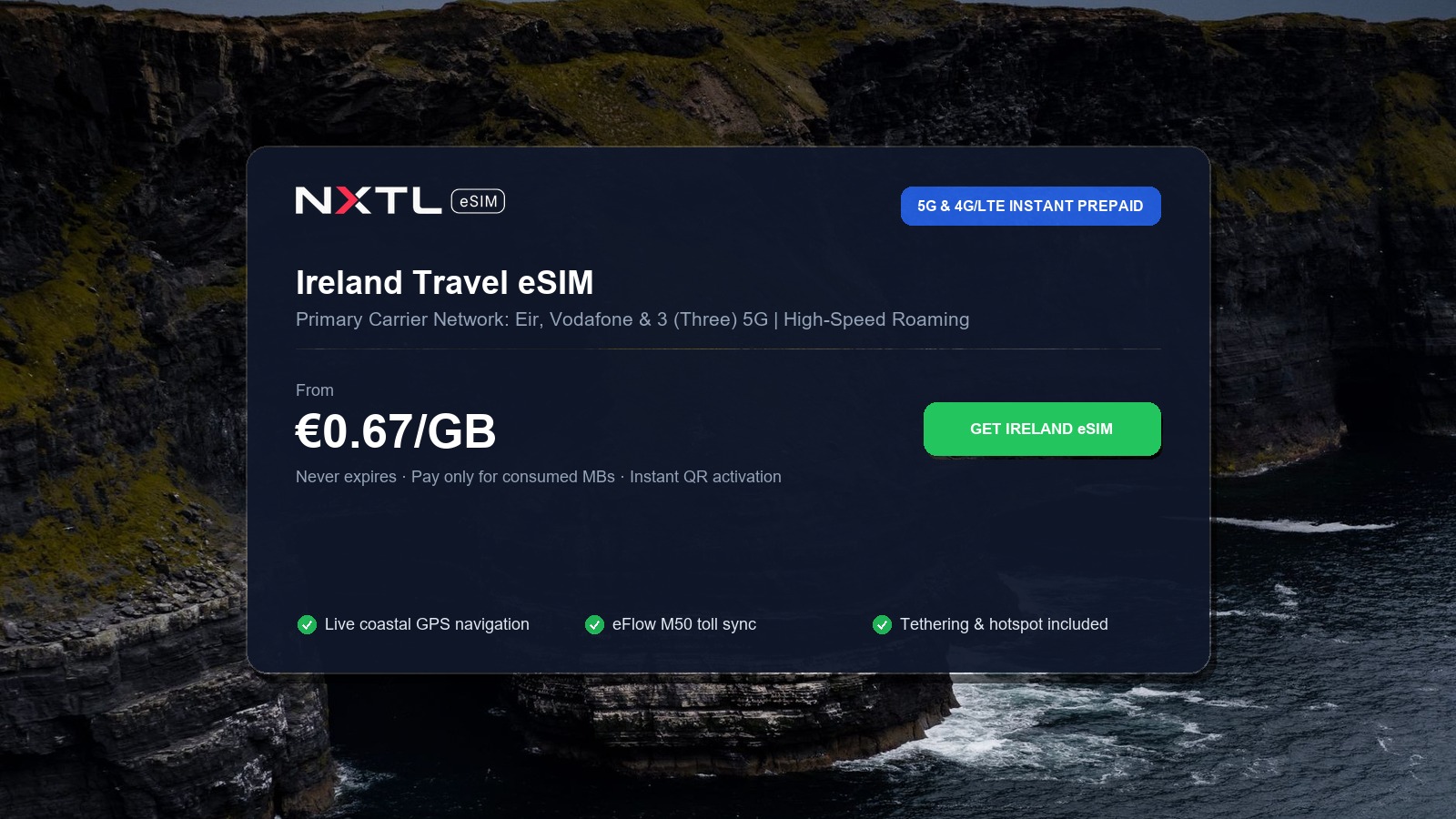
With an NXTL Ireland travel eSIM, travelers connect directly to Ireland’s premier telecommunications infrastructure, including Eir, Vodafone, and 3 (Three) 5G networks. Starting from just $0.76 per gigabyte with no expiration dates, you only pay for the precise mobile data you consume, with full personal hotspot tethering included across all your devices.
| Traveler Data Profile | Estimated Data Usage | Primary Trip Applications | Recommended NXTL Plan |
|---|---|---|---|
| Light Navigator | 1 GB – 3 GB | Google Maps turn-by-turn routing, eFlow toll payments, WhatsApp messaging, restaurant reservations | 1 GB – 3 GB Pay-As-You-Go ($0.76/GB) |
| Active Explorer | 5 GB – 10 GB | Live satellite GPS navigation, Met Éireann weather radars, social media updates, music streaming along coastal drives | 5 GB – 10 GB High-Speed Package |
| Remote Professional | 15 GB – 20 GB+ | Laptop tethering, high-resolution photography uploads, video calls, evening entertainment streaming in rural B&Bs | 20 GB High-Volume Bundle |
By securing seamless cellular connectivity before you depart, avoiding common rental car traps, and focusing your itinerary on the magnificent coastal stretches of the Wild Atlantic Way, your Irish journey will deliver an effortless, richly authentic exploration of emerald headlands, historic stone fortresses, and unforgettable coastal hospitality.