Few European regions capture the imagination quite like Transylvania, yet first-time travelers frequently stumble when planning their transportation logistics. International visitors routinely ask whether they can navigate Romania exclusively by passenger train, picturing scenic rail routes linking gothic castles and alpine villages. While Romania’s state railway (CFR Călători) connects major urban hubs like Bucharest, Brașov, and Cluj-Napoca, rail travel across the Carpathian foothills remains notoriously slow, with passenger trains frequently averaging less than 50 km/h due to winding single-track mountain infrastructure. Furthermore, trains cannot reach the secluded UNESCO-listed Saxon fortified churches of Viscri and Biertan or ascend the legendary high-altitude curves of the Transfăgărășan highway.
To truly experience the wild, untamed beauty of Transylvania, a carefully planned road trip is the undisputed gold standard. By landing at Bucharest Henri Coandă Airport (OTP), spending an initial evening exploring the capital’s historic core, picking up a rental car on departure morning, and driving northward into the Southern Carpathians, you unlock total autonomy. This 7-day Transylvanian road trip weaves through royal mountain palaces, fortified Saxon citadels, pastel-hued baroque town squares, and soaring alpine passes, delivering an unforgettable expedition through one of Europe’s most authentic landscapes.
| Day / Stage | Overnight Base | Key Highlights | Driving & Transit Logistics | Essential Advance Bookings | What to Skip / Save |
|---|---|---|---|---|---|
| Day 1: Little Paris to Old Town | Bucharest (Lipscani or Sector 1) | Palace of the Parliament monumental tour, Stavropoleos Monastery courtyard, historic Lipscani pedestrian lanes, Romanian Athenaeum | Henri Coandă Airport (OTP) to Bucharest Gara de Nord via CFR airport train (20 min, 5.50 RON); pick up rental car on Day 2 | Palace of the Parliament interior guided tour (passport required for entry, book 24–48 hr ahead) | Skip renting a car at OTP airport on arrival; central Bucharest traffic is intense and parking around Lipscani is virtually impossible |
| Day 2: Royal Prahova Valley & Crown City | Brașov (Old Town Core) | Peleș Castle fairytale royal apartments in Sinaia, Pelișor Art Nouveau chateau, drive up Prahova Valley, Brașov Council Square at dusk | Bucharest to Sinaia via DN1/E60 (130 km, 2 hr 15 min); Sinaia to Brașov (50 km, 1 hr 10 min); total driving: 180 km | Peleș Castle ground floor + first floor combined ticket (skip long ticket lines online); purchase mandatory electronic Rovinieta toll pass | Skip visiting Peleș Castle on a weekend afternoon; heavy domestic weekend traffic turns the two-lane DN1 highway through Comarnic into a 4-hour parking lot |
| Day 3: Dracula’s Myth & Saxon Roots | Sighișoara (Citadel) | Bran Castle cliffside ramparts (early morning), Râșnov fortress panorama, UNESCO Viscri village unpaved lanes and fortified church | Brașov to Bran via DN73 (30 km, 45 min); Bran to Viscri via DN13 (80 km, 1 hr 20 min); Viscri to Sighișoara (45 km, 50 min) | Bran Castle early 09:00 entry slot; Viscri fortified church admission pass | Skip paying inflated private parking fees at Bran village entrance; continue 300 meters past the tourist bazaar to find municipal metered spaces |
| Day 4: Fortified Valleys to Saxon Capital | Sibiu (Historic Center) | Sighișoara 14th-century Clock Tower climb, Church on the Hill, Biertan UNESCO fortified church multi-walled complex, Sibiu Bridge of Lies | Sighișoara to Biertan via DJ141B (30 km, 35 min); Biertan to Sibiu via DN14 (80 km, 1 hr 15 min); smooth two-lane paved route | Sibiu hotel parking reservation; Sighișoara Clock Tower museum entry | Skip bypassing Biertan; its triple defensive ring walls and historic 1515 matrimonial lock chamber offer Transylvania’s finest Saxon architecture |
| Day 5: The Transfăgărășan Alpine Ridge | Sibiu or Curtea de Argeș | Transfăgărășan (DN7C) highway hairpin turns, Bâlea Lake glacier basin, Bâlea Waterfall cable car, Vidraru Dam, Curtea de Argeș Monastery | Sibiu to Bâlea Lake via DN1 and DN7C (80 km, 1 hr 45 min); Bâlea Lake to Curtea de Argeș (85 km, 2 hr 15 min); open late June to late Oct | Check CNAIR official road status for DN7C; mountain lodge lunch table at Cabana Bâlea Lac | Skip driving the Transfăgărășan from November to mid-June when the high alpine section is completely buried under snow and blocked by metal gates |
| Day 6: Wallachia to Thermal Rejuvenation | Bucharest (Otopeni Area) | Curtea de Argeș Byzantine royal cathedral, drive along A1 motorway to Bucharest, evening relaxation at Therme București botanical wellness spa | Curtea de Argeș to Pitești via DN73C (35 km, 45 min); Pitești to Bucharest/Otopeni via A1 highway (120 km, 1 hr 20 min) | Therme București Elysium/The Palm admission ticket (reserve timed weekend entry online) | Skip driving into central Bucharest on your final evening; staying near Otopeni allows seamless vehicle return and effortless airport departure |
| Day 7: Open-Air Village Museum & Departure | Henri Coandă Airport (OTP) | Dimitrie Gusti National Village Museum (traditional thatched peasant farmhouses from all Romanian provinces), return vehicle at OTP terminal | Otopeni to Herăstrău Village Museum via DN1 (12 km, 20 min); return to OTP rental car depot (15 min) | Airport departure scheduled after 14:00 to accommodate relaxed morning museum stroll | Skip unlicensed airport curbside taxi touts; return your rental car directly at the designated airport depot with a full fuel tank receipt |
Audience, Seasonality, and the Driving Route
Planning your route along this loop gives you the optimal balance between cultural immersion and comfortable driving. By tackling the winding mountain ascents in the morning and anchoring your evenings in pedestrianized medieval centers, you avoid the fatigue of marathon driving days while savoring Romania’s rich regional culinary traditions.
Day 1: Little Paris to Old Town
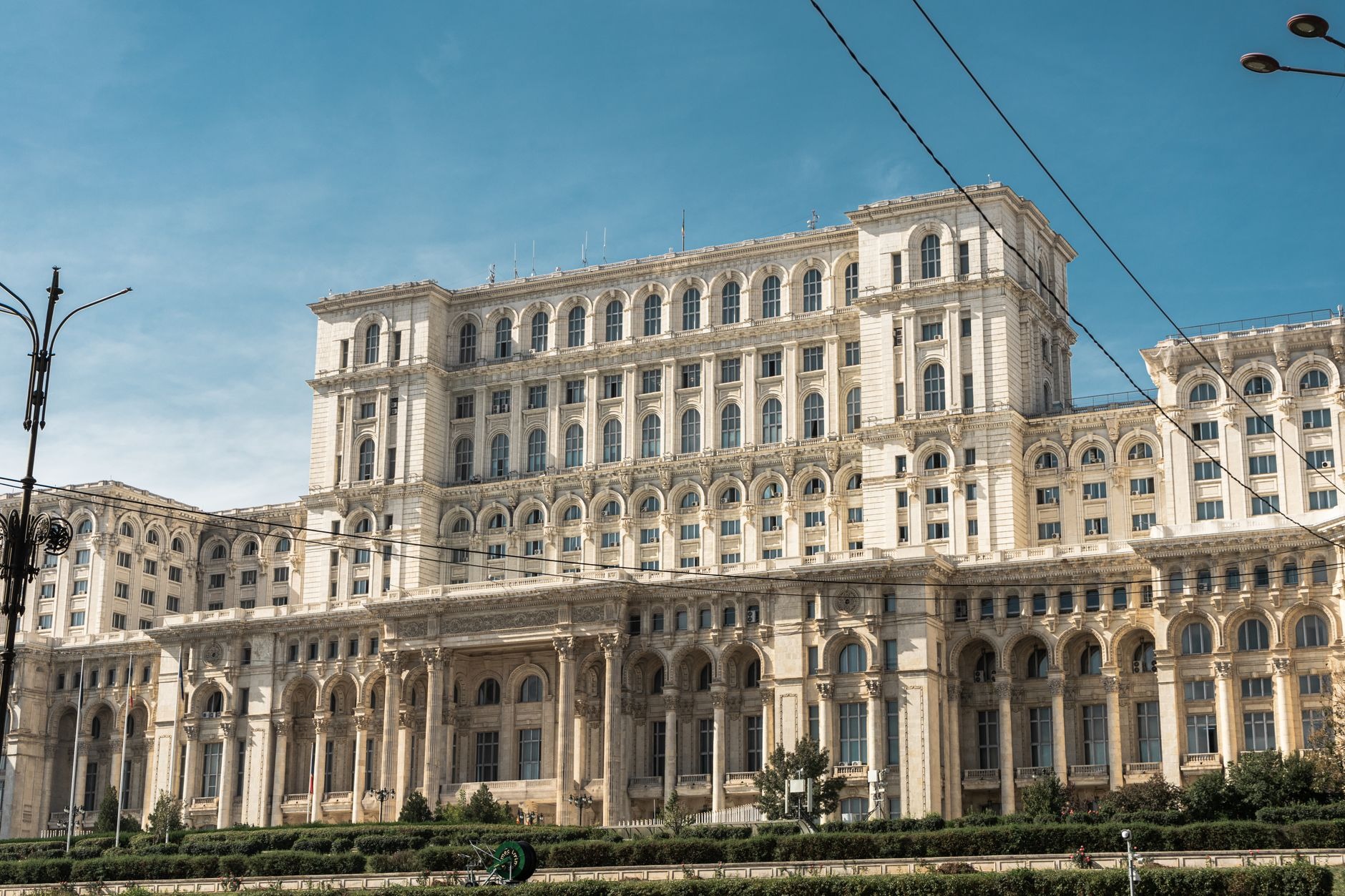
Your journey begins in Bucharest, Romania’s dynamic, contrasting capital once celebrated as the “Little Paris of the East” for its Belle Époque boulevards and bohemian cafes. No structure embodies the country’s turbulent 20th-century history more dramatically than the Palace of the Parliament (Palatul Parlamentului). Conceived by communist dictator Nicolae Ceaușescu following the 1977 earthquake, this megalomaniacal monument spans 365,000 square meters, contains over 1,100 rooms, and consumed millions of tons of native Transylvanian marble, crystal, and oak. Taking an interior guided tour reveals cavernous marble galleries, colossal chandeliers, and silk-woven carpets so vast they had to be woven inside the building itself.
From the communist grandeur of the Civic Center, cross the Dâmbovița River into the historic pedestrian labyrinth of Lipscani (Old Town). Here, narrow cobblestone passages like Strada Smârdan and Strada Franceză hum with outdoor terrace cafes, craft beer pubs, and independent bookshops. Step inside the serene courtyard of the 18th-century Stavropoleos Monastery, an exquisite jewel of Brâncovenesc architecture featuring intricately carved stone columns, oriental arabesques, and tranquil Byzantine choral chants that feel a world away from the surrounding metropolis.
Day 2: Royal Prahova Valley & Crown City
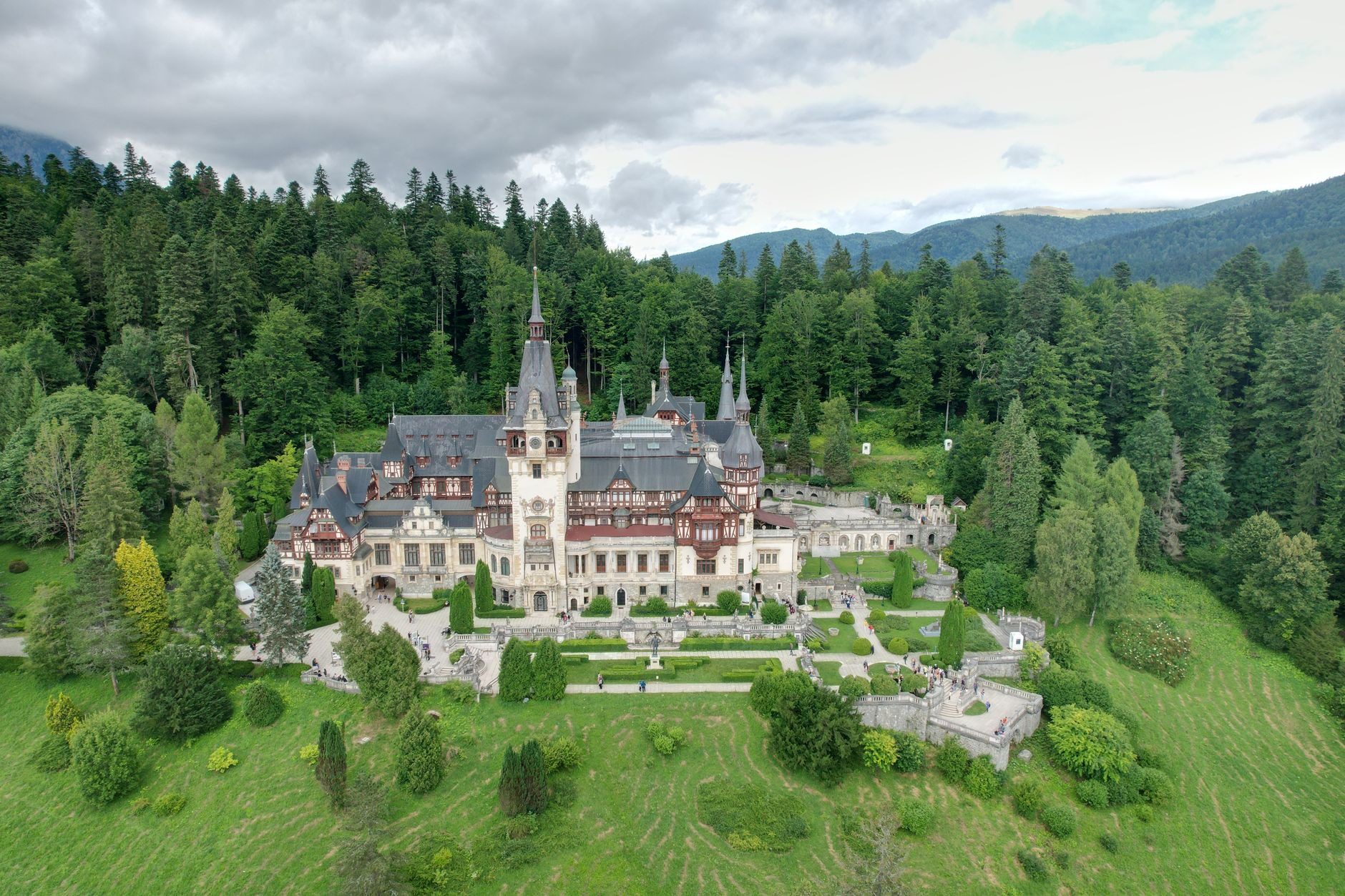
Picking up your rental vehicle on the morning of Day 2, head north along the DN1 highway toward the dramatic forested heights of the Southern Carpathians. Your first major stop is the royal mountain retreat of Sinaia, home to Peleș Castle (Castelul Peleș). Built between 1873 and 1914 as the summer palace for King Carol I, Peleș is universally regarded as one of Europe’s most breathtaking neo-Renaissance residences. Nestled against dense pine forests, its half-timbered alpine facades, sculpted marble terraces, and soaring towers give way to opulent interiors lavishly adorned with German Renaissance woodcarvings, Murano glass mirrors, and priceless collections of historical weaponry.
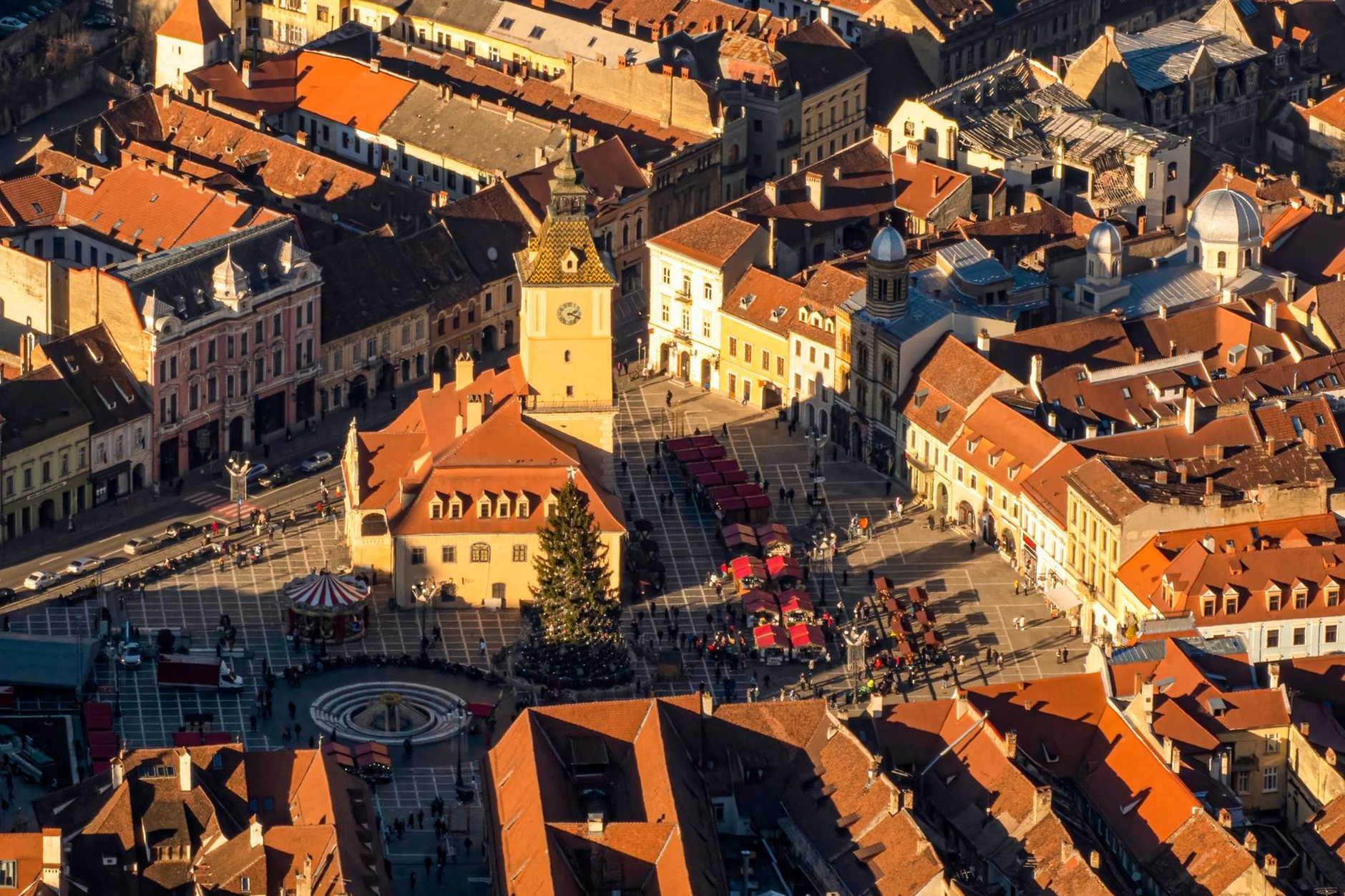
Continuing through the scenic Prahova Valley pass, you descend into Brașov (Kronstadt), one of the seven historic fortified cities founded by Transylvanian Saxon settlers in the 13th century. Centered around the vibrant Piața Sfatului (Council Square), Brașov charms visitors with its pastel-painted baroque townhouses, cobblestone lanes, and dramatic natural amphitheater created by forested Mount Tâmpa. Looming over the square is the monumental Black Church (Biserica Neagră), the largest Gothic hall church east of Vienna, named for its soot-darkened stone walls following the great fire of 1689. Inside, admire its towering 4,000-pipe organ and an extraordinary collection of over 110 antique Anatolian prayer rugs gifted by medieval Saxon merchant guilds.
Day 3: Dracula’s Myth & Saxon Roots
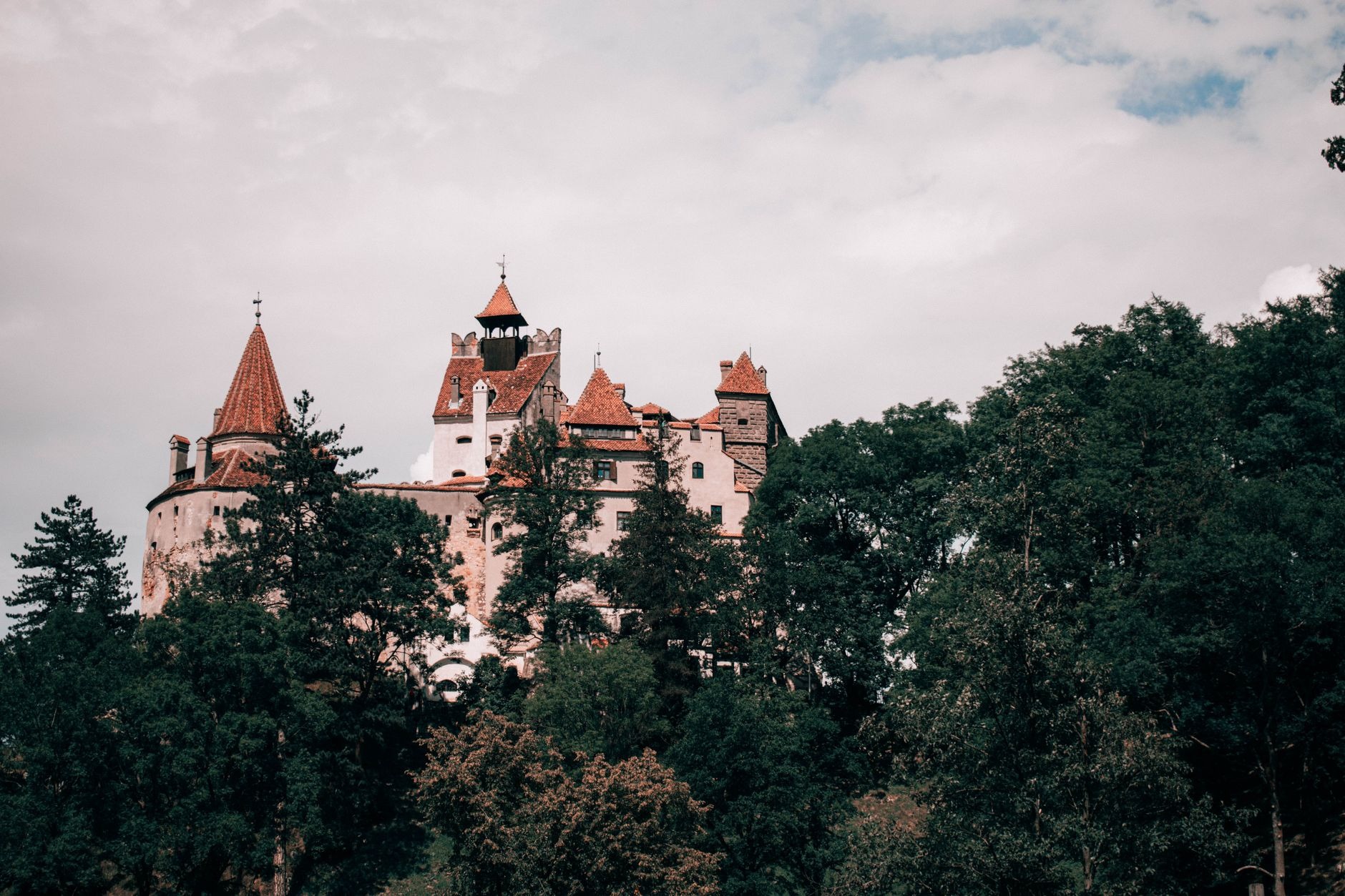
Day 3 takes you thirty kilometers southwest of Brașov to the dramatic rock bluff of Bran Castle, internationally renowned as the mythical stronghold of Count Dracula. While Bram Stoker never visited Romania and historical links between the fortress and Prince Vlad the Impaler (Vlad Țepeș) are tenuous, the 14th-century castle itself is architecturally spectacular. Its whitewashed courtyards, narrow secret staircases carved into sheer rock, and timbered ramparts command sweeping views across the forested mountain gorge that once marked the border between the Kingdom of Hungary and the Principality of Wallachia. Arrive promptly at 09:00 to explore the interior before tour bus crowds arrive from the capital.
Leaving Bran behind, escape the commercial tourist circuit by driving northwest into the timeless rural landscape of the Saxon heartlands. Detour along unpaved country tracks into the secluded village of Viscri (Deutschweißkirch), protected as a UNESCO World Heritage site and famously championed by King Charles III for its traditional heritage preservation. In Viscri, dirt lanes are lined with pastel blue and pale green 18th-century peasant homesteads, where horse carts still transport hay from surrounding meadows. Walk up the village hill to the 12th-century Viscri Fortified Church, climbing its narrow wooden defensive bastions for an uninterrupted vista over the rolling, wildflower-strewn pastures of rural Transylvania.
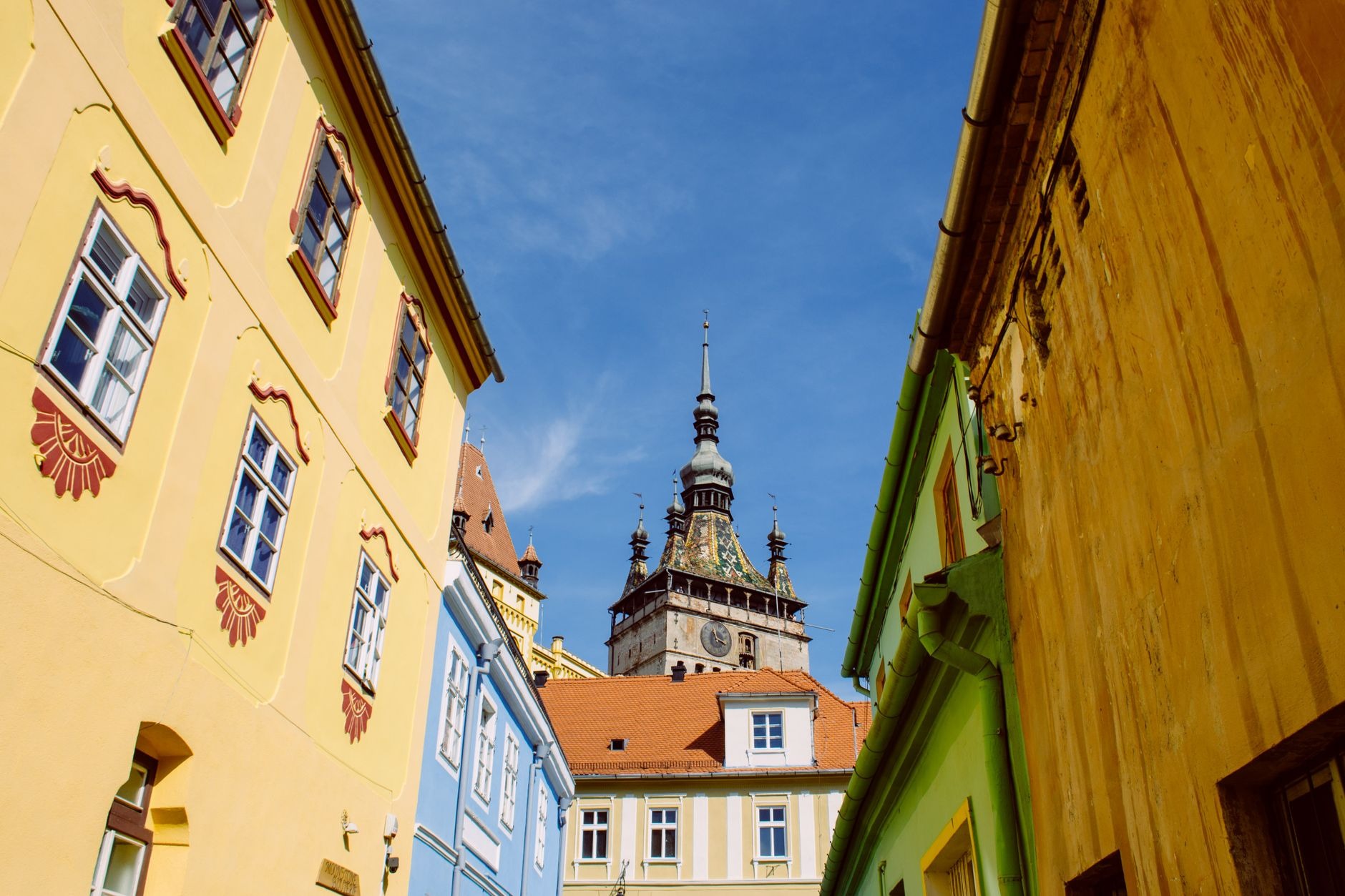
Conclude Day 3 in Sighișoara (Schässburg), one of the best-preserved inhabited medieval citadels in Europe. Perched on a forested hilltop above the Târnava Mare River, Sighișoara looks like a scene lifted directly from a fairytale illustration. Pass through the defensive gate beneath the 64-meter Clock Tower (Turnul cu Ceas), whose colorful enameled roof tiles and animated wooden clock figurines have greeted travelers since 1360. Walk the atmospheric cobblestone alleys past pastel-painted houses, including the yellow house on Piața Muzeului where Vlad the Impaler was born in 1431 during his father’s royal exile.
Climb the 178 wooden steps of the covered Scholars’ Stairs (Scara Acoperită), built in 1642 to shelter schoolchildren during bitter winter blizzards, reaching the plateau of the Church on the Hill. Here, quiet Gothic vaults open onto the historic Saxon cemetery, where centuries of carved stone graves lie sheltered beneath ancient linden trees. As evening settles over the citadel, dine in courtyard taverns on rustic Transylvanian specialties like goulash stew served inside crusty rye bread bowls, accompanied by a glass of regional Fetească Neagră red wine.
Day 4: Fortified Valleys to Saxon Capital
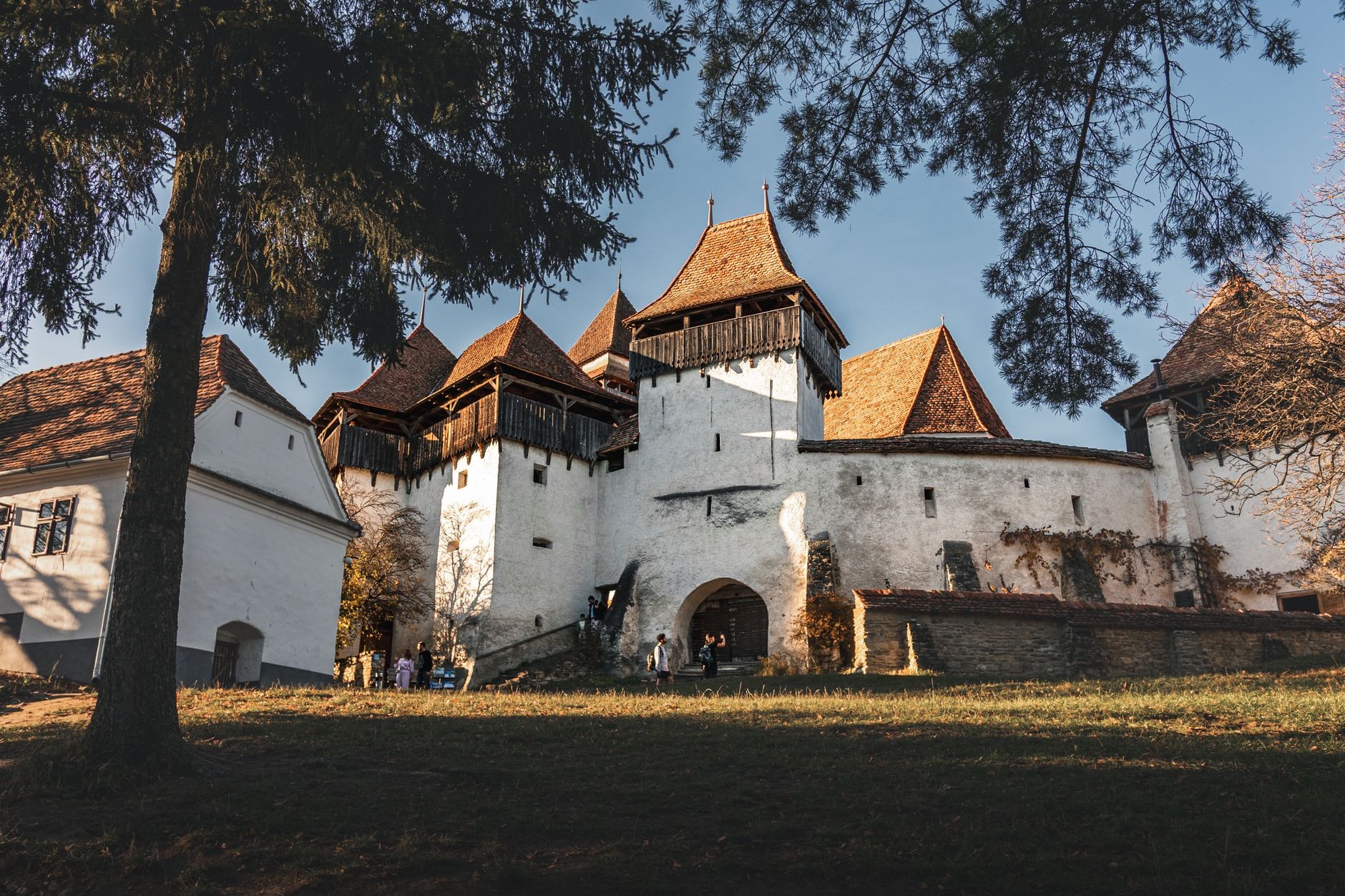
On Day 4, drive westward through winding vineyard valleys to Biertan, the most formidable of all Transylvania’s fortified church complexes. Established as the seat of the Transylvanian Saxon Lutheran Bishop from 1572 to 1867, Biertan’s towering late-Gothic hall church is surrounded by three concentric rings of stone ramparts, six defensive towers, and three bastions designed to withstand prolonged Ottoman sieges. Step inside the treasury room to inspect the ingenious 1515 sacristy door lock—a masterpiece of medieval engineering that moves 19 separate iron bolts simultaneously with the turn of a single key. Outside in the churchyard, visit the charming “matrimonial prison,” where quarreling couples seeking divorce were locked together for two weeks with only a single bed, table, chair, and spoon, resulting in only one recorded divorce over three centuries.
In the afternoon, continue southwest to Sibiu (Hermannstadt), widely celebrated as Transylvania’s most culturally sophisticated city and European Capital of Culture in 2007. Divided into an aristocratic Upper Town and a picturesque working-class Lower Town, Sibiu’s defining architectural signature is the famous “eyes of Sibiu”—eyelid-shaped dormer attic ventilation windows set into steep terracotta tile roofs that seem to quietly observe every passerby in the grand cobblestone expanses of Piața Mare and Piața Mică. Cross the historic cast-iron Bridge of Lies (Podul Minciunilor), where local folklore claims the bridge will creak and collapse if a dishonest traveler crosses, before enjoying an evening concert or outdoor dinner along the medieval fortress wall towers of Strada Cetății.
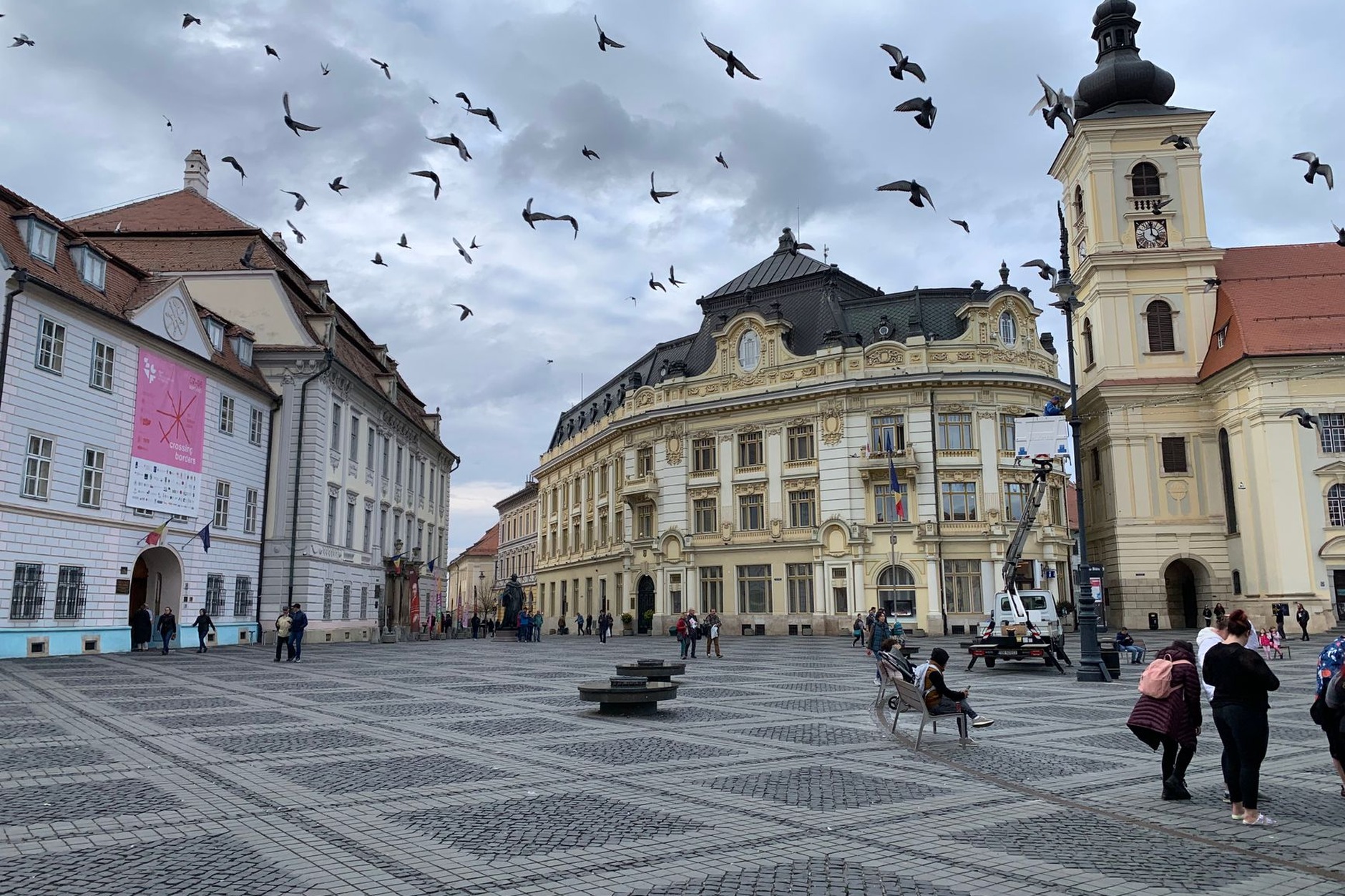
Walking through Sibiu’s Lower Town reveals quiet artisan courtyards, medieval defensive towers, and winding stair passages connecting back to the historic Upper Town ramparts. The city’s walkable historic fabric, artisan bakeries, and flourishing cafe culture make it one of Transylvania’s most thoroughly enjoyable urban bases before ascending into the high alpine zones.
Day 5: The Transfăgărășan Alpine Ridge
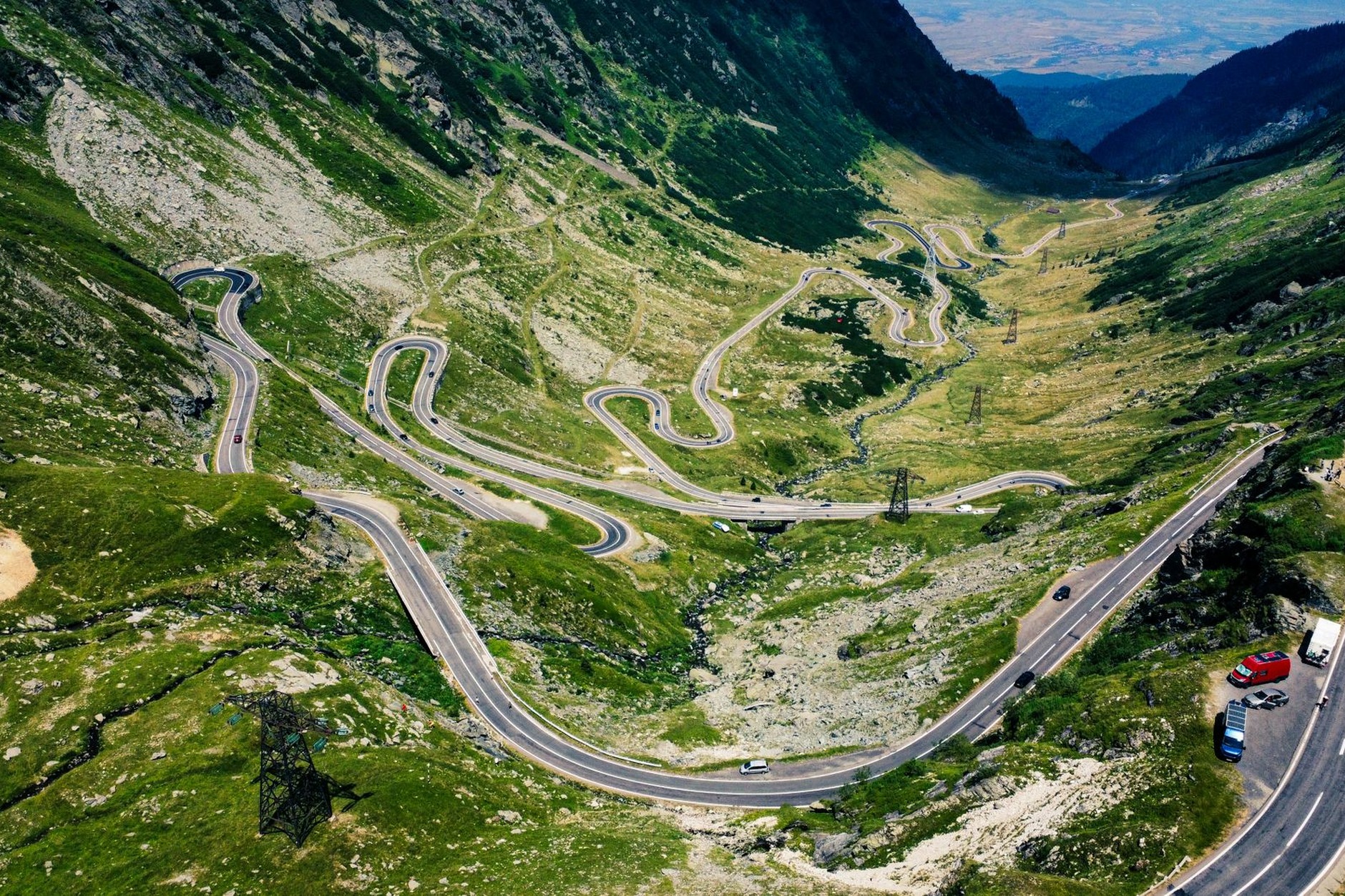
Day 5 brings the undisputed highlight of your driving journey: tackling the Transfăgărășan (DN7C) highway. Built between 1970 and 1974 under Nicolae Ceaușescu as a strategic military route across the colossal Făgăraș Mountains in response to the 1968 Soviet invasion of Czechoslovakia, this 90-kilometer engineering triumph was famously dubbed “the best driving road in the world” by Top Gear. Ascending from the Transylvanian plateau, the road snakes through dramatic granite canyons, roaring waterfalls, and endless series of tight switchbacks before reaching Bâlea Lake (Lacul Bâlea), a pristine glacial lake resting at 2,034 meters elevation.
After navigating the dark 884-meter summit tunnel slicing straight through the mountain ridge, you emerge into Wallachia on the southern slope of the Carpathians, descending past the sheer 166-meter curved concrete wall of the massive Vidraru Dam and the authentic cliffside fortress of Poenari. Conclude your mountain crossing in the historic royal capital of Curtea de Argeș, home to the breathtaking 16th-century Cathedral of Curtea de Argeș, renowned for its twisted limestone cupolas and Moorish-Byzantine ornamentation where Romania’s royal kings and queens lie interred.

Day 6: Wallachia to Thermal Rejuvenation
On Day 6, a fast cruise down the A1 motorway brings you back to the northern outskirts of Bucharest. Before your departure, treat yourself to an afternoon at Therme București near Otopeni Airport—the largest indoor botanical thermal wellness complex in Europe. Relaxing in mineral-rich thermal pools surrounded by over 800,000 living palm trees, botanical orchids, and themed saunas provides the ultimate rejuvenation after days of navigating mountain passes.
Day 7: Open-Air Village Museum & Departure
On Day 7, conclude your trip with a tranquil morning walk through the Dimitrie Gusti National Village Museum on the shores of Lake Herăstrău. This remarkable open-air ethnographical museum showcases over 300 authentic timber peasant homesteads, thatched windmills, wooden churches, and watermills transported piece by piece from Maramureș, Moldavia, Transylvania, and the Danube Delta. Return your vehicle at Otopeni Airport rental depot, carrying memories of mist-shrouded mountain passes, centuries-old Saxon ramparts, and warm Romanian hospitality.
Street Smarts & Avoiding Costly Romanian Travel Traps
Romania is exceptionally welcoming and safe, with low rates of violent crime. However, driving conditions, bureaucratic road regulations, and popular tourist hubs come with specific logistical traps that can quickly ruin a vacation budget. Keep these six localized pitfalls in mind:
- The Mandatory Rovinieta Electronic Toll Camera Trap: Driving on any national road (DN) or highway (A) in Romania requires an electronic road vignette called a Rovinieta. Unlike countries with physical toll booths, Romania’s National Road Infrastructure Administration (CNAIR) operates dozens of automated camera gantries equipped with optical license plate recognition. Many car rental companies at Otopeni Airport do not include the Rovinieta in their base rates and fail to inform foreign drivers. Driving past a camera without an active pass triggers automated statutory fines of a cash sum per occurrence. Alternative: Immediately upon picking up your rental vehicle, purchase an official 7-day or 30-day Rovinieta online directly from the official state portal (erovinieta.ro) for less than a cash sum, saving proof of purchase on your phone.
- Transfăgărășan High Alpine Seasonal Snow Closures: Foreign drivers frequently rely on standard mapping apps that plot routes over the Transfăgărășan (DN7C) between November and late June. In reality, the high alpine section between Piscu Negru (km 104) and Bâlea Cascadă (km 130) is legally closed to all vehicle traffic for nearly eight months of the year due to massive snowdrifts, avalanche risk, and rockfalls, blocked by locked iron gates. Motorists who ignore physical warning signs face steep police fines and costly emergency towing. Alternative: Verify live road conditions on the official CNAIR portal (cnadnr.ro) before setting out. If traveling between November and June, take the picturesque low-altitude Olt Valley Gorge route (DN7) to cross between Transylvania and Wallachia instead.
- The Bran Castle “Dracula Hype” & Unofficial Parking Shakedown: Approaching Bran village on summer mornings, drivers encounter men in fluorescent vests waving orange flags directing cars into dusty, unpaved private dirt lots, aggressively demanding a cash payment. Furthermore, visitors who arrive between 11:00 and 15:00 face claustrophobic 90-minute queues in tight interior corridors, only to discover Queen Marie of Romania’s restored royal furniture rather than any vampire exhibits. Alternative: Bypass aggressive street parking touts and drive 300 meters past the main entrance to use the official municipal parking machines (around hour). Arrive right at the 09:00 opening bell, purchase your ticket online in advance, and manage your expectations regarding the castle’s true historical role as a royal residence.
- Rural Horse-Drawn Carts (Căruțe) & Aggressive Two-Lane Passing: While driving through rural Transylvania, you will frequently encounter horse-drawn wooden carts (căruțe) hauling timber or hay. These carts often lack reflective tape or taillights, making them nearly invisible on unlit country roads after dusk. In response, local motorists frequently execute high-risk, high-speed passing maneuvers across double solid lines around blind curves on narrow two-lane national roads like the DN1 and DN13. Alternative: Strictly avoid driving long distances after nightfall in rural areas. When encountering slow-moving farm vehicles or livestock, remain patient, maintain a generous following distance, and pass only when visibility is 100% clear with dashed road markings.
- The Otopeni Airport “Pirate Taxi” Terminal Arrivals Trap: Walking through the arrivals hall at Bucharest Henri Coandă Airport (OTP), tourists are repeatedly approached by aggressive freelance drivers whispering “Taxi, boss? Good price.” These unlicensed operators lead unsuspecting travelers to unmarked cars in secondary parking lots, demanding exorbitant flat rates of a cash sum for a ride into Bucharest center that should cost a cash sum. Alternative: Completely ignore curbside touts. Inside the arrivals terminal, use the automated yellow touchscreen kiosks to summon a licensed, metered taxi from a reputable company (such as Speed Taxi or Cristaxi) with a printed ticket showing car number and arrival time, or use licensed ride-hailing apps like Uber and Bolt from the designated upper-level pickup zone.
- Restaurant Bread, Condiment & Water “Silent Add-Ons”: In traditional rustic restaurants across Transylvania, waiters will place wooden baskets of sliced bread, small bowls of garlic sauce (mujdei), and sealed glass bottles of mineral water on your table before taking your food order. Many foreign diners assume these items are complimentary hospitality. However, upon receiving the bill, you will find each item billed separately, often adding a cash sum to your meal. Alternative: If you do not intend to consume the bread, garlic sauce, or bottled water, politely ask the server to remove them immediately when they are brought to your table, or review your itemized bill before presenting your payment card.
Staying Connected Across the Transylvanian Highways
Driving through the rugged topography of the Carpathian Mountains, negotiating narrow village bypasses, and keeping track of dynamic alpine weather conditions demands continuous, dependable cellular connectivity. Reliable mobile data enables you to navigate tricky hairpin turns via GPS, purchase mandatory digital road vignettes on the fly, translate Romanian restaurant menus and road signs, and access live emergency services should mountain weather shift unexpectedly.
Rather than wasting valuable vacation hours searching for mobile carrier shops in central Bucharest, navigating passport registration procedures at local kiosks, or facing shocking daily international roaming charges from home cellular providers, configuring a digital eSIM prior to landing guarantees immediate network access the second your plane touches down at Otopeni.
With an NXTL Romania travel eSIM, travelers connect directly to Romania’s world-class telecommunications infrastructure, including DIGI, Orange, and Vodafone 5G networks. Starting from just $0.75 per gigabyte with zero expiration dates, you enjoy lightning-fast download speeds, full mobile hotspot tethering, and transparent pay-as-you-go pricing across all your devices.
| Traveler Data Profile | Estimated Data Usage | Primary Trip Applications | Recommended NXTL Plan |
|---|---|---|---|
| Road Navigator | 1 GB – 3 GB | Google Maps & Waze turn-by-turn routing, Rovinieta electronic toll purchases, WhatsApp messaging | 1 GB – 3 GB Pay-As-You-Go ($0.75/GB) |
| Transylvanian Explorer | 5 GB – 10 GB | Carpathian mountain weather radar, social media video sharing, photo uploads, live translation of historical markers | 5 GB – 10 GB High-Speed Package |
| Digital Road Nomad | 15 GB – 20 GB+ | Laptop tethering across boutique Saxon guesthouses, remote video calls, continuous high-definition media streaming | 20 GB High-Volume Bundle |
By securing dependable mobile connectivity before you depart, planning your mountain crossings around seasonal highway openings, and avoiding airport transit traps, your Romanian road adventure will deliver an extraordinary, deeply authentic exploration of one of Europe’s most enchanting cultural frontiers.