Uzbekistan is the beating heart of the ancient Silk Road, where turquoise-tiled madrasahs, soaring minarets, and desert trading domes rise dramatically against the sands of Central Asia. Yet many first-time travelers attempt an exhausting overland marathon: trying to drive thousands of kilometers across the Kyzylkum Desert to reach the remote Aral Sea ship graveyard, Khiva, Bukhara, and Samarkand inside a single week. That hurried plan turns a magical journey into endless hours bumping along unpaved desert highways in secondhand Daewoo sedans.
The definitive first journey is an 8-day oasis spine route powered by the modern Afrosiyob high-speed tilting train. Starting in the cosmopolitan capital of Tashkent, you speed west across irrigated steppe to the turquoise domes of Samarkand, continue into the living medieval clay quarter of Bukhara, and make a dedicated flight or sleeper extension to the open-air mudbrick citadel of Khiva. This route delivers iconic architecture, legendary Silk Road hospitality, and rich culinary traditions with modern transit comfort.
The 8-Day Uzbekistan Silk Road Itinerary at a Glance
| Day / Stage | Overnight Base | Key Highlights | Transit & Route Logistics | Essential Advance Bookings | What to Cut / Save |
|---|---|---|---|---|---|
| Day 1: Soviet Grandeur & Domed Bazaars | Tashkent | Chorsu Bazaar under turquoise dome, ornate Tashkent Metro chandeliers, Khast Imam square (7th-century Quran) | Tashkent Airport (TAS) to center via Yandex Go app (15 min, 25,000 UZS); subway via contactless bank card | Book Afrosiyob rail tickets exactly 45 days in advance via railway.uz; domestic flight to Urgench | Skip street money changers outside bazaars; official bank ATMs dispense crisp US dollars and Uzbek Som |
| Days 2–3: The Jewel of Samarkand | Samarkand | Afrosiyob high-speed rail, Registan illuminated squares, Shah-i-Zinda cobalt avenue, Gur-e-Amir mausoleum | Tashkent to Samarkand via Afrosiyob bullet train (2 hr 15 min); city transit via Yandex Go or walking | Afrosiyob rail seat; evening Registan light-show ticket; dinner at Platan restaurant | Skip buying cheap modern souvenir carpets in Registan madrasah courtyards; visit certified silk workshops |
| Days 4–5: Medieval Oasis of Bukhara | Bukhara | Poi Kalyan minaret, Ark citadel fortress, 16th-century domed trading bazaars, Chor Minor four towers, Lyabi-Khauz pool | Samarkand to Bukhara via Afrosiyob train (1 hr 35 min); historic Bukhara is completely pedestrianized | Afrosiyob rail ticket; Hammam Bozori Kord 16th-century bathhouse session | Skip booking expensive hotel excursions; Bukhara’s historic center is best explored slowly on foot |
| Days 6–7: Desert Citadel of Khiva | Khiva (Itchan Kala) | Walled mudbrick citadel of Itchan Kala, turquoise Kalta Minor minaret, Juma Mosque carved elm pillars, Islam Khodja view | Bukhara to Khiva via Sharq train (6 hr) or domestic flight via Urgench; stay inside ancient city gates | Itchan Kala unified multi-day museum pass; evening sunset rooftop access at Kuhna Ark | Skip long 8-hour taxi drives across the bumpy Kyzylkum desert; air-conditioned daytime trains or flights are safer |
| Day 8: Silk Road Farewell & Departure | Tashkent Departure | Morning flight from Urgench to Tashkent, artisan ceramics shopping, departure via Tashkent International Airport | Urgench (UGC) to Tashkent (TAS) via Uzbekistan Airways (1 hr 20 min); airport transfer via Yandex Go | Domestic flight UGC to TAS; schedule international flight at least 3.5 hours after domestic arrival | Skip exchanging Uzbek Som back to foreign cash at airport gates; bank exchange counters in town give better rates |
Relying on the electrified Afrosiyob railway transforms travel in Uzbekistan. Instead of enduring twelve-hour desert car drives on bone-rattling asphalt, you glide smoothly at 250 km/h between ancient oases in climate-controlled comfort with complimentary tea service.
Tashkent: Underground Palaces & Chorsu Bazaars (Day 1)
Your journey begins in Tashkent, a fascinating metropolis where broad Soviet boulevards, brutalist concrete monuments, and ancient Islamic colleges intersect. After a devastating 1966 earthquake leveled the city, architects from across the Soviet republics rebuilt Tashkent with seismic-resistant engineering and ambitious civic grandeur.
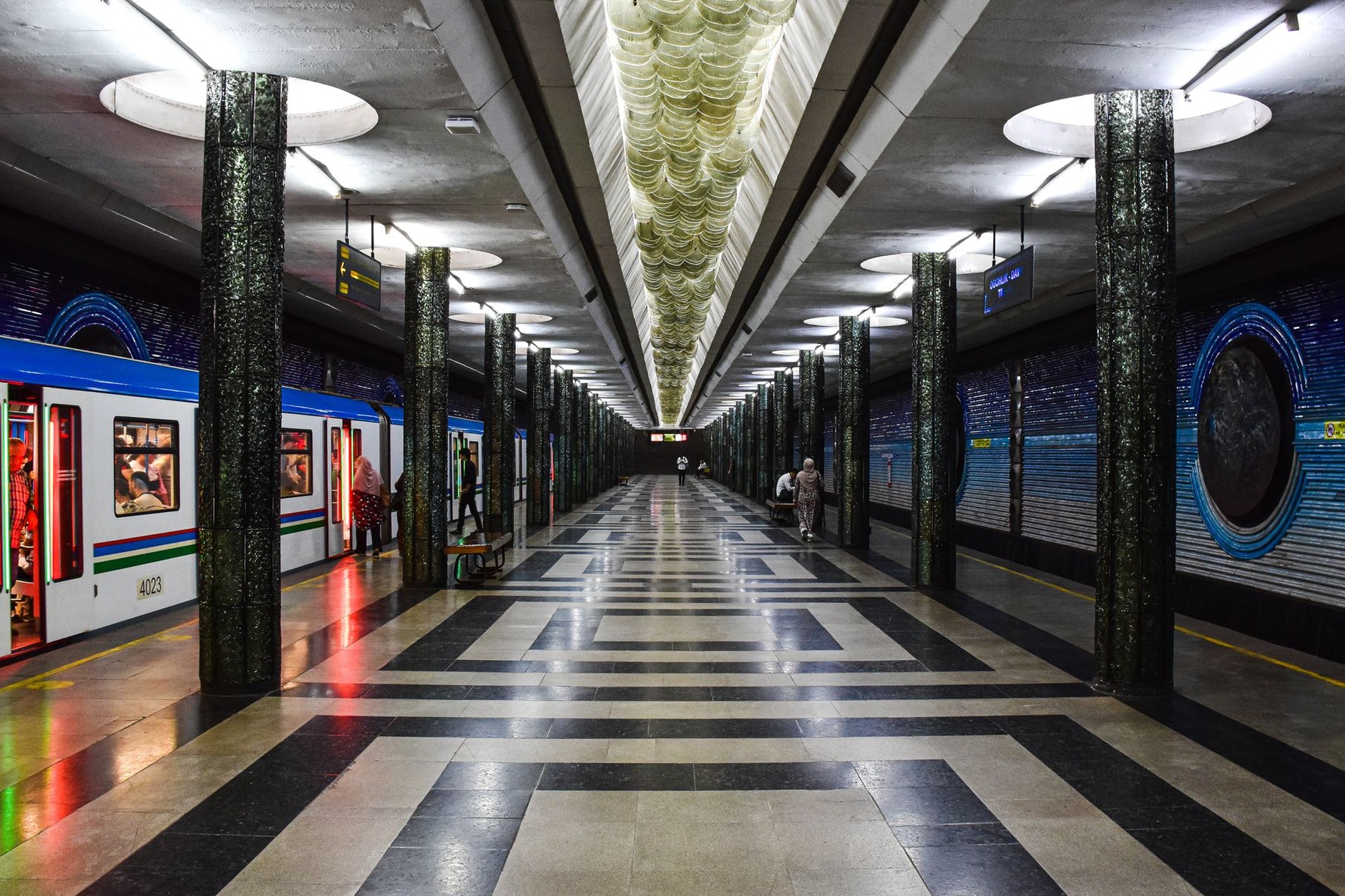
Descend into the Tashkent Metro, Central Asia’s first underground railway. Opened in 1977, each station is a palatial architectural showcase of carved marble, ceramic bas-reliefs, and brass chandeliers. Visit *Alisher Navoi* station, styled like a vaulted blue mosque with floral domes, and *Kosmonavtlar*, an ethereal tribute to Soviet space exploration with dark sapphire glass medallions honoring Yuri Gagarin and Valentina Tereshkova.
Above ground, explore the legendary Chorsu Bazaar, crowned by a monumental turquoise-tiled brutalist concrete dome measuring 60 meters in diameter. Underneath this dramatic canopy, three tiers of sensory commerce unfold.
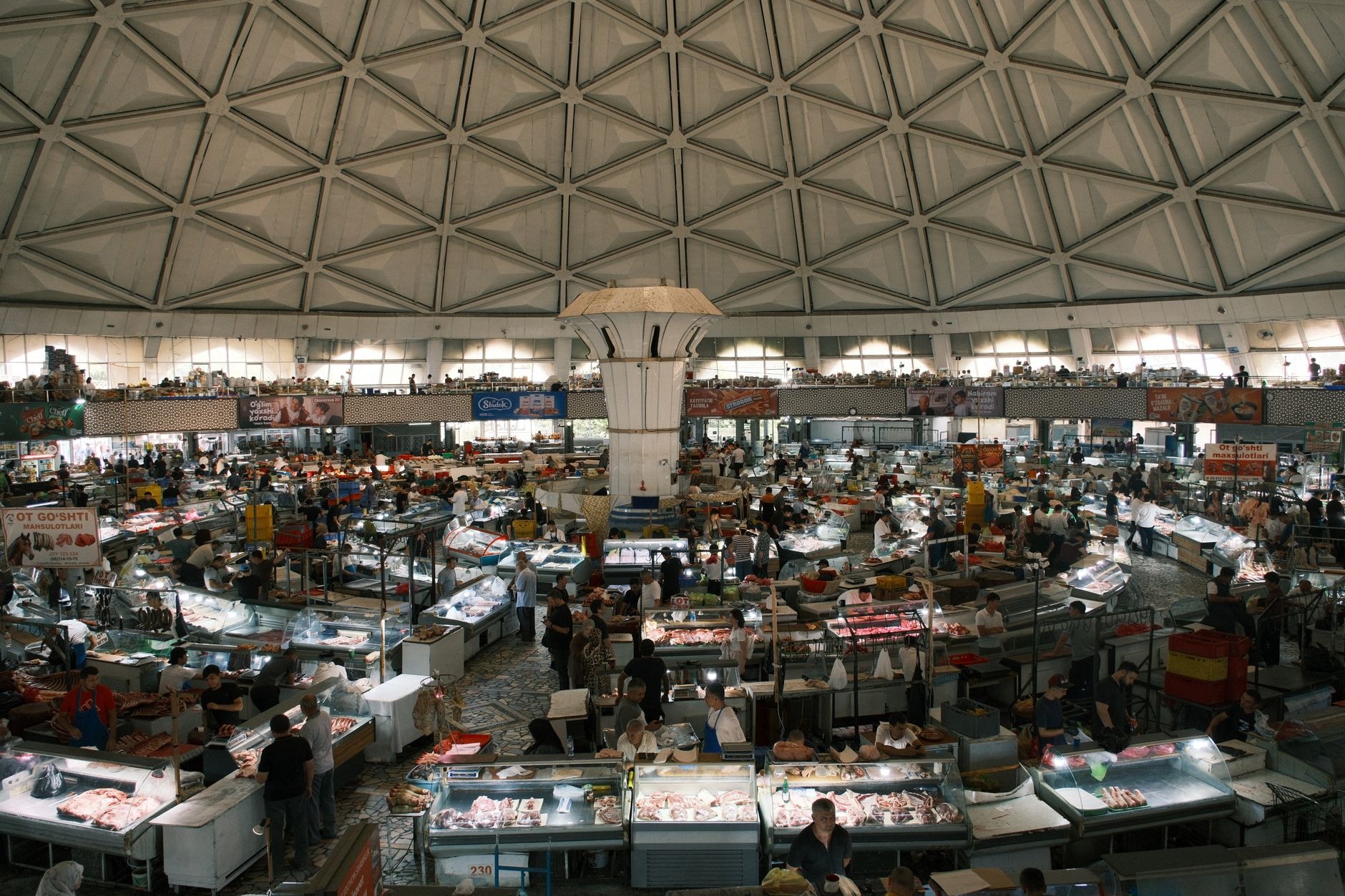
Walk past pyramids of fragrant dried apricots, golden sultanas, pistachios, and mountain cumin, pausing to watch bakers slap round non flatbreads onto the fiery clay walls of outdoor tandoor ovens. In the old city quarter of Sibzar, visit Khast Imam square to view the 7th-century Uthman Quran (Samarkand Kufic Quran), one of the oldest surviving written Qurans on earth, stained with the blood of the third Caliph Uthman.
Samarkand: Afrosiyob High-Speed Rail & Turquoise Domes (Days 2–3)
On Day 2, board the sleek Afrosiyob bullet train at Tashkent Northern Station. In just two hours and fifteen minutes, the train covers 344 kilometers of Central Asian steppe, arriving at the historic crossroads of Samarkand.

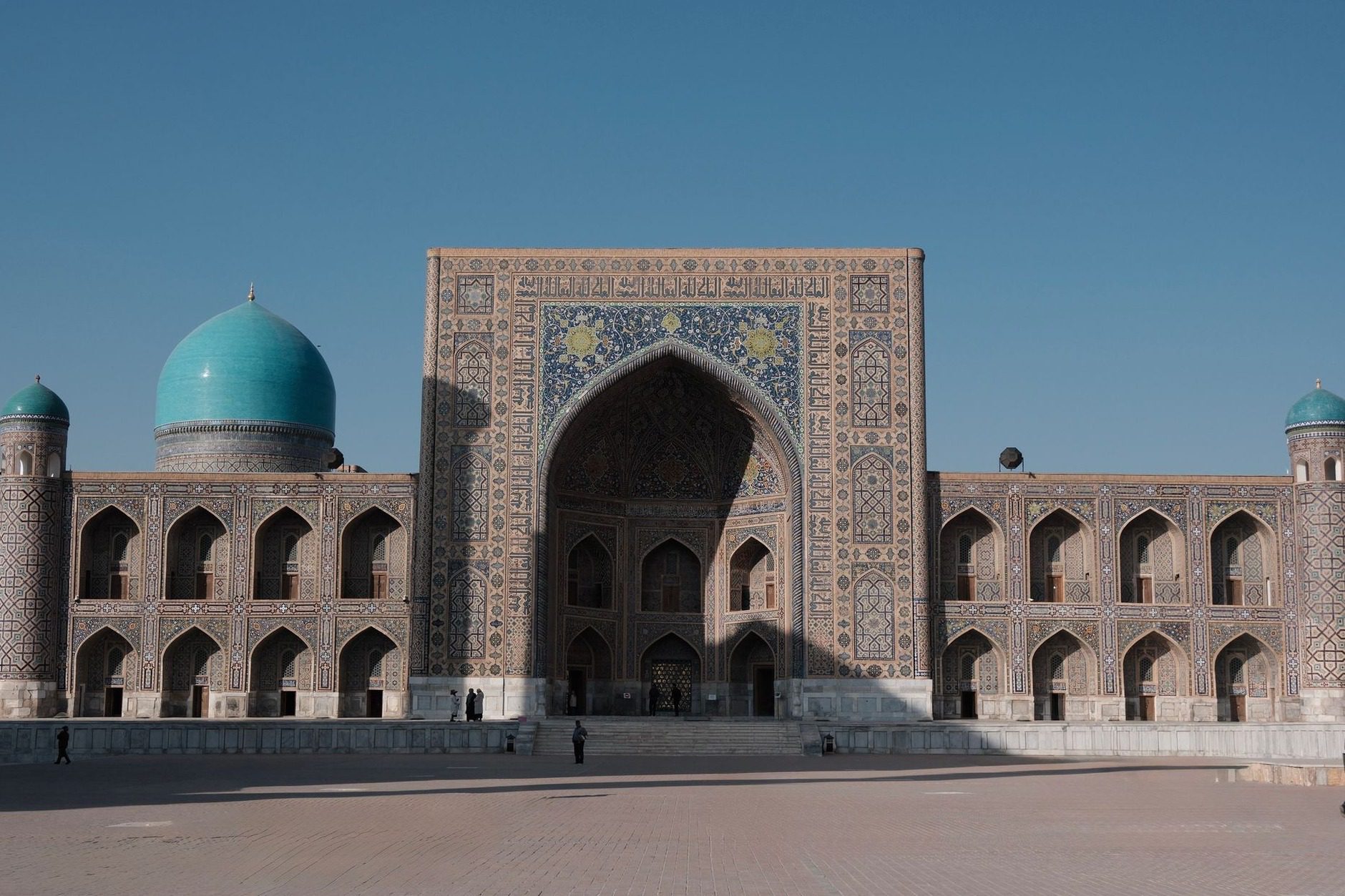
Samarkand was the glittering imperial capital of conqueror Tamerlane (Amir Timur), who assembled master architects, ceramicists, and stone masons from Persia, Syria, and India to construct monuments intended to project divine majesty. Begin at Registan Square, framed by three monumental madrasahs: Ulugh Beg, Sher-Dor, and Tilya-Kori. The 17th-century Sher-Dor Madrasah is famous for defying traditional Islamic aniconism: its grand portal depicts two roaring striped tigers with human-faced suns rising from their backs, hunting white fallow deer across azure tilework.
In 1420, Tamerlane’s grandson, the astronomer-king Ulugh Beg, transformed Samarkand into the scientific capital of the Islamic world. At his hilltop observatory, Ulugh Beg engineered a colossal 40-meter curved marble meridian arc sextant carved directly into limestone bedrock. Using this monumental arc, his astronomers calculated the stellar year to 365 days, 5 hours, 49 minutes, and 15 seconds—within 25 seconds of modern atomic measurements.
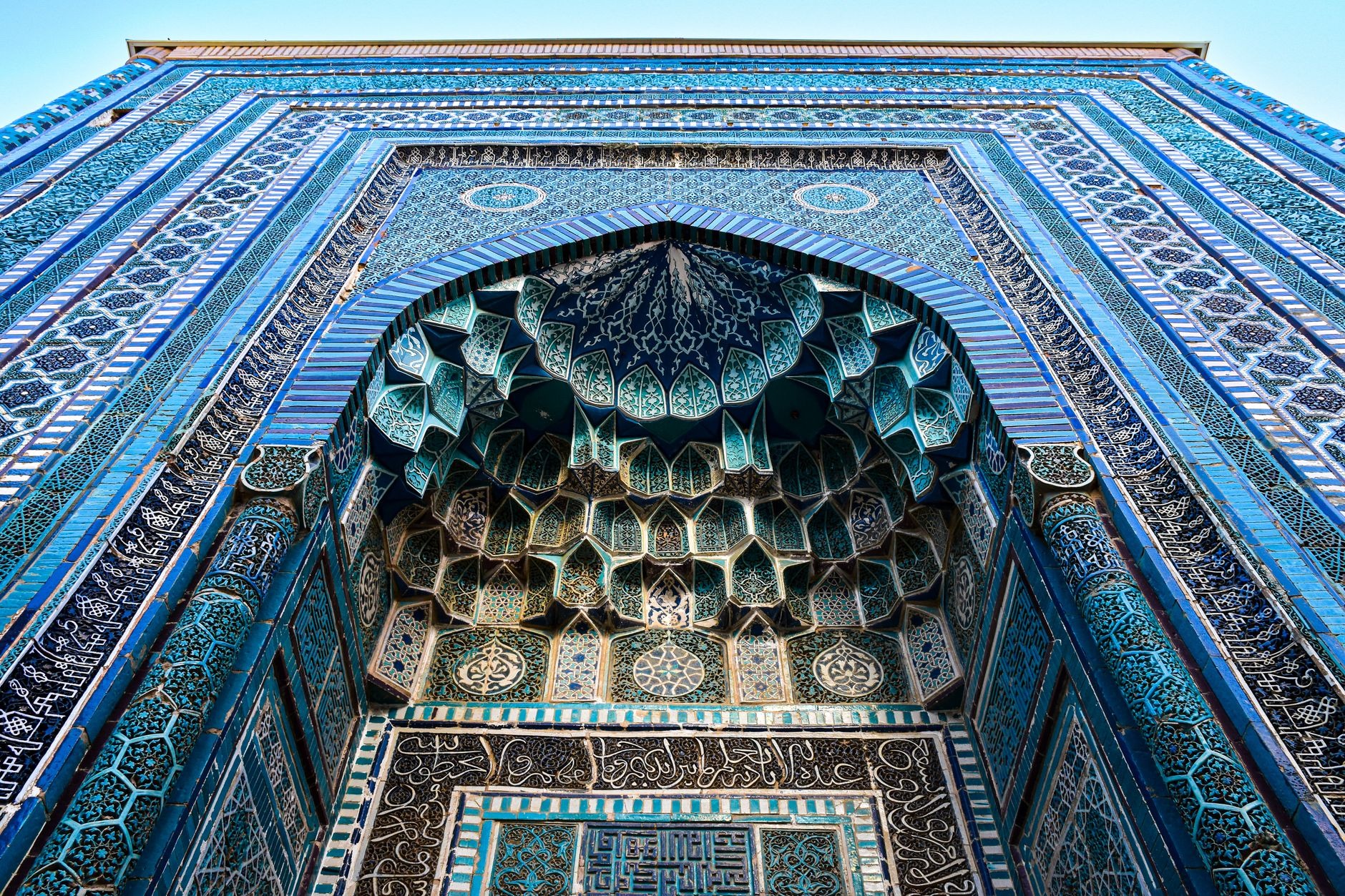
Next, walk the sacred avenue of Shah-i-Zinda (The Living King), a hillside necropolis of royal mausoleums dating from the 11th to 15th centuries. Stepping between these narrow tomb facades feels like walking through an azure canyon of lapis lazuli, turquoise mosaic tiles, and carved terra-cotta calligraphy.
Just outside the city in Konigil, visit the historic watermill workshop to discover the secret of Samarkand mulberry paper. Following the 751 AD Battle of Talas, captured Chinese artisans introduced papermaking to Samarkand. Local craftsmen perfected a 1,000-year mulberry bark paper, beaten with water-hammers and polished with agates to create smooth, insect-resistant parchment that preserved illuminated manuscripts for centuries.
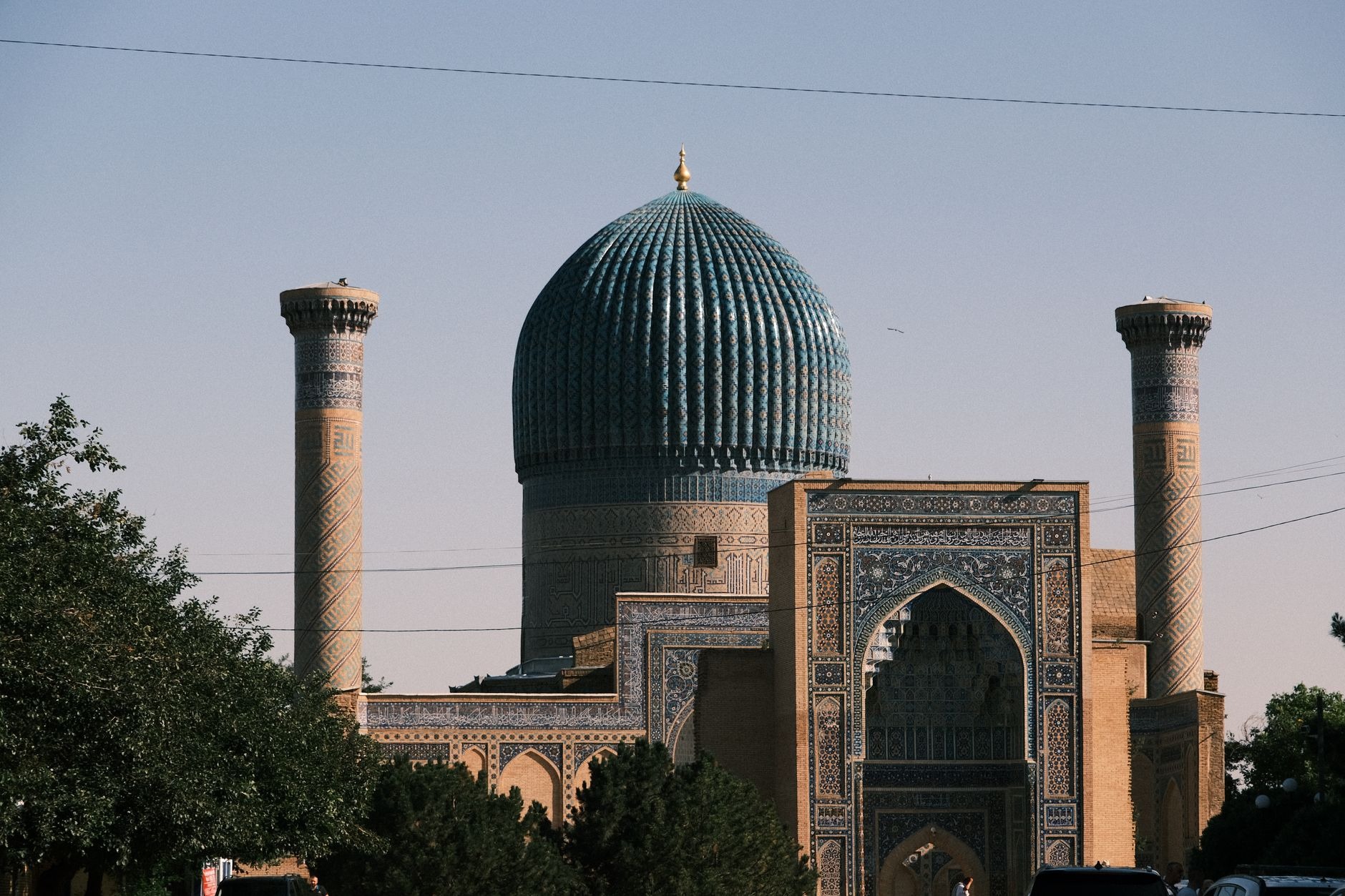
Conclude Day 3 at Gur-e-Amir, Tamerlane’s final resting place beneath an azure melon dome. Beneath an opulent golden vault sits Tamerlane’s dark green nephrite jade cenotaph, bearing the infamous inscribed warning: *”Whosoever disturbs my tomb will unleash an invader more terrible than I.”* Soviet anthropologist Mikhail Gerasimov famously opened the tomb on June 20, 1941—two days before Hitler launched Operation Barbarossa.
Bukhara: Kalyan Minaret, Trading Domes & Mudbrick Alleys (Days 4–5)
Board the Afrosiyob on Day 4 for the 90-minute journey west to Bukhara, a UNESCO World Heritage oasis that retains its medieval street grid and mudbrick soul.
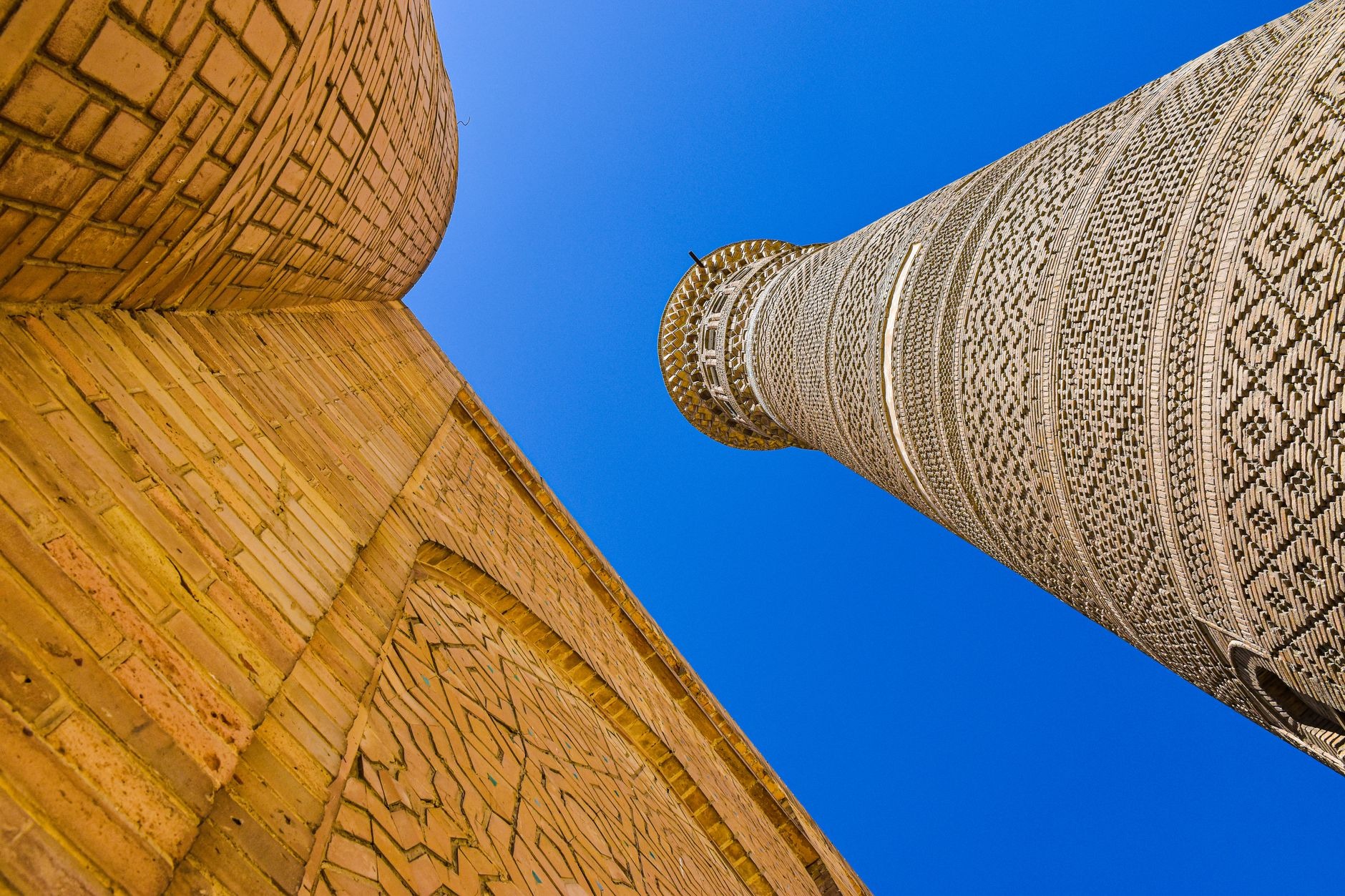
At the center of Bukhara rises the Kalyan Minaret, erected in 1127 by the Karakhanid ruler Arslan Khan. Soaring 45.6 meters above the desert floor, this baked-brick tower served as an oasis beacon for camel caravans, a call-to-prayer tower, and a watchtower. In 1220 AD, when Genghis Khan sacked and burned Bukhara to the ground, he stood at the foot of the tower. Looking up at its dizzying height, his helmet fell off. Stricken with awe by the intricate geometric brickwork patterns, the Mongol conqueror ordered the minaret spared from destruction while the rest of the city perished.
Stroll through Bukhara’s four 16th-century domed trading bazaars (taqi): Taqi Zargaran (jewelers), Taqi Sarrofon (moneychangers), and Taqi Telpak Furushon (cap makers). Here, master blacksmiths hammer Damascus steel scissors shaped like storks, and weavers craft delicate ikat silk tapestries. Relax in the late afternoon under shade-giving mulberry trees around Lyabi-Khauz, a peaceful 17th-century stone reflecting pool, sipping spiced green tea accompanied by crystalline sugar crystals (navat).
Khiva: Mudbrick Ramparts & Truncated Minarets (Days 6–7)
Travel west on Day 6 across the red sands of the Kyzylkum Desert to Khiva, arriving at the fortified inner city of Itchan Kala. Surrounded by undulating 10-meter mud-brick ramparts, Khiva is an astonishingly intact open-air museum where thousands of residents still live inside the ancient city gates.
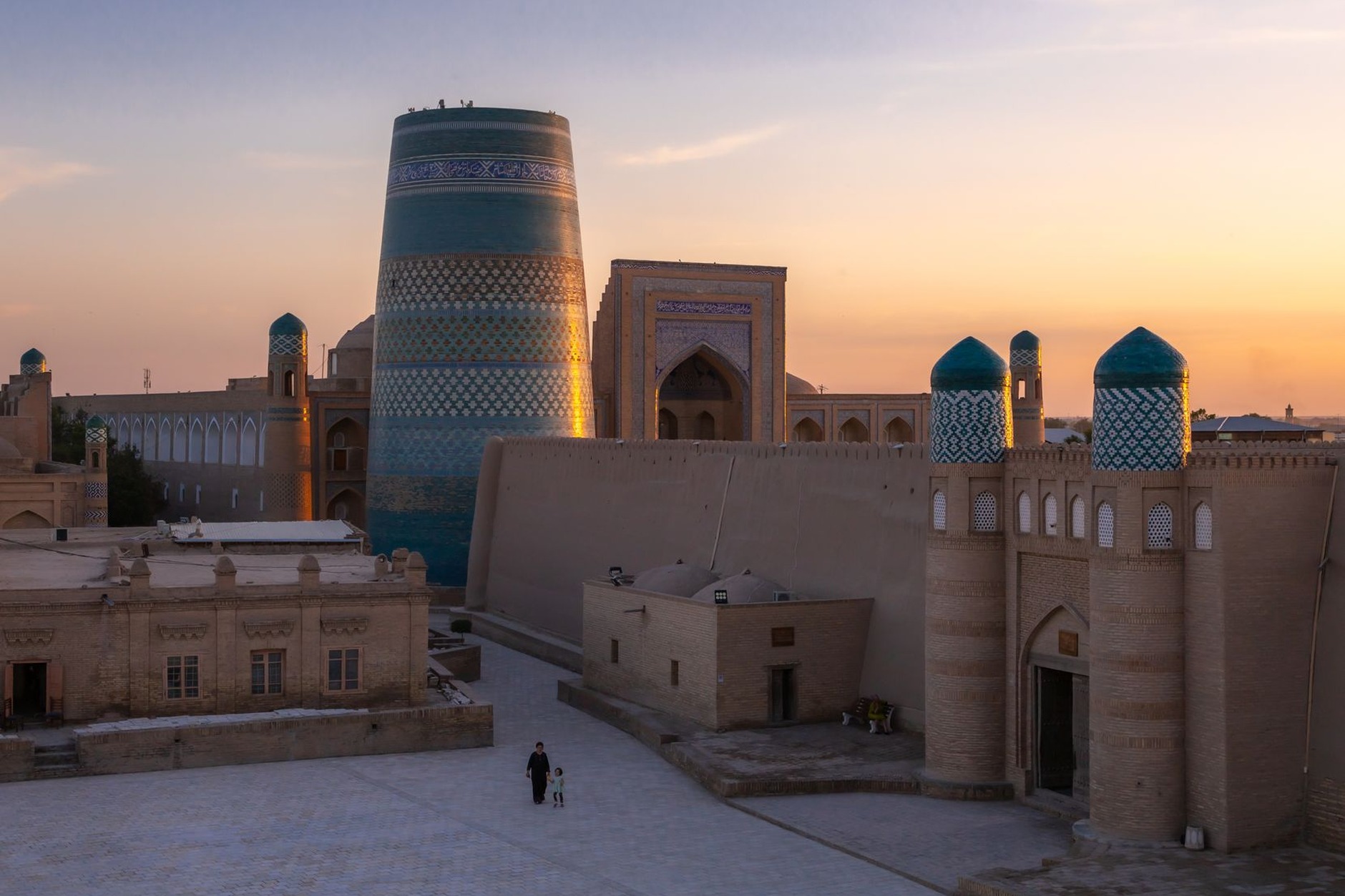
Immediately inside the West Gate stands Kalta Minor, the iconic turquoise-glazed minaret. Commissioned in 1851 by Mohammed Amin Khan, it was intended to reach 70 meters high so the Khan could gaze across the desert all the way to Bukhara. However, when the Khan was killed in battle in 1855, construction ceased abruptly. The minaret remains frozen at a stout 29 meters, completely blanketed in brilliant turquoise, teal, and lapis majolica bands. Step into the 10th-century Juma Mosque, a cool hypostyle hall supported by 218 intricately hand-carved elm pillars, no two of which share the same pattern.
Silk Road Gastronomy: The Alchemy of Uzbek Plov (Day 8)
Uzbek culinary culture revolves around Plov (pilaf), an ancient feast prepared in massive cast-iron cauldrons (kazan) over open wood fires. The origins of plov carry medicinal pedigree: Ibn Sina (Avicenna) codified plov as an alchemical balance of seven ingredients (onion, carrot, meat, fat, salt, water, rice: representing *PALOV OSH*) to revitalize exhausted Silk Road caravans.
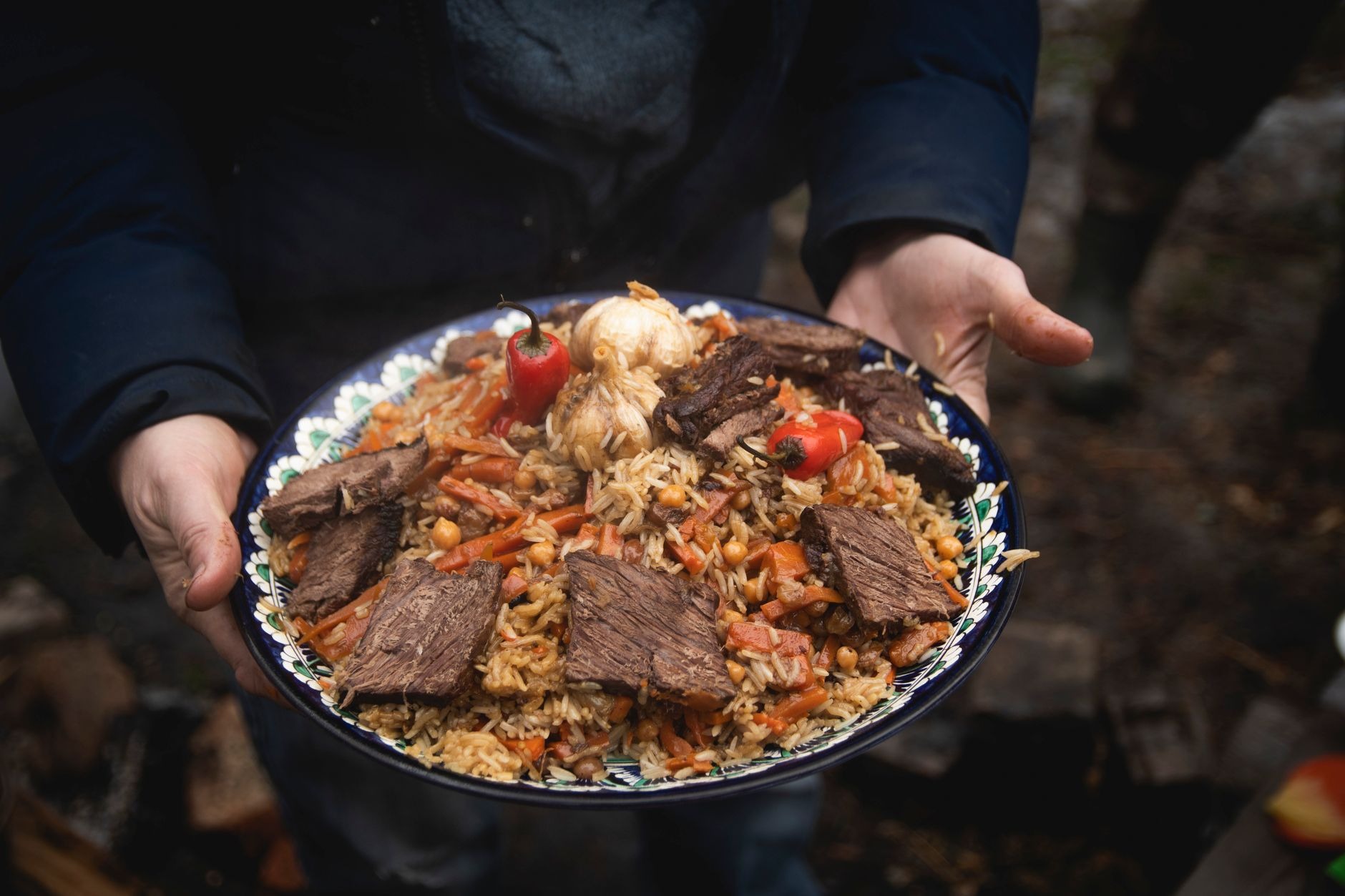
At the Central Asian Plov Centre in Tashkent or local chaikhanas in Samarkand, watch master plov chefs (*oshpaz*) ladle glistening mounds of golden rice, sweet yellow carrots, tender chunks of lamb, chickpeas, raisins, and quail eggs onto ceramic plates. Pair it with fresh tomato-and-onion *achichuk* salad and hot green tea.
Street Smarts: Rail Booking Bottlenecks, Cash Traps & Taxi Realities in Uzbekistan
Uzbekistan is one of the safest travel destinations in Eurasia with remarkably warm hospitality, but infrastructure transitions and tourism surges require practical street smarts. Keep these essential precautions in mind:
- The Afrosiyob High-Speed Rail Ticket Shortage: The Spanish-built Talgo 250 Afrosiyob trains have limited seating and sell out within minutes of release. Third-party agencies buy up allocations and resell tickets at 300% markups to desperate travelers. Defense: Log onto the official railway ticketing portal (railway.uz or the Uzrailway app) exactly 45 days in advance at 08:00 Tashkent time when seats open. If Afrosiyob trains are sold out, book the comfortable Soviet-era Sharq express or night sleeper trains.
- The Unofficial Street Money-Changer Hustle: While the black-market dollar trade was eliminated in 2017, touts still lurk around Chorsu Bazaar and border crossings offering “better-than-bank” currency exchange rates. They frequently pass expired Soviet-era banknotes or manipulate fat stacks of Uzbek Som with shorted bills. Defense: Exchange foreign currency only at official bank branches or use hotel ATMs, which dispense clean US dollars and Uzbek Som at official central bank rates with zero street risk.
- Unmetered Station Taxis & The “No Change” Ruse: Aggressive drivers swarm train stations in Samarkand and Bukhara quoting a high cash fare for rides that should cost far less. Once at your hotel, drivers claim they have no small bills to return change. Defense: Always use Yandex Go (the Central Asian ride-hail app), which operates reliably in Tashkent, Samarkand, and Bukhara with locked digital pricing. If hailing a private cab, agree on the exact fare before placing your luggage in the trunk, and carry small 5,000 and 10,000 som notes.
- Antique Carpet & Textile Export Confiscations: Artisan shops in Bukhara and Khiva sell gorgeous vintage Suzani embroideries and carpets. However, Uzbek customs laws strictly prohibit the export of items over 50 years old without an official cultural export license from the Ministry of Culture. Without documentation, border customs officers at Tashkent Airport will confiscate your purchase. Defense: Always demand an official Ministry of Culture export certificate with an ink stamp and photo attachment from the shop merchant before paying for any vintage textile or carpet.
- The Lyabi-Khauz “Service Fee & Music Charge” Surprise: Outdoor restaurants around Bukhara’s Lyabi-Khauz pool occasionally add unlisted 15% to 20% service fees plus unexpected “live music fees” per person onto paper checks presented to foreign tourists. Defense: Check the itemized bill carefully before paying, confirm with your server whether service is included when ordering, and ask for a printed fiscal register receipt.
- Tourist Registration Slip (Propiska) Losses: Uzbek immigration law requires foreign visitors to be registered at every accommodation. Hotels print small paper registration slips (*propiska*) with QR codes upon checkout. Border guards at Tashkent Airport occasionally inspect these slips upon departure. Defense: Keep all hotel registration slips safely folded inside your passport until you clear passport control at the airport. Many hotels now upload registrations digitally to emehmon.uz, but paper slips remain your best physical backup.
Armed with these practical transit and financial insights, your journey across Uzbekistan’s Silk Road oases will be smooth, culturally rich, and completely stress-free.
Silk Road Rail Navigation & Mobile Connectivity with NXTL
Traveling between Uzbekistan’s ancient desert oases requires continuous cellular connectivity. Active mobile internet is vital for hailing verified rides via Yandex Go outside train stations, displaying digital train tickets on Uzrailway, navigating pedestrian alleys in Bukhara with Google Maps, and messaging boutique guesthouse hosts on Telegram (Uzbekistan’s universal communication platform).
Uzbekistan’s cellular telecommunications network has modernized rapidly, supported by tier-one national operators Ucell, Beeline Uzbekistan, and Mobiuz. Ucell and Beeline provide strong 4G/LTE coverage across Tashkent, Samarkand, Bukhara, Khiva, and along the central rail corridors. With an NXTL Uzbekistan travel eSIM, your phone connects immediately to these high-speed networks at transparent prepaid rates starting from just $0.94 per gigabyte. There is no physical SIM card swap, no passport registration bureaucracy at local telecom shops, and no expiring monthly contracts.
| Traveler Usage Profile | Daily Online Activities | 8-Day Total Bandwidth | Estimated Data Cost (@ $0.94/GB) |
|---|---|---|---|
| Light Navigator (Yandex Go & messaging) |
Yandex Go taxi booking, Telegram communication with hotels, Google Maps walking navigation | 2 GB – 4 GB | $1.88 – $3.75 |
| Balanced Silk Road Explorer (Social sharing & research) |
All navigation, high-res tilework photo uploads, restaurant research, audio streaming during train journeys | 5 GB – 8 GB | $4.69 – $7.50 |
| Heavy Digital Nomad (Remote work & tethering) |
Laptop tethering from hotel courtyards, video calls, cloud photo backups, media streaming | 10 GB – 15 GB | $9.38 – $14.07 |
What sets NXTL apart is its reusable global data eSIM model. Instead of buying a disposable local SIM card that only works within Uzbekistan and expires after your holiday, NXTL operates across 180+ supported countries and 460+ carrier networks. You purchase the eSIM profile once for just $11.99, which includes $10.00 in preloaded travel balance ready for immediate use. Your balance never expires as long as your account remains active.
If your Central Asian adventure continues into Kazakhstan, Kyrgyzstan, Georgia, or onward across Asia and Europe, the exact same eSIM profile connects automatically in the next country. You never have to re-register or buy another data bundle. Full mobile hotspot tethering is permitted across all destinations, and dual-SIM functionality allows your primary home SIM to stay active for bank two-factor SMS alerts with zero unexpected roaming fees.
Install your NXTL eSIM profile on your phone before departing for Central Asia. When your flight touches down at Tashkent International Airport, turn on your data roaming line to book a verified Yandex Go ride, confirm your hotel check-in, and start exploring the Silk Road with total peace of mind.