Most first-time visitors to Denmark attempt to cram the entire kingdom into a single week, rushing from Copenhagen to distant sand dunes before doubling back in exhaustion. That hurried approach treats one of Europe’s most thoughtfully engineered societies as a geographic checklist. Bound together by high-speed electrified rail, deep-water straits, and an egalitarian design philosophy, Denmark rewards unhurried exploration. This rewarding seven-day journey links the capital on Zealand with the cultural hub of Aarhus on Jutland, using historic Funen as an illuminating stepping stone.
Designed for independent travellers seeking architectural heritage, regional culinary traditions, and efficient transit, this seven-day rail route establishes two primary bases: three nights in Copenhagen for maritime canals, royal palaces, and cycle-first streetscapes, followed by three nights in Aarhus for modernist museums and timbered heritage. Crossing the Storebælt via Danish state railways (DSB) turns transit into a scenic highlight across an eighteen-kilometer engineering marvel uniting eastern and western Denmark.
| Day / Stage | Overnight Base | Key Highlights | Transit & Route Logistics | Essential Advance Bookings | What to Cut / Save |
|---|---|---|---|---|---|
| Days 1–2: Maritime Foundations & Center | Copenhagen | Nyhavn 17th-century quays, Christianshavn canals, Church of Our Saviour spire, Torvehallerne food halls | Metro (M1/M2) and walking; City Pass Small (zones 1–4) for 24–48 hours | Advance slot for Church of Our Saviour spire; dinner smørrebrød reservation | Skip open-top bus tours; walk or use yellow harbour ferries (Havnebus) |
| Day 3: Royal Regalia & Evening Tivoli | Copenhagen | Rosenborg Castle crown jewels, King’s Garden, Designmuseum, Tivoli Gardens evening illumination | S-train or rental bicycle (Donkey Republic); pedestrian exploration | Rosenborg Castle timed entry ticket; Tivoli Gardens admission and ride pass | Cut midday shopping malls; reserve afternoon hours for waterfront cycling |
| Day 4: Great Belt Rail Crossing to Funen & Jutland | Aarhus | DSB InterCity rail dash over Storebælt Bridge, Odense stopover (H.C. Andersens Hus), arrival in Aarhus | DSB InterCity train (Copenhagen to Odense: 1 hr 15 min; Odense to Aarhus: 1 hr 35 min) | DSB Orange discount rail ticket and seat reservation (Pladsbillet) | Avoid rental car drop-off fees; rail delivers you directly to downtown station hubs |
| Days 5–6: Cultural Capital & Living History | Aarhus | ARoS Art Museum (Your Rainbow Panorama), Den Gamle By living museum, Moesgaard Museum, Latin Quarter | Midttrafik buses and Letbanen light rail; walking through cobbled historic core | ARoS Museum admission; Moesgaard Museum prehistoric exhibition timed entry | Save outlying Jutland beaches for a dedicated summer cottage trip |
| Day 7: Coastal Nature & Return Transit | Departure | Aarhus waterfront promenade (Dokk1), harbour bath, direct return rail to Copenhagen Airport | Direct DSB InterCityLyntog to Copenhagen Airport Kastrup (3 hr 10 min) | Advance morning train seat booking for return trip with luggage storage | Skip connecting domestic flights; rail terminates beneath airport terminal |
Days 1–3: Copenhagen — Maritime Canals, Royal Palaces & Bicycle Urbanism
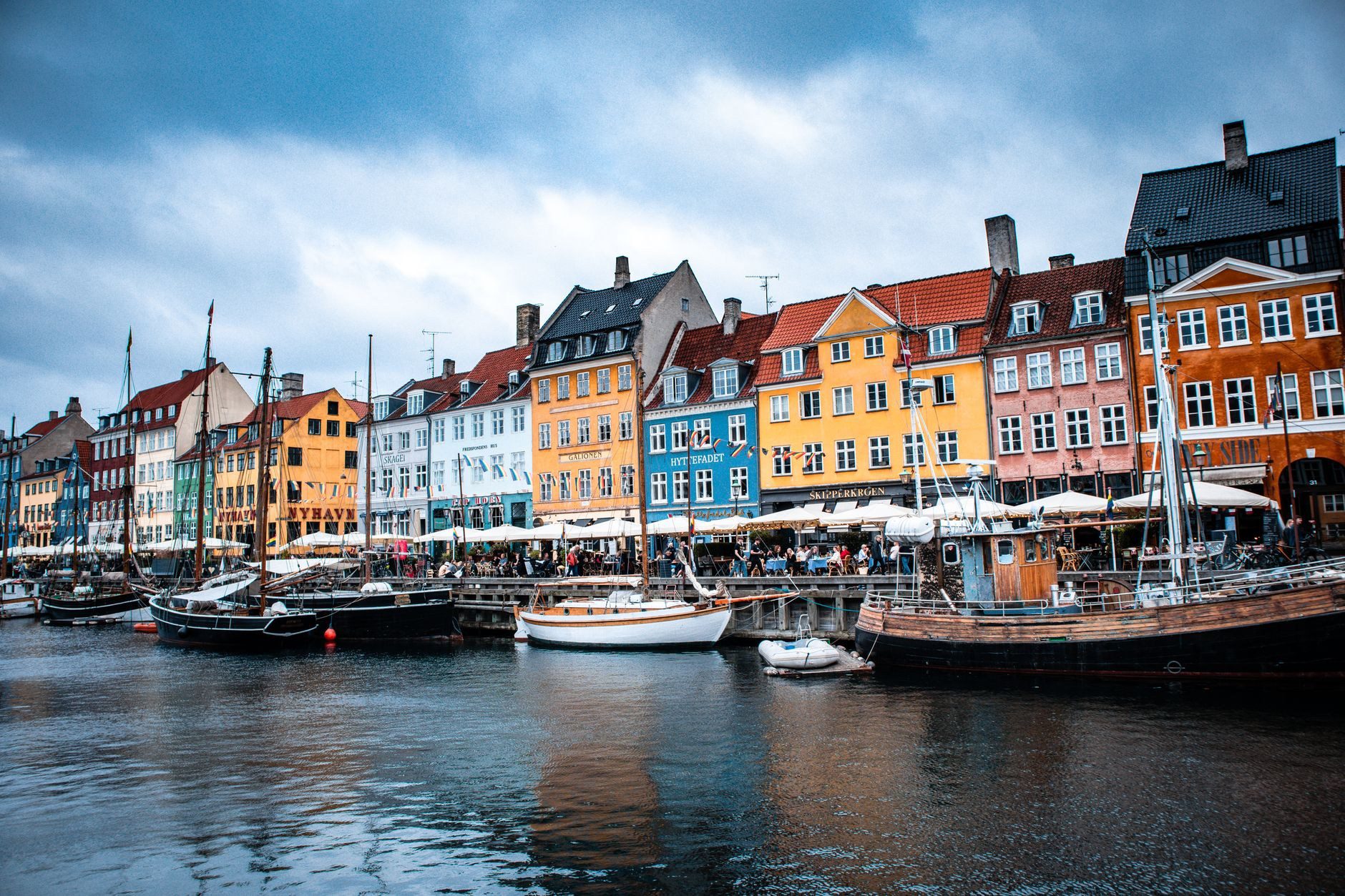
Copenhagen introduces itself as a triumph of human-scaled urban engineering. Its geography is maritime, sculpted by centuries of naval trade and coastal defense. While crowds congregate along Nyhavn, few consider its gritty origin. In the 1670s, King Christian V ordered Swedish prisoners of war from the Dano-Swedish War to dig the canal by hand, linking Kongens Nytorv to the sea so merchant barques could unload timber and salted herring into cellar warehouses. Today, those gabled townhouses glow in ochre and cobalt, framing heritage wooden schooners.
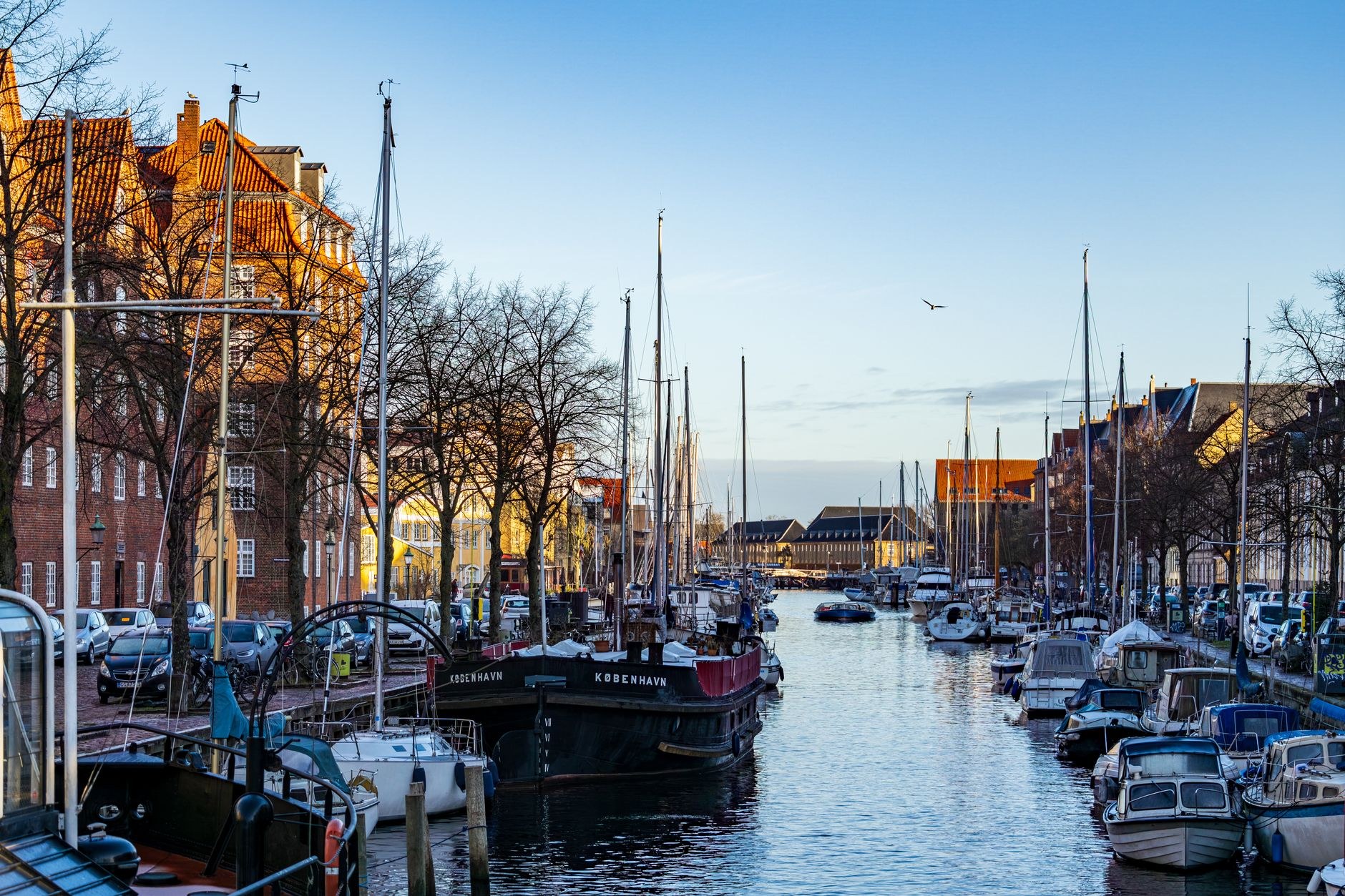
Beyond the central quayside, cross Inderhavnsbroen footbridge into Christianshavn. Commissioned in the 1610s by King Christian IV, Christianshavn was modelled after Dutch trading cities with straight canals, stepped gables, and stone warehouses. Along Christianshavns Kanal, wooden houseboats and bakeries coexist peacefully. Nearby rises the baroque helix spire of the Church of Our Saviour (Vor Frelsers Kirke), whose external oak staircase winds 400 steps for panoramic views over Zealand’s rooftops.
Urban mobility here is an integral cultural experience. Copenhagen features over 380 kilometres of segregated cycle tracks where bicycles easily outnumber cars. On thoroughfares like Dronning Louises Bro, electronic counters track daily riders while traffic signals synchronize to a green wave (*Grøn Bølge*), letting cyclists gliding at twenty kilometres per hour pass without braking. When renting through Donkey Republic, remember that cycling is rapid transit: raise a flat palm to stop and extend an arm before turning.
In the late afternoon, head to Tivoli Gardens opposite Central Station. Established in 1843 by Georg Carstensen on decommissioned military ramparts, Tivoli is the world’s second-oldest amusement park. Carstensen famously persuaded King Christian VIII to grant the charter by arguing: “When people amuse themselves, they do not think of politics.” Tivoli preserves wooden coasters, Moorish pavilions, and hanging glass lanterns casting a warm incandescent glow at dusk.
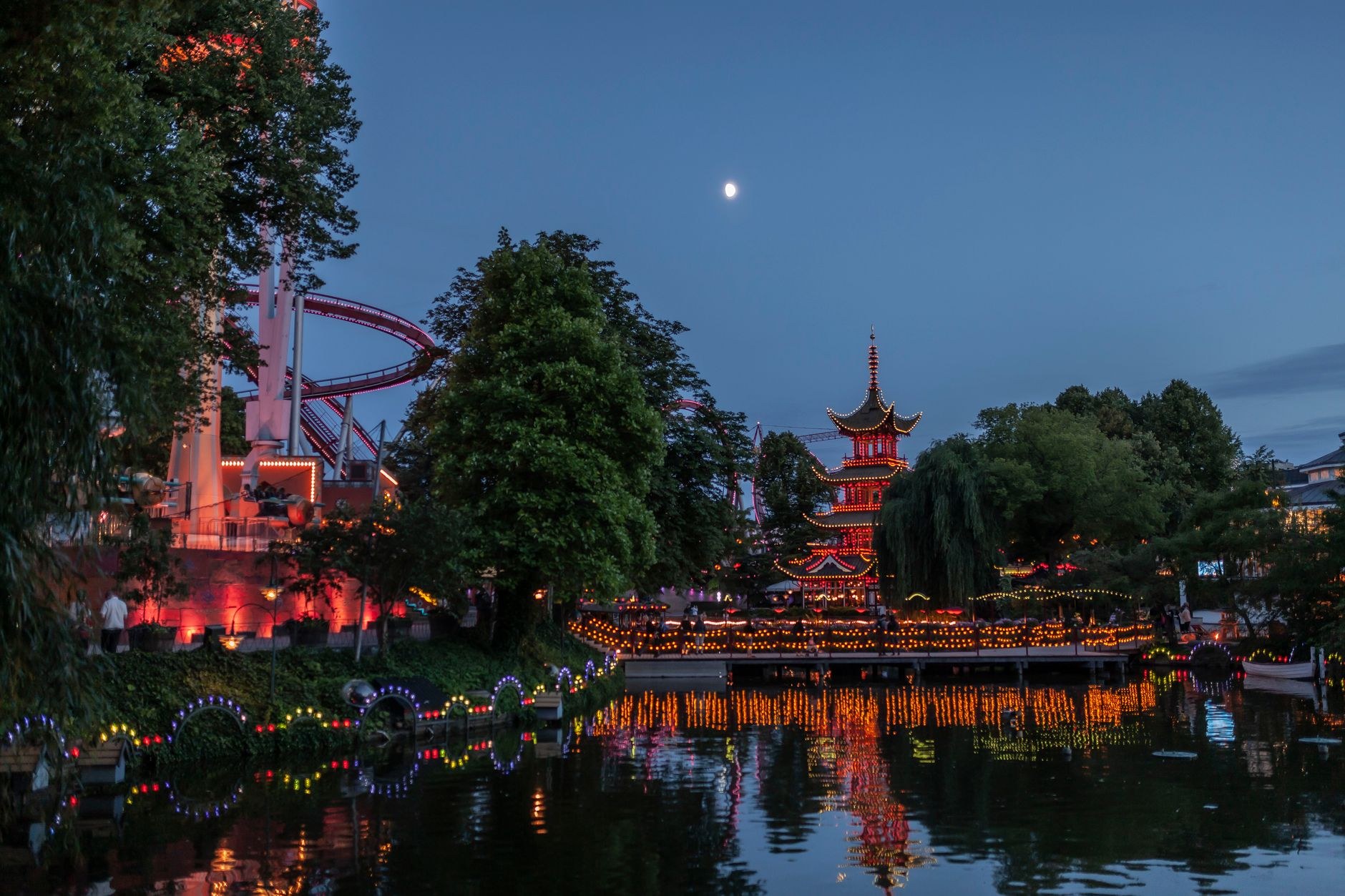
Walking through Tivoli after twilight reveals how central public leisure is to Danish identity. Locals gather around open-air brass concerts, pantomime theaters, and food stalls, embodying *hygge* through shared relaxation rather than luxury.
Dedicate your third morning to royal heritage at Rosenborg Castle. Built between 1606 and 1633 as a summer palace for Christian IV, Rosenborg showcases Dutch Renaissance architecture in red brick and copper spires. Its interiors remain virtually intact. In the Long Hall, coronation thrones stand guarded by three life-sized silver lions cast in the 1670s. Below ground, descend into fortified vaults to view the Crown Regalia, including Christian IV’s gem-encrusted coronation crown.
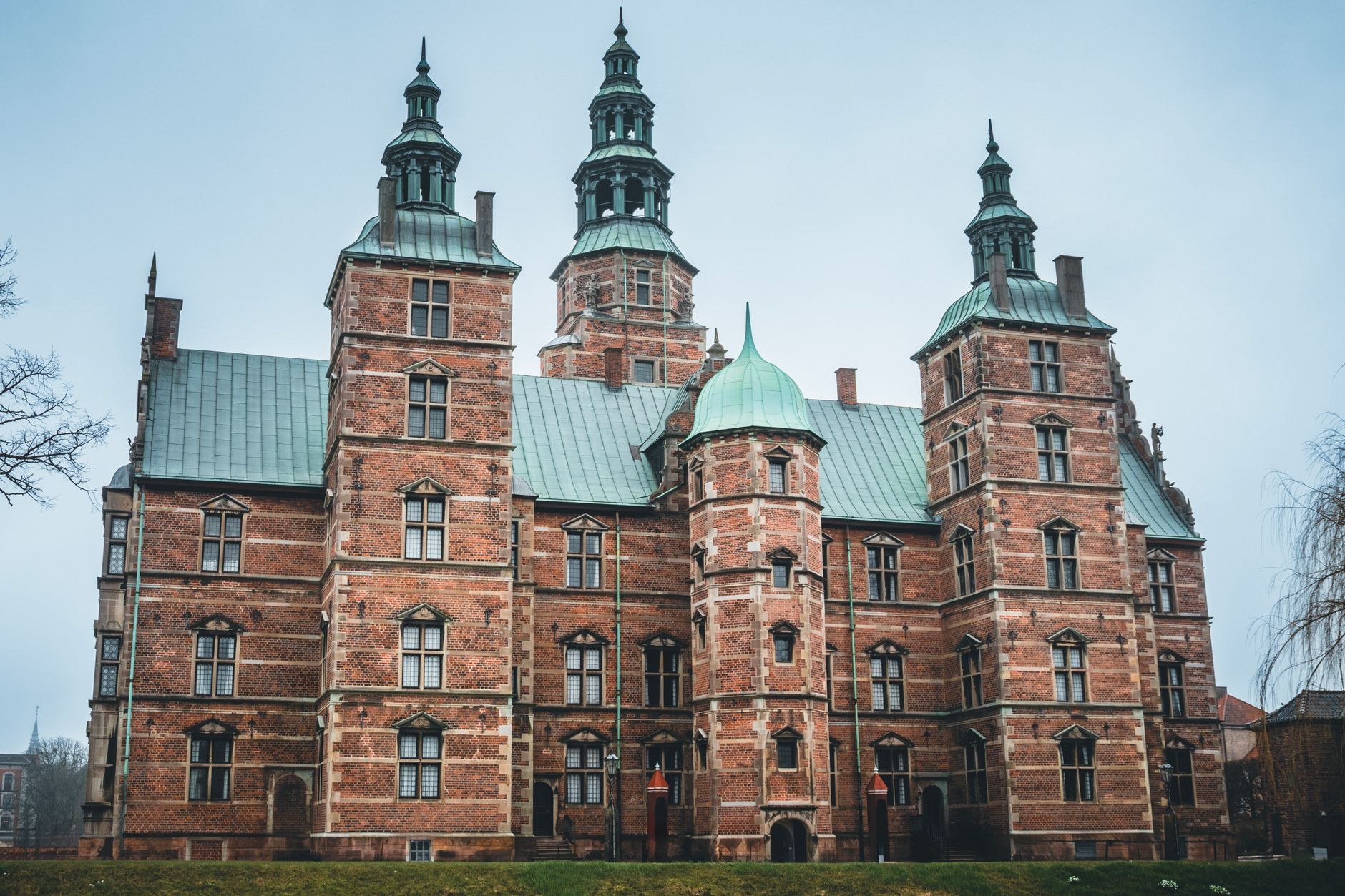
Surrounding Rosenborg lies Kongens Have, Denmark’s oldest royal park, where locals share coffee and cinnamon buns (*kanelsnegle*). A short stroll leads to Designmuseum Danmark on Bredgade, tracing Danish modernism from handcrafted cabinetmaking to functionalist icons by Arne Jacobsen, Hans Wegner, and Poul Henningsen.
Exploring Copenhagen requires experiencing traditional Danish *smørrebrød*. Governed by strict culinary rules dating to the 19th century, authentic smørrebrød at Torvehallerne or Schønnemann begins with dense, sourdough rye bread (*rugbrød*) spread with butter or lard (*fedt*).
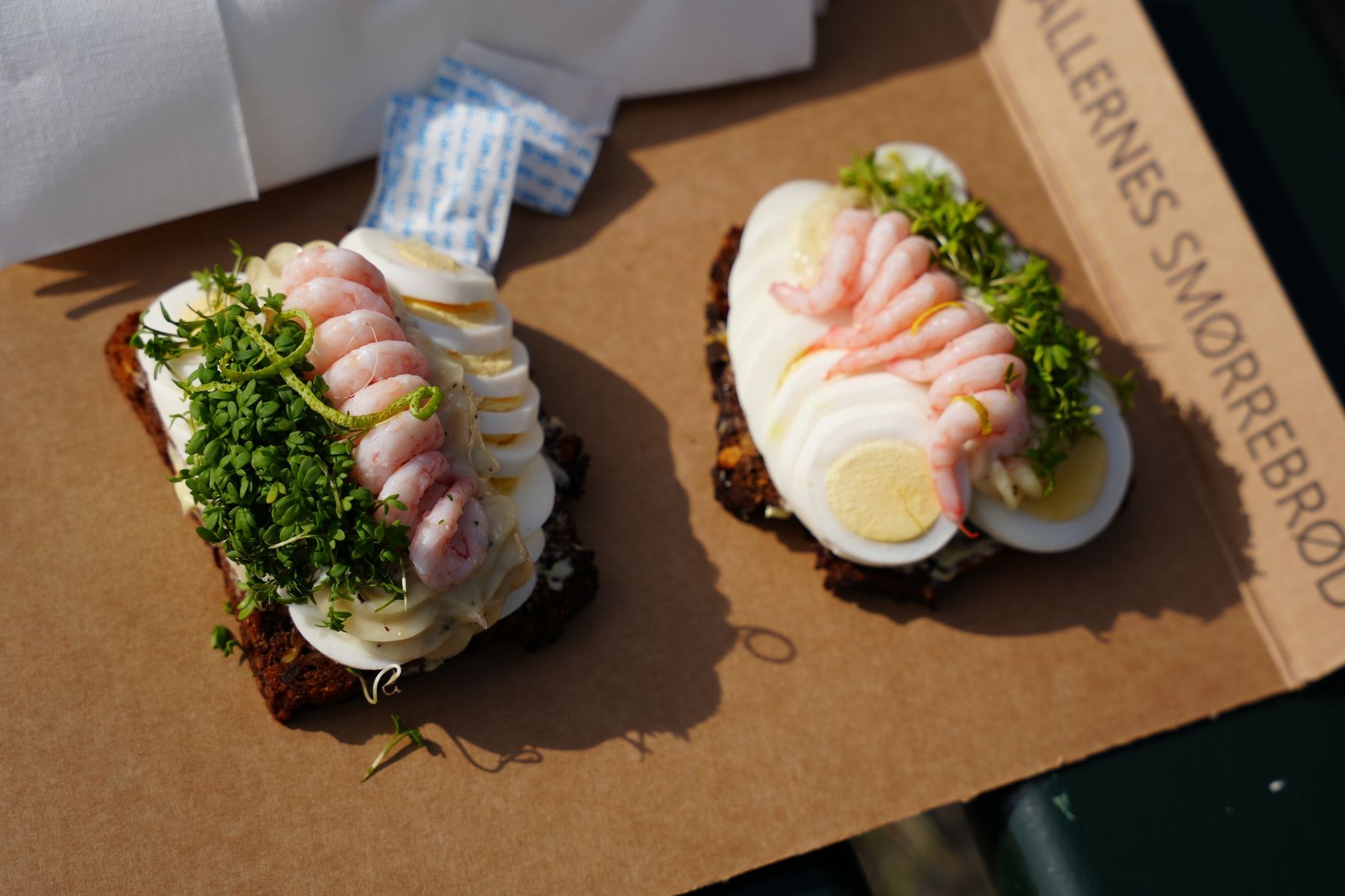
Rules dictate that fish precedes meat, and meat precedes cheese. Diners start with pickled herring and dill paired with caraway akvavit, followed by fried plaice with remoulade, roast beef with crispy onions, or warm liver pâté (*leverpostej*). Crucially, smørrebrød is never eaten by hand; it is eaten with knife and fork, finishing with aged Danbo cheese before boarding regional trains.
Day 4: The Great Belt Rail Crossing & Odense — Engineering Marvels & Fairytale Lore
On morning four, board a DSB InterCity train toward western Denmark. For over a century, crossing the Great Belt (Storebælt) required slow train ferries. That bottleneck vanished with the completion of the Great Belt Fixed Link (*Storebæltsforbindelsen*) in 1997–1998. Spanning eighteen kilometres, this engineering marvel combines an undersea twin-bore rail tunnel, an artificial mid-strait island (Sprogø), and a soaring suspension bridge.
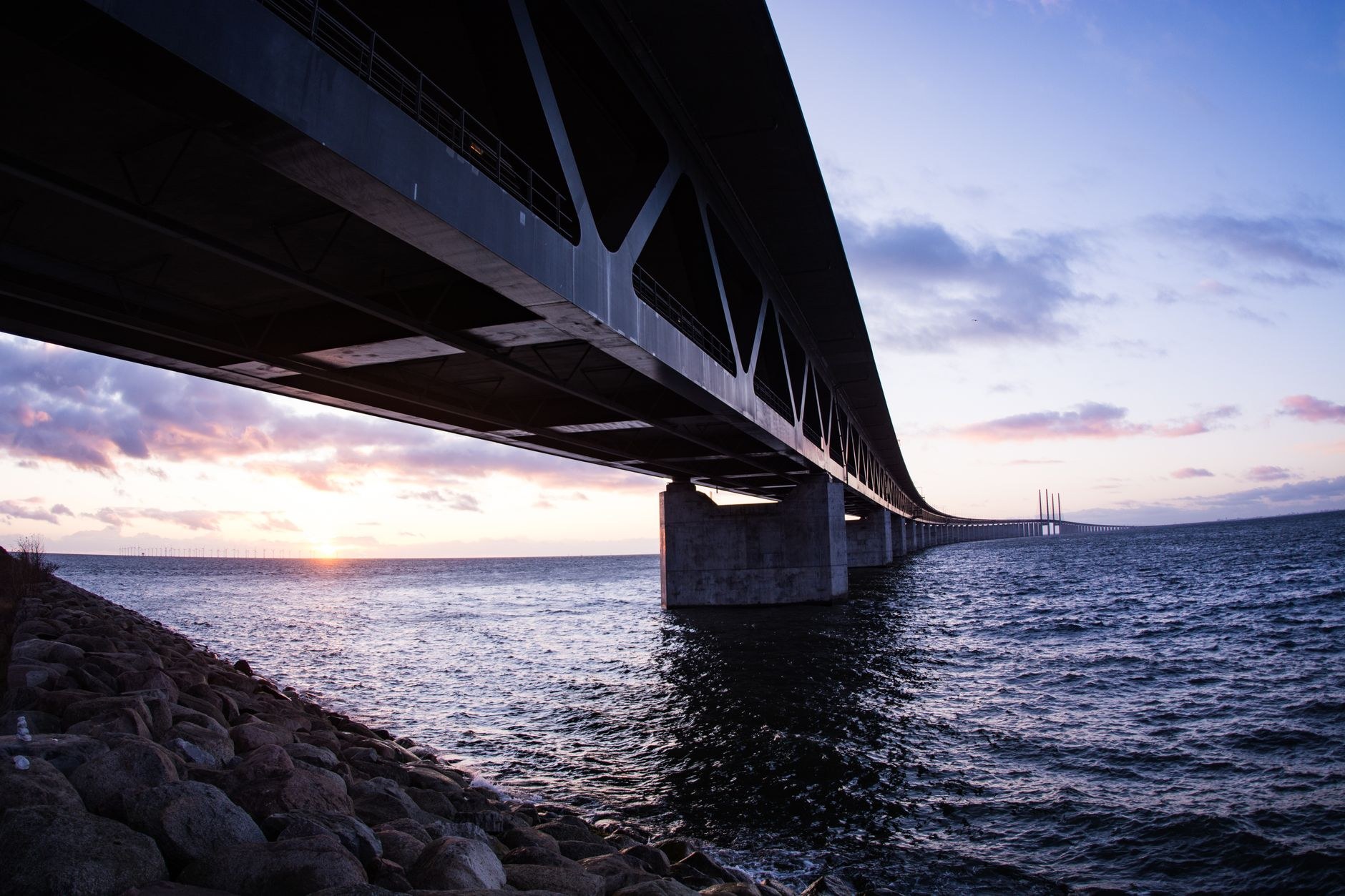
Gliding high above grey Baltic waters, the rail crossing takes just over ten minutes, turning a former ninety-minute ferry delay into a swift journey that permanently integrated Denmark’s transport network.
Just over an hour from Copenhagen, stop in Odense, regional capital of Funen (*Fyn*). Known as the ‘Garden of Denmark’ for rolling farmland and thatched manors, Funen is famous as the birthplace of Hans Christian Andersen in 1805. Cobbled lanes in the historic quarter feature preserved timber-framed artisan cottages in mustard and sage.
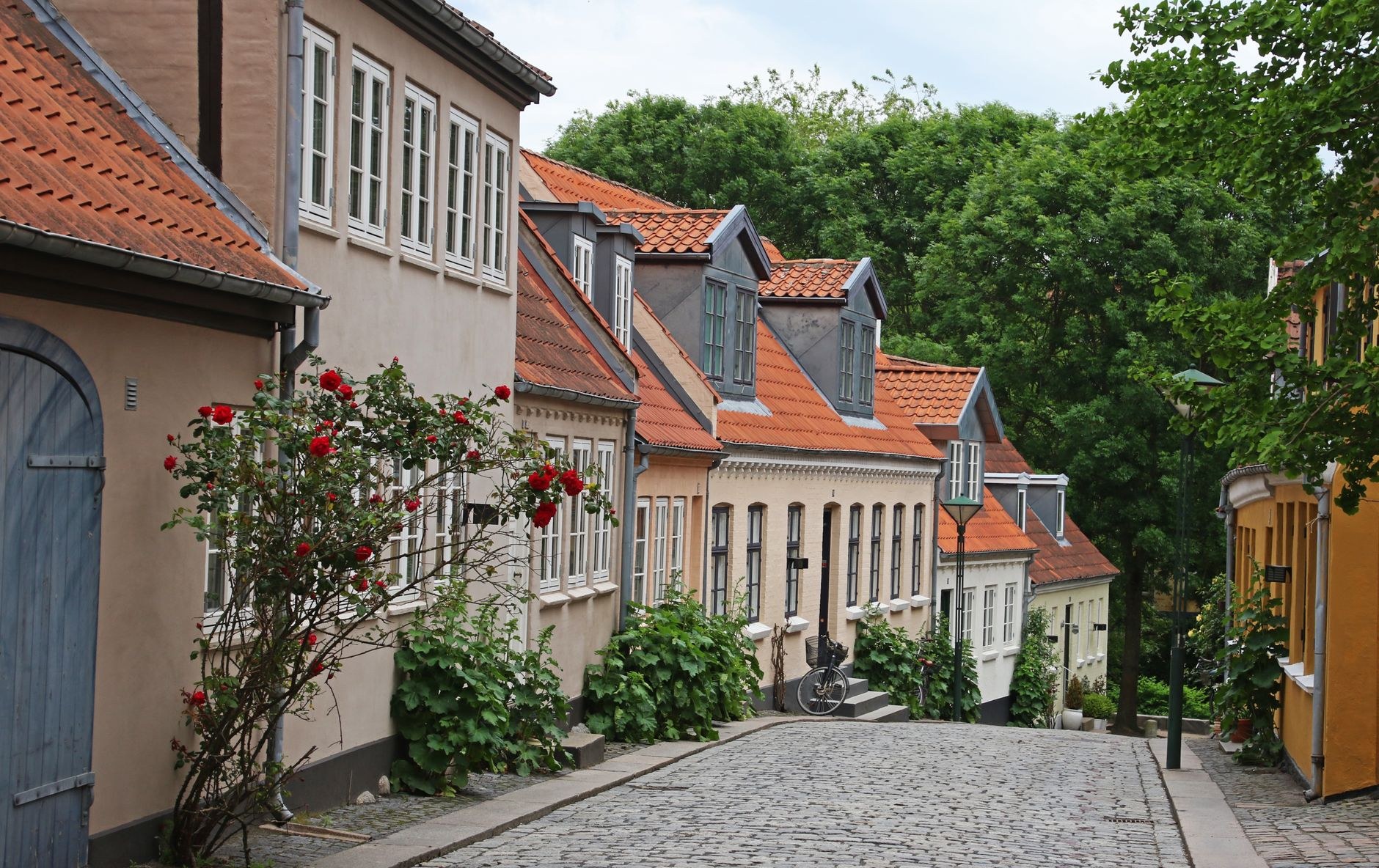
Nearby stands the H.C. Andersens Hus museum by Japanese architect Kengo Kuma, which sinks two-thirds of its structure underground into curving gardens and glass pavilions. Exhibits illuminate Andersen’s fairy tales through spatial sound and design. After a courtyard coffee, return to Odense Station and board the DSB train to Aarhus, crossing the Little Belt bridge into Jutland in ninety minutes.
Days 5–6: Aarhus — Modernist Architecture, Living History & Jutland Culture
Aarhus is Denmark’s second city, with a rhythm independent of Copenhagen. Originating in the 8th century as a fortified Viking settlement named *Aros*, it is today a lively university hub where one in five residents is a student, enlivening historic merchant quarters with independent cafes and contemporary architecture.
Its cultural centerpiece is ARoS Art Museum, crowned by Olafur Eliasson’s permanent installation *Your Rainbow Panorama*. Walking through this 150-metre circular glass skywalk transforms the urban view: harbour cranes shift from indigo to cyan, copper spires glow lemon yellow, and Jutland forests appear in deep crimson.
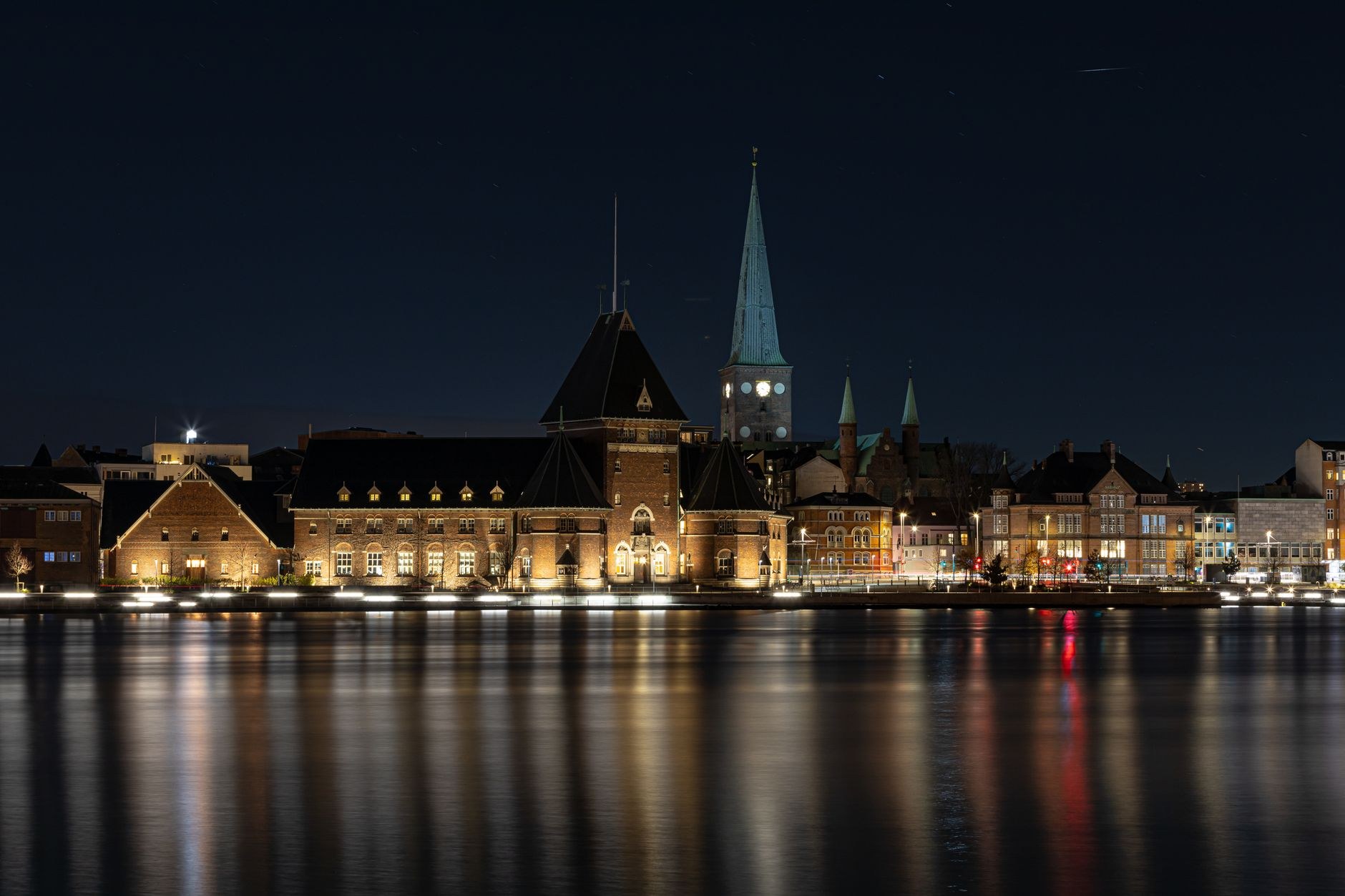
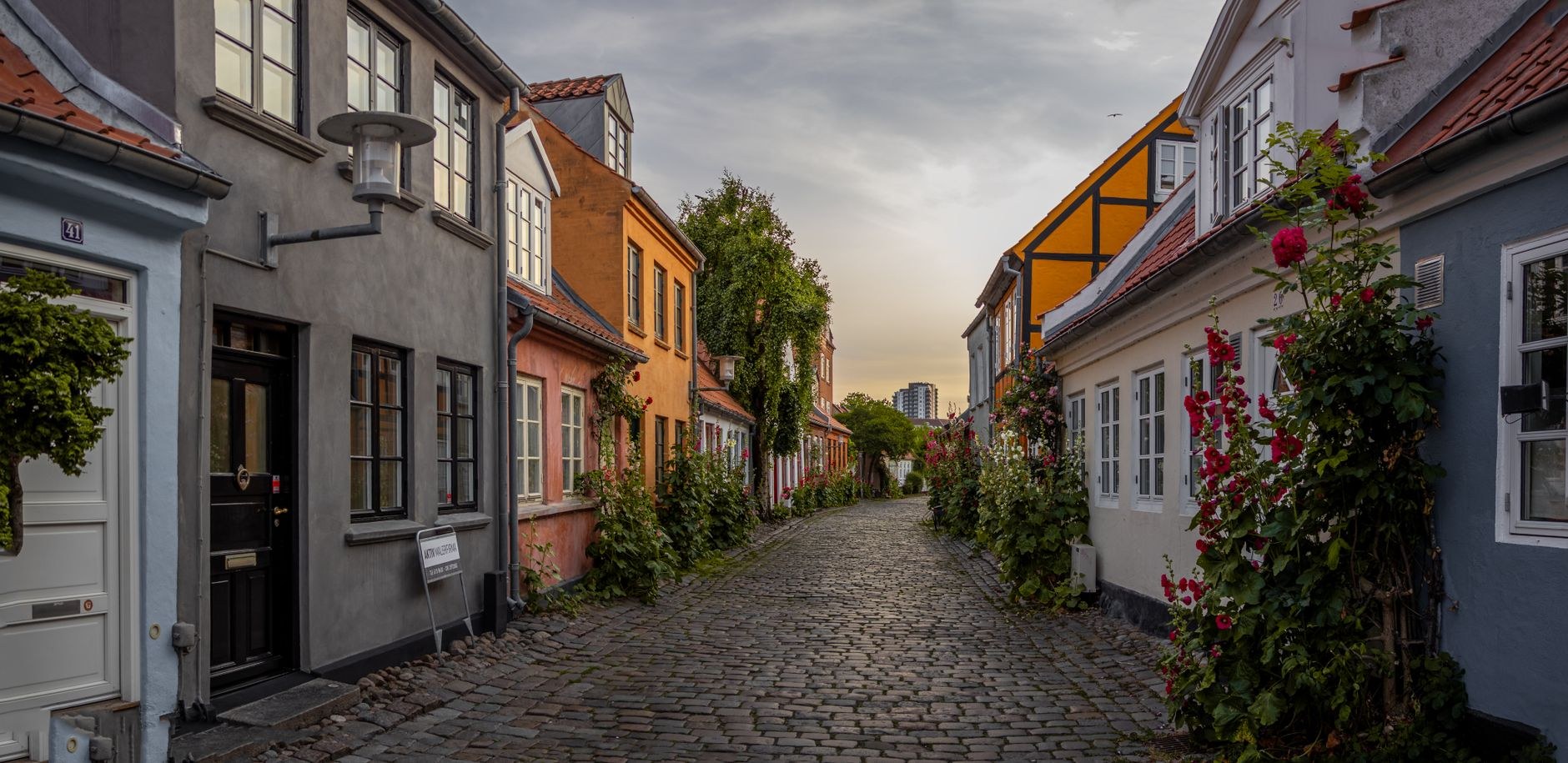
A stroll through the Latin Quarter (*Latinerkvarteret*) reveals Aarhus’s oldest quarter. Glacial cobblestone lanes feature 16th-century half-timbered buildings housing micro-roasters and sourdough bakeries, blending heritage with modern Nordic craft.
Directly contrasting this modernism is Den Gamle By (The Old Town). Founded in 1909 as the world’s first open-air urban museum, it preserves seventy-five timber merchant buildings relocated from across Denmark. Exhibits span an 1860s horse-drawn market town, a 1920s telephone-wired district, and a 1970s welfare-era neighborhood with authentic vinyl shops and bakeries.
On your second afternoon, visit Moesgaard Museum south of the city. Designed by Henning Larsen Architects, its turf-covered roof rises directly from the hillside. Inside rests the Grauballe Man, an Iron Age bog body discovered in 1952 and preserved for over 2,300 years down to his fingernails, presented with profound archaeological care.
Day 7: Coastal Harbor Baths & Direct Departure Transit
Spend your final morning exploring transformed docklands at Aarhus Ø. The faceted white balconies of ‘Isbjerget’ contrast with timber decks of the Aarhus Harbour Bath (*Havnebadet*), designed by Bjarke Ingels Group (BIG), where locals swim in seawater pools before warming in cedar saunas.
For departure, board a direct DSB InterCityLyntog express at Aarhus Central Station. In three hours and ten minutes, the train whisks across Jutland, Funen, and Zealand, terminating directly beneath Terminal 3 at Copenhagen Airport Kastrup (CPH), with escalators delivering you straight to departures.
Street Smarts: Tourist Scams, Overpriced Traps & Transit Hazards in Denmark
Denmark is consistently ranked among the safest, lowest-crime societies in the world, with virtually zero violent street crime directed toward tourists. However, foreign travellers frequently fall victim to bureaucratic transit regulations, rigid cycling rules, and expensive tourist-trap pricing that can drain travel budgets unexpectedly. Navigating smoothly requires clear awareness of local enforcement norms and practical street etiquette.
- DSB Transit Zone & Validation Fines (*Kontrolafgift*): Denmark’s public transport operates on a proof-of-payment honor system without entry turnstiles at most regional and S-train stations. Ticket inspectors carry handheld scanners and show zero tolerance for confused tourists. Boarding a train or metro without an activated mobile ticket, or travelling into an extra zone beyond your ticket’s boundary, results in an automatic fine of $112.98. Always verify your route on the official DSB or DOT app before boarding, and ensure your phone battery remains charged throughout the trip.
- Bicycle Track Intrusion & Walking Collisions: In Copenhagen and Aarhus, raised bicycle tracks between pedestrian pavements and parked cars are commuter highways, not walking paths. Pedestrians who wander into bike lanes to take photos or step backward off curbs without looking will be met with sharp bicycle bell rings and aggressive reprimands. A collision with a commuter cycling at twenty-five kilometres per hour can cause severe injury and legal liability. Always treat bicycle lanes with the same vigilance as active motorways.
- Nyhavn Al Fresco Dining Markups: The outdoor dining terraces lining the sunny side of Nyhavn are notorious for overpriced, mediocre tourist fare. Many restaurants charge upwards of $37.28 for frozen, reheated fish, and add covert surcharges for tap water and bread baskets. For authentic Danish dining, walk three streets inland to Gothersgade or visit the market stalls of Torvehallerne, where artisan purveyors serve fresh, seasonal smørrebrød at half the cost.
- Christiania Photography Bans & Safety Protocols: While Freetown Christiania in Christianshavn is a historic social experiment that welcomes respectful visitors, its central commercial area (historically known as Pusher Street) is strictly regulated by local residents. Photography, filming, and running are prohibited. Attempting to take photos or video on mobile phones can result in your device being confiscated, broken, or immediate confrontation. Keep cameras and phones firmly in your pockets when entering the central market quarters.
- Copenhagen Card Value Miscalculation: Many tourists purchase 72-hour or 120-hour Copenhagen Cards costing upwards of $135.58–$197.72, assuming it offers automatic savings. Because Copenhagen is compact and highly walkable, most visitors only visit two paid museums daily, meaning the card frequently costs significantly more than individual admissions combined with an inexpensive DOT City Pass. Calculate your intended museum visits in advance before buying all-inclusive attraction passes.
- Airport Taxi Surcharges & Currency Conversion: When arriving at Copenhagen Airport Kastrup, unlicensed touts occasionally approach arriving passengers in the arrivals hall offering private transfers. Even with legitimate street taxis, paying in cash using euros or foreign currency incurs punitive retail exchange rates up to 20% below market value. The express train from Copenhagen Airport to Central Station takes only thirteen minutes, costs $5.42, and leaves from platform 2 directly beneath the arrivals terminal.
By keeping these logistical nuances in mind, you will bypass common friction points that catch unprepared visitors off guard. Denmark’s public systems are built on civic trust, precision, and personal responsibility; aligning yourself with those community norms ensures a safe, relaxing, and financially sensible trip from start to finish.
High-Speed Rail Transit & Mobile Connectivity with NXTL
Mastering independent travel across Denmark requires continuous digital connectivity. Modern Danish transport and hospitality operate almost entirely on smartphone infrastructure. The official DSB app is essential for booking seat reservations (*Pladsbillet*), monitoring live platform changes, and storing discounted advance rail tickets (*DSB Orange*). Regional journeys require checking *Rejseplanen* (Journey Planner), which aggregates trains, metro lines, harbor buses, and local coaches into unified live itineraries. Spontaneous dining, museum admissions, and bike rentals increasingly rely on app-based authorizations, where instant push notifications and high-speed data are indispensable.
Relying on public Wi-Fi networks in railway stations or hotel lobbies introduces latency, connectivity drops, and security risks when managing transport reservations on the move. Equipping your smartphone with an authentic NXTL Denmark travel eSIM ensures instant, reliable data access across the country. Through primary tier-one carrier partnerships with TDC and Telenor/Telia 5G, NXTL provides high-speed, low-latency mobile connectivity across urban centers, rural Funen farmland, and during high-speed rail transit over the Great Belt Fixed Link.
| Travel Profile | Primary Daily Mobile Usage | Estimated 7-Day Data | Cost at $0.77/GB |
|---|---|---|---|
| Light Navigator | DSB ticket validation, Google Maps routing, Rejseplanen schedules, messaging | 1.5 GB | $1.15 |
| Balanced Explorer | Transit navigation, museum audio guides, photo uploads, restaurant research, rideshare | 4.5 GB | $3.46 |
| Heavy Digital Nomad | Continuous 5G hotspot tethering, high-res video sharing, streaming, cloud work | 10.0 GB | $7.68 |
The NXTL travel connectivity model is built for modern international travellers. Operating reliably across 180+ supported countries and 460+ carrier networks, your single NXTL eSIM remains active across borders without needing to be swapped or reinstalled. An initial purchase of $11.99 comes with $10.00 in preloaded data credit included, and that balance never expires as long as your account remains active. Because data is billed strictly on a pay-as-you-go basis, you only pay for the precise megabytes you consume, eliminating wasteful fixed daily bundles.
Furthermore, mobile hotspot and tethering are fully permitted across Denmark, allowing you to connect your laptop or tablet on the train effortlessly. With dual-SIM technology, your physical home carrier SIM stays active in your phone for essential two-factor banking SMS and emergency voice calls, while NXTL handles all data traffic at local rates starting from just $0.77/GB. Setting up takes minutes via a simple QR code scan before you depart, ensuring that as soon as your aircraft touches down on the runway at Copenhagen Airport, your phone connects to the local 5G grid automatically.
Whether you are pedalling alongside thousands of morning commuters across Dronning Louises Bro, admiring the crown jewels in Rosenborg Castle’s subterranean vault, crossing the Storebælt suspension bridge at two hundred kilometres per hour, or walking through Olafur Eliasson’s rainbow panorama over Aarhus, Denmark rewards those who travel with curiosity, respect, and meticulous preparation. Pack a good windproof jacket, book your rail seats early, and look forward to an exceptional Scandinavian journey.