Kyrgyzstan is a high-altitude fortress of nomadic civilization where ninety-four percent of the territory is defined by mountains, with an average elevation exceeding 2,750 metres above sea level. Spanned by the glaciated peaks of the Tian Shan (‘Heavenly Mountains’) and the Pamir-Alay ranges, this Central Asian nation presents raw geographical grandeur unlike anywhere else on the Eurasian landmass. However, first-time visitors frequently underestimate the sheer scale, rough roads, and infrastructure realities of mountain travel, mistakenly assuming that public transport connects remote alpine valleys with European frequency, or attempting to cross high passes in passenger sedans without four-wheel-drive capability.
This eight-day nature and nomadic route is designed for adventurous travellers who prize untouched alpine wilderness, authentic horse-trekking heritage, and traditional felt yurt culture. Rather than attempting an impossible circuit of the entire nation, the itinerary focuses on an achievable mountain loop: one night in capital Bishkek with a day hike into Ala Archa gorge, three nights along the southern shore of Lake Issyk-Kul exploring sandstone canyons and eagle-hunting traditions, and two nights at alpine Lake Song-Kul sleeping in nomadic felt yurts at three thousand metres. Combining vetted private 4×4 transport with community homestays, this route unlocks Central Asia’s premier trekking frontier safely and thoughtfully.
| Day / Stage | Overnight Base | Key Highlights | Transit & Route Logistics | Essential Advance Bookings | What to Cut / Save |
|---|---|---|---|---|---|
| Days 1–2: Capital Foothills & Glacial Gorges | Bishkek (City Center) | Ala-Too Square, Osh Bazaar spice rows, Ala Archa National Park day hike to Ak-Sai waterfall, traditional lagman dinner | Trolleybuses and Yandex Go in Bishkek; private 4×4 or shared taxi for Ala Archa gorge (45 min each way) | Ala Archa National Park entrance ticket; vetted private driver via CBT Kyrgyzstan | Skip chaotic Didube-style station touts; use app-based taxis within Bishkek |
| Day 3: Ancient Silk Road Minarets & Warm Lake | Bokonbayevo (Issyk-Kul) | Burana Tower (11th-century Balasagun), ancient balbal stone markers, arrival at southern shore of Lake Issyk-Kul | Private 4×4 eastward via Chuy Valley and Boom Gorge to southern Issyk-Kul (4.5 hr drive) | Burana Tower archaeological museum admission; local yurt camp reservation in Bokonbayevo | Avoid the congested northern shore resort strip of Cholpon-Ata; southern shore is pristine |
| Days 4–5: Red Sandstone Canyons & Eagle Hunters | Tamga or Bokonbayevo | Skazka (Fairy Tale) Canyon mineral labyrinth, Jeti-Oguz red rock Seven Bulls cliffs, traditional Salbuurun eagle hunting demonstration | Private 4×4 along southern shore highway; local dirt tracks into canyon trailheads | Salbuurun eagle hunting demonstration with local berkutchi; Jeti-Oguz valley guesthouse | Cut rushed full-lake circuit driving; spend afternoons swimming in Issyk-Kul’s clear waters |
| Days 6–7: Alpine Lake Song-Kul Nomadic Yurt Camp | Lake Song-Kul (3,016m) | Ascending 33 Parrots Pass, high-altitude jailoo pastures, traditional felt yurt stay, horse riding along lake shore, starlight | High-clearance 4×4 via Kalmak-Ashu or 33 Parrots Pass (4.5 hr); horseback riding with nomad guides | Song-Kul eco-yurt accommodation with wood stove (*pechka*); horse-trekking guide | Skip standard passenger cars; high mountain passes demand high-clearance 4×4 vehicles |
| Day 8: Felt Artisan Villages & Departure | Departure (FRU) | Descending to Kochkor, traditional shyrdak felt rug workshop, return highway drive to Bishkek Manas Airport | Private 4×4 descent from Song-Kul to Kochkor (2 hr) and onward to Manas Airport (3.5 hr) | Afternoon airport transfer buffer; international flight check-in allowance | Avoid tight flight departure windows; mountain pass weather can cause travel delays |
Days 1–2: Bishkek & Ala Archa — Soviet Plazas & Glacial Canyons
Bishkek greets visitors with wide, tree-lined boulevards and a tranquil urban grid framed by the dramatic backdrop of the snow-capped Kyrgyz Ala-Too range rising ten thousand feet directly south of the city. Founded in 1825 as a Kokand fortress, Bishkek evolved into a Soviet garden city of neoclassical buildings, public parks, and monumental statuary. At the center of the city opens Ala-Too Square, where goose-stepping guards perform the ceremonial changing of the guard beneath a towering Kyrgyz national flag, watched over by a bronze statue of the mythic warrior-hero Manas.
The cultural soul of the city thrives within the labyrinthine rows of Osh Bazaar. Wandering through its covered alleys reveals pyramids of mountain spices, dried apricots, walnuts from Arslanbob, and rows of smoked horsemeat sausage (*chuchuk*). In the traditional textile section, craftsmen display conical white felt hats (*ak-kalpak*) worn proudly by Kyrgyz men, and colorful embroidered wall hangings (*tush-kyiz*). Nearby, vendors sell bowls of hand-pulled *lagman* noodles stir-fried with peppers, beef, and fragrant star anise.
On your second morning, drive forty kilometres south into the granite canyon of Ala Archa National Park. Founded in 1976 as a Soviet mountaineering training sanctuary, Ala Archa preserves twenty glaciers and fifty distinct mountain peaks within the Kyrgyz Ala-Too range.
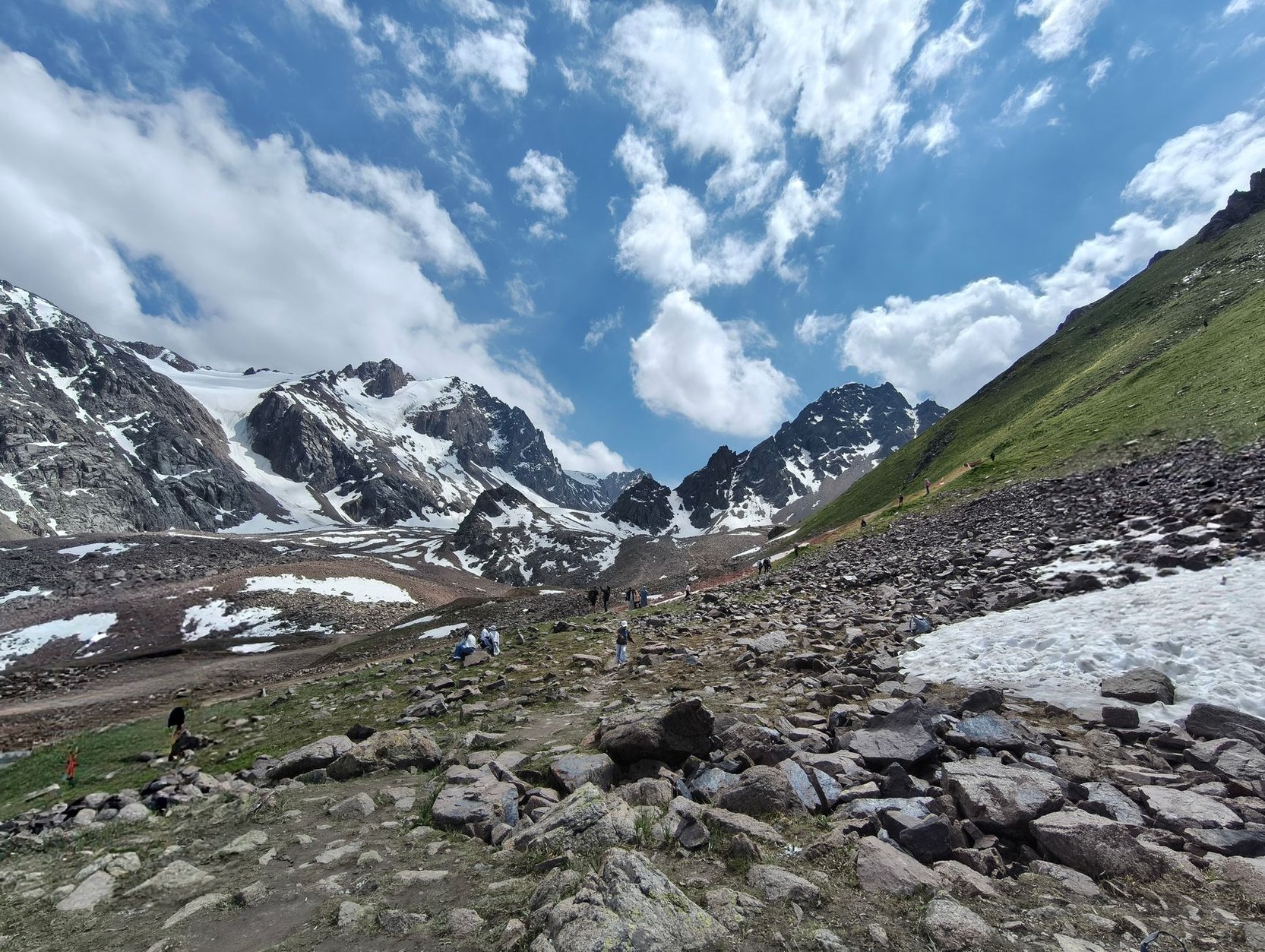
A rewarding day hike follows the rushing Ala Archa River through stands of fragrant juniper trees (*archa*) up toward the roaring Ak-Sai waterfall. The trail climbs steeply over glacial moraines, offering views of the sheer granite pyramid of Peak Free Korea (4,740m) and the Ak-Sai glacier, demonstrating why Kyrgyzstan is celebrated as the mountaineering capital of Central Asia.
Days 3–5: Lake Issyk-Kul — Silk Road Minarets, Canyons & Eagle Hunters
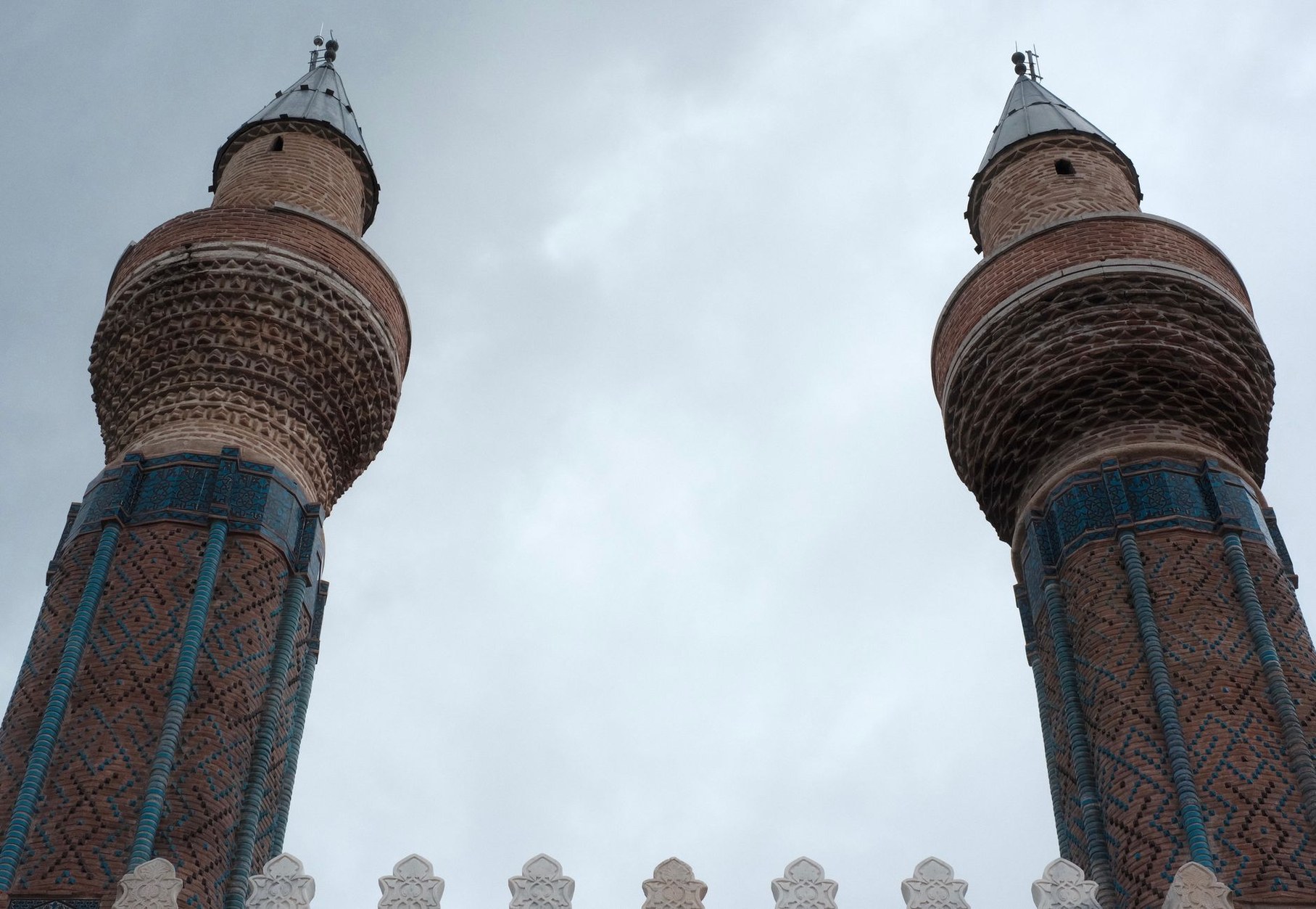
Departing Bishkek on day three, head eastward through the fertile Chuy Valley along an ancient branch of the northern Silk Road. Fifty kilometres from Bishkek stands Burana Tower, an 11th-century Karakhanid minaret marking the ancient Silk Road citadel of Balasagun, whose upper half collapsed in a 15th-century earthquake. Surrounding the tower on the open steppe is an open-air collection of *balbals*—enigmatic sixth- to tenth-century stone grave markers carved with detailed human faces, sabers, and wine chalices by ancient Turkic nomadic tribes.
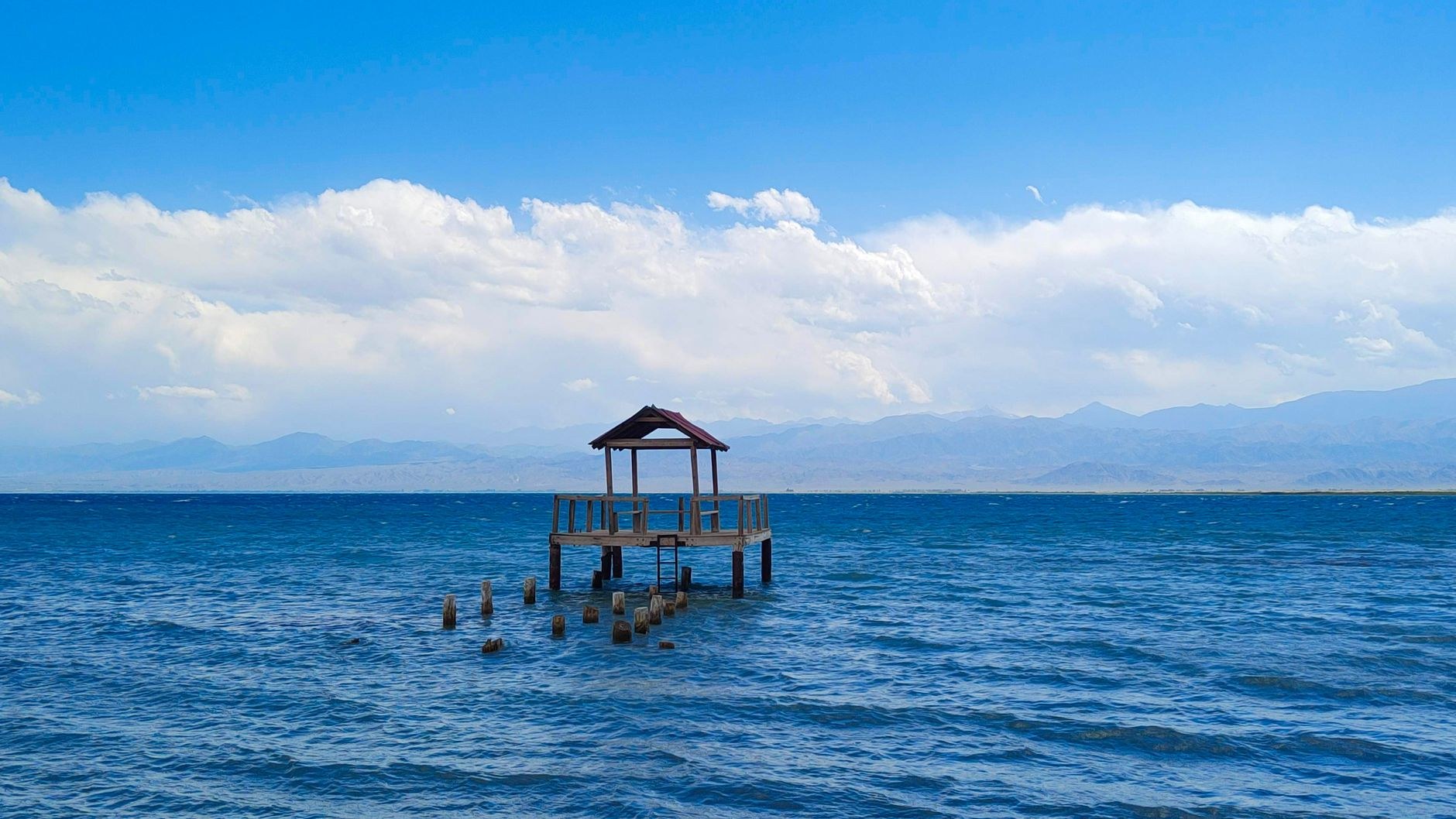
Continuing through the narrow, rocky defile of Boom Gorge, the road opens onto the sparkling blue expanse of Lake Issyk-Kul (‘Warm Lake’). Sitting at 1,607 metres above sea level and encircled by the glaciated peaks of the Tian Shan, Issyk-Kul is the second-largest alpine lake in the world, surpassed only by Lake Titicaca in South America. With a maximum depth of 668 metres and mild mineral salinity fed by thermal springs, the lake never freezes, even when winter temperatures across the surrounding steppes drop to minus thirty degrees Celsius.
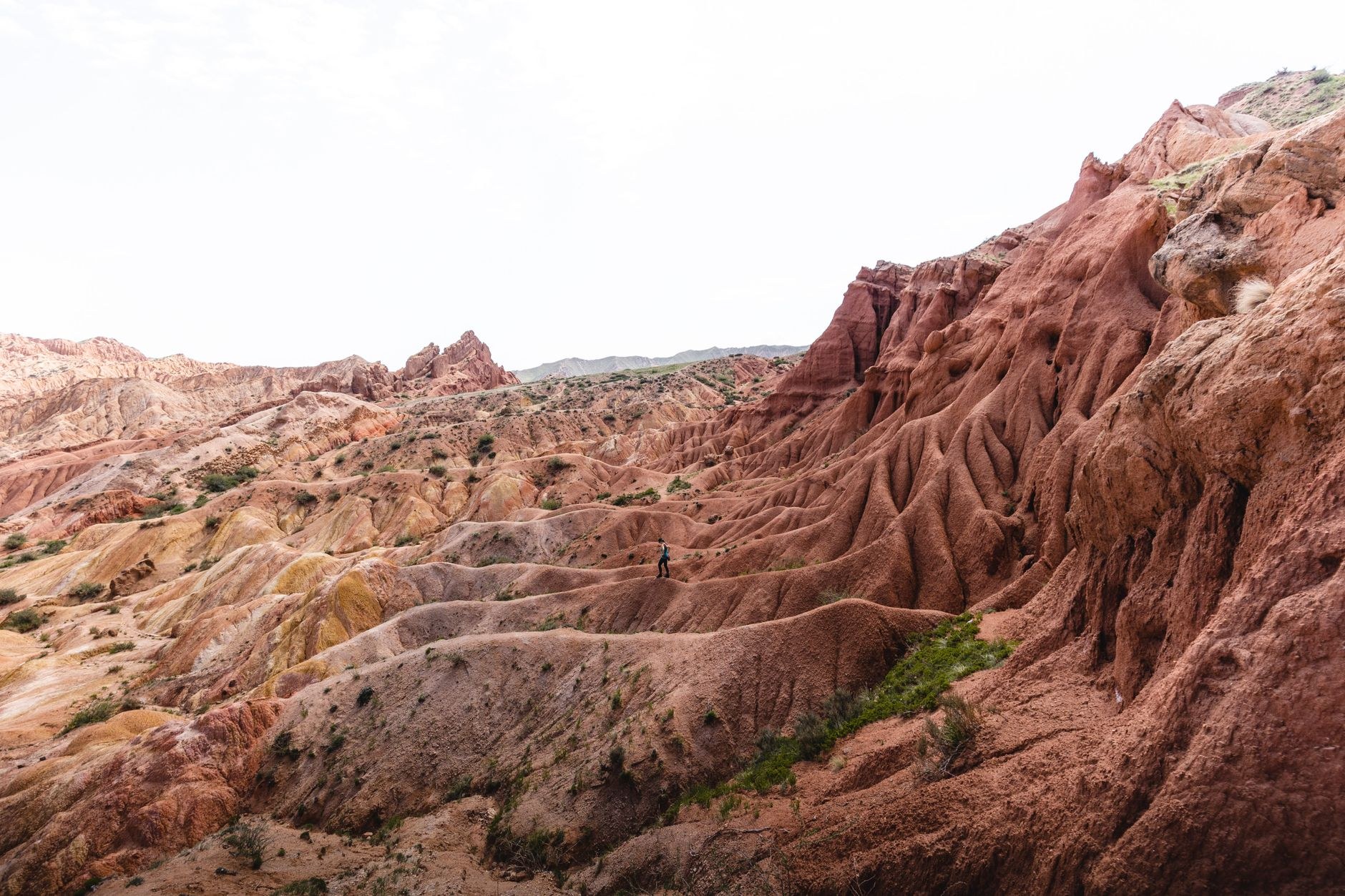
While the northern shore is developed with crowded resorts, the southern shore around Bokonbayevo and Tamga remains pristine and culturally rich. On day four, explore Skazka (Fairy Tale) Canyon, located near the village of Tosor. Here, millennia of wind and hydraulic erosion have sculpted mineral-rich red sandstone, yellow ochre clay, and white limestone into a surreal maze of jagged spires, knife-edge ridges, and natural labyrinthine walls resembling ancient battlements.
Further east along the lake lies the sacred valley of Jeti-Oguz (‘Seven Bulls’). A dramatic geological formation of blood-red sandstone cliffs rises above green alpine forests of Tian Shan spruce. Nomadic folklore tells of seven wild bulls turned to stone by the gods to punish a greedy khan. Higher up the valley in the flower-carpeted pastures of the Valley of Flowers (*Kok-Jaiyk*), wooden footbridges cross glacial torrents where semi-nomadic Kyrgyz families pitch their summer yurt camps.
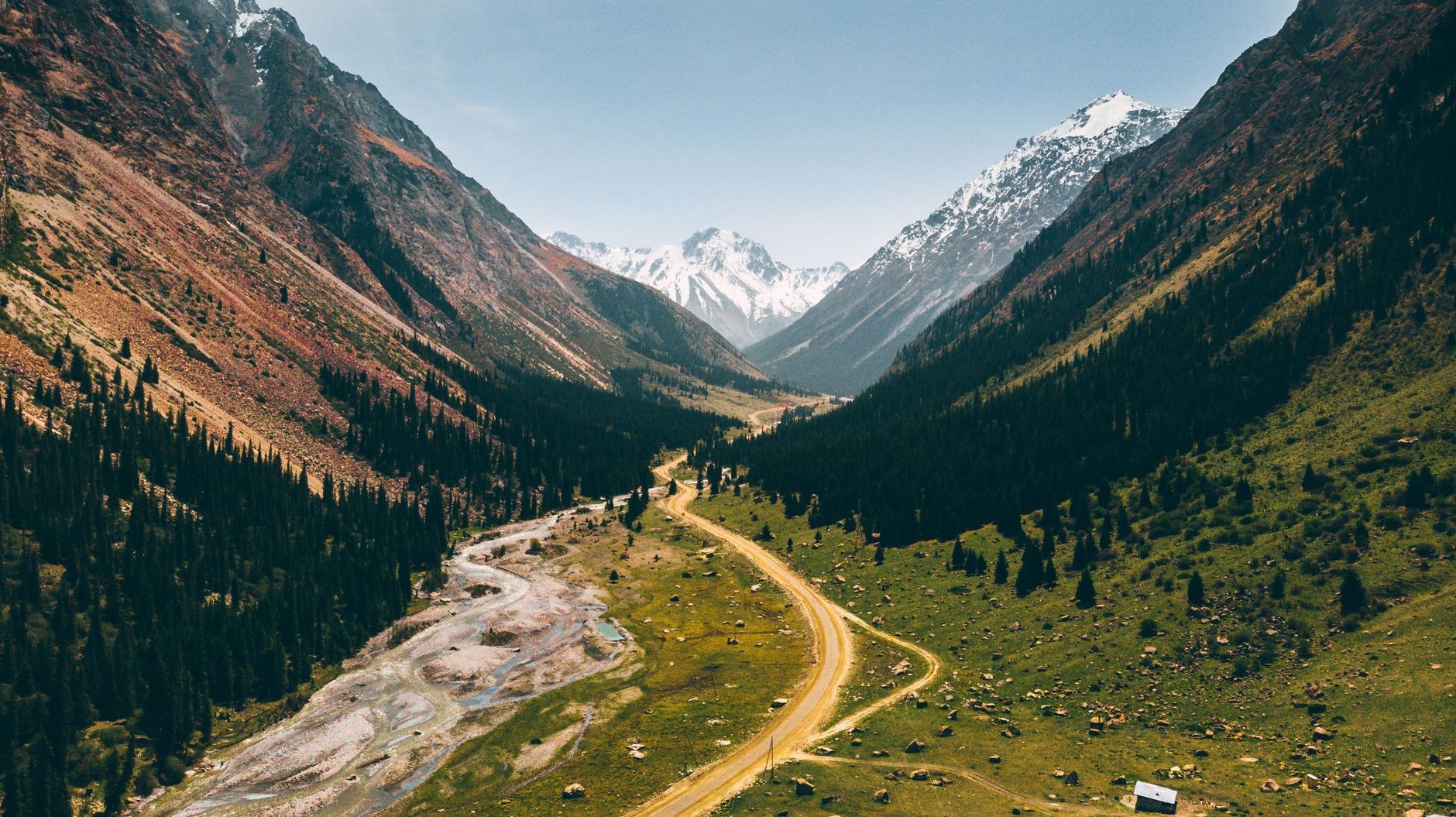
In Bokonbayevo, witness an authentic demonstration of *Salbuurun*—the ancient nomadic art of hunting with golden eagles (*berkut*). Master hunters (*berkutchi*) inherit their craft through family lineages, capturing juvenile female golden eagles from high mountain nests and training them for years to hunt foxes, hares, and marmots in partnership with Kyrgyz Taigan hunting sighthounds, exemplifying the deep symbiosis between nomadic pastoralists and mountain wildlife.
Days 6–7: Alpine Lake Song-Kul — Nomadic Life at 3,000 Metres
On morning six, leave the shores of Lake Issyk-Kul and navigate your 4×4 south toward Lake Song-Kul. The approach requires climbing one of Kyrgyzstan’s most exhilarating high-altitude gravel passes: the 33 Parrots Pass (Teskei Torpok, 3,133m) or the Kalmak-Ashu Pass (3,446m). The single-lane road snakes through thirty-three steep hairpin switchbacks clinging to vertical canyon walls, demanding experienced low-gear driving. Crossing the windswept crest, the terrain opens into a boundless alpine plain surrounding Lake Song-Kul, resting at 3,016 metres above sea level.
Song-Kul is accessible only during the brief summer months from June through mid-September. As soon as the mountain snows melt, semi-nomadic Kyrgyz shepherds from Kochkor and Naryn migrate upward to graze their herds of sheep, goats, and horses on the nutrient-rich jailoo pastures, erecting traditional felt yurts along the shoreline.
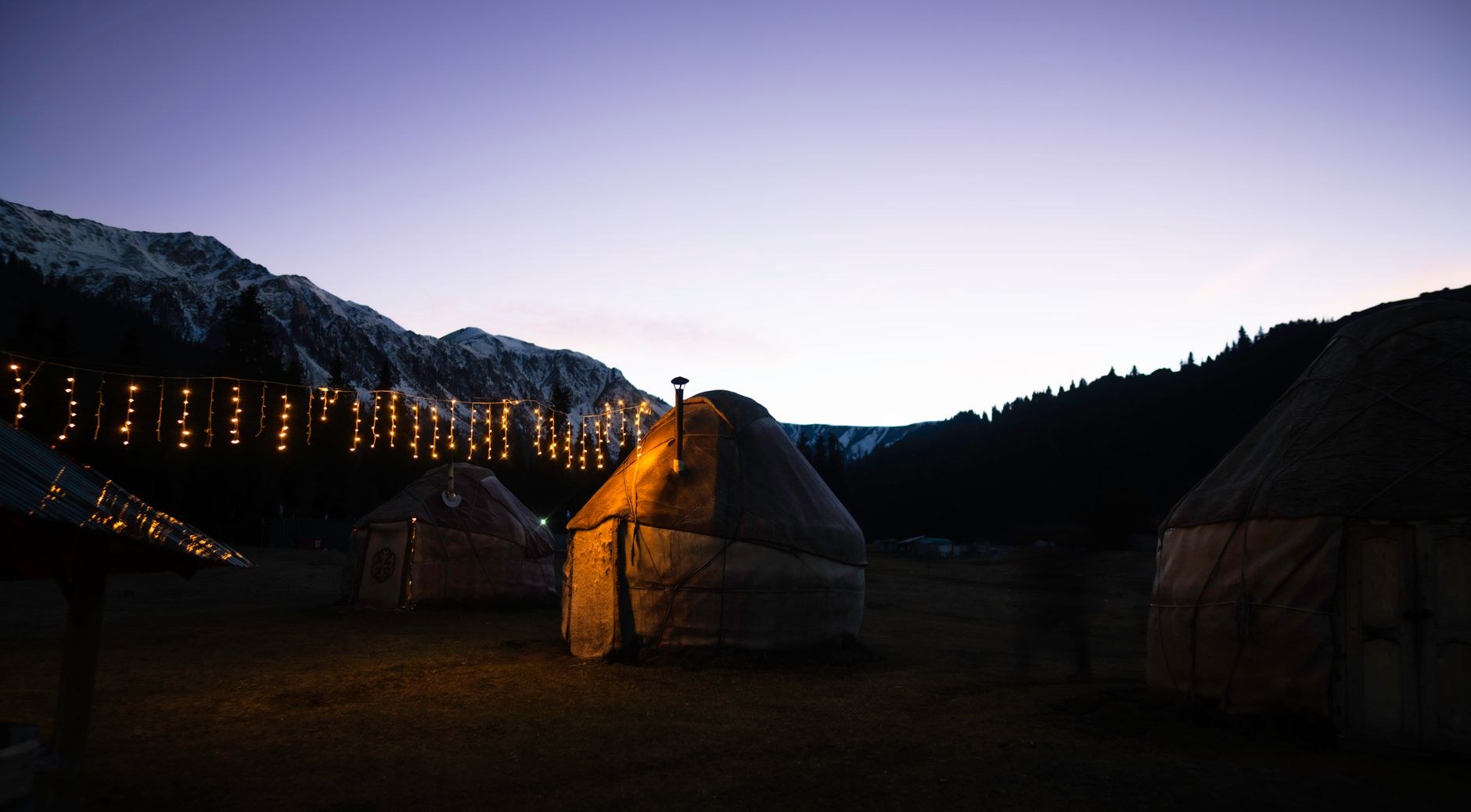
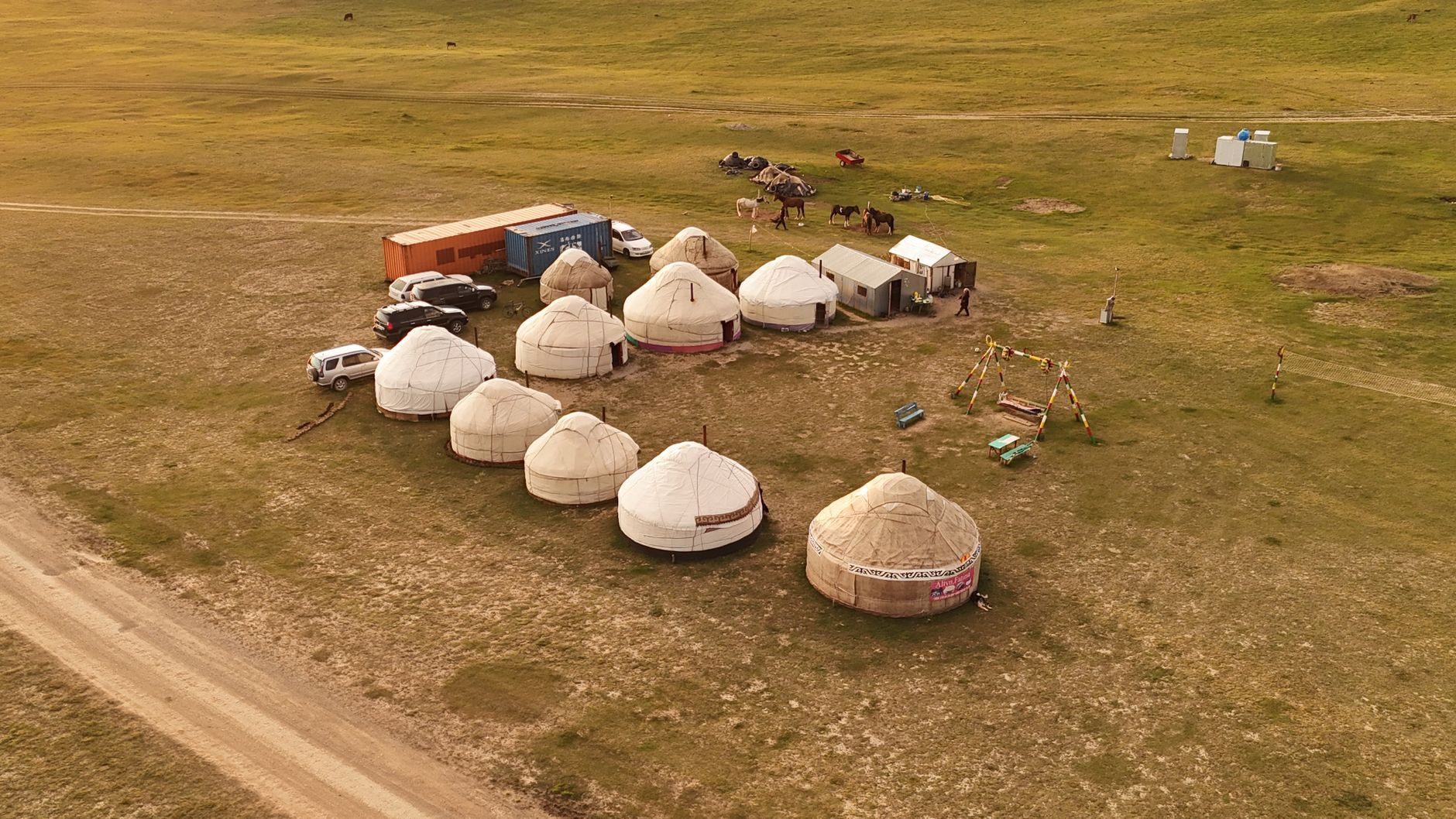
The Kyrgyz yurt (*boz-ui*) is an engineering triumph of portable architecture. Constructed without a single nail, its circular wooden lattice frame (*kerege*) is lashed with rawhide strips, connected by curved willow poles (*uuk*) to a central wooden crown called the *tunduk*. Covered in thick, weather-resistant sheep’s wool felt, the structure resists high mountain winds while remaining breathable. The tunduk holds immense spiritual significance as the portal connecting the home to the heavens; its distinctive cross-hatch design forms the central golden emblem on Kyrgyzstan’s red national flag.
Spending two nights in a traditional yurt camp provides an immersion into nomadic hospitality. Days are spent riding sure-footed Kyrgyz mountain horses across the treeless alpine steppe, herding livestock beside the mirror-like lake waters reflecting rolling mountains.
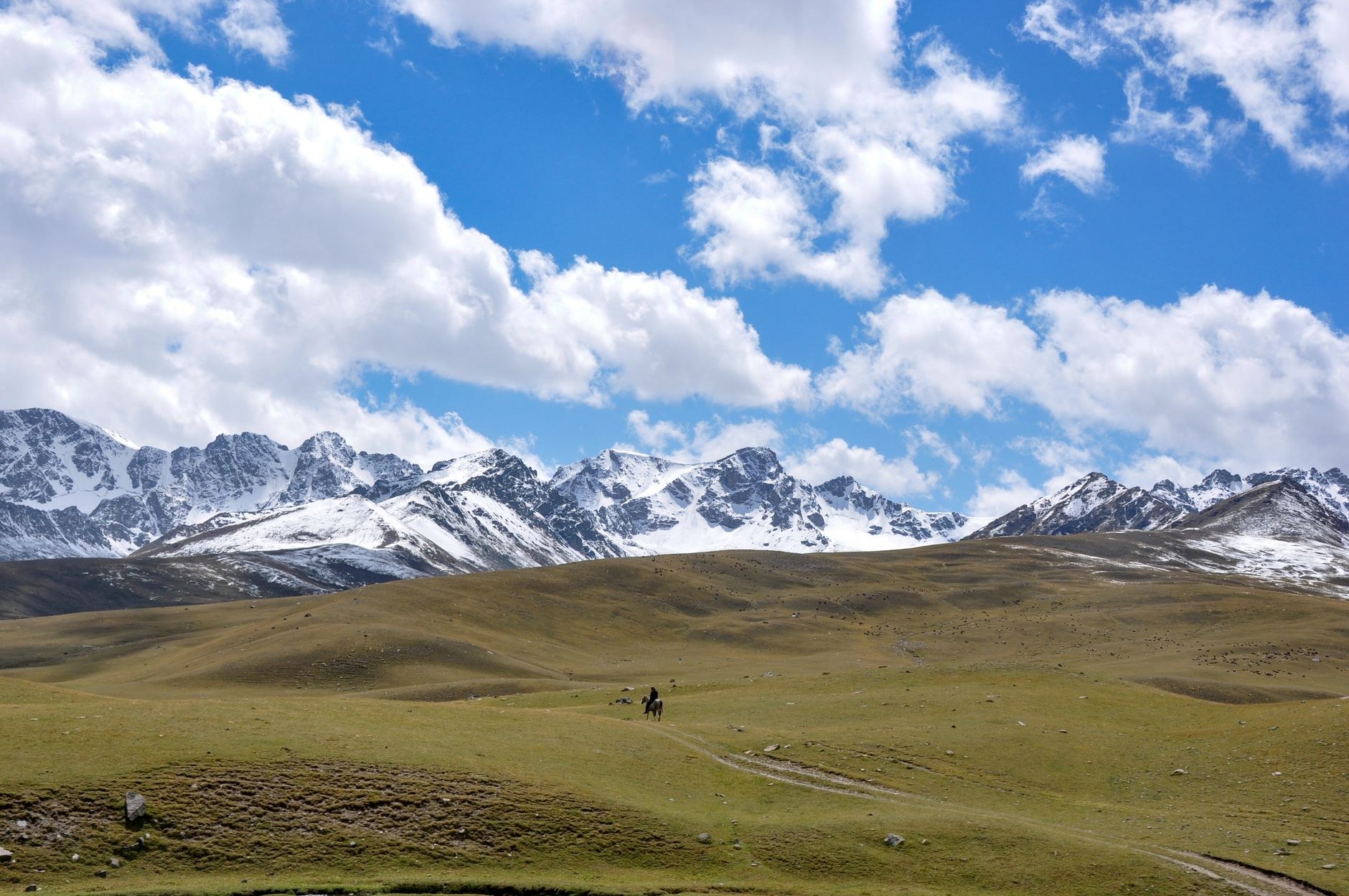
Inside the warm yurt, sit around the low wooden table (*dastorkhon*) to taste *kymyz*—fermented mare’s milk churned in smoked leather sacks, offering a tart, slightly effervescent flavor prized for centuries by steppe nomads. Dinner features *beshbarmak* (‘five fingers’), a celebratory dish of boiled mutton and fresh flat noodles in rich onion broth, eaten with the hands according to nomadic custom. When darkness falls at three thousand metres, step outside to gaze at the unpolluted night sky, where the Milky Way arches across the alpine basin with crystalline brilliance.
Day 8: Felt Artisan Traditions in Kochkor & Departure
Descend from Song-Kul on your final morning through the dramatic river gorge to Kochkor, a regional craft town on the valley floor. Kochkor is celebrated as the cultural center of traditional Kyrgyz feltmaking. Visit an artisan workshop to witness the labor-intensive creation of an authentic *shyrdak* carpet.

Recognized by UNESCO as Intangible Cultural Heritage, shyrdaks are handcrafted by cutting two contrasting layers of thick wool felt simultaneously into intricate nomadic patterns—such as the curved *kochkor* (ram’s horn) symbolizing wealth, or flowing water motifs representing life. The cutout pieces are swapped to create positive and negative mosaic designs, meticulously quilted together with dyed camel-hair cord. After purchasing an authentic felt keepsake directly from the women’s cooperative, your driver follows the modern highway north through Boom Gorge back to Bishkek Manas International Airport (FRU) for your departure flight.
Street Smarts: Tourist Scams, Overpriced Traps & Transit Hazards in Kyrgyzstan
Kyrgyzstan is one of the most hospitable and welcoming countries in Central Asia, where travellers are received with sincere warmth. However, travelling through remote alpine environments and crowded bazaar hubs introduces specific safety, health, and transport risks that require careful preparation.
- Overloaded Marshrutkas & Mountain Transit Hazards: Shared minibuses (*marshrutkas*) are inexpensive for intercity travel between Bishkek and Balykchy, but they are notoriously overcrowded, poorly maintained, and rarely equipped with working seatbelts. On steep mountain roads, drivers frequently overtake aggressively on blind curves. When travelling into high alpine regions like Song-Kul or Jeti-Oguz, public marshrutkas do not run; attempt these routes only in a high-clearance 4×4 with a vetted driver arranged through reputable organizations like Community Based Tourism (CBT Kyrgyzstan).
- Osh Bazaar Pickpocketing & Fake Police Document Checks: The crowded alleys of Osh Bazaar in Bishkek are frequented by coordinated pickpocket teams who target tourists near money changers and dried fruit stalls. Keep wallets and phones secured in zippered interior pockets. Furthermore, beware of plainclothes individuals claiming to be ‘tourist police’ asking to inspect your wallet or passport for counterfeit money or registration stamps. Legitimate officers wear uniforms and have no right to search your cash. Carry a laminated color photocopy of your passport and politely insist on walking to the nearest uniformed police station.
- Song-Kul High-Altitude Sickness & Sub-Zero Weather Shifts: Lake Song-Kul sits at 3,016 metres. Acute Mountain Sickness (AMS) can affect travellers who ascend directly from Bishkek (800m) without adequate acclimatization. Symptoms include headaches, nausea, and insomnia. Stay well hydrated and avoid heavy alcohol consumption on your first night. Furthermore, nighttime temperatures at Song-Kul regularly plunge below freezing even in July. Yurts rely on small wood- or dung-burning cast-iron stoves (*pechka*) that burn out during the night; bring thermal base layers, a wool hat, and a warm sleeping bag liner.
- Unregulated Horse Rental & Trail Accidents: Horse trekking is an essential highlight of jailoo culture, but renting horses from independent boys at lake camps without guides can be dangerous. Kyrgyz mountain horses are semi-wild and can bolt if startled by flapping rain ponchos or sudden movements. Always rent horses through established CBT coordinators who provide experienced horsemen (*at-bakar*), helmets, and properly adjusted leather stirrups.
- Mountain Pass Closures & Landslide Realities: The 33 Parrots Pass (3,133m) and Kalmak-Ashu Pass (3,446m) into Song-Kul are unpaved gravel tracks vulnerable to mudslides, rockfall, and unseasonal summer snowstorms. A sudden afternoon deluge can make passes impassable for days. Always confirm current pass conditions with the CBT office in Kochkor before starting your ascent, and maintain a flexible itinerary with buffer time for airport returns.
- Livestock Guardian Dogs (*Alabai* / *Döböt*): Large Central Asian shepherd dogs (*Alabai* or *Döböt*) guard sheep and horse herds across high summer pastures. These powerful dogs are fiercely territorial and view lone hikers on foot as threats to their livestock. When hiking near yurt camps or sheep flocks, never run or make aggressive arm gestures. Stop walking, hold your trekking poles horizontally across your body, and shout for the shepherd (*chaban*), who will immediately call the dog off.
By respecting these mountain realities and cultural customs, you will navigate Kyrgyzstan safely and comfortably, experiencing one of the world’s last great nomadic sanctuaries with total peace of mind.
Highland 4×4 Navigation & Mobile Connectivity with NXTL
Navigating Kyrgyzstan’s remote alpine passes and vast steppes requires continuous mobile connectivity. High-altitude gravel passes like the 33 Parrots Pass lack physical road signage; offline satellite mapping and live GPS tracking are essential for monitoring mountain routes. Mobile data is equally critical for coordinating homestay arrival times with CBT coordinators in Kochkor, checking high-altitude weather forecasts, and using translation apps when conversing with semi-nomadic families in jailoo pastures.
Standard foreign cellular roaming packages rarely function reliably in Central Asia or incur exorbitant roaming charges. Equipping your smartphone with an authentic NXTL Kyrgyzstan travel eSIM guarantees high-speed, dependable data across the country. Operating on primary tier-one carrier networks MegaCom, Beeline, and O! 4G/LTE, NXTL provides reliable coverage in urban Bishkek, throughout the Lake Issyk-Kul basin, and across high mountain transit corridors.
| Travel Profile | Primary Daily Mobile Usage | Estimated 8-Day Data | Cost at $0.93/GB |
|---|---|---|---|
| Light Navigator | Google Maps GPS tracking, CBT homestay coordination, translation, basic messaging | 1.5 GB | $1.39 |
| Balanced Explorer | Mountain trail GPS navigation, photo uploads, restaurant research, Yandex Go taxis | 4.5 GB | $4.17 |
| Heavy Digital Nomad | Continuous 4G/LTE hotspot tethering, remote work video calls, streaming, cloud backups | 10.0 GB | $9.26 |
The NXTL travel connectivity model provides unmatched flexibility for overland adventurers. Operating across 180+ supported countries and 460+ carrier networks, your single NXTL eSIM remains reusable across international borders without tedious reinstallation. An initial purchase of $11.99 includes $10.00 in preloaded data credit, which never expires as long as your account remains active. Because data is billed strictly on a pay-as-you-go basis, you only pay for the precise megabytes you consume, eliminating wasteful expiring daily bundles.
Furthermore, mobile hotspot and tethering are fully permitted across Kyrgyzstan, allowing you to connect your laptop or tablet in mountain guesthouses effortlessly. With dual-SIM capability, your physical home carrier SIM stays active in your phone for essential two-factor banking SMS and emergency voice calls, while NXTL handles all data traffic at local rates starting from just $0.93/GB. Setting up takes minutes via a simple QR code scan before you depart, ensuring that as soon as your aircraft lands at Bishkek Manas Airport, your phone connects to the local LTE grid automatically.
From the towering Soviet monuments of Bishkek and the ancient Karakhanid bricks of Burana Tower to the red sandstone labyrinths of Skazka Canyon and the silent, star-filled skies above Lake Song-Kul, Kyrgyzstan offers an unforgettable encounter with the soul of Central Asia. Pack warm thermal layers, travel with an open spirit, and prepare for a majestic mountain adventure.