Guatemala presents one of the most compelling cultural landscapes in the Americas, yet independent travelers frequently stumble over its rugged mountain geography and unpredictable road transit. An eight-day itinerary links the Spanish colonial architecture of Antigua Guatemala and the volcanic shores of Lake Atitlán with the ancient Maya rainforest citadels of Tikal in Petén. By relying on vetted tourist shuttles in the western highlands and substituting grueling ten-hour overland bus rides with a forty-five-minute domestic flight to Flores, travelers experience profound cultural transitions without losing days to winding highways.
The primary logistical trap in Guatemala is underestimating topography. The volcanic spine running through the southern highlands creates steep altitude variations, where narrow switchback roads face landslides and slow agricultural trucks. Navigating public chicken buses across three departments with luggage is exhausting. Structured tourist shuttle vans and scheduled domestic aviation allow you to bridge the high-altitude volcanic belt and northern tropical lowlands with confidence.
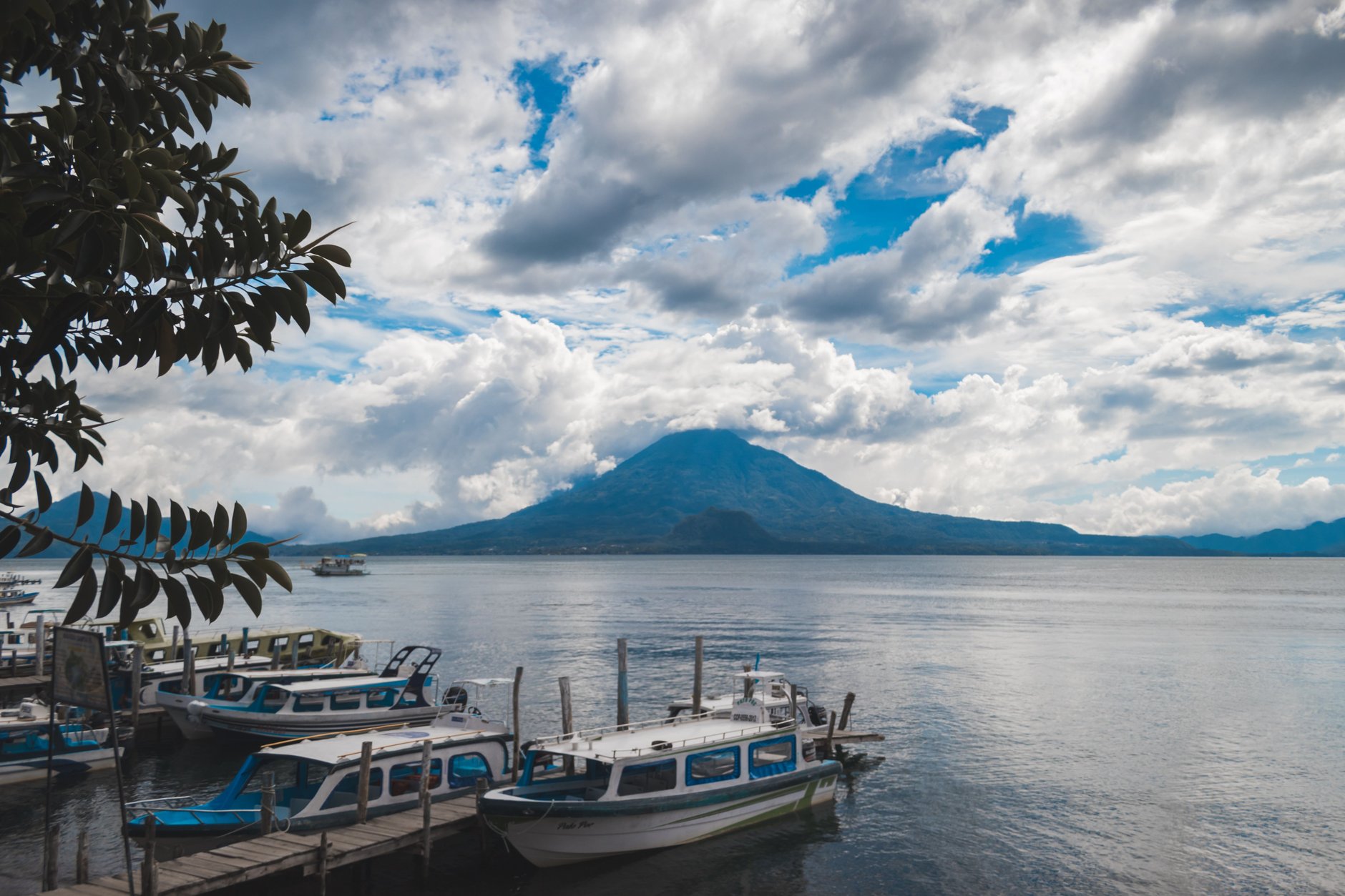
Understanding Guatemala requires engaging with its living indigenous heritage rather than viewing it solely through archaeological relics. In the villages surrounding Lake Atitlán, indigenous Tz’utujil and Kaqchikel Maya communities maintain ancestral linguistic traditions, sacred textile arts, and complex syncretic spiritual practices that have survived centuries of colonial rule. The route detailed below balances urban colonial history, living highland traditions, and monumental pre-Columbian rainforest archaeology.
Strategic Route Architecture: The 8-Day Highlands & Petén Itinerary
Eight days allows a balanced, realistic exploration of Guatemala’s three premier cultural zones: three nights in Antigua Guatemala, two nights on the tranquil shores of Lake Atitlán, and two nights in the northern department of Petén to explore Tikal National Park, concluding with a final evening in Guatemala City or Antigua. This structure provides adequate time to acclimatize to high elevations before trekking or exploring remote jungle trails.
| Day | Base | Key Stops & Cultural Sightseeing | Transit Mode | Transit Time | Advance Bookings Required |
|---|---|---|---|---|---|
| Day 1 | Antigua Guatemala | Arrive GUA airport, private shuttle to Antigua, evening stroll past Santa Catalina Arch, dinner on Parque Central. | Private shuttle | 1 hr 15 min | Vetted airport shuttle, Antigua heritage hotel. |
| Day 2 | Antigua Guatemala | Iglesia de la Merced, ruins of Convento de las Capuchinas, afternoon coffee plantation tour, sunset at Cerro de la Cruz. | Walking & Tuk-tuk | Local transit | Capuchinas admission ticket, coffee estate tour. |
| Day 3 | Antigua Guatemala | Day excursion to Pacaya Volcano lava fields or base of Acatenango, traditional pepián cooking class. | Shared 4WD van | 1 hr 30 min each way | Licensed INGUAT volcano guide, cooking class. |
| Day 4 | Lake Atitlán (San Juan) | Morning shuttle across mountain pass to Panajachel, public lancha boat to San Juan La Laguna, artisan textile walk. | Shuttle & Lancha | 2.5 hrs road + 25m boat | Antigua to Panajachel shared tourist shuttle. |
| Day 5 | Lake Atitlán (San Juan) | Early boat to Santiago Atitlán to visit Maximón shrine, lakeside hike along lower cliffs, sunset dinner in Santa Catarina. | Public lancha boats | 30 min between towns | Local indigenous community guide in Santiago. |
| Day 6 | Flores / Tikal (Petén) | Morning boat to Panajachel, shuttle to GUA airport, 45-minute domestic flight to Flores, sunset over Lake Petén Itzá. | Shuttle & Flight | 3 hrs road + 45m flight | TAG Airlines domestic flight GUA-FRS. |
| Day 7 | Flores / Tikal (Petén) | Early morning departure to Tikal National Park, climb Temple IV, explore Great Plaza, afternoon wildlife spotting. | Park minibus shuttle | 1 hr 15 min each way | Tikal National Park early entrance ticket. |
| Day 8 | Guatemala City / Departure | Morning stroll around Flores island, return flight from Flores to Guatemala City (GUA), international departure. | Flight | 45 min air | Return domestic flight TAG Airlines. |
The pacing of this route deliberately places the domestic flight to Flores on Day 6. Attempting to travel overland from Lake Atitlán to Petén requires enduring ten to twelve punishing hours on winding secondary roads subject to military checkpoints and mechanical delays. By flying from Guatemala City’s La Aurora Airport to Flores Santa Elena Airport, you preserve your energy for walking the sprawling jungle trails of Tikal.
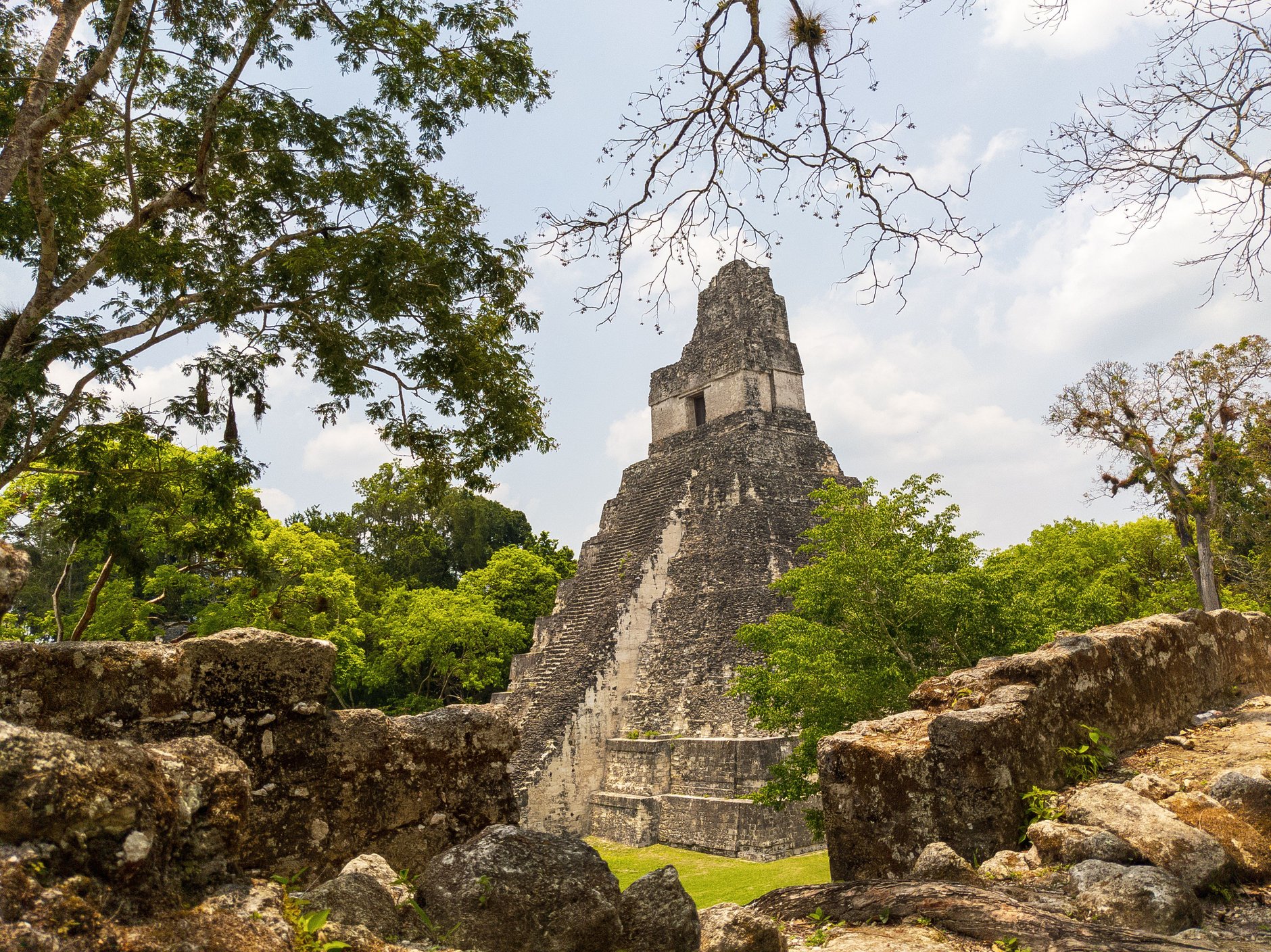
Selecting San Juan La Laguna or Santa Catarina Palopó as your overnight base on Lake Atitlán instead of noisy Panajachel provides a significantly calmer cultural environment. Panajachel serves as the lake’s busy transit hub, filled with persistent street vendors and noisy tuk-tuks. The smaller shore towns allow you to sleep quietly next to the water, waking to the rhythmic sound of small waves against volcanic stone and early fishermen paddling traditional wooden dugout canoes (*cayucos*).
Antigua Guatemala: Earthquakes, Monasteries and Volcanic Horizons
Antigua Guatemala sits at an elevation of 1,530 meters, situated in a mountain valley framed by three dramatic volcanic peaks: Volcán de Agua, Acatenango, and the perpetually smoldering Volcán de Fuego. Founded in 1543 as *Santiago de los Caballeros de Guatemala*, it served for more than two centuries as the grand military and cultural seat of the Captaincy General of Guatemala, presiding over a vast territory stretching from southern Mexico to Costa Rica.
The city’s architectural character was forever defined by tectonic catastrophe. In July 1773, the devastating Santa Marta earthquakes struck the valley, fracturing baroque cathedral domes, collapsing convent cloisters, and reducing palaces to rubble. The Spanish Crown subsequently decreed that the capital be relocated thirty miles east to the Ermita Valley, establishing present-day Guatemala City. Antigua was largely abandoned, freezing its Renaissance street grid and Spanish baroque ruins in an extraordinary state of preservation.
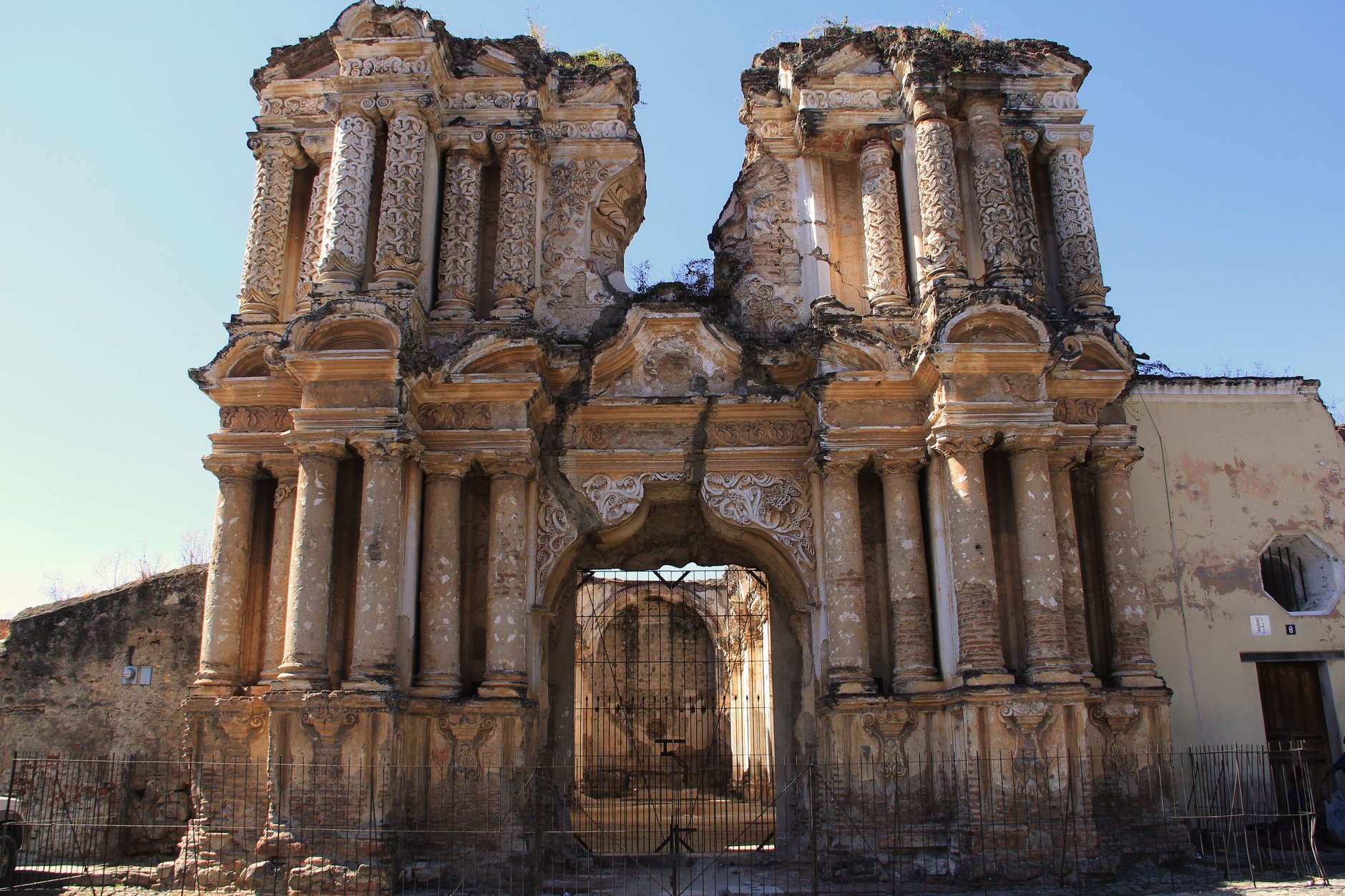
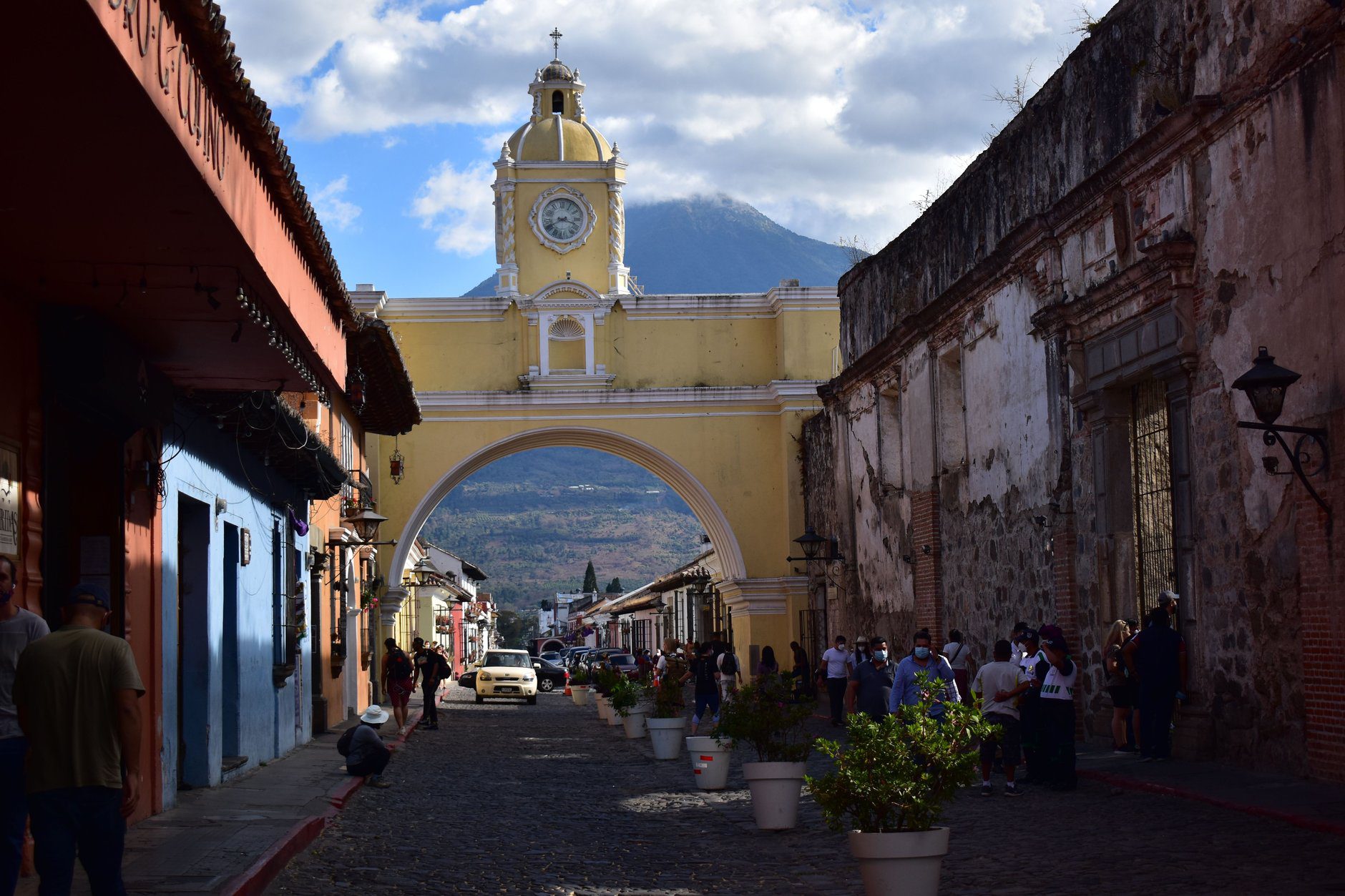
Wandering Antigua’s cobblestone streets reveals striking architectural details. The most famous landmark is the pale yellow Santa Catalina Arch (*Arco de Santa Catalina*), built in 1694 with a hidden interior passageway that allowed cloistered nuns to cross the street unseen. Today, it frames the symmetrical cone of Volcán de Agua, creating one of Latin America’s most recognizable vistas.
Beyond the arch, explore the partially restored ruins of Convento de las Capuchinas. Built in 1736, this complex is celebrated for its circular tower containing eighteen monastic cells arranged around a central patio, featuring an advanced underground ventilation system engineered by master architect Diego de Porres. At the Church of San Francisco El Grande, pilgrims gather to pray at the tomb of Santo Hermano Pedro de Betancur, Central America’s first canonized saint, leaving handwritten notes of thanks and wax votive candles.
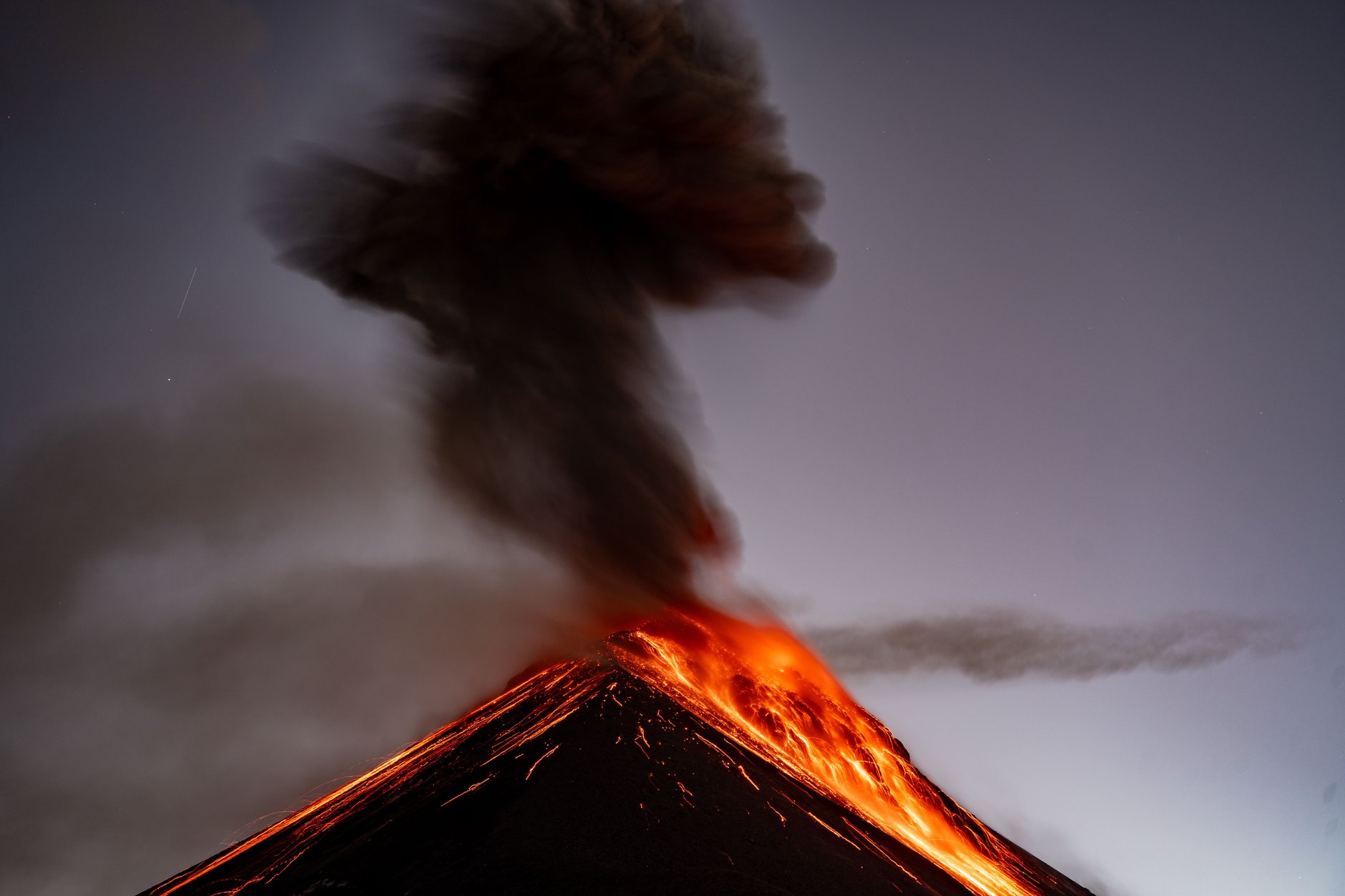
For outdoor enthusiasts, Antigua provides access to extraordinary volcanic ascents. The demanding overnight trek up Volcán Acatenango (3,976 meters) brings hikers to a high-altitude ridge facing the active crater of neighboring Volcán de Fuego, where gas bursts and glowing lava fountains erupt into the night sky every twenty to thirty minutes. Those seeking a gentler excursion can explore Pacaya Volcano, walking across solidified black basalt lava fields where subterranean geothermal vents roast marshmallows and warm mountain winds.
Lake Atitlán: Volcanic Calderas and Living Mayan Traditions
Traveling two and a half hours west from Antigua brings you to the rim of Lake Atitlán. The lake occupies a massive volcanic caldera formed approximately 84,000 years ago during the catastrophic Los Chocoyos super-eruption. Today, the water reaches depths exceeding 340 meters, ringed by steep volcanic cliffs and guarded by three dormant peaks: Volcán San Pedro, Volcán Tolimán, and Volcán Atitlán.
What distinguishes Lake Atitlán is the enduring presence of its indigenous communities. Around the caldera rim, roughly a dozen distinct villages maintain deep Mayan roots, divided primarily between Tz’utujil and Kaqchikel ethnolinguistic groups. In San Juan La Laguna, community-led textile cooperatives have revived ancestral backstrap loom weaving. Indigenous women harvest organic cotton, spin fibers by hand, and dye yarn using botanical infusions made from wild indigo, sacatinta leaves, avocado seeds, and crushed cochineal insects.
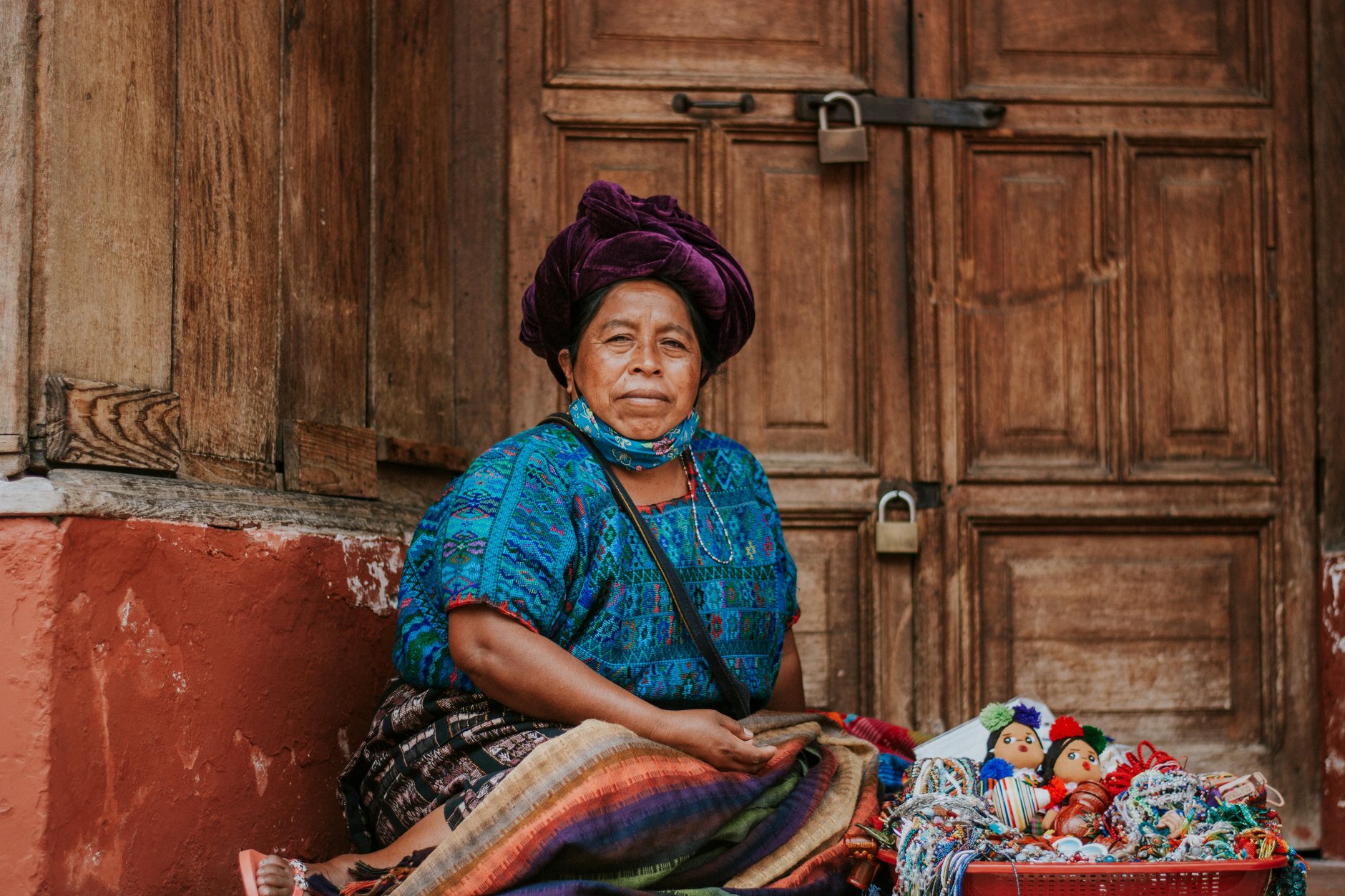
Across the bay in Santiago Atitlán, spiritual life centers around Maximón (San Simón), a syncretic deity blending pre-Columbian Mayan creator gods with Spanish Catholic folk traditions. Housed in the residence of a rotating religious brotherhood (*cofradía*), the wooden effigy is attended by shamans who chant prayers while devotees offer rum (*aguardiente*), cigars, and candles in exchange for healing and protection.
Navigating between lake settlements is handled by public water taxis known as *lanchas*. These fiberglass launches depart every twenty minutes from town docks. Plan your boat trips for morning hours. By early afternoon, the *Xocomil*—a fierce mountain wind caused by warm coastal air colliding with cold highland air masses—whips across the caldera, creating substantial waves and making boat crossings choppy and wet.
Petén & Tikal: The Ancient Rainforest Metropolis
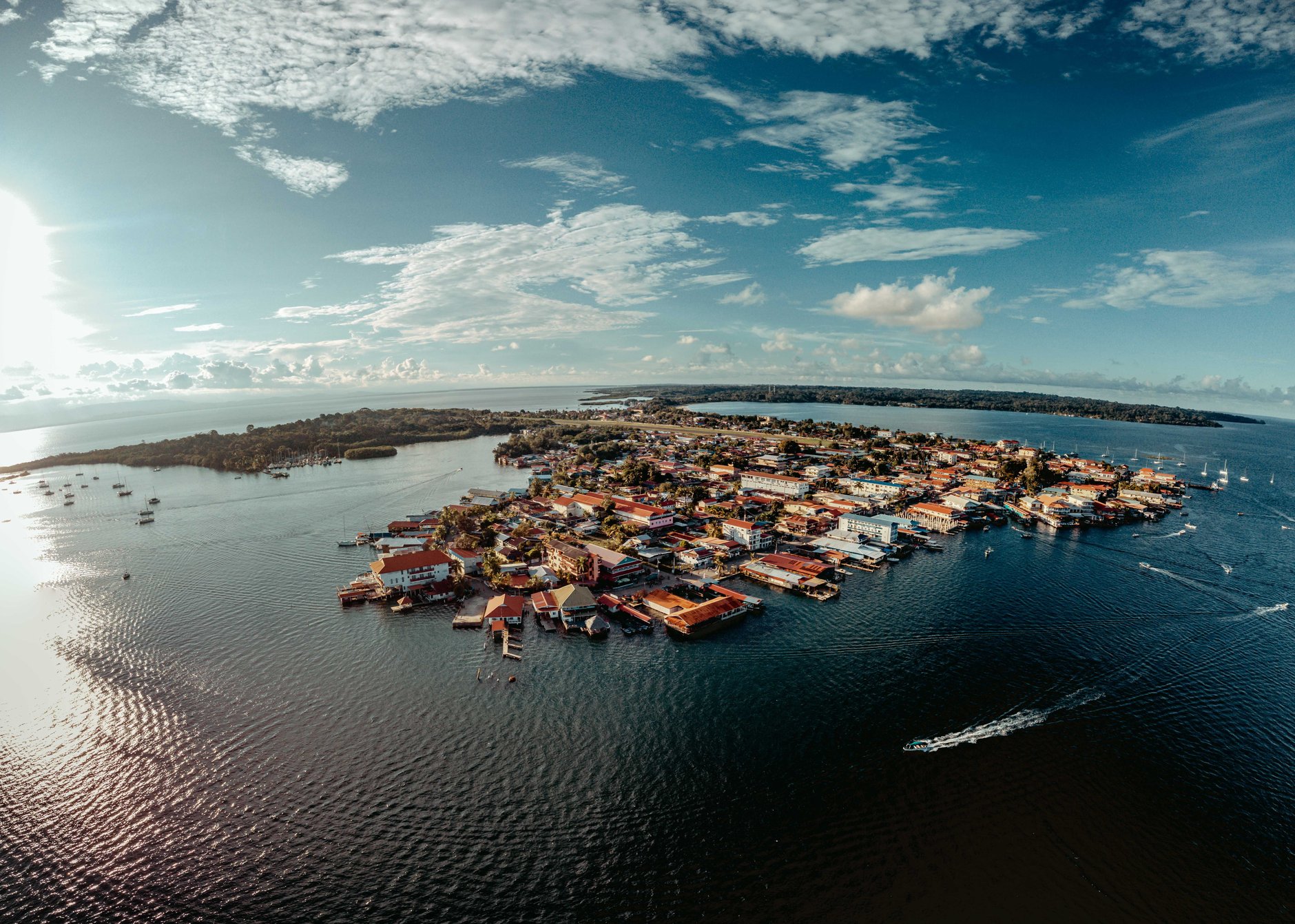
Leaving the highlands behind, a domestic hopper flight descends into the dense tropical lowlands of the northern Petén basin, landing at Flores Island on Lake Petén Itzá. Flores is a charming pastel colonial town connected to the mainland by a short stone causeway, serving as the staging ground for expeditions into the Maya Biosphere Reserve.
An hour’s drive north from Flores leads into Tikal National Park, one of the most powerful kingdoms of the ancient Maya world, known in classical inscriptions as *Yax Mutal*. Flourishing between 200 and 900 CE, Tikal dominated regional trade routes and engaged in monumental urban competition with neighboring rivals like Calakmul. Today, the archaeological complex encompasses thousands of ancient structures scattered across primary tropical rainforest.
Walking through the forest trails, the deep roar of howler monkeys reverberates through the mahogany canopy, while spider monkeys swing through branches overhead. The ceremonial heart of the city is the Great Plaza, flanked by Temple I (Temple of the Great Jaguar, rising 47 meters and housing the funerary crypt of ruler Jasaw Chan K’awiil I) and Temple II (Temple of the Masks). The stark limestone pyramids, weathered by centuries of jungle humidity, stand as towering testaments to advanced pre-Columbian geometry and astronomical alignment.
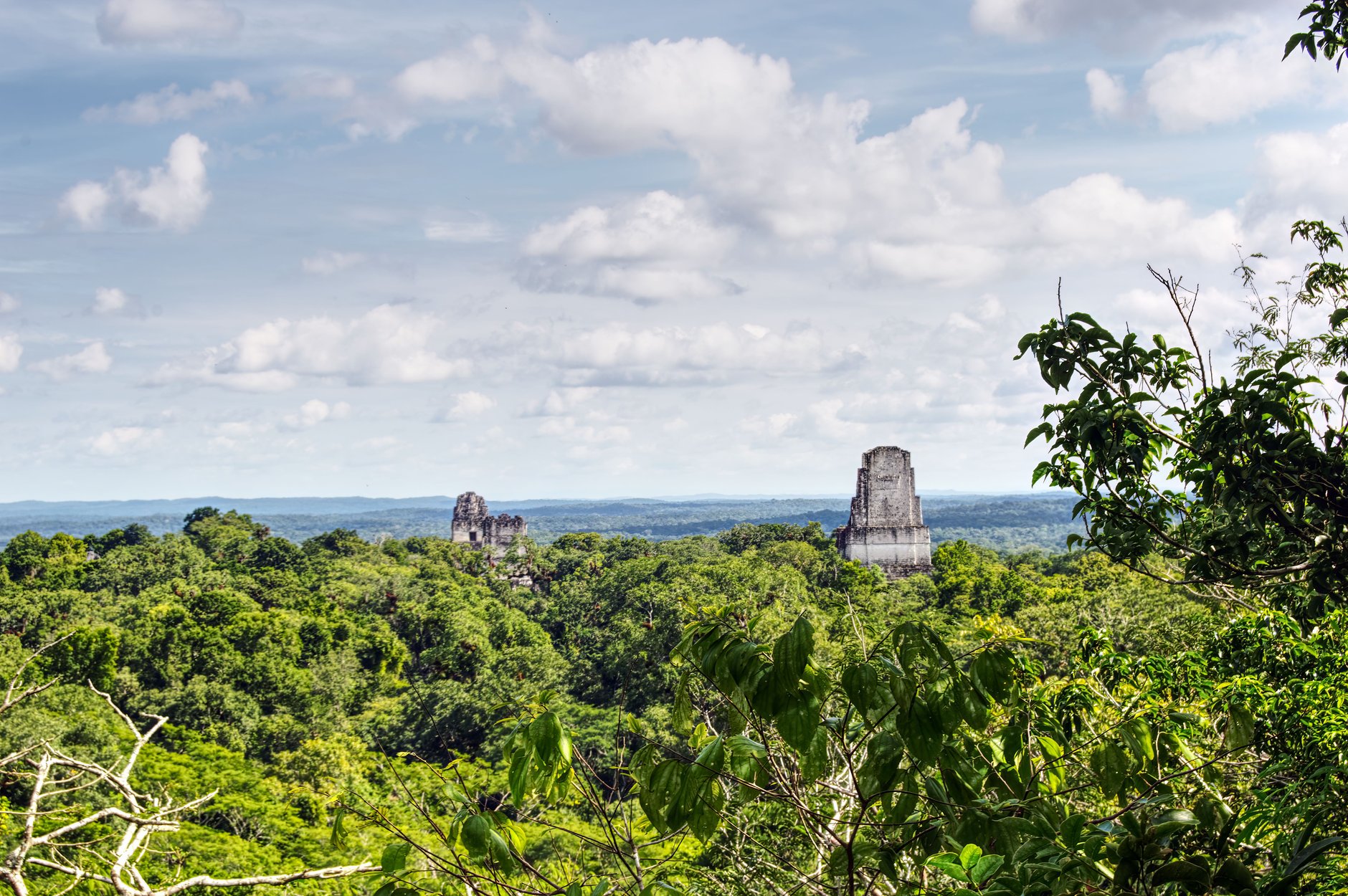
The definitive highlight of any Tikal visit is climbing Temple IV (Temple of the Double-Headed Serpent). Standing sixty-five meters tall, it is the highest pre-Columbian structure in the Maya world. From its summit platform, you gaze out across a vast sea of unbroken green jungle canopy, through which the limestone roof-combs of Temples I, II, and III pierce the morning mist like ancient islands rising from an emerald sea.
Gastronomy: Mayan Ceremonial Stews and Heirloom Corn
Guatemalan gastronomy is deeply anchored in indigenous Mesoamerican agricultural staples: corn, beans, squash, and native chilies, enriched by Spanish colonial livestock and Mediterranean aromatics. At the heart of highland cooking is *Pepián*, widely recognized as Guatemala’s national dish. Tracing its origins to pre-Hispanic Kaqchikel ceremonial feasts, Pepián is a thick, complex stew made by slow-cooking chicken, beef, or pork in a sauce prepared from fire-toasted pumpkin seeds (*pepitoria*), sesame seeds, charred dried chilies (*guajillo* and *pasa*), roasted tomatoes, and roasted tortillas.
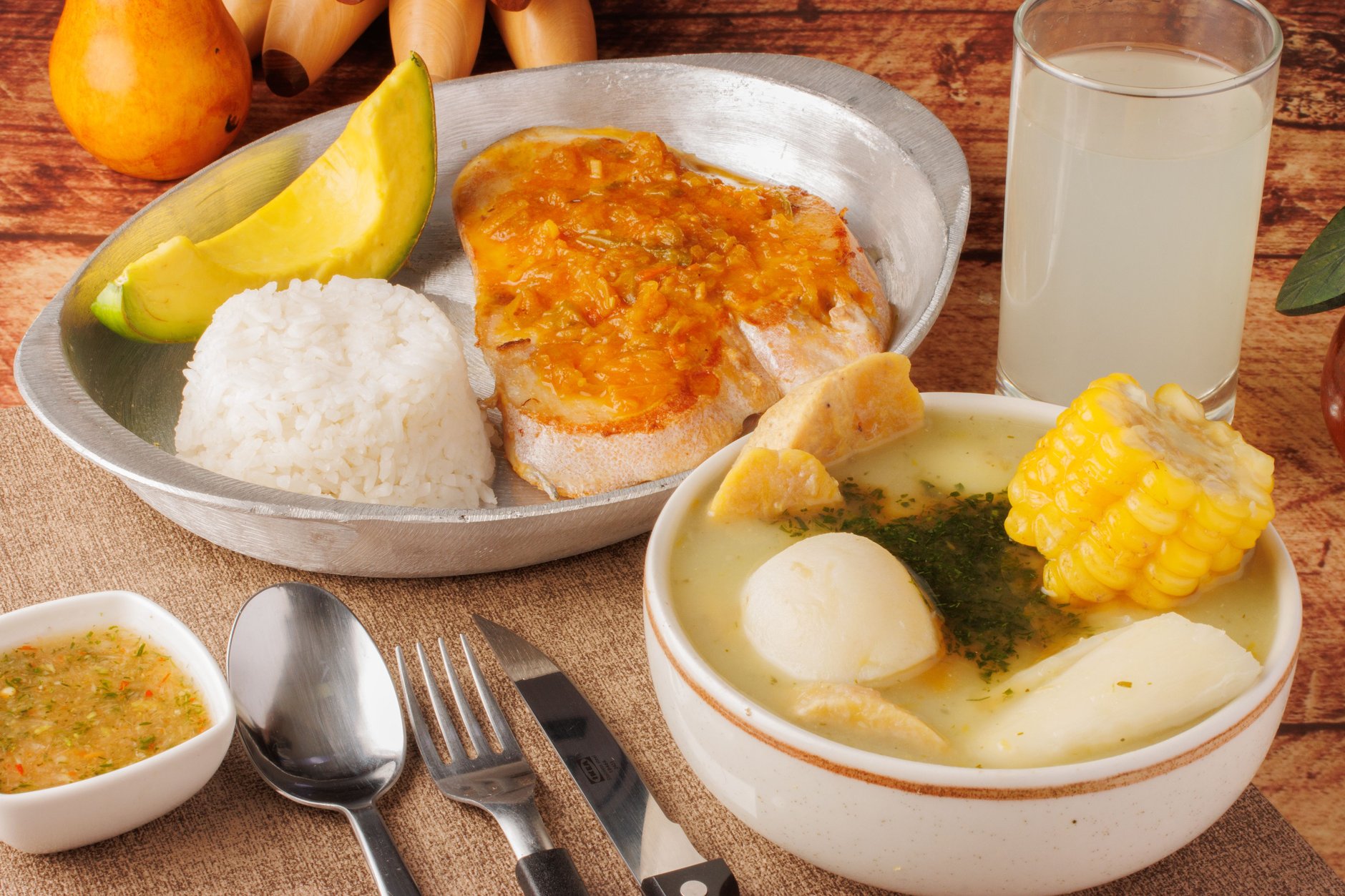
In the Alta Verapaz and Petén lowlands, the premier traditional dish is *Kak’ik*, an ancient Q’eqchi’ Maya turkey soup. Fragrant with coriander, garlic, and wild *samat* herbs, the broth gains its crimson color from achiote paste and cobanero chili peppers, served with turkey drumstick and warm tamalitos wrapped in plantain leaves. Every meal is accompanied by freshly pressed, handmade corn tortillas toasted on clay comales over wood fires.
Avoiding Common Scams, Pitfalls, and Tourist Traps
While Guatemala is welcoming and hospitable, independent travelers often encounter persistent street scams and transport traps. Awareness of these common tactics ensures you protect your travel funds and stay safe.
- Chicken Bus Luggage Roof Theft and Reckless Drivers: Retired American school buses (“chicken buses”) are brightly painted and inexpensive, but their drivers operate at dangerous speeds on mountain roads. Furthermore, luggage loaded onto open roof racks is vulnerable to slash-and-grab theft during uphill traffic stops. For journeys between cities, always book licensed tourist shuttle vans or vetted private drivers.
- Unregistered Volcano Guides and Inadequate Gear: In Antigua, informal touts offer cheap thirty-dollar hikes up Acatenango. These rogue operators frequently take travelers up the mountain without thermal sleeping gear, weatherproof tents, or emergency satellite radios. Temperatures on Acatenango drop below freezing, and exposure can be fatal. Only hire certified INGUAT guides with established expedition agencies like OX Expeditions or CA Travelers.
- Lake Atitlán Lancha Private Boat Charter Extortions: At the public docks in Panajachel, boat touts often tell arriving tourists that the public lanchas are “finished for the day” and attempt to charge twenty to thirty dollars for a “private charter.” Public boats run consistently until 18:00 or 19:00. The standard public fare is fixed at twenty to twenty-five Quetzales (roughly $3) per person. Pay the boat pilot directly on board, not an intermediary on the dock.
- Synthetic Machine-Woven Textile Counterfeits: In market towns like Chichicastenango and Antigua, vendors frequently market factory-milled synthetic textiles from overseas as “genuine handwoven silk and organic cotton.” Real Mayan backstrap weaving requires weeks of hand labor and has an irregular handmade texture on the reverse side. Purchase directly from certified indigenous women’s weaving cooperatives in San Juan La Laguna.
- Flores Airport Overpriced Tikal Transport Touts: When stepping off the domestic flight at Flores Airport, independent passengers are surrounded by aggressive drivers offering private Tikal transfers for eighty to one hundred dollars. Regulated shared tourist minibuses depart directly from the terminal parking area for roughly ten to fifteen dollars per person round trip.
- Unofficial Border Crossing Stamp Fees: If traveling overland between Guatemala, Belize, or Honduras, fraudulent agents at border posts may demand an unofficial “exit tax” or “stamp fee” of twenty to fifty Quetzales. Official immigration processing at land borders is free of charge unless clearly specified under bilateral treaties. Always demand an official government receipt if money is requested.
Remaining vigilant regarding transport arrangements and tour operator credentials keeps your itinerary running smoothly and protects your budget for legitimate cultural experiences.
Packing Essentials and Regional Seasonal Advice
Packing for Guatemala requires preparing for dramatic climate shifts between high-altitude mountain valleys and sweltering lowland tropical jungles. In Antigua and Lake Atitlán, elevations exceed 1,500 meters, resulting in warm days around 24°C (75°F) and crisp evenings dropping to 10°C–13°C (50°F–55°F). Layering is essential: breathable cotton tops, comfortable trousers, a warm fleece jacket, and broken-in walking shoes with aggressive tread for navigating slippery cobblestone streets and mountain paths.
If you plan to trek Acatenango, specialized cold-weather gear is mandatory, including thermal base layers, a down parka, warm gloves, and a wool hat, as overnight temperatures at the summit ridge regularly dip below freezing (-2°C / 28°F). In contrast, Petén and Tikal sit near sea level, where humidity is high and temperatures regularly hover around 32°C–35°C (90°F–95°F). Pack quick-drying, lightweight technical clothing, broad-spectrum insect repellent containing DEET, and a wide-brimmed sun hat.
Guatemala has two main seasons: the dry season (*verano*), lasting from November through April, and the rainy season (*invierno*), extending from May through October. The dry season offers clear skies, dry mountain trails, and optimal volcano viewing conditions. Visiting during the green season, however, brings fewer crowds, lush green landscapes, and lower accommodation rates. Rain typically arrives as reliable afternoon downpours, leaving mornings crisp and sunny for sightseeing.
Mobile Connectivity & Logistics: Dual-Network 4G/LTE Across Guatemala
Reliable mobile connectivity is essential when navigating Guatemala’s mountainous terrain and remote jungle reserves. Whether coordinating a private shuttle pickup in Antigua, verifying real-time water taxi schedules across Lake Atitlán, or loading offline GPS topography for high-altitude volcano ascents, constant cellular access ensures safe, independent travel.
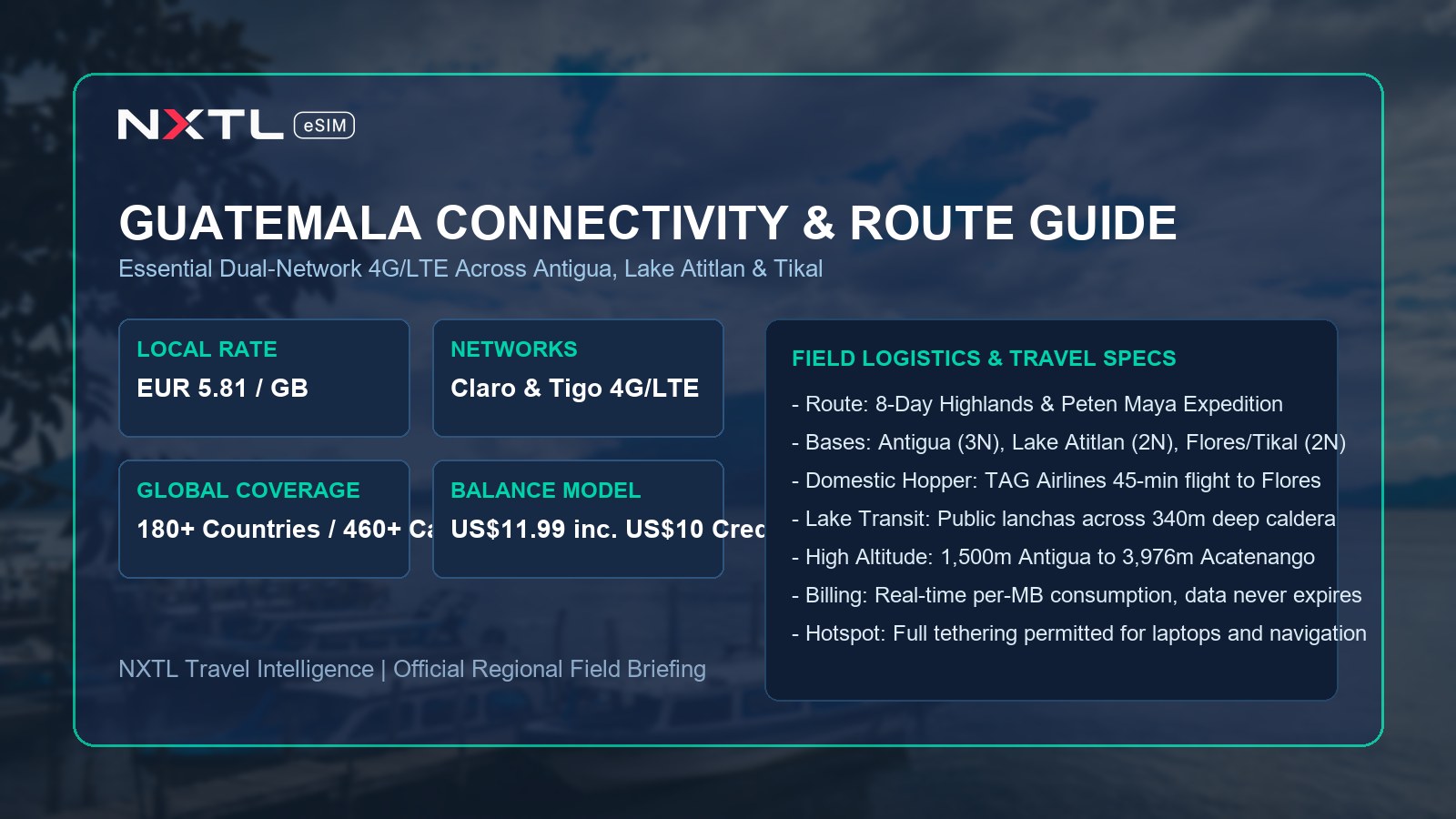
Guatemala’s telecommunications infrastructure is operated by two primary nationwide networks: Claro (América Móvil) and Tigo (Millicom). Both carriers provide solid high-speed coverage throughout urban areas like Guatemala City, Antigua, and Panajachel. However, as you travel along remote mountain switchbacks, across the volcanic caldera of Lake Atitlán, or into the dense jungle corridors surrounding Tikal, signal strength fluctuates significantly. While Claro often maintains stronger coverage along rural transit highways, Tigo frequently excels in isolated lakeside villages and the northern Petén interior.
For independent travelers, the NXTL Guatemala eSIM delivers automatic dual-network roaming access across both Claro and Tigo 4G/LTE infrastructures at an honest pay-as-you-go rate of $6.56 per gigabyte. Rather than standing in long passport-registration queues at airport kiosks or dealing with short-lived local SIM bundles that expire after seven days, your connection activates immediately upon touchdown.
The service operates on a transparent balance model: the initial profile purchase costs $11.99 and includes $10.00 of preloaded roaming balance. Because data is billed strictly per megabyte consumed and balances never expire, unused credit remains valid for your next international journey across NXTL’s global network covering 180+ supported countries and 460+ carrier networks. Full personal hotspot tethering is permitted without restriction, allowing you to share high-speed data with laptops, tablets, and companion smartphones throughout your journey.