Bosnia and Herzegovina contains some of Europe’s most dramatic mountain river scenery and layered historical architecture, yet many travelers experience it merely as a hurried three-hour day trip from coastal Croatia. A purposeful seven-day itinerary links the Ottoman and Austro-Hungarian cultural tapestry of Sarajevo with the Mediterranean stone heritage of Mostar and the sun-drenched valleys of Herzegovina. By utilizing one of the continent’s most spectacular mountain railway lines and incorporating meaningful stops at Cold War bunkers, Ottoman fortress towns, and travertine waterfalls, travelers unlock the country’s profound resilience without getting lost in transport confusion.
The primary dilemma when planning a first trip is choosing between rail, intercity buses, and a rental car. The modern Talgo passenger train operated by ŽFBH between Sarajevo and Mostar is not just public transit; it is an extraordinary journey that winds through deep karst canyons, crossing dramatic mountain viaducts alongside the emerald Neretva River. However, reaching regional sights like the Dervish monastery at Blagaj, the fortified stone village of Počitelj, and Kravica Waterfalls requires either a local rental car or vetted private transfers. The optimal strategy pairs the scenic trunk railway with regional road transit, providing relaxing travel across both historical hubs.
Understanding Bosnia and Herzegovina requires engaging with its layered past rather than reducing it to a single conflict. For centuries known as the “Jerusalem of Europe,” its towns developed where Catholic cathedrals, Orthodox basilicas, Ottoman mosques, and Sephardic synagogues stood side by side. From the 1914 assassination of Archduke Franz Ferdinand that catalyzed the First World War to the four-year siege of Sarajevo in the 1990s, the nation’s stone bridges and mountain passes tell stories of enduring cultural survival. The seven-day route below provides a clear, balanced blueprint for exploring the country’s two defining regions.
Strategic Route Architecture: The 7-Day Sarajevo & Mostar Corridor
Seven days allows you to thoroughly explore the cultural differences between continental Bosnia and Mediterranean Herzegovina. This itinerary is anchored by two primary bases: three nights in the capital of Sarajevo, followed by three nights in Mostar, concluding with a return transfer or departure connection. This setup minimizes hotel packing while giving you adequate time to explore surrounding mountain valleys and archaeological treasures.
| Day | Base | Key Stops & Cultural Sightseeing | Transit Mode | Transit Time | Advance Bookings Required |
|---|---|---|---|---|---|
| Day 1 | Sarajevo | Arrive SJJ airport, transfer to Old Town, sunset stroll around Baščaršija square and Sebilj fountain, evening ćevapi dinner. | Airport taxi / Bus | 25 min | Vetted airport taxi, Baščaršija hotel. |
| Day 2 | Sarajevo | Gazi Husrev-beg Mosque, Latin Bridge assassination site, cable car to Mount Trebević 1984 bobsled track, sunset at Žuta Tabija. | Walking & Cable car | Local transit | Trebević cable car round-trip ticket. |
| Day 3 | Sarajevo | Sarajevo Tunnel of Hope (Tunel Spasa) museum, Historical Museum of Bosnia, afternoon Bosnian coffee tasting on Kazandžiluk. | Tram 3 & Taxi | 35 min to Tunnel | Tunnel of Hope guided tour admission. |
| Day 4 | Mostar | Morning ŽFBH Talgo train to Mostar via Neretva Canyon, check-in, explore Stari Most and historic cobblestone bazaar. | Scenic Talgo train | 1 hr 55 min | ŽFBH train ticket (station purchase). |
| Day 5 | Mostar | Day excursion through Herzegovina: Blagaj Tekke Dervish house at Buna spring, medieval stone citadel of Počitelj. | Rental car / Tour | 20m to Blagaj, 25m to Počitelj | Herzegovina regional day tour or car rental. |
| Day 6 | Mostar | Morning swim at Kravica Waterfalls, visit Radimlja medieval stećci tombstones near Stolac, sunset dinner overlooking Stari Most. | Rental car / Private van | 40 min to Kravica | Kravica Waterfalls entry ticket. |
| Day 7 | Sarajevo / Departure | Scenic return drive via Konjic (Ottoman stone bridge & Tito’s secret nuclear bunker ARK D-0), airport departure from SJJ. | Train / Transfer | 2 hrs total | Tito’s Bunker guided reservation. |
The pacing of this route deliberately places the rail transit from Sarajevo to Mostar on Day 4 during the morning departure. The early train departs Sarajevo Railway Station around 07:15, descending through the dramatic canyon of the Neretva as morning mist lifts from the limestone cliffs of the Prenj mountain range. Arriving in Mostar before 09:30 gives you the rest of the day to explore the Old Town before day-trippers arrive on excursion buses from the Adriatic coast.
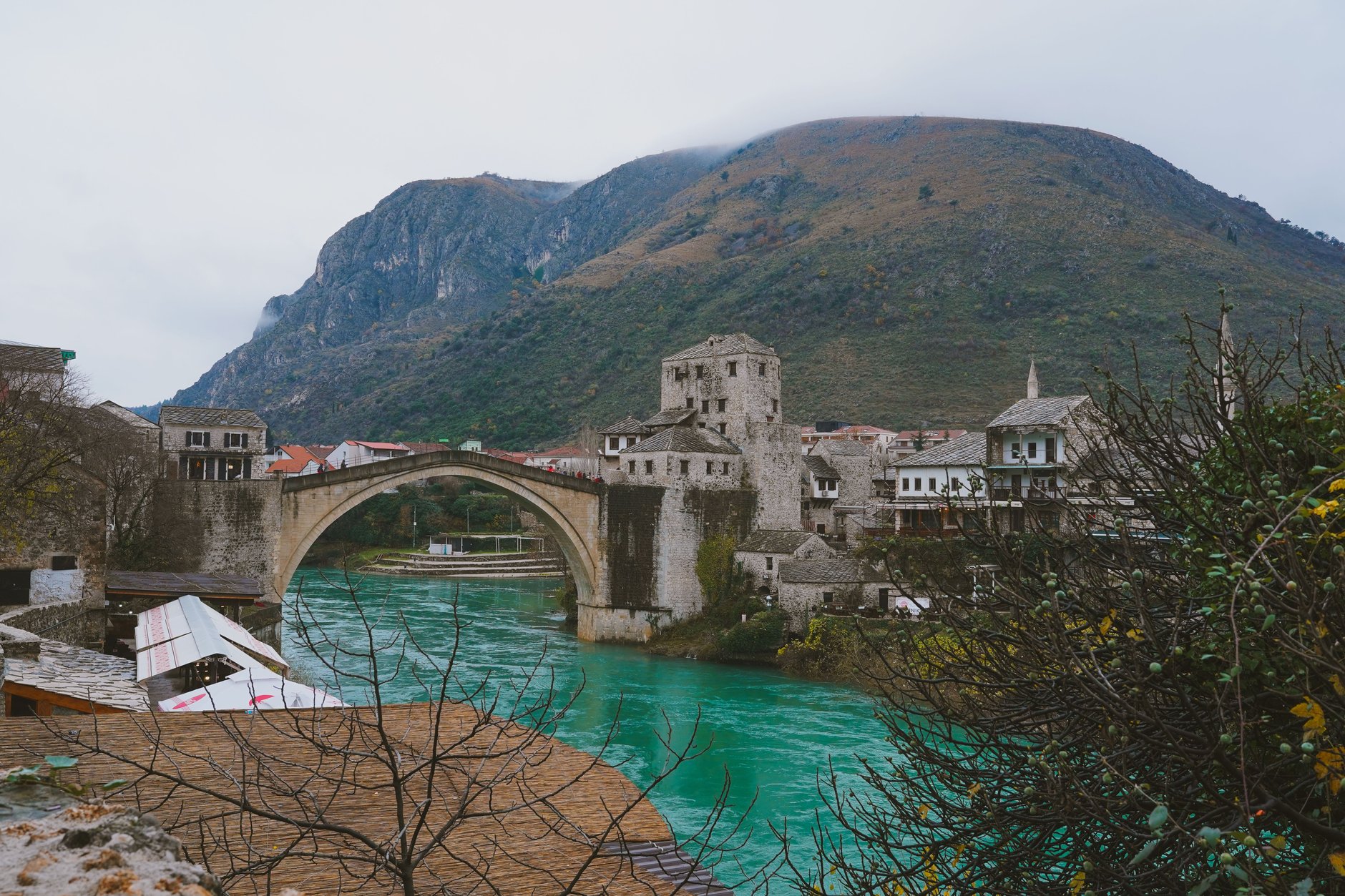
Staying three full nights in Mostar rather than taking a rushed single-day detour transforms your encounter with the city. By late afternoon, the crowds of seaside vacationers return to coastal Croatia, returning the cobblestones of Kujundžiluk to local residents. The illuminated stone arch of Stari Most reflected in the dark green waters of the Neretva at twilight is one of the most poignant architectural vistas in southeastern Europe.
Sarajevo: The Jerusalem of Europe and 20th-Century History
Sarajevo sits in a mountain valley along the Miljacka River, framed by the Dinaric Alps. Its architectural character shifts along Ferhadija Street, where a pavement marker indicates “Sarajevo Meeting of Cultures.” Looking east, you gaze down cobblestone lanes lined with Ottoman wooden storefronts, domed hammams, and stone minarets. Looking west, the perspective transforms into neoclassical facades and grand boulevards of the Austro-Hungarian era.
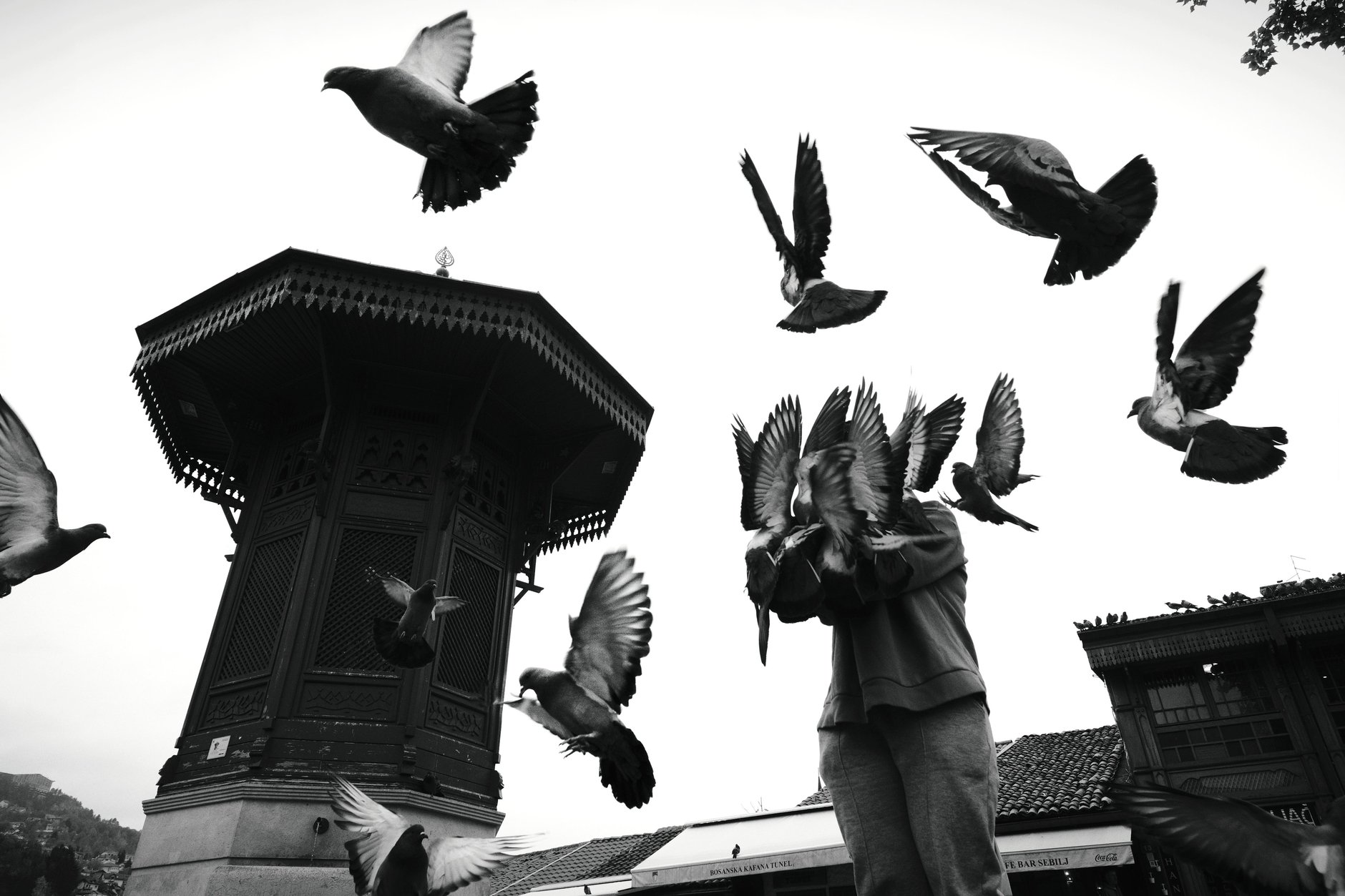
At the center of Baščaršija stands the Sebilj, a wooden Ottoman public fountain built in 1753. From here, walk to Gazi Husrev-beg Mosque, constructed in 1531 by master architect Acem Esir Ali. As the largest historical mosque in Bosnia, its complex includes a madrasa and lunar clock tower (*Sahat-kula*). Nearby stand the Catholic Sacred Heart Cathedral, Old Orthodox Church, and Ashkenazi Synagogue, physical testaments to the cosmopolitan fabric that earned Sarajevo its historic reputation.
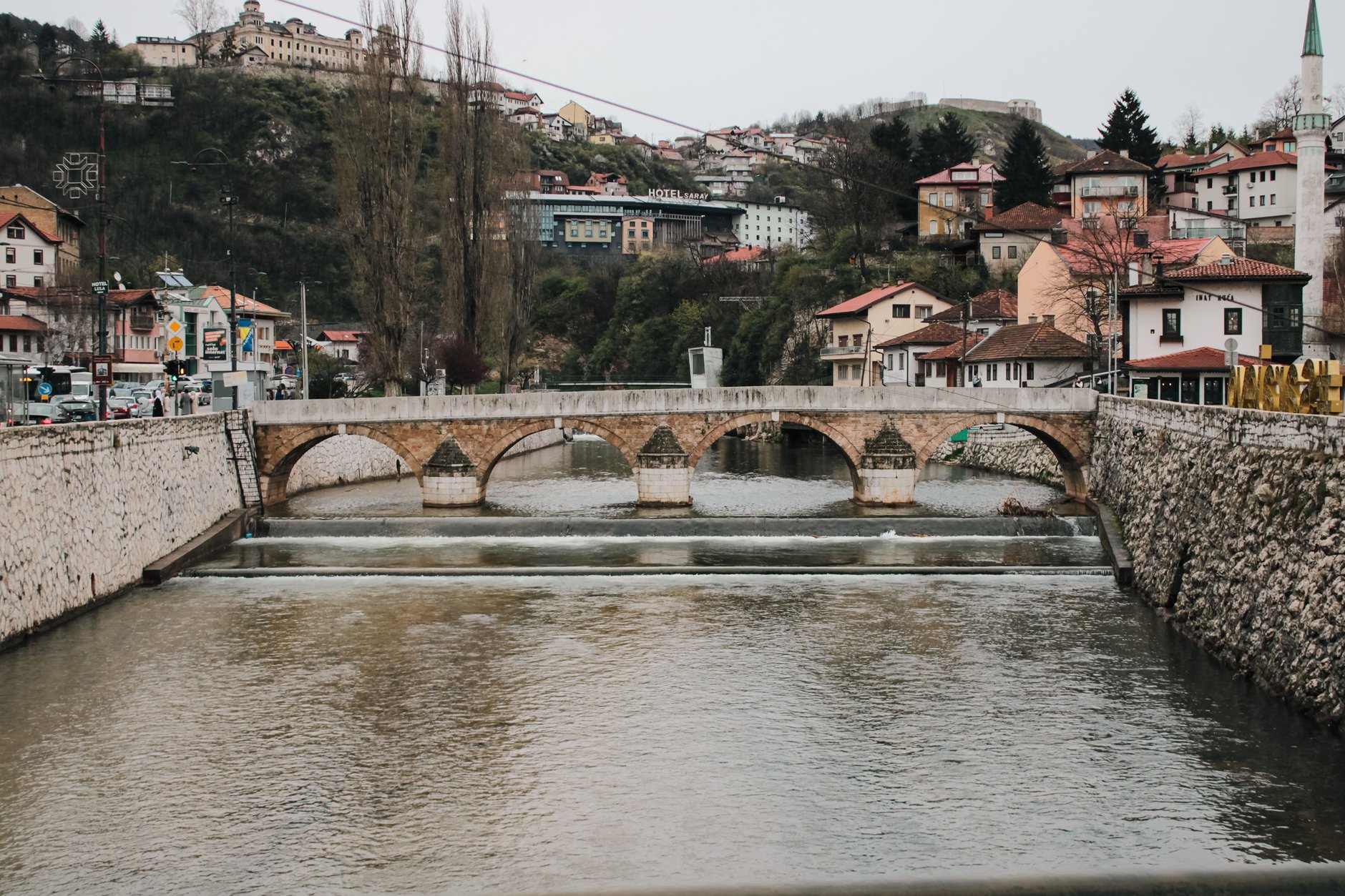
Just south of Baščaršija, the stone Latin Bridge (*Latinska Ćuprija*) crosses the Miljacka. On the street corner facing the bridge, nineteen-year-old Gavrilo Princip stepped forward on June 28, 1914, firing shots at Archduke Franz Ferdinand and his wife Sophie. The assassination triggered World War I and ended four global empires.
To understand the city’s modern history, visit the Sarajevo Tunnel of Hope (*Tunel Spasa*). During the 1,425-day siege from 1992 to 1996, defenders hand-dug an eight-hundred-meter tunnel beneath the airport runway. This subterranean passage became the city’s lifeline for food, medicine, and power cables. Walking through a preserved section of the damp tunnel provides an unforgettable lesson in urban survival.
For a panoramic view, take the restored Sarajevo Cable Car to Mount Trebević. Rising eleven hundred meters, you can walk along the concrete curves of the 1984 Winter Olympic bobsled track, now covered in street art, before descending to the yellow fortress (*Žuta Tabija*) for sunset over the city’s rooftops.
The Neretva Route & Konjic: From Cold War Bunkers to Ottoman Arches
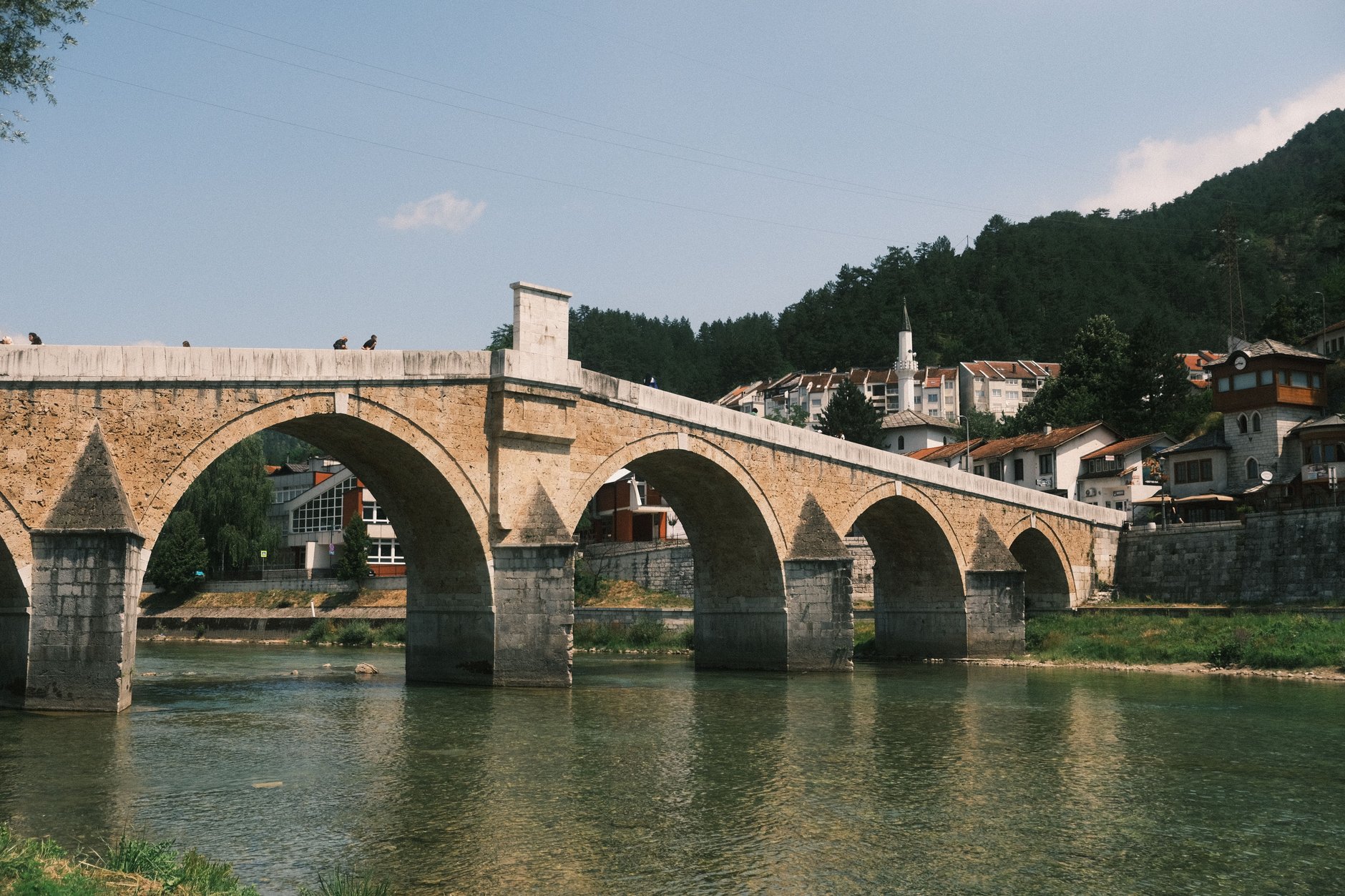
Traveling south toward Herzegovina, the highway and railway pass through Konjic, situated where the Neretva emerges from mountain ravines. The town’s centerpiece is the Stara Ćuprija, a six-arched Ottoman stone bridge constructed in 1682. Blown up in 1945, the bridge was reconstructed between 2006 and 2009 using authentic white limestone masonry.
Hidden inside the mountain slopes outside Konjic lies Tito’s Bunker (code-named ARK D-0). Constructed between 1953 and 1979 at vast expense, this subterranean labyrinth spans 6,500 square meters. Engineered to protect Yugoslav leader Josip Broz Tito and 350 military officials from nuclear strike, the complex remained classified until the 1990s. Visitors can tour air-filtration systems, decontamination airlocks, and private residential quarters preserved in period detail.
Continuing down the Neretva gorge brings you to Jablanica, site of the 1943 Battle of the Neretva, where Partisans destroyed the railway bridge to trap Axis divisions; the twisted bridge ruins still lie in the river. Jablanica is equally famous for roadside restaurants turning whole spit-roasted lamb (*jagnjetina na ražnju*) over waterwheels.
Mostar and Herzegovina: Stone Arches, Dervish Springs and Waterfalls
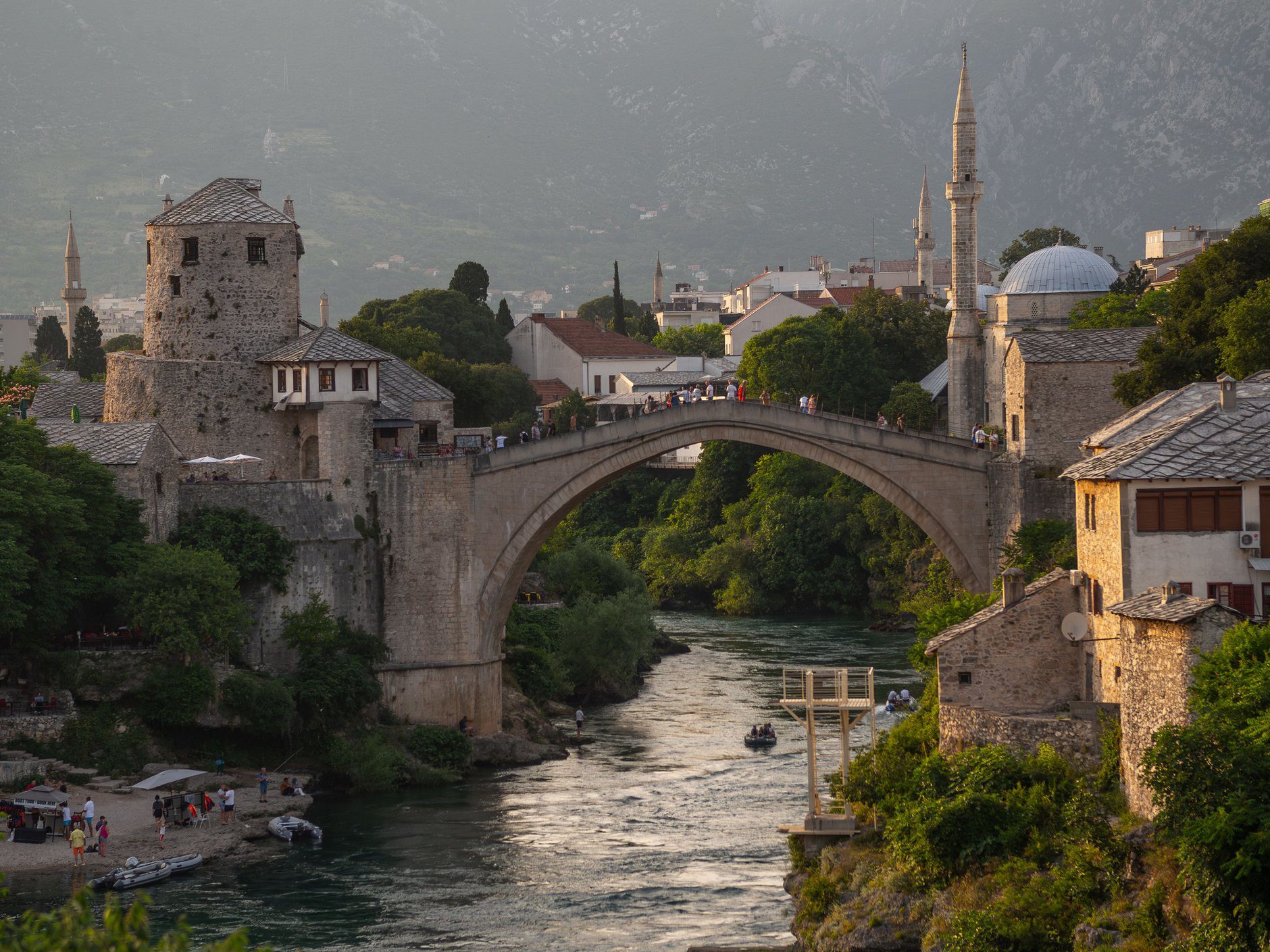
Arriving in Mostar, the climate shifts to Mediterranean warmth. Fig trees, pomegranates, and cypress line the riverbanks. Mostar’s heart is Stari Most (Old Bridge), commissioned in 1557 by Sultan Suleiman the Magnificent and completed in 1566 by master architect Mimar Hayruddin.
Hayruddin designed a single stone arch spanning twenty-nine meters across the Neretva, rising twenty-four meters above the water without central supports. Built from tenelija limestone, the bridge stood for 427 years until destroyed by artillery in November 1993. An international effort rebuilt the arch using original Ottoman engineering and local stone, earning UNESCO status in 2005.
Today, the bridge remains the center of local pride and diving traditions. Members of the Mostari diving club plunge twenty-four meters into the cold currents below. Walking across the limestone cobbles brings you into Kujundžiluk, the historic bazaar where copper artisans hammer traditional coffee sets by hand.
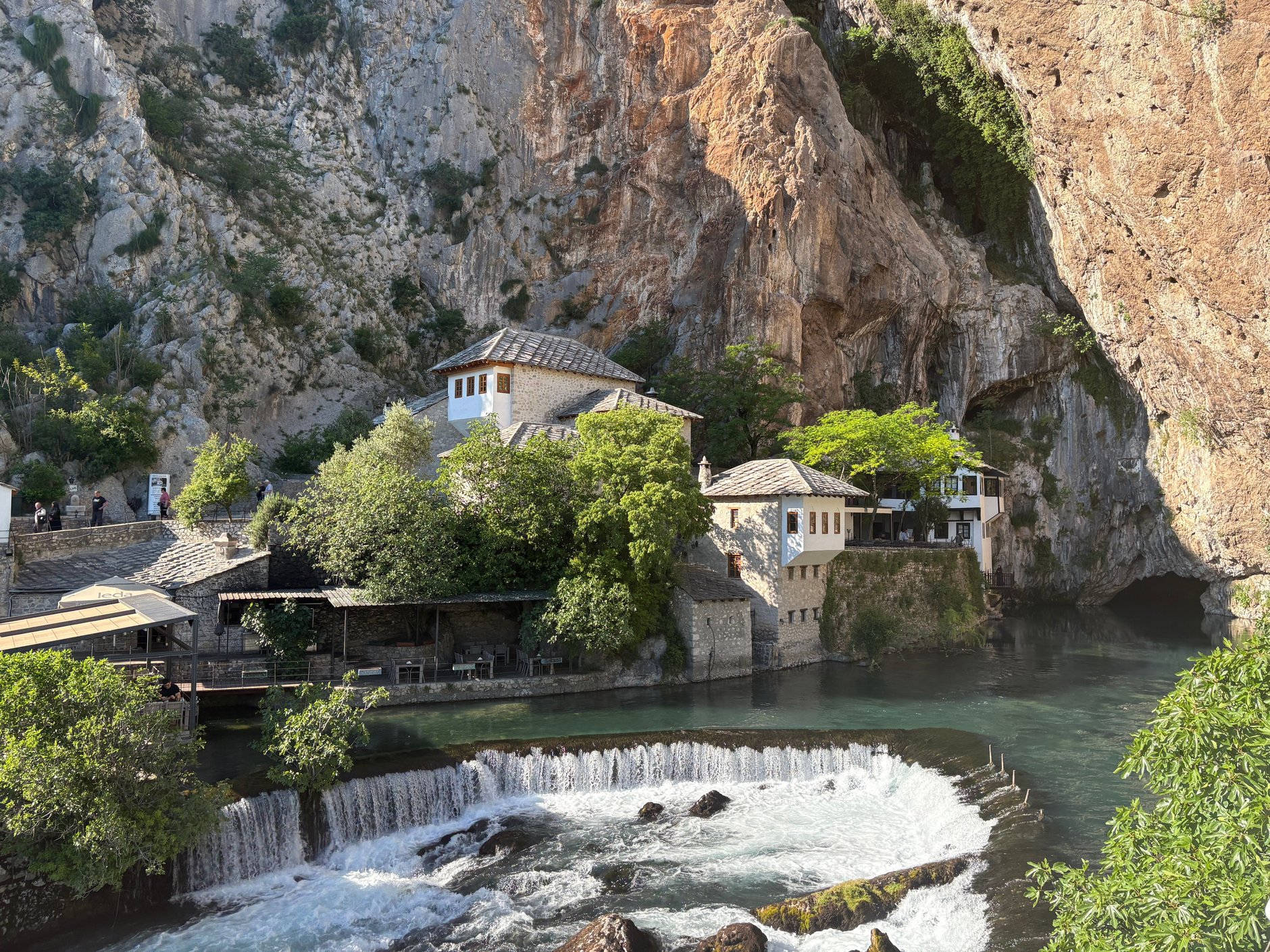
Just twelve kilometers southeast of Mostar lies Blagaj Tekke. Constructed around 1520 for the Bektashi and later Halveti Sufi orders, this whitewashed timber-and-stone monastery clings to the base of a sheer two-hundred-meter limestone cliff. Beside the tekke emerges Vrelo Bune, one of Europe’s most powerful karst springs, which pours forty-three thousand liters of ice-cold emerald water per second from a subterranean cavern into the Buna River. The interior of the tekke preserves quiet prayer rooms, wooden ceilings, and the mausoleum (*turbe*) of revered dervish elders.
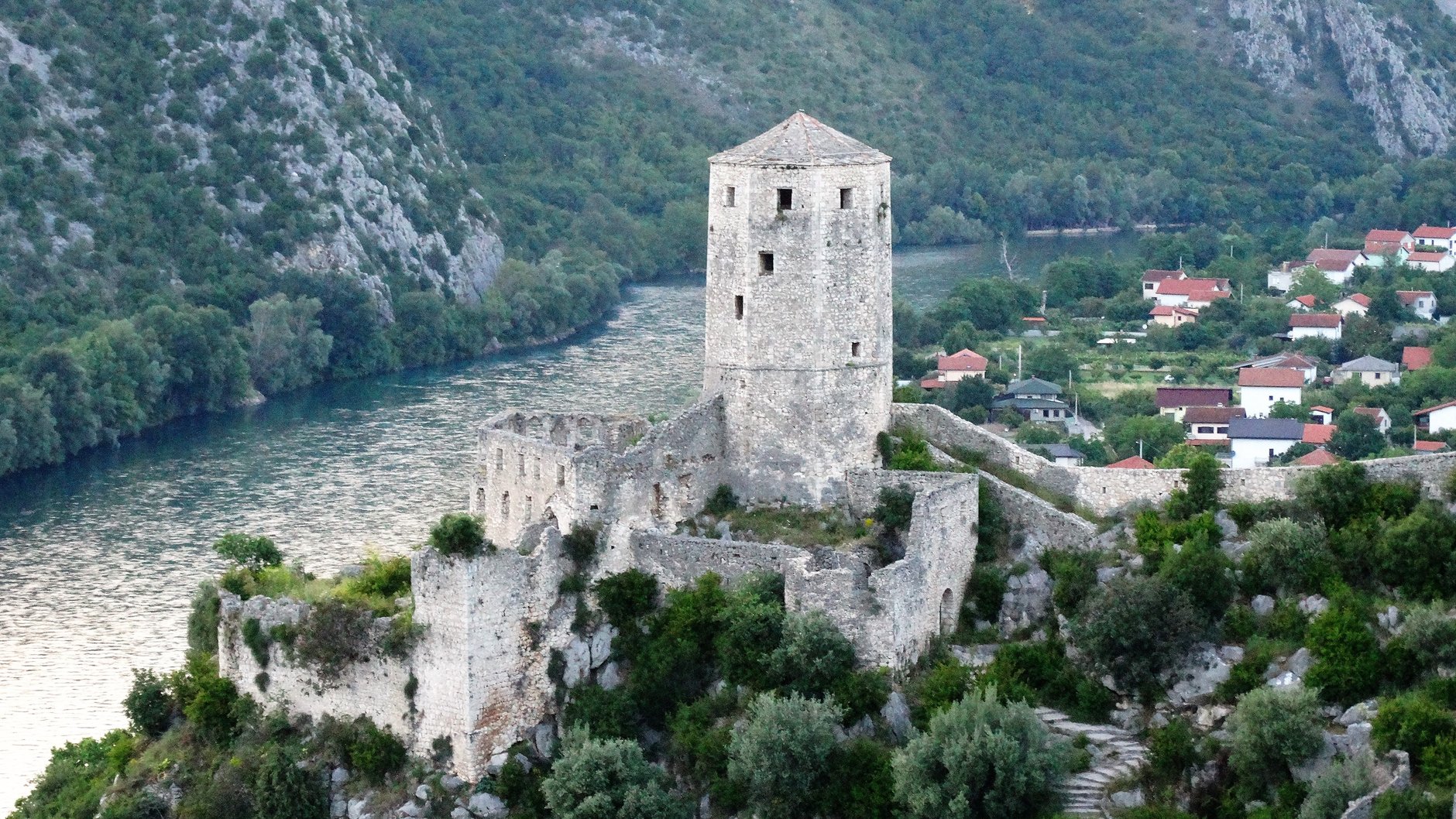
Further south along the Neretva sits Počitelj, an open-air stone village climbing a natural limestone amphitheater above the river. Built as a strategic fortified stronghold by King Tvrtko I in 1383 and expanded by the Ottomans in the fifteenth century, Počitelj features stone stairways, the Gavrankapetanović tower, and the sixteenth-century Šišman Ibrahim-paša Mosque. Climbing to the top of the medieval fortress tower yields sweeping views across the river plain.
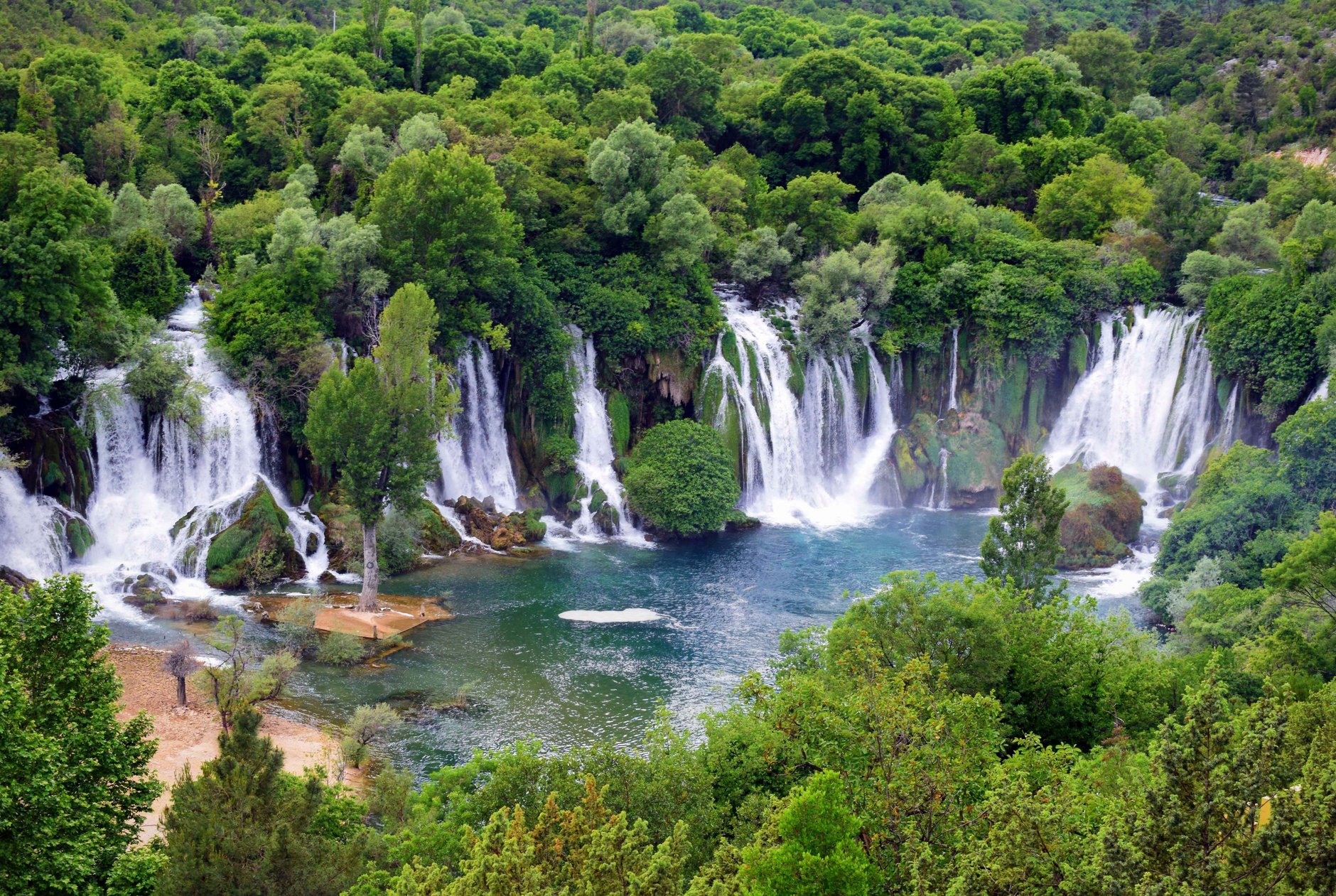
Conclude your exploration of Herzegovina at Kravica Waterfalls near Ljubuški. Here, the Trebižat River tumbles twenty-five meters over a hundred-meter-wide amphitheater of porous travertine tufa ledges into a turquoise swimming lagoon surrounded by weeping willows and fig trees. The water is refreshingly cold even in midsummer, offering an idyllic natural retreat after days of historic sightseeing.
Culinary Heritage: Ćevapi, Burek and Bosnian Coffee Culture
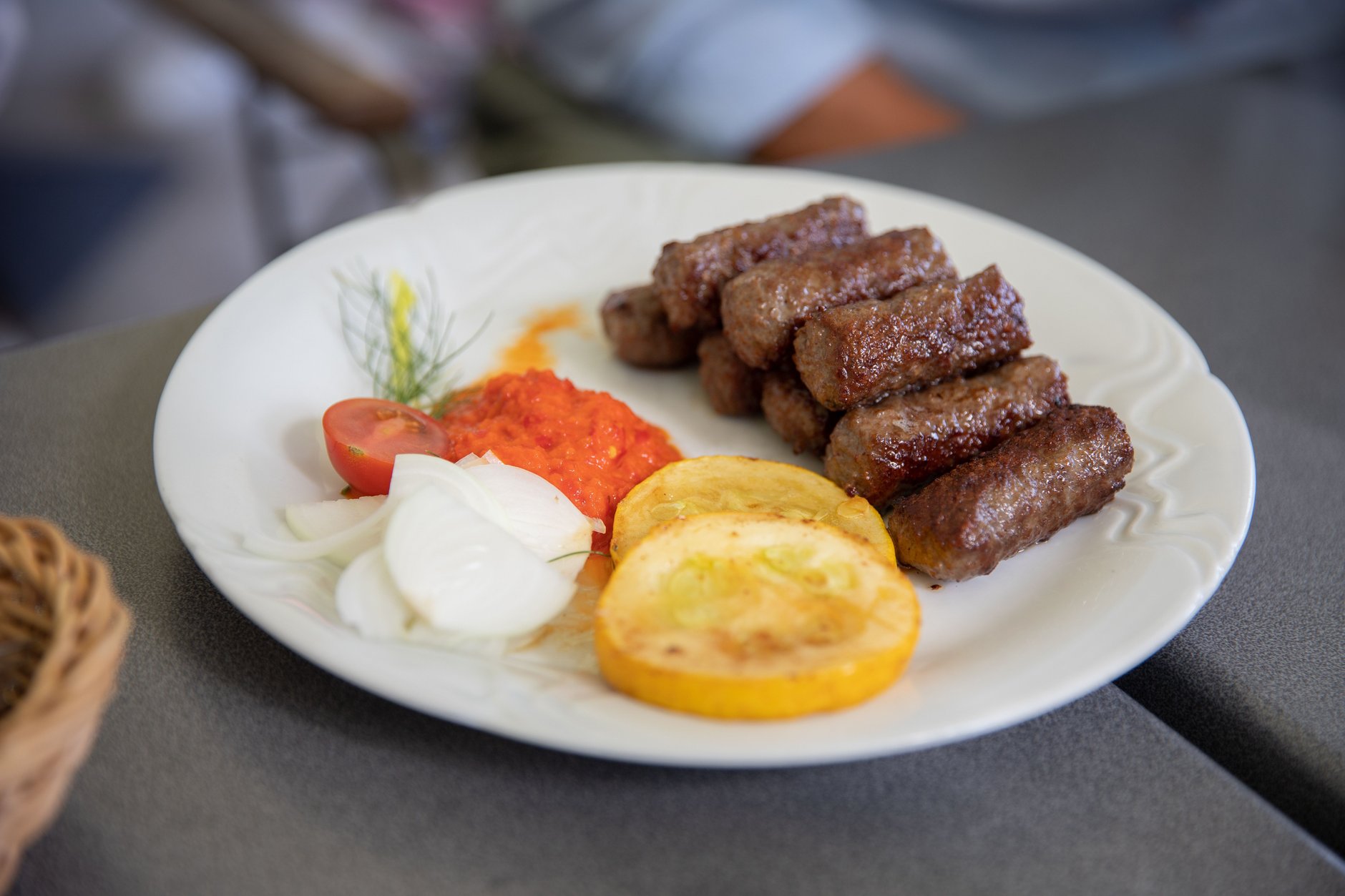
Bosnian culinary culture is centered around wood-fired ovens, charcoal grills, and communal hospitality. The undisputed national staple is *ćevapi*—small hand-rolled sausages made from minced beef seasoned with garlic and black pepper, grilled over charcoal and served inside *somun* (a pocket flatbread with a diamond-scored crust). In Sarajevo, the standard order is a *desetka* (ten pieces) served with heaps of raw diced onions and a generous dollop of *kajmak*, a salted clotted cream with a rich, tangy flavor.
Equally central to daily life are *pite* (phyllo pastries). In Bosnia, language matters: *burek* refers exclusively to pastry filled with spiced ground beef. Pastry filled with fresh curd cheese is called *sirnica*, spinach and cheese is *zeljanica*, and grated spiced potato is *krompiruša*. Traditional buregdžinice roll the paper-thin dough across wide wooden tables, coil it into spiral snails, and bake it on round copper trays over wood fires until golden and crisp.
No trip is complete without experiencing *Bosanska kafa* (Bosnian coffee). Far more than a beverage, it is a deliberate social ritual. Finely ground coffee is boiled in a long-handled copper pot called a *džezva*, poured unfiltered into small handleless ceramic cups (*fildžan*), and served on a stamped copper tray with sugar cubes and a cube of *rahat lokum* (Turkish delight). The traditional way to drink it is to dip a corner of the sugar cube into the coffee, place it between your teeth, and sip the rich, dark brew through the sweetness.
Avoiding Common Scams, Pitfalls, and Tourist Traps
Bosnia and Herzegovina is welcoming and safe for foreign visitors, but navigating urban transit hubs and rural border areas requires practical awareness to prevent avoidable friction.
- Sarajevo Tram and Baščaršija Pickpocket Rings: Organized pickpockets operate on crowded public transport, particularly Tram Line 3 connecting the railway station to Baščaršija, and around the pedestrian crossings near Latin Bridge. Keep valuables in zippered interior pockets and never store phones or wallets in loose exterior backpack compartments.
- Unmetered Sarajevo Airport Pirate Taxis: Outside the arrival terminal at Sarajevo International Airport (SJJ), freelance drivers frequently approach travelers quoting inflated flat rates of thirty to fifty Convertible Marks ($16.95 to $28.25) for rides that should cost far less on the meter. Only use red Sarajevo Taxi vehicles stationed at the official rank or order a ride through verified local dispatch numbers.
- Mostar Bridge Diving Club Money Hustles: At Stari Most, members of the local diving club stand on the parapet in swim trunks collecting money from tourists, promising to dive once they reach fifty to one hundred euros in tips. Often, divers will collect money for forty-five minutes and walk away without diving when another group appears. Only contribute if you see an active diver preparing to jump immediately.
- Kravica Waterfalls Unofficial Parking Touts: Approaching Kravica Waterfalls, unauthorized individuals stand along the access road waving flags to direct vehicles into private dirt lots, charging ten marks while claiming the main lot is full. Ignore these roadside touts and proceed to the official paved parking lot at the visitor center entrance where standard municipal fees apply.
- Counterfeit “Handmade” Copper Souvenirs: In Sarajevo’s Kazandžiluk (Coppersmith Street) and Mostar’s Kujundžiluk, some souvenir shops sell machine-stamped brass coffee sets imported from overseas as “authentic hand-hammered Bosnian copper.” Genuine local copperware is hand-chiseled on-site, heavier, and lined with tin on the interior for safe beverage consumption. Look for artisans actively working with hammers in their workshops.
- Rural Unmarked Landmine Hazard Awareness: While cities, main highways, and tourist sites are completely cleared of unexploded ordnance from the 1990s conflict, rural mountain backcountry and abandoned wartime frontlines still contain uncleared minefields. Never wander off marked hiking trails in remote mountain zones (especially on the slopes of Mount Trebević and Bjelašnica), and strictly heed red triangular signs displaying a skull and crossbones with the warning *Pazi – Mine!*.
Practicing basic situational awareness around busy bazaars and respecting rural trail markers ensures an entirely safe, rewarding exploration of Bosnia’s historic landscape.
Packing Essentials and Regional Seasonal Advice
Packing for Bosnia and Herzegovina requires preparing for two distinct climates. Continental Bosnia (Sarajevo and the mountains) experiences alpine conditions with crisp mountain breezes, while Mediterranean Herzegovina (Mostar and Trebižat) can be intensely hot and arid during the summer months.
In Sarajevo and the surrounding Dinaric Alps, evening temperatures can drop sharply even in July, requiring a warm fleece layer or light windbreaker. Comfortable walking shoes with durable, non-slip rubber soles are mandatory: the historic cobblestones of Baščaršija and the tenelija limestone steps of Stari Most are polished slick by centuries of foot traffic and can be treacherous when wet. When visiting mosques like Gazi Husrev-beg, modest attire covering shoulders and knees is required, and women must cover their hair with a scarf.
The optimal months to visit are May through June and September through October. Spring brings rushing alpine waterfalls, blooming mountain wildflowers, and comfortable sightseeing temperatures around 20°C–24°C (68°F–75°F). Autumn brings gold-and-crimson foliage across the Neretva Canyon, grape harvests in Herzegovina, and thinning crowds in Mostar. Midsummer (July and August) sees Mostar temperatures regularly exceed 38°C (100°F), making midday outdoor sightseeing grueling.
Mobile Connectivity & Logistics: Multi-Network 4G/LTE Across Bosnia
Reliable mobile connectivity is essential when navigating Bosnia and Herzegovina. Whether following GPS topography through mountain switchbacks along the Neretva River, checking daily departure times for the ŽFBH Talgo train, or translating Cyrillic road signs in the Republika Srpska, instant data access is a critical travel asset.
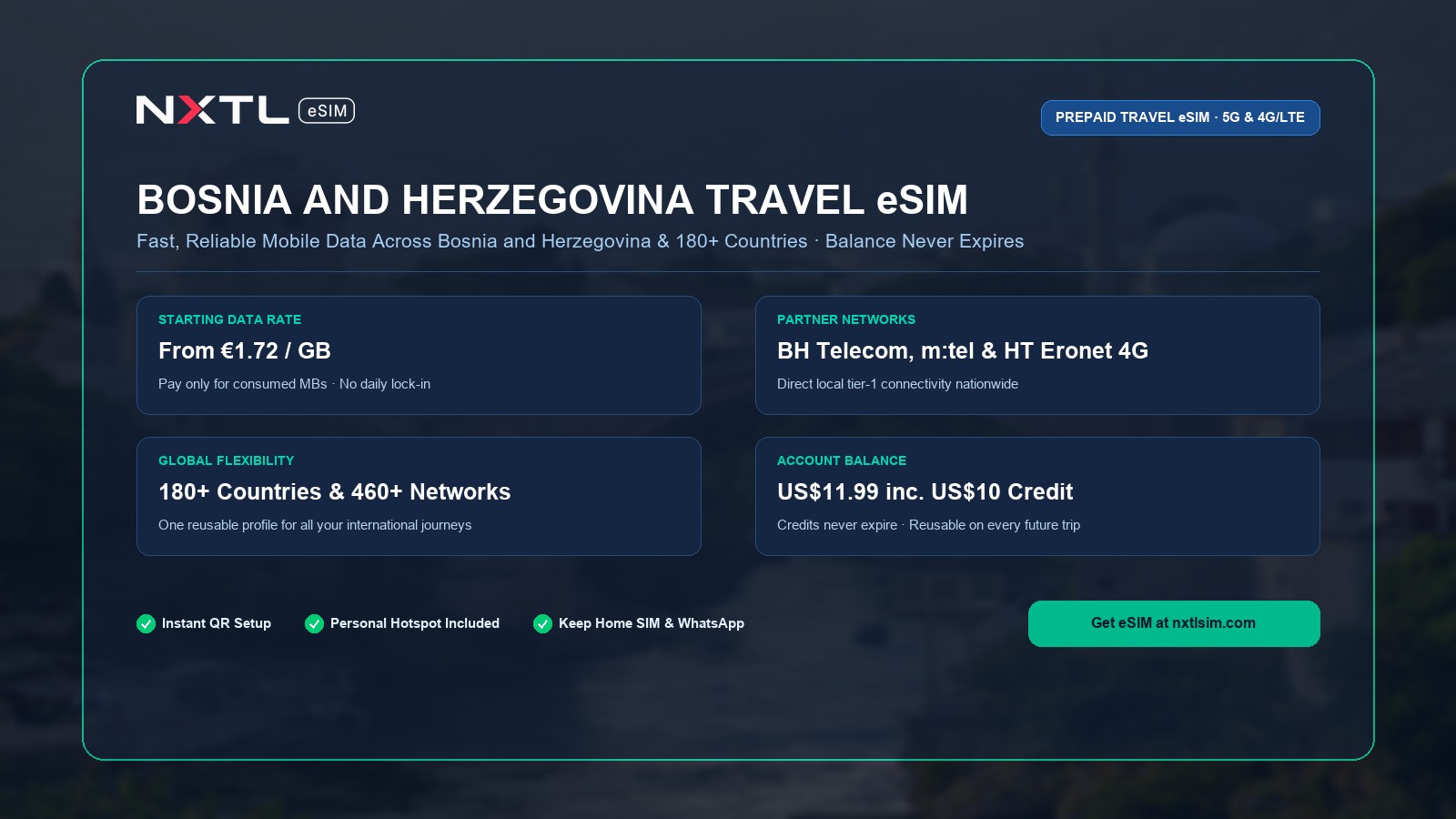
The telecommunications landscape in Bosnia and Herzegovina is divided among three regional carriers: BH Telecom (dominant in the Federation), m:tel (Telekom Srpske, dominant in Republika Srpska), and HT Eronet (operating extensively in Herzegovina). Because regional administrative boundaries weave across transit corridors, single-network prepaid tourist SIMs frequently suffer from dropped connections when crossing between municipal zones. Having a mobile profile that roams across all three carrier backbones ensures uninterrupted coverage across the entire country.
For independent travelers on this route, the NXTL Bosnia and Herzegovina eSIM provides direct multi-carrier access connecting natively to BH Telecom, m:tel, and HT Eronet 4G/LTE networks at an honest pay-as-you-go rate of $1.60 per gigabyte. Rather than searching for airport kiosks or registering passport paperwork at local telecom shops, your connection activates immediately upon arrival.
The service operates under a transparent balance model: the initial profile purchase costs $11.99 and includes $10 of preloaded roaming balance. Because data is billed per megabyte and balances never expire, unused credit carries over indefinitely for future trips across 180+ supported countries and 460+ carrier networks. Full personal hotspot tethering is permitted without restriction, allowing you to run navigation tablets, laptops, and companion smartphones throughout your journey.