Latvia presents one of Northern Europe’s most satisfying first-time travel equations: an architecturally magnificent Baltic capital framed by ancient river valleys, dense pine forests, and miles of white quartz sand coastline. Yet travellers planning a week in the country routinely struggle with transit choices. Many instinctively book a rental car for the entire journey, only to discover that parking in Riga is punitive, the suburban rail link to coastal Jūrmala costs under two euros and runs every twenty minutes, and high-frequency trains reach the medieval castle towns of Gauja National Park faster than highway traffic. The key to an effortless Latvian trip is matching the right transport mode to each region.
This seven-day route is designed for independent travellers who want a balanced journey through urban heritage, medieval history, coastal relaxation, and peat bog ecology without logistical friction. By using Riga as a strategic public transit hub for the opening four days, taking electric commuter trains into the seaside enclaves of Jūrmala and the river bluffs of Sigulda and Cēsis, and picking up a rental car only for rural bog boardwalks or western Kurzeme extensions, you maximize exploration while avoiding unnecessary expenses. Here is your comprehensive guide to bases, train schedules, culinary traditions, and seasonal timing across Latvia.
Trip Planning Blueprint: Bases, Transit Modes, and Seasonal Timing
Transport logistics in Latvia divide neatly into two categories: routes where public rail transit is clearly superior, and journeys where a private vehicle unlocks rural independence. Latvia’s passenger rail system (branded as Vivi) is punctual, remarkably inexpensive, and connects Riga Central Station directly to the country’s most rewarding day trips. The commuter line west to Jūrmala (specifically Majori station) takes just thirty-three minutes, eliminating the seasonal three-euro automobile entry fee (caurlaide) and chronic parking gridlock along the coast. Similarly, modern diesel and electric passenger trains run northeast along the scenic Vidzeme line to Sigulda in fifty minutes and medieval Cēsis in an hour and fifteen minutes.
A rental car becomes genuinely valuable only when venturing beyond established railway corridors. If you wish to witness sunrise over the Great Ķemeri Bog Boardwalk, explore the baroque Rundāle Palace in Zemgale, or navigate the cobblestone lanes of Kuldīga beside Europe’s widest waterfall (Ventas Rumba), renting a car for two or three days provides freedom that rural regional buses cannot match. For urban Riga, walking and modern electric trams provide the most practical transit.
Seasonality shapes the Latvian experience profoundly. The ideal travelling window spans from late May through mid-September. Midsummer (Jāņi, June 23–24) brings white nights where twilight lingers past midnight, outdoor beer gardens thrive, and locals weave oak leaf crowns. July and August deliver the warmest Baltic sea temperatures (typically 18°C to 21°C) and peak berry-picking season in the pine forests. Autumn (late September to mid-October) transforms Gauja National Park into a golden corridor of deciduous foliage, making Sigulda a premier European hiking destination. Winter brings snow-draped timber houses and festive Christmas markets in Riga, but daylight shrinks to under seven hours per day.
| Day / Stage | Base | Highlights | Transport Mode | Transit Time | Advance Booking Requirement |
|---|---|---|---|---|---|
| Day 1 | Riga | Old Town (Vecrīga) walking tour, Dome Cathedral, House of the Black Heads | Walking | Urban base | Old Town hotel reservation |
| Day 2 | Riga | Quiet Centre Art Nouveau quarter, Riga Art Nouveau Museum, Central Market hangars | Walking & Tram | 10-15 mins city transit | Art Nouveau Museum timed ticket |
| Day 3 | Sigulda (Gauja) | Gauja River cable car, Gutmanis Cave, medieval Turaida Castle and museum reserve | Vivi Passenger Train | 50 mins each way from Riga | Train ticket via Mobilly app |
| Day 4 | Cēsis | Medieval Cēsis Castle ruins, historic old town, St. John’s Church, artisan bakeries | Vivi Passenger Train | 1 hr 15 mins from Riga | Castle lantern tour reservation |
| Day 5 | Ķemeri & Jūrmala | Great Ķemeri Bog boardwalk at sunrise, sulfur springs, transfer to coastal Jūrmala | Rental Car or Commuter Train | 45 mins driving (40 km) | Weekend car rental pickup |
| Day 6 | Jūrmala (Majori) | Jomas iela pedestrian promenade, wooden spa villas, quartz beach walk, smoked fish | Walking & Bicycle | Local coastal exploration | Seaside spa hotel reservation |
| Day 7 | Riga departure | Kalnciema wooden architecture quarter, artisan crafts, Riga airport transfer | Rental Car or Bolt Taxi | 20 mins airport transit | Airport transfer coordination |
Days 1–2: Riga’s Hanseatic Roots and Art Nouveau Splendor
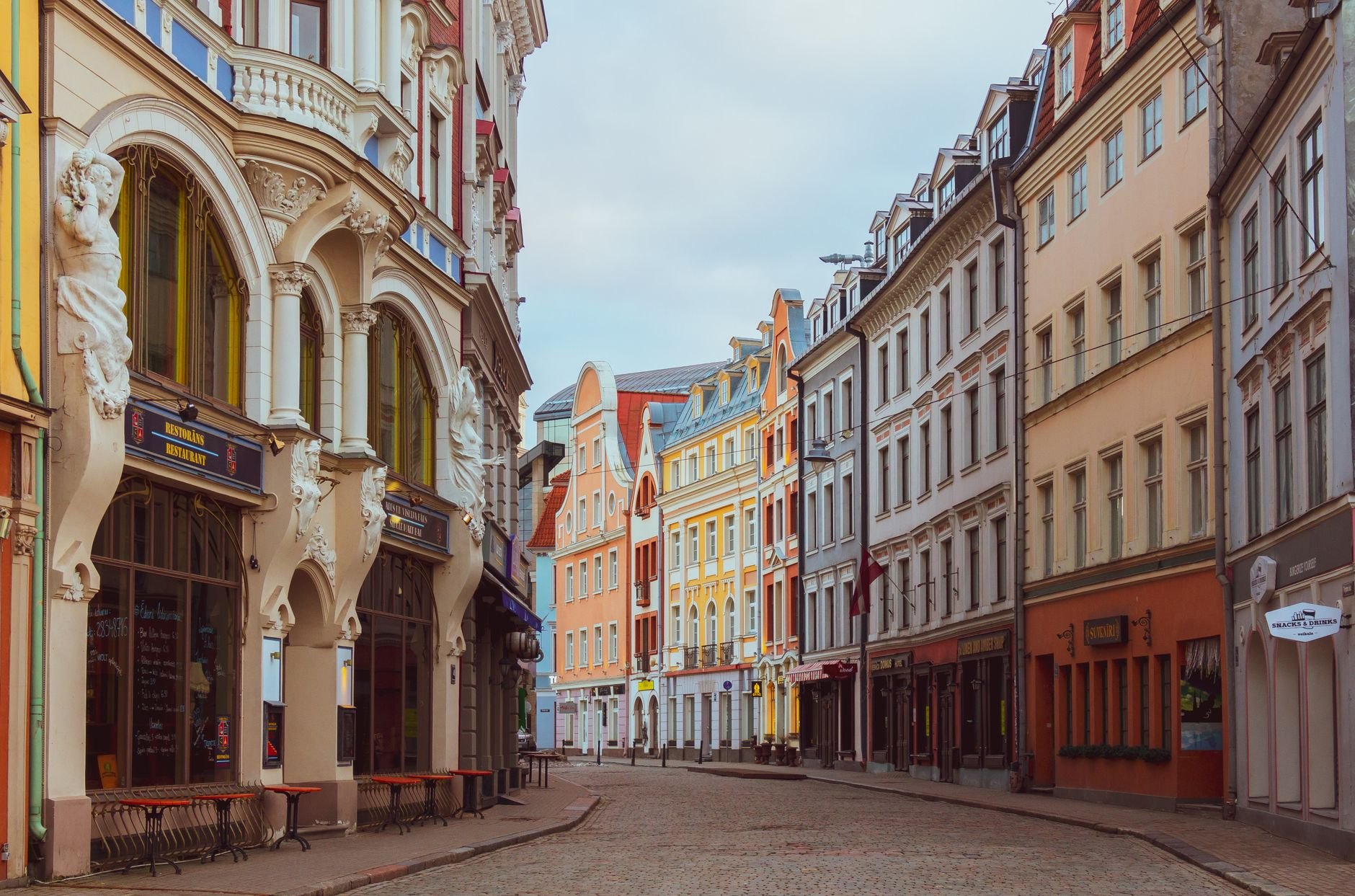
Riga is the largest metropolis in the Baltic states, possessing a dual urban personality that balances eight hundred years of Hanseatic maritime commerce with one of the world’s most concentrated collections of Art Nouveau architecture. Begin Day 1 in Vecrīga (Old Town), pedestrianized and paved in smooth granite cobbles. Marvel at the House of the Black Heads on Town Hall Square, originally constructed in the early fourteenth century for an unmarried brotherhood of foreign merchants. The facade presents an ornate assembly of Dutch Renaissance gables, astronomical clockwork, and carved stone reliefs of Saint Maurice.
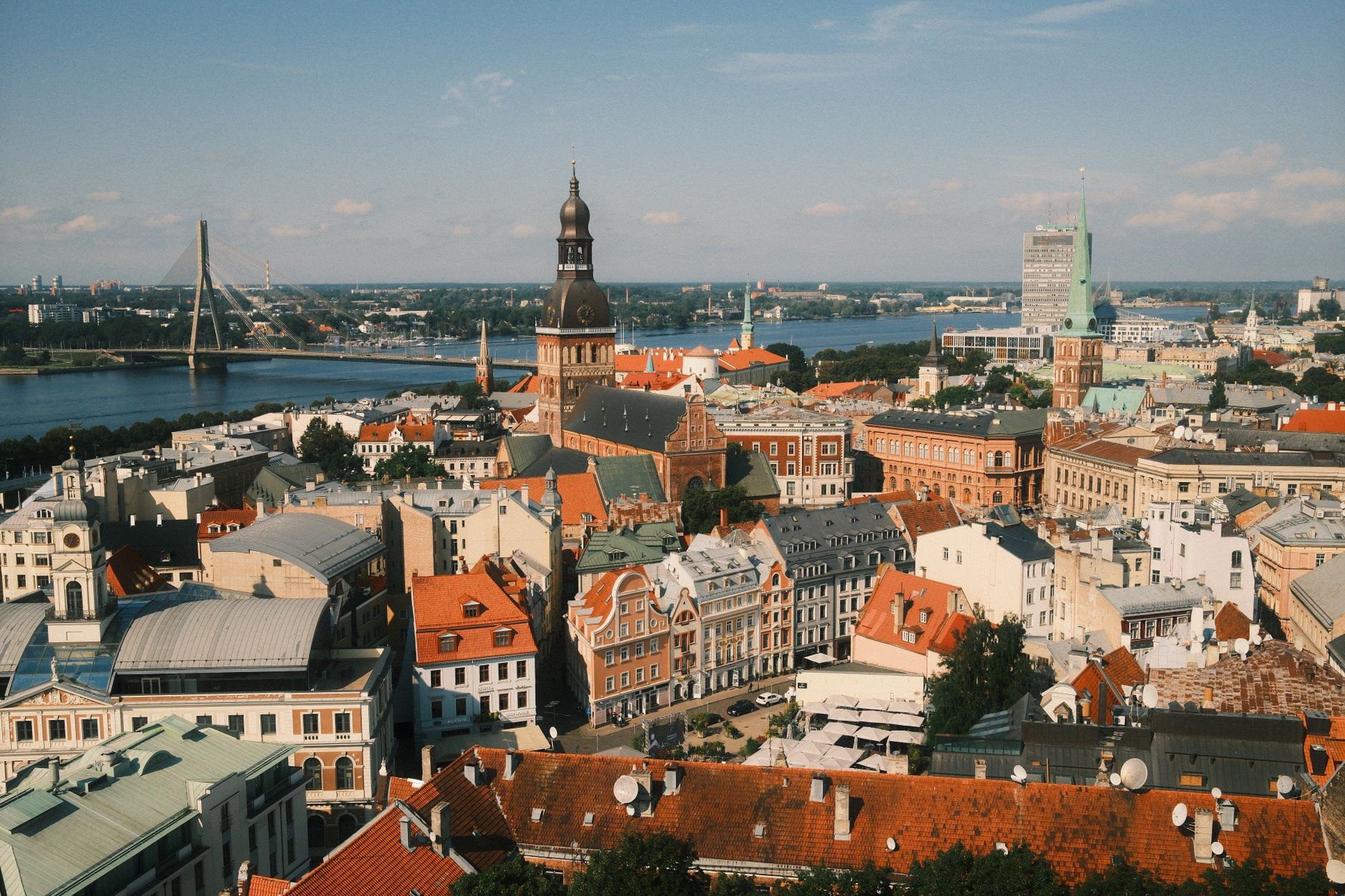
Climb the soaring 123-meter brick spire of Saint Peter’s Church via elevator for an expansive panorama across red-tiled roofs, the wide Daugava River, and the suspension bridges linking central Riga to the Pārdaugava district. Nearby, inspect the Three Brothers—a charming residential trio on Mazā Pils iela showing the historical evolution of Baltic domestic architecture from the late fifteenth through the seventeenth centuries. Conclude your afternoon at Riga Dome Cathedral, listening to afternoon organ recitals on its historic 1884 E.F. Walcker pipe organ, once the largest mechanical instrument in the world.
On Day 2, walk north across the city canal parks into the Quiet Centre (Klusais centrs). Approximately one-third of central Riga was built during an economic boom between 1898 and 1914, resulting in over eight hundred Art Nouveau (Jugendstil) structures. Wander along Alberta iela and Elizabetes iela, where visionary architect Mikhail Eisenstein designed striking apartment facades festooned with screaming stone gargoyles, stylized sphinxes, peacock reliefs, and expressive classical maidens.
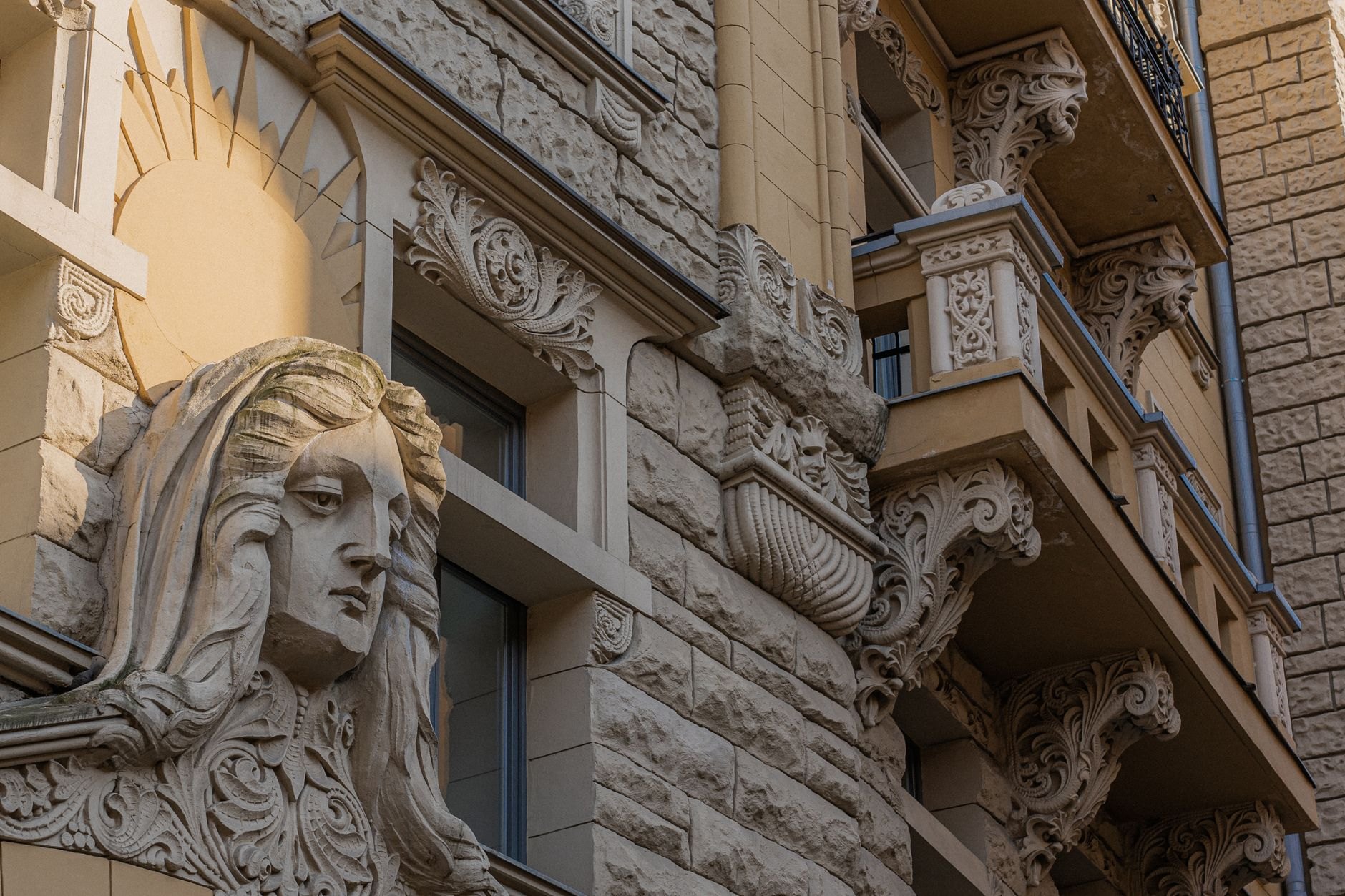
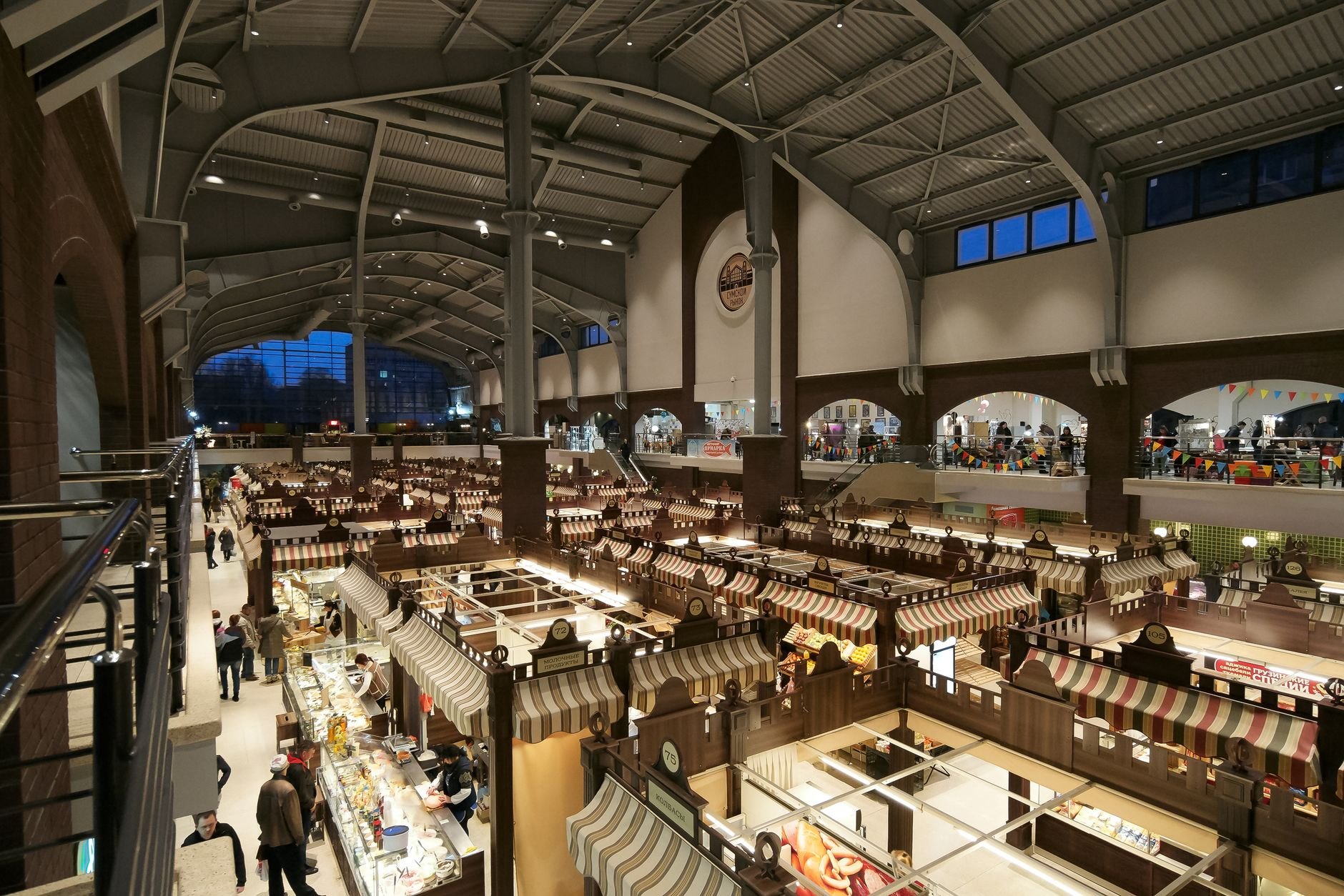
Step inside the Riga Art Nouveau Museum at Alberta iela 12, the former residence of prominent Latvian architect Konstantīns Pēkšēns. Its centerpiece is a spiraling multi-story staircase with intricate fresco ceilings, representing one of Europe’s premier interior photography locations. In the late afternoon, head south to the Riga Central Market. Housed inside five colossal arched pavilions originally constructed as German Zeppelin hangars in the 1920s, the market is an energetic gastronomic world. Wander between vast displays of pickled garlic, wild chanterelles, fresh curd cheese spiced with caraway seeds, and counters lined with smoked Baltic fish.
Days 3–4: Castles and Ancient Valleys in Gauja National Park
On Day 3, board a morning train from Riga Central Station toward Sigulda, the gateway to Gauja National Park. Known as “The Switzerland of Vidzeme,” this protected park protects a deep primeval valley carved by the Gauja River, flanked by red sandstone cliffs and thick mixed forests. Arriving in Sigulda, take the aerial cable car that glides forty-three meters above the tree canopy across the river gorge to Krimulda, offering stunning vistas of the winding waterway below.
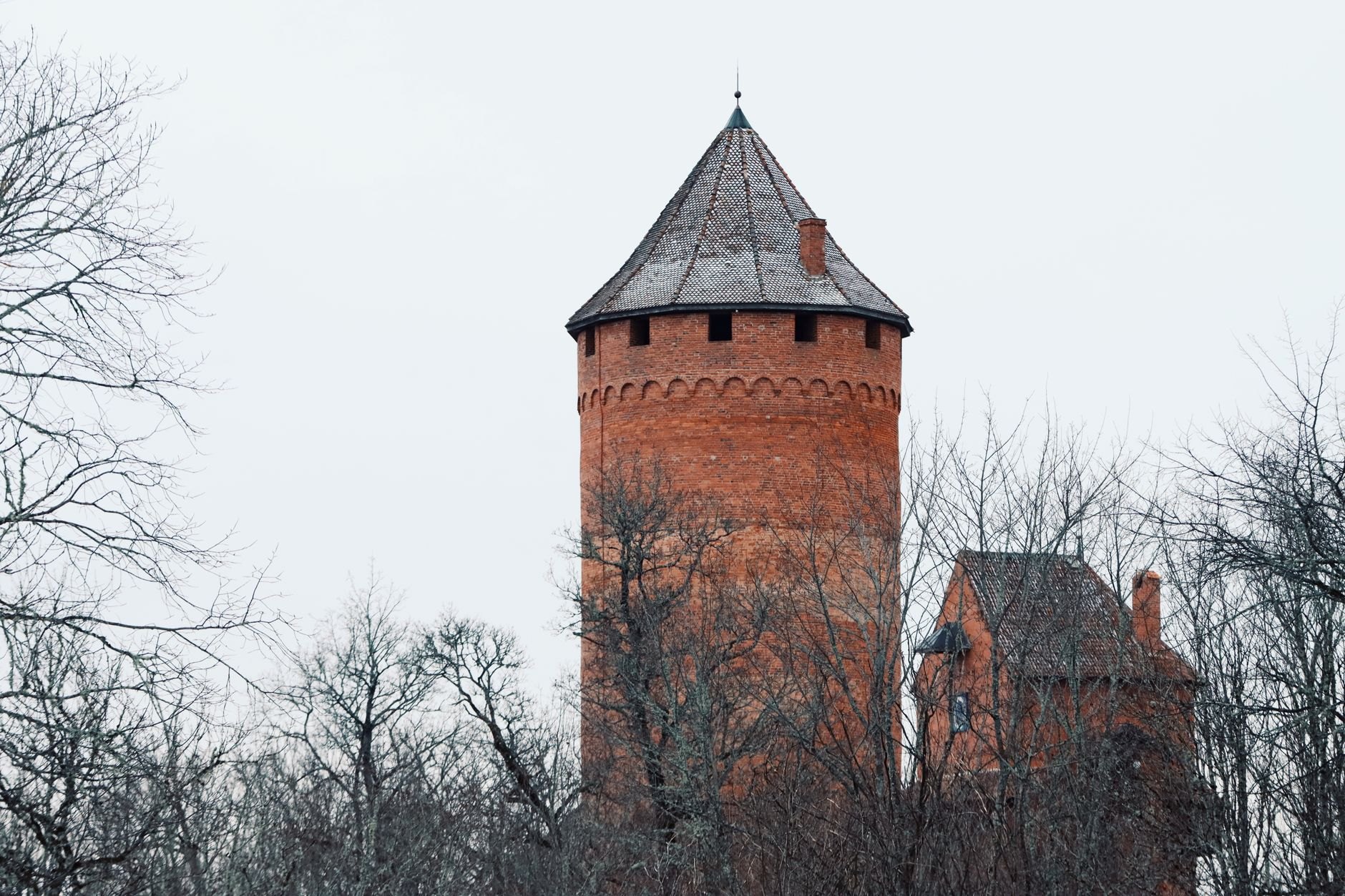
Follow forest footpaths down toward Gutmanis Cave, the widest and highest cave in the Baltic states. The soft red Devonian sandstone walls are etched with centuries of traveler inscriptions, coats of arms, and dates stretching back to the early seventeenth century. From the cave, ascend wooden staircases to Turaida Museum Reserve. The red-brick medieval castle, founded in 1214 by the Archbishop of Riga, features a massive cylindrical main tower that delivers sweeping panoramas over the endless green wilderness of the Gauja valley.
On Day 4, take a quick twenty-five-minute train ride further northeast to Cēsis, arguably Latvia’s most romantic historic town. Established by the Livonian Brothers of the Sword in 1206, Cēsis centers on its formidable medieval stone fortress ruins. Visitors are handed candlelit lanterns at the ticket desk to navigate the pitch-black spiral stone staircases leading into the Western Tower and subterranean dungeon chambers. The historic town surrounding the castle grounds is exceptionally well preserved, featuring timber merchant houses, cobblestone courtyards, and cozy artisan coffee roasters.
Days 5–6: Ķemeri Peat Bogs and the Baltic Shoreline of Jūrmala
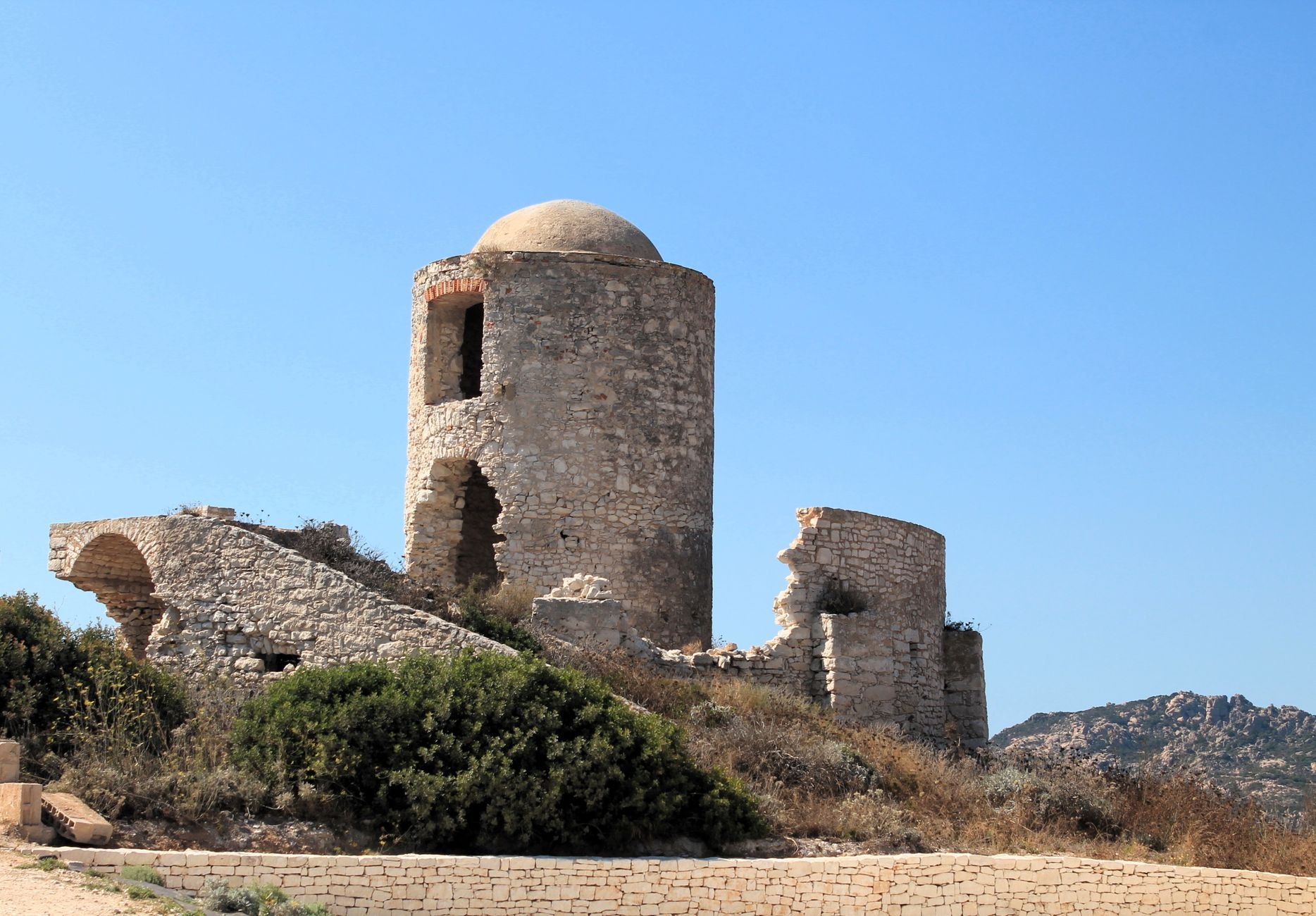
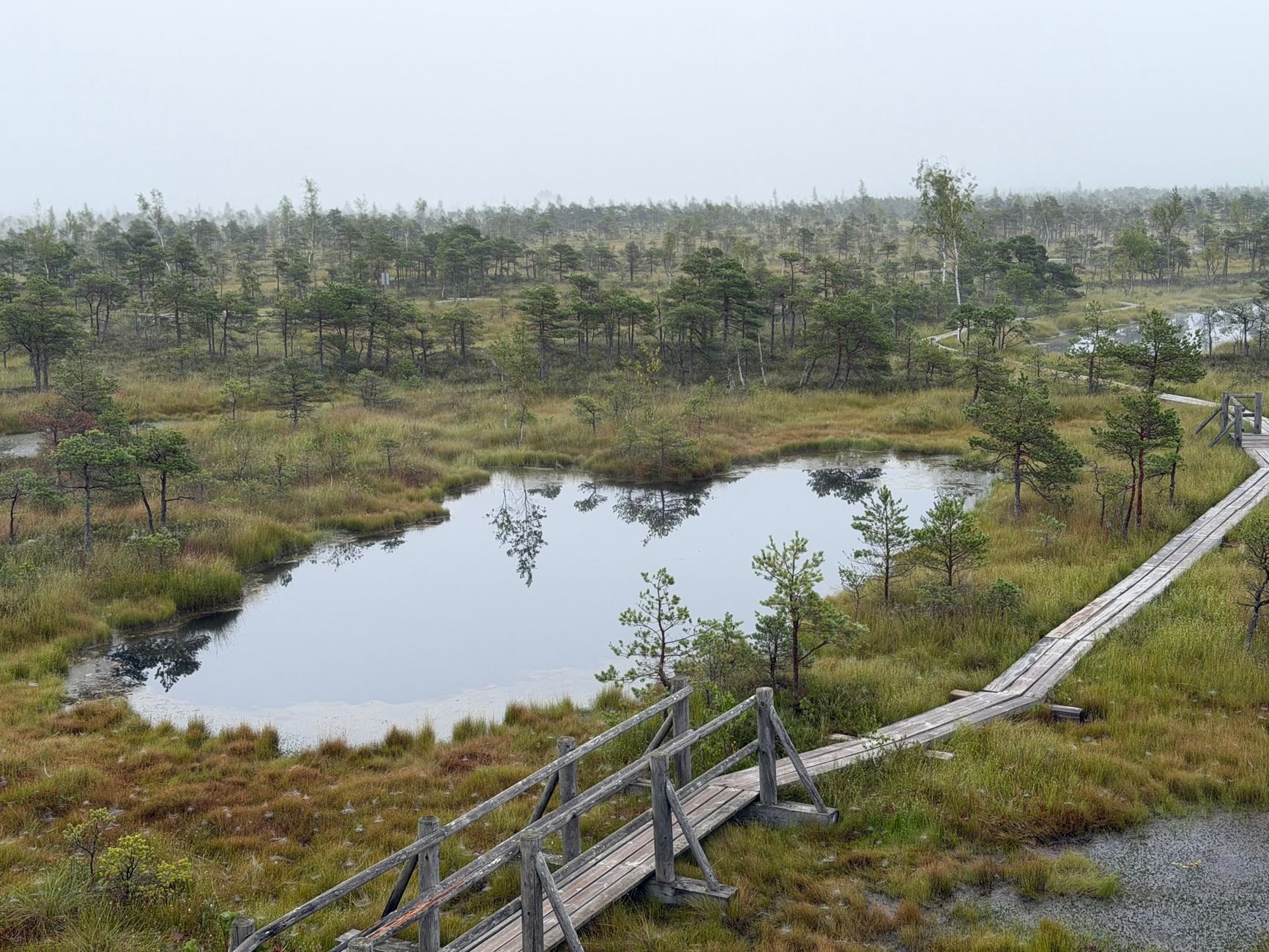
On Day 5, pick up your rental car in Riga or take the commuter train west to explore Ķemeri National Park. The crown jewel of the reserve is the Great Ķemeri Bog Boardwalk, located forty-five kilometers west of the capital. An elevated wooden pathway spans three and a half kilometers through an untouched mossy wetland of peat moss, dwarf Scots pines, and dark amber pools. Visiting around sunrise or early morning is magical, as cool morning mist rises off the water while migratory cranes and golden plovers call across the peat fields. Climb the multi-level wooden observation tower at the loop’s midpoint to absorb the otherworldly terrain stretching toward the horizon.
After your morning bog hike, continue fifteen minutes east into Jūrmala, Latvia’s legendary seaside resort town spanning thirty-three kilometers of coastal pine forests along the Gulf of Riga. Base yourself in Majori or Dzintari. Jūrmala flourished in the late nineteenth and early twentieth centuries as an aristocratic Russian and European spa retreat, celebrated for therapeutic mineral mud, sea air, and curative sulfur springs. The residential avenues are lined with hundreds of protected wooden Art Nouveau and neo-Gothic summer cottages featuring intricate gingerbread fretwork, glass verandas, and decorative corner towers.
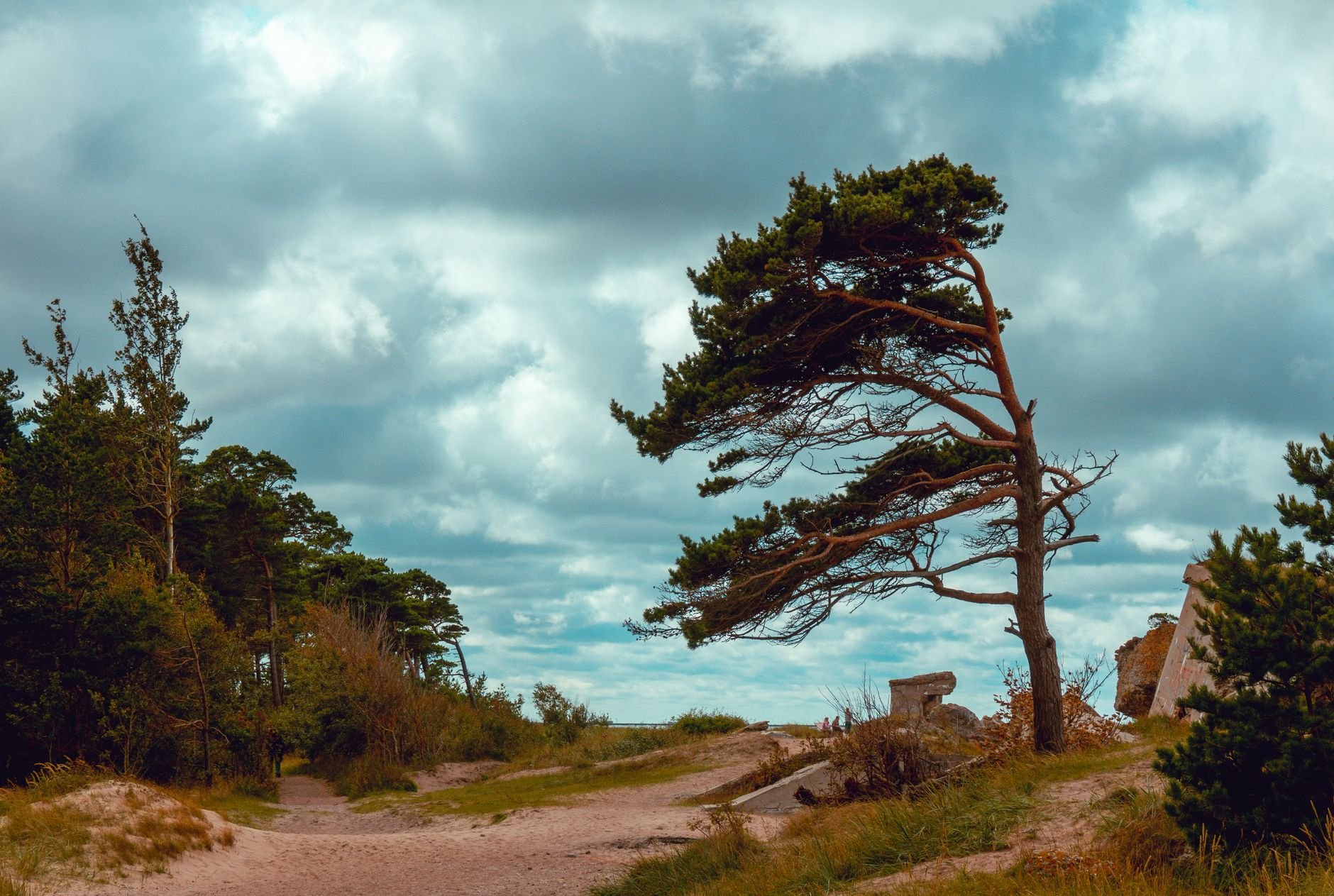
Spend Day 6 walking along the wide, powdery white quartz sand beach. The shoreline is bordered by natural sand dunes and fragrant pine groves rather than high-rise concrete resorts, maintaining a remarkably peaceful atmosphere. Stroll down pedestrian Jomas iela to browse local amber jewelry shops and open-air cafes, or rent a cruiser bicycle to pedal along the firm sand at low tide. In the evening, treat yourself to a traditional Baltic sauna ritual (pirts) complete with birch branch whisks and cold plunge pools at one of Jūrmala’s historic seaside wellness spas.
Day 7: Traditional Latvian Culinary Heritage and Homeward Departure
On Day 7, make the short journey back toward Riga, spending your final hours exploring the Kalnciema Quarter in Pārdaugava. This revitalized cultural enclave consists of beautifully restored nineteenth-century classicist wooden buildings clustered around an apple orchard courtyard. On Saturdays, it hosts a popular farmers and craft market where local producers sell homemade country cheeses, sourdough breads, clover honey, and handcrafted linen goods.
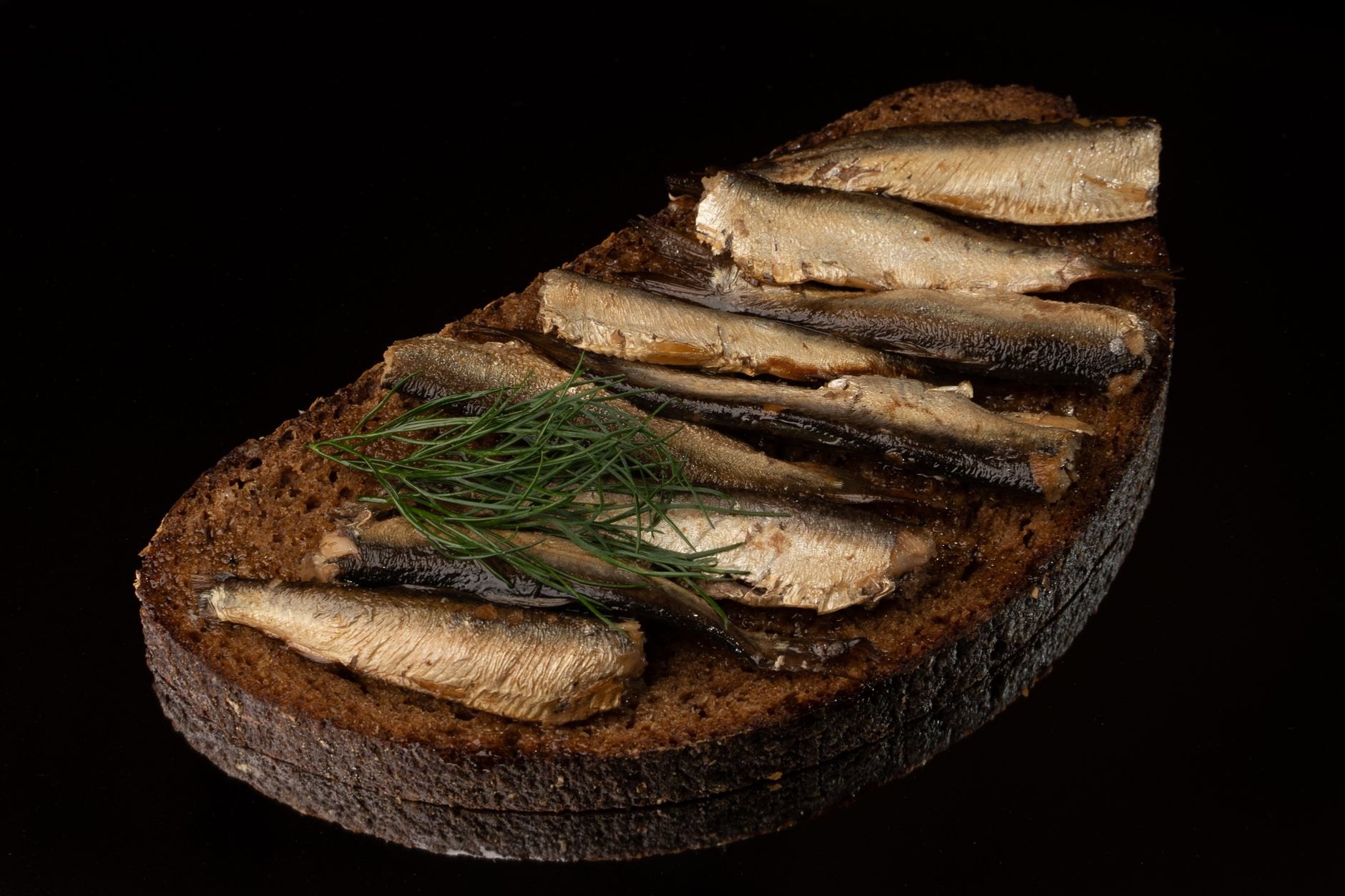
Latvian gastronomy is hearty, earth-driven, and intrinsically tied to seasonal forest foraging. The culinary foundation is rudzu maize: dense, dark, naturally fermented sourdough rye bread that carries national cultural pride. At lunch, order pelēkie zirņi ar speķi (soft grey peas stewed with smoked bacon cubes and fried onions), accompanied by a glass of cold kefir or Valmiermuiža craft beer. Sample cold beet soup (aukstā zupa), a refreshing fuchsia-pink broth of kefir, grated beets, cucumber, fresh dill, and boiled egg. Finish your meal with maizes zupa—a comforting dessert soup of sweetened soaked rye bread, stewed cranberries, and fresh whipped cream—paired with a warming sip of herbal Riga Black Balsam.
Tourist Scams, Logistics Pitfalls, and Practical Traps in Latvia
Latvia is among the safest travel destinations in the European Union, with low violent crime rates and an orderly public environment. However, foreign visitors occasionally stumble into common commercial pitfalls and transport fines. Keep these five practical considerations in mind:
- Old Town Nightlife Bar Tab Extortion: A lingering late-night scam in central Vecrīga involves attractive local promoters inviting solo male travellers into discreet basement cocktail lounges or gentlemen’s clubs. Victims are presented with inflated bills running into hundreds or thousands of euros for ordinary drinks, enforced by intimidating security guards. Stick to reputable, open pubs and established cocktail bars on Doma laukums or Audēju iela, and never follow strangers into unverified venues.
- Jūrmala Vehicle Toll Camera Fines (Caurlaide): Driving into the municipality of Jūrmala requires paying a mandatory entry toll of three euros per vehicle between April 1 and September 30. High-tech automatic number plate recognition cameras monitor all highway entrances. Tourists who fail to pay online or at roadside ticket vending machines before entering face an automatic fifty-euro administrative fine mailed directly to their car rental agency.
- Unlicensed Airport Taxi Overcharging: Outside the arrivals terminal at Riga International Airport, unauthorized private drivers occasionally solicit arriving tourists, charging forty to sixty euros for a journey into the city centre. Legitimate fares using the official Bolt smartphone ride-hailing app or licensed green Baltic Taxi and Air Baltic cabs at the official rank cost between fifteen and twenty euros. Always insist on metered fares or book via Bolt directly on your phone.
- Imitation Amber Souvenirs in Tourist Stalls: The Baltic region is famous for natural amber, but street market stalls frequently sell cheap pressed plastic, synthetic resin, or heat-treated copal masquerading as ancient amber. Authentic Baltic amber feels warm to the touch, generates static electricity when rubbed against fabric, and floats in saturated saltwater. Purchase certified amber jewelry with authenticity guarantees from reputable heritage jewelers rather than open street carts.
- Riga Central Market Pickpocketing Awareness: While the historic Zeppelin hangars are completely safe during normal shopping hours, the dense crowds surrounding the meat and fish halls provide prime opportunities for opportunist pickpockets. Keep wallets, smartphones, and passports securely zipped inside internal jacket pockets rather than loose backpack compartments, especially during peak weekend morning shopping hours.
Staying Connected Across Latvia with NXTL Mobile Data
From checking real-time train departures on the Vivi railway app and purchasing public transit tickets on Mobilly to navigating scenic backroads through Gauja National Park and hailing Bolt taxis in central Riga, reliable high-speed cellular connectivity is vital throughout your week in Latvia. While local prepaid plastic SIM cards are sold at Narvesen convenience kiosks, purchasing them requires manual handset configuration, SIM tray swaps, and keeping track of local top-up codes.
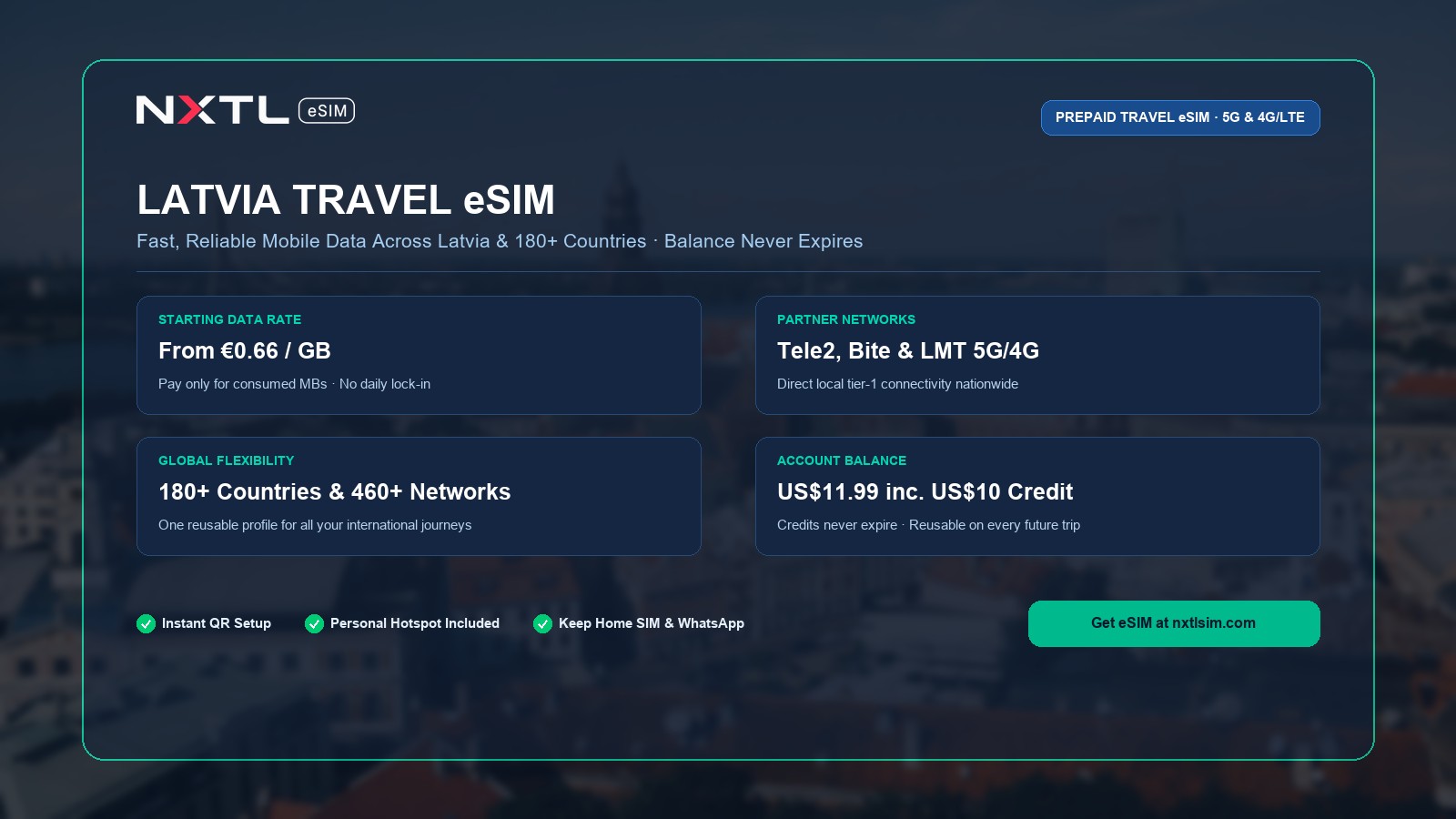
A much smoother, highly economical solution is installing the NXTL Latvia eSIM before stepping off your flight at Riga Airport. Powered by Latvia’s leading nationwide telecommunications carriers—including Tele2, Bite, and LMT (Latvijas Mobilais Telefons) 5G/4G—NXTL provides lightning-fast connectivity across the capital, the coastal pine corridors of Jūrmala, and the sandstone river bluffs of Sigulda. At starting rates of just $0.75 per gigabyte, NXTL delivers true tier-one network speed on an intuitive prepaid consumption basis, charging you exclusively for the actual megabytes you consume.
Crucially for international travellers, your account balance never expires. Any remaining credit from your week in Latvia stays active in your wallet, ready for effortless reuse across more than 180 countries and over 460 partner networks worldwide on your future travels. Activation takes under two minutes via a simple QR code scan on any eSIM-capable device, leaving your primary physical SIM card active for banking verification codes, WhatsApp messaging, and domestic calls throughout your Baltic journey.