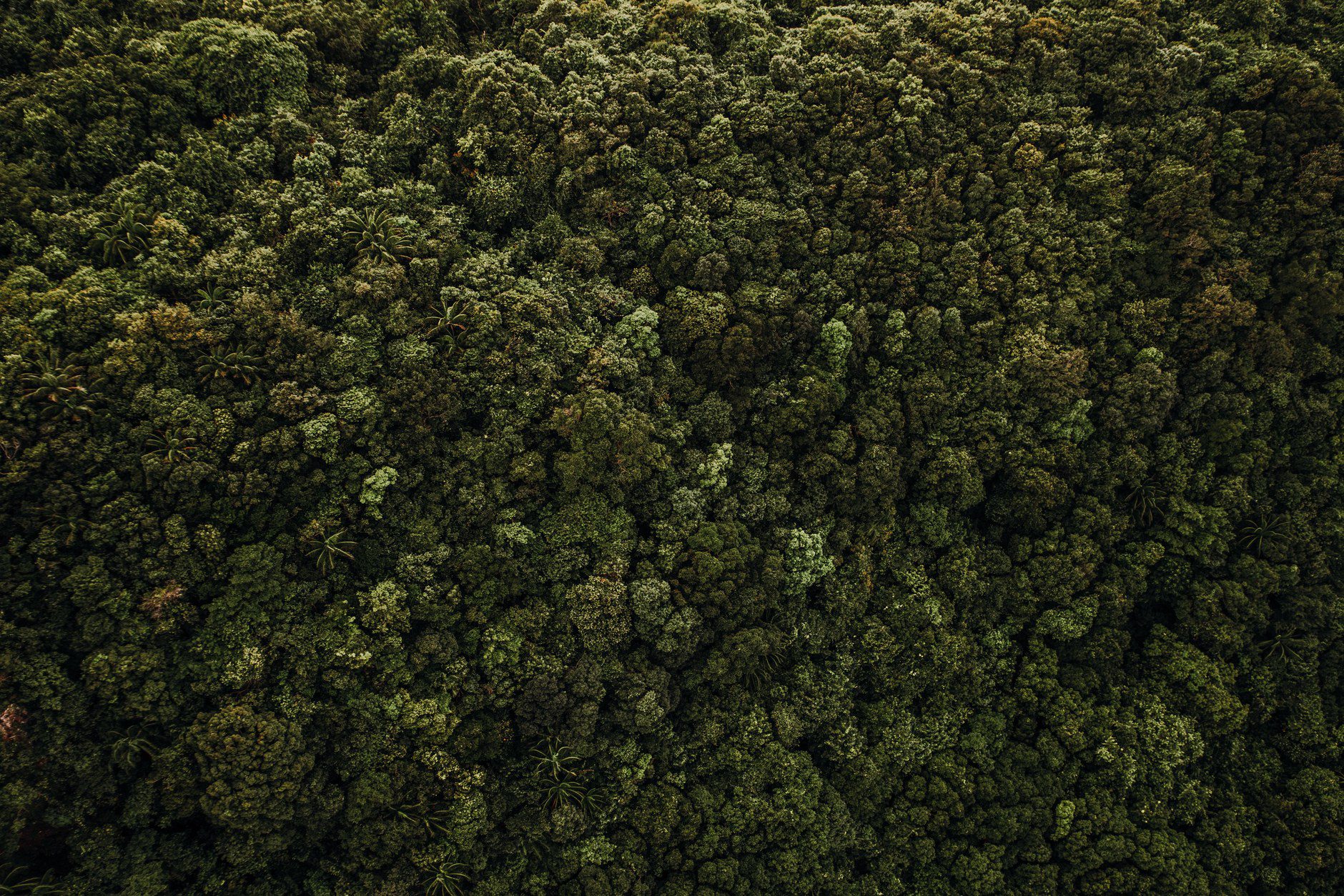
Gabon occupies an anomalous position in Central African travel: an oil-wealthy, politically stable equatorial republic where eighty-five percent of the landmass remains blanketed by dense tropical rainforest. Often referred to as “Africa’s Last Eden” following ecologist Mike Fay’s legendary 2,000-mile Megatransect expedition in 2000, Gabon made international conservation history in 2002 by designating eleven percent of its entire territory into thirteen national parks. Here, equatorial biodiversity collides directly with the South Atlantic: forest elephants browse along open ocean sands, family groups of western lowland gorillas forage in primary coastal canopies, and hippos surf breaking Atlantic breakers.
Yet experiencing Gabon demands total logistical realism. This is not an East African safari circuit of smooth paved highways, abundant minibuses, and mass-market tented camps. Traveling through Gabon requires substantial financial investment, meticulous advance planning, and strict reliance on domestic aviation and river transfers. Independent road travel into the interior is exceptionally difficult for foreign visitors due to deteriorating rainforest tracks, impassable equatorial mud, and complex administrative checkpoints. A realistic seven- or eight-day itinerary anchors itself around three accessible poles: the coastal capital of Libreville, the leatherback sea turtle nesting sanctuaries of Pongara National Park, and the wilderness of Loango National Park.
Libreville: Gateway and Logistics Hub
Your journey begins in Libreville, arriving through Léon Mba International Airport (LBV). Perched along the northern shore of the wide Gabon Estuary, Libreville is a sprawling, modern coastal capital defined by French colonial administrative buildings, oil-sector commerce, and wide seaside boulevards lined with coconut palms. Because French is the universal administrative and conversational language, having a functional grasp of basic French is essential for navigating local logistics, dining, and internal transfers.
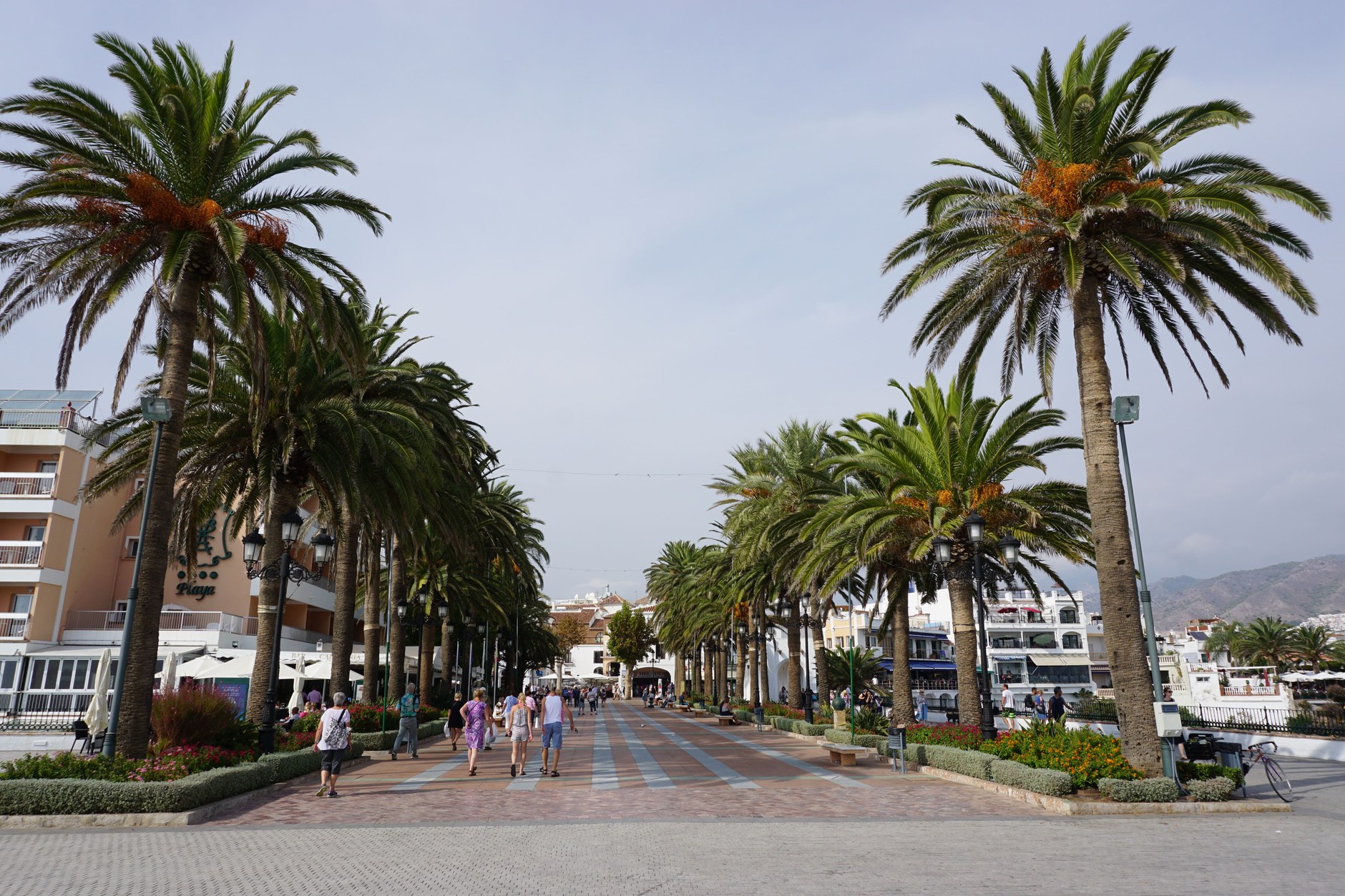
Spend your arrival day organizing park permits and acclimating to equatorial humidity. Stroll along Boulevard Bord de Mer, the city’s coastal boulevard, where public sculptures commemorate national emancipation and open-air cafés serve fresh espresso and cold Régab beer. Visit the National Museum of Art and Tradition in the city center, which houses an extraordinary collection of traditional wooden ritual masks carved by the Fang, Kota, and Punu peoples, complete with geometric brass repoussé reliquary guardian figures that influenced early European modernists.
In the bustling commercial neighborhood of Nkembo, visit the church of St. Michael of Nkembo, renowned for its thirty-one exterior wooden support columns. Each pillar was hand-carved by a blind Gabonese artisan, depicting biblical and indigenous spiritual scenes through traditional tribal motifs. Central Libreville also houses the headquarters of the National Agency for National Parks (ANPN), where travelers must verify national park conservation permits and eco-tourism guide assignments before venturing into protected wilderness zones.
Pongara National Park: Estuary Turtles and Mangroves
On your second day, arrange a morning boat transfer across the Gabon Estuary to Pongara National Park. Located directly opposite Libreville across an eight-mile stretch of water, Pongara spans over 350 square miles of coastal sand spits, mangrove estuaries, and primary coastal rainforest. Fast motorized pirogues departing from Port Môle or private marina docks in Libreville make the crossing in twenty-five to thirty-five minutes.
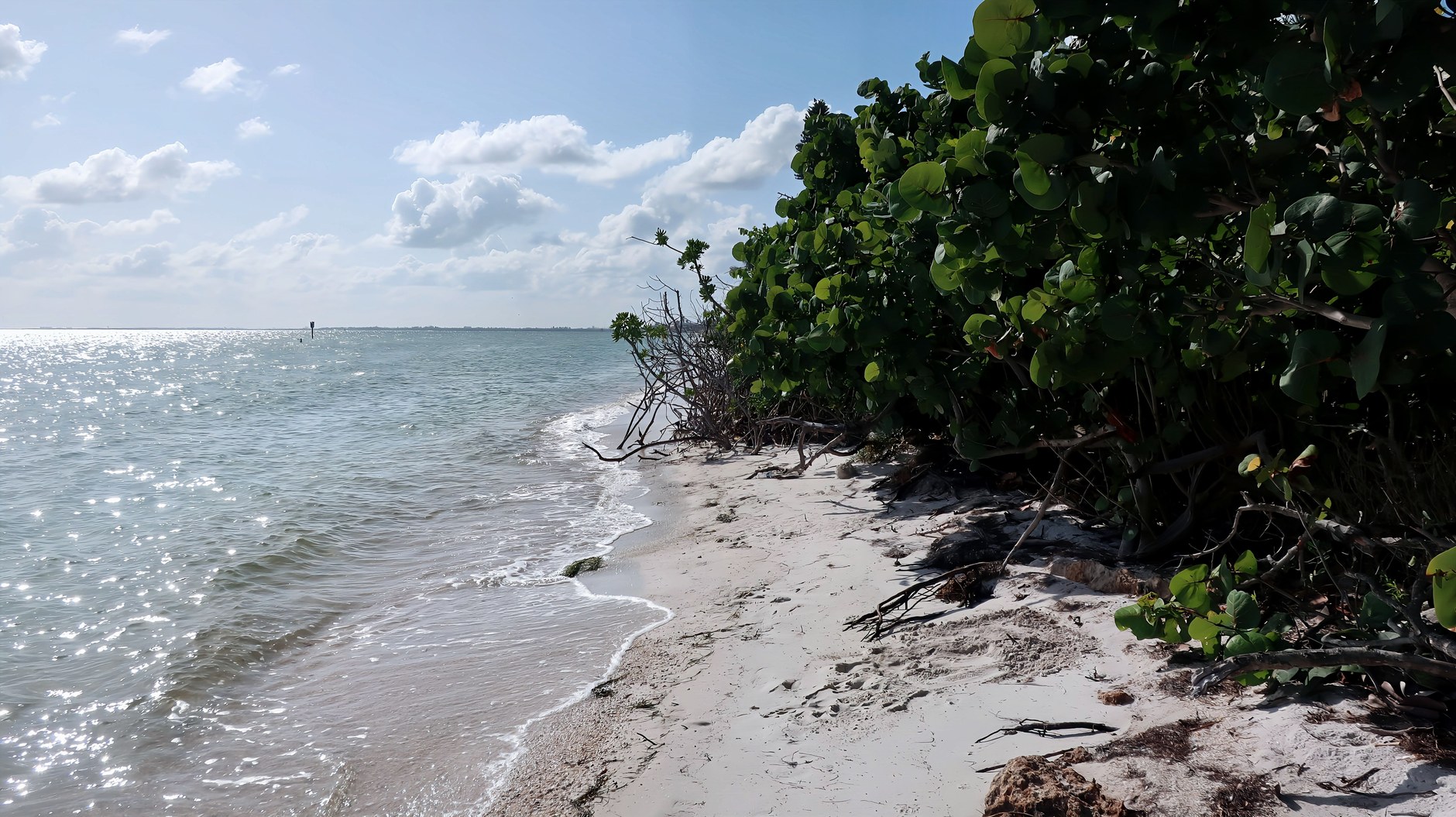
Pongara serves as one of the world’s most critical nesting grounds for giant leatherback sea turtles (Dermochelys coriacea). Between November and February, thousands of female leatherbacks haul themselves out of the Atlantic breakers onto the dark, deserted beaches under cover of night to deposit their clutches of eggs in deep sand pits. Guided night patrols organized through conservation lodges allow visitors to witness these massive prehistoric reptiles—often weighing over nine hundred pounds—digging nesting chambers in total silence before returning to the sea.
During daylight hours, guided forest walks lead inland beneath towering kapok and mahogany trees. Forest elephants, red river hogs, and colobus monkeys frequently emerge along the boundary between the forest and the beach. Because Pongara is situated within sight of Libreville’s skyline yet remains completely wild, it offers an outstanding introduction to equatorial wildlife before undertaking the complex multi-leg journey south to Loango.
The Passage South: Flights, Lagoons, and 4WD Tracks
Reaching Loango National Park illustrates why independent road travel in Gabon is unfeasible. Attempting to drive overland from Libreville to Loango requires traversing over five hundred miles of heavily deteriorated unpaved logging roads through dense jungle, punctuated by deep red-clay mud bogs that swallow four-wheel-drive vehicles during rainy cycles. There are no bridges across the Ogooué River delta, no reliable repair shops, and no public bus services.
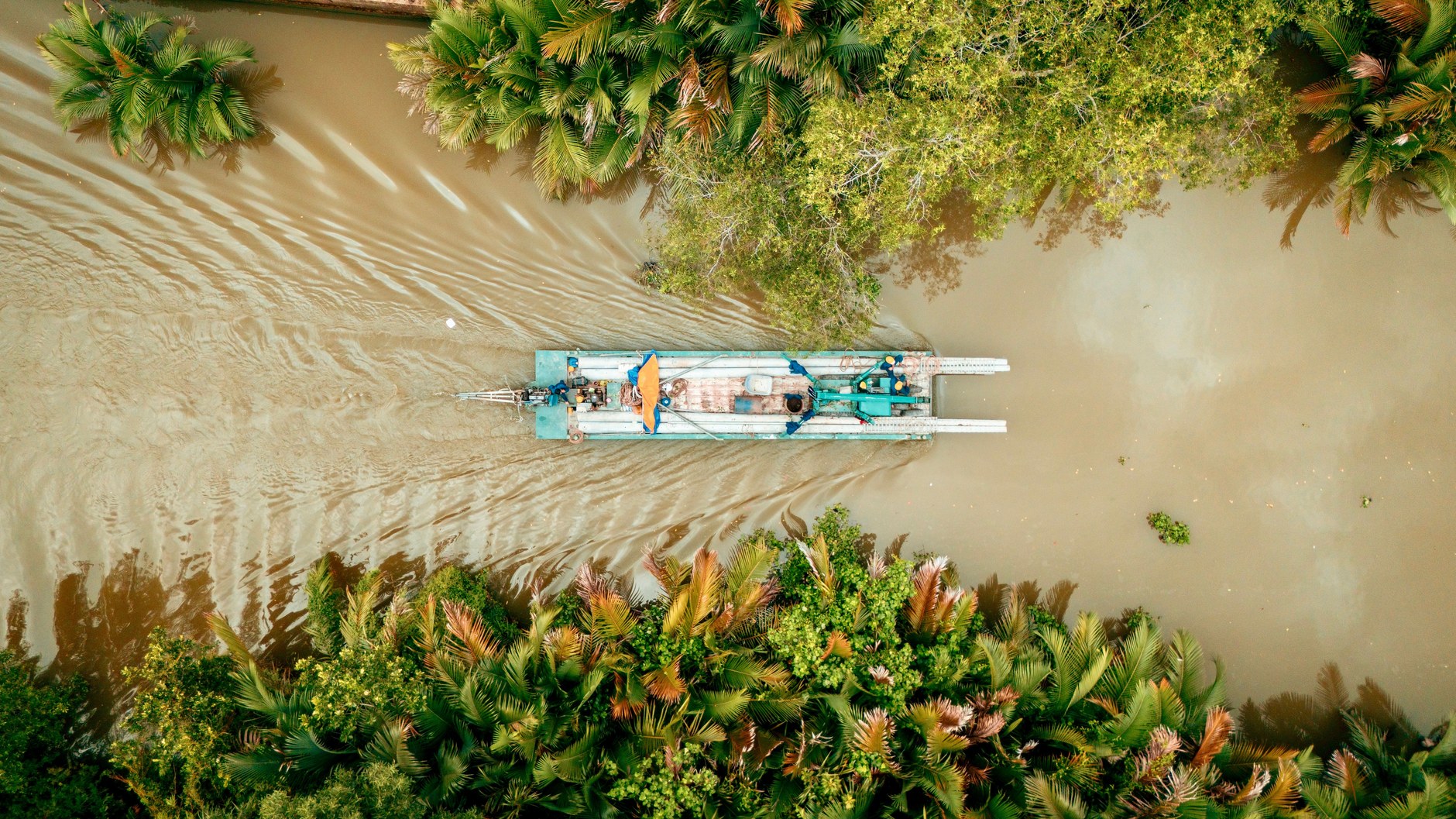
Instead, your journey south relies on domestic aviation and water transfers. On your third morning, board a domestic flight on Afrijet from Libreville (LBV) to Port-Gentil (POG), the country’s oil hub located on Mandji Island at the mouth of the Ogooué River. The flight takes thirty-five minutes aboard modern regional turboprops. Upon landing at Port-Gentil, pre-arranged private transfers transport you to the harbor to board a motorized river cruiser for the journey through the Fernan Vaz lagoon network.
For two and a half hours, the boat glides across mirror-still coastal lagoons and mangrove channels, passing traditional stilt fishing settlements and dense riverbank jungle where kingfishers and fish eagles circle overhead. The boat docks at the small river outpost of Omboué. Here, you transfer into a rugged, high-clearance 4WD vehicle for a rough two-hour drive across sandy savannah ridges and wooden river bridges, finally arriving at the edge of Loango National Park near Iguela Lagoon.
Loango: Where the Forest Meets the Sea
Loango National Park spans over 600 square miles of coastal lagoons, flooded swamp forests, open coastal grasslands, and sixty miles of completely uninhabited Atlantic shoreline. It is here that the iconic imagery of Gabon’s wildlife comes to life: forest elephants walking through breaking ocean surf and hippos feeding along open sandy beaches.
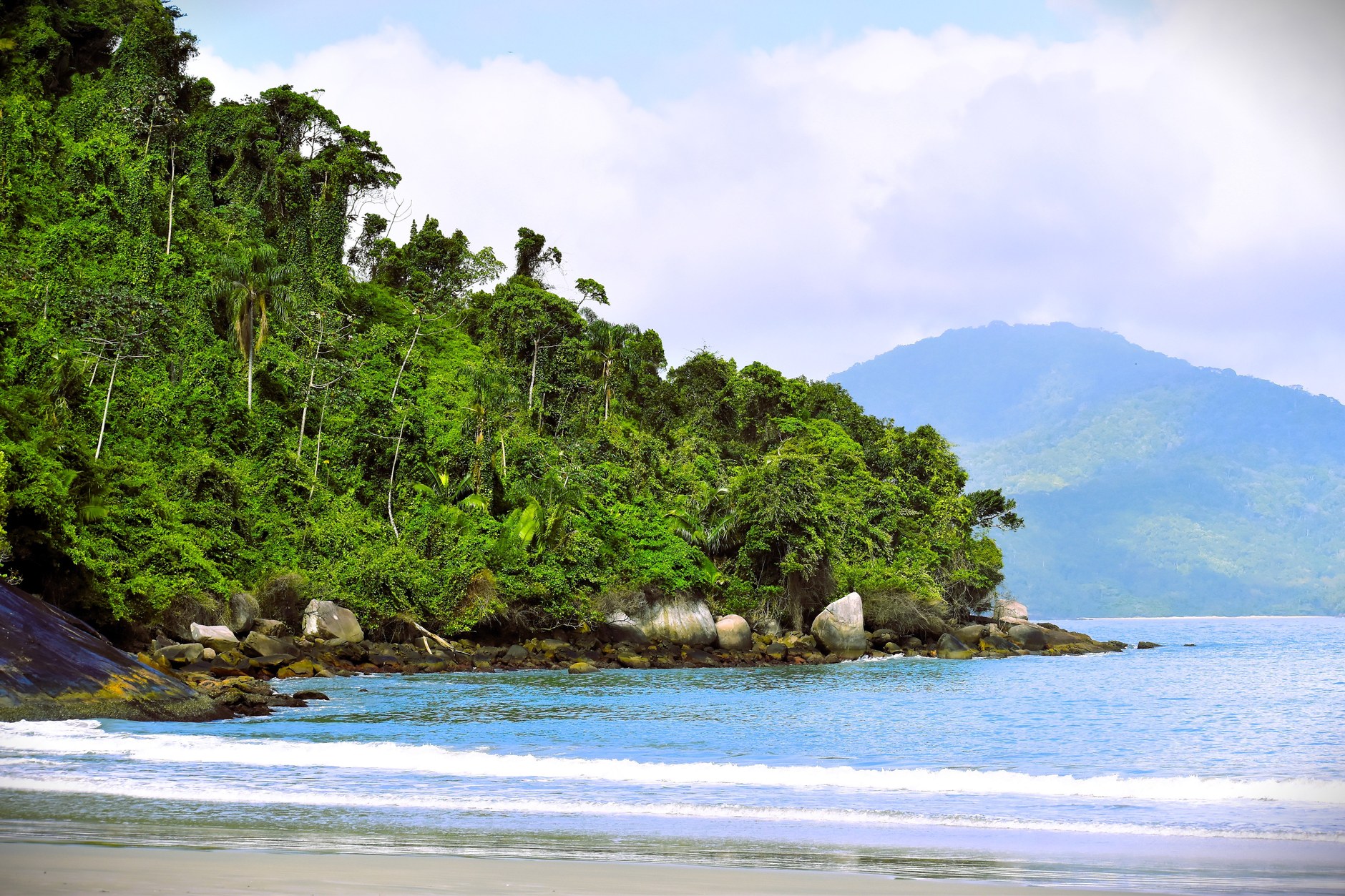
Accompanied by armed ANPN park rangers and indigenous trackers, early morning game drives and walking safaris explore the mosaic of coastal savannahs. African forest elephants (Loxodonta cyclotis)—distinct from their larger savannah cousins by their smaller stature, rounded ears, and straight, downward-pointing ivory tusks—emerge from the dense forest edge in small family units to graze on mineral-rich coastal grasses and stroll along the high-tide line.
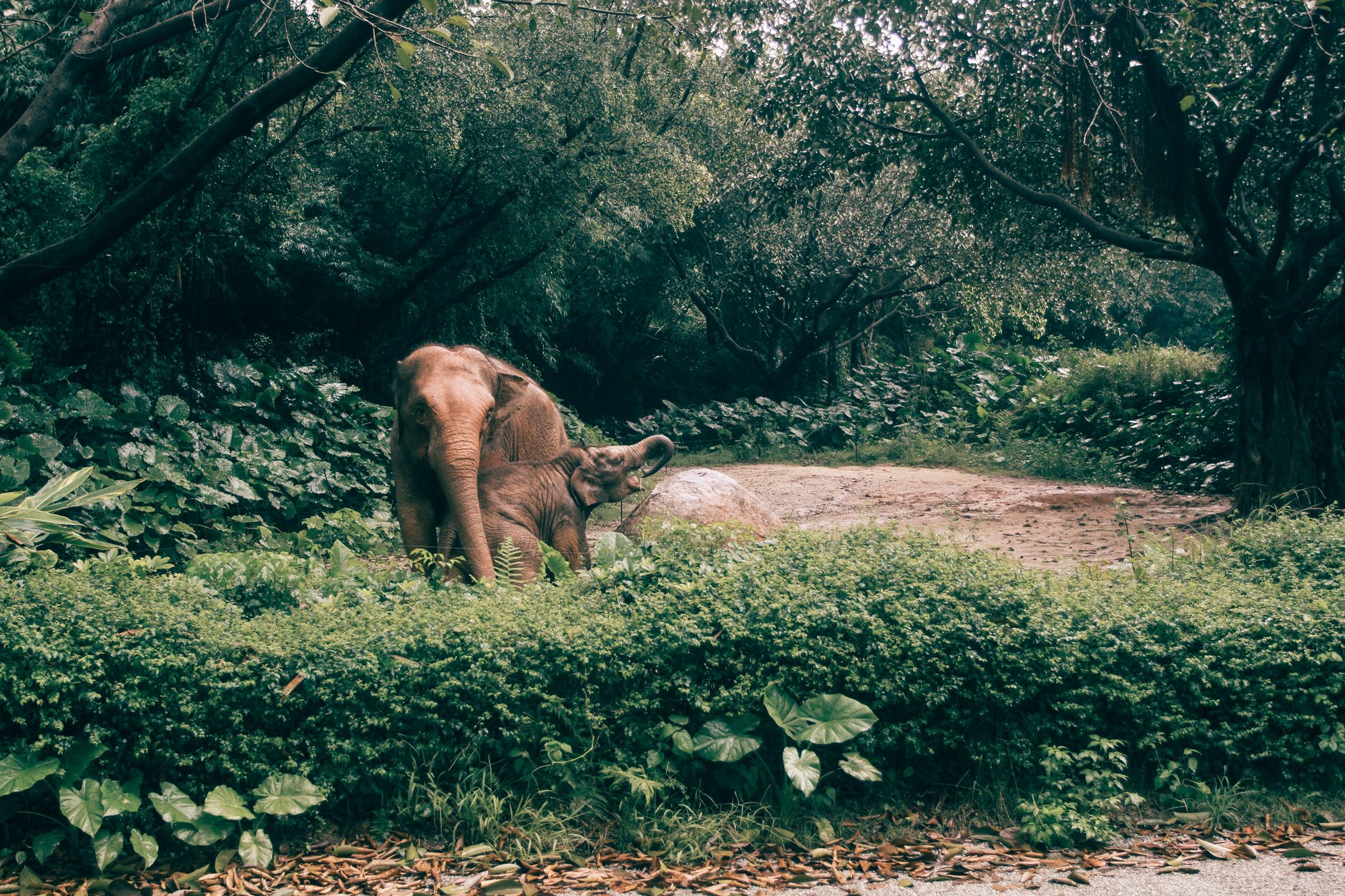
Along the beach near the mouth of Iguela Lagoon, look for Loango’s famous “surfing hippos.” While hippos do not actively ride waves for sport, they routinely enter the brackish surf to cool their thick skin, cleanse themselves of parasites, and maneuver between coastal river channels. Watching a three-ton bull hippo navigate five-foot ocean breakers with the green wall of equatorial rainforest behind it is one of the most surreal sights in natural history.
Gorilla Habituation and River Safaris
On your fifth day, participate in Loango’s western lowland gorilla trekking experience at the Yatouga research camp. While mountain gorillas in Rwanda and Uganda inhabit montane cloud forests and have been habituated for decades, western lowland gorillas (Gorilla gorilla gorilla) dwell in dense lowland swamp forests and are notoriously shy and difficult to track.
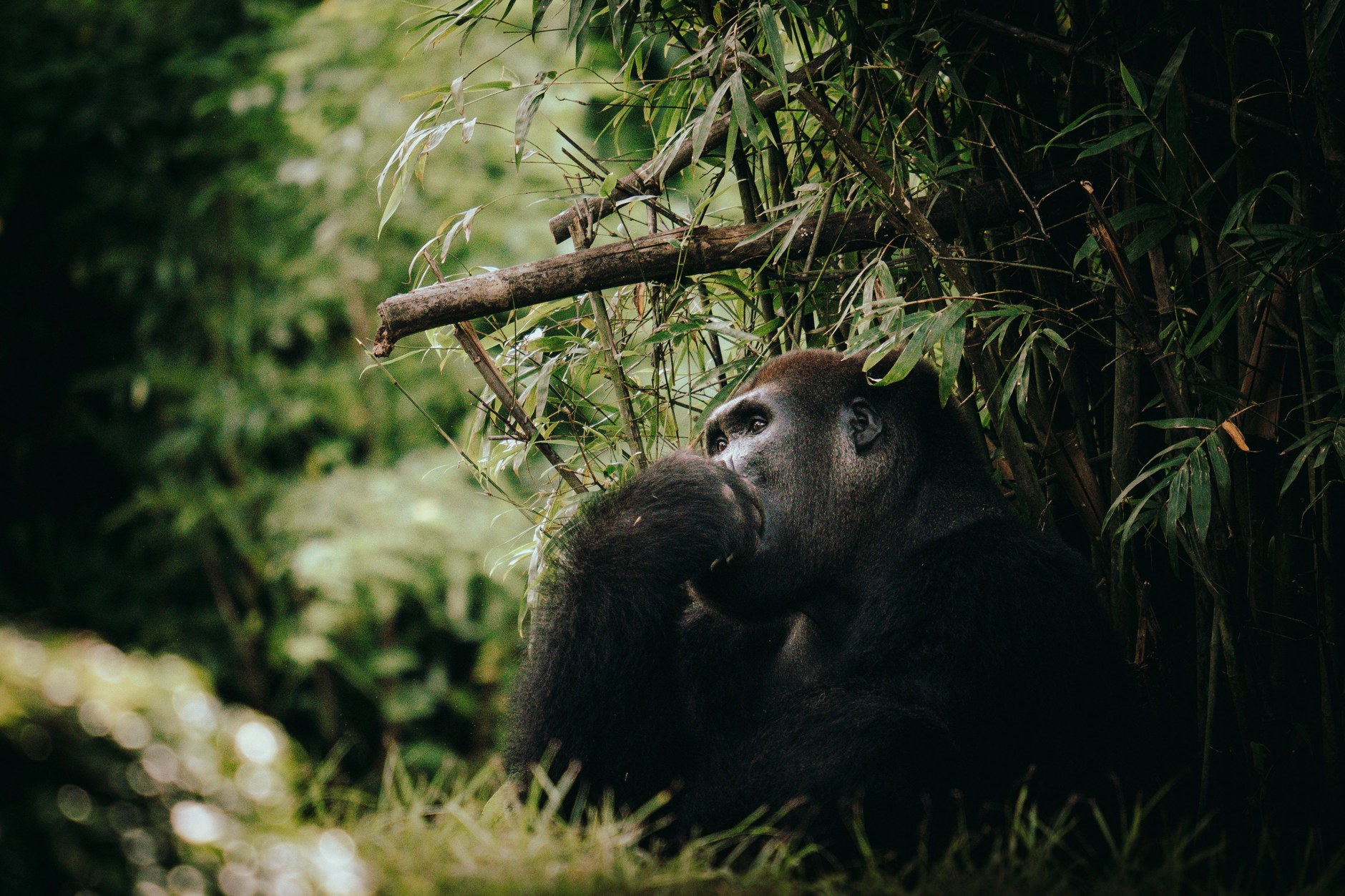
Operated in strict coordination with the Max Planck Institute for Evolutionary Anthropology, the Yatouga habituation project allows small groups of visitors (maximum four guests per day) to track the habituated “Kamaya” gorilla group. Following expert Pygmy trackers through dense secondary undergrowth and wading through ankle-deep swamp clearings (bais), you spend one regulated hour observing the silverback, females, and playful infants feeding on wild ginger stems and tree fruit. Strict surgical face masks and a twenty-foot viewing perimeter are enforced to prevent disease transmission to the primates.
In the afternoon, board an aluminum river skiff for a safari along the Mpivié River. Gliding beneath cathedral-like canopies of wild mahogany and screw pines, your boatman spots rare slender-snouted crocodiles basking on fallen logs, black colobus monkeys leaping across high branches, and elusive sitatunga antelopes feeding along the marsh margins. As dusk falls, red river hogs and sitatungas emerge onto open sandbanks while nightjars flutter through the humid evening air.
Interior Alternatives: The Transgabonais Railway
For travelers interested in combining coastal rainforest with the mountainous interior, Gabon’s Transgabonais Railway offers an alternative terrestrial expedition. Constructed through immense engineering difficulty during the 1970s and 1980s, the railway connects Owendo terminal in Libreville with Franceville in the southeast, cutting directly through the equatorial heartland.
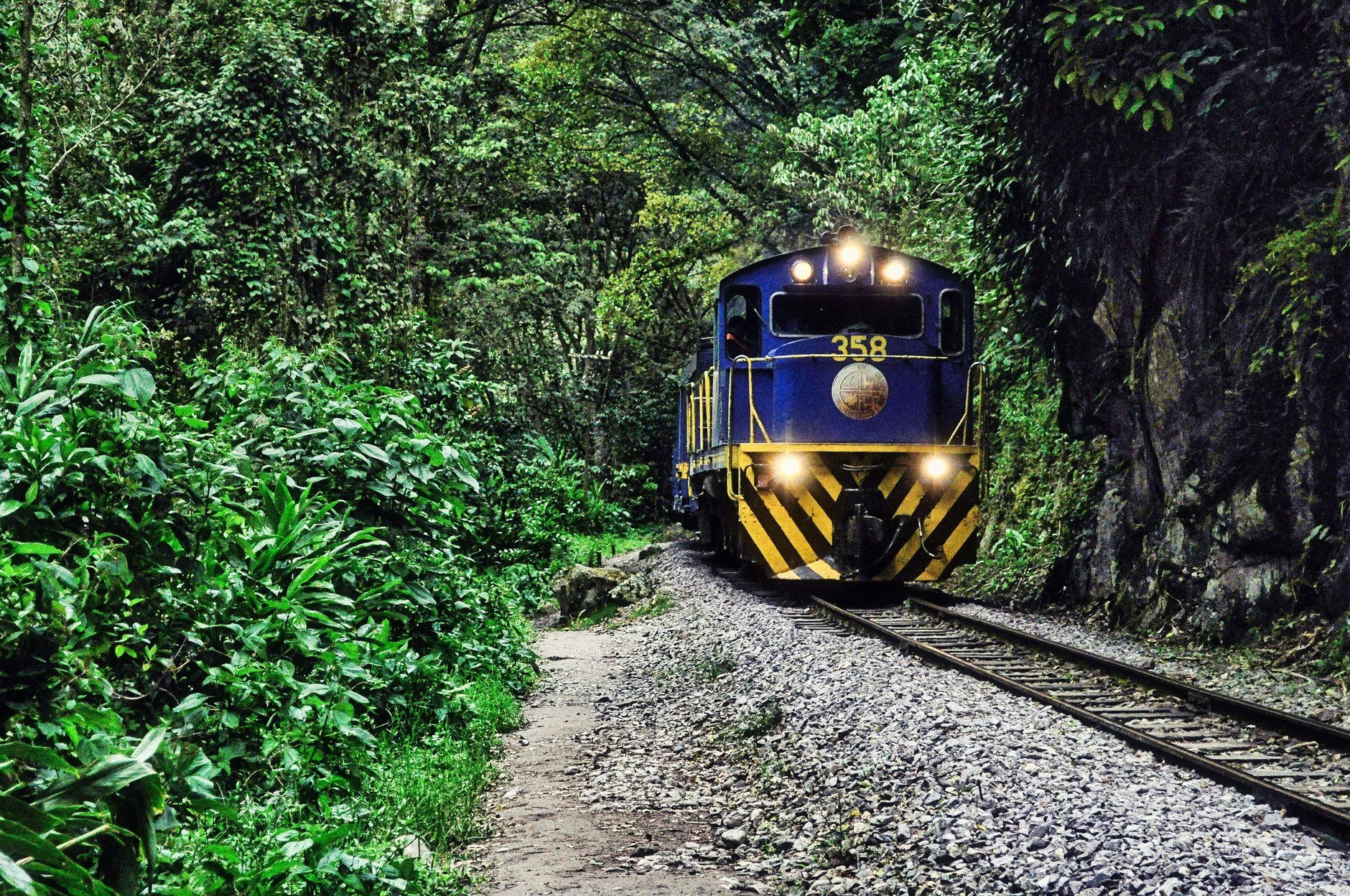
Boarding the evening passenger train from Owendo delivers you eight hours later to Lopé National Park. A UNESCO World Heritage site, Lopé features a rare ecological transition zone where ancient savannah grasslands meet dense rainforest along the Ogooué River valley. Lopé is world-renowned for hosting the largest aggregations of mandrills on earth: super-troops numbering between four hundred and one thousand individuals roam the forest edge, their multi-colored facial markings flashing through the understory.
Lopé also preserves thousands of prehistoric petroglyphs carved into open-air basalt boulders by Iron Age hunter-gatherers, depicting geometric spirals, spears, and extinct fauna. However, traveling via the Transgabonais demands ample schedule buffers: freight train derailments and manganese ore shipments frequently delay or cancel passenger train departures by twelve to twenty-four hours. Travelers must never schedule a train return on the same day as an international departure.
7-Day Gabon Wildlife & Coastal Itinerary
This compact itinerary balances the marine turtle sanctuaries of Pongara with a fully supported bush expedition into Loango National Park. All transit segments rely on verified domestic aviation and riverboat transfers.
| Day / Stage | Base | Highlights | Transport Mode | Transit Time | Advance Booking Requirement |
|---|---|---|---|---|---|
| Day 1 | Libreville | Airport arrival, Boulevard Bord de Mer, National Museum | Airport taxi / hotel shuttle | 20 mins from LBV | Arrange secure hotel airport transfer in advance |
| Day 2 | Pongara (Pointe Denis) | Estuary boat crossing, coastal forest walk, night turtle patrol | Motorized pirogue / skiff | 30 mins boat crossing | Book Pongara lodge & marine park permit |
| Day 3 | Loango (Iguela) | Flight to Port-Gentil, Fernan Vaz boat, 4WD transfer | Flight, boat & 4WD | 35m flight + 4.5h boat/4WD | Book Afrijet flight & Loango lodge expedition |
| Day 4 | Loango (Iguela) | Coastal savannah game drive, forest elephants on beach, hippos | Safari 4WD & walking | Full day game tracking | Included in lodge park itinerary |
| Day 5 | Loango (Iguela) | Yatouga lowland gorilla tracking, Mpivié River boat safari | Forest trek & boat | 4 hours trek + 2h boat | Pre-book gorilla habituation permit months prior |
| Day 6 | Libreville | 4WD to Omboué, boat to Port-Gentil, flight to Libreville | 4WD, boat & flight | 5 hours total transit | Reconfirm Afrijet return afternoon flight |
| Day 7 | Libreville | St. Michael Nkembo wood carvings, craft market, return LBV | Private driver / taxi | Local city transit | Arrange late checkout & international check-in |
Field Connectivity and Practical Logistics
Telecommunications in Gabon reflect the nation’s pronounced urban-wilderness divide. In Libreville, Port-Gentil, and along major coastal transit corridors, local mobile operators ZAIN and Celtel (operating nationally as Airtel Gabon) provide fast and stable LTE cellular coverage. However, the moment your riverboat enters the Fernan Vaz lagoon delta and approaches Loango National Park, terrestrial cellular reception drops entirely. Installing an NXTL Gabon eSIM before your arrival flight ensures immediate data connectivity upon landing at Léon Mba International Airport. Your balance never expires, and unused credit stays available for later trips across more than 180 countries.
Having reliable mobile internet is invaluable during the critical transit junctions: you will need active data to verify domestic flight departure gates with Afrijet, communicate via WhatsApp with lodge transfer drivers at Port-Gentil and Port Môle, and load offline satellite maps before venturing into remote forested zones. Retaining your primary domestic physical SIM in a dual-SIM smartphone guarantees you continue receiving essential two-factor authentication banking codes while routing all local data traffic through the cost-effective eSIM profile.
Budget Realities and Travel Economics
Travelers must prepare for high baseline expenses when visiting Gabon. Because the national economy is centered on petroleum and timber extraction rather than consumer tourism, consumer goods, food, and hospitality carry premium price tags comparable to major Western European capitals. A basic mid-range hotel room in Libreville routinely costs $150 to $250 USD per night, while restaurant meals in quality establishments range from $30 to $60 USD per person.
Venturing into protected national parks increases daily expenditures substantially. Operating wilderness lodges in remote equatorial environments requires chartering bush aircraft, maintaining specialized 4WD vehicles in corrosive coastal sand, generating private solar and diesel power, and transporting all fresh provisions by boat. An all-inclusive expedition package to Loango National Park—covering lodging, meals, park fees, guided tracking, and lagoon transfers—typically ranges between $600 and $1,000 USD per person per day. Attempting to travel to Loango on a shoestring budget without pre-arranged logistics is virtually impossible.
Currency and Financial Operations
The official currency is the Central African CFA Franc (XAF), which is pegged to the Euro at a fixed rate of approximately 655.957 XAF to 1 EUR. Credit cards (primarily Visa, with Mastercard accepted in fewer establishments) are utilized by major hotels, airline ticket counters, and established supermarkets in Libreville and Port-Gentil. However, beyond these urban pockets, Gabon is strictly a cash economy.
Bank ATMs operated by institutions such as BGFI Bank, Ecobank, and BICIG are available in Libreville and Port-Gentil, dispensing XAF banknotes. ATMs do not exist anywhere near Loango, Omboué, or Pongara. Always withdraw substantial cash in CFA Francs before leaving Libreville to cover artisanal souvenirs, personal gratuities for trackers and boatmen, and incidental village expenses.
Common Scams and Travel Precautions
While Gabon is safe from the violent civil instability that has affected some neighboring nations, navigating the country’s bureaucratic landscape requires preparation. Observing these specific safety precautions ensures an untroubled journey.
- Gendarmerie Checkpoint Document Inspections: Police and gendarmerie checkpoints are ubiquitous along highways and river waterways. Officers will thoroughly inspect passports, visas, yellow fever cards, and vehicle paperwork. Always carry certified color copies of your passport and visa, remain calm and excessively polite, speak French, and never offer bribes; wait patiently while credentials are examined.
- Unlicensed Currency Changers and Airport Touts: Informal money changers loiter outside Léon Mba Airport offering black-market exchange rates that frequently involve counterfeit CFA banknotes or rigged calculations. Bypass curbside solicitors entirely and exchange currency at official airport bank counters or withdraw cash from secure ATMs inside the terminal.
- The “Self-Drive Rental to Loango” Infrastructure Trap: Unscrupulous car rental agencies in Libreville will gladly rent standard SUVs to foreign visitors, falsely claiming that Loango is accessible by road. In reality, the tracks are impassable without specialized winch-equipped overland vehicles and expert local bush mechanics. Never attempt an independent self-drive to Loango.
- Transgabonais Freight Derailment Delays: The railway line between Libreville and Lopé frequently experiences multi-day delays due to heavy manganese freight trains derailing on soft rainforest embankments. Never schedule an interior train excursion with a tight connection to your international departure flight; always maintain a 48-hour buffer in Libreville.
- Unregulated Wildlife Approaches on Coastal Beaches: Encountering forest elephants or hippos along the beach in Loango or Pongara is thrilling, but these are wild, dangerous animals capable of charging at high speeds. Always maintain a minimum distance of fifty yards, stay downwind, and strictly obey the directional instructions of your certified armed ANPN park ranger.
Slower and Shorter Route Adjustments
If your schedule or budget allows for only four or five days in Gabon, do not attempt to visit Loango National Park. Instead, divide your time between Libreville and Pongara National Park. Spend two days in the capital exploring cultural museums and dining along Boulevard Bord de Mer, then take a thirty-minute boat across the estuary to spend two nights at a coastal eco-lodge in Pongara, observing nesting leatherback turtles and walking coastal forest trails without the expense of domestic flights.
Travelers with ten to twelve days can combine Loango with the interior savannah of Lopé National Park. Take the Transgabonais train from Libreville to Lopé to spend three days tracking massive super-troops of mandrills and exploring ancient petroglyph fields along the Ogooué River, then return to Libreville to connect with the flight and boat routing to Loango for an extraordinary dual-ecosystem expedition.