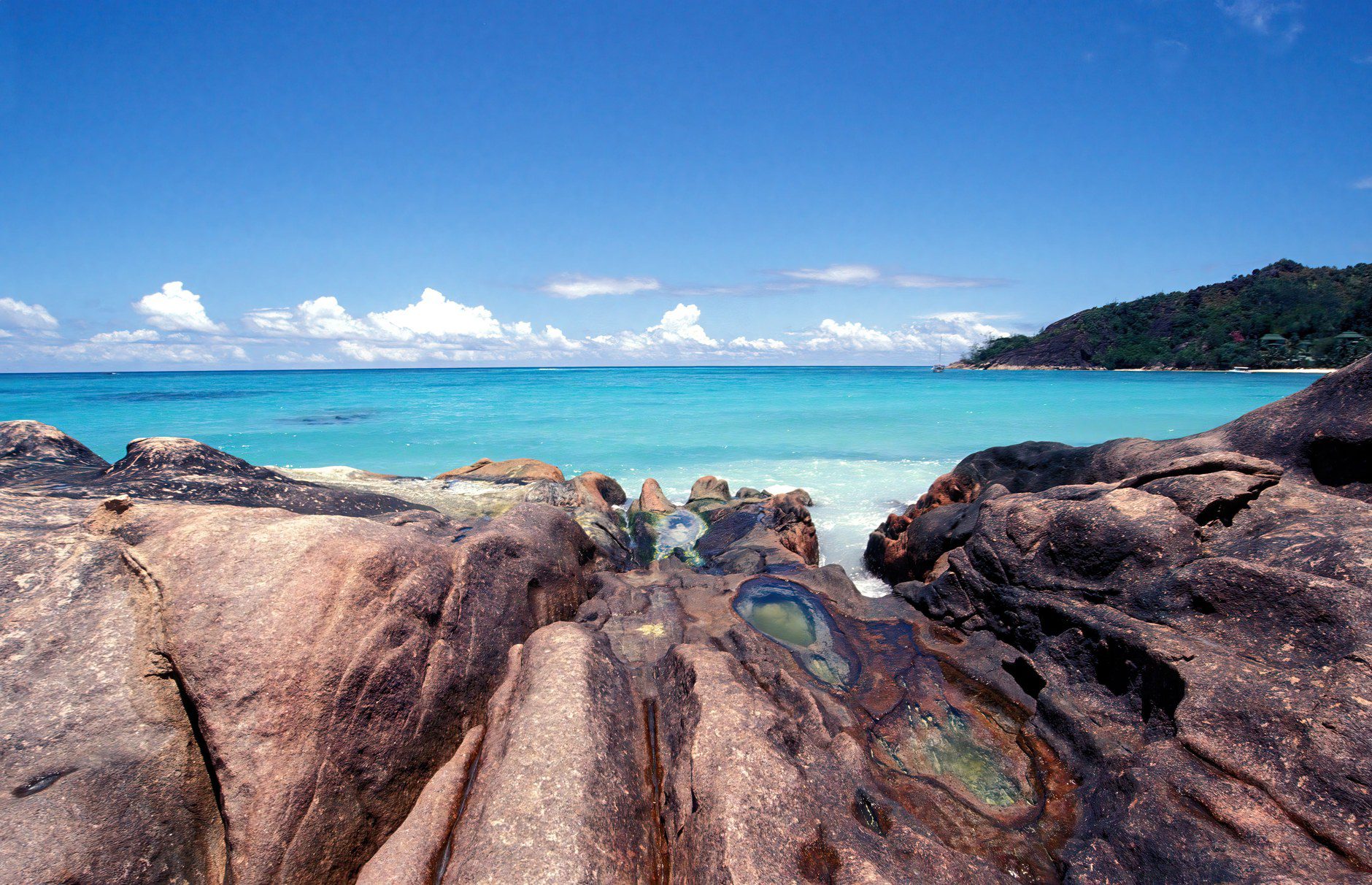
The Seychelles archipelago occupies a singular position in global geography: 115 islands scattered across 400,000 square kilometers of the western Indian Ocean, distinguished as the only oceanic granitic islands on earth. The inner islands of Mahé, Praslin, and La Digue are fragments of ancient continental crust left behind when India sheared away from Madagascar 65 million years ago. Their shorelines feature prehistoric granite monoliths rising from calm coral lagoons, backed by cloud-forest mountains and endemic palm jungles.
Planning a trip to the Seychelles requires resisting the urge to treat the country as a static resort enclave. A properly constructed eight- to nine-day itinerary links the mountainous cultural landscapes of Mahé, the prehistoric coco de mer reserves of Praslin, and the bicycle-paced serenity of La Digue into a logical island-hopping circuit. Crucial practical decisions define this journey: choosing between high-speed open-ocean catamarans and scenic twin-engine flights, navigating seasonal monsoon wind reversals that radically alter beach swimming safety, and managing steep left-hand mountain drives flanked by deep concrete storm ditches.
The Granitic Triangle: Mahé, Praslin, and La Digue
The vast majority of travelers spend their entire visit within the “Granitic Triangle” formed by the three primary inhabited islands. Each island possesses a distinct identity, topography, and transit style. Mahé is the commercial and administrative anchor, housing 90 percent of the national population, the international airport, and the capital of Victoria. Praslin, situated 44 kilometers northeast of Mahé, offers a slower pace centered around pristine beaches and protected botanical sanctuaries. La Digue, located just seven kilometers east of Praslin, is virtually devoid of private passenger cars, preserving a tranquil, bicycle-powered rhythm of life.
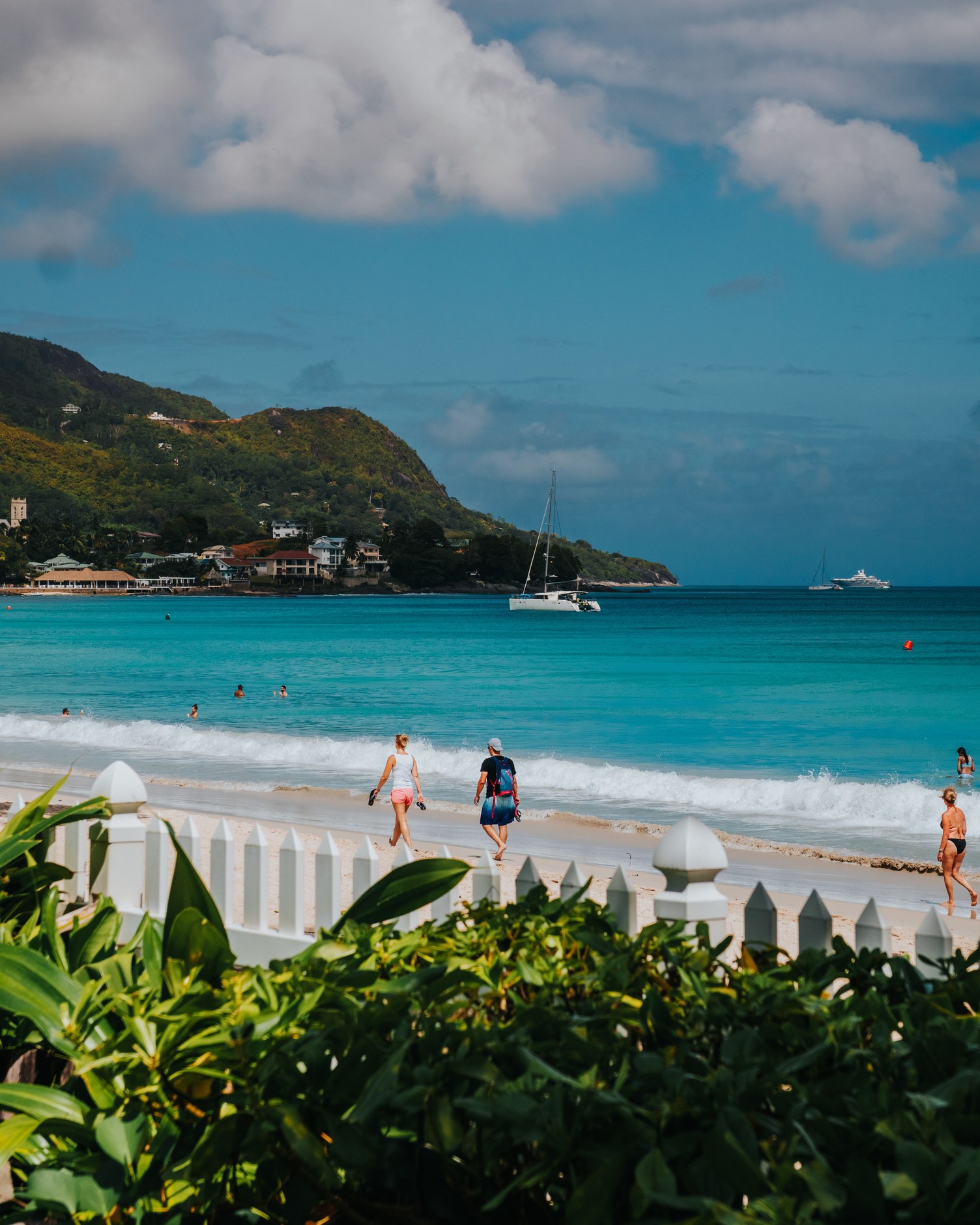
Dividing an eight-night stay across these three bases requires thoughtful allocation: three nights on Mahé, three nights on Praslin, and two nights on La Digue. This distribution minimizes unnecessary luggage transfers while allowing sufficient time to explore quiet coves before daily ferry excursions arrive. Rushing through all three islands in four or five days results in spending more time packing bags, coordinating ferry check-ins, and waiting at jetties than walking beneath granite boulders.
Mahé: Mountain Trails, Colonial Victoria, and Wild Southern Coves
Arriving at Seychelles International Airport (SEZ) lands you on Mahé’s east coast. Spend your first day exploring Victoria, one of the world’s smallest national capitals. The town center revolves around the silver-painted Victoria Clock Tower (installed in 1903) and the lively Sir Selwyn Selwyn-Clarke Market, where fishmongers display red snapper and yellowfin tuna on marble slabs alongside bundles of cinnamon bark, vanilla pods, and lemongrass.
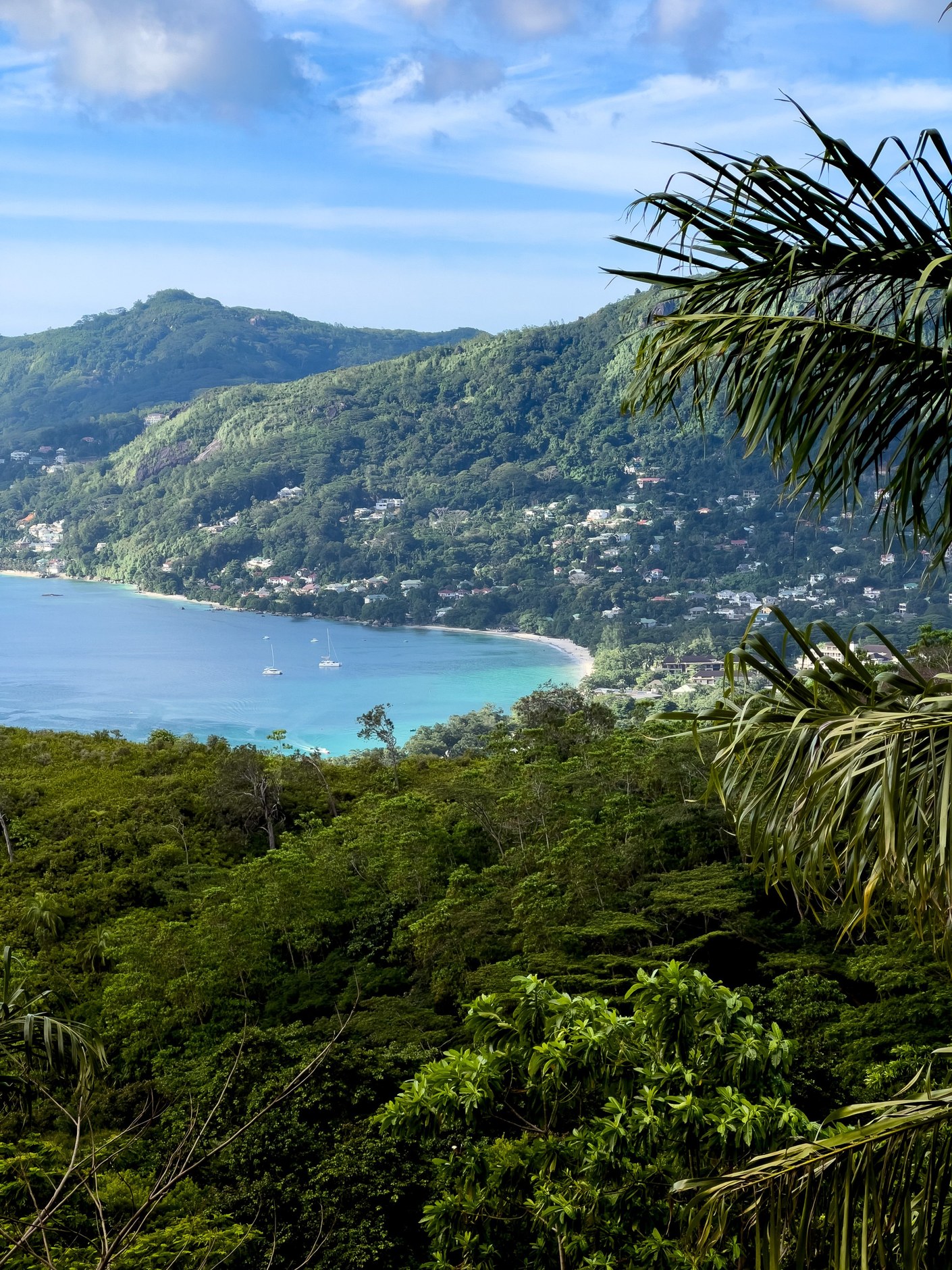
Leaving Victoria, Sans Souci Road climbs into Morne Seychellois National Park, covering twenty percent of Mahé. Hiking the Copolia Trail (a 1.5-hour ascent through humid mist forest) reaches a windswept granite plateau at 497 meters. The summit reveals endemic carnivorous pitcher plants (Nepenthes pervillei) on bare rock and panoramic views over Victoria harbor and St. Anne Marine National Park.
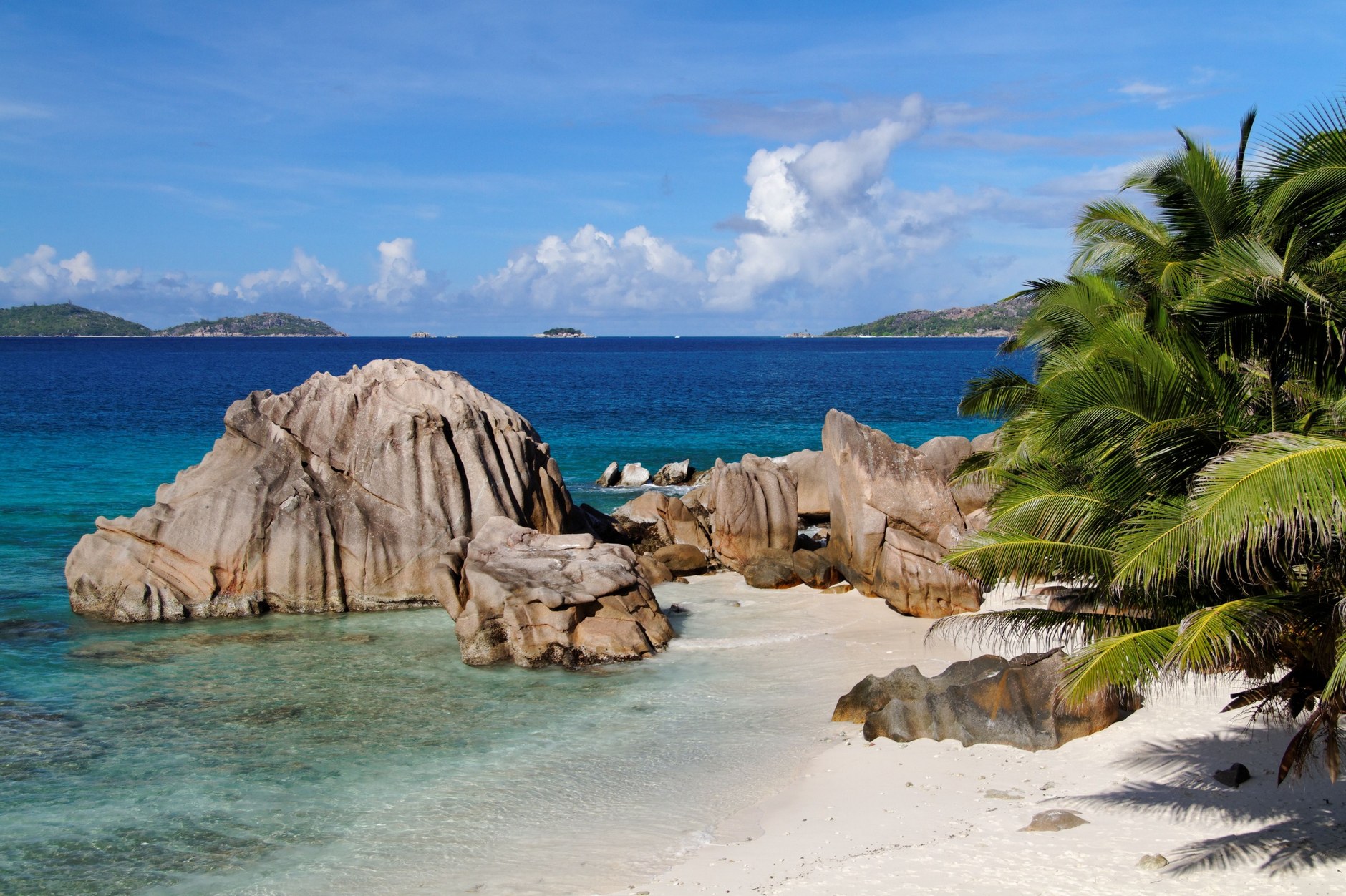
Southern Mahé contrasts sharply with northern resort bays. Communities like Baie Lazare and Takamaka lead to wild coastal stretches like Anse Intendance. Here, Indian Ocean swells crash against white sands without a barrier reef to break their power. While hazardous for swimming during summer trade winds, the beach is magnificent for coastal walks beneath leaning palms.
Driving on Mahé demands vigilance. Roads are narrow and winding, flanked by deep, uncovered concrete storm gutters known locally as ‘Seychelles ditches.’ Dropping a wheel into one of these drainage chasms shatters vehicle suspension or cracks the oil sump. Choose a compact automatic rental car, drive conservatively, and yield to oncoming public Tata buses that dominate the road center.
Inter-Island Transit: Cat Cocos Ferry vs. Domestic Twin Otter Flights
Connecting Mahé to Praslin requires crossing forty-four kilometers of open Indian Ocean. Travelers must choose between two transit modes: the Cat Cocos high-speed passenger catamaran or an Air Seychelles domestic flight.
The Cat Cocos catamaran connects Victoria with Praslin’s Baie Ste Anne jetty in roughly one hour ($67.79 to $79.09 one-way). While convenient, the open-ocean crossing crosses deep channels. During the Southeast Monsoon (May through October), trade winds generate continuous two- to three-meter swells, causing heavy pitching. If prone to motion sickness, booking the open-air upper deck provides fresh breeze and horizon visibility, mitigating nausea.
The alternative is the Air Seychelles scheduled shuttle flight, operated by twin-engine DHC-6 Twin Otter turboprops. Flying between Mahé (SEZ) and Praslin (PRI) takes just fifteen minutes and costs between $101.68 and $158.17 one way. The flight stays below 3,000 feet, providing aerial perspectives of coral barrier reefs and granite peaks while completely bypassing sea turbulence. For travelers visiting during the rough winter monsoon, the modest airfare premium is well worth the comfort and saved travel time.
Praslin: The Prehistoric Palm Forests and Coastal Headlands
Praslin is famous worldwide as one of only two natural habitats of the legendary coco de mer palm (Lodoicea maldivica), which produces the largest and heaviest seed in the plant kingdom, weighing up to twenty kilograms. The heart of Praslin is the Vallée de Mai Nature Reserve, a UNESCO World Heritage site preserving an ancient, primeval palm forest that has remained largely unchanged since prehistoric times.
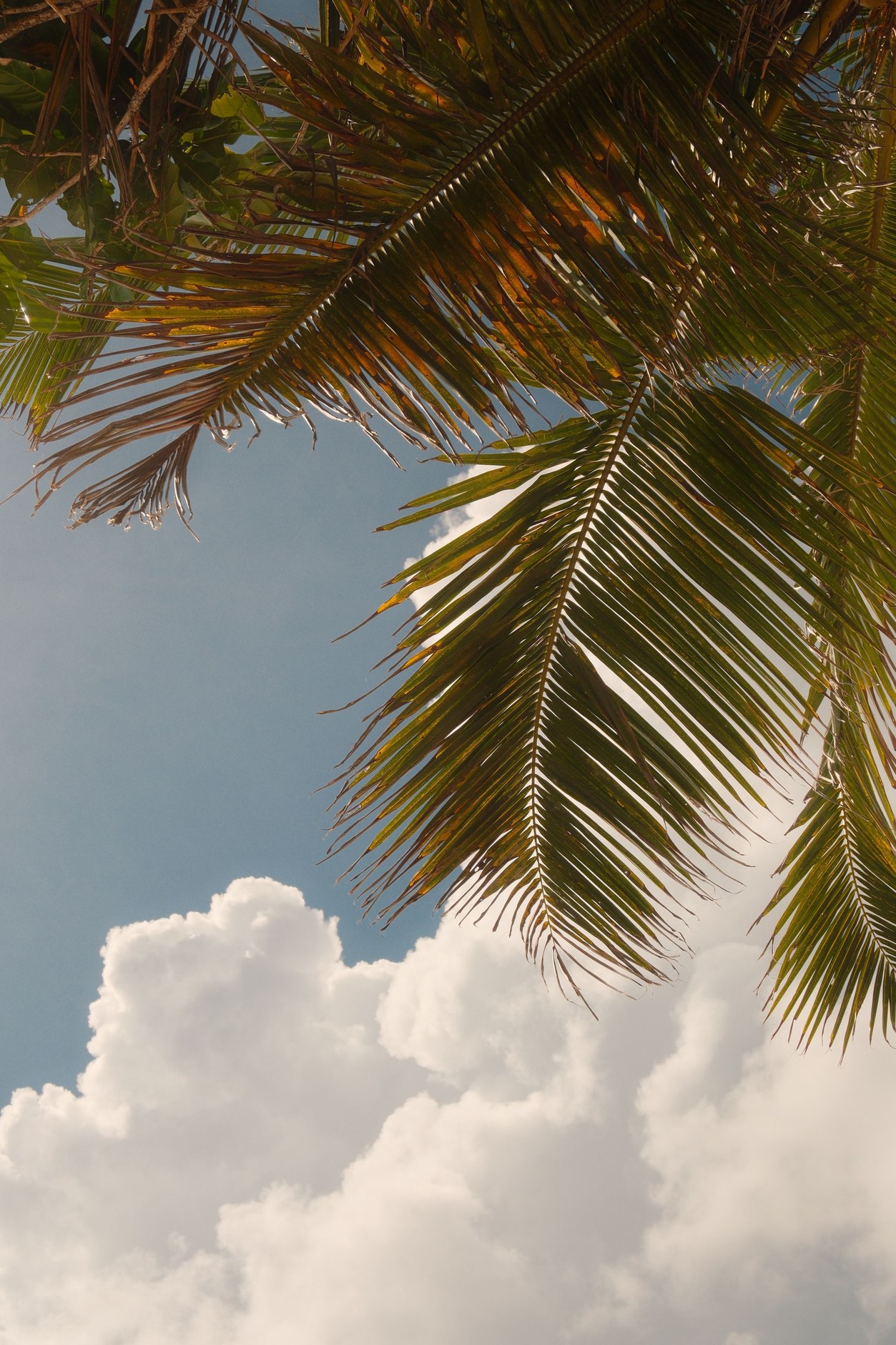
Walking beneath towering forty-meter palm fronds feels prehistoric. Dense fan leaves filter sunlight into green twilight, while clattering fronds echo across the valley. Look for the rare Seychelles black parrot (Coracopsis barklyi), which nests in dead coco de mer trunks. For a quieter hike with sea views, the community-managed Fond Ferdinand Nature Reserve offers guided coco de mer walks at half the admission price of Vallée de Mai.
On Praslin’s northwest tip lies Anse Lazio, frequently ranked among the world’s premier beaches. Broad stretches of soft coral sand are framed by polished granite headlands and shaded by takamaka trees. The bay features an offshore net-protected swimming zone and gentle drop-offs that make it ideal for snorkeling along the rocky fringes, where hawksbill sea turtles, spotted eagle rays, and parrotfish graze along coral outcroppings. Arrive before 9:30 AM to secure shaded parking and enjoy the bay before tour catamarans anchor offshore.
La Digue: Bicycle Rhythms and Anse Source d’Argent
From Praslin’s Baie Ste Anne jetty, the Cat Roses inter-island ferry makes the short, sheltered crossing to La Digue in just fifteen minutes. Stepping ashore at La Passe jetty feels like traveling back fifty years. Private motor vehicles are strictly restricted on La Digue; local transport consists of luggage carts, golf buggies operated by guesthouses, and hundreds of single-speed cruiser bicycles fitted with front baskets.
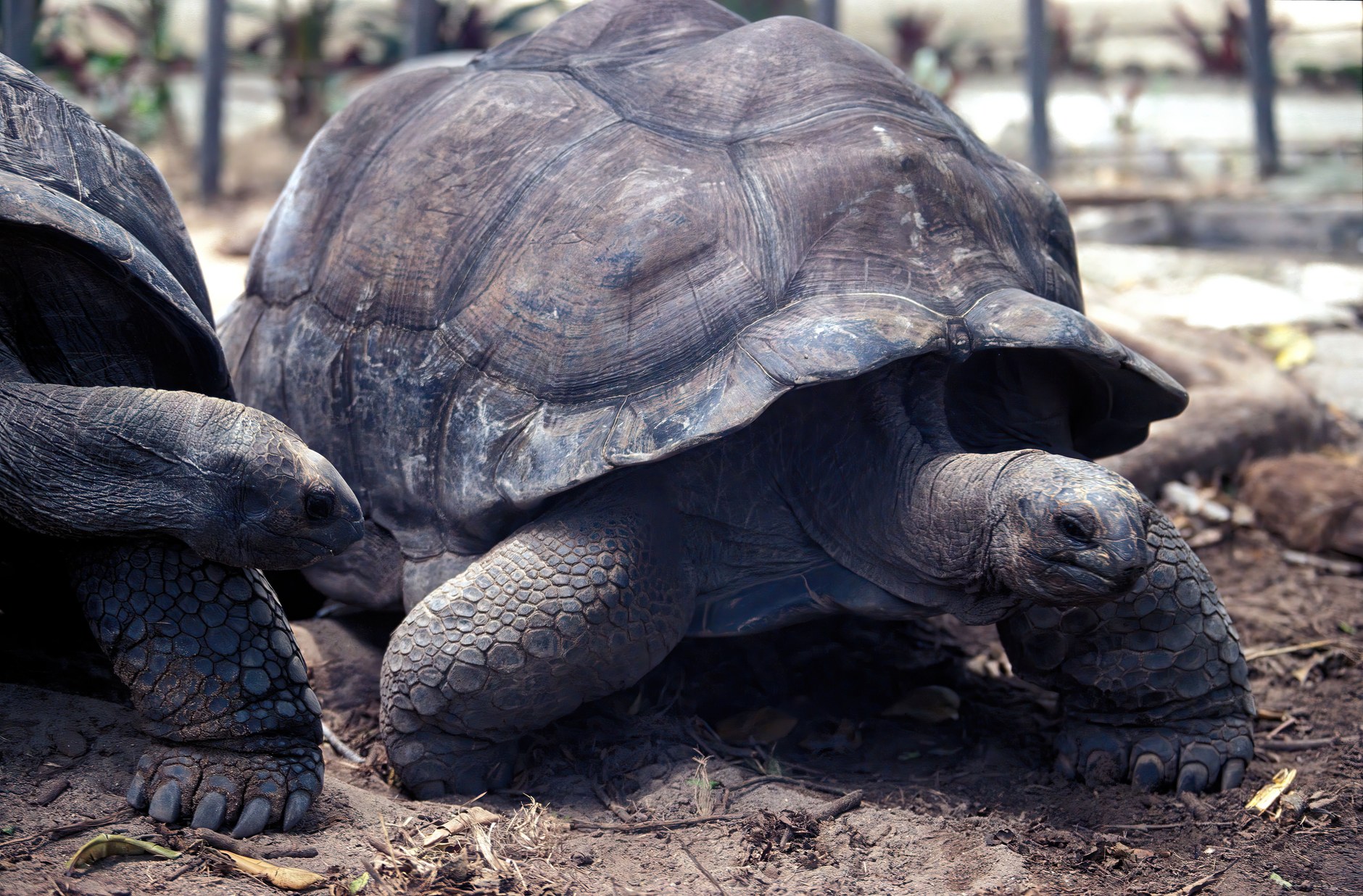
Renting a bicycle at the jetty (approximately 150 to 200 SCR per day) is the definitive way to explore the island. The flat coastal paths wind beneath coconut palms, past Creole timber cottages with tin roofs and blooming hibiscus hedges. The primary destination for most visitors is L’Union Estate, a historic coconut and vanilla plantation that charges an entrance fee of 150 SCR. The estate contains a traditional ox-powered copra mill, an old colonial plantation house, and a vast granite boulder enclosure housing dozens of gentle Aldabra giant tortoises.
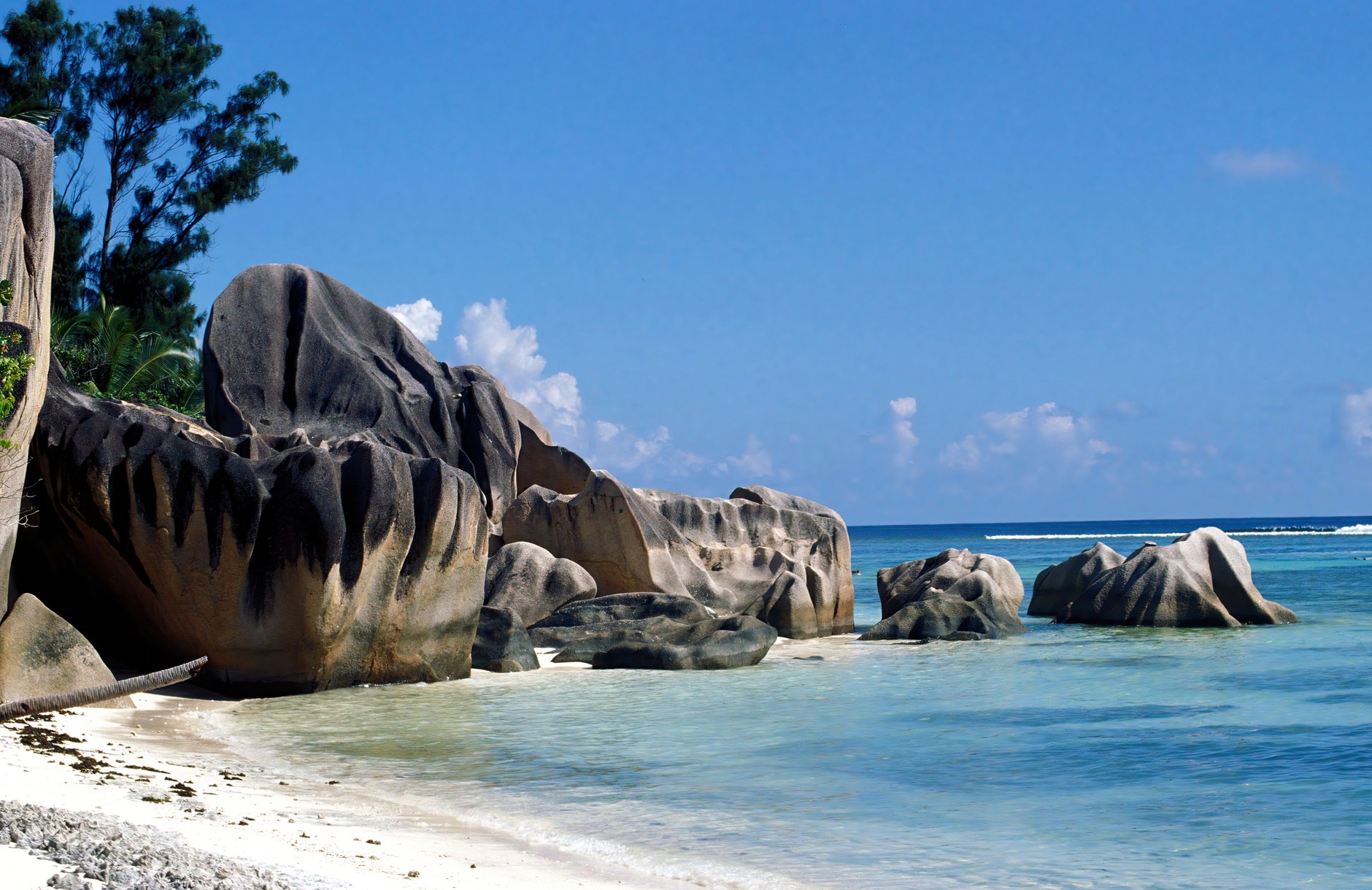
Passing through L’Union Estate leads to Anse Source d’Argent, among the world’s most photographed shorelines. Weathered granite monoliths create a labyrinth of sandy coves and transparent lagoons. An offshore reef keeps water calm and shallow, allowing visitors to wade through warm shallows between granite caverns. Because crowds peak between 10:00 AM and 3:00 PM with day-trippers from Praslin, staying overnight on La Digue lets you enjoy the coves in quiet early mornings and late afternoons.
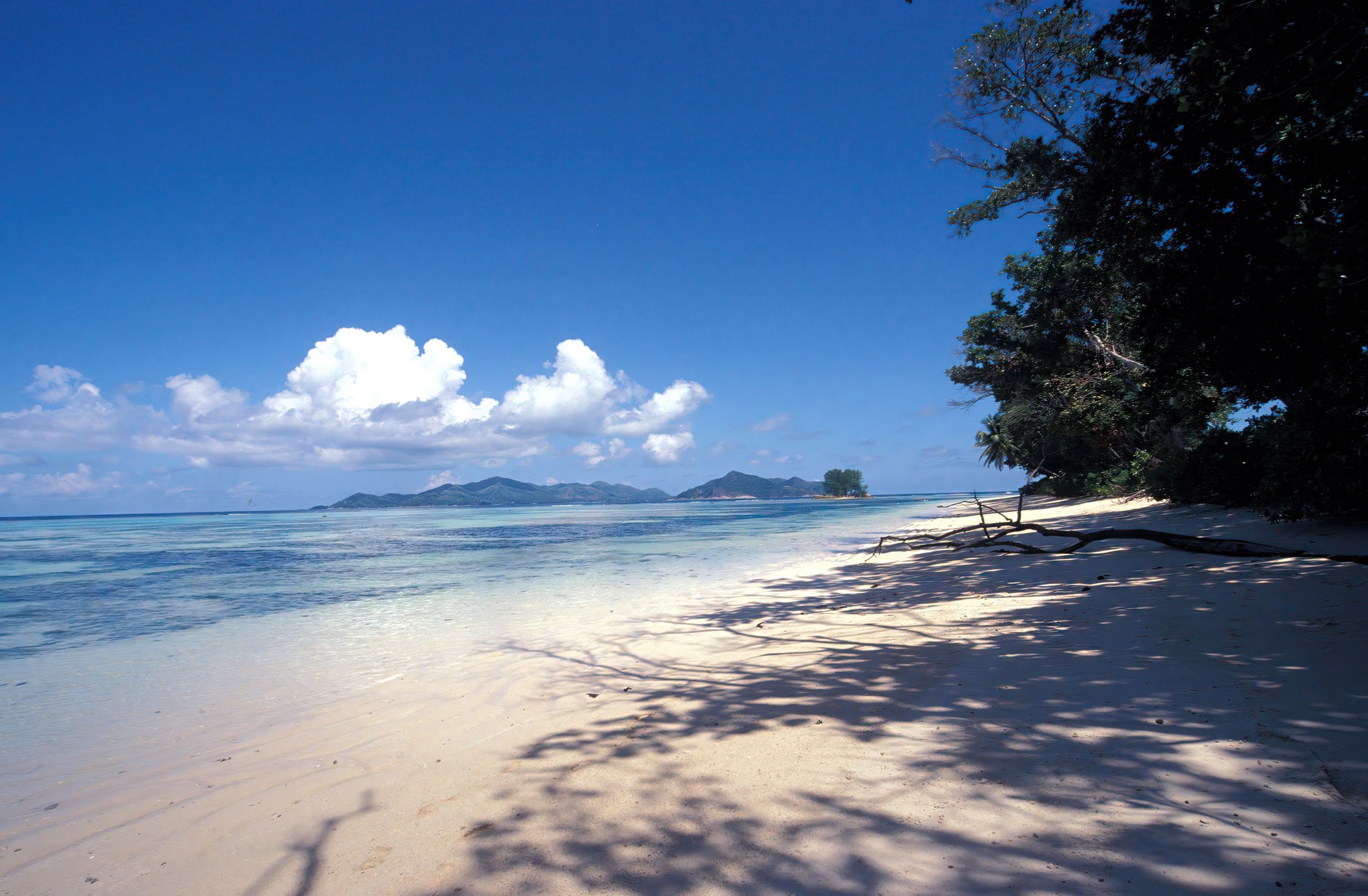
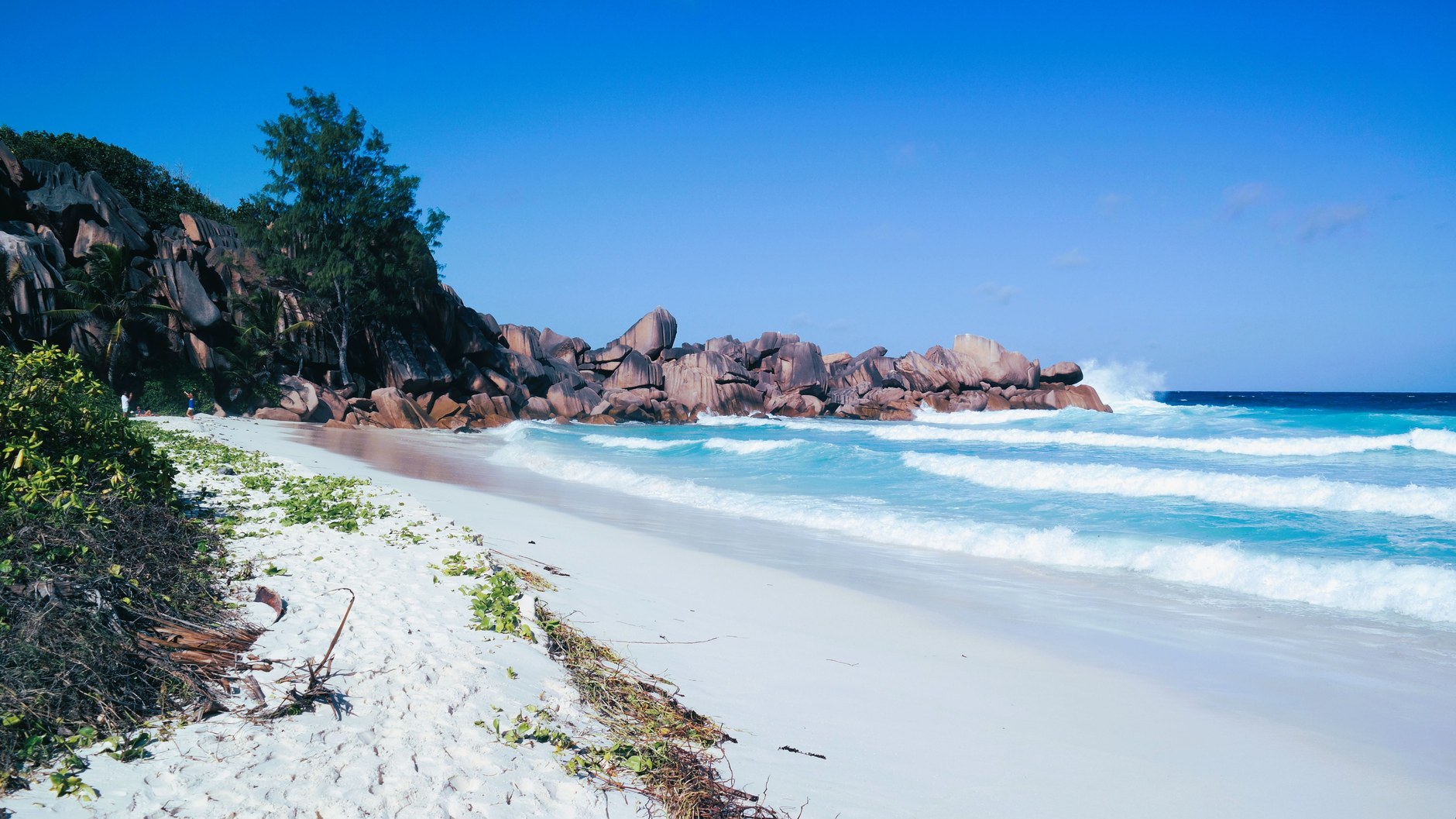
For more active exploration, pedal south toward Grand Anse on the wild southeastern coast. From Grand Anse, a rugged coastal footpath traverses granite headlands to Petite Anse and Anse Cocos. At Anse Cocos, the beach terminates in a natural granite tidal pool known as “The Natural Swimming Pool,” where massive boulders shelter a deep, crystal-clear seawater bath completely insulated from dangerous offshore currents.
8-Day Seychelles Island-Hopping Itinerary
This balanced eight-day itinerary optimizes travel across the Granitic Triangle, minimizing transit friction while ensuring you experience each island’s unique pace and landscapes.
| Day / Stage | Base | Highlights | Transport Mode | Transit Time | Advance Booking Requirement |
|---|---|---|---|---|---|
| Day 1 | Mahé (Beau Vallon) | Arrival at SEZ, rental car pickup, Victoria market, Beau Vallon sunset | Compact rental car | 30 mins from airport | Book compact automatic rental car ahead |
| Day 2 | Mahé (Beau Vallon) | Morne Seychellois National Park, Copolia Trail hike, Mission Lodge ruins | Compact rental car / hiking | 1.5 hours driving | Pay Copolia trail entrance fee at trailhead |
| Day 3 | Mahé (South Coast) | Scenic coastal drive, Anse Intendance surf walks, Baie Lazare artists | Compact rental car | 2 hours driving | Check seasonal monsoon surf warning flags |
| Day 4 | Praslin (Cote d’Or) | Twin Otter flight or Cat Cocos ferry to Praslin, Anse Volbert relaxation | Flight or ferry / taxi | 15 min flight / 1 hr ferry | Reserve upper deck ferry or flight in advance |
| Day 5 | Praslin (Cote d’Or) | Vallée de Mai UNESCO coco de mer walk, afternoon Anse Lazio snorkeling | Rental car or local bus | 45 mins driving | Book Vallée de Mai admission or guided tour |
| Day 6 | La Digue (La Passe) | Morning Cat Roses ferry to La Digue, bicycle hire, L’Union Estate tortoises | Ferry (15m) / bicycle | 15 mins ferry | Reserve La Digue boutique guesthouse early |
| Day 7 | La Digue (La Passe) | Sunrise at Anse Source d’Argent, bike ride to Grand Anse and Anse Cocos | Cruiser bicycle / walking | Full day cycling | Bring cash for L’Union Estate entrance fee |
| Day 8 | Mahé Departure | Ferry to Praslin, onward connection to Mahé, departure from SEZ | Ferries / airport transfer | 2.5 hours total transit | Allow 4-hour buffer before international flight |
Field Connectivity and Mobile Data Economics
Mobile telecommunications in the Seychelles operate across isolated Indian Ocean islands linked by submarine fiber cables. The market is served by two domestic operators: Cable & Wireless Seychelles and Airtel Seychelles. Both networks provide robust LTE coverage across Mahé, Praslin, and La Digue, including residential centers, coastal resort bays, and primary roadways. However, coverage drops sharply when navigating remote granite headlands, interior national park valleys in Morne Seychellois, or uninhabited offshore islets.
With an NXTL Seychelles eSIM, understanding the roaming tariff is vital for budget control. Connecting directly to Airtel LTE, mobile data is billed at $222.71 per gigabyte ($0.22 per megabyte). NXTL operates on a pay-per-megabyte model against a permanent prepaid balance that never expires, ideal for zero-friction arrival coordination and emergency messaging without recurring contract fees. Unused credit stays available for later trips across more than 180 countries.
Careful mobile data arithmetic demonstrates its practical utility: loading a Google Maps route pin, confirming a Cat Cocos ferry departure, or sending a quick text message on WhatsApp consumes roughly 2 to 5 megabytes, costing around $0.44 to $1.12. A modest 50-megabyte allocation provides all essential messaging and arrival coordination for roughly $11.13, saving you from navigating airport SIM registration queues with passport photocopies. However, bandwidth-heavy activities such as streaming music, watching video clips, or enabling automated cloud photo uploads can deplete prepaid funds quickly. To maximize efficiency, keep background app refresh disabled on cellular data, cache your island navigation maps offline before landing, and rely on hotel and guesthouse Wi-Fi for evening photo backups and entertainment.
Monsoon Meteorology and Seasonal Beach Safety
The climate of the Seychelles is governed by two opposing seasonal wind patterns that dictate sea conditions, water clarity, and beach safety across the archipelago.
The Northwest Monsoon (December through March) brings warm, humid air masses with higher rainfall in the form of short, intense tropical afternoon showers. Winds are generally light, making the seas around the southern and western coasts of the islands calm and clear. However, beaches on northern coastlines—such as Beau Vallon on Mahé and Anse Volbert on Praslin—can experience choppy surf and occasional seaweed deposits.
The Southeast Monsoon (May to October) brings cooler weather averaging 26 degrees Celsius, with persistent trade winds of 15 to 22 knots. These winds generate heavy swells along south- and southeast-facing shores, including Anse Intendance on Mahé and Grand Anse on La Digue. Strong undertows make swimming hazardous when warning flags fly. Conversely, sheltered northwestern bays like Anse Lazio on Praslin and Beau Vallon on Mahé remain calm and safe year-round.
Currency, Tipping, and Local Financial Habits
The currency of the country is the Seychelles Rupee (SCR). While luxury resort hotels, international vehicle rental agencies, and inter-island ferry operators quote prices in Euros or US Dollars, they accept local rupees, Euros, or credit cards at standard bank exchange rates.
Credit cards (Visa and Mastercard) are widely accepted across established establishments, restaurants, and supermarkets. However, cash in Seychelles Rupees is strictly required for small island transactions: renting bicycles on La Digue, purchasing tropical fruits from roadside stands, buying takeout lunches (Creole curry boxes) from local vendors, and paying admission fees at community nature reserves. ATMs are widely available across Victoria and resort centers on Mahé, as well as near the main jetties on Praslin and La Digue.
Tipping is not legally mandatory in the Seychelles, as restaurants and hotels routinely include a 5 to 10 percent service charge directly on the bill. However, leaving an additional cash tip of 50 to 100 SCR for exceptional service by local boatmen, guides, or guesthouse staff is warmly appreciated.
Common Scams and Tropical Island Hazards
The Seychelles is one of the safest travel destinations in Africa, characterized by political stability and low crime rates. Nevertheless, avoiding practical island traps ensures a trouble-free journey.
- The Southeast Monsoon Shorebreak and Rip Current Hazard: Disregarding red warning flags at un-reefed southern beaches like Anse Intendance (Mahé) or Grand Anse (La Digue) during the May-October trade wind season leads to severe drowning incidents. Never swim where warning flags fly or where open-ocean waves break directly on sand.
- High-Bandwidth Mobile Roaming Bill Drain: Streaming videos, scrolling social feeds, or allowing cloud libraries to sync over mobile roaming at $222.71/GB depletes prepaid accounts rapidly. Strictly disable background data in smartphone settings, relying on cellular only for navigation pings and essential text messages.
- The “Seychelles Ditch” Vehicle Chassis Damage Trap: Negotiating narrow mountain roads without shoulders frequently results in slipping into deep, unpaved concrete storm drains, causing major axle damage. Always rent a compact vehicle, inspect undercarriage condition upon pickup, and drive cautiously around tight corners.
- Unreserved Anse Georgette Gate Rejection: Attempting to visit Anse Georgette by walking through the grounds of the Constance Lemuria resort without an advance security gate booking leads to immediate turned-away entry. Reserve gate access through the resort days in advance, or prepare for the rugged 1.5-hour mountain hike from Anse Lazio.
- Unlicensed Beach Excursion Tout Scams: Informal hustlers approaching travelers on Beau Vallon beach offering cut-rate boat charters to Curieuse Island often operate unlicensed, uninsured speedboats lacking safety vests, park landing permits, or marine radio gear. Always book marine excursions through licensed charter desks at Victoria Marine Charter.
Slower and Shorter Route Adjustments
If your travel window is limited to five or six days, eliminate La Digue and focus strictly on Mahé and Praslin. Spend three nights on Mahé exploring Morne Seychellois trails and southern coves, and two nights on Praslin visiting Vallée de Mai and Anse Lazio. Attempting to include all three islands on a short trip creates an exhausting schedule of ferry transfers, taxi rides, and luggage packing.
With ten to twelve days, add an offshore marine excursion. Take a boat charter from Praslin to Curieuse Island, where hundreds of Aldabra giant tortoises roam unconstrained among mangroves and red hills. Snorkelers should explore St. Anne Marine National Park off Mahé or the granite islets of Île Cocos and Félicité, renowned for clear visibility and encounters with hawksbill turtles and reef sharks.