The Federation of Saint Kitts and Nevis represents one of the most compelling dual-island destinations in the Leeward Caribbean. Separated by a shallow, two-mile ocean channel known as The Narrows, these two volcanic sister islands share a joint constitution but offer distinctly contrasting travel rhythms. Saint Kitts, the larger and more populous island, is defined by dramatic volcanic topography, the monumental stone fortifications of Brimstone Hill, lively beachfront dining along the Southeast Peninsula, and the historic streets of Basseterre. Nevis, by contrast, is a circular, serene retreat dominated by the misty cone of Nevis Peak, historic sugar estates transformed into boutique plantation inns, and four miles of tranquil golden sand along Pinney’s Beach.
Planning an effective seven- or eight-day itinerary across the federation requires recognizing that visiting both islands is far more rewarding than staying anchored to a single resort. Connecting the two landmasses is straightforward if you understand the local maritime logistics: fast passenger ferries run between Basseterre and Charlestown, the SeaBridge vehicle ferry crosses The Narrows in twenty minutes, and speedboat water taxis provide flexible point-to-point transfers from Cockleshell Bay directly onto the beaches of northern Nevis. Structuring your journey with bases on both islands lets you experience the historical weight and mountain hikes of Saint Kitts before sinking into the timeless, unhurried atmosphere of Nevis.
Arriving in Saint Kitts: Basseterre and the Scenic Southeast Peninsula
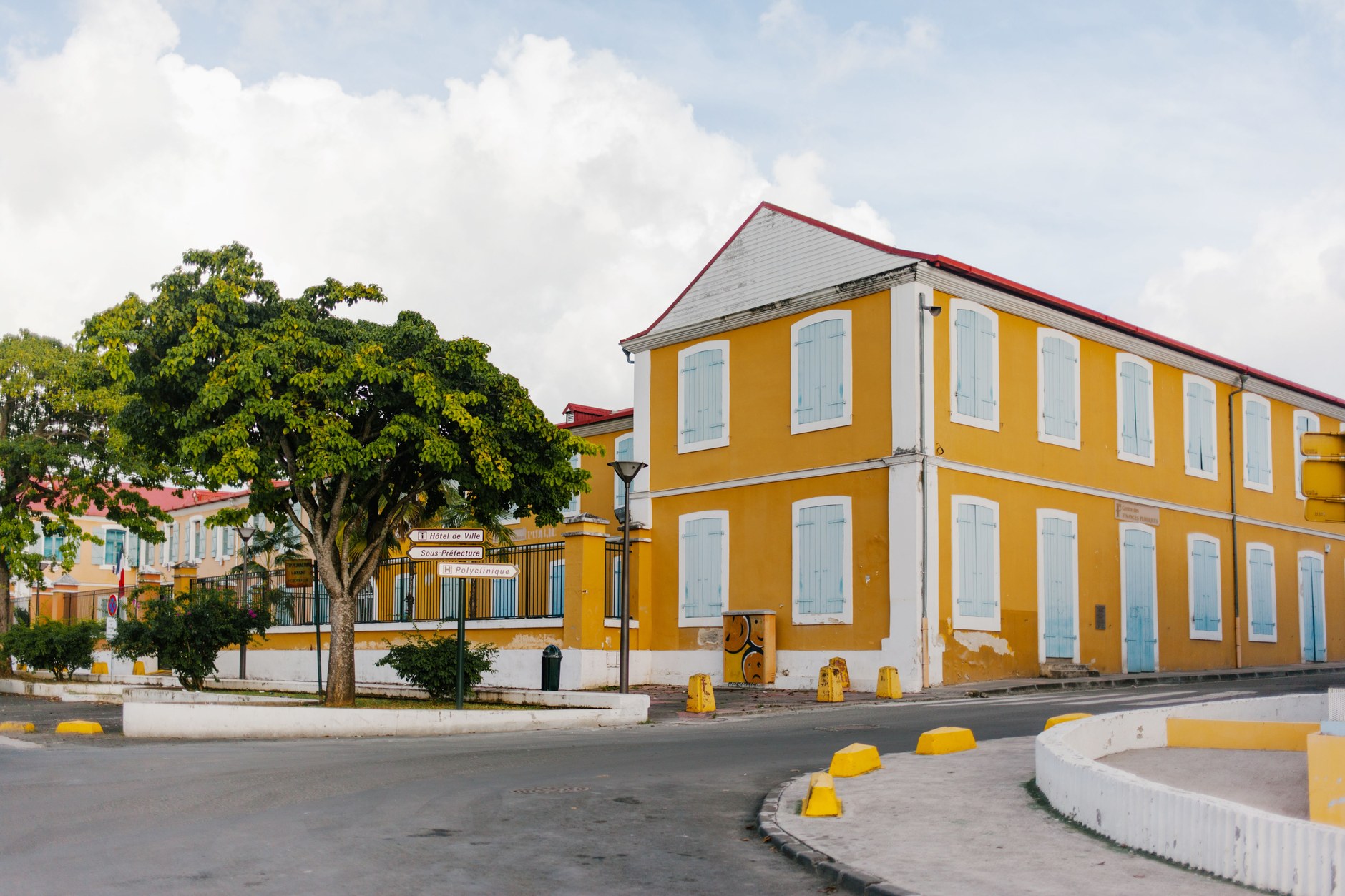
Most international flights arrive at Robert L. Bradshaw International Airport (SKB), situated just northeast of the capital of Basseterre. Basseterre preserves a rich architectural heritage shaped by French colonial planning and British Georgian masonry. The focal point of the town is The Circus, an octagonal traffic roundabout modeled after London’s Piccadilly Circus, centered around the green cast-iron Berkeley Memorial Clock Tower. A short stroll leads to Independence Square, formerly Pall Mall Square, an open park bordered by eighteenth-century stone-and-timber commercial buildings where government offices and shaded cafes now operate.
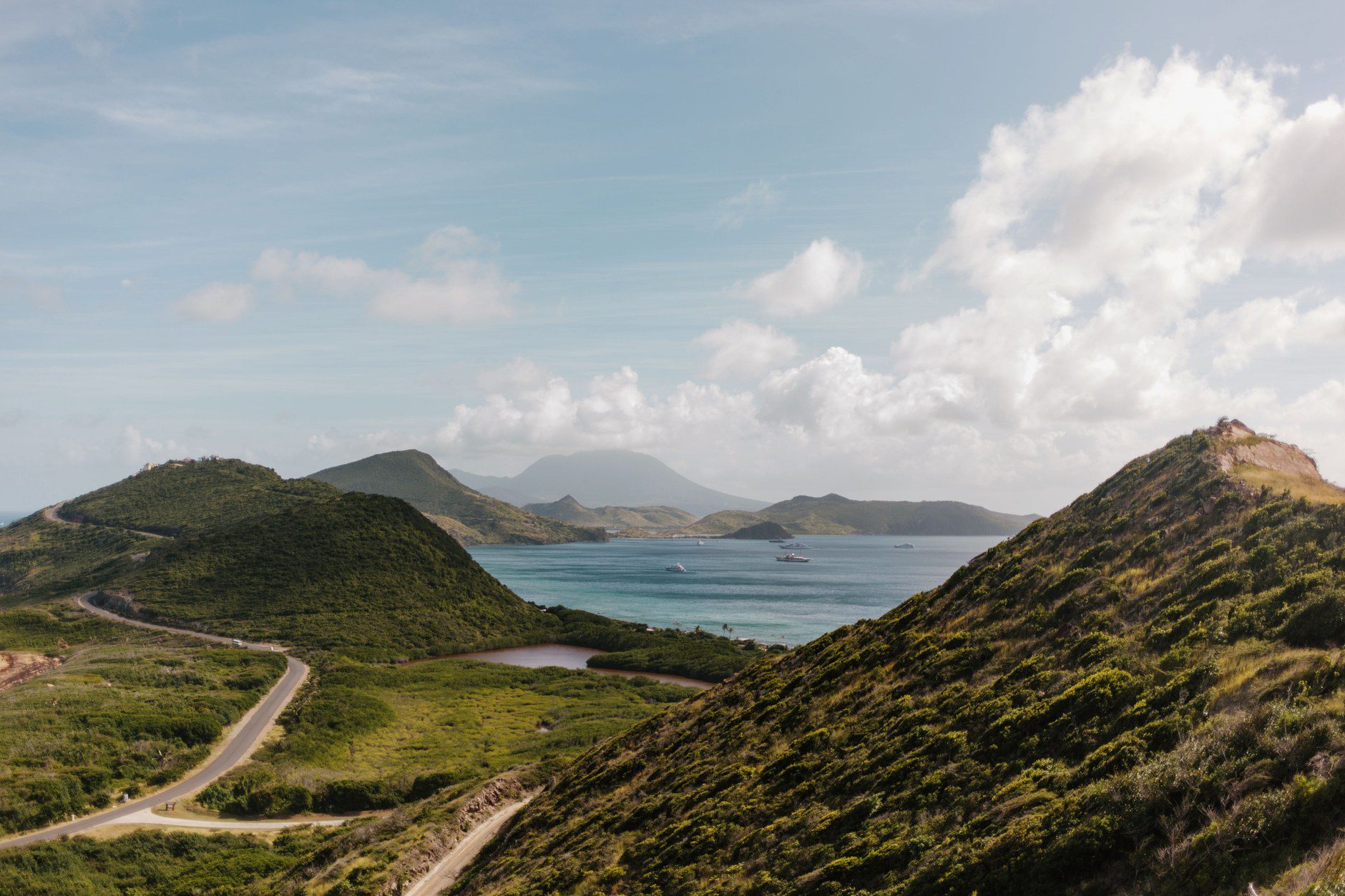
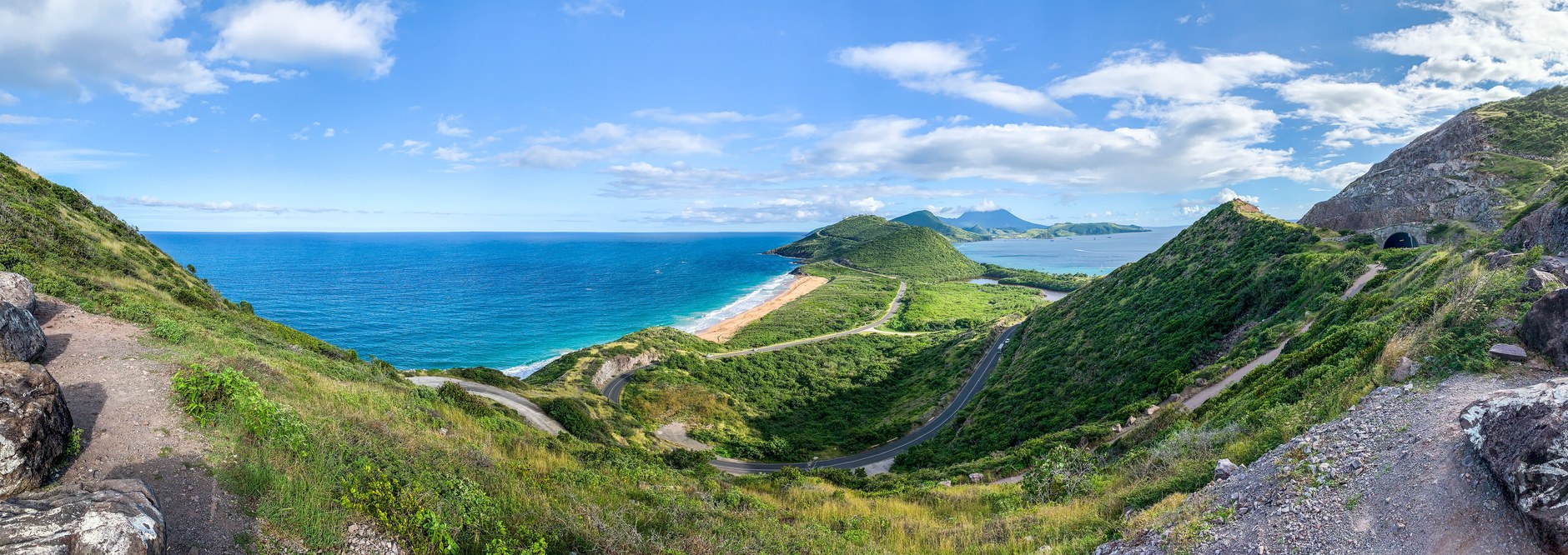
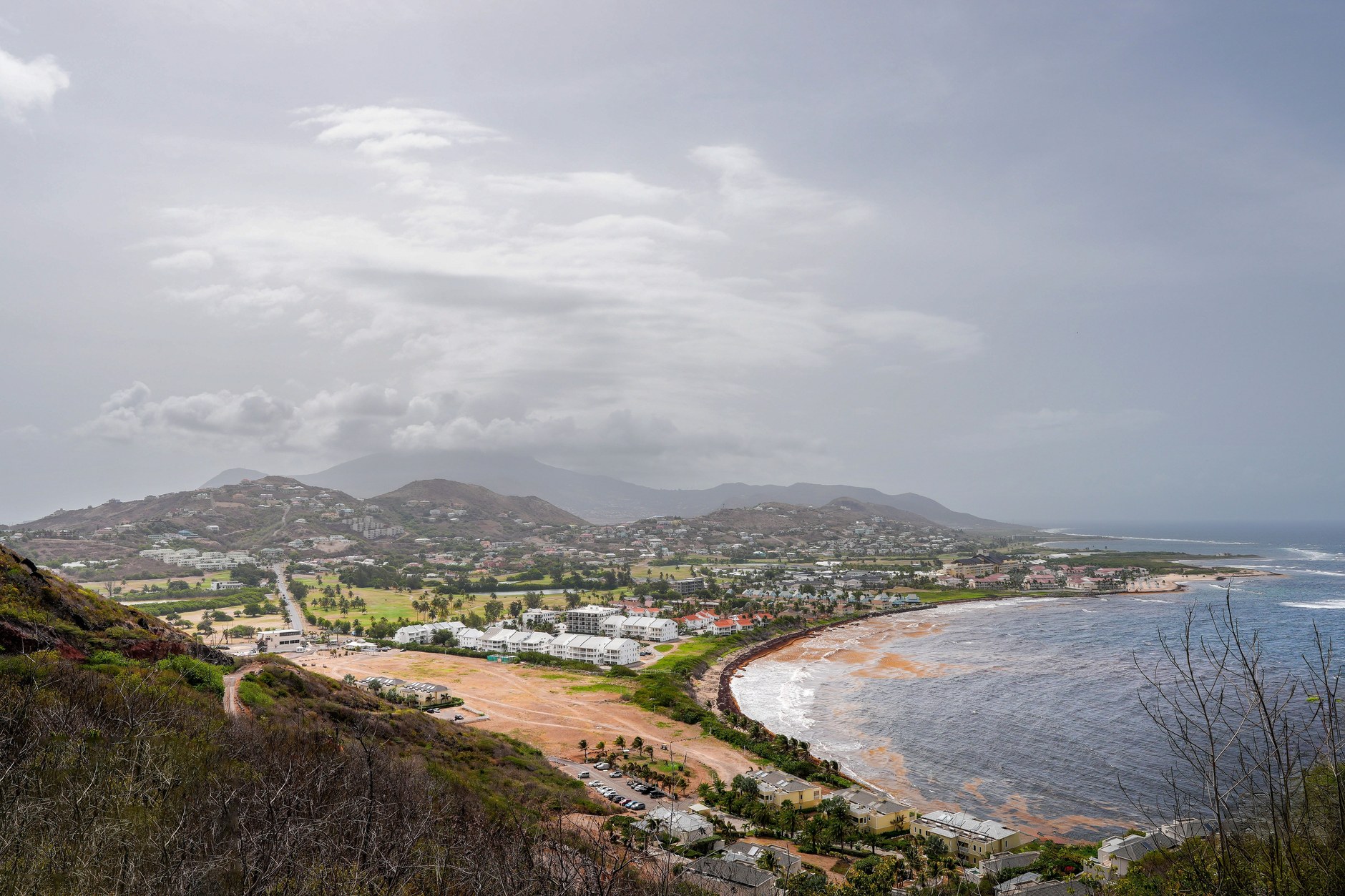
South of Basseterre, the island narrows dramatically into the Southeast Peninsula, where a winding modern highway opened remote coastal landscapes in the late 1980s. The visual highlight of this drive is Timothy Hill Overlook. Standing on this high ridge provides a dramatic geographic contrast: on your left, the turbulent, deep-blue waves of the Atlantic Ocean crash against jagged cliffs; on your right, the calm, turquoise waters of the Caribbean Sea lap gently against sandy coves, while the volcanic silhouette of Nevis rises majestically across the southern horizon.
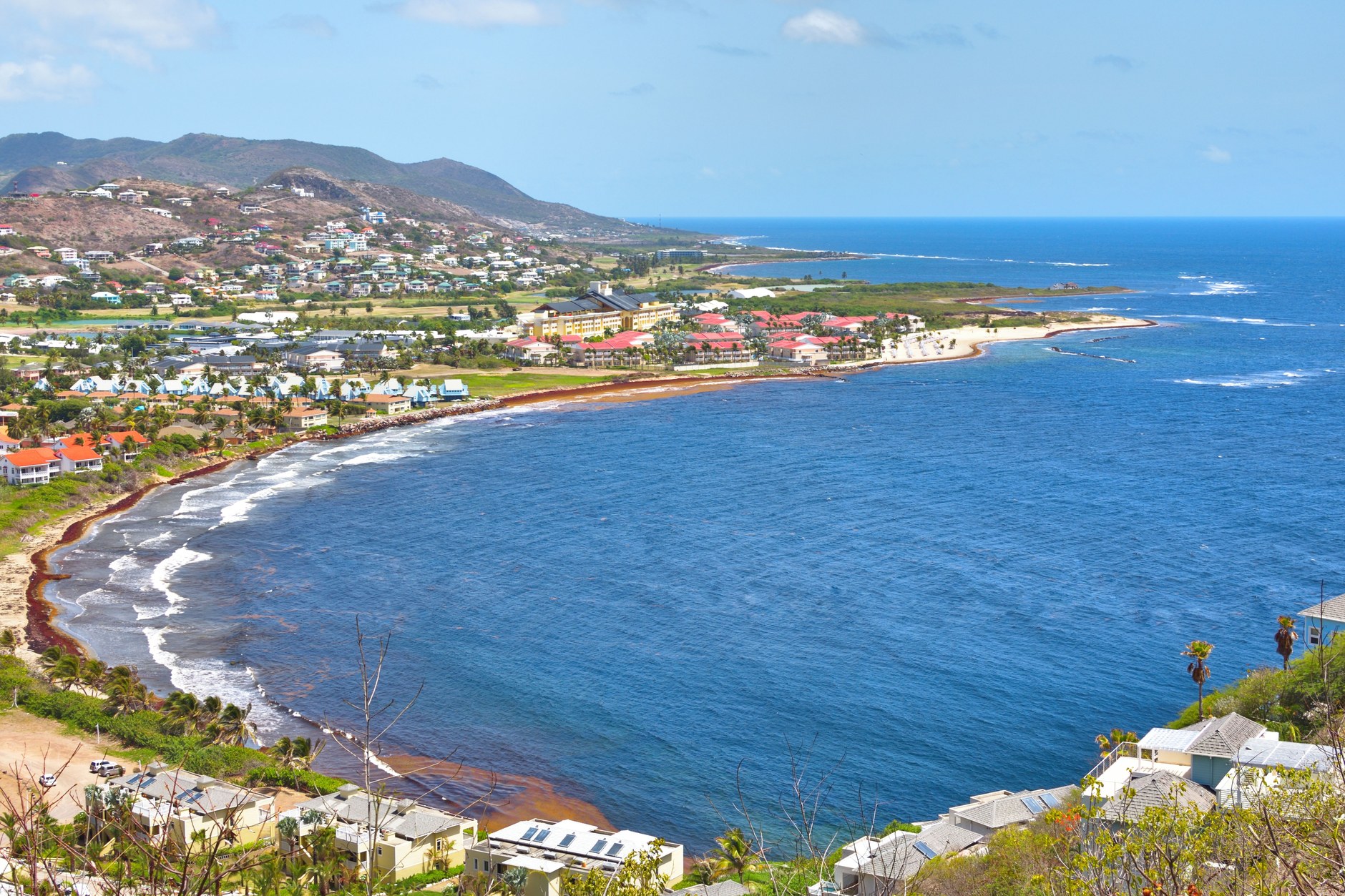
Continuing along the peninsula brings you to a succession of exceptional beaches, including South Friars Bay and Cockleshell Bay. Unlike the crowded resort strips near cruise terminals, these bays feature relaxed open-air beach bars where travelers eat fresh grilled mahi-mahi, spiny lobster, and goat water stew with their toes in the sand. Cockleshell Bay also serves as the primary northern launch point for water taxis crossing The Narrows toward Nevis.
Brimstone Hill Fortress: The Gibraltar of the West Indies
No exploration of Saint Kitts is complete without ascending to Brimstone Hill Fortress National Park, a UNESCO World Heritage site situated on the island’s western coastline. Rising nearly 250 meters (800 feet) on a steep volcanic outcrop, this monumental British military fortress was constructed over a century beginning in the 1690s, built almost entirely by enslaved African laborers who hand-carved colossal blocks of black volcanic basalt.
The fortress complex spans multiple defensive terraces, powder magazines, barrack rooms, and massive stone bastions. The central citadel, Fort George, features mounted eighteen-pounder cannons aimed across the Caribbean Sea. On clear days, the ramparts provide unobstructed panoramas across five neighboring island nations: Sint Eustatius, Saba, Saint Barthélemy, Saint Martin, and Nevis. A well-curated museum inside the stone barracks details the brutal conditions endured by enslaved builders and the dramatic 1782 siege when French forces captured the fortress before returning it under the Treaty of Paris.
A crucial planning detail involves timing your visit around cruise arrivals. When several cruise ships dock simultaneously at Port Zante in Basseterre, Brimstone Hill receives a heavy influx of tour minibuses between 10:30 AM and 1:30 PM. Arriving right when gates open at 9:30 AM—or visiting in the mid-afternoon around 2:30 PM—ensures quiet ramparts, cool ocean breezes, and uninterrupted photographic angles.
Mount Liamuiga: Hiking into the Stratovolcano Crater
For active travelers, Saint Kitts offers one of the most exhilarating mountain hikes in the Eastern Caribbean: the ascent of Mount Liamuiga. Formerly known as Mount Misery, this dormant stratovolcano summits at 1,156 meters (3,792 feet) and serves as the highest point in the federation. The mountain’s lower slopes feature fertile former sugarcane fields, transitioning into dense tropical rainforest filled with giant bamboo groves, wild mango trees, and climbing philodendrons, before ending in high-altitude cloud forest.
The trail begins near the village of Newton Ground on the northern coast and climbs over 800 vertical meters. The hike is demanding, taking between four and five hours round-trip. Hikers must scramble over slick volcanic boulders, pull themselves up steep mud steps using exposed tree roots, and navigate humid jungle air. Near the summit, the trail terminates abruptly at the lip of the crater rim, revealing a staggering 300-meter drop into an enormous volcanic caldera nearly a kilometer wide, where sulfurous steam vents hiss beside a small crater lake.
Hiring a certified local guide is strongly recommended for Mount Liamuiga. Unpredictable tropical rain squalls frequently turn root-strewn paths into slippery chutes, and trail markers in the upper cloud forest can be obscured by dense fog. Reliable local guides carry first-aid kits, provide walking poles, point out medicinal plants, and ensure you pace yourself safely across steep rock scrambles.
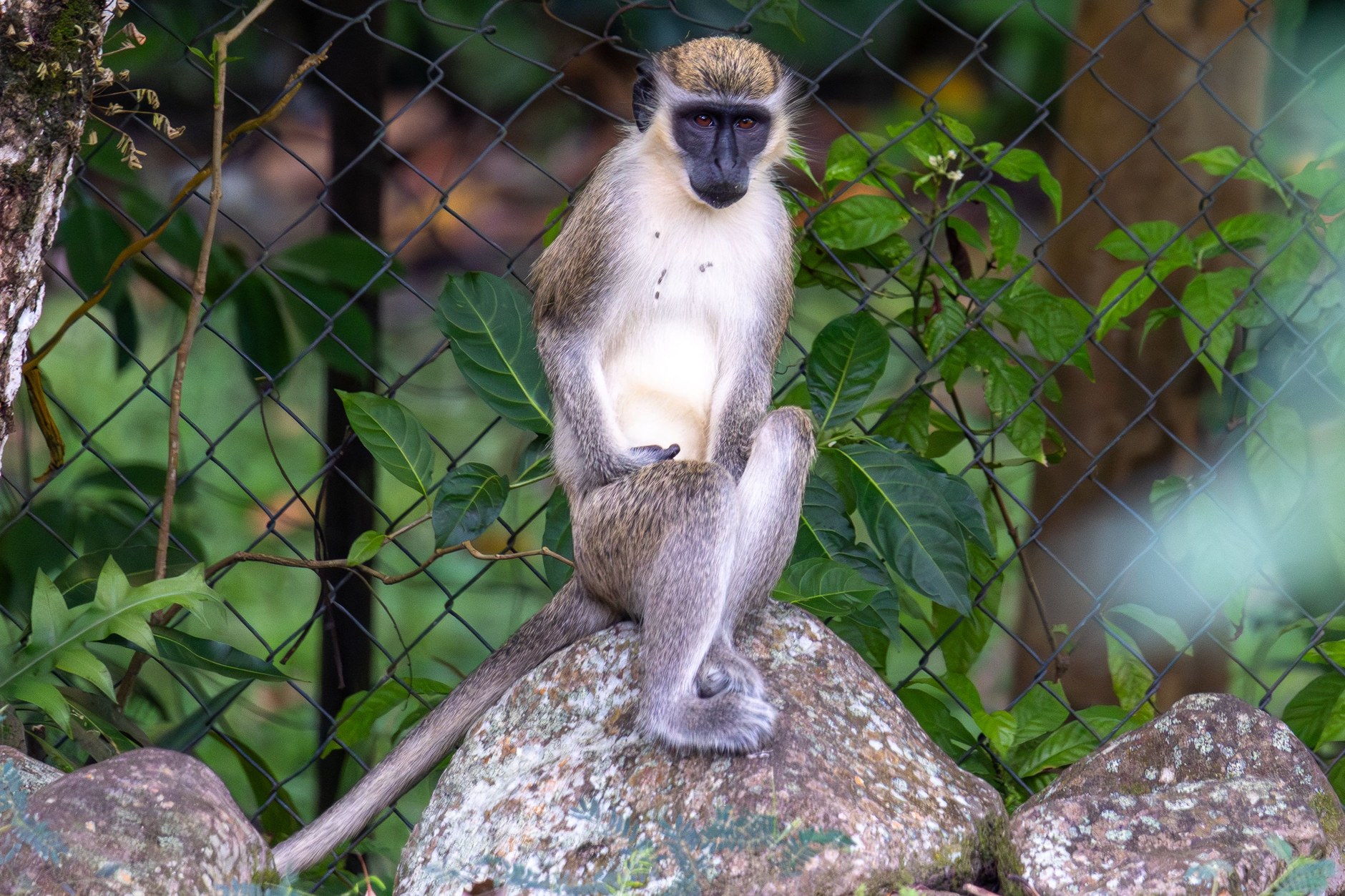
Along the mountain trail and throughout rural gardens, you will regularly encounter green vervet monkeys (Chlorocebus sabaeus). Brought to the islands by seventeenth-century French settlers as exotic pets, these agile primates multiplied in the mountain rainforests and now significantly outnumber the human population across Saint Kitts and Nevis. While entertaining to observe foraging in wild trees, avoid feeding them or approaching them closely in agricultural areas.
Crossing The Narrows: Practical Ferry and Water Taxi Logistics
Crossing between Saint Kitts and Nevis is an easy and scenic maritime transition. Travelers have three distinct transit options depending on their location, schedule, and luggage requirements.
The first option is the scheduled public passenger ferry running between Basseterre ferry terminal (St. Kitts) and Charlestown pier (Nevis). Multiple commercial vessels (including the MV Mark Twain and MV Caribe Queen) make the crossing throughout the day, taking approximately 45 minutes and costing roughly $10 to $12 USD (E$17.55 to E$21.06) one-way. This route is ideal for travelers staying in central Basseterre or those wishing to arrive directly in the heart of historic Charlestown without private vehicle transfers.
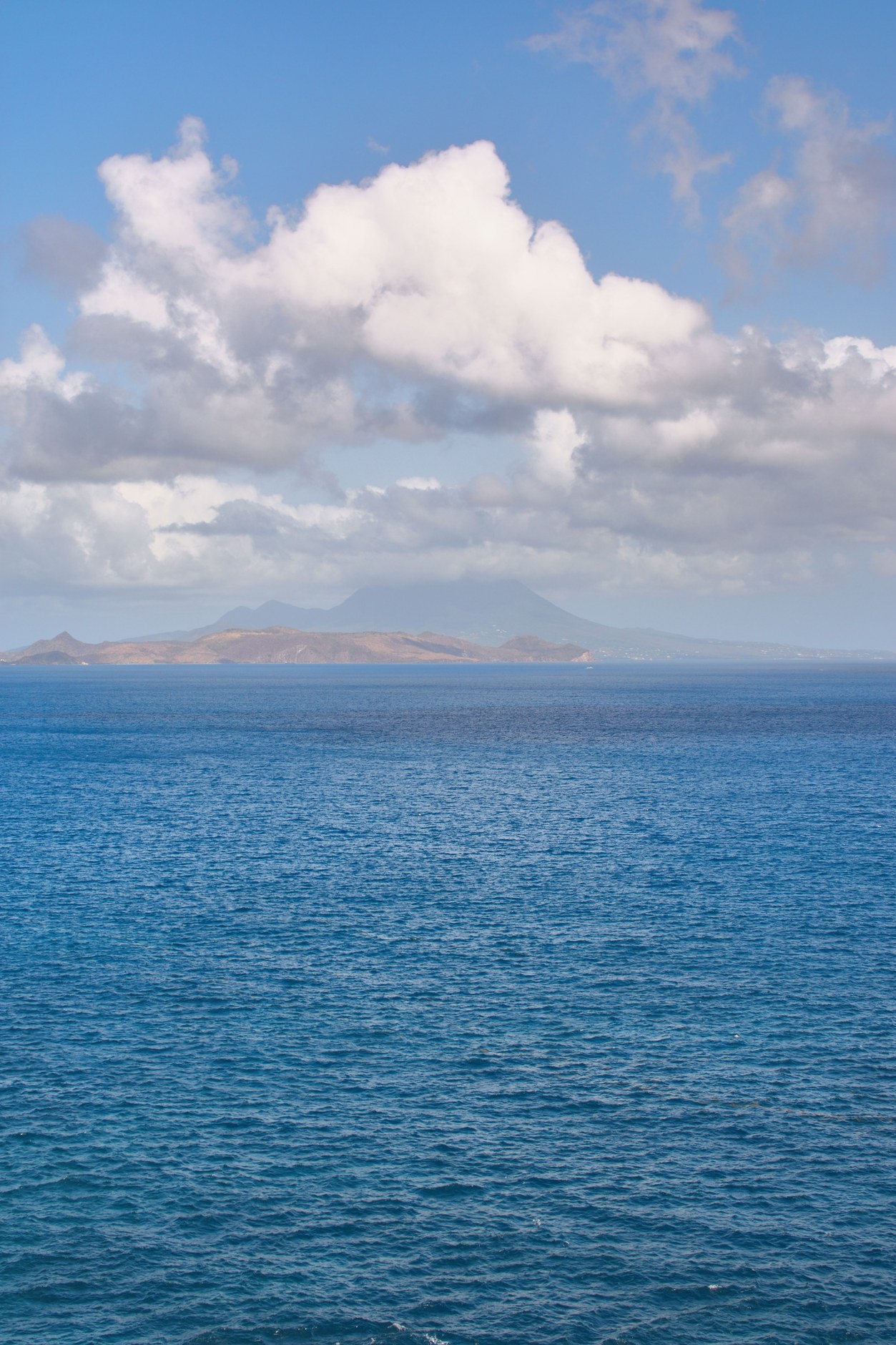
The second option is the SeaBridge roll-on/roll-off vehicle and passenger ferry, operating between Major’s Bay at the southern tip of the Southeast Peninsula and Cades Bay on Nevis. The SeaBridge makes the crossing across The Narrows in just fifteen to twenty minutes. If you have rented a car on Saint Kitts and your rental agency permits inter-island transit, taking your vehicle on the SeaBridge allows you to explore both islands with a single rental.
The third option is a private speedboat water taxi departing from Cockleshell Bay or Major’s Bay pier directly to Oualie Beach on northern Nevis. These fast skiffs take under ten minutes, depart on demand, and cost roughly $25 to $30 USD per passenger. Water taxis are especially popular with travelers staying on the Southeast Peninsula or heading to luxury accommodations on northern Nevis, providing rapid, open-air transit across the blue waters of The Narrows.
Nevis: Plantation Inns, Charlestown, and Pinney’s Beach
Stepping onto Nevis reveals a dramatically tranquil, uncommercialized island atmosphere. The island is essentially a single massive volcanic peak—Nevis Peak (985 meters)—surrounded by gentle coastal plains and ringed by an unhurried 32-kilometer loop road. Nevis deliberately shunned mega-resorts, large cruise ship terminals, and fast-food chains, cultivating instead an elite, eco-conscious style of hospitality centered around restored eighteenth-century sugar estates.
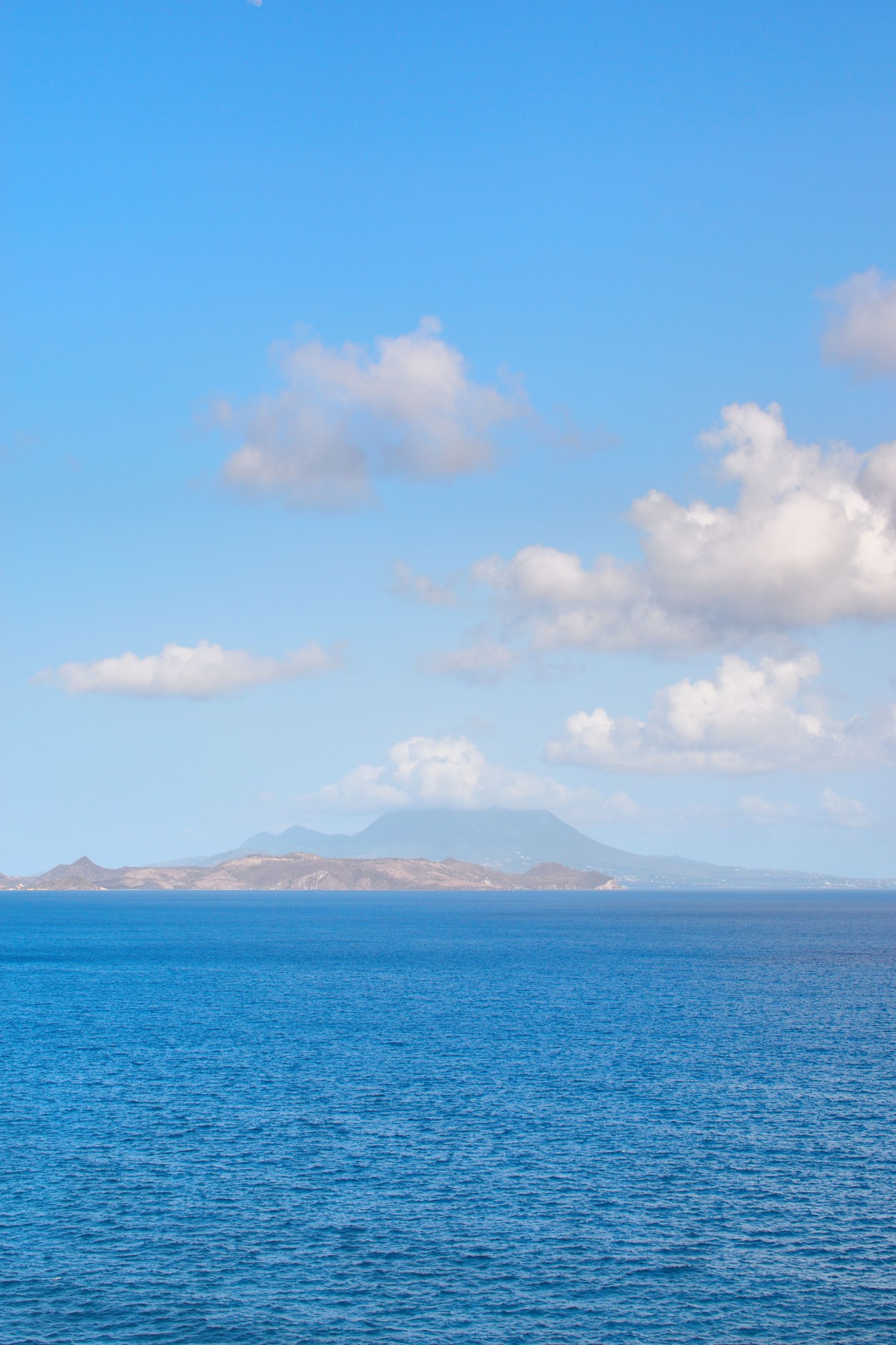
Historic plantation inns like Hermitage Plantation Inn (featuring a 1670s great house believed to be the oldest surviving wooden building in the English-speaking Caribbean), Golden Rock Inn, and Montpelier Plantation (where British naval hero Horatio Nelson married Frances Nisbet in 1787) offer stone-walled dining verandas set in lush botanical gardens. Spending an evening dining in an open-air stone sugar mill surrounded by whistling tree frogs is one of the quintessential experiences of Caribbean travel.
For daytime relaxation, Pinney’s Beach stretches for four uninterrupted miles along the sheltered Caribbean coast just north of Charlestown. The sand is a soft saffron gold, shaded by towering coconut palms, with warm, calm water ideal for relaxed swimming. Pinney’s Beach is also home to Sunshine’s Beach Bar, a legendary Caribbean gathering place celebrated for its freshly grilled jerk lobster and its trademarked rum punch, the “Killer Bee.”
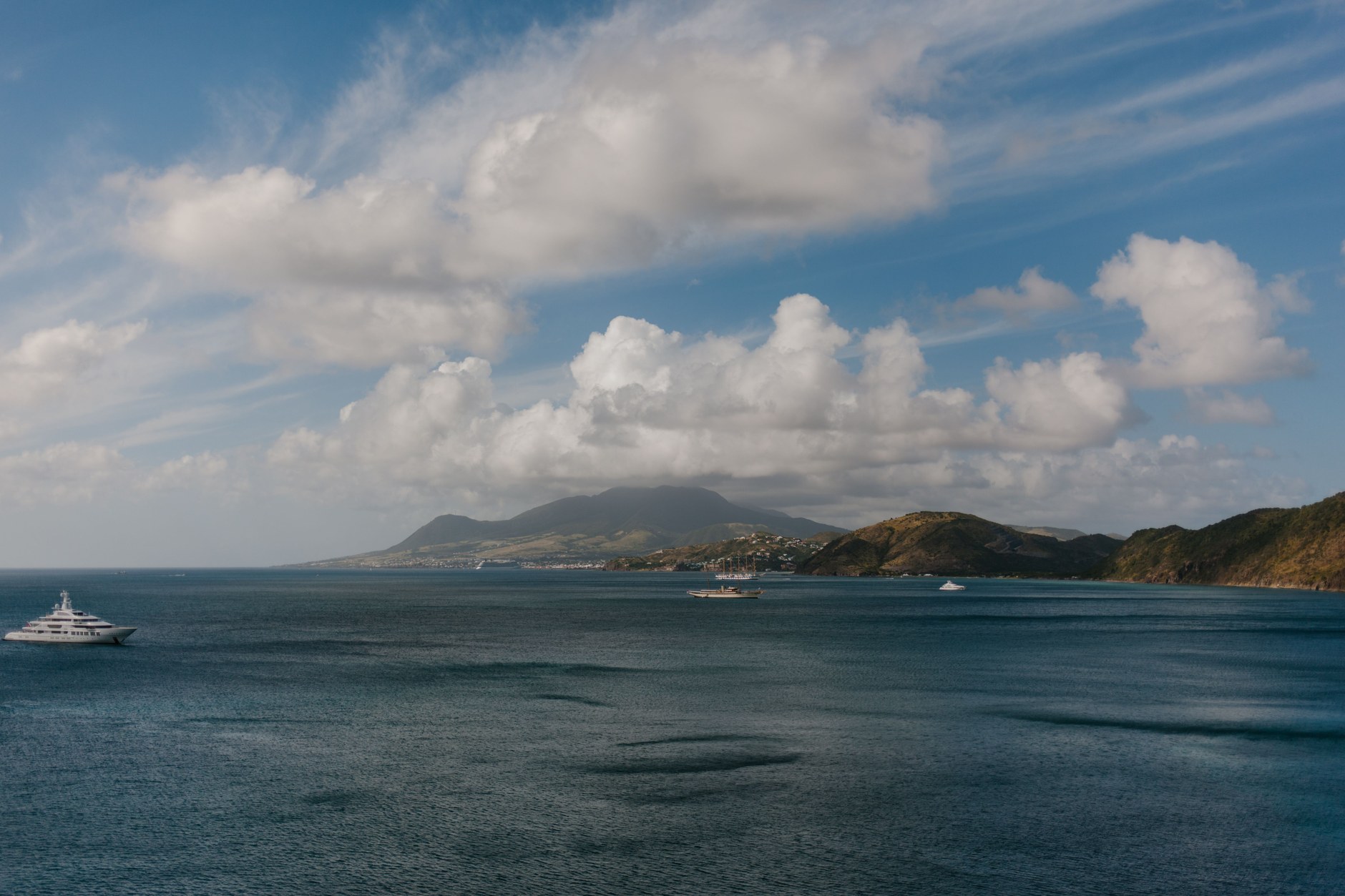
In Charlestown, history enthusiasts can tour the Alexander Hamilton Museum, built on the waterfront foundation of the great statesman’s birthplace in 1755 or 1757. The quiet colonial capital features pastel gingerbread balconies, hand-cut stone courtyards, and the Bath Hotel and Spring House, an eighteenth-century thermal spring retreat where travelers once bathed in therapeutic volcanic mineral waters.
8-Day Saint Kitts & Nevis Circuit Itinerary
This comprehensive eight-day itinerary balances the dramatic volcanic hiking and historical fortifications of Saint Kitts with the serene heritage and beach culture of Nevis.
| Day / Stage | Base | Highlights | Transport Mode | Transit Time | Advance Booking Requirement |
|---|---|---|---|---|---|
| Day 1 | St. Kitts (Frigate Bay) | SKB arrival, rental car pickup, Basseterre Circus walk, Frigate Bay dinner | Rental car | 20 mins from airport | Book compact 4WD rental car in advance |
| Day 2 | St. Kitts (Frigate Bay) | Brimstone Hill Fortress morning tour, Caribelle Batik at Romney Manor | Rental car | 45 mins driving | Visit Brimstone Hill at 9:30 AM before tour buses |
| Day 3 | St. Kitts (Frigate Bay) | Mount Liamuiga guided volcano crater hike, afternoon South Friars beach | Rental car / hiking | 4 hours hiking | Reserve certified local volcano guide |
| Day 4 | St. Kitts (Peninsula) | Timothy Hill Overlook, Cockleshell Bay beach relaxation, coastal boat sail | Rental car / boat | 30 mins driving | Book afternoon catamaran coastal sail |
| Day 5 | Nevis (Charlestown) | SeaBridge ferry or water taxi to Nevis, check-in to historic plantation inn | Ferry or water taxi | 20 mins crossing | Confirm SeaBridge car space or water taxi transfer |
| Day 6 | Nevis (Plantation base) | Charlestown heritage walk, Alexander Hamilton Museum, Bath hot springs | Rental car or taxi | 30 mins driving | Reserve evening plantation great house dinner |
| Day 7 | Nevis (Plantation base) | Full day at Pinney’s Beach, Sunshine’s Beach Bar, sunset over The Narrows | Rental car or bicycle | 15 mins driving | Carry cash for beach bars and rentals |
| Day 8 | St. Kitts Departure | Morning water taxi back to St. Kitts, transfer to SKB for departure | Water taxi / taxi | 45 mins total transit | Allow 3-hour buffer before flight departure |
Field Connectivity and Mobile Data Economics
Telecommunications across Saint Kitts and Nevis benefit from compact island geography and modern regional fiber links. The federation is primarily served by Cable & Wireless (operating under the Flow brand) and Digicel. Both networks deliver dependable LTE coverage along the coastal ring roads, through Basseterre and Charlestown, across the Southeast Peninsula, and throughout the developed beach strips of Frigate Bay and Pinney’s Beach. Signal diminishes primarily when hiking inside the deep volcanic caldera of Mount Liamuiga or in the high mountain cloud forests of Nevis Peak.
Travelers using an NXTL Saint Kitts and Nevis eSIM enjoy exceptional value in this destination. The profile connects directly to the Cable & Wireless LTE network at a highly economical rate of $7.22 per gigabyte (approximately $0.007 per megabyte). Unlike remote Pacific or African destinations where high wholesale roaming rates necessitate data conservation, the competitive tariff in Saint Kitts and Nevis allows for carefree daily data use.
A single gigabyte covers extensive Google Maps road navigation between Basseterre and the Southeast Peninsula, looking up real-time ferry departures across The Narrows, searching restaurant menus, and sharing high-resolution photos on social media without financial anxiety. Because NXTL operates on a reusable global eSIM profile with permanent non-expiring prepaid credit, any remaining balance carries over automatically to your next travel destination across more than 180 countries. Keeping your domestic primary SIM active alongside your NXTL digital profile ensures you receive two-factor authentication banking SMS codes without incurring expensive international carrier roaming fees.
Currency, Driving Regulations, and Local Practices
The official legal tender of the federation is the Eastern Caribbean Dollar (XCD), which is permanently pegged to the United States Dollar at an official rate of $1 USD = $2.70 XCD. United States Dollars are universally accepted by virtually every taxi driver, restaurant, and shop across both islands, though change is frequently provided in Eastern Caribbean Dollars. Credit cards (Visa and Mastercard) are accepted at established hotels, car rental agencies, and supermarkets, but carrying a supply of US or EC Dollar cash is essential for water taxis, beach shacks, and market vendors.
Driving is on the left-hand side of the road. Visitors wishing to drive a rental vehicle must obtain a temporary Visitor Driver’s Permit, which costs $24 USD (E$43.87) and can be issued directly by your car rental agency upon presenting your domestic driver’s license. While main highways on Saint Kitts are paved and well-maintained, roads around Nevis are narrower and frequently shared with wandering livestock, including goats, sheep, donkeys, and troops of green vervet monkeys. Observe the national speed limits (usually 20 to 40 mph) and exercise caution on blind corners.
Common Scams and Caribbean Island Hazards
Saint Kitts and Nevis is an orderly and welcoming nation with low rates of serious crime against visitors. However, practicing standard traveler caution prevents avoidable hassles.
- Uncertified Mount Liamuiga Volcano Hiking: Attempting to scale Mount Liamuiga without an experienced local guide frequently results in lost hikers, severe ankle injuries on wet volcanic roots, and medical emergencies inside the crater. Always book a certified guide through your hotel or the national tourism authority.
- Cruise Ship Rush Hours at Brimstone Hill: Arriving at Brimstone Hill Fortress between 10:30 AM and 1:30 PM on days with multiple cruise ships in Port Zante leads to crowded ramparts and long vehicle lines. Plan your visit for early morning opening (9:30 AM) or mid-afternoon (2:30 PM) for unobstructed views.
- The Dual-Currency Change Discrepancy: Paying in US Dollars at informal beach shacks or roadside stands and receiving change in EC Dollars calculated at unfavorable exchange rates (such as 2.50 rather than 2.70). Always verify the conversion rate before paying or carry local EC Dollar cash.
- Unlicensed Water Taxi Swell Transfers: Boarding informal wooden skiffs at Cockleshell Bay during heavy winter Atlantic swells without standard life jackets or marine radios. Only utilize registered water taxi operators at the formal pier (such as SeaBridge or established commercial operators).
- Green Vervet Monkey Street Photo Extortion: Touts near the Basseterre cruise terminal thrusting captive baby monkeys into tourists’ arms for photos, then aggressively demanding a cash payment fees. Politely decline these encounters and observe wild monkeys in their natural forest habitats instead.
Slower and Shorter Route Adjustments
If you have only four or five days, base yourself entirely on Saint Kitts and treat Nevis as a dedicated day trip. Spend three days exploring Brimstone Hill Fortress, the Southeast Peninsula beaches, and Mount Liamuiga, and take the 45-minute morning passenger ferry from Basseterre to Charlestown for a relaxed day exploring Alexander Hamilton’s birthplace and Pinney’s Beach before returning by evening ferry.
Travelers with ten to twelve days should split their time equally, spending five nights on Saint Kitts and five nights on Nevis. On Nevis, take time to hike the challenging Nevis Peak trail, explore the overgrown ruins of Hamilton Estate, take a catamaran snorkeling day sail to the marine reserves of southern Sint Eustatius, and immerse yourself in the culinary traditions of restored plantation great houses.