Armenia presents an extraordinary highland landscape, where fourth-century stone basilicas cling to basalt canyon rims and Mount Ararat commands the southern horizon. Yet first-time visitors frequently fall into an exhausting logistical trap: basing themselves exclusively in Yerevan for an entire week and attempting punishing, five-to-eight-hour out-and-back day trips across rugged mountain passes to reach remote provincial sanctuaries. The key to exploring Armenia without highway burnout lies in anchoring your journey in distinct regional bases.
By dividing a week between Yerevan’s wide boulevards, the forested northern valleys of Tavush around Dilijan, and the dramatic red limestone canyons of Vayots Dzor and Syunik, travel times become manageable adventures rather than endurance trials. This multi-base approach lets you explore cliffside monasteries at dawn before tour groups arrive and savor meals in village orchards along historic trade routes.
Strategic Base Architecture: Yerevan, Dilijan & Goris
Armenia’s topography is defined by high volcanic plateaus, jagged mountain ridges, and steep river gorges that make driving distances deceptively slow. While compact on a map, driving from Yerevan to the southern monastery of Tatev takes over four hours each way along winding highways. A day trip leaves barely an hour on site after eight exhausting hours on the road. A seven-day loop eliminates this strain by establishing three overnight bases.
Your itinerary begins with three nights in Yerevan, allowing ample time for arrival recovery, exploring the capital’s neoclassical pink tuff architecture, and taking short half-day excursions to Garni and Geghard. You then transfer northward for two nights in Dilijan or near the shores of Lake Sevan, experiencing alpine beech forests and lakeside monasteries. The journey concludes with two nights in the southern town of Goris or Yeghegnadzor, providing relaxed access to Noravank canyon, the Areni wine valley, and the dramatic Wings of Tatev aerial tramway before circling back to Yerevan for departure.
| Day | Base | Key Stops & Cultural Sightseeing | Transit Mode | Transit Time | Advance Bookings Required |
|---|---|---|---|---|---|
| Day 1 | Yerevan | Republic Square, Cascade complex, Cafesjian Center, Matenadaran manuscript museum | Walk / Yandex Go | 15 minutes | None |
| Day 2 | Yerevan | Hellenistic Temple of Garni, Azat River basalt organ, rock-carved Geghard Monastery | Private driver / rental car | 1 hour each way | Geghard choir concert (optional) |
| Day 3 | Lake Sevan / Dilijan | Sevanavank peninsula monastery, Sevan trout lunch, Dilijan Old Town, Haghartsin | Rental car / transfer | 1.5 hours | Lakeside dining reservation |
| Day 4 | Dilijan | Dilijan National Park forest trails, Goshavank medieval academy, artisan workshops | Foot / local taxi | 30 minutes | National park trail map |
| Day 5 | Goris / Yeghegnadzor | Selim Caravanserai, Vardenyats Pass (2,410m), Noravank red canyon, Areni-1 cave winery | Highland highway drive | 2.5 hours | Areni winery cellar tour |
| Day 6 | Goris | Wings of Tatev aerial tramway, Tatev Monastery cliff complex, Khndzoresk cave bridge | Cable car + car | 45 minutes | Wings of Tatev tramway time slot |
| Day 7 | Yerevan | Khor Virap monastery beneath Mount Ararat, Vernissage arts market, departure flight | Highway M2 to EVN | 3.5 hours | Flight check-in |
This route avoids backtracking and keeps driving under three hours per transfer, shifting across semi-arid plains, alpine forests, and southern karst canyons.
Yerevan: The Pink City and Ancient Foundations
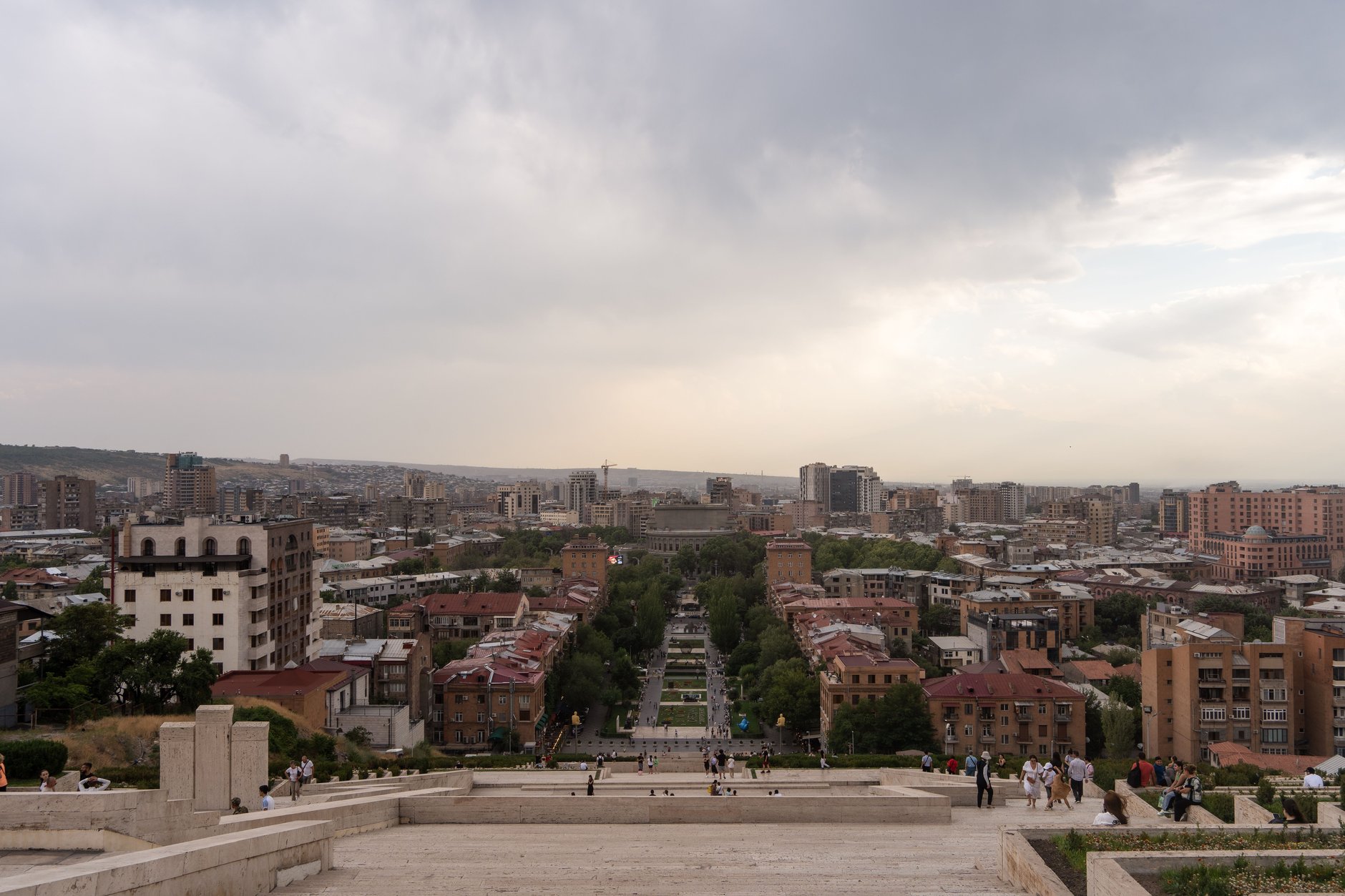
Yerevan ranks among the world’s oldest continuously inhabited capitals, founded in 782 BC by Urartian King Argishti I as the military fortress of Erebuni—predating Rome by nearly three decades. The modern city center, however, owes its distinctive aesthetic to Soviet-era master architect Alexander Tamanian. During the 1920s, Tamanian reimagined Yerevan as a neoclassical garden city arranged in concentric rings, utilizing locally quarried volcanic tuff stone in delicate hues of rose, salmon, and cream, earning Yerevan its moniker as the Pink City.
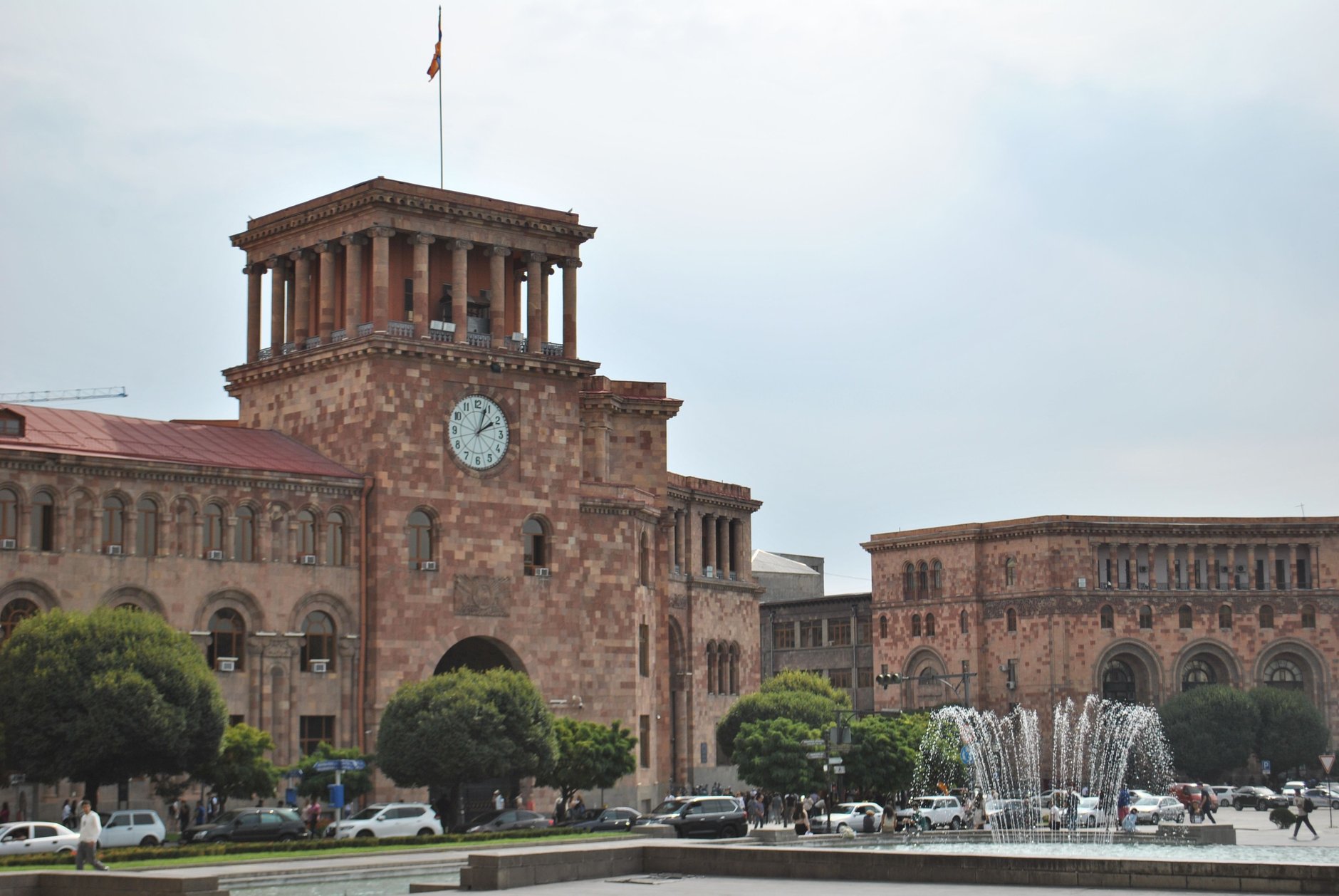
At Republic Square, monumental ministries in pink tuff enclose an expansive plaza. From May through October, locals gather in the evenings to watch the Singing Fountains dance to classical and Armenian orchestral scores.
A short walk northward leads to the Cascade, an immense limestone stairway carved into the hillside that doubles as an open-air modern sculpture park and houses the Cafesjian Center for the Arts. Ascending the 572 exterior steps or indoor escalators brings you to panoramic platforms where Yerevan spreads outward beneath the snow-capped twin peaks of Mount Ararat across the border.
Cultural preservation in Yerevan reaches its apex at the Matenadaran (the Mesrop Mashtots Institute of Ancient Manuscripts). Guarded by a monumental statue of Mesrop Mashtots, the scholar who invented the Armenian alphabet in 405 AD, this fortress-like archive houses over twenty thousand ancient illuminated manuscripts, scientific codices, and historical scrolls written in Armenian, Persian, Greek, Arabic, and Syriac.
The Azat Canyon: Garni Temple and Geghard
Located just forty minutes east of Yerevan, the dramatic Azat River gorge shelters two of Armenia’s most significant cultural monuments, representing the profound spiritual transition from paganism to Christianity. The Temple of Garni stands perched on a high triangular promontory protected by sheer vertical cliffs. Built in the first century AD by King Tiridates I, likely dedicated to the sun god Mihr, it is the sole surviving Greco-Roman colonnaded temple in the entire post-Soviet realm.
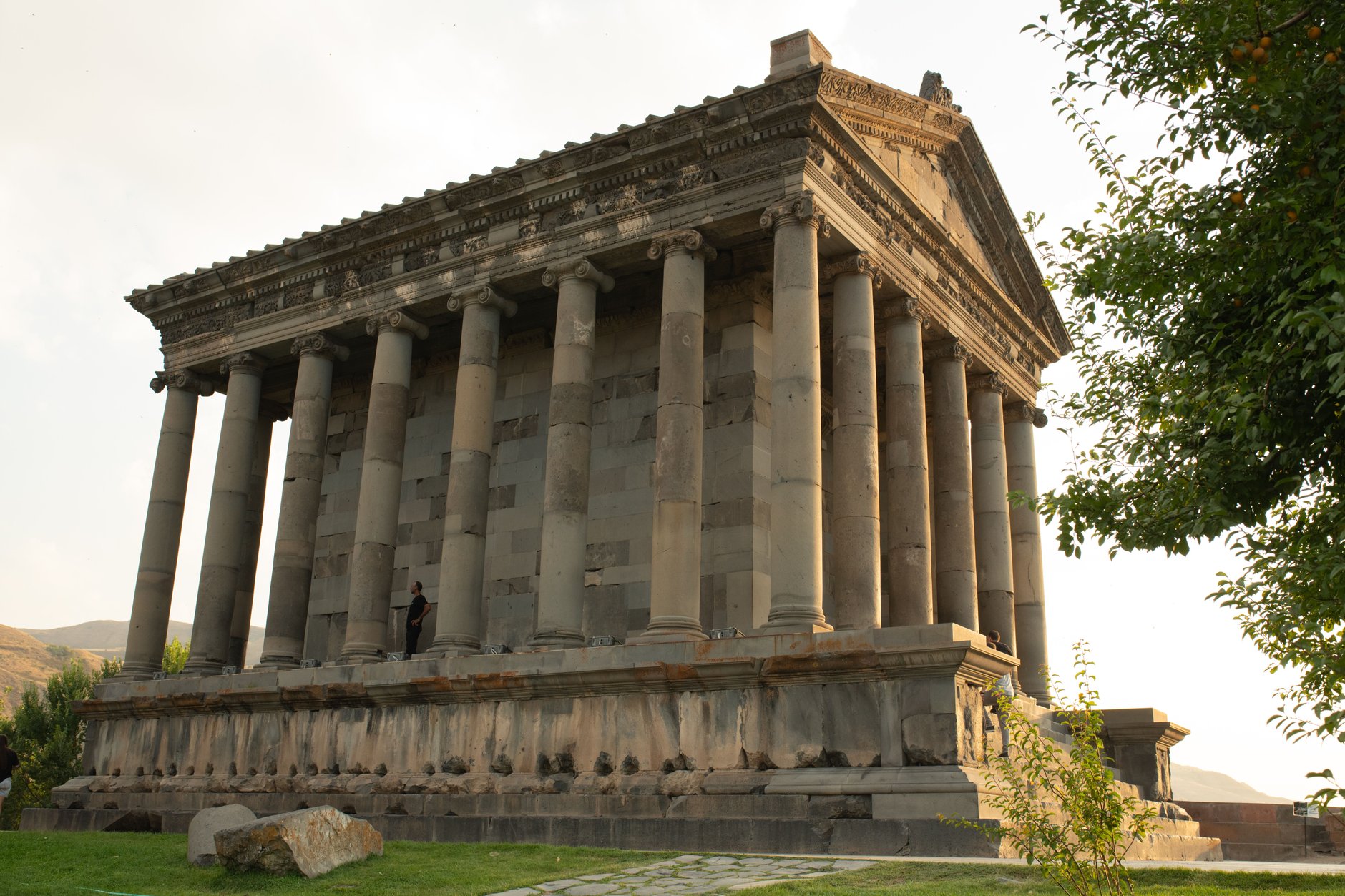
Constructed from local black basalt, Garni’s twenty-four Ionic columns support an ornately sculpted entablature depicting classical grapevine and acanthus motifs. Directly beneath the temple promontory, a trail descends into the Azat Gorge to reveal the Symphony of Stones—a dramatic geological formation where volcanic basalt columns hang vertically from canyon walls like giant organ pipes.
Ten kilometers further up the winding valley lies Geghard Monastery, a UNESCO World Heritage site founded in the fourth century by Saint Gregory the Illuminator at the site of a sacred cave spring. Originally named Ayrivank (Monastery of the Cave), it later became known as Geghardavank (Monastery of the Spear) after the Holy Lance that pierced Christ’s side was brought here for safekeeping, now displayed in the museum of Holy Echmiadzin.
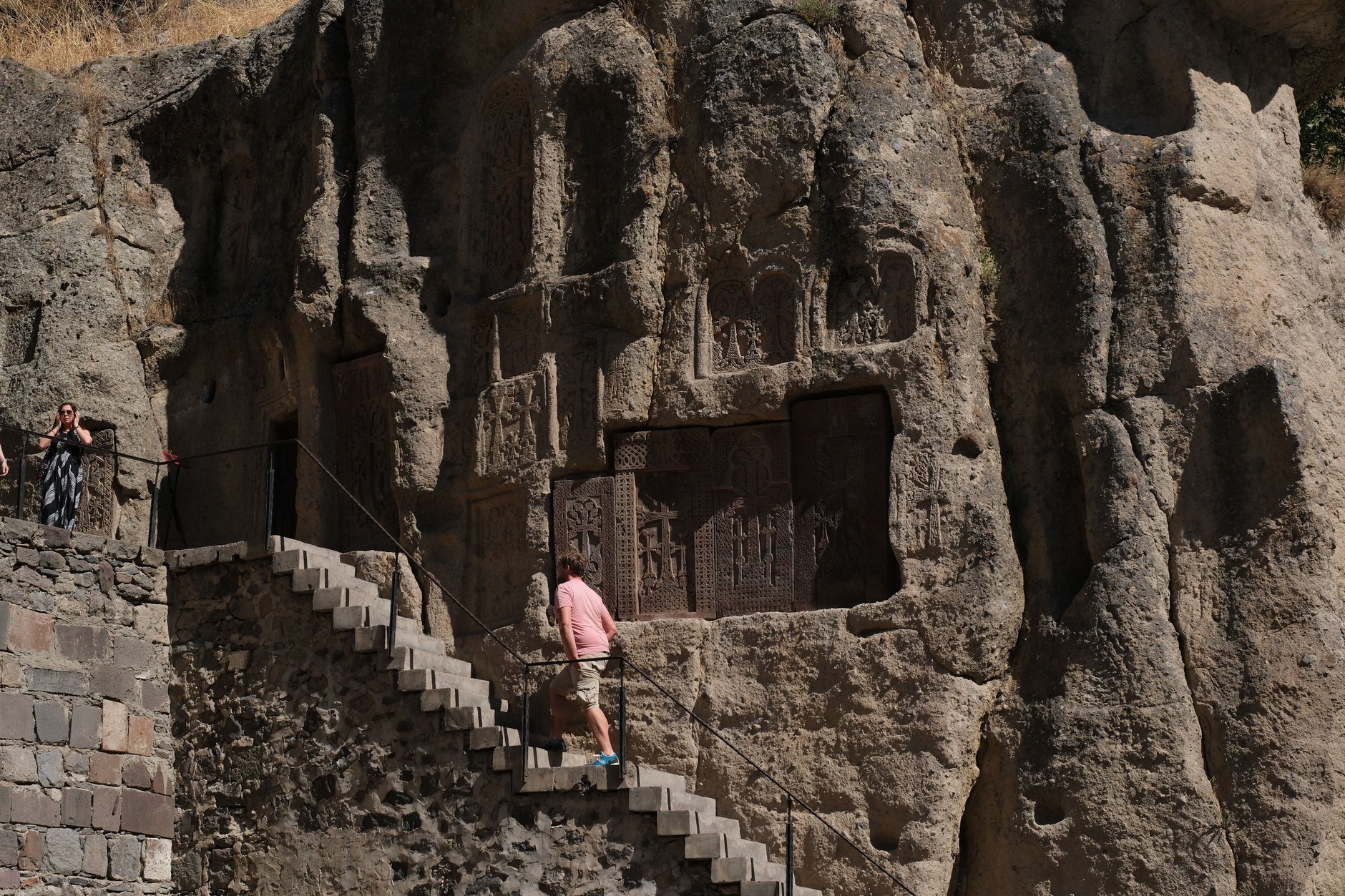
Geghard is architecturally unique because several chapels and tombs are carved directly into living rock. In the rock-cut Avazan chamber, holy spring water trickles into stone basins, while the vaulted Proshian tomb produces resonant acoustics. Intricately carved khachkars (cross-stones) are etched directly into surrounding cliffs.
Lake Sevan and the Alpine Forests of Dilijan
Climbing northeast from Yerevan brings you to Lake Sevan, one of the world’s largest high-altitude freshwater lakes, situated at 1,900 meters above sea level. Covering over 1,200 square kilometers at 1,900 meters, this high-altitude alpine lake reflects dazzling shades of turquoise and deep cobalt under thin mountain skies.
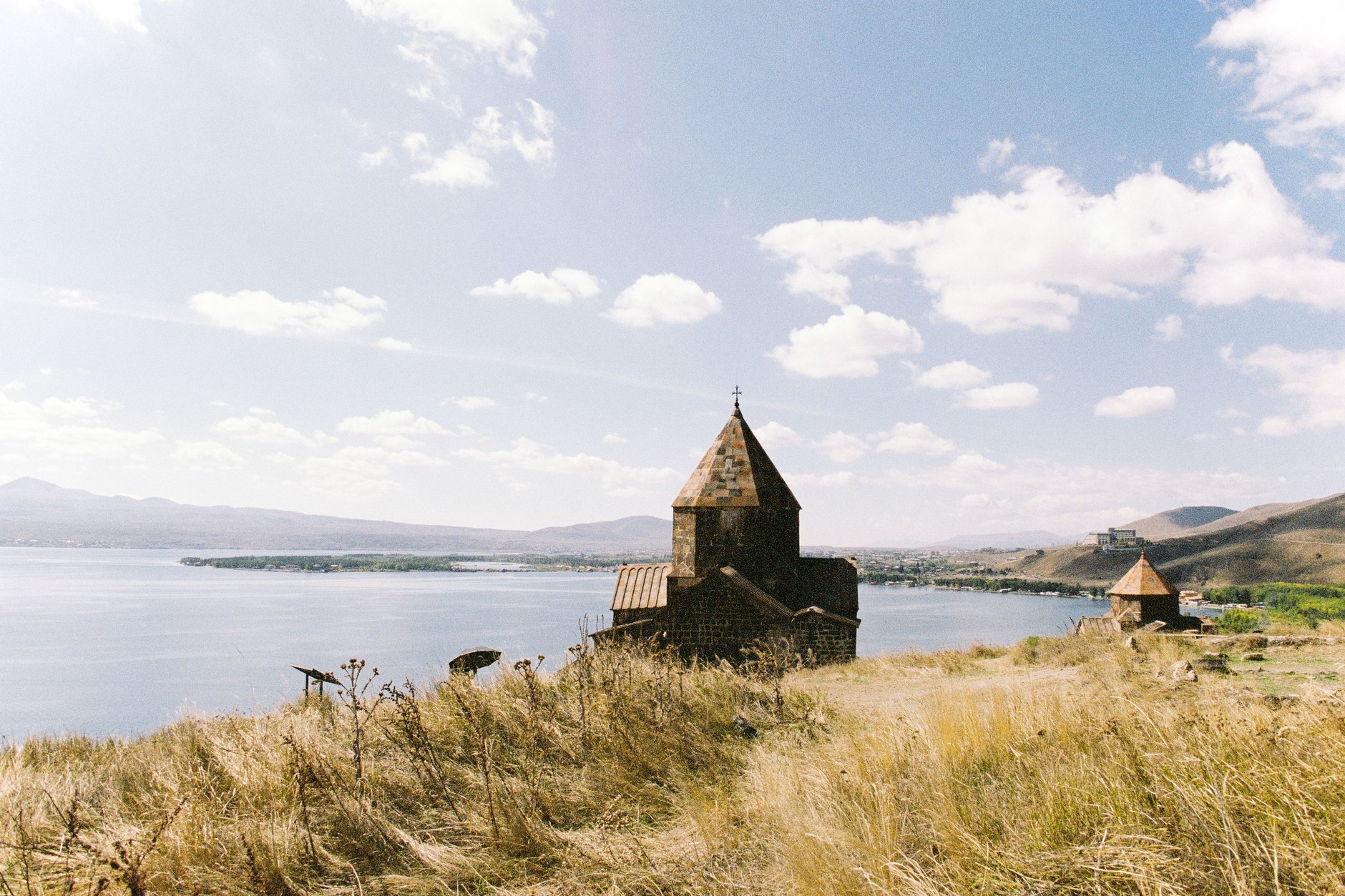
On a steep rocky promontory overlooking the water stands Sevanavank Monastery, established in 874 AD by Princess Mariam Bagratuni. Originally built on an island that served as a retreat for monks, Soviet water drainage converted the site into a peninsula. Its twin ninth-century tuff churches house distinctive green limestone khachkars.
Passing the tunnel behind Lake Sevan brings an immediate transformation. Dry plateaus yield to lush beech and oak forests in Dilijan National Park. Dilijan provides a tranquil haven of carved wooden balconies along Sharambeyan Street, craft workshops, and forested trails.
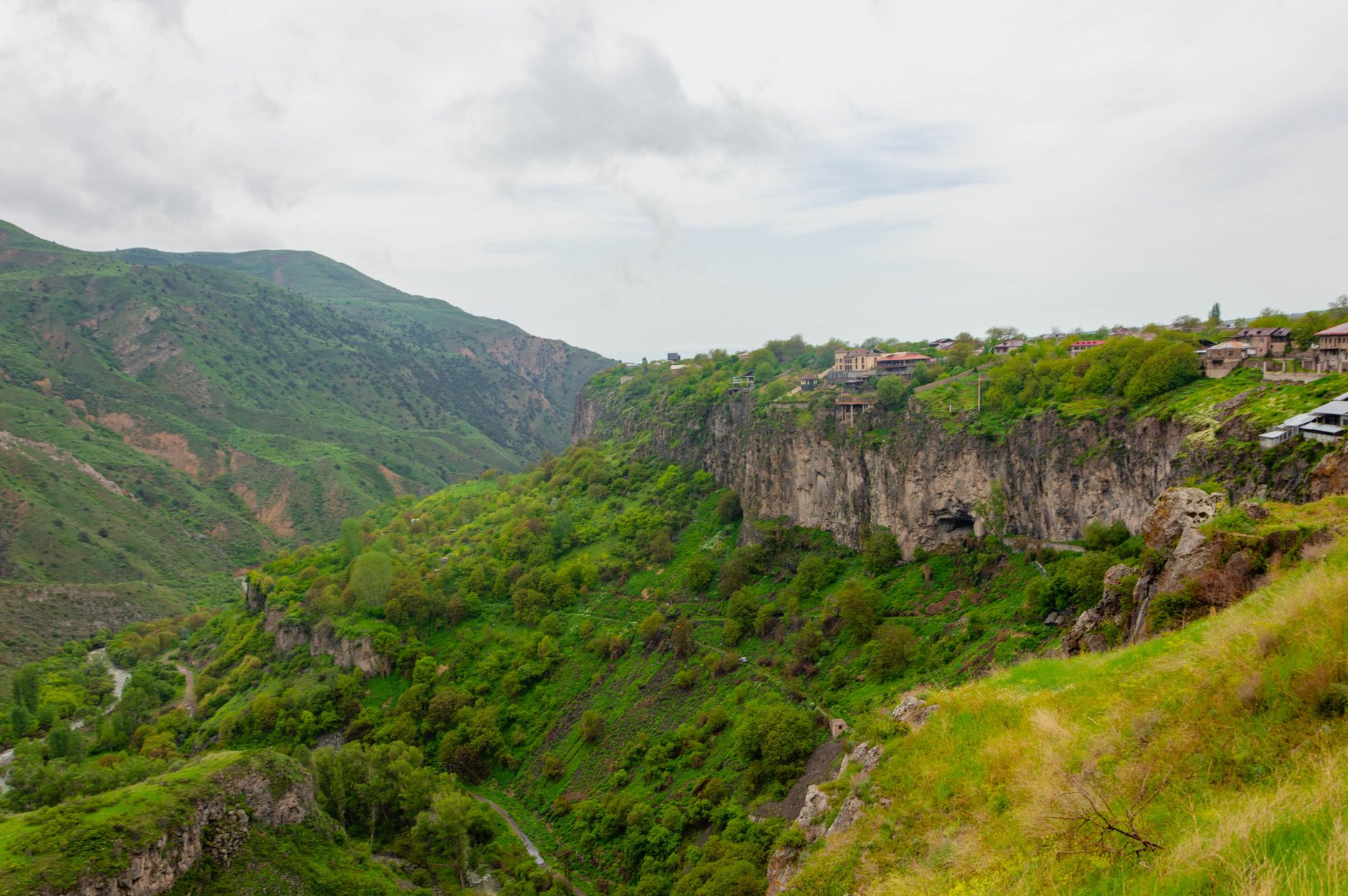
Deep within the national park’s wooded glens sit Haghartsin and Goshavank monasteries. Built between the tenth and thirteenth centuries, these monastic complexes served as major regional centers of medieval theology, music, and law. At Goshavank, master stone-carver Pavghos sculpted the Needlecarved Khachkar in 1291, a lace-like limestone masterpiece with patterns so intricate they resemble fine needlepoint embroidery.
The Dramatic South: Vayots Dzor, Noravank & Wings of Tatev
Journeying south from Lake Sevan requires crossing the Vardenyats Pass at 2,410 meters, where the remarkably preserved fourteenth-century Selim Caravanserai sheltered Silk Road merchant caravans carrying silk and spices between Tabriz and the Black Sea. Descending into Vayots Dzor province reveals a stark, arid landscape of tiered red cliffs and deep limestone gorges that form the cradle of Armenian viticulture.
In the village of Areni, archaeologists excavating the Areni-1 cave complex unearthed the world’s oldest known winery, dating back 6,100 years to roughly 4100 BC. Excavations revealed an ancient wine press, clay vats, and desiccated seeds of the endemic Areni Noir grape. Boutique wineries line the valley today, offering tastings of earthy red wines aged in Caucasian oak.
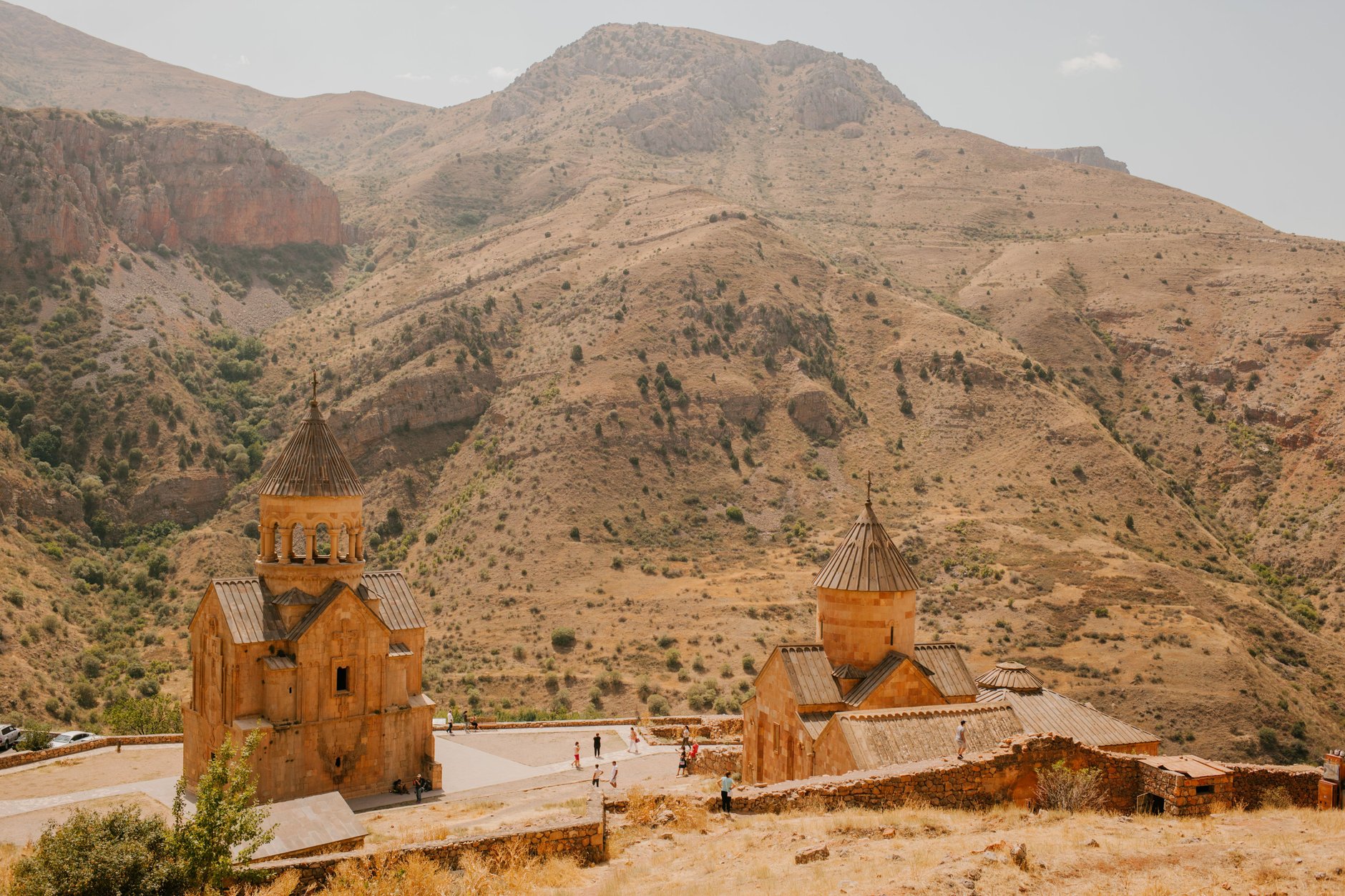
A narrow eight-kilometer canyon road flanked by towering brick-red limestone cliffs leads to Noravank Monastery. Built in the thirteenth and fourteenth centuries under the patronage of the Orbelian noble family, Noravank is famed for its two-story Surb Astvatsatsin (Holy Mother of God) funerary church, designed by master architect and sculptor Momik. The church’s facade features an exterior cantilevered stone staircase without railings, while stone reliefs above the portals display rare depictions of God the Father holding the head of John the Baptist.
Continuing further south into Syunik Province brings you to Halidzor, the departure station for the Wings of Tatev. Certified by Guinness World Records as the world’s longest reversible aerial tramway, this non-stop cable car spans 5.7 kilometers across the precipitous Vorotan River gorge in twelve minutes, soaring 320 meters above the canyon floor.
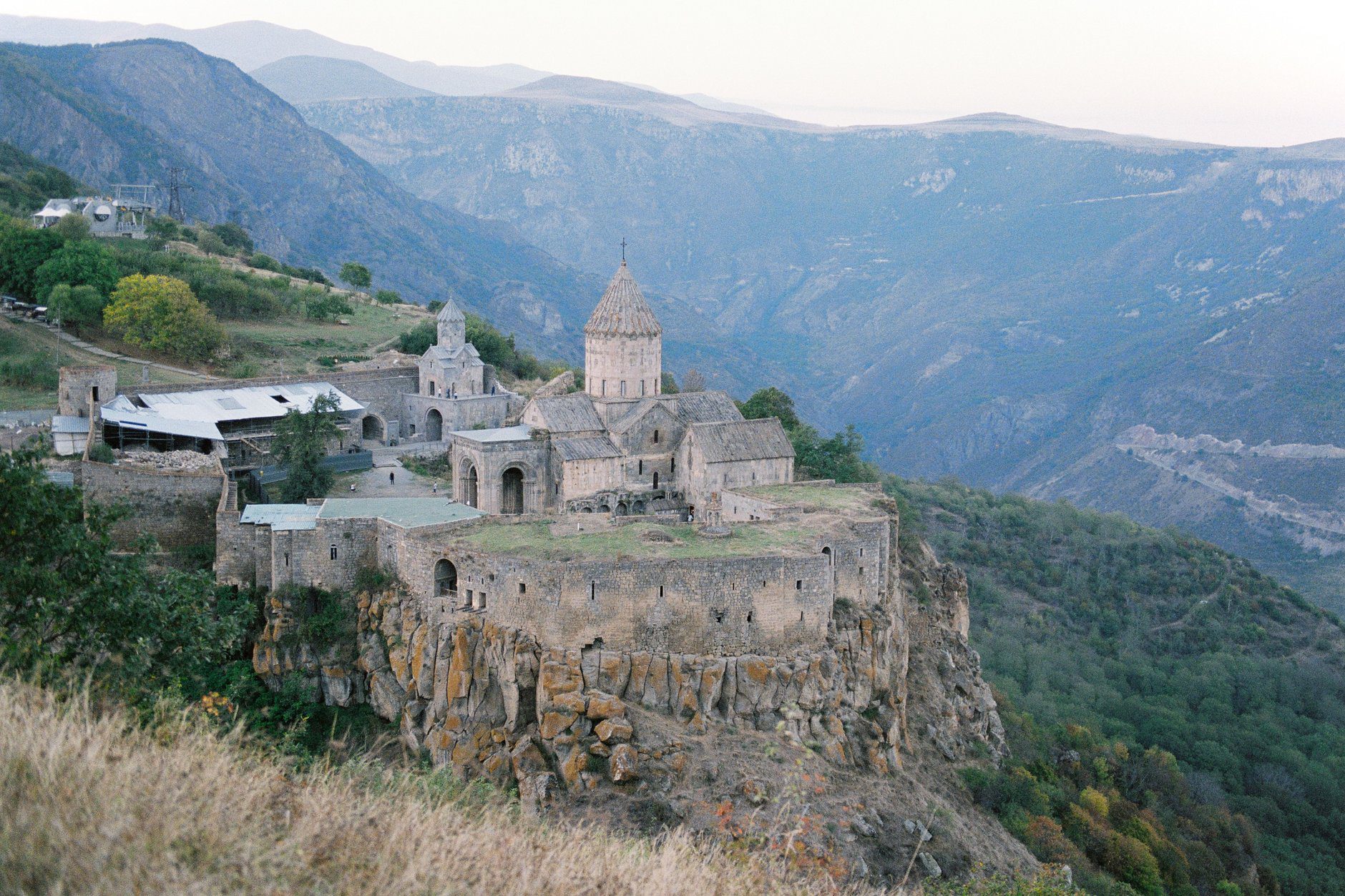
Arriving on the southern cliff plateau brings you to Tatev Monastery, founded in the ninth century. Poised on the edge of a sheer precipice, Tatev served as a powerful spiritual fortress and the seat of a medieval university that educated philosophers, illuminators, and astronomers. In the courtyard stands the Gavazan, an eight-meter stone column engineered on a mechanical pivot that wobbled during earthquakes or advancing enemy cavalry.
Gastronomic Heritage & Tonir Traditions
Armenian cuisine is rooted in fresh herbs, slow fire-roasting, fermented dairy, and ancient grains. Meals are communal celebrations where tables overflow with plates of fresh tarragon, purple basil, wild sorrel, and salted Lori sheep’s cheese. At the heart of every dining ritual is lavash, an unleavened paper-thin flatbread inscribed on the UNESCO Intangible Cultural Heritage list.
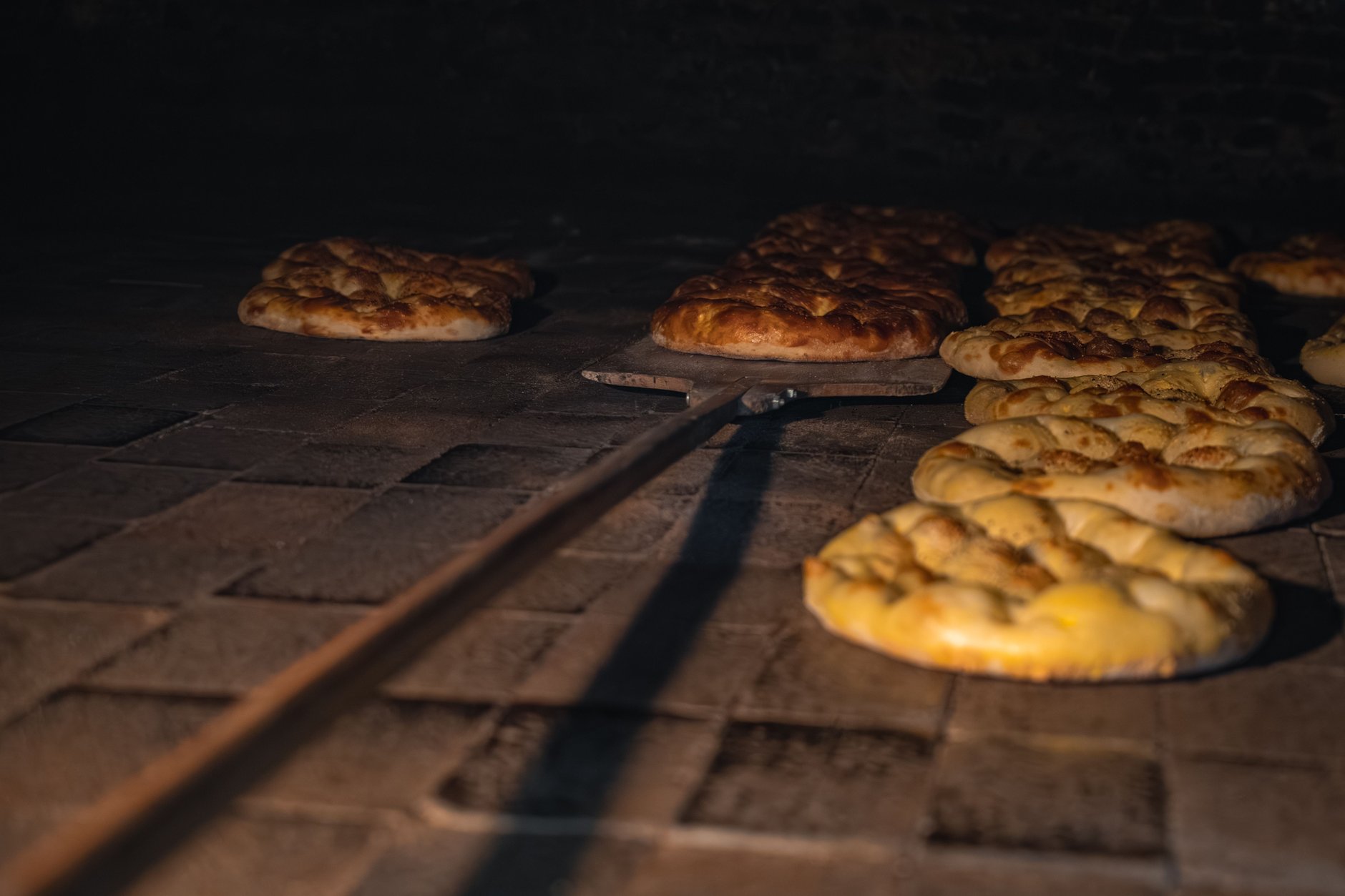
Baking lavash is a communal art passed down through generations. Women roll out wheat dough into transparent sheets before slapping them onto a stuffed fabric cushion, which is thrust downward onto the red-hot clay walls of an underground sunken oven called a tonir. Within thirty seconds, bubbling blistering flatbread emerges, served warm with barbecue or dried for winter storage.
Other essential culinary specialties include khorovats—skewers of pork, beef, or lamb marinated with onions and grilled over fruitwood coals—and traditional dolma, tender minced meat and rice wrapped tightly inside pickled grape leaves or stuffed into seasonal aubergines and bell peppers, accompanied by thick garlic-infused matsun yogurt. In Dilijan, taste local river trout or pan-fried chanterelle mushrooms, while around Lake Sevan, travelers feast on grilled ishkhan (Sevan trout) and crawfish tail kebabs.
Dining concludes with dried fruits stuffed with crushed walnuts, sweet gata pastry filled with buttery flour-sugar filling (koritz), and a cup of rich, unfiltered Armenian coffee brewed slowly in a copper jazzve over hot sand.
Practical Transport Logistics & Highway Realities
Navigating Armenia requires realistic planning around road infrastructure. Within Yerevan, getting around is simple and affordable. The city features a single-line underground metro system, while smartphone ride-hailing apps like GG Taxi and Yandex Go provide reliable, metered city rides for 800 to 1,500 AMD (approximately 2 to 4 USD), eliminating the need to negotiate fares with street drivers.
For rural travel, public transport consists primarily of marshrutkas (fixed-route minibuses) departing from Yerevan’s Northern and Southern bus stations. While remarkably cheap, marshrutkas operate on informal schedules, offer zero luggage space, and frequently drop passengers on main highways kilometers away from isolated monasteries. For a seven-day multi-base itinerary, renting a vehicle or hiring a private driver is far superior.
Driving in Armenia is generally straightforward on major arteries like the M1 and M2, though caution is required. Roads outside Yerevan often suffer from potholes, unmarked speed bumps, roaming livestock, and aggressive overtaking on two-lane mountain passes. In winter and early spring, high passes like Vardenyats can close due to heavy blizzards and ice; always check road conditions before departing.
Travel Safety & Common Scams to Avoid
Armenia ranks among the safest countries in Europe and the Caucasus, with violent crime being exceptionally rare. Locals are renowned for warm hospitality toward international visitors. However, opportunistic pricing and deceptive tourist schemes do exist, particularly around transit hubs and major landmarks.
- Zvartnots Airport Fake Taxi Touts: Unlicensed drivers aggressively intercept arriving passengers inside the terminal, claiming app rides are illegal or unavailable. They charge a high cash fare for rides into central Yerevan that legitimately cost far less. Always ignore terminal touts and book directly through the GG Taxi or Yandex Go app, or use the official airport taxi desk.
- Vernissage “Antique” Rug & Stamp Scams: Vendors at the weekend Vernissage market in Yerevan sell modern reproduction carpets and Soviet military relics, falsely claiming they are authentic nineteenth-century antiques. Taking authentic antiques out of Armenia requires a costly export permit from the Ministry of Culture; uncertified items are routinely seized at airport customs.
- Garni & Geghard Unofficial Photo “Blessing” Fees: Near the entrances of Garni Temple and Geghard Monastery, men dressed in historical costumes or claiming monastic affiliation demand payments from tourists photographing nearby khachkars or ancient stone carvings. Entry to monuments is covered by official tickets; never pay cash to informal courtyard actors.
- Tatev Canyon Roadside “Shortcut” Drivers: Near the Halidzor cable car terminal, private drivers approach tourists waiting in line, claiming the Wings of Tatev tramway is closed for emergency maintenance. They offer to drive passengers down into the Vorotan gorge for exorbitant cash fares. The tramway rarely closes except during severe gale winds; always verify status directly at the ticket desk.
- Deceptive Currency Exchange Kiosks: Roadside exchange booths near regional bus stations or markets occasionally display confusing exchange boards with reversed buy/sell columns or hidden percentage commissions deducted after handing over cash. Always exchange currency inside authorized commercial banks or use reputable bank ATMs.
- Nightclub & Pedestrian Promenade Tab Padding: Certain second-story lounges and cocktail bars along central pedestrian avenues employ friendly promoters who invite solo travelers for a drink. Guests are subsequently presented with bills totaling hundreds of dollars for basic drinks, enforced by intimidating security staff. Avoid venues that do not provide clear printed price lists.
Maintaining basic urban awareness, confirming prices before ordering in unpriced establishments, and keeping a modest amount of Armenian Dram (AMD) cash for village produce will keep your journey smooth and trouble-free.
Mobile Connectivity & eSIM Intelligence for Armenia
Continuous mobile connectivity is essential when navigating Armenia’s remote mountain passes, coordinating local drivers, and checking weather updates at high-altitude trailheads. While Yerevan’s cafes and boutique hotels offer reliable Wi-Fi, wireless access disappears the moment you drive into rural river canyons or hike through national park forests.

Purchasing a physical SIM card upon arrival at Zvartnots International Airport or in downtown Yerevan can be frustrating. Armenian telecommunications law requires passport registration and biometric verification at local carrier stores (such as Viva-MTS, Team Telecom, or Ucom). Store queues can be lengthy, and airport kiosks routinely sell overpriced tourist packages bundled with unneeded domestic minutes and short validity periods.
A global eSIM provides an immediate, hassle-free alternative. With NXTL, you connect directly to top Armenian mobile networks the moment your flight lands in Yerevan, without swapping out your domestic SIM card or standing in telecom store lines. NXTL operates on a flexible pay-as-you-go balance model, delivering high-speed cellular data in Armenia at an affordable rate of just EUR 1.19 per gigabyte.
Crucially, NXTL features multi-carrier failover across Armenia’s major cellular operators: Viva-MTS, Team Telecom (formerly Beeline), and Ucom. When driving through deep limestone gorges like Noravank or ascending the Vorotan canyon where a single carrier’s signal might drop, NXTL automatically routes your data through the strongest available cellular tower. Personal hotspot and tethering are fully permitted, enabling you to share 4G/LTE connectivity with laptops and companion devices.
Getting set up requires no contracts or recurring fees. For $11.99, you receive your universal eSIM profile with $10 in preloaded account balance. Because your balance never expires and covers 180+ countries and 460+ carrier networks worldwide, any unused credit remains active for future travels across the Caucasus, Europe, and beyond.