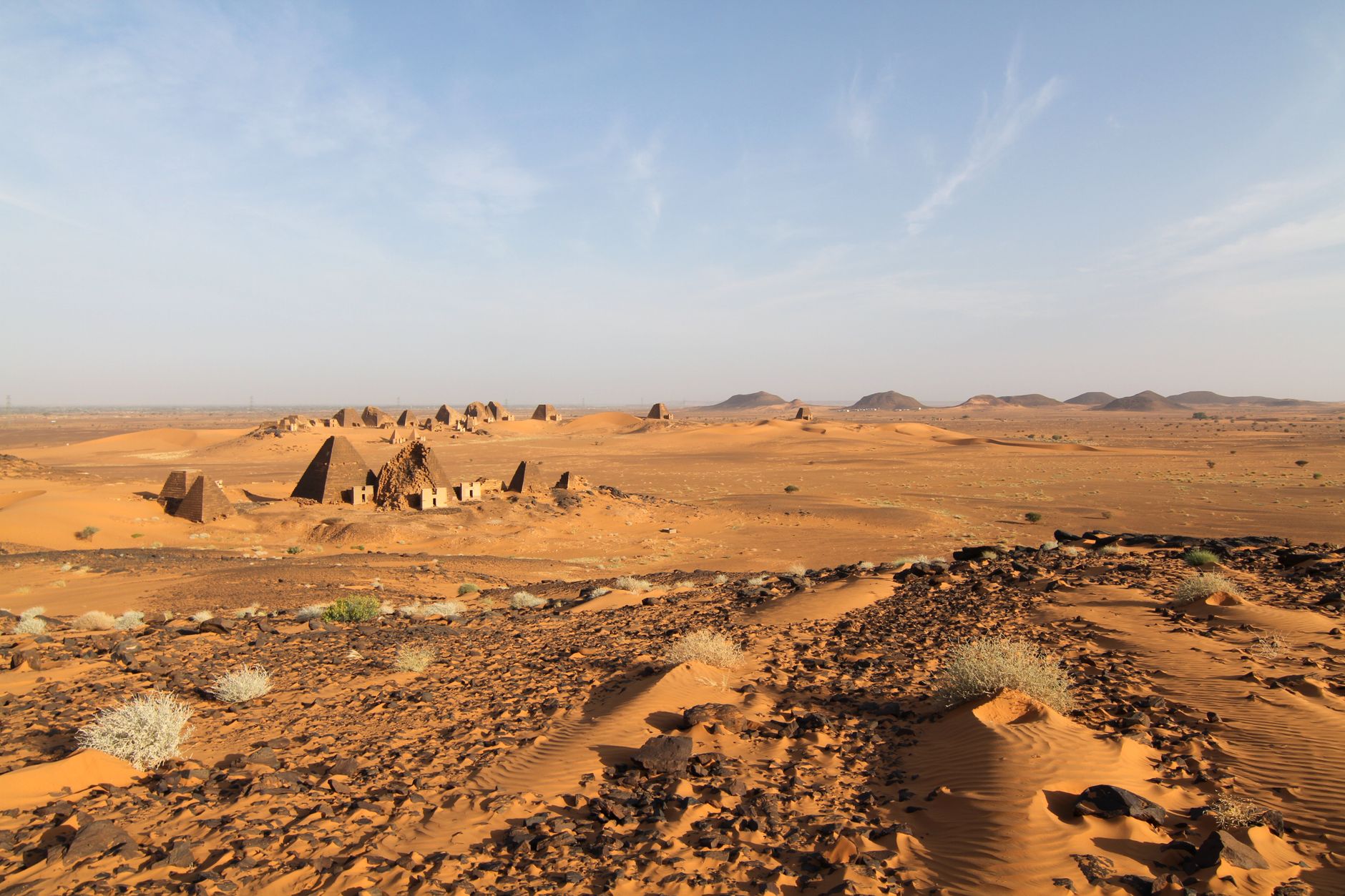
Bangladesh is one of South Asia’s least understood and most intensely rewarding travel frontiers, offering an overwhelming sensory tapestry of Mughal fortresses, tea-carpeted highlands, and the world’s largest mangrove wilderness. Yet first-time visitors frequently feel intimidated by Dhaka’s legendary traffic congestion and complex domestic transport logistics. Attempting an overambitious overland circuit across the entire delta inevitably leads to exhaustion. The key to a triumphant first journey lies in a disciplined, focused triangular route: diving into the raw energy and architectural monuments of Old Dhaka, retreating to the emerald tea estates and gibbon-filled rainforests of Srimangal, and embarking on a small-vessel eco-safari through the tidal waterways of the Sundarbans.
This eight-day itinerary is designed specifically for curious independent travellers who want cultural depth without logistical chaos. By establishing what must be arranged well before landing—including your Sundarbans forest permits, express train seat bookings via Shohoz, and airport vehicle pickups—you sidestep local bottlenecks and experience Bangladesh’s legendary warmth with complete peace of mind. Here is how to navigate river ports, railway berths, rainforest trails, and traditional Bengali feasts across an unforgettable journey.
Trip Planning Blueprint: Bases, Transit Modes, and Timing
Selecting your travel season is the single most critical decision when planning a trip to Bangladesh. The country experiences a sub-tropical monsoon climate divided into three distinct phases. The optimal window for independent travel is the cool, dry winter running from November through February. During these months, daytime temperatures hover around a comfortable twenty-five degrees Celsius, night skies are clear, humidity drops significantly, and rainfall is minimal. Crucially, winter brings calm sea conditions along the Bay of Bengal, making small-boat navigation through the mangrove channels of the Sundarbans safe and pleasant.
The pre-monsoon summer (March through May) brings oppressive heat exceeding thirty-eight degrees Celsius, accompanied by severe afternoon thunderstorms known locally as Kalbaishakhi. From June through October, the southwest monsoon drenches the Bengal delta with torrential rains, flooding low-lying river plains and disrupting rural road networks. While the monsoon turns the tea hills of Srimangal an electric green, river currents become treacherous and mangrove safaris are frequently cancelled due to maritime cyclone warnings. Winter is unequivocally the season to choose.
An eight-day duration provides the perfect framework for a first visit. It permits two nights to explore the historical monuments and river life of Dhaka, two nights based among the tea plantations of Srimangal reached by comfortable intercity rail, and three nights dedicated to a fully catered liveaboard boat expedition deep into the Sundarbans mangrove reserve before returning to Dhaka for international departure.
| Day / Stage | Base | Highlights | Transport Mode | Transit Time | Advance Booking Requirement |
|---|---|---|---|---|---|
| Day 1 | Dhaka | Lalbagh Mughal Fort, Ahsan Manzil Pink Palace, Shankharia Bazar rickshaw ride | Cycle Rickshaw & Walking | Urban pedestrian base | Airport private transfer pre-arranged with hotel |
| Day 2 | Dhaka | Sadarghat river port wooden boat crossing, Star Mosque, National Parliament (Jatiyo Sangsad) | Wooden Rowboat & Uber | 30-45 mins city transit | Parliament complex exterior viewing permission |
| Day 3 | Srimangal | Parabat Express train to Srimangal, Finlay tea estates, Nilkantha seven-layer tea | Bangladesh Railway (Snigdha AC) | 4 hrs 15 mins rail journey | Train ticket via Shohoz portal (10-14 days ahead) |
| Day 4 | Srimangal | Lawachara National Park rainforest trek, Western hoolock gibbons, Manipuri tribal village | Auto-Rickshaw (CNG) | 25 mins to park entrance | Forest Department eco-guide at park gate |
| Day 5 | Khulna / Mongla (Sundarbans) | Morning train/flight to Jessore, road transfer to Mongla port, embark liveaboard vessel | Domestic Rail/Flight + Vessel | 4 hrs transit to vessel | Sundarbans eco-cruise package pre-booked 1-2 months ahead |
| Day 6 | Sundarbans National Park | Kotka wildlife sanctuary, wooden creek boat safari, mangrove watchtower, tiger tracking | Liveaboard Vessel + Rowboat | Navigating tidal channels | Forest Department armed guard permit (handled by operator) |
| Day 7 | Sundarbans National Park | Kochikhali wildlife trail, Jamtola sea beach walk, spotted deer herds, river dolphin spotting | Liveaboard Vessel + Footpath | Cruising coastal mangroves | National park entry fee included in cruise package |
| Day 8 | Dhaka departure | Disembark at Mongla port, drive to Jessore Airport, short domestic flight to Dhaka | Road Transfer + Domestic Flight | 1 hr drive + 45 mins flight | Domestic flight Jessore to Dhaka booked in advance |
What to Arrange Before Arrival in Bangladesh
Travelling independently in Bangladesh is immensely rewarding, but it requires meticulous advance preparation. Arriving without key logistics arranged will lead to frustrating delays. First, resolve your visa status: while citizens of many Western nations can obtain a 30-day visa on arrival at Hazrat Shahjalal International Airport (DAC) for $51 in exact cash, applying for an electronic visa (e-Visa) or consular visa in advance eliminates chaotic airport queues that frequently exceed two hours during peak evening flight banks.
Second, pre-book your Sundarbans liveaboard cruise at least four to six weeks prior to departure. Independent travel inside the Sundarbans mangrove reserve is legally prohibited: all foreign travellers must enter aboard an authorized vessel accompanied by licensed Forest Department armed guards. Premier small-boat operators (such as Guide Tours or Bengal Tours) manage vessels carrying eight to twenty passengers, providing private air-conditioned cabins, skilled onboard naturalists, and delicious Bengali cuisine. Attempting to book a boat on arrival in Khulna or Mongla during peak winter weekends routinely ends in disappointment.
Third, secure your intercity railway tickets through the official Bangladesh Railway portal (shohoz.com) or via a reputable local tour agent. The Parabat Express and Upaban Express connecting Dhaka’s Kamalapur Station with Srimangal are extremely popular; air-conditioned chair car (Snigdha) and first-class berths sell out within hours of opening ten days before departure. Finally, arrange a reliable airport pickup with your hotel to avoid aggressive unlicensed taxi brokers outside international arrivals.
Days 1–2: Old Dhaka’s Mughal Monuments, River Ports, and Rickshaws
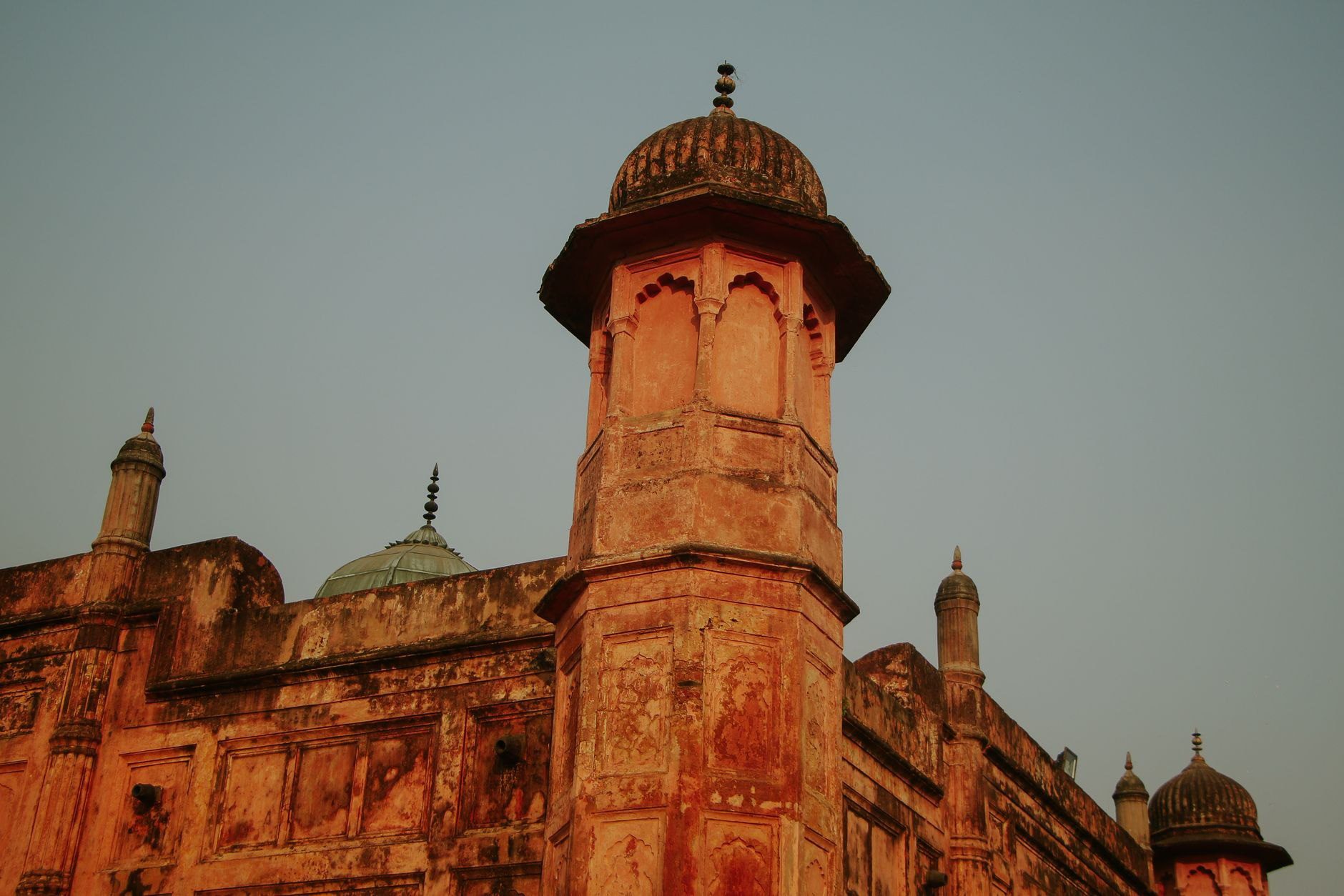
Dhaka is a megacity of over twenty million people where past and present collide with astounding energy. Begin your exploration in Old Dhaka (Puran Dhaka) at Lalbagh Fort, an incomplete seventeenth-century Mughal palace fortress begun in 1678 by Prince Muhammad Azam, son of Emperor Aurangzeb. Set among landscaped formal lawns, the complex features three primary structures: the Diwan-i-Aam (Hall of Public Audience), the three-domed Lalbagh Fort Mosque, and the exquisite marble Tomb of Pari Bibi (Lady Pari), the prince’s beloved betrothed who died prematurely, constructed from imported white marble and grey sandstone.
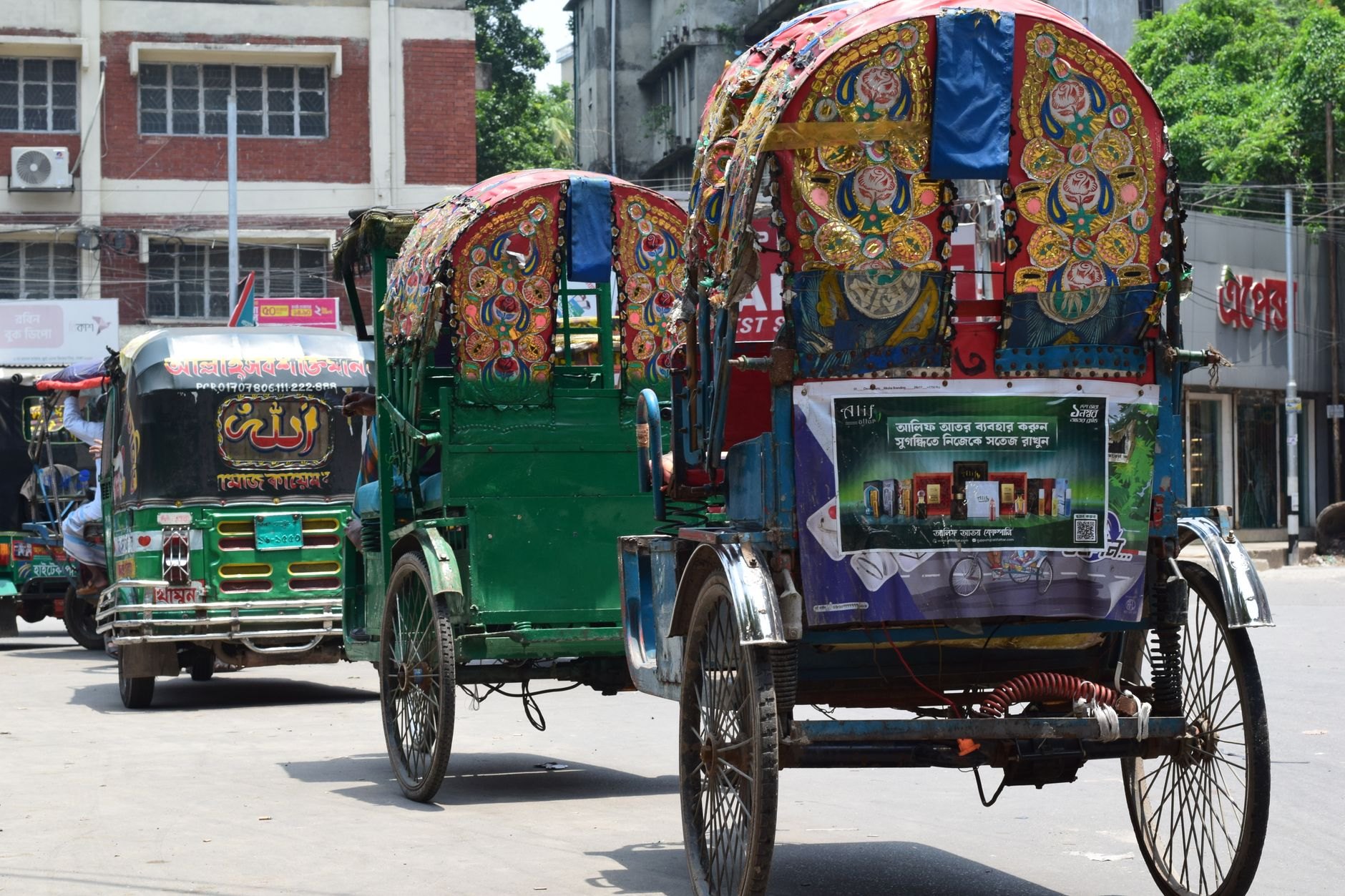
Step outside the fortress gates and flag down a cycle rickshaw to navigate the narrow alleys of Shankharia Bazar (Hindu Street), where master shell artisans have carved conch shells into ceremonial bridal bangles (shakha) for three centuries. Old Dhaka is the world capital of cycle rickshaws, with hundreds of thousands of hand-painted three-wheelers flowing through the streets like a rolling art exhibition. Each rickshaw is decorated with colorful tin panels depicting movie stars, rural landscapes, floral motifs, and Mughal monuments.
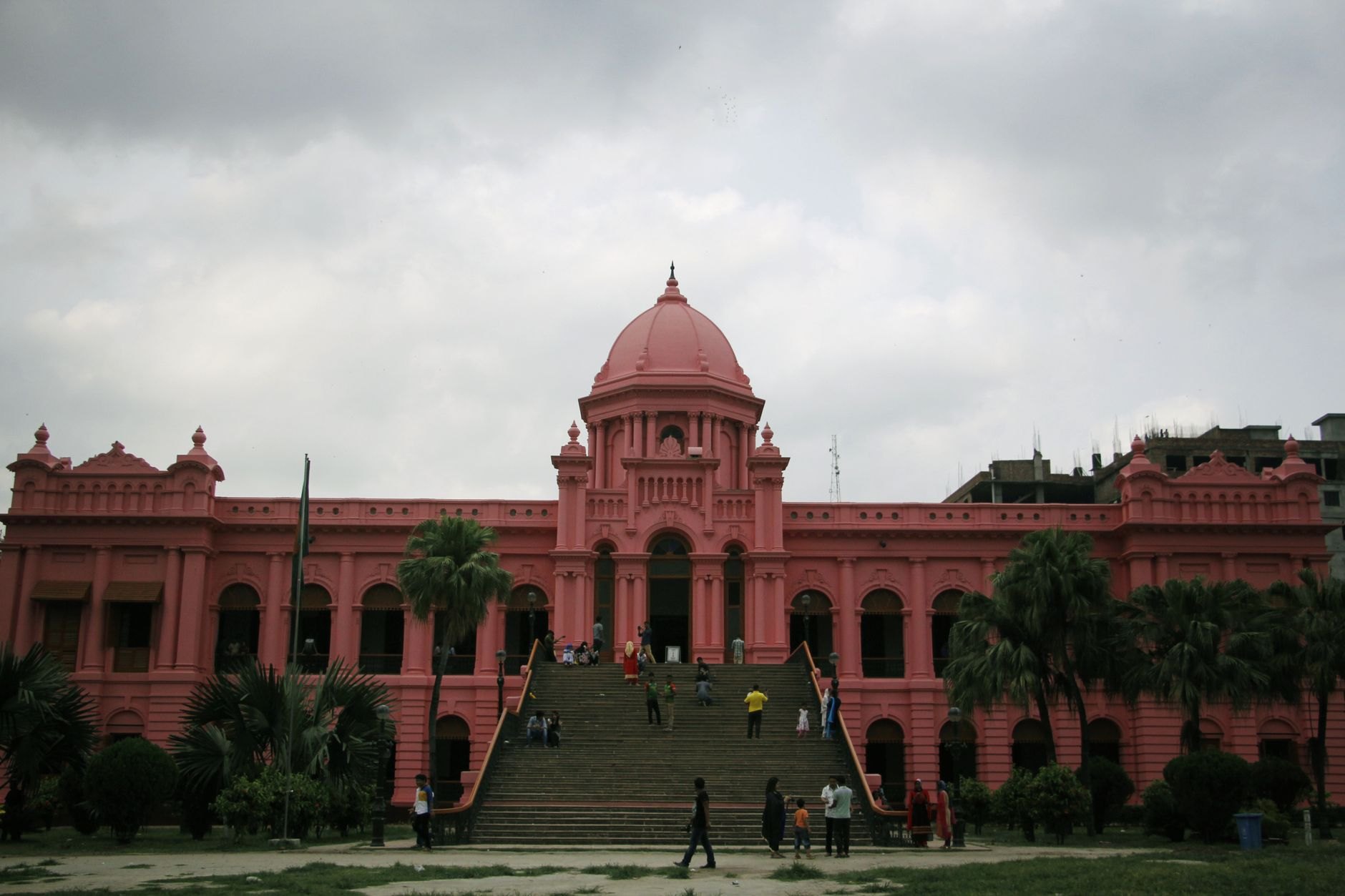
Follow the river breezes south to the banks of the Buriganga River to visit Ahsan Manzil, universally celebrated as the Pink Palace. Built in 1872 on the site of an earlier French trading factory, this majestic neoclassical riverfront palace served as the seat and residence of the Nawabs of Dhaka, who played a central role in the political life of British India. Today, its twenty-three restored galleries showcase gilded family portraits, antique weaponry, and authentic nineteenth-century furnishings.
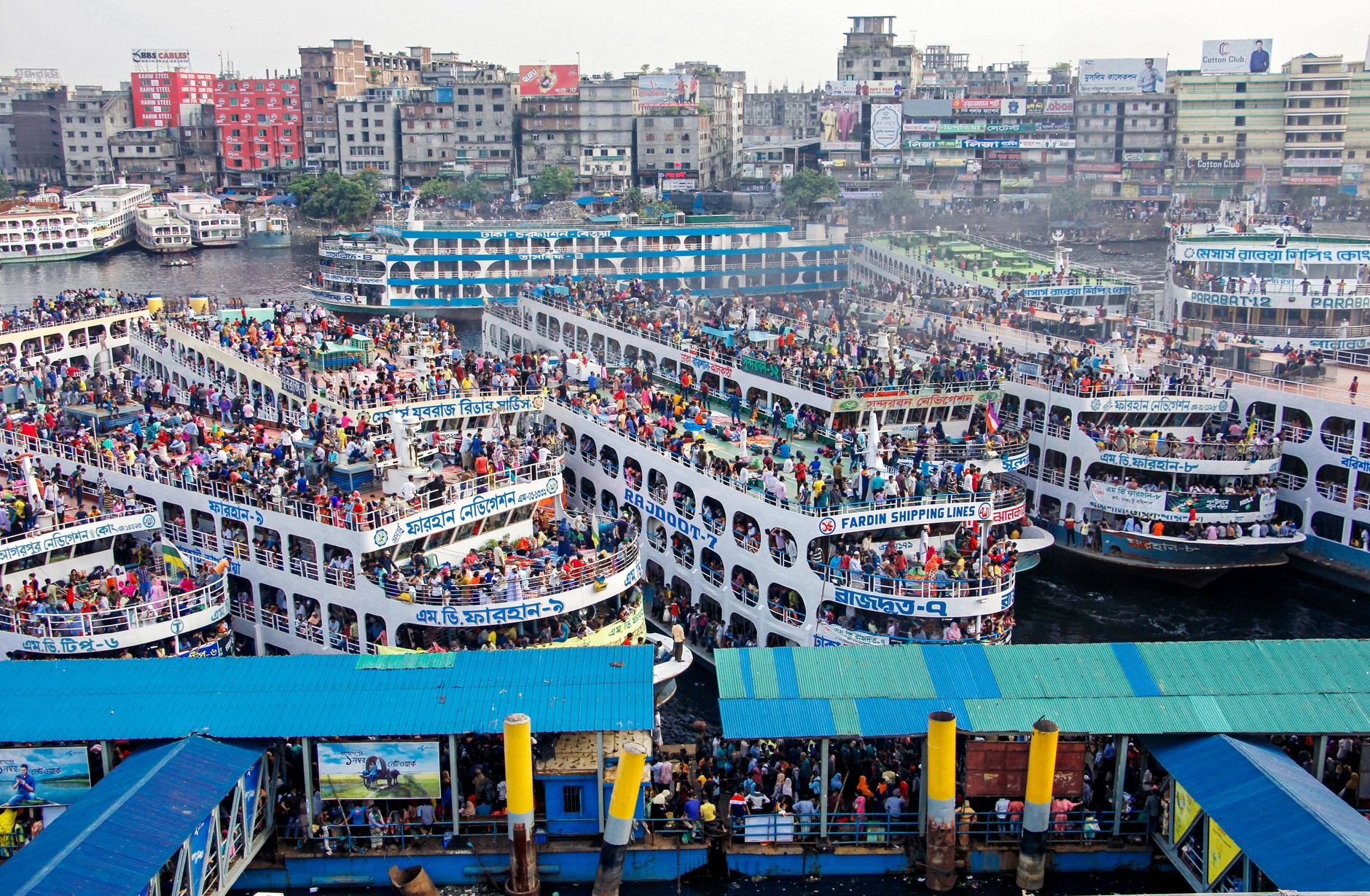
A few hundred meters east lies Sadarghat, one of the largest and most chaotic river passenger terminals on earth. From morning until midnight, hundreds of triple-deck passenger paddle steamers and modern launches (launch) load thousands of passengers bound for the southern delta. Hire a small wooden dinghy (nauka) with an experienced oarsman to row you across the swollen brown currents of the Buriganga. Watching colossal passenger ships maneuver inches past tiny wooden skiffs while dockworkers carry baskets of fruit along the mud banks is an unforgettable spectacle of raw human industriousness.
Days 3–4: Srimangal’s Tea Estates and Lawachara Rainforest
On Day 3, arrive early at Dhaka’s Kamalapur Railway Station to board the morning Parabat Express bound for Srimangal. As the train clears the industrial periphery of Dhaka, the landscape transforms into emerald green rice paddies, winding silt rivers, and coconut groves. Arriving in Srimangal four hours later, the air turns cool and fragrant. Srimangal is the tea capital of Bangladesh, containing over forty sprawling tea plantations established during the British Raj in the nineteenth century.

Hire a green compressed natural gas (CNG) auto-rickshaw to explore the undulating dirt lanes winding through the Finlay and Zareen tea estates. Manicured waist-high tea bushes blanket the low hills (tillas), shaded by tall albizia trees. Stop at the famous Nilkantha Tea Cabin to experience a unique culinary curiosity: the legendary seven-layer tea (saat ronger cha). Invented by local tea maker Ramesh Ram Gour, this glass of tea features distinct, unmixed horizontal layers of black tea, green tea, spiced lemon tea, condensed milk, and cloves, layered purely through differing liquid densities and sugar levels.
Dedicate Day 4 to Lawachara National Park, a protected 1,250-hectare semi-evergreen rainforest reserve situated ten kilometers east of town. Enter early in the morning when mist hangs in the canopy and animal activity peaks. Accompanied by a local Forest Department eco-guide, follow the three-hour trekking circuit under towering chapalish and fig trees draped in thick woody vines.
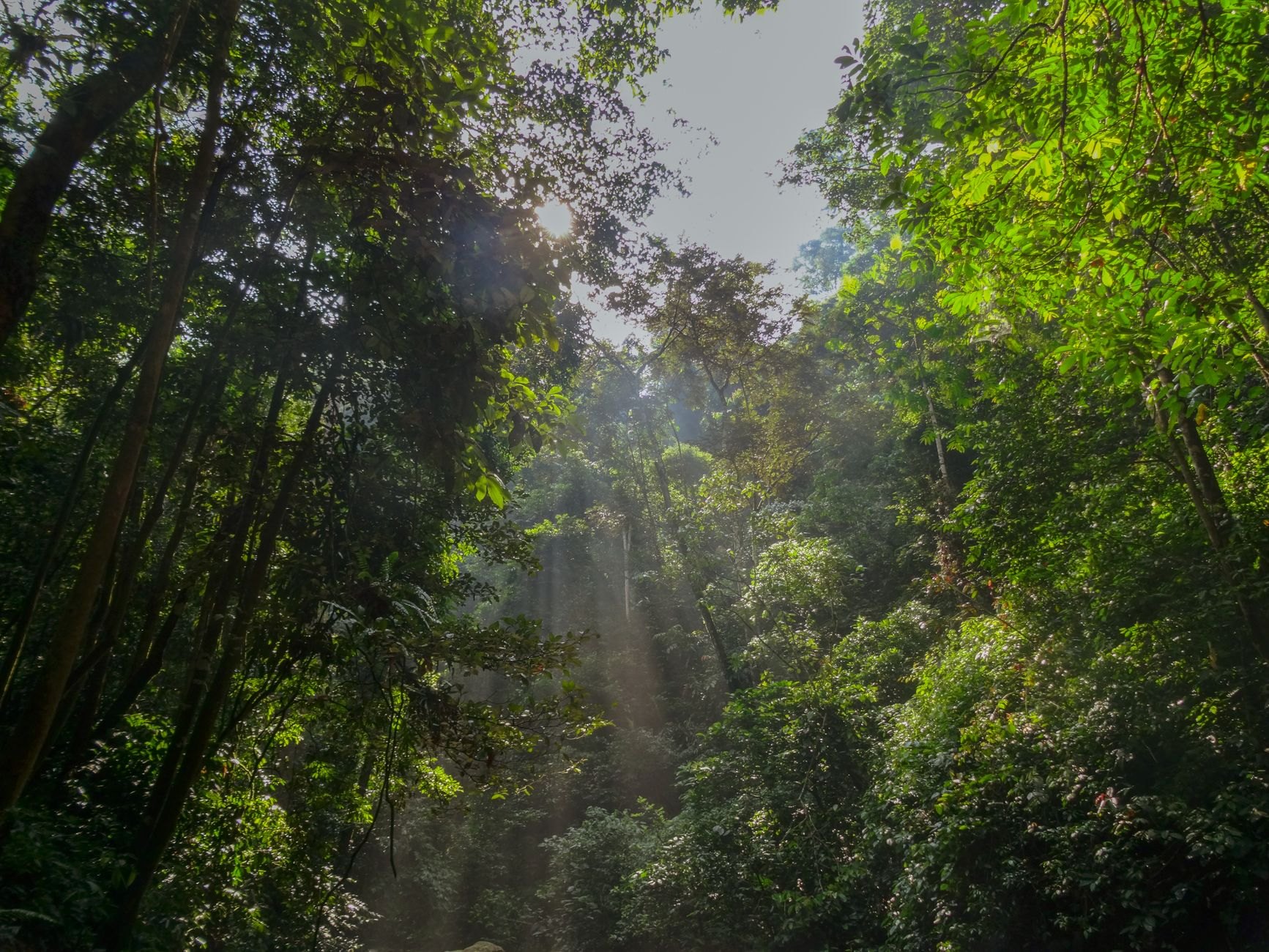
Lawachara is one of the last remaining refuges for the critically endangered Western hoolock gibbon, India and Bangladesh’s only ape species. Listen carefully for their haunting, melodic territorial calls echoing through the high branches, and watch for family troops swinging effortlessly across the upper canopy. You may also encounter capped langurs, barking deer, slow lorises, and over two hundred species of exotic birds, including the great hornbill and red junglefowl. Conclude your day by visiting a nearby Manipuri tribal village to observe heritage handloom textile weaving.
Days 5–8: The Sundarbans Mangrove Wilderness by Liveaboard Vessel
On Day 5, travel overland or via domestic flight from Sylhet/Dhaka to Jessore, connecting by private road transfer to the maritime port of Mongla. Here, you step aboard your pre-booked expedition vessel, your floating home for the next three days. As the vessel casts off and navigates down the Passur River, the industrial port gives way to the silent, untamed wilderness of the Sundarbans.

Covering ten thousand square kilometers across Bangladesh and India, the Sundarbans forms the deltaic meeting point of the Ganges, Brahmaputra, and Meghna rivers. It is the largest contiguous mangrove forest on earth, named after the dominant sundari mangrove tree (Heritiera fomes). Cruising deep into the Kotka and Kochikhali wildlife sanctuaries, you enter an ecosystem governed entirely by daily tidal rhythms, where pneumatic breathing roots (pneumatophores) rise like wooden spikes from muddy banks at low tide.
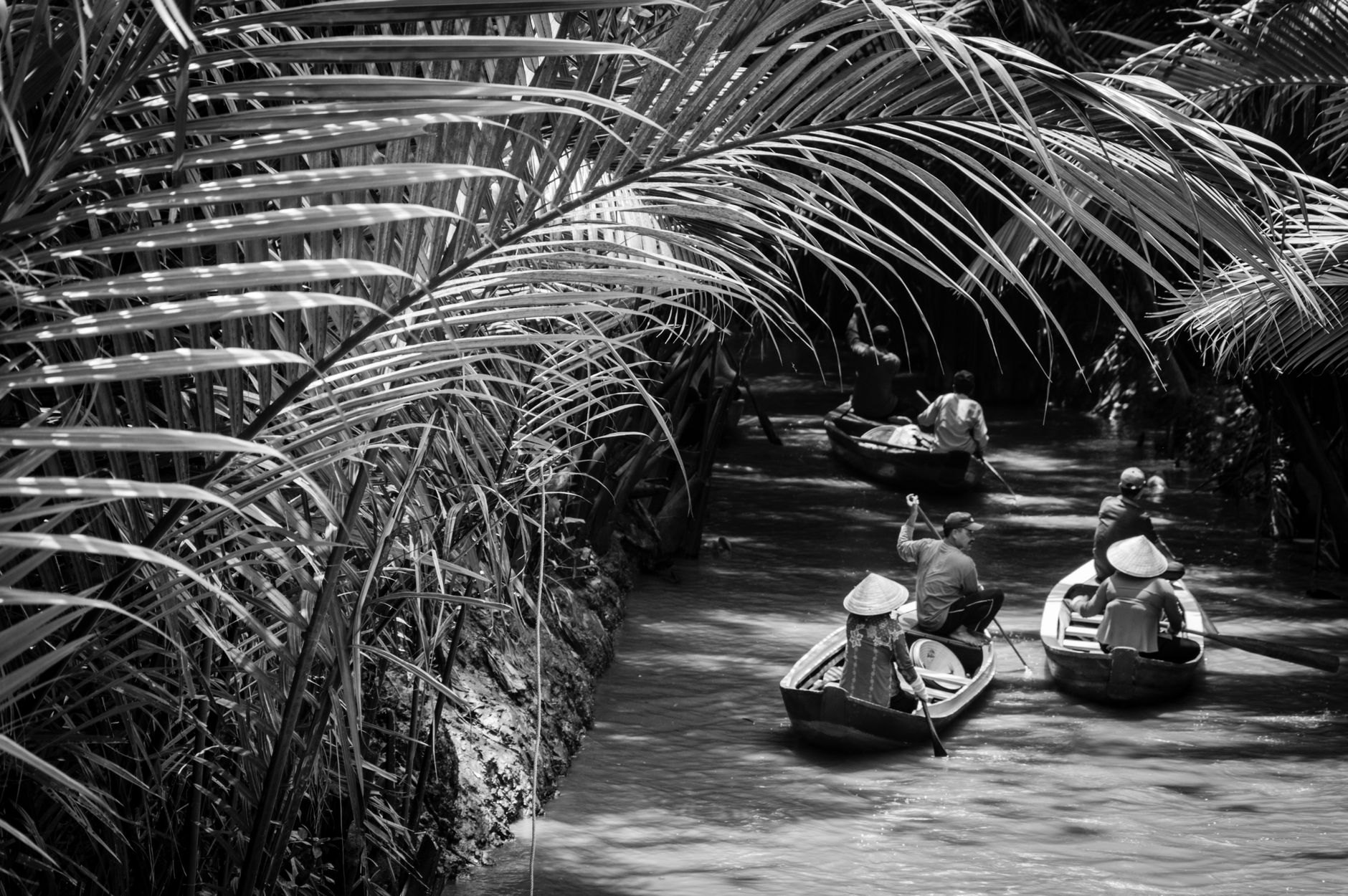
Each morning at dawn, step into a small, non-motorized wooden rowboat. Your guide and boatman row silently into narrow, winding tidal creeks where larger vessels cannot enter. Drifting along muddy banks, you can observe saltwater crocodiles basking in the morning sun, monitor lizards flicking their tongues, and spotted chital deer browsing on tender mangrove shoots alongside playful wild boars.
The Sundarbans harbors the world’s largest wild population of Royal Bengal tigers (Panthera tigris tigris), renowned for their unique ability to swim across wide saltwater channels and drink brackish water. While actual tiger sightings require extraordinary luck, you will almost certainly spot fresh paw prints (pugmarks) pressed deeply into the wet river mud. Accompanied by two armed forest guards, disembark at Kotka to climb the observation watchtower overlooking dense grasslands, and walk the jungle trail to Jamtola Beach on the wild Bay of Bengal coast. On Day 8, return to Mongla port, transfer to Jessore, and fly back to Dhaka for your departure.
Bangladeshi Culinary Traditions: Biryani, River Fish, and Bhortas
Bangladeshi cuisine is a rich, fragrant culinary universe centered around rice (bhat) and freshwater fish (machh), captured in the enduring proverb “Machhe bhate Bangali” (Fish and rice make a Bengali). The national fish is ilish (hilsa), a prized anadromous shad harvested from the Padma and Meghna rivers. The ultimate preparation is shorshe ilish, where rich, oily hilsa steaks are gently braised in a pungent, sharp paste of ground yellow and black mustard seeds, green chilies, and cold-pressed mustard oil.

In Old Dhaka, food culture revolves around kacchi biryani. Unlike layered curried rice dishes, authentic kacchi biryani is prepared by marinating raw tender chunks of mutton in yogurt, ghee, and warming spices (nutmeg, mace, cardamom), layering them beneath partially cooked kalijira rice and large spiced potatoes, and sealing the giant copper cooking cauldron (degchi) with flour dough to slow-cook over glowing coals. The result is fall-apart tender meat and aromatic grains infused with savory marrow juices.
Every daily meal features an array of bhortas—rustic, comforting mash dishes prepared by pounding roasted or boiled vegetables, dried fish (shutki), or lentils with mustard oil, raw onions, and toasted red chilies. Sample alu bhorta (spiced mashed potato) and begun bhorta (charred mashed eggplant). For dessert, indulge in Bengal’s world-famous milk sweets: spongy roshogolla soaked in cardamom sugar syrup, and creamy mishti doi, caramelized sweetened yogurt fermented in porous clay pots.
Tourist Scams and Travel Traps in Bangladesh
Bangladeshis are among the most genuinely hospitable people in the world, frequently offering directions, tea, and warm greetings without expecting compensation. Nonetheless, international travellers can encounter logistical traps and aggressive financial brokers. Keep these five practical precautions in mind:
- Unlicensed Airport Currency Touts and SIM Brokers: Exiting customs at Dhaka Airport, travellers are often surrounded by aggressive touts claiming foreign bank cards will not work or that official exchange counters are closed. Always ignore these touts, withdraw local Bangladeshi Taka directly from bank ATMs inside the terminal, and decline inflated physical SIM card offers.
- Rickshaw and CNG Fare Inflation: Auto-rickshaw (CNG) drivers in Dhaka rarely agree to use their meters despite legal mandates. Unsuspecting foreigners are routinely quoted three to four times the standard fare. Always agree on a firm price before stepping inside, or better yet, use the Uber smartphone app for cars or CNGs, which guarantees fixed electronic pricing.
- Unregistered Sundarbans Boat Brokers in Khulna: Booking a budget Sundarbans tour through informal street brokers in Khulna can land you on an unsafe, unpermitted fishing trawler without life jackets, basic sanitation, or authorized armed guards, which risks interception and heavy fines by the Forest Department. Only book through licensed, reputable tour operators.
- Bogus Station Porters at Kamalapur: Station porters (coolies) wearing red shirts at Dhaka’s railway stations sometimes snatch luggage from your hands without permission, carry it twenty meters to your platform, and aggressively demand 500 to 1,000 BDT. Carry your own luggage, or negotiate a clear fee (50 to 100 BDT per bag) before allowing anyone to touch your bags.
- Street Food and Unfiltered Water Hazards: While Old Dhaka’s street foods like puchka and jhalmuri look enticing, waterborne bacteria pose serious health risks for foreign visitors. Never drink tap water or beverages containing crushed ice, avoid pre-cut fruit sold from open carts, and dine only at high-turnover restaurants where food is cooked to order at high heat.
Staying Connected Across Bangladesh with NXTL Mobile Data
From navigating the labyrinthine alleys of Old Dhaka on the Uber app and checking real-time Bangladesh Railway train running status on Shohoz to verifying weather updates before boarding your Sundarbans expedition boat, constant mobile data connectivity is essential throughout your travels in Bangladesh. Searching for local physical SIM cards at city markets requires submitting paper passport copies, passport-sized photographs, and local sponsor contact information under strict regulatory laws.
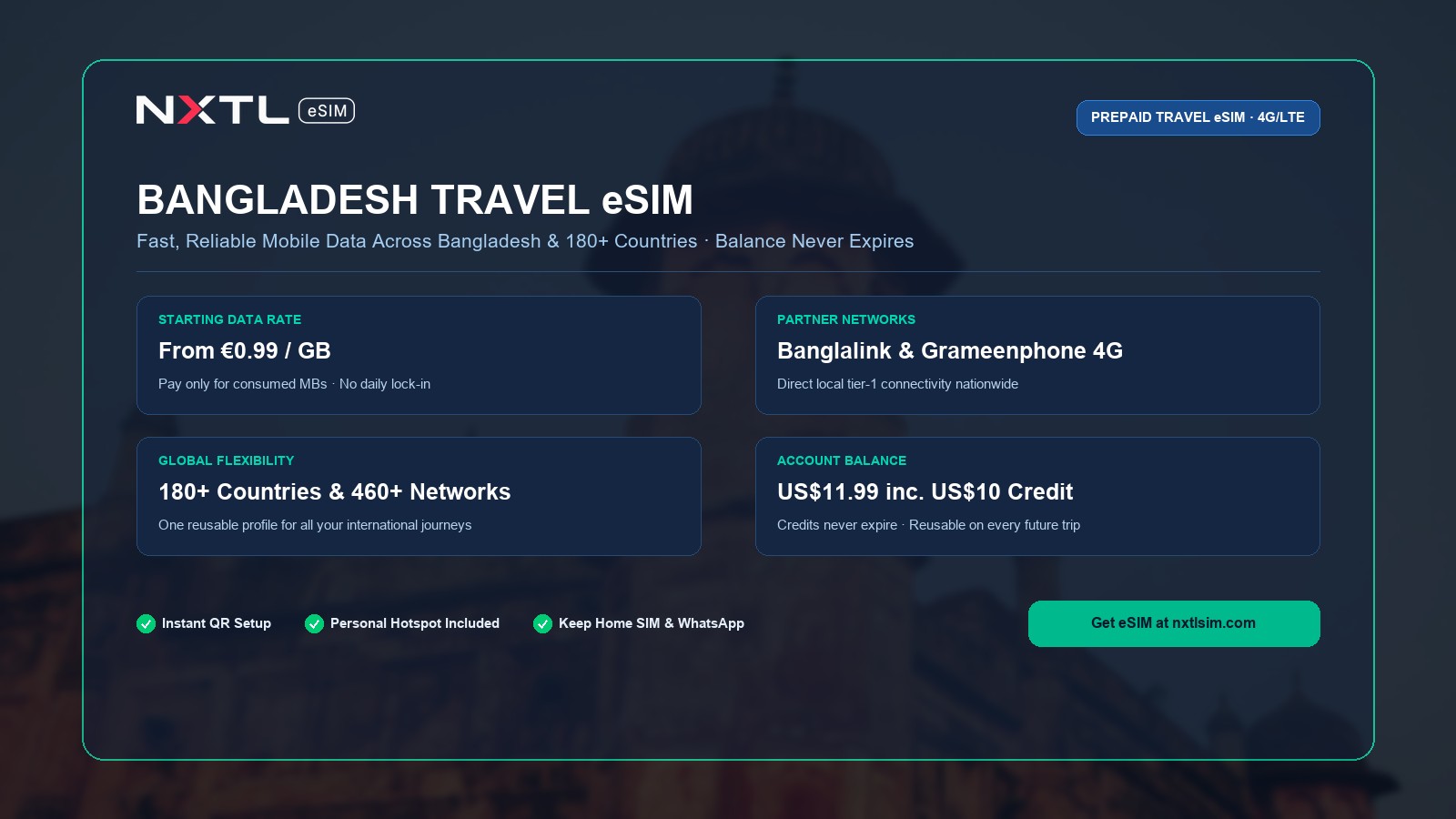
A far simpler, highly reliable alternative is installing the NXTL Bangladesh eSIM before you depart. Connecting across Bangladesh’s premier tier-1 cellular infrastructures—including Banglalink and Grameenphone 4G—NXTL delivers robust, dependable mobile data rates starting from just $1.12 per gigabyte. Because NXTL operates on an intuitive prepaid consumption model, you pay strictly for the data megabytes you consume, eliminating wasteful expiration periods typical of tourist SIMs.
Furthermore, your initial account balance never expires. Any remaining credit from your week exploring Dhaka, Srimangal, and the Sundarbans remains securely in your account, ready for effortless reuse across 180+ supported countries and 460+ carrier networks worldwide on your subsequent journeys. Activation takes less than two minutes via a quick QR code scan, allowing you to maintain your home physical SIM card active for two-factor verification codes while enjoying dependable 4G connectivity across Bangladesh.