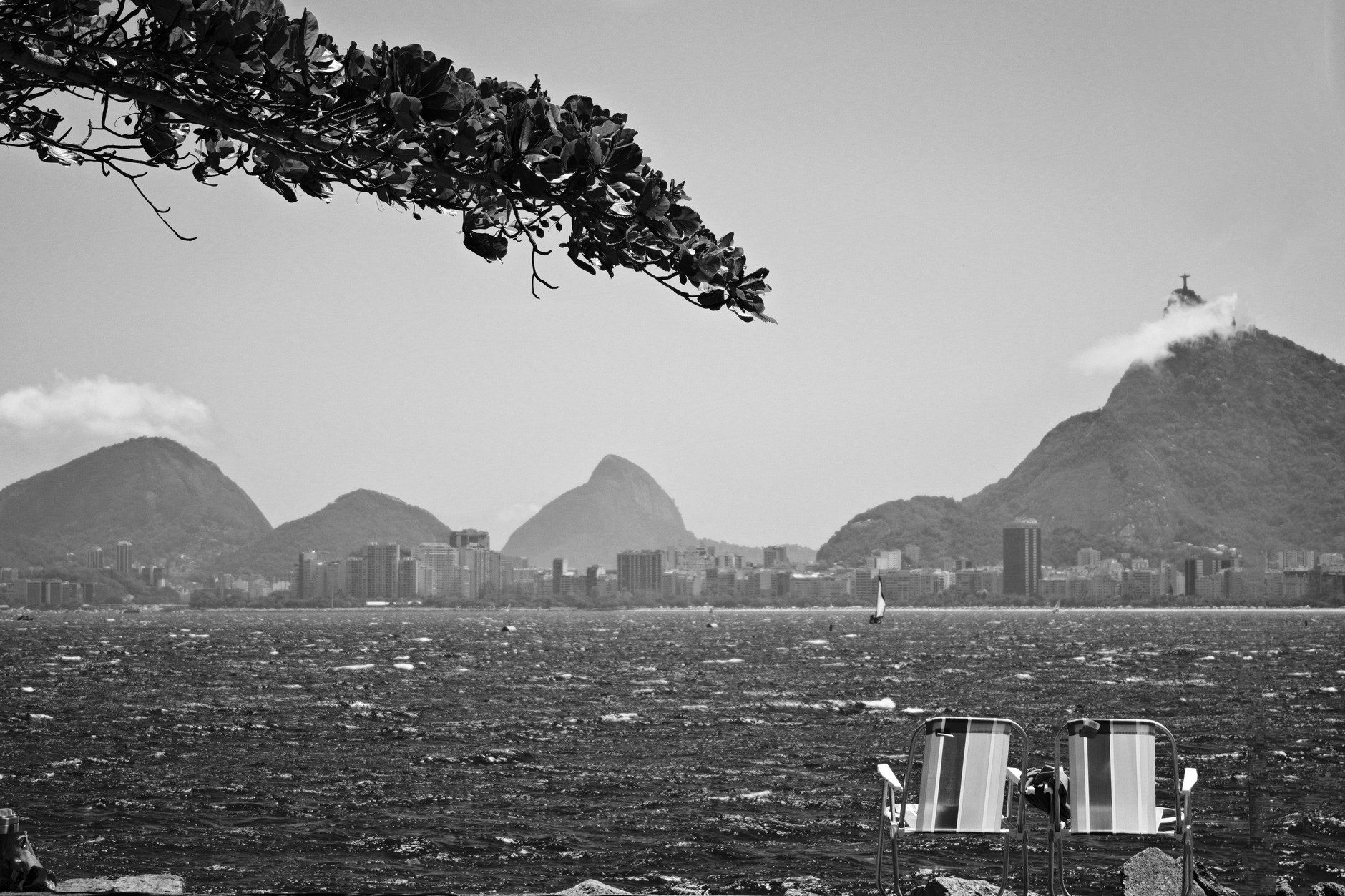
Brazil is a continent-sized nation spanning four time zones, yet first-time travelers frequently fall into the trap of treating it like a compact European country. They build impossible itineraries that attempt to connect Rio de Janeiro, Iguazu Falls, Salvador da Bahia, the Amazon rainforest, and the Pantanal wetlands into a single ten-day sprint. That approach guarantees three full days lost inside airports, thousands of dollars in domestic airfares, and chronic physical exhaustion.
The vastly smarter, deeply rewarding alternative is to embrace a focused regional journey along southeastern Brazil’s famed Costa Verde (Green Coast). This realistic 9-day itinerary pairs the electrifying urban landscapes, world-famous beaches, and Atlantic rainforest peaks of Rio de Janeiro with the car-free island sanctuary of Ilha Grande and the preserved 17th-century Portuguese colonial port of Paraty. Connected by reliable private tourist transfers and scenic passenger boat crossings, this route keeps travel times under three to four hours, immerses you in authentic Brazilian coastal culture, and eliminates domestic flight stress entirely.
| Day / Stage | Overnight Base | Key Highlights | Transit & Travel Time | Essential Advance Bookings | What to Skip / Save |
|---|---|---|---|---|---|
| Days 1–3: Stage 1 | Rio de Janeiro (Ipanema or Leblon) | Christ the Redeemer atop Corcovado, Sugarloaf Mountain cable car sunset, Escadaria Selarón, Jardim Botânico, Ipanema beach life | Galeão Airport to Ipanema: 45 min via official taxi/Uber; city transit via Metro Rio and Uber | Trem do Corcovado timed train ticket (3–4 weeks ahead); Bondinho Sugarloaf sunset fast-pass | Skip street money changers and carrying wallets on the beach; pay via contactless cards and keep phones tucked away |
| Days 4–5: Stage 2 | Ilha Grande (Vila do Abraão) | Car-free dirt lanes, Lopes Mendes surf beach, tropical rainforest hiking trails, Lagoa Azul snorkeling boat tour | Rio to Conceição de Jacareí: 2 hr 30 min shared minivan; Fast-boat crossing to Abraão: 20 min | Door-to-door minivan and flex-boat transfer ticket (Easy Transfer / Top Transfer); island pousada | Skip rolling heavy hard-shell suitcases along dirt trails; hire local licensed wooden cart porters (carreteiros) |
| Days 6–8: Stage 3 | Paraty (Centro Histórico) | Pedestrian-only cobblestone alleys, 17th-century whitewashed churches, wooden schooner cruise, cachaça distillery tours | Abraão to Conceição de Jacareí: 20 min boat; Shared transfer van to Paraty: 1 hr 45 min | Traditional wooden schooner day cruise time slot; colonial heritage walking tour | Skip taking wheeled cabs into Centro Histórico; motorized vehicles are legally banned inside the stone gates |
| Day 9: Departure | Rio de Janeiro (GIG Airport) | Morning espresso in Paraty, direct highway transfer back to Rio de Janeiro Galeão International Airport | Paraty to Rio Galeão Airport (GIG): 4 hr 15 min via private or shared highway van transfer | Galeão departure flight timed after 18:00 to accommodate coastal highway traffic buffers | Skip morning flights out of Rio on departure day; coastal highway BR-101 requires adequate travel buffers |
Why the Costa Verde Route Works for First-Time Visitors
This 9-day journey is tailored for independent travelers, active couples, and cultural explorers who want to experience the breathtaking beauty of Brazil without constant domestic flights. The Costa Verde represents one of the world’s most dramatic ecological intersections, where the steep, jungle-covered granite mountains of the Serra do Mar plunge directly into an emerald-green Atlantic bay dotted with hundreds of tropical islands.
Visiting between May and October delivers optimal conditions: crisp blue skies, warm daytime temperatures (24°C to 28°C), lower humidity, and minimal rainfall, making it ideal for coastal hiking, boat excursions, and mountain viewpoints like Corcovado. Summer (December to March) brings energetic beach life and the world-famous spectacle of Carnival, but also brings tropical afternoon downpours and peak holiday lodging prices.
Stage 1: Rio de Janeiro’s Natural and Cultural Heights (Days 1–3)
Arriving at Rio’s Galeão International Airport (GIG), bypass aggressive street touts and walk directly to the official licensed taxi desks (such as Aerotaxi or Transcoopass) or summon an Uber from the designated app pickup zone on the departures level. Base yourself in the safe, upscale beachfront neighborhoods of Ipanema or Leblon (between Postos 9 and 12), where tree-lined streets are filled with juice bars (sucos), artisan bakeries, and high-end security patrols.
Begin Day 2 early at the base of Corcovado Mountain to board the historic cogwheel train (Trem do Corcovado) as it winds through the lush Atlantic rainforest canopy of Tijuca National Park. Step out onto the summit terrace beneath the monumental 30-metre Art Deco statue of Christ the Redeemer (Cristo Redentor), gazing out over the panoramic expanse of Guanabara Bay, the lagoon of Rodrigo de Freitas, and the distant blue Atlantic horizon.

In the late afternoon, take a taxi to the district of Urca to board the twin-stage Sugarloaf Mountain (Pão de Açúcar) cable cars. Ascend first to Morro da Urca and then to the 396-metre summit of Sugarloaf just before golden hour. Watch the sunset illuminate the curves of Copacabana beach as dusk settles and the city lights flicker to life across the bay.
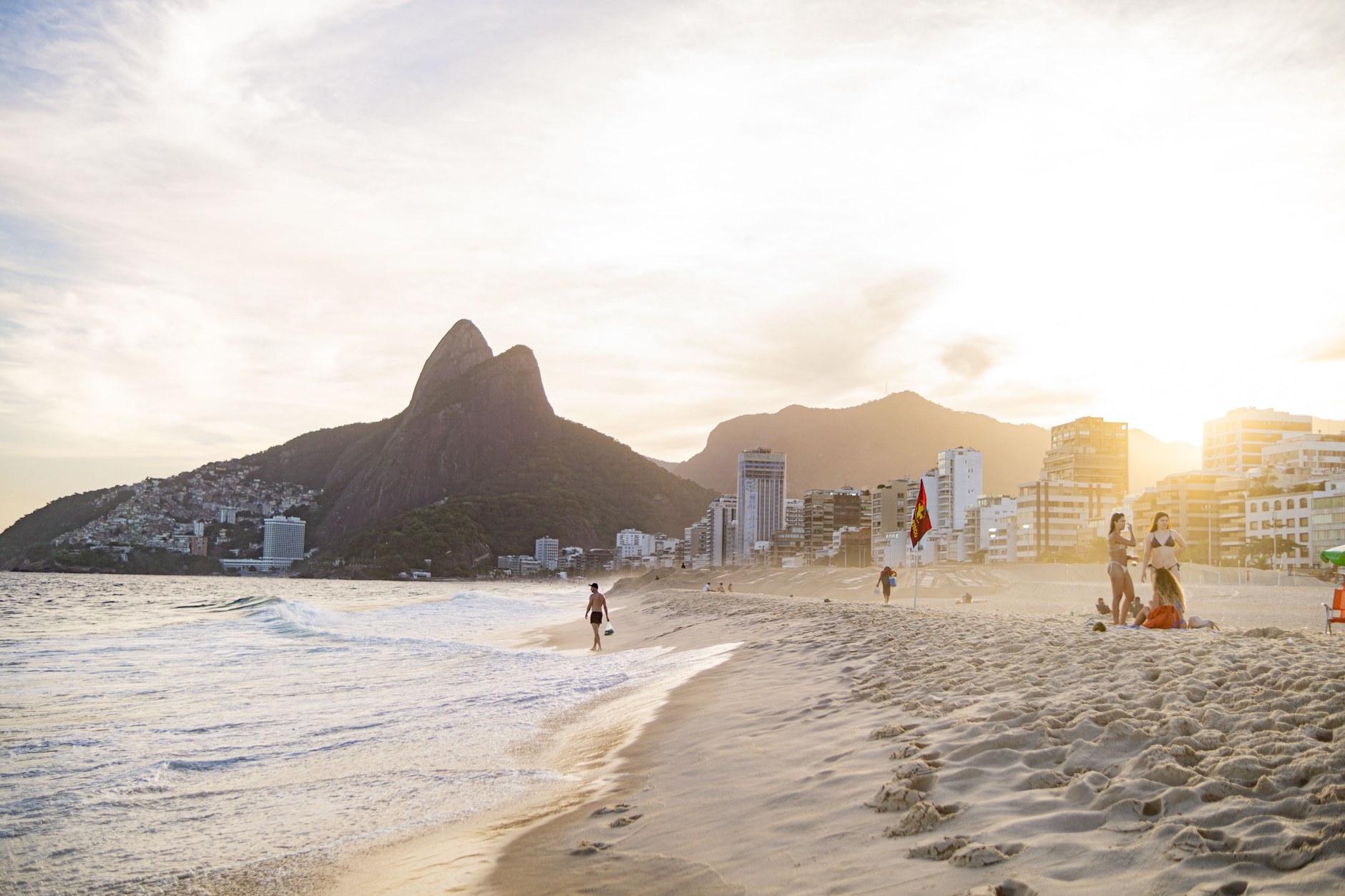
Dedicate Day 3 to the vibrant cultural contrasts of the city. Stroll along the black-and-white wave-patterned mosaic sidewalk of Ipanema Beach, observing the vibrant beach subcultures: footvolley matches in the sand, vendors calling out cold matte tea and crispy biscoito Globo, and sunbathers framed by the jagged twin peaks of Morro Dois Irmãos.

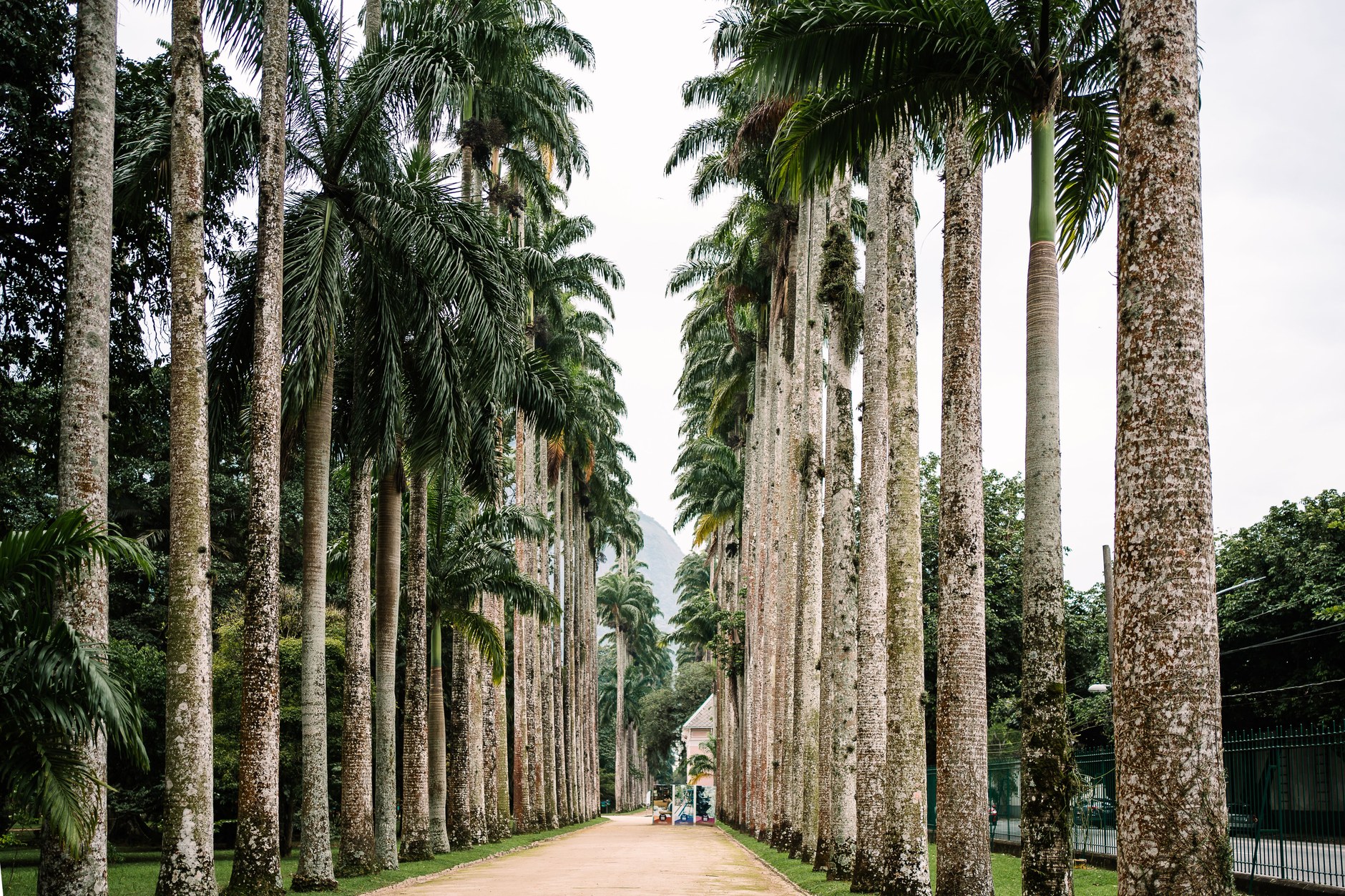
In the afternoon, take Metro Rio downtown to the bohemian enclave of Lapa. Walk up the 215 brightly colored ceramic steps of the Escadaria Selarón, an extraordinary open-air mosaic created by Chilean artist Jorge Selarón using over 2,000 decorative tiles donated by visitors from 60 nations. Next, escape the urban energy by visiting the Jardim Botânico (Botanical Garden), established by Prince Regent Dom João in 1808, strolling down the majestic Avenue of Royal Palms beneath century-old trees echoing with the calls of wild toucans and capuchin monkeys.
In the evening, dine at a traditional churrascaria (such as Churrascaria Palace in Copacabana or Fogo de Chão in Botafogo), experiencing the continuous table service of prime cuts like picanha (top sirloin cap) carved directly onto your plate.
Stage 2: Ilha Grande’s Car-Free Rainforest Sanctuary (Days 4–5)
On Day 4, board a pre-arranged shared tourist transfer van (operators like Easy Transfer or Top Transfer) from your Ipanema hotel heading west along the coastal highway BR-101 to the pier at Conceição de Jacareí (2.5 hours). Here, board a fast flex-boat for a thrilling 20-minute crossing across the turquoise bay to Vila do Abraão, the main settlement of Ilha Grande.
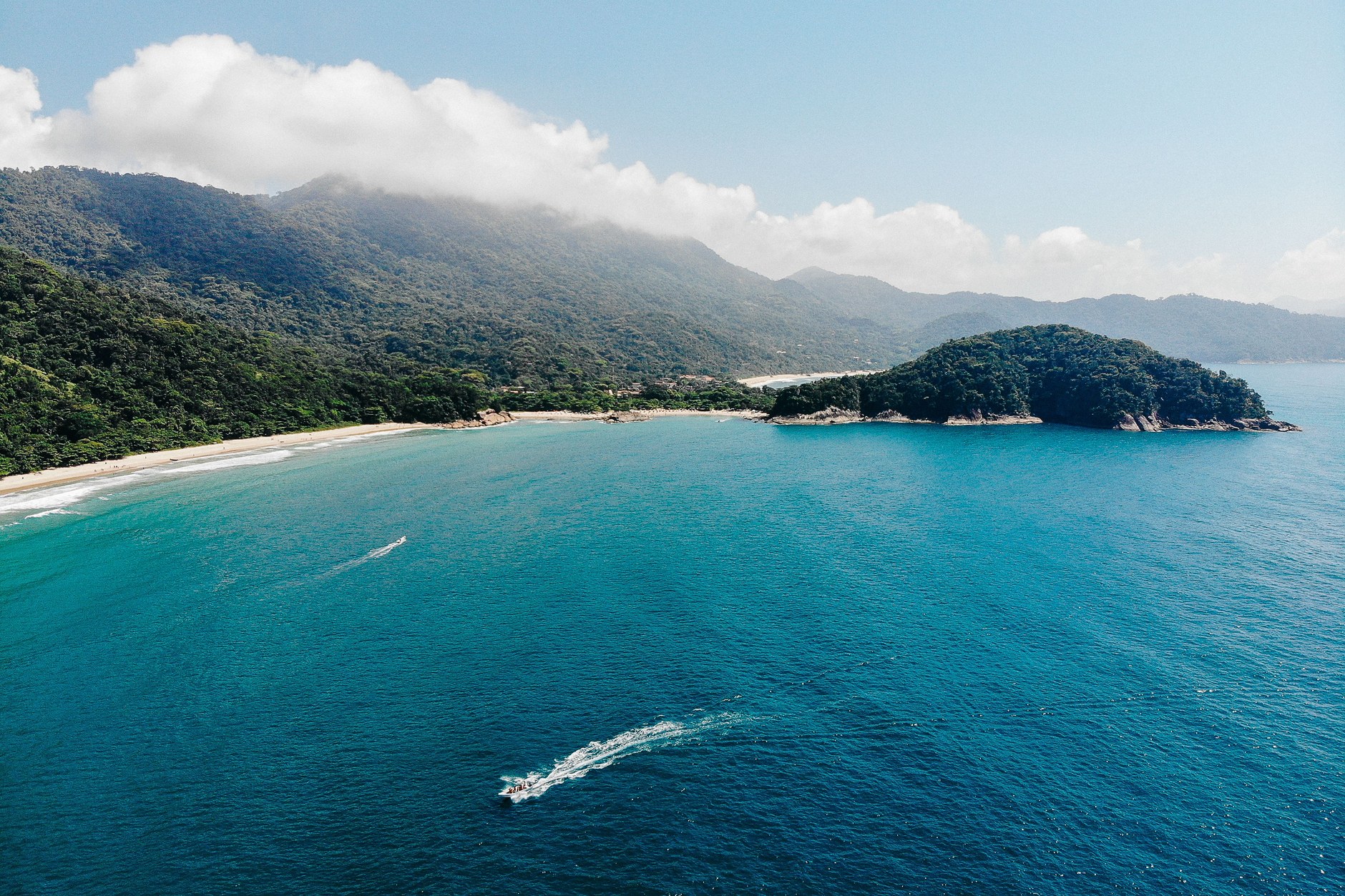
Ilha Grande is an environmental sanctuary where motorized private vehicles are strictly illegal. There are no paved roads, traffic lights, or horns; only dirt footpaths, chirping tree frogs, and crashing ocean waves. When you disembark at the wooden jetty, hire a local licensed porter (carreteiro) pushing a sturdy wooden wheelbarrow to haul your heavy luggage across the sand and gravel alleys to your rustic-chic pousada.
Day 5 delivers an unforgettable island adventure to Lopes Mendes Beach, consistently rated among the world’s most pristine stretches of sand. Take a local taxi boat from Abraão to Pouso beach, then embark on an invigorating 25-minute hike through dense primary Atlantic rainforest, watching for blue morpho butterflies and howler monkeys in the canopy. Emerge onto three kilometres of powdery, blindingly white quartz sand that squeaks beneath your bare feet, framed by wild surf and coastal almond trees.
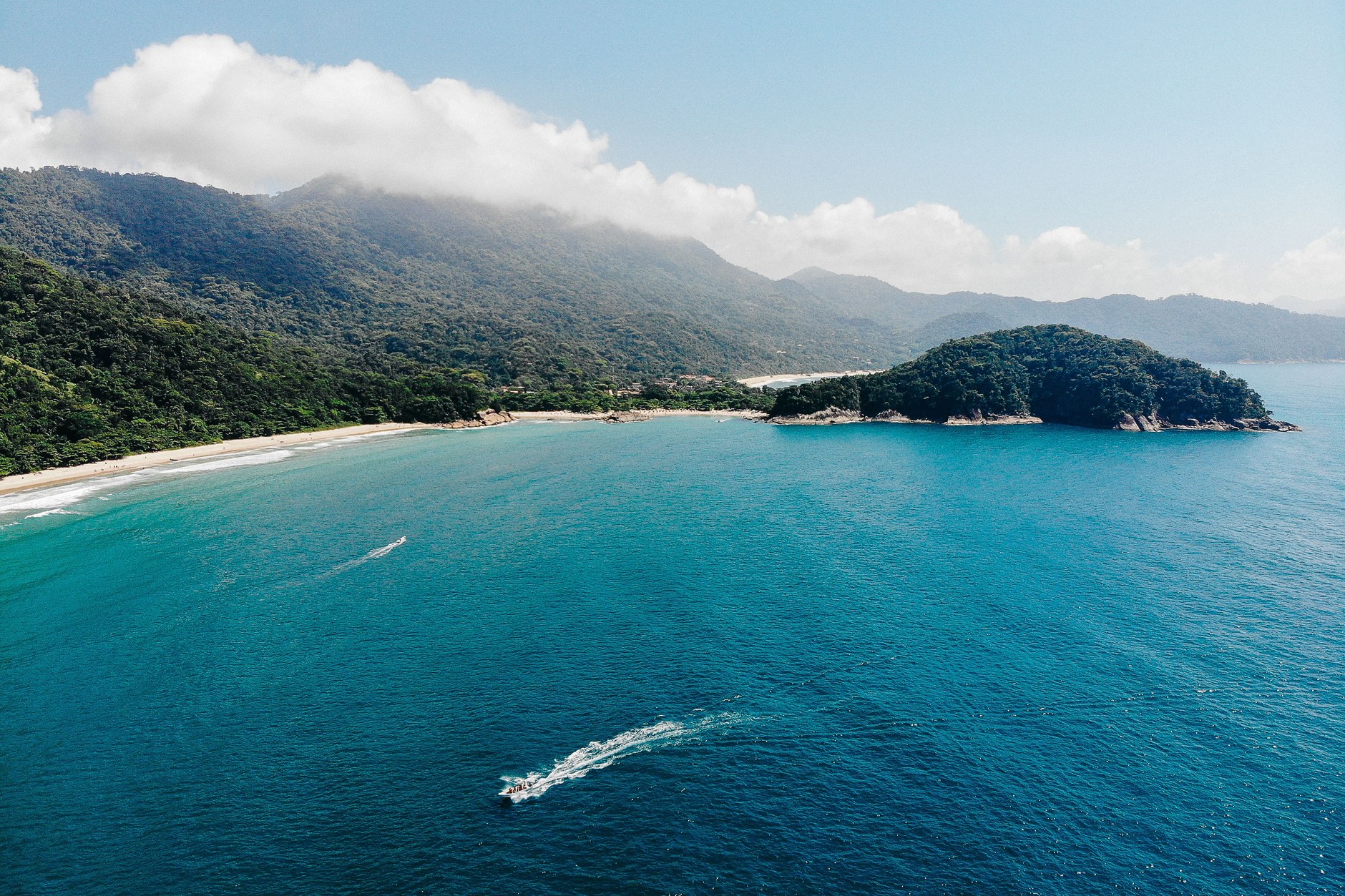
In the evening, return to Vila do Abraão to dine at candlelit wooden tables placed directly on the beach sand. Savor fresh seafood stew (moqueca de peixe) simmered in coconut milk, dende palm oil, and fresh cilantro, paired with cold caipirinhas while listening to live acoustic forró music.
Stage 3: Colonial Paraty and the Coastal Fjords (Days 6–8)
On Day 6, take a morning flex-boat back to the mainland pier and transfer into a private shuttle heading south along the winding coastal cliffs to Paraty (1 hour 45 minutes). Founded in 1667, Paraty served as the vital export terminal for the Caminho do Ouro (Gold Trail), through which tons of inland gold and diamonds mined in Minas Gerais were loaded onto armed Portuguese galleons bound for Lisbon.
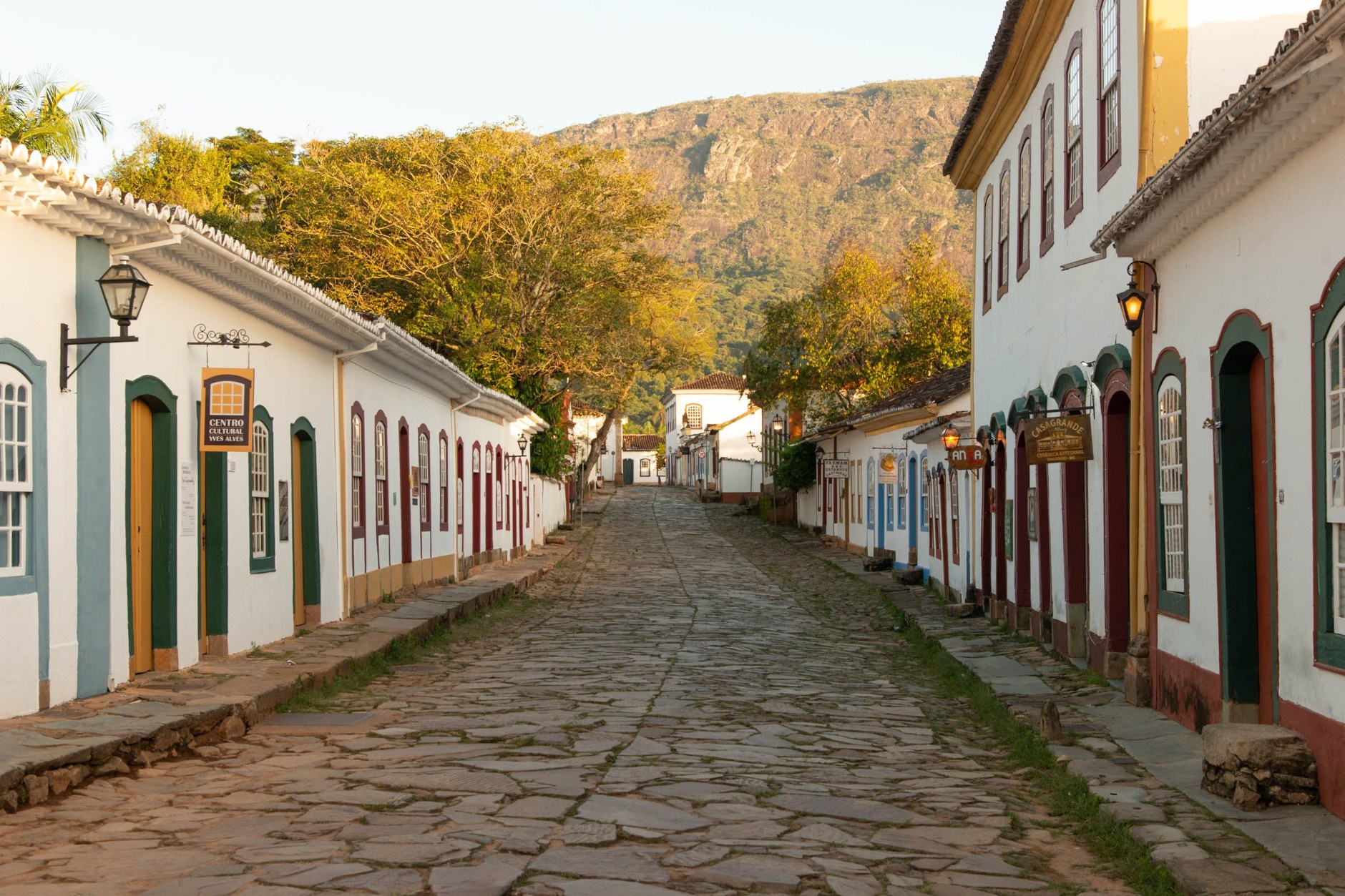
Check into a colonial pousada within Paraty’s UNESCO-listed historic center. The entire historic quarter is paved with irregular, massive river stones (pé-de-moleque) and completely closed to motorized vehicles. Walk past whitewashed stone buildings adorned with decorative geometric moldings and vibrant turquoise and mustard-yellow window shutters. During high tide full moons, seawater gently floods the street gutters by architectural design, washing the stones clean and creating mirror-like reflections of the 18th-century churches.
On Day 7, board a traditional wooden schooner boat at the municipal pier for a six-hour day cruise through the sheltered bay of Paraty. The boat anchors at secluded island coves like Praia Vermelha and Ilha dos Cocos, where you can swim in crystal-clear emerald water surrounded by schools of yellow-tailed fish. In the afternoon, hire a taxi to visit a historic sugarcane distillery in the rainforest foothills (such as Cachaça Coqueiro or Maria Izabel), learning how artisanal cachaça has been pot-distilled in copper stills since the 18th century.

On Day 8, enjoy a leisurely final day browsing artisan ceramic workshops and bookshops in Paraty before packing for your morning departure. On Day 9, board your direct transfer van along highway BR-101 back to Rio de Janeiro Galeão Airport (GIG) for your evening homeward flight.
Street Smarts: Tourist Scams, Beach Safety & Card Skimming in Brazil
Brazil offers extraordinary warmth and generosity, but street crime, distraction theft, and financial card scams in major tourist hubs require sharp awareness. Keep these verified street smarts and safety rules at the front of your itinerary:
- Smartphone Snatching by Passing Cyclists (Bonde dos Ciclistas): The single most prevalent crime affecting tourists in Rio de Janeiro is drive-by smartphone snatching. Groups of young thieves on bicycles cruise along the sidewalk promenades of Copacabana and Ipanema. When they spot a tourist holding a phone with one hand to take photos or navigate, they snatch the device at high speed and pedal into traffic before you can react. Defense: Never walk along streets or cross intersections looking at your screen. Step inside a shop, cafe, or hotel lobby to check directions, and use two hands with a secure wrist lanyard when taking photos.
- Beach Kiosk Card Machine Tampering & Menu Price Switch: When renting beach chairs (cadeiras) or ordering caipirinhas and grilled cheese (queijo coalho) from beach kiosks (barracas) on Copacabana, unscrupulous vendors may quote a cash sum verbally, but secretly type a cash sum or a cash sum on the handheld card payment terminal. Some use tampered machines with scratched or darkened screens claiming the display is “broken.” Defense: Never insert your physical card or tap without visually verifying the exact transaction amount on the screen. Always ask for the printed paper receipt (comprovante).
- Unofficial Airport Taxi Touts at Galeão (GIG) vs. App Rides: As you exit international customs at Galeão Airport, aggressive touts wearing official-looking suits approach tourists offering “official airport transportation.” They lead travelers to unmarked private sedans and charge extortionate flat fees of a cash sum for rides into the South Zone. Defense: Ignore all touts in the terminal hall. Walk to the licensed, pre-paid taxi counters inside the terminal (such as Aerotaxi or Transcoopass) where fares are fixed and pre-billed, or head upstairs to the departures level to summon an Uber for roughly a cash sum
- The Spilled Mustard / Liquid Distraction Scam in Lapa & Centro: While walking near the Selarón Steps or Praça XV, an accomplice squirts mustard, fake bird droppings, or dirty water onto your shoulder or backpack. An overly friendly stranger immediately approaches with tissues to “help clean you up,” fussing over your clothes while skillfully removing your wallet, watch, or phone from your pockets. Defense: If any liquid hits you on the street, do not stop. Wave the person away with a firm “Não, obrigado” and walk into the nearest business to clean up independently.
- GPS Navigation Traps into Non-Pacified Favelas: If you rent a car or direct a driver, blindly following default GPS apps like Google Maps or Waze can route you onto steep side streets that pass through non-pacified favelas controlled by armed drug factions (such as areas near Complexo da Maré along Linha Amarela). Defense: Stick exclusively to main avenues (Linha Vermelha, Linha Amarela, Aterro do Flamengo) when traveling between the airport and South Zone. Never drive into unknown hillside communities without a verified local guide.
- Ilha Grande Fast-Boat Overcharging & Baggage Extortion: At the pier in Conceição de Jacareí, informal touts claim that official ferry crossings are sold out or that normal boats do not run on that day, directing you to private speedboats for a cash sum+ per person. Furthermore, upon arriving in Abraão, informal luggage handlers may grab your bag from the boat deck without asking and demand a cash payment to return it. Defense: Book your combined minivan and flex-boat transfer in advance through licensed operators (Top Transfer or Easy Transfer), and maintain physical hold of your bags until negotiating a clear fee with a registered carreteiro.
Follow the simple golden rule of Brazilian street safety: dress casually in shorts, t-shirts, and havaianas flip-flops; leave all expensive jewelry, luxury watches, and designer accessories at home; and carry only a small amount of cash alongside a digital smartphone payment method.
Mobile Connectivity Across Rio and the Costa Verde
Continuous mobile internet connectivity is a genuine safety requirement when navigating Rio de Janeiro and the Costa Verde. Summoning verified Uber rides from safe indoor lobbies, checking real-time bus and transfer schedules, monitoring banking app charge alerts instantly after card transactions, and translating Portuguese menus all depend on a stable, high-speed cellular connection.
Brazil’s primary telecommunications networks are operated by tier-one providers: Claro, TIM, and Vivo. Claro and TIM offer comprehensive 5G coverage across Rio de Janeiro’s metropolitan area and reliable 4G/LTE connectivity along the winding coastal highway BR-101, throughout Vila do Abraão on Ilha Grande, and across the colonial town of Paraty. However, purchasing a physical plastic SIM card upon arrival in Brazil requires navigating bureaucratic registration under federal regulations that demand a domestic Brazilian tax identification number (CPF – Cadastro de Pessoas Físicas), a requirement that frequently blocks foreign visitors at retail airport counters.
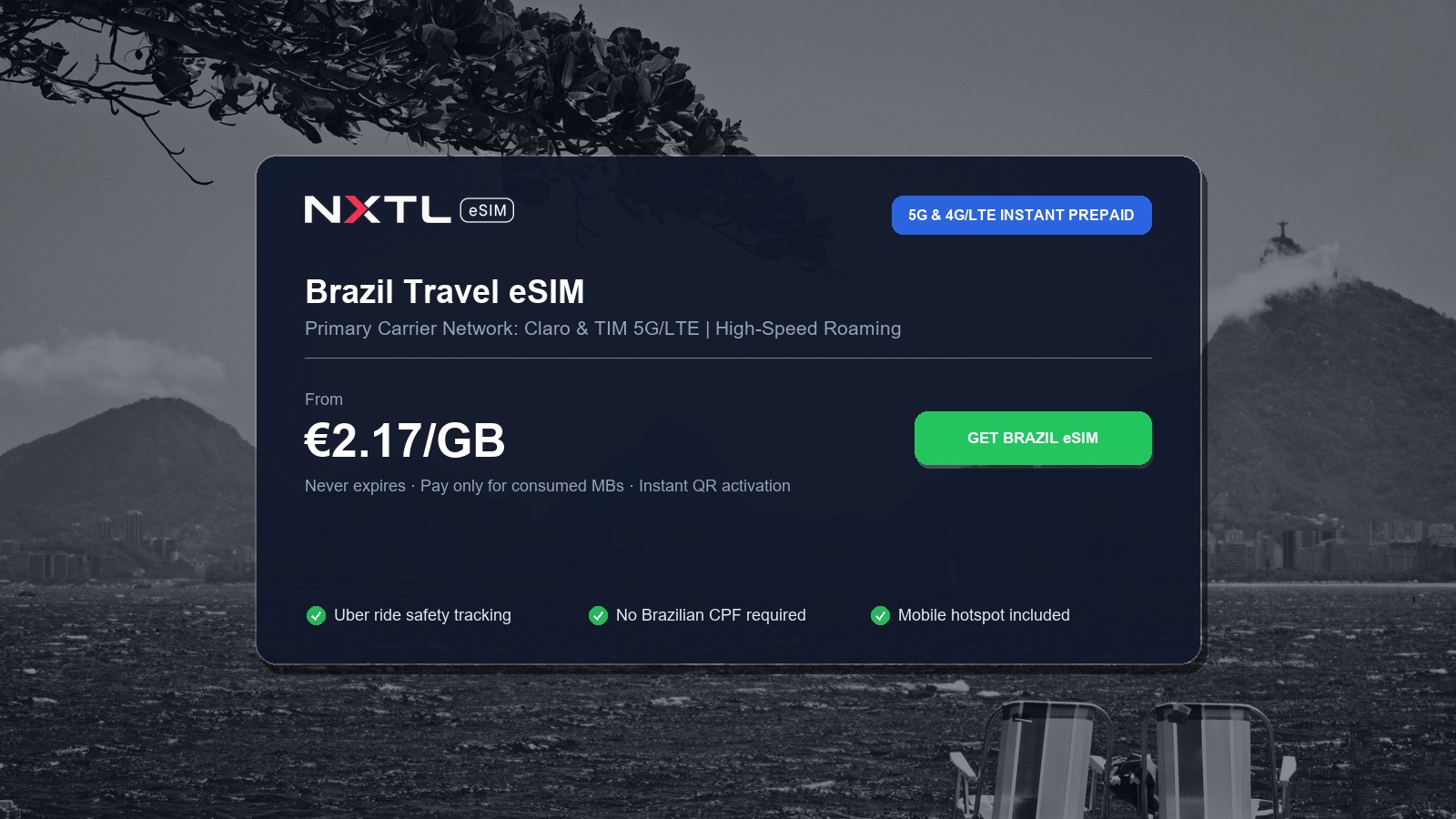
The modern, stress-free alternative is an NXTL Brazil travel eSIM. You connect directly to tier-one Claro and TIM networks at transparent prepaid rates starting from just $2.45 per gigabyte. There is no physical SIM card swap, no bureaucratic CPF tax registration, and your balance never expires: you pay only for the exact bandwidth you consume. Here is an estimated data breakdown for a 9-day Brazil journey:
| Travel Style & Usage Profile | Daily Online Activities | 9-Day Total Bandwidth | Estimated Data Cost (@ $2.45/GB) |
|---|---|---|---|
| Light Navigator (Ride-hailing & safety) |
Uber ride requests, Google Maps walking navigation, WhatsApp messaging, live banking card transaction alerts | 3 GB – 5 GB | $7.36 – $12.26 |
| Balanced Explorer (Social sharing & translation) |
All navigation, Google Translate camera OCR, Instagram story uploads, restaurant reviews, boat tour coordination | 6 GB – 9 GB | $14.71 – $22.07 |
| Heavy Digital Nomad (Remote work & tethering) |
Laptop tethering from pousadas, high-res video calls, cloud photo backups, YouTube/Spotify streaming | 12 GB – 16 GB | $29.42 – $39.23 |
Install your NXTL eSIM profile on your smartphone before boarding your flight to South America. When your aircraft touches down at Rio’s Galeão Airport, enable your data roaming line to request a verified Uber pickup or message your transfer driver before you even leave the baggage reclaim hall.
Trip Variations: Adjusting for Time and Interests
If You Have Only 6 or 7 Days
If you have less than a week, do not attempt to visit all three destinations. Choose between two focused alternatives: spend four nights in Rio de Janeiro combined with two nights on Ilha Grande for an active beach, hiking, and rainforest retreat; or pair four nights in Rio with two nights in Paraty if you prefer colonial history, cachaça distilleries, and schooner excursions. Attempting to fit Rio, Ilha Grande, and Paraty into six days leaves you constantly in transit.
If You Have 12 to 14 Days
With an extra four to five days, you can expand this trip without overloading your travel days. Consider adding a quick two-night side flight from Rio to Foz do Iguaçu to witness the world’s most spectacular waterfalls spanning the Brazilian and Argentine borders. Alternatively, head into the mountainous interior of Rio state to explore Petrópolis, the Imperial City of Emperor Pedro II, featuring royal palaces, crisp mountain air, and historic breweries.
Best Times to Visit
Rio and the Costa Verde can be visited year-round. Summer (December to March) brings hot, humid days (30°C to 38°C), vibrant beach crowds, and afternoon tropical showers, culminating in the spectacle of Carnival (February/March, which requires booking accommodation six months ahead at peak prices). Autumn and winter (May to September) offer delightful conditions: warm, sunny days (24°C to 27°C), lower humidity, crisp blue skies ideal for mountain photography from Corcovado and Sugarloaf, and calm sea waters for boat tours in Paraty.