Travel to Burkina Faso requires a sober, realistic understanding of West Africa’s evolving Sahelian security landscape. Under its transitional military administration—which assumed authority in 2022 and formed the Alliance of Sahel States alongside Mali and Niger—the country navigates profound political and security challenges. Foreign ministries worldwide, including the British Foreign Office and the United States Department of State, maintain strict travel advisories cautioning against all non-essential movement due to armed insurgent activity, kidnapping risks, and volatile regional conditions.
Yet for humanitarian logistics personnel, development specialists, visiting diaspora families, cultural researchers, and seasoned expedition travelers, purposeful travel continues. Success in navigating Burkina Faso depends on distinguishing between secured municipal corridors and high-risk rural frontiers. While vast swaths of the north and east remain dangerous, the primary southwestern axis connecting the administrative capital of Ouagadougou with the cultural heartland of Bobo-Dioulasso remains accessible through disciplined planning and daytime transit.
This operational guide delivers grounded planning intelligence for travelers undertaking authorized or essential journeys. It outlines safe movement between major urban hubs, the cultural heritage of Sahelian adobe architecture, cash and mobile money realities, checkpoint protocols, and digital connectivity options to help you evaluate practical travel realities on the ground.
Travelers must recognize that security in Burkina Faso is distinctly compartmentalized. Major urban centers maintain active municipal policing, functional markets, and regular commercial services, while unpaved rural roads and peripheral border districts present severe security hazards requiring strict avoidance.
Navigating the Security Landscape: Urban Hubs vs. Rural Restrictions
Understanding regional demarcation is the foundation of any Burkinabé travel plan. Security conditions are defined by sharp geographic boundaries. The northern Sahel region (including Djibo, Dori, and Gorom-Gorom) and eastern provinces bordering Niger and Benin are active conflict zones plagued by militant groups, including JNIM and ISGS. Travel into these regions is strictly off-limits to foreign nationals.
In contrast, the urban core of Ouagadougou operates under regular civilian administration backed by visible gendarmerie patrols. Movement within the capital is generally manageable by day, though visitors must observe local curfews, stay alert around military installations, and avoid crowded political gatherings. Similarly, Bobo-Dioulasso, located three hundred and sixty-five kilometers southwest, maintains a peaceful daily rhythm celebrated for artistic and musical life.
The crucial corridor connecting these two major cities is National Route 1 (RN1). While RN1 is fully paved and monitored by military patrols, overland transit must be strictly confined to daylight hours. Straying off the main highway onto unpaved laterite feeder roads introduces risks of banditry and ambushes. If your mission requires visiting provincial towns, travel only with vetted local drivers who understand current security checkpoints and local dialect dynamics.
Registration with your home nation’s embassy (such as the US STEP program or equivalent consular registries) is mandatory before departure. Keep emergency consular phone numbers stored in multiple physical and digital locations, and carry official identification at all times.
Ouagadougou: Cinema Capital, Sankara Legacy & Artisan Craft
Known affectionately as “Ouaga,” Burkina Faso’s capital is a sprawling Sahelian metropolis of over two million residents. Far from a faceless administrative post, the city has long served as the cultural and cinematic capital of the African continent.
Every two years, Ouagadougou hosts FESPACO (Festival Panafricain du Cinéma et de la Télévision de Ouagadougou), the oldest and most prestigious African film festival, founded in 1969. Filmmakers, actors, and critics from across Africa and the diaspora gather to celebrate cinematic storytelling at historic venues such as Ciné Burkina and the Cinémathèque Africaine. During festival seasons, the capital pulses with open-air screenings and intellectual debates.
To understand modern Burkinabé political identity, visit the Memorial to Thomas Sankara at the Conseil de l’Entente compound. Sankara, the charismatic revolutionary president who governed from 1983 until his assassination in 1987, renamed the former French colony Upper Volta to Burkina Faso (“Land of Incorruptible People”). The memorial complex features a towering bronze statue of Sankara alongside museum exhibits detailing his campaigns for food self-sufficiency, women’s rights, mass vaccination, and anti-colonial sovereignty.
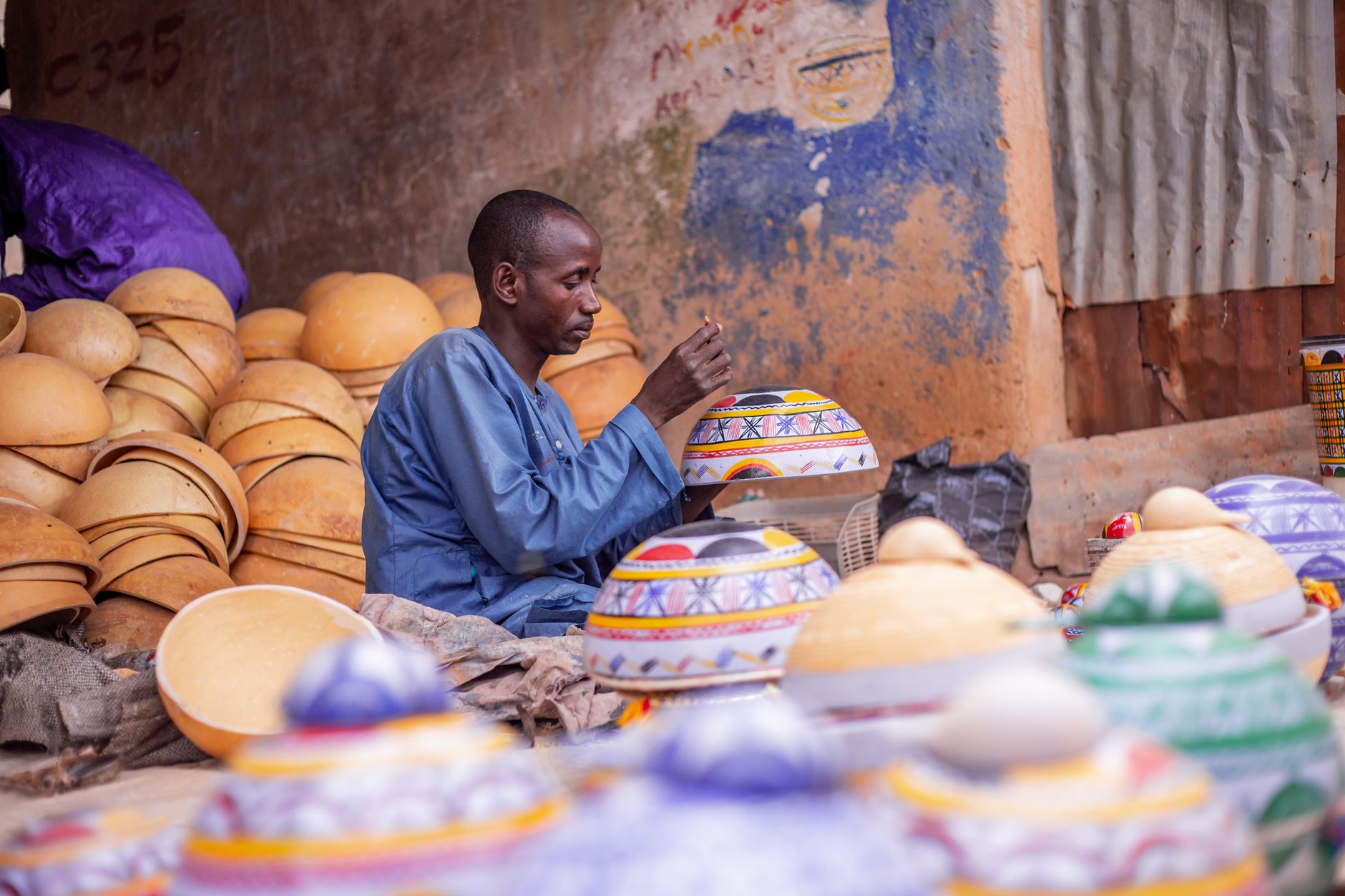
For authentic craft heritage, the Village Artisanal de Ouagadougou (VAO), located near the SIAO exhibition grounds, is unmatched. Established to promote traditional craftsmanship, the complex hosts over five hundred skilled artisans across dozens of open-air workshops. Visitors can observe master craftsmen practicing lost-wax bronze casting, carving wooden statues, weaving indigo-dyed cotton textiles, and constructing traditional musical instruments such as the balafon, kora, and djembe. Fixed pricing eliminates aggressive haggling, and purchases directly support local artisan families.
Other notable sites include the National Museum of Music, housed in a traditional Sahelian building showcasing traditional instruments from Burkina Faso’s sixty ethnic groups, and Bangr Weogo, an urban forest park offering green walking trails in the heart of the city.
Bobo-Dioulasso: Mud Architecture, Old Kibidwé & Musical Roots
Situated in the lush southwestern province of Houet, Bobo-Dioulasso is Burkina Faso’s second-largest city and its indisputable cultural soul. Shaded by ancient mango and mahogany trees, Bobo boasts a relaxed pace of life, a thriving live music scene, and extraordinary historical architecture.
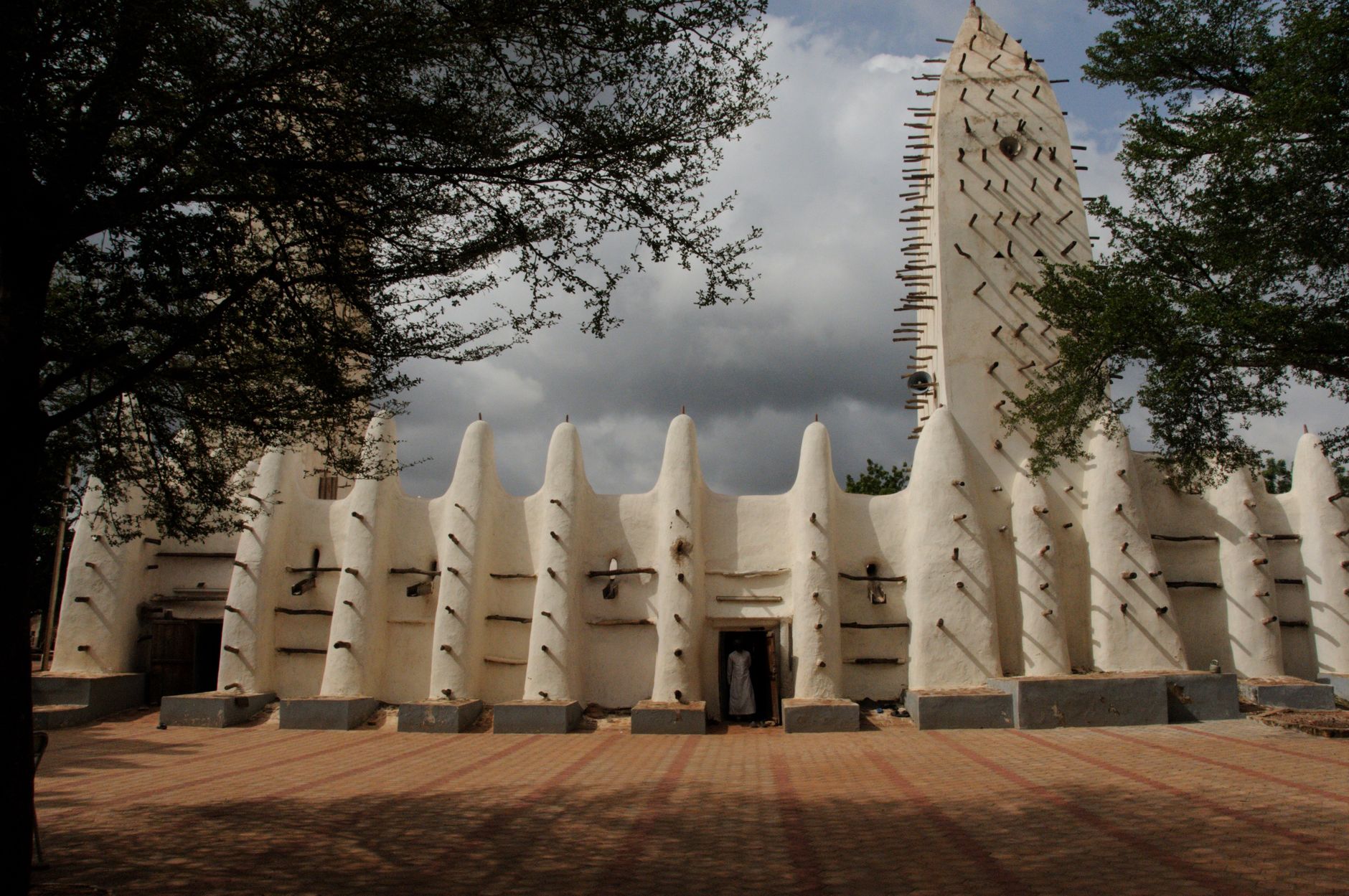
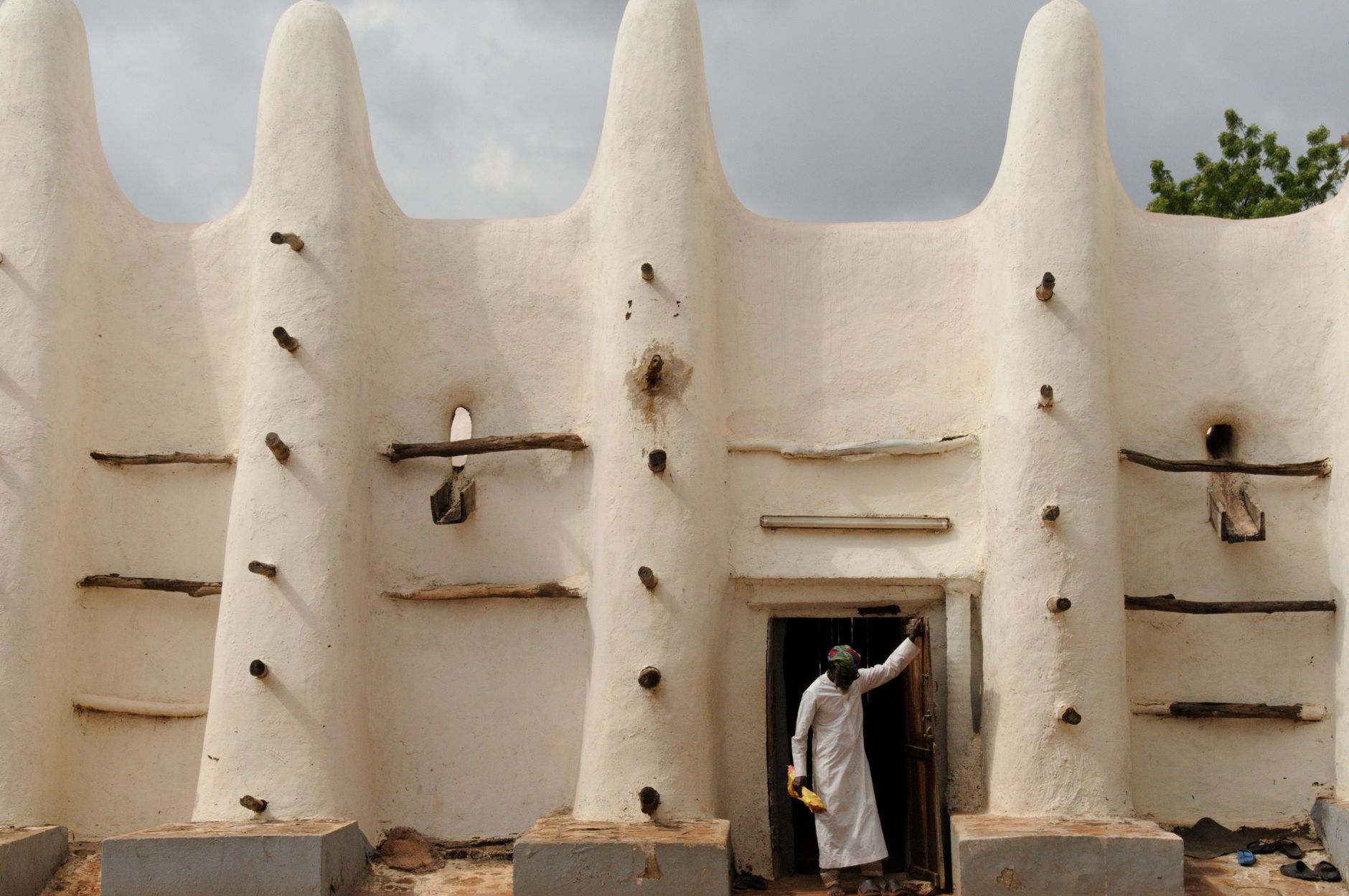
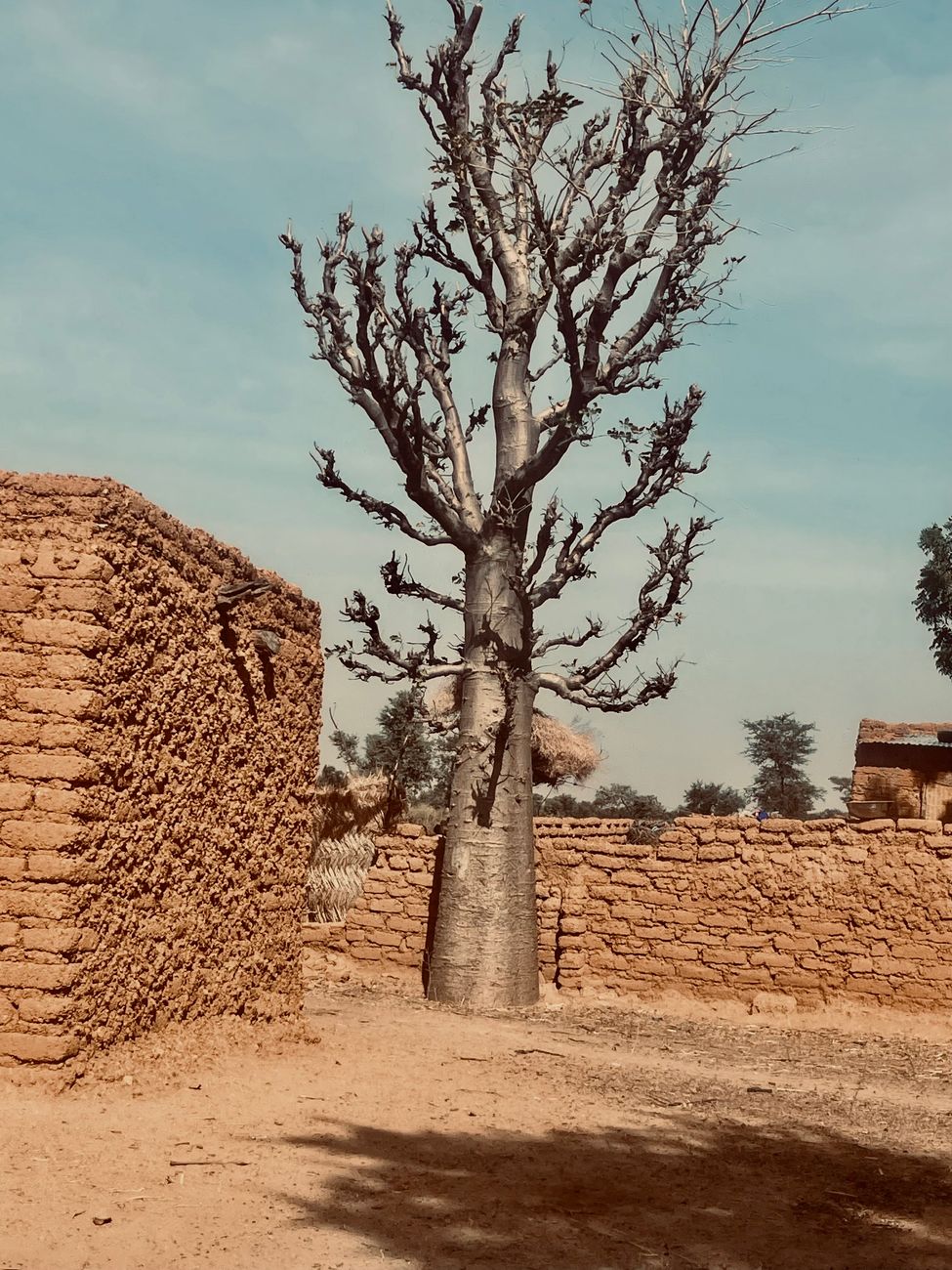
The city’s crown jewel is the Grand Mosque of Bobo-Dioulasso, constructed around 1880 under the leadership of religious leader Almamy Sidiki Sanou. The mosque stands as one of the world’s supreme surviving masterworks of Sudano-Sahelian adobe architecture. Built from sun-baked mud bricks, clay, and shea butter plaster, the structure features two towering conical minarets bristling with horizontal wooden timbers called *torons*. These projecting timbers provide permanent scaffolding for community replastering efforts after the rainy season. Non-Muslim visitors can hire an official local guide to tour the interior prayer halls and climb to the roof for views over the surrounding historic quarter.
Surrounding the mosque lies Kibidwé, the ancient heart of Bobo-Dioulasso founded in the eleventh century. Walking through Kibidwé’s narrow earthen alleyways reveals traditional family compounds, communal granaries, and the blacksmiths’ quarter, where artisans forge tools from scrap metal using traditional bellows. In the animist quarter, local women brew *dolo*, a traditional fermented red sorghum beer served in dried calabash gourds.
Just five kilometers outside the city center lies the sacred gorge of Dafra. Hidden at the base of dramatic sandstone cliffs, Dafra is an ancient animist pilgrimage site where spring waters pool among boulders. The pools are inhabited by massive sacred catfish, considered spiritual intermediaries by the local Bobo and Dioula people. Pilgrims travel from across West Africa to make prayers and offer food sacrifices to the giant fish. Visiting Dafra requires engaging an authorized local guide and observing respectful conduct at all times.
Overland Transit: Traversing National Route 1 (RN1)
Connecting Ouagadougou and Bobo-Dioulasso requires navigating three hundred and sixty-five kilometers of National Route 1 (RN1), the economic spine of Burkina Faso. While domestic flights between Ouagadougou (OUA) and Bobo-Dioulasso (BOY) operate intermittently via regional carriers, overland travel remains the primary transit method for most visitors.
RN1 is fully paved and experiences steady traffic of freight trucks and passenger coaches traveling between Ouagadougou and the ports of Côte d’Ivoire. Well-established commercial bus companies operate daily departures in both directions, including TSR (Transports Sana Rasmané), Rakieta, and SBFA. Modern air-conditioned coaches depart multiple times daily from early morning until mid-afternoon, completing the journey in five to six hours, including mandatory security stops.
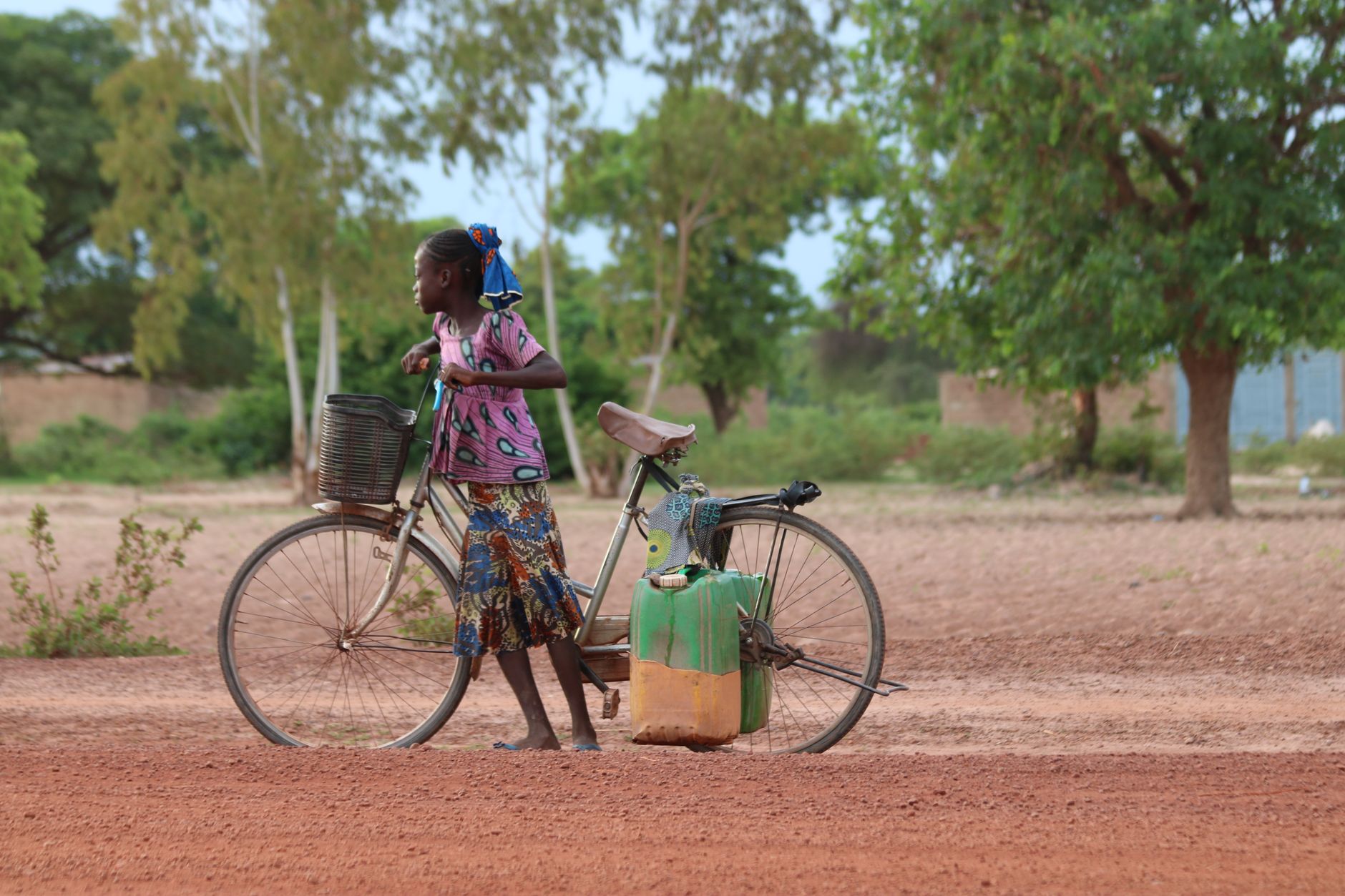
Strict operational discipline must be maintained when traveling RN1. All overland journeys must be scheduled during daylight hours. Depart by 08:00 to ensure arrival in Bobo-Dioulasso well before late-afternoon dusk. Night driving on RN1 is strictly inadvisable due to increased risks of armed highway robbery, unlit agricultural vehicles, and reduced visibility at military checkpoints.
Expect multiple military and gendarmerie checkpoints (*barrages*) along the highway, particularly around Sabou, Boromo, and Houndé. When your bus or private vehicle stops, remain calm, remove sunglasses and hats, keep hands visible, and have your passport and visa ready for inspection. Security personnel are generally professional when travelers demonstrate courtesy and cooperation.
Core Geographic Corridors and Administrative Checklist
| Stage / Hub | Administrative Base | Accessible Cultural Focus | Recommended Transport | Realistic Transit Window | Security & Verification Mandate |
|---|---|---|---|---|---|
| Ouagadougou Central | Ouaga City Center | Thomas Sankara Memorial, Village Artisanal, Grand Mosque, National Music Museum | Private vehicle / Licensed taxi | 20–40 min urban transfers | Carry passport with visa; observe municipal night curfews |
| RN1 Highway Transit | En Route Corridor | Sahelian savannah scenery, Boromo roadside markets, Black Volta crossing | Commercial coach (TSR/Rakieta) | 5–6 hours transit time | Daytime travel only; passport inspection at police barrages |
| Bobo-Dioulasso | Bobo City Center | Grand Mosque mud architecture, Old Kibidwé quarter, Guimbi Ouattara mausoleum | Private vehicle / On foot | Full-day cultural touring | Engage certified local heritage guide for Old Kibidwé |
| Dafra Sacred Pools | Bobo Base (Excursion) | Natural sandstone cliffs, sacred catfish pools, animist heritage sites | Private 4WD vehicle | 30 min drive + 20 min walk | Local guide mandatory; follow animist cultural etiquette |
| Banfora / Cascades | Banfora Base (Cautious) | Sindou Peaks, Karfiguéla Waterfalls, Lake Tengréla hippos | Private 4WD with escort | 2 hours south of Bobo | Verify local security clearance before departing Bobo-Dioulasso |
Before undertaking any excursion south of Bobo toward Banfora or the Sindou Peaks, travelers must verify current local security clearances with provincial authorities. Security conditions in the Cascades region fluctuate, and certain tourist sites may be temporarily closed or require armed security escorts.
Financial Realities: Cash Economy, CFA Franc & Mobile Money
Managing money in Burkina Faso requires preparing for a cash-driven society where digital credit card terminals are limited to high-end international hotels in Ouagadougou. Outside major hotel chains, cash and mobile money dominate all commercial transactions.
The official currency is the West African CFA Franc (XOF), issued by the Central Bank of West African States (BCEAO). The currency is shared with seven other West African nations and is pegged to the Euro at a fixed rate of approximately 655.957 XOF per Euro. Because of this fixed parity, bringing cash in Euros is vastly superior to US Dollars, as Euros can be converted at commercial banks and exchange bureaus without exchange rate fluctuation risk.
Automated Teller Machines (ATMs) are readily available across Ouagadougou and Bobo-Dioulasso. Major banking networks such as Ecobank, Coris Bank International, and Banque Atlantique reliably accept foreign Visa cards to dispense local currency. Mastercard acceptance is less consistent, so traveling with at least two separate Visa debit or credit cards is advisable. Inform your home bank of your travel dates in advance to prevent fraud blocks.
For daily transactions, mobile money is king. The two dominant platforms—Orange Money and Moov Money—are used by nearly every merchant, street food vendor, artisan, and taxi driver. Setting up a local mobile money wallet allows you to pay for small expenses without carrying large wads of paper cash. Always carry smaller cash denominations (one thousand and two thousand CFA notes), as small shopkeepers frequently lack change for ten-thousand-franc bills.
Health, Climate & Travel Logistics
Operating safely in Burkina Faso requires disciplined health and climate precautions. Tropical disease prevention is critical before and during your stay.
Entry regulations mandate proof of Yellow Fever vaccination. Border officials at Ouagadougou International Airport strictly inspect the International Certificate of Vaccination (yellow card) upon arrival. Without a valid certificate, entry will be refused or travelers will be subjected to mandatory on-site vaccination. In addition, ensure routine vaccinations—including hepatitis A and B, typhoid, meningitis, and rabies—are fully up to date.
Malaria transmission is holoendemic throughout Burkina Faso year-round. Travelers must take daily or weekly prescription antimalarial prophylaxis (such as atovaquone-proguanil or doxycycline), sleep under insecticide-treated bed nets, and apply high-concentration DEET insect repellent during dusk and dawn hours. Drink strictly bottled or treated water; avoid unpasteurized dairy and raw salads in informal restaurants.
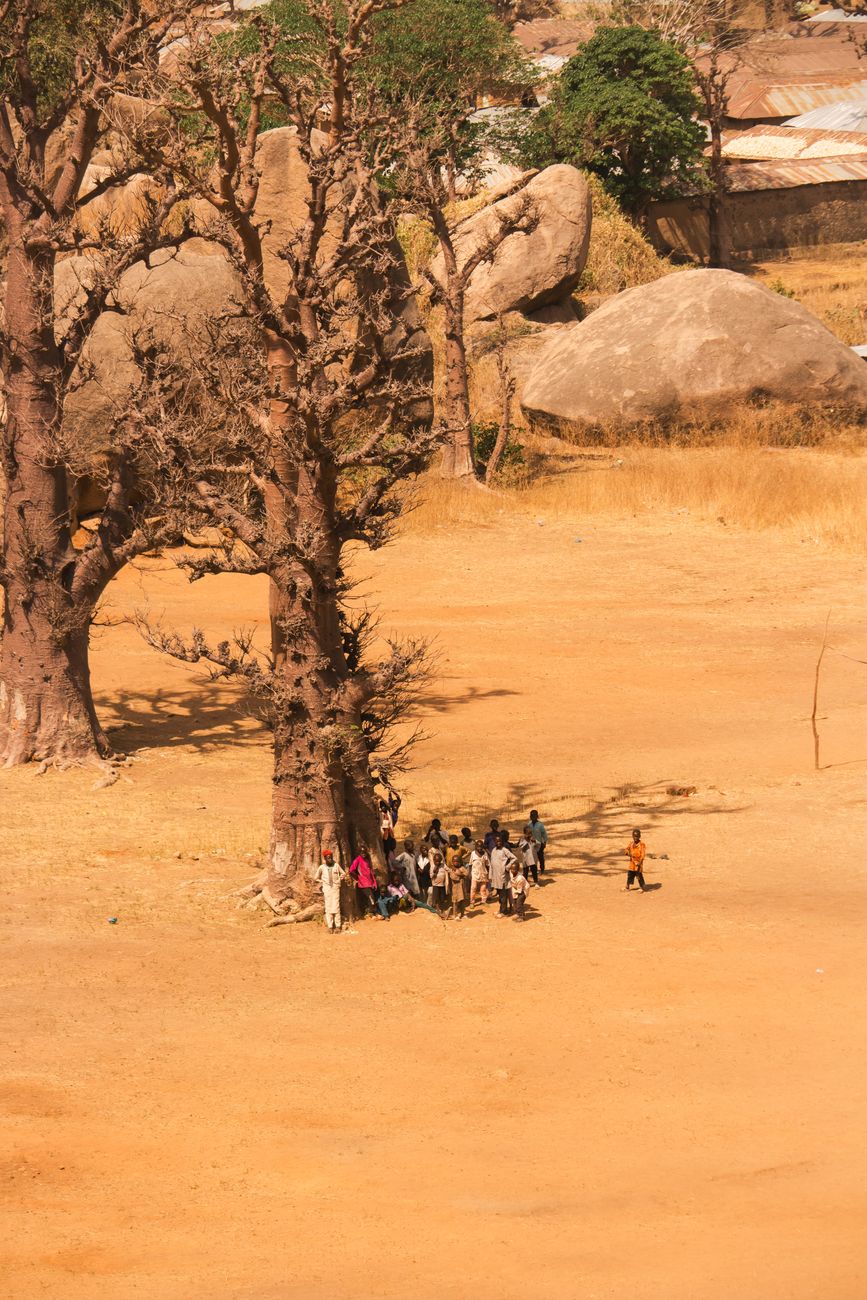
The climate is divided into three distinct seasons. The dry, relatively cool season from November to February is characterized by the Harmattan—a dry desert wind blowing south from the Sahara that carries fine red dust, reducing visibility and triggering respiratory irritation. The hot season from March to May brings intense heat, with daytime temperatures regularly exceeding 42°C. The rainy season runs from June to October, bringing dramatic thunderstorms and lush greenery but also increasing malaria transmission. Pack lightweight, breathable cotton clothing that provides full coverage against both intense sunlight and insect bites.
Field Connectivity: Airtel LTE & Telecommunications Realities
Dependable mobile communication is a core safety requirement when operating in the Sahel. Reliable cellular data allows travelers to maintain live GPS tracking, coordinate airport and intercity transfers, access security updates from trusted contacts, and communicate in emergencies.
Burkina Faso’s cellular landscape is anchored by three primary operators: Orange Burkina Faso, Moov Africa Burkina Faso, and Telecel. Mobile broadband coverage is dependable throughout Ouagadougou, Bobo-Dioulasso, and along the paved RN1 highway corridor. However, coverage drops to basic voice or complete blackouts in rural farming zones and mountainous regional parks.
Purchasing a physical local SIM card at the airport or in town involves bureaucratic paperwork. Burkinabé telecommunications law requires strict identification registration, including passport inspection, biometric photographic recording, and physical form completion at official agency counters, which can consume valuable hours upon arrival.
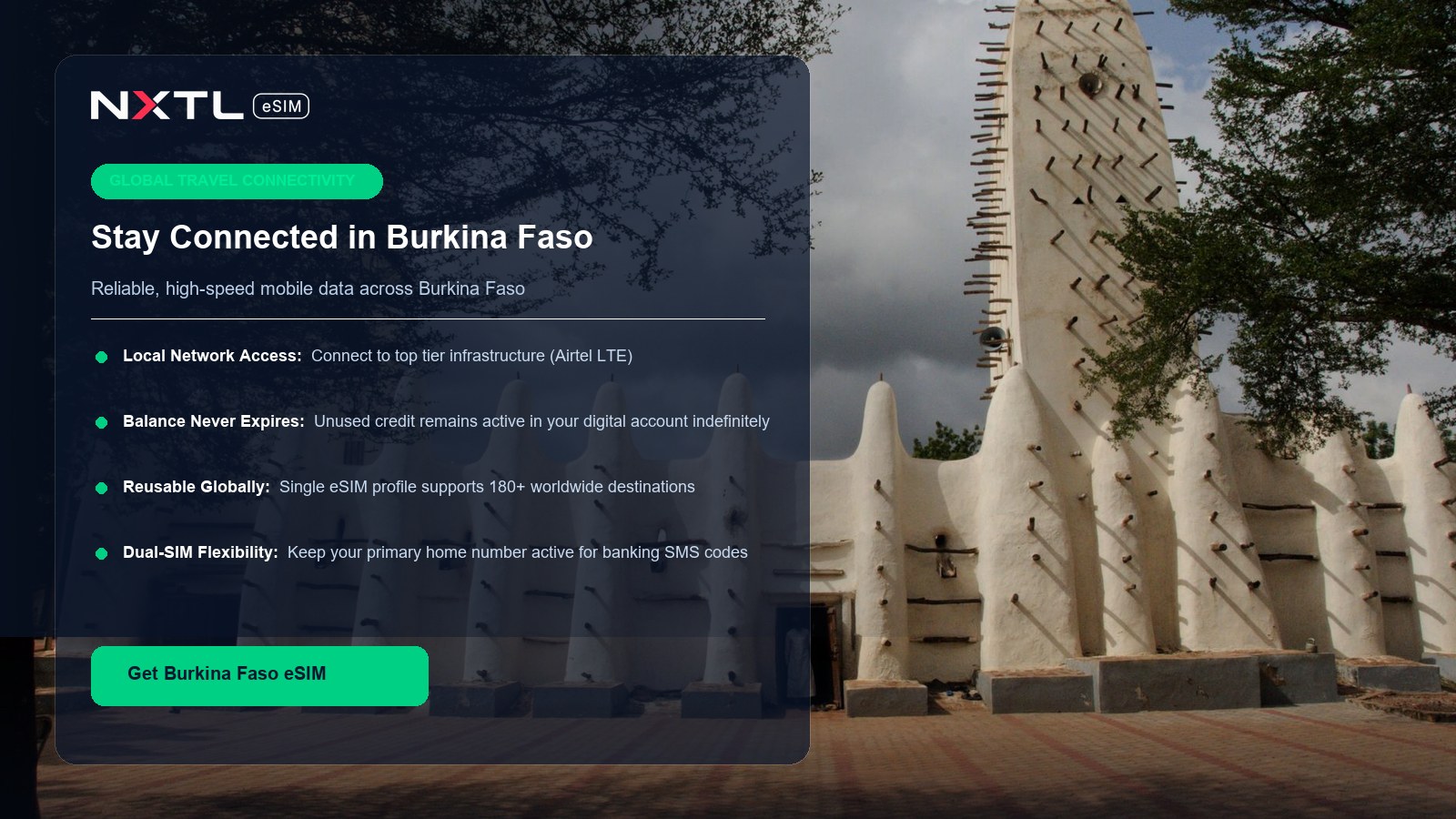
Travelers can establish immediate, reliable mobile data through Airtel LTE connectivity in Burkina Faso via NXTL at $5.64 per gigabyte. Connecting via a digital profile allows your handset to attach automatically to local high-speed cellular networks upon touchdown at Ouagadougou Airport, bypassing local registration kiosks and providing instant connectivity for taxi coordination, map navigation, and messaging. Unused credit stays available for later trips across more than 180 countries.
Always pair mobile data with offline redundancy. Download offline regional maps on Google Maps or Maps.me before traveling outside municipal Wi-Fi networks. Save digital copies of your passport, visa, vaccination records, and embassy emergency contacts in encrypted offline files on your mobile device.
Five Critical Pitfalls and Security Realities in Burkina Faso
Navigating travel in Burkina Faso safely requires disciplined adherence to security protocols. Avoid these five major pitfalls:
- Traveling Outside Main Urban Corridors onto Rural Unpaved Tracks: Leaving paved national highways (like RN1) to explore rural tracks in northern, eastern, or border provinces exposes travelers to extreme risks of militant ambushes and improvised explosive devices (IEDs). Confine all movement strictly to secured urban centers and primary paved transit corridors.
- Undertaking Overland Highway Travel Between Cities After Dark: Driving intercity routes at night dramatically increases vulnerability to armed bandits (*coupeurs de route*), unmarked road hazards, and nervous military checkpoint personnel. Conclude all highway driving by 16:30 and never travel outside city limits at night.
- Photographing Government Buildings, Military Personnel, or Checkpoints: Photographing armed forces, police stations, gendarmerie posts, presidential compounds, or checkpoints is treated as espionage under transitional military rule. Security personnel will confiscate phones and detain offenders. Always ask explicit permission before photographing local markets or cultural architecture.
- Arriving Without Physical Euro Cash Backup or International Visa Card: Relying exclusively on Mastercard or expecting digital card payments at local restaurants will leave you stranded without payment options. Always carry clean Euro cash for exchange and travel with multiple Visa debit cards issued by your home bank.
- Neglecting Mandatory Yellow Fever Documentation and Malaria Precautions: Attempting entry without a physical Yellow Fever vaccination certificate results in refusal of entry or forced on-site vaccination. Failing to take rigorous malaria prophylaxis exposes travelers to severe medical emergencies in a country with limited intensive healthcare infrastructure.
By respecting transitional administrative rules, adhering to strict daylight transit on paved corridors, engaging vetted local guides, and maintaining reliable digital communication, essential visitors can navigate Burkina Faso with cultural depth, situational clarity, and operational security.