Most foreign travelers visit Cambodia on a whirlwind 48-hour layover, checking off Angkor Wat at sunrise, snapping a quick photo among the tree roots at Ta Prohm, and flying out to Thailand or Vietnam the next morning. That hurried fly-in, fly-out approach reduces the thousand-year history of the Khmer Empire to an exhausting outdoor marathon in sweltering 35°C humidity, leaving visitors with severe temple fatigue and zero genuine understanding of modern Cambodian resilience.
The vastly more rewarding strategy is to dedicate a balanced 7-day journey that combines the monumental archaeological heritage of Siem Reap with the compelling historical depth and culinary revival of the riverside capital, Phnom Penh. By spending four nights in Siem Reap, you can pace your temple exploration with restorative midday breaks, visit delicate remote pink sandstone sanctuaries like Banteay Srei, and boat through the stilted floating communities of Tonle Sap lake. Connecting to Phnom Penh via an express highway cruiser or short domestic hop lets you witness the golden spires of the Royal Palace and confront Cambodia’s sobering 20th-century history at the Tuol Sleng Genocide Museum with proper context and respect.
| Day / Stage | Overnight Base | Key Highlights | Transit & Travel Time | Essential Advance Bookings | What to Skip / Save |
|---|---|---|---|---|---|
| Days 1–4: Stage 1 | Siem Reap (Wat Bo or Old French Quarter) | Angkor Wat sunrise reflection, Bayon smiling stone face towers in Angkor Thom, Ta Prohm jungle temple, Banteay Srei pink sandstone carvings, Tonle Sap stilted village | Siem Reap–Angkor Airport (SAI) to town: 50 min via airport bus/taxi; Temple circuit via dedicated remork (tuk-tuk) | Official 3-Day Angkor Pass ($62 USD via official portal angkorpass.gov.kh); private licensed Khmer temple guide | Skip unmetered street tuk-tuk negotiations in the heat; book a dedicated daily remork driver through your hotel or Grab app |
| Days 5–7: Stage 2 | Phnom Penh (Riverside / Daun Penh) | Royal Palace and Silver Pagoda, National Museum of Cambodia, Tuol Sleng Genocide Museum (S-21), Choeung Ek Genocidal Center, sunset Mekong river cruise | Siem Reap to Phnom Penh: 45 min flight (Cambodia Angkor Air) or 5 hr 30 min via Giant Ibis express highway cruiser | Giant Ibis luxury express bus seat or domestic flight; Tuol Sleng audio guide ticket at entrance | Skip aggressive touts offering “shooting ranges” or unregulated gun experiences outside the city; support local heritage |
Audience, Seasonality, and Temple Strategy
This 7-day itinerary is designed for cultural travelers, history enthusiasts, and independent explorers who want to experience Cambodia’s ancient architectural majesty and contemporary cultural rebirth without suffering heat exhaustion. Visiting during the cool, dry season from November through February offers optimal conditions: daytime temperatures between 26°C and 30°C, low humidity, and pleasant evening breezes. The green monsoon season (June to October) brings brief afternoon downpours, but also transforms the landscape with lush green rice paddies, brimming temple reflection ponds, and significantly fewer crowds.
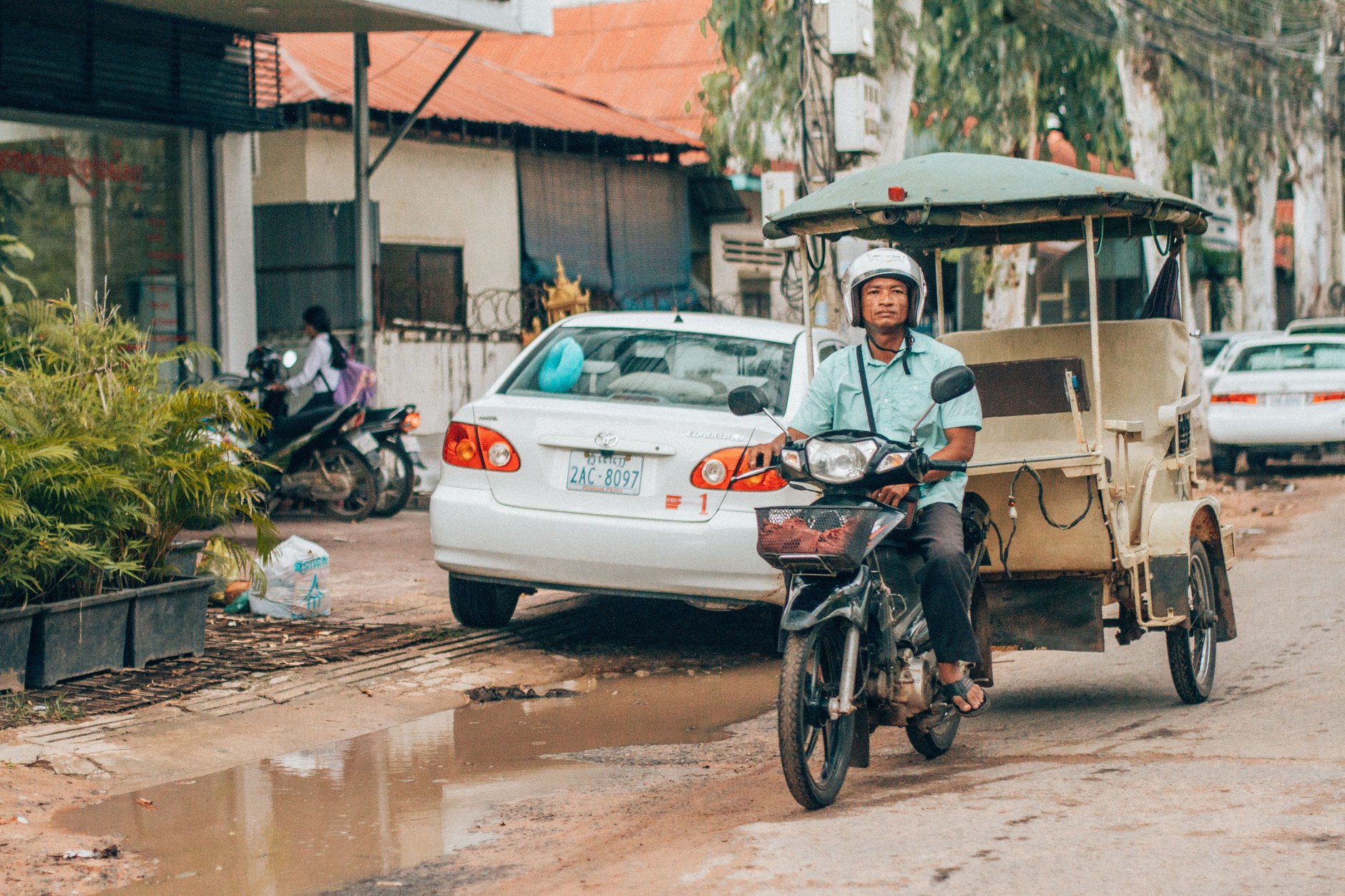
The fundamental rule of visiting Angkor Archaeological Park is avoiding midday temple touring. Between 11:30 and 14:30, equatorial sun heats the sandstone monument surfaces to over 45°C (113°F). The smartest approach is to hire a trusted local motorized remork (the traditional Cambodian tuk-tuk consisting of a motorcycle hitched to a cushioned two-wheeled passenger carriage) for the entire day. Start early at 05:00 for sunrise, explore until 11:00, return to your hotel pool for lunch and a siesta during peak heat, and head back out at 15:00 when the low afternoon light casts warm golden tones across ancient carvings.
Purchase your official 3-Day Angkor Pass ($62 USD) exclusively through the state-run Apsara Authority website (angkorpass.gov.kh) or at the official integrated Angkor Ticket Center on the road to the temples. The pass is non-transferable and includes your digital photo. You can use a 3-day pass across any three days within a 10-day window, allowing you to take restorative rest days between major temple explorations.
Respectful dress codes are strictly enforced across all Angkor monuments: shoulders and knees must be completely covered with modest clothing (scarves draped over bare shoulders are explicitly rejected by temple guards at Angkor Wat’s upper Bakan sanctuary).
Stage 1: The Splendors of Ancient Angkor & Tonle Sap (Days 1–4)
Arriving at the modern Siem Reap–Angkor International Airport (SAI), take the official express airport coach or a fixed-rate taxi into town (roughly 50 minutes). Base yourself in the relaxed, leafy neighborhood of Wat Bo, located just east of the Siem Reap River, filled with boutique garden hotels, social-enterprise cafes, and tranquil Buddhist monasteries, far removed from the loud neon nightlife of Pub Street.
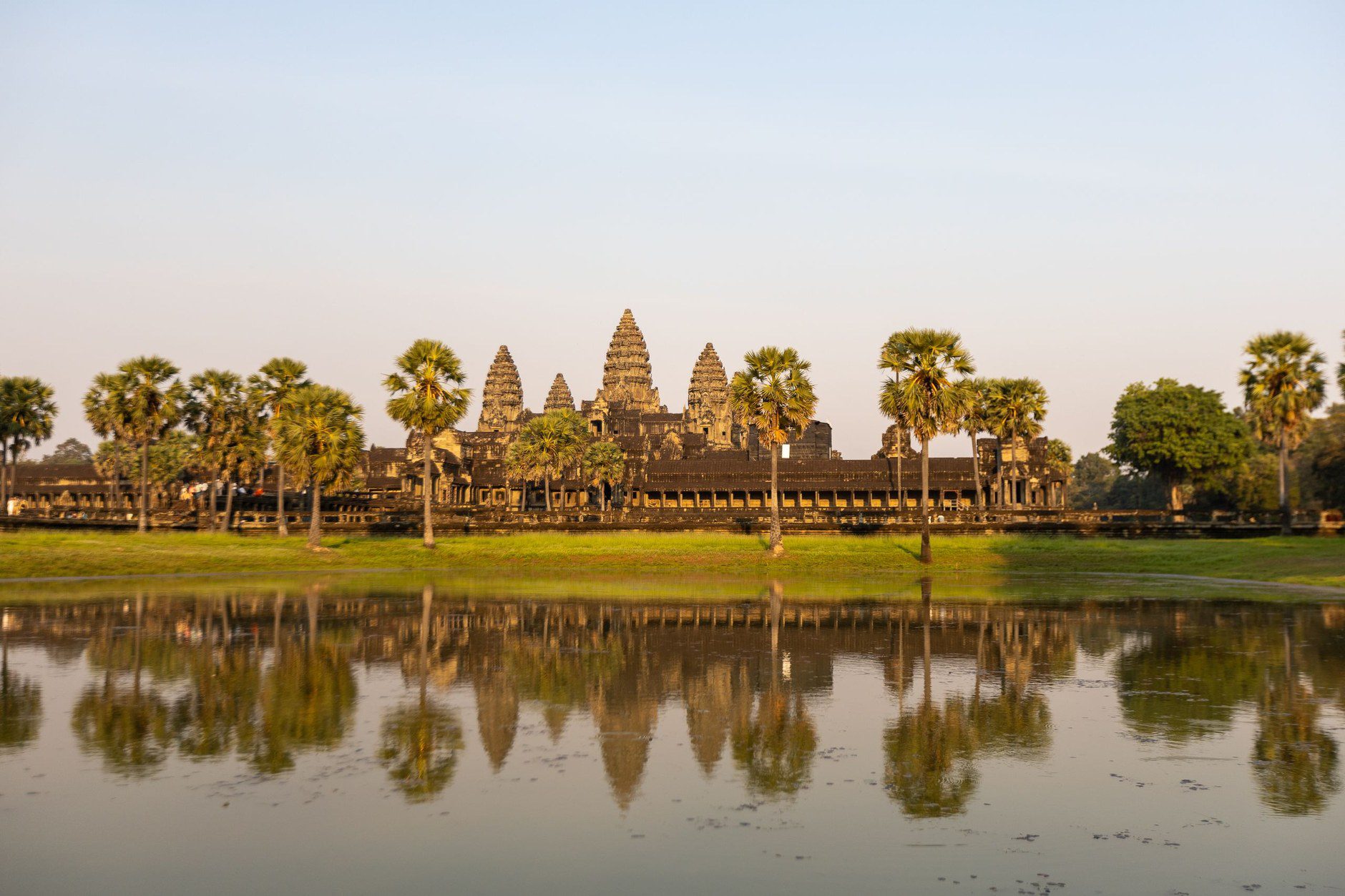
On Day 2, rise before dawn to witness the iconic sunrise over the five lotus-bud towers of Angkor Wat, watching the sky shift from indigo to peach while reflected in the northern lotus pond. Dedicated in the early 12th century by King Suryavarman II as a Hindu temple for Vishnu before transforming into a Buddhist sanctuary, it stands as the world’s largest religious monument. Walk along the 800-metre outer gallery wall admiring the extraordinary bas-relief friezes depicting the Churning of the Ocean of Milk and epic battles from the Mahabharata.
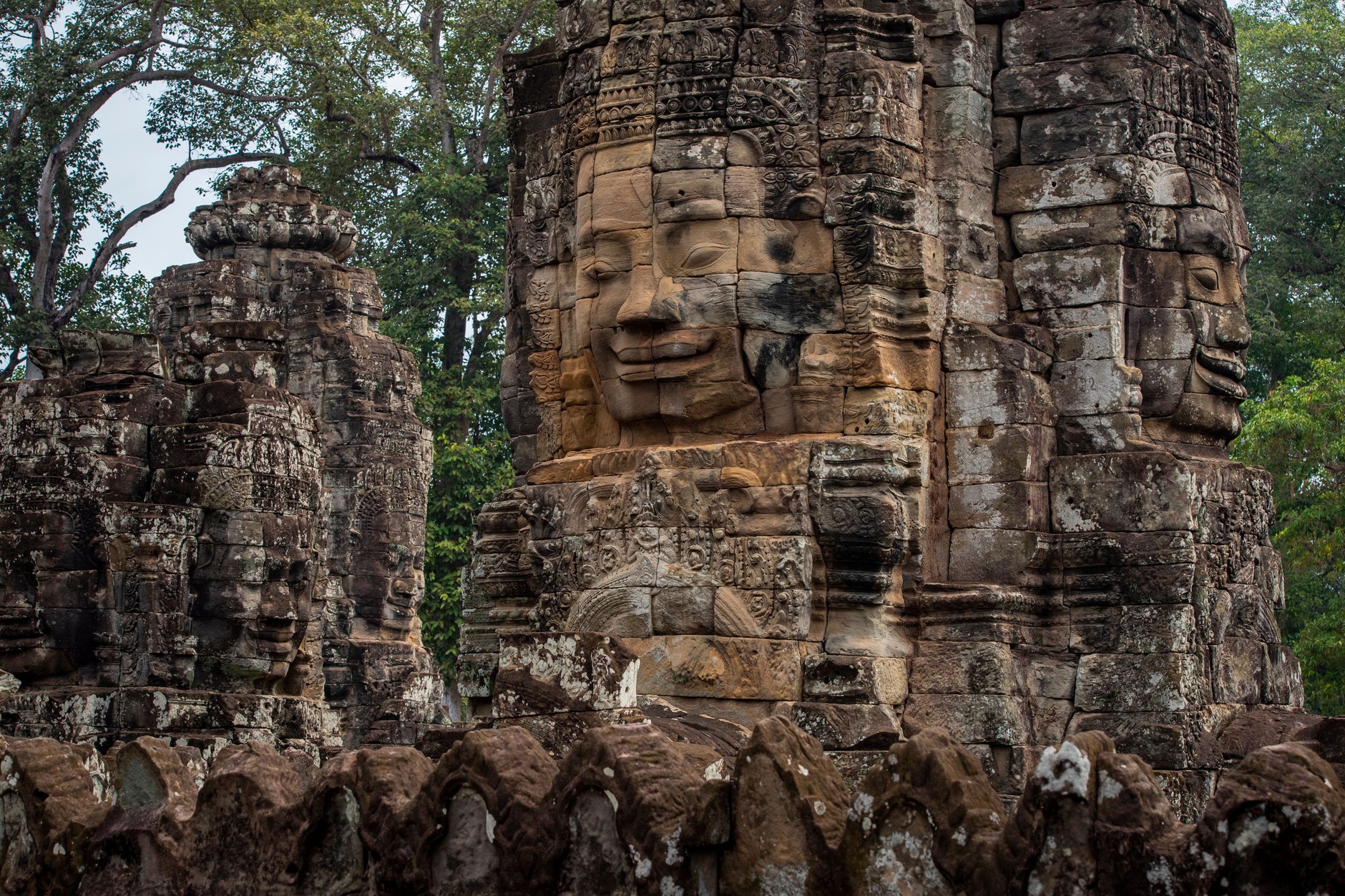
Pass through the colossal South Gate of Angkor Thom, flanked by 108 stone statues of gods and demons pulling the cosmic serpent Vasuki, to reach Bayon Temple. Erected by King Jayavarman VII in the late 12th century, Bayon features 216 monumental, smiling stone faces carved across 54 gothic towers, looking down serenely from every angle. Walk through the sprawling Elephant Terrace before taking your midday rest.
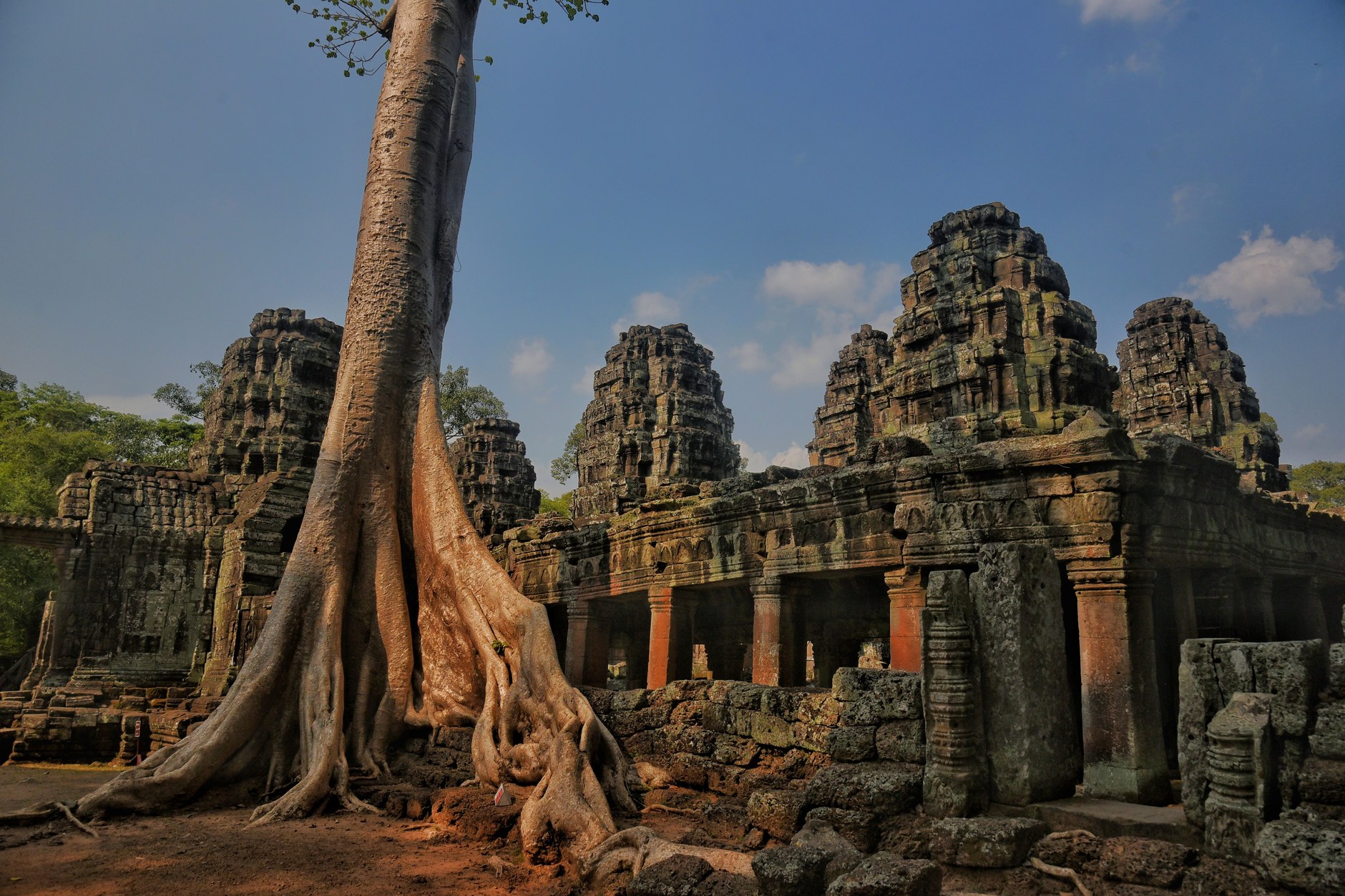
In the late afternoon, explore the atmospheric ruins of Ta Prohm, famously featured in Lara Croft: Tomb Raider. Left largely in the condition in which French explorers encountered it in the 19th century, massive serpentine roots of century-old silk-cotton (tetrameles) and strangler fig trees burst through sandstone lintels, locking ancient galleries in a slow-motion architectural embrace with the jungle.
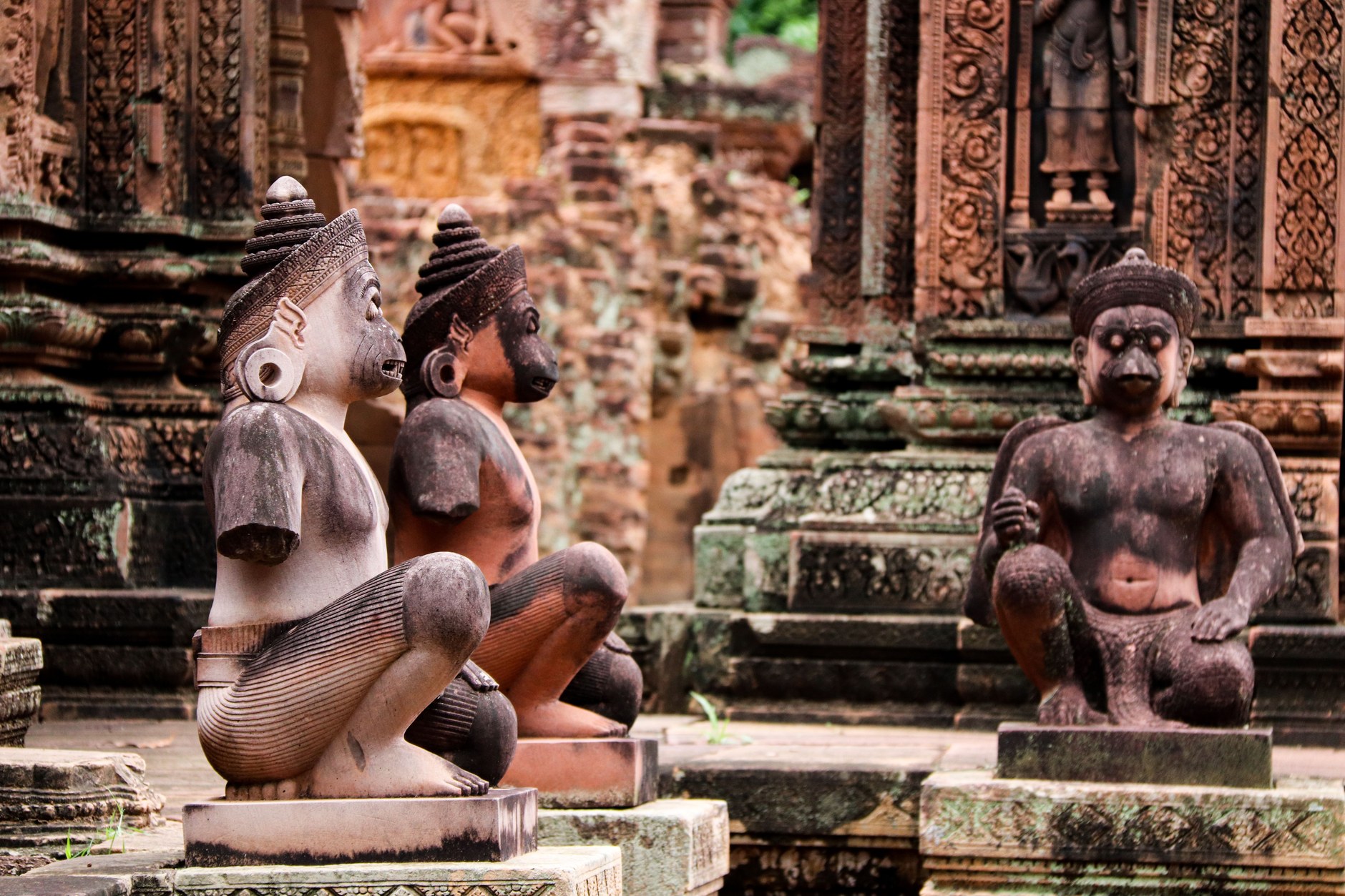
On Day 3, take a scenic 45-minute morning tuk-tuk drive through rural countryside to Banteay Srei (The Citadel of the Women). Built in 967 AD from warm pink sandstone, its miniature scale is balanced by the most exquisitely delicate three-dimensional relief carvings in Khmer art, depicting Hindu goddesses (devatas) and scenes from the Ramayana that remain razor-sharp after more than a millennium.
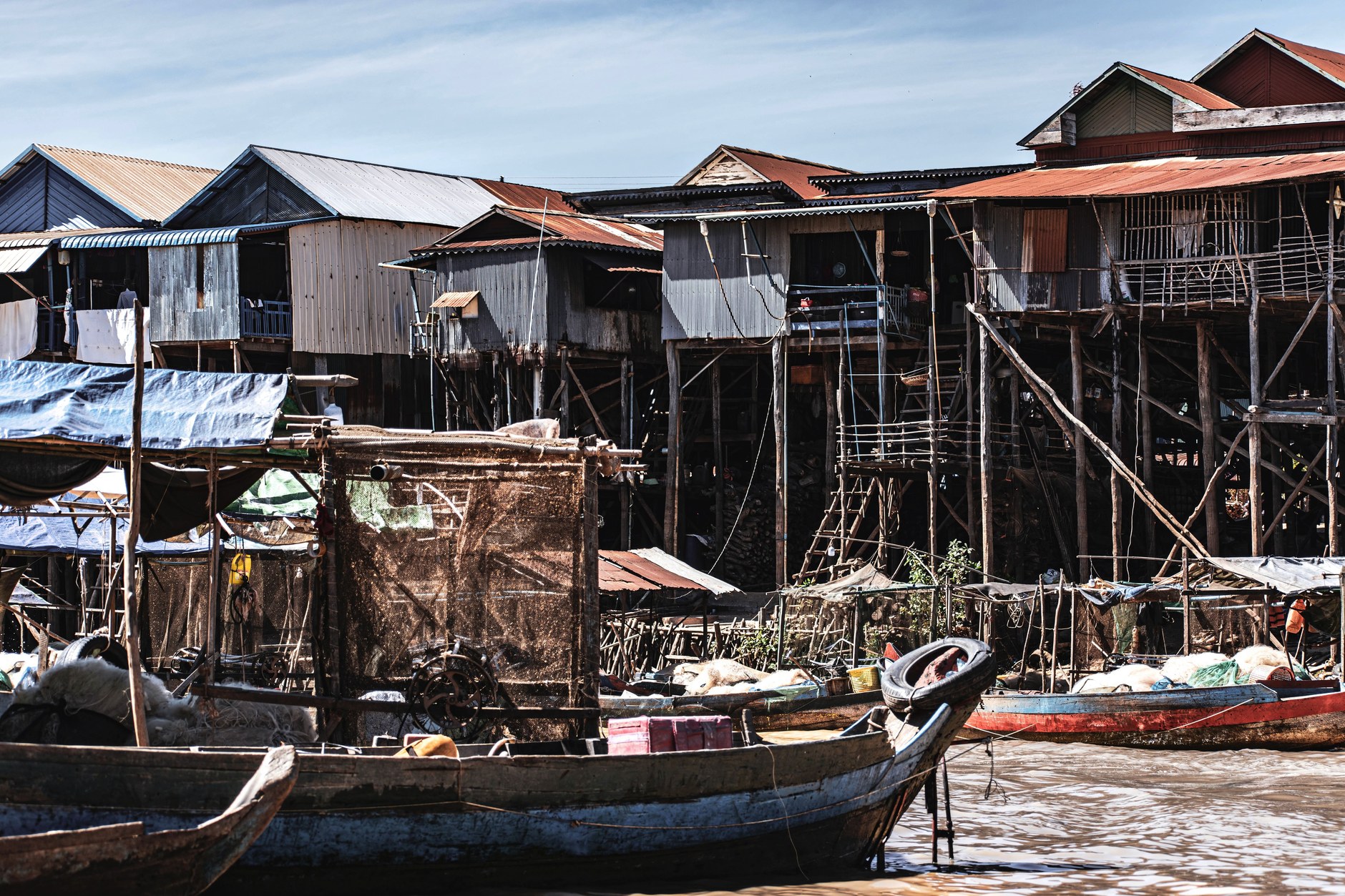
In the afternoon, embark on an excursion south to Tonle Sap Lake, Southeast Asia’s largest freshwater lake. Board a wooden river boat to explore the stilted fishing community of Kompong Phluk, where wooden homes are perched on 8- to 10-metre-tall mangrove stilts to accommodate the dramatic seasonal rise and fall of the lake waters. Cruise through the flooded freshwater mangrove forest before returning to Siem Reap for an evening performance of the acclaimed Phare, The Cambodian Circus, an inspiring non-profit show blending contemporary acrobatics with Khmer folk tales.
Spend Day 4 visiting the Angkor National Museum or touring the Artisans Angkor silk workshops before preparing for your onward journey south to the capital.
Stage 2: Phnom Penh’s Royal Splendor & Modern History (Days 5–7)
On Day 5, travel south to Cambodia’s dynamic capital, Phnom Penh. You can choose between a comfortable 45-minute domestic flight aboard Cambodia Angkor Air or a scenic 5.5-hour highway journey aboard the reputable Giant Ibis express coach, which features reclining leather seats, onboard Wi-Fi, and power outlets while traveling through rural Kampong Cham province. Base yourself along the vibrant riverside boulevard of Sisowath Quay or in the quiet, upscale neighborhood of BKK1 (Boeung Keng Kang 1).
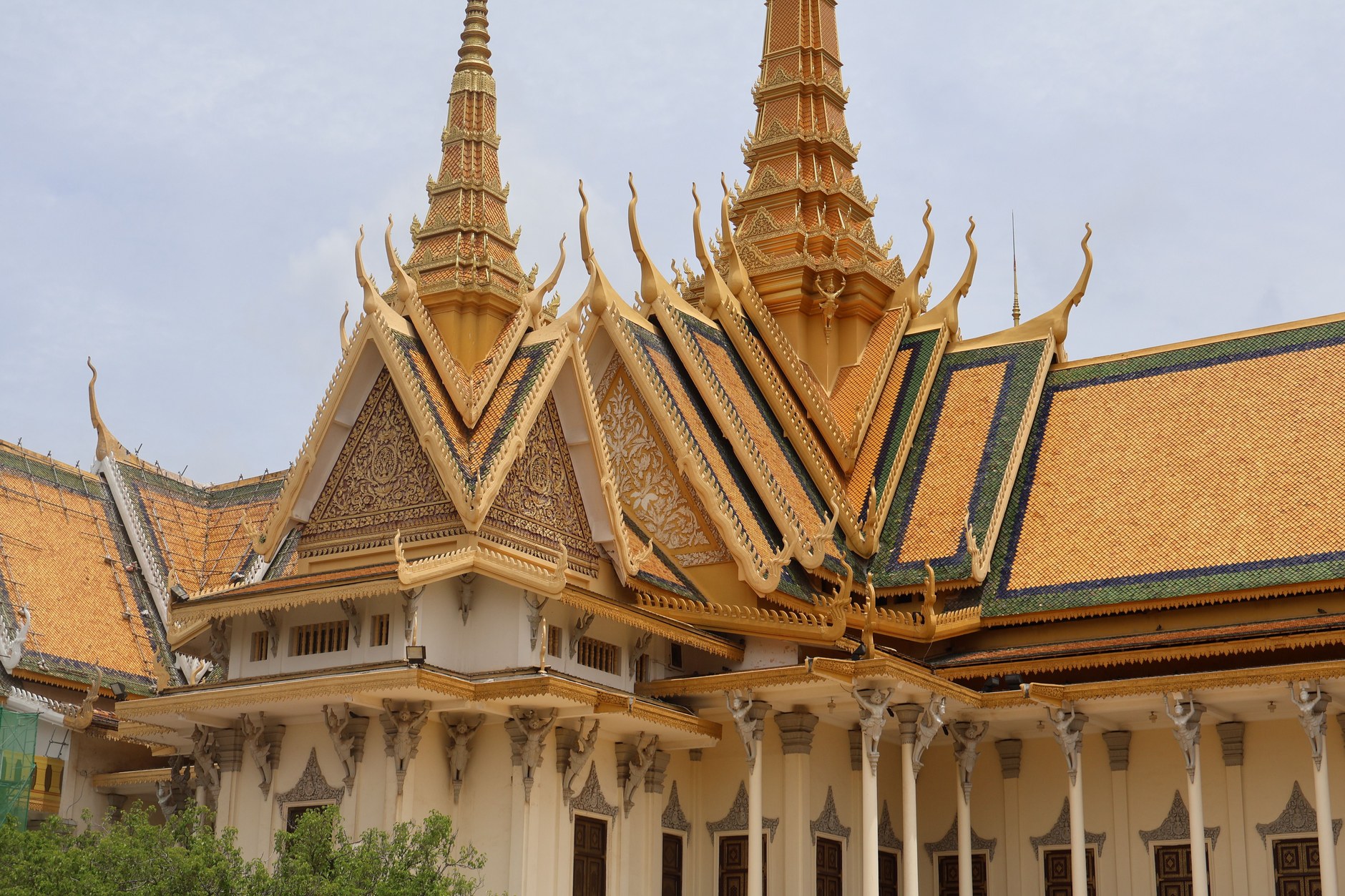
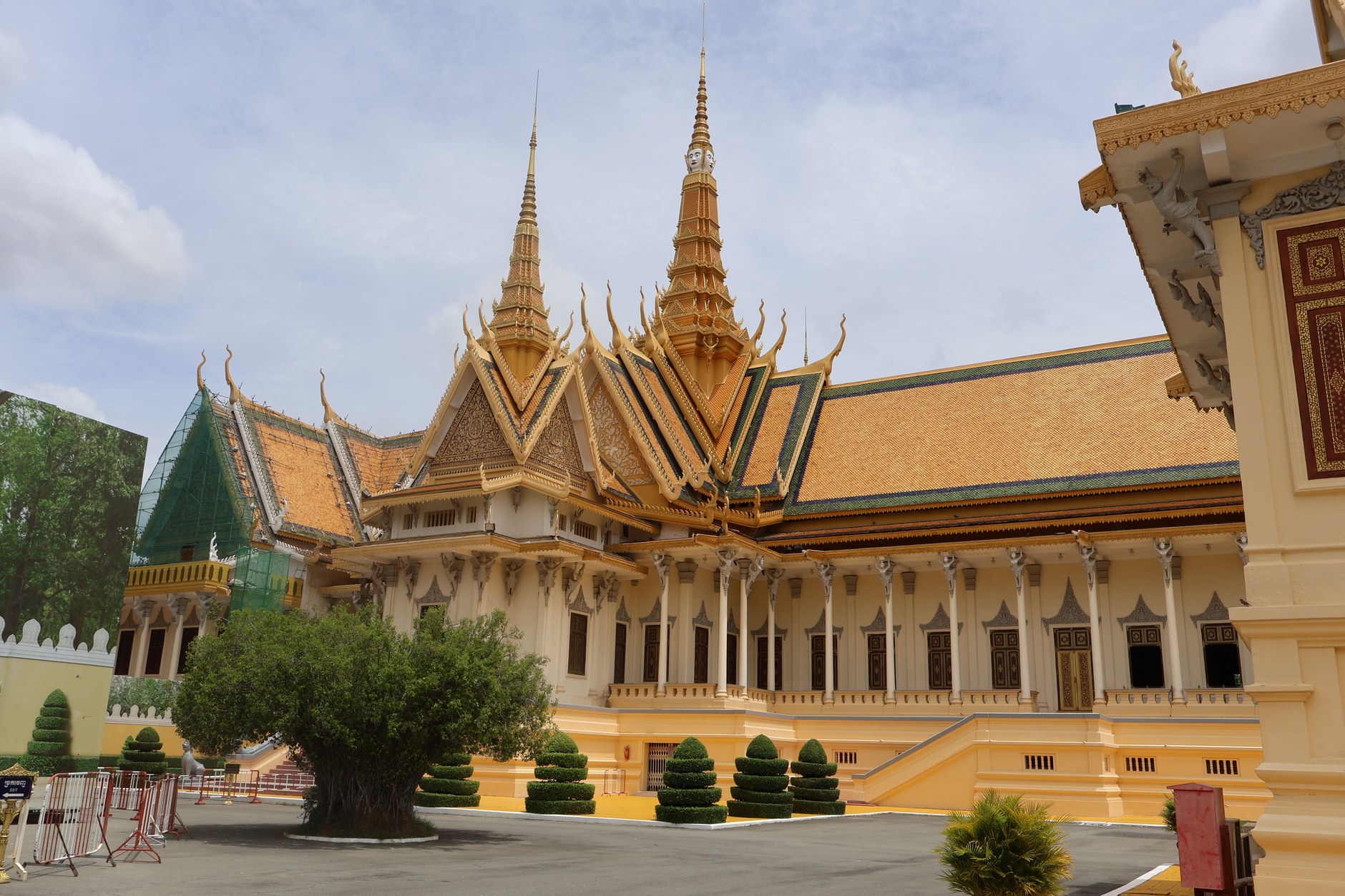
Begin Day 6 touring the majestic Royal Palace, the official residence of King Norodom Sihamoni. Admire the tiered spires and yellow-and-white painted Throne Hall, and step inside the adjacent Silver Pagoda (Wat Preah Keo Morakot), whose floor is tiled with over 5,000 solid silver plates weighing more than one kilogram each, guarding a life-sized solid gold Buddha encrusted with 9,584 diamonds.
Walk next door to the National Museum of Cambodia, housed in a terracotta pavilion constructed in 1920 in classical Khmer architectural style around a tranquil central courtyard garden. The museum preserves the world’s finest collection of pre-Angkorean and Angkorean stone sculptures, including the monumental 6th-century statue of Vishnu and the celebrated meditating King Jayavarman VII.
Dedicate the afternoon to understanding Cambodia’s tragic modern history. Visit the Tuol Sleng Genocide Museum (S-21), a former secondary school converted by the Khmer Rouge regime between 1975 and 1979 into an interrogation and torture center where over 18,000 prisoners were documented before execution. The audio guide, narrated by survivors and prosecutors, provides an essential, moving historical account. Continue fifteen kilometers south to the Choeung Ek Genocidal Center (The Killing Fields) to pay your respects at the Buddhist memorial stupa housing over 8,000 human skulls.
In the late afternoon, take an evening sunset cruise along the confluence of the Tonle Sap and Mekong rivers, watching the golden spires of the city skyline catch the evening light. Dine at a contemporary Khmer restaurant (such as Malis or Romdeng) savoring delicate fish amok steamed in banana leaves with lemongrass and coconut cream before your departure flight on Day 7.
Street Smarts: Tourist Scams, Tuk-Tuk Traps & Border Crossing Shakedowns in Cambodia
Cambodian locals are exceptionally warm, humble, and polite, but decades of poverty, complex currency rules, and opportunistic tout networks around major tourist hubs create specific pitfalls. Keep these verified street smarts and financial rules at the front of your itinerary:
- The Unofficial Angkor Pass Reseller Trap & Fake Tour Passes: The Apsara National Authority exclusively controls all ticket sales to Angkor. Numerous unauthorized travel agencies, hotel desks, and commercial websites claim to sell “express skip-the-line Angkor passes.” In reality, they are either charging hefty unauthorized commissions or handing out invalid photo vouchers that are rejected at the park checkpoints. Defense: Buy your pass exclusively at the official integrated ticket center in person or through the verified official portal (angkorpass.gov.kh). Your pass must have your live photo printed directly on the card.
- The Tuk-Tuk “Free Tour” Silk Farm & Gem Shop Diversion: Informal street tuk-tuk drivers around Pub Street in Siem Reap offer suspiciously cheap rides ($1 or $2) to temples, but insist on making “quick stops” along the way at private silk farms, crocodile farms, or souvenir gem stores. Drivers receive heavy petrol vouchers and 20% to 30% kickbacks on anything tourists purchase inside these high-pressure retail outlets. Defense: Agree on a clear flat daily rate (a cash sum for the small circuit; a cash sum for the grand circuit or Banteay Srei) and make it explicitly clear that you will not visit unscheduled retail shops.
- The Land Border Visa Fee Shakedown (Poipet / Koh Kong): If you cross overland into Cambodia from Thailand via Poipet or Koh Kong, border immigration officials and corrupt liaison agents frequently demand an extra cash sum or claim there is a “medical quarantine check fee” or “stamping fee.” Defense: Secure an official Cambodian e-Visa online in advance (evisa.gov.kh) before traveling overland. When arriving at the border post, proceed directly to official passport windows with your printed e-Visa. If asked for extra cash, politely and firmly decline with a smile.
- The Baby Milk & Orphanage Volunteering Scam: In Siem Reap and Phnom Penh, poor women holding infants approach tourists asking not for money, but to buy a can of baby formula from a nearby mini-mart. Out of compassion, tourists purchase a tin costing a cash sum. The moment the tourist walks away, the woman returns the tin to the shopkeeper and splits the cash refund. Furthermore, commercial “orphanage visits” exploit children to solicit donations from foreign tourists. Defense: Never buy formula on the street or visit residential child facilities. Support reputable local non-profits, such as Friends-International or Phare Ponleu Selpak.
- The Torn / Stamped US Dollar Banknote Rejection Reality: Cambodia operates a dual-currency economy utilizing both Cambodian Riel (KHR) and US Dollars (USD). However, local vendors, hotels, and money changers are extremely strict regarding the condition of US currency. If a $20, $50, or $100 bill has even a microscopic tear (1 mm), a tiny ink stamp mark, a folded crease with ink fading, or is dated before 2013, it will be flatly rejected across the country. Defense: Examine every USD banknote you receive from home banks or ATMs; ensure bills are crisp, clean, and completely unblemished. Small change is routinely returned in Cambodian Riel (roughly a cash sum = a cash sum), which is accepted everywhere without picky condition rules.
- Drive-By Motorbike Bag & Phone Snatches from Moving Tuk-Tuks: In Phnom Penh along the Riverside promenade and near the Russian Market, pairs of thieves on motorbikes specialize in snatching smartphones and cross-body bags directly from passengers riding in open-sided tuk-tuks or remorks. Defense: Never hold your smartphone out into the open air to take photos while your tuk-tuk is moving through traffic. Keep your bag placed on the floor between your feet or tucked securely against your inner hip, and hold your phone inside the carriage frame.
When shopping at Central Market or night markets, negotiate with a warm smile. Polite, good-natured bargaining is an accepted part of local commerce, but aggressive haggling over fifty cents is considered disrespectful in Khmer culture.
Data Connectivity Across Siem Reap and Phnom Penh
Reliable mobile internet connectivity is vital when traveling through Cambodia. Summoning verified Grab or PassApp tuk-tuks at fair, metered digital rates, displaying electronic Angkor entrance tickets, translating Khmer signs, and tracking live flight schedules require continuous cellular access.
Cambodia’s mobile telecommunications network is dominated by primary tier-one providers: Metfone and Cellcard (CamGSM), alongside Smart Axiata. Metfone and Cellcard deliver excellent 4G/LTE and growing 5G speeds across Phnom Penh and central Siem Reap, while maintaining surprising cellular coverage throughout the forested temples of the Angkor archaeological zone. While purchasing a physical plastic SIM card upon landing at the airport requires waiting in vendor lines and submitting physical passport copies for government SIM registration, an instant digital travel eSIM connects you seamlessly the moment you step off your plane.
The modern, convenient choice is an NXTL Cambodia travel eSIM. You connect directly to leading tier-one networks like Metfone and Cellcard at transparent prepaid rates starting from just $1.91 per gigabyte. There is no physical SIM card swap, no contracts, and your balance never expires: you pay only for the exact bandwidth you consume. Here is an estimated data usage breakdown for a 7-day Cambodia itinerary:
| Travel Style & Usage Profile | Daily Online Activities | 7-Day Total Bandwidth | Estimated Data Cost (@ $1.91/GB) |
|---|---|---|---|
| Light Navigator (Grab rides & maps) |
Grab / PassApp tuk-tuk booking, Google Maps navigation, WhatsApp messaging, electronic ticket display | 2 GB – 4 GB | $3.82 – $7.64 |
| Balanced Explorer (Social sharing & audio guides) |
All navigation, temple audio guide streaming, Instagram photo uploads, restaurant research, mobile banking checks | 5 GB – 8 GB | $9.55 – $15.27 |
| Heavy Digital Nomad (Remote work & tethering) |
Laptop tethering from cafes, high-resolution video calls, cloud photo backups, YouTube video streaming | 10 GB – 15 GB | $19.09 – $28.64 |
Install your NXTL eSIM profile on your phone prior to boarding your flight to Cambodia. When your plane touches down at Siem Reap–Angkor Airport, activate your data line to open Grab and confirm your transfer driver before you even step outside into the tropical heat.
Trip Variations: Adjusting for Time and Interests
If You Have Only 4 or 5 Days
If you have less than a week, focus exclusively on Siem Reap. Spend four nights based in town to explore the Angkor temples at an unhurried, comfortable pace with proper midday heat breaks, take the boat excursion to the stilted village of Kompong Phluk on Tonle Sap, and enjoy Siem Reap’s outstanding farm-to-table dining scene. Skip Phnom Penh for a future journey when you can give its museums and riverfront the time they deserve.
If You Have 10 to 12 Days
With an extra four to five days, you can expand this itinerary south to Cambodia’s peaceful southern coast. From Phnom Penh, take the scenic passenger train or a private transfer south to Kampot, a sleepy riverside town famous for world-renowned Kampot black pepper plantations and French colonial architecture. Continue to the coastal crab market in Kep, or take a 45-minute speedboat from Sihanoukville to relax on the pristine white sand beaches of Koh Rong Sanloem island.
Best Times to Visit
Winter (November to February) offers the most comfortable weather across Cambodia, with clear blue skies, lower humidity, and temperatures rarely exceeding 30°C. March to May is the hot season, with temperatures frequently reaching 38°C to 40°C; if visiting during these months, begin temple visits at 05:00 and drink plenty of electrolyte water. The green monsoon season (June to October) brings refreshing afternoon showers, lush tropical greenery, and uncrowded temple grounds that make for breathtaking photography.