Scattered five hundred kilometers off the coast of West Africa in the Atlantic Ocean, the ten volcanic islands of Cape Verde present travellers with an immediate strategic choice. First-time visitors frequently attempt to race across four or five distinct islands in a single week, only to find their plans disrupted by delayed domestic flights, shifting ferry timetables, or oceanic swells. The most rewarding way to experience the nation’s profound cultural soul and dramatic natural grandeur is to focus on a coherent two-island pairing: the musical port city of São Vicente and the precipitous, green hiking wonderland of Santo Antão.
Connected by a reliable sixty-minute ferry crossing across the São Vicente Channel, these two northern windward (*Barlavento*) islands provide an extraordinary contrast without the anxiety of domestic flight dependencies. São Vicente offers the cosmopolitan Creole rhythm, colonial architecture, and soulful *morna* music made famous worldwide by Cesária Évora. Just across the water, Santo Antão rises like a fortress of jagged basalt needles, terraced subtropical valleys, and vertigo-inducing cliff trails. Here is your definitive eight-day operational itinerary, balancing cultural immersion, alpine hiking, island transport, and practical travel logistics.
Trip Planning Blueprint: Ferry Logistics, Transport, and Seasonality
Planning an efficient journey across São Vicente and Santo Antão requires attention to several essential logistical factors:
The Strategic São Vicente-Santo Antão Ferry: Unlike the southern islands where inter-island transit often relies on flight schedules, São Vicente and Santo Antão are linked by the most dependable maritime route in the archipelago. Modern passenger ferries operated by CV Interilhas cross daily between Porto Grande in Mindelo and Porto Novo on Santo Antão. The journey takes approximately sixty minutes, costs around eight hundred Escudos (seven euros and fifty cents) each way, and runs twice per day in each direction. Booking your ferry ticket forty-eight hours ahead during holiday periods is recommended, though seats are usually readily available outside peak carnival weeks.
Island Transport via Collective Aluguer: The backbone of Cape Verdean public transit is the *aluguer*—shared minibuses or open-backed Toyota Hilux pickups that run fixed routes between towns. In Mindelo and Porto Novo, aluguers depart from central market squares once full. Fares are remarkably affordable, typically costing between one hundred and five hundred Escudos (one to five euros) depending on distance. If travelling as a couple or small group with luggage, or attempting to reach remote hiking trailheads early in the morning, hiring an aluguer privately as a dedicated taxi provides flexibility for a reasonable negotiated day rate.
Currency Dynamics and Cash Requirements: The Cape Verdean Escudo (CVE) is pegged directly to the Euro at a fixed rate of 110.265 CVE to 1 EUR. While hotels, upscale restaurants, and ferry ticket offices in Mindelo accept credit cards, cash is mandatory for all aluguers, rural village grocery shops (*mercearias*), trail guides, and grogue distilleries. Multibanco network ATMs (vinti4) are available in Mindelo and Porto Novo, accepting Visa and Mastercard. Avoid paying directly in Euros in small establishments, as merchants universally convert at an unfavorable 1:100 rate, costing you roughly ten percent on every transaction.
| Day / Stage | Base | Highlights | Transport Mode | Transit Time | Advance Booking Requirement |
|---|---|---|---|---|---|
| Day 1 | Mindelo (São Vicente) | Cesária Évora Airport arrival, Praça Nova stroll, historic waterfront promenade | Airport Taxi | 15 mins transfer | Airport transfer coordination |
| Day 2 | Mindelo & Island Circuit | Monte Verde panoramic lookout, Baía das Gatas tidal lagoon, evening Morna tavern | Aluguer / Private Driver | 2 hrs scenic loop | Mindelo live music tavern table |
| Day 3 | Santo Antão / Ponta do Sol | Fast ferry to Porto Novo, Estrada da Corda cobblestone ridge, Cova crater view | Fast Ferry & 4WD Aluguer | 60 mins ferry + 1 hr drive | Interilhas ferry ticket & Porto Novo pickup |
| Day 4 | Vale do Paul | Cova crater descent into terraced Paul valley, sugarcane groves, grogue trapiche tasting | Trail Hiking / Aluguer | 4-5 hrs hiking | Local mountain guide for trail descent |
| Day 5 | Ponta do Sol / Coastal Cliffs | Cliff path from Ponta do Sol to Fontainhas, Corvo hamlet, Cruzinha fishing harbor | Footpath Trek / Return Aluguer | 5-6 hrs coastal hike | Return transport pickup from Cruzinha |
| Day 6 | Ribeira das Patas Gorges | Basalt amphitheatres of Curral das Gatas, Alto Mira terraces, rural mountain lunch | Private 4WD Aluguer | 1.5 hrs scenic drive | Day-rate 4WD driver reservation |
| Day 7 | Mindelo Return | Porto Novo morning market, return ferry to São Vicente, Laginha beach sunset | Fast Ferry & Walking | 60 mins crossing | Return ferry passage booking |
| Day 8 | Mindelo Departure | Torre de Belém replica, municipal fish market, Cesária Évora Museum, airport transit | Taxi | 15 mins to VXE | Flight check-in 2 hours prior |
Day 1: Arrival in Mindelo, Colonial Plazas, and Atlantic Harbor
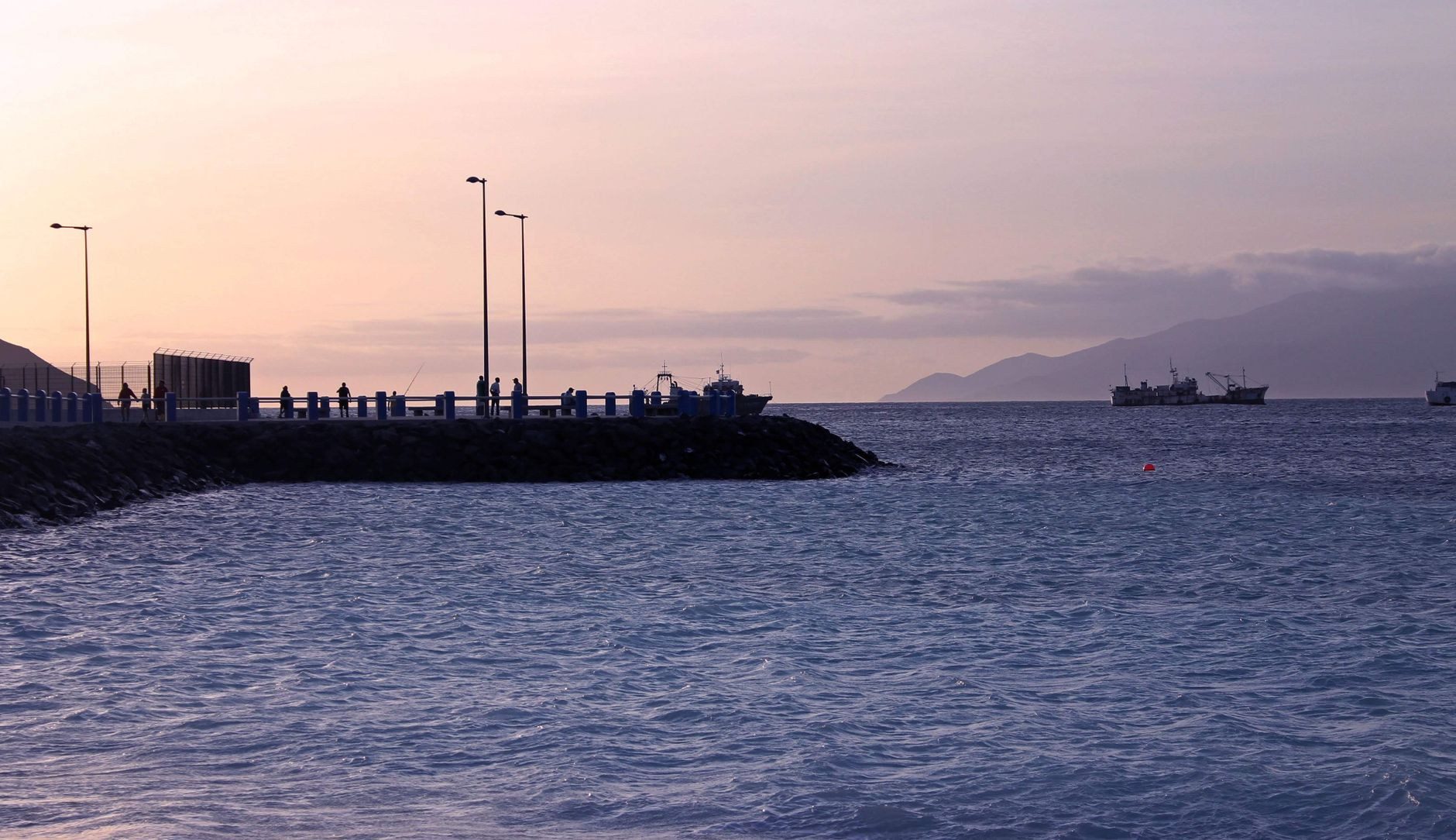
Your journey begins at Cesária Évora International Airport (VXE), located fifteen minutes southwest of Mindelo on the flat coastal plain of São Pedro. After passing through immigration and paying the mandatory Airport Security Fee (TSA), take an official taxi into Mindelo. Set around a deep, circular volcanic bay sheltered by the uninhabited islet of Ilhéu dos Pássaros, Mindelo is the undisputed cultural and intellectual capital of Cape Verde.
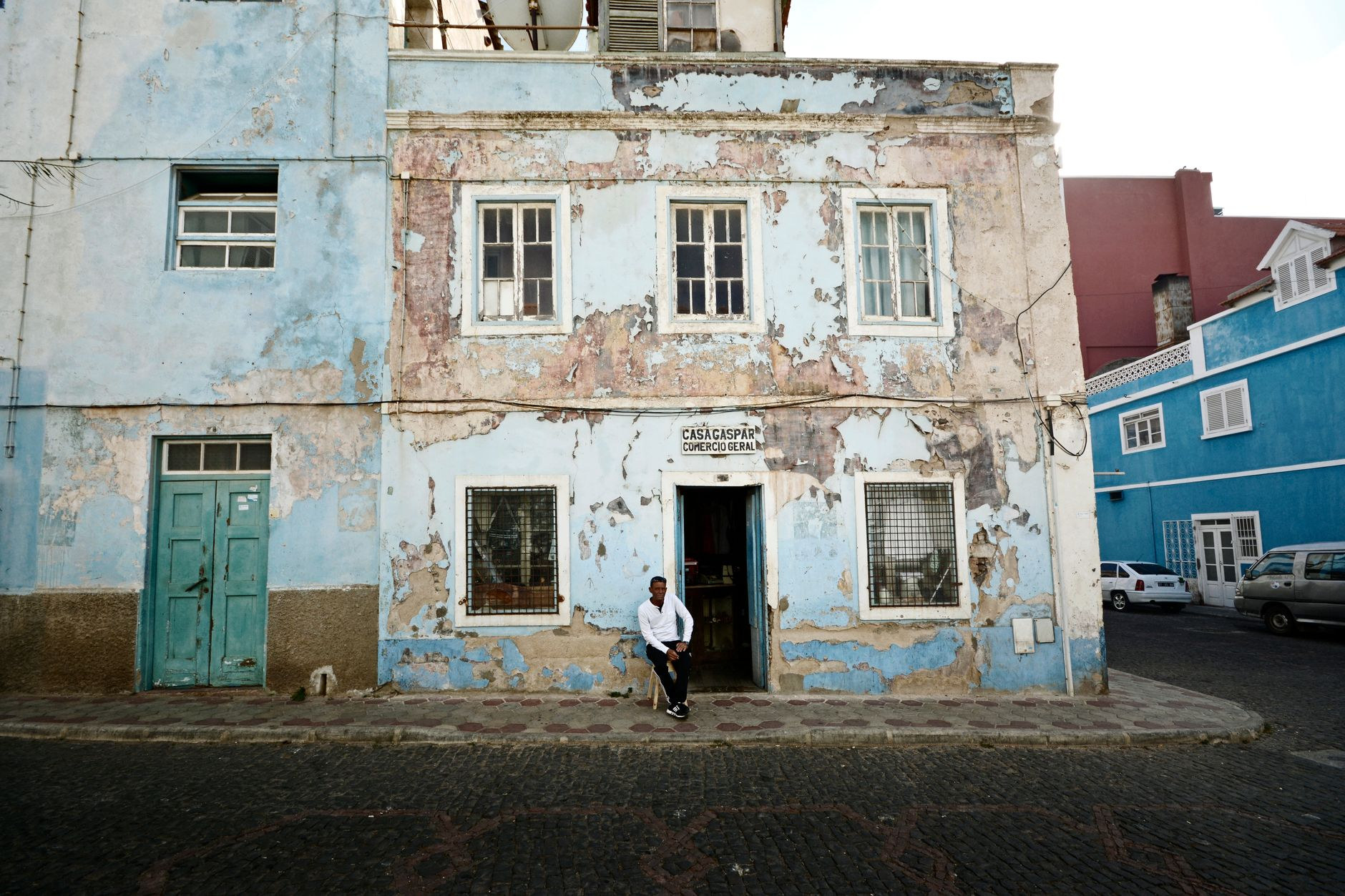
Settle into a restored colonial townhouse hotel in the historic center. Spend your afternoon wandering the cobblestone avenues between Praça Nova and Rua Lisboa. The urban landscape reflects the town’s golden era as a premier 19th-century British transatlantic coaling station, evident in pastel-washed neoclassical facades, wrought-iron verandas, and the distinctive pink Governor’s Palace (*Palácio do Povo*). Enjoy a late-afternoon bica espresso at a shaded sidewalk cafe, watching the lively pedestrian flow of students, artists, and merchants.
Day 2: Monte Verde Panoramas and Mindelo’s Musical Heritage
Dedicate your second morning to exploring the arid exterior of São Vicente. Charter a morning aluguer to ascend Monte Verde, the island’s highest elevation at 744 meters. On clear mornings, the summit weather station provides expansive 360-degree vistas across the entire island, the cobalt sweep of Baía do Porto Grande, and the jagged volcanic skyline of neighboring Santo Antão across the channel.
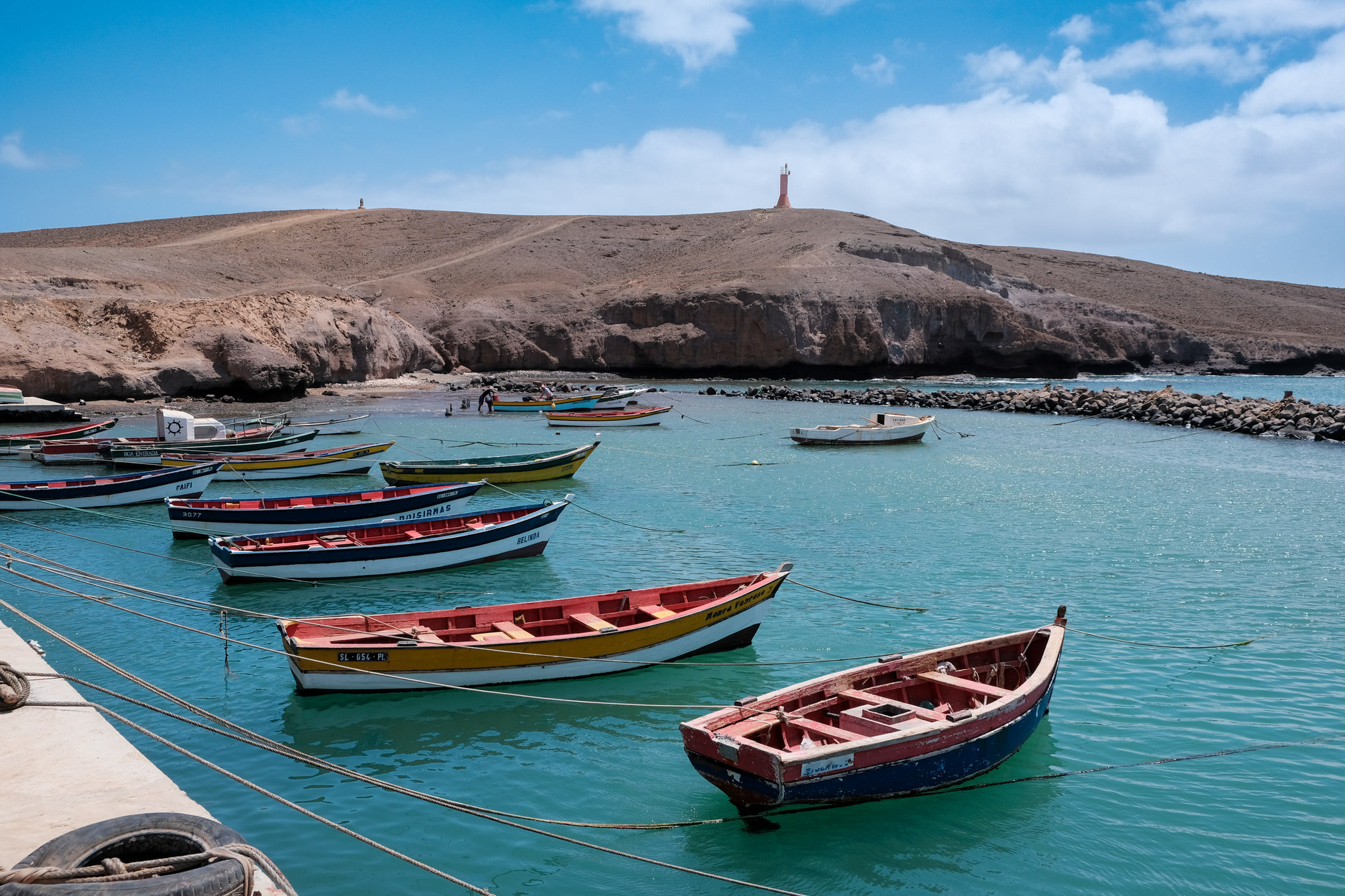
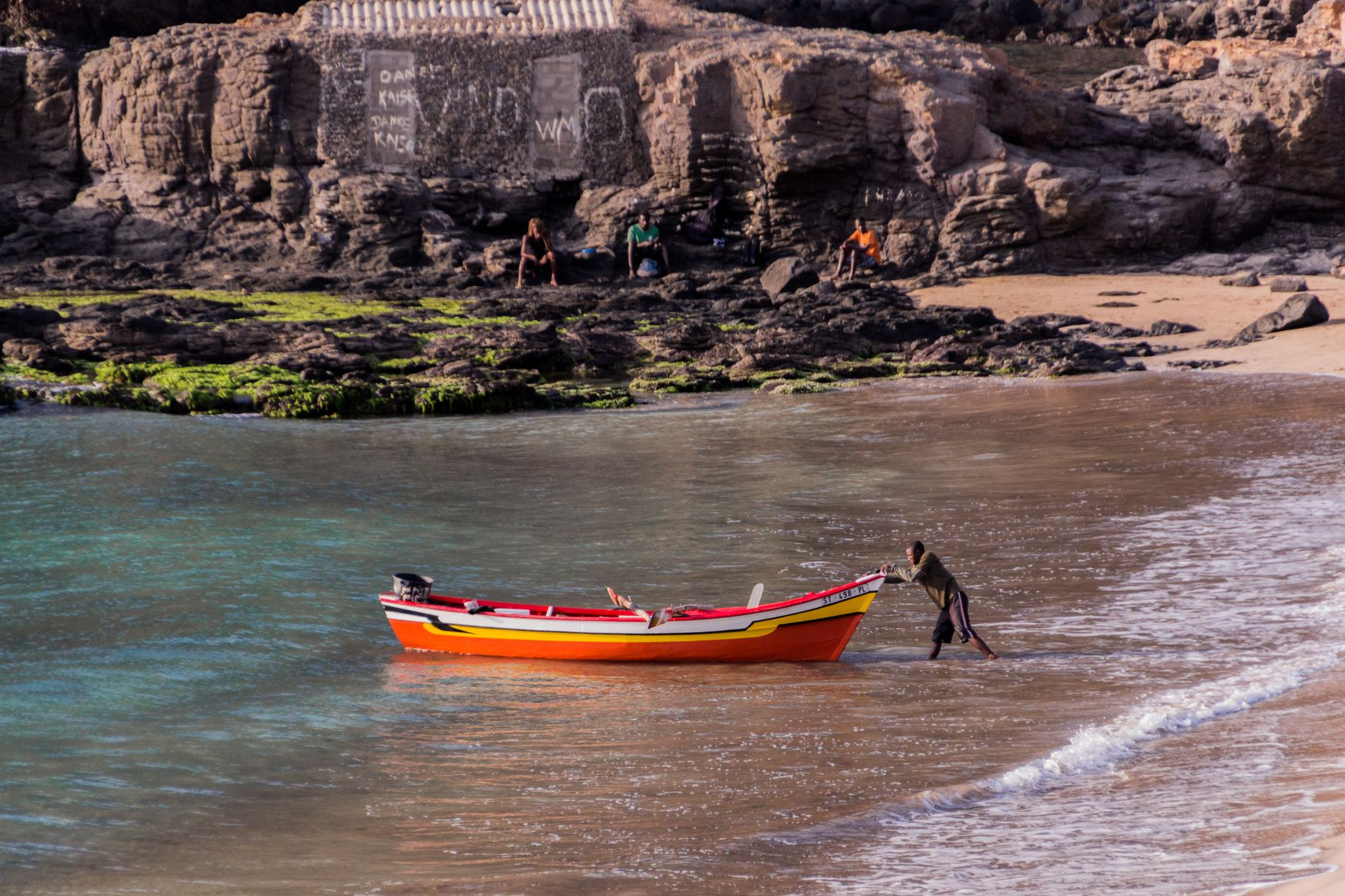
Descend toward the eastern shoreline to visit Baía das Gatas, a sweeping natural cove where an offshore lava reef creates a calm, emerald-tinted saltwater swimming pool sheltered from Atlantic rollers. Continue along the coastal road through the fishing hamlet of Calhau, where colorful wooden skiffs rest on black volcanic sand beneath extinct cinder cones.

In the evening, immerse yourself in Mindelo’s world-renowned musical culture. Music is not a staged tourist spectacle here; it is the fundamental language of community life. Book a table at a traditional music restaurant or intimate bar such as Casa da Morna or Livraria Nho Djunga. Over plates of grilled grouper and goat cheese with papaya marmalade, listen to acoustic ensembles featuring nylon-string guitars, *cavaquinhos*, violins, and rich vocalists singing *morna*—the melancholic, poetic ballad tradition that embodies *sodade*, the uniquely Cape Verdean longing for absent loved ones and scattered homelands.
Day 3: Crossing to Santo Antão via the Historic Estrada da Corda
Board the morning CV Interilhas ferry at Mindelo’s maritime terminal for the crossing to Santo Antão. As the vessel leaves the sheltered harbor, the dramatic silhouette of Santo Antão looms ahead, rising abruptly out of the deep Atlantic like an impenetrable basalt citadel. Disembark at Porto Novo, the dry southern port town where rows of aluguer drivers await arriving passengers.
Bypass the modern coastal highway and insist on travelling north via the historic *Estrada da Corda* (Rope Road). Constructed by hand in the 1960s using hundreds of thousands of hand-cut basalt cobblestones, this engineering marvel climbs relentlessly from the arid sea-level desert into cool pine-forested alpine ridges exceeding one thousand meters elevation.
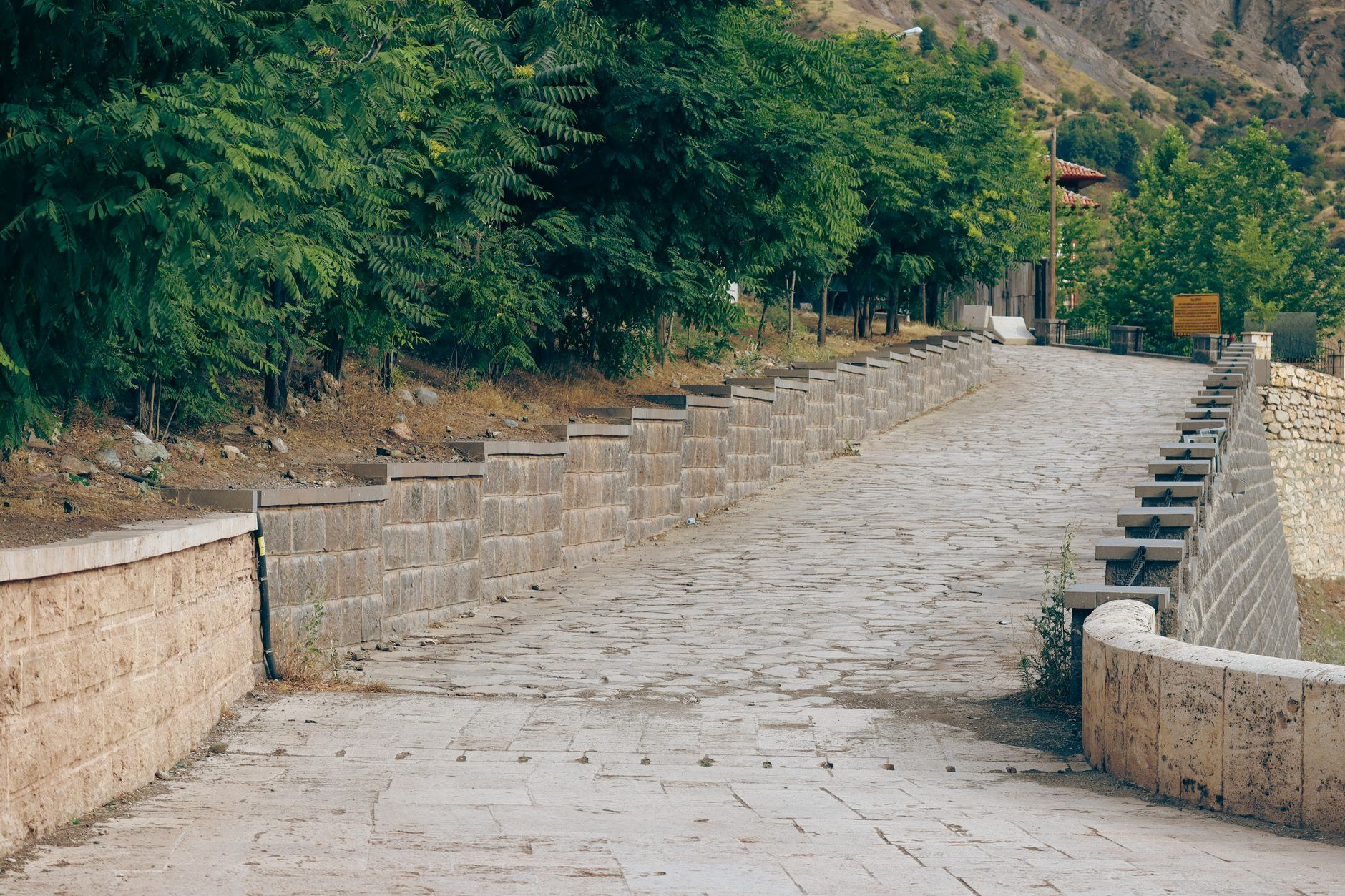
Stop at the rim of Cova Crater, an extinct volcanic caldera whose flat crater floor has been transformed by local farmers into a patchwork of corn, potato, and bean fields. From the northern edge of the caldera, peer down into the vertiginous chasm of Vale do Paul, where mountain mists drift over terraced cliffs dropping hundreds of meters toward the ocean. Continue descending through dramatic switchbacks to base yourself in Ponta do Sol or Ribeira Grande along the rugged north coast.
Day 4: Hiking the Terraced Oasis of Vale do Paul
Day four delivers one of the most magnificent valley hikes in all of Africa. Arrange an early morning aluguer transfer up to the rim of Cova Crater to begin the descent into Vale do Paul. The stone trail winds steeply down thousands of stone steps cut directly into the caldera wall, descending into a lush, subtropical garden irrigated by perennial mountain springs.
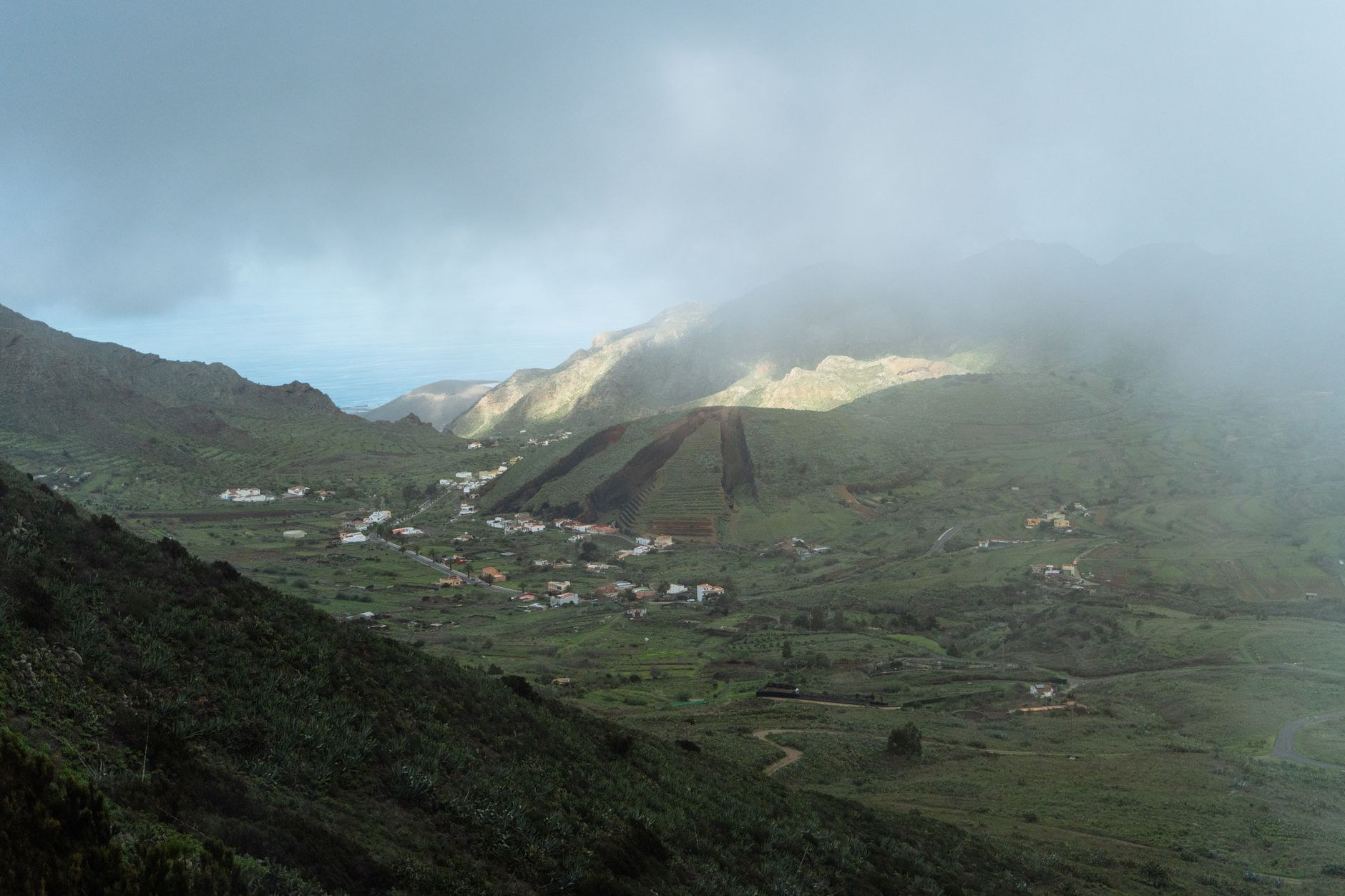
As you descend, the vegetation intensifies into a lush agricultural tapestry: terraced groves of sugarcane, banana plants, breadfruit, mango trees, and shade-grown Arabica coffee bushes. Small hamlets of thatched stone cottages cling to rocky promontories beside cascading irrigation channels (*levadas*). Friendly local farmers greet passing hikers with warm calls of *bom dia*, tending their plots with hand hoes on nearly vertical hillsides.

In the lower valley around Cabo da Ribeira and Eito, stop at an artisanal *trapiche* (traditional sugarcane distillery). Between January and May, oxen or mechanical rollers crush freshly cut stalks to extract pure sweet cane juice (*caldo*). The juice ferments naturally before distillation in copper wood-fired stills to produce *grogue*, the legendary national spirit. Savor a small tasting of aged *grogue velho* or *ponche* (blended with honey and lime) before taking an afternoon aluguer back to your coastal base.
Day 5: The Vertical Cliff Trail: Ponta do Sol to Fontainhas and Cruzinha
Lace up supportive trekking boots for Santo Antão’s iconic coastal trail, a dramatic footpath carved into sheer volcanic sea cliffs connecting Ponta do Sol to the fishing hamlet of Cruzinha da Garça.
Departing Ponta do Sol on foot, the stone path ascends along the cliff face high above crashing Atlantic swells. After forty-five minutes of steady walking, round a dramatic mountain bend to reveal Fontainhas—a striking village of pastel green, yellow, and terra-cotta houses clustered precariously on a knife-edge volcanic ridge suspended over a sheer ravine.
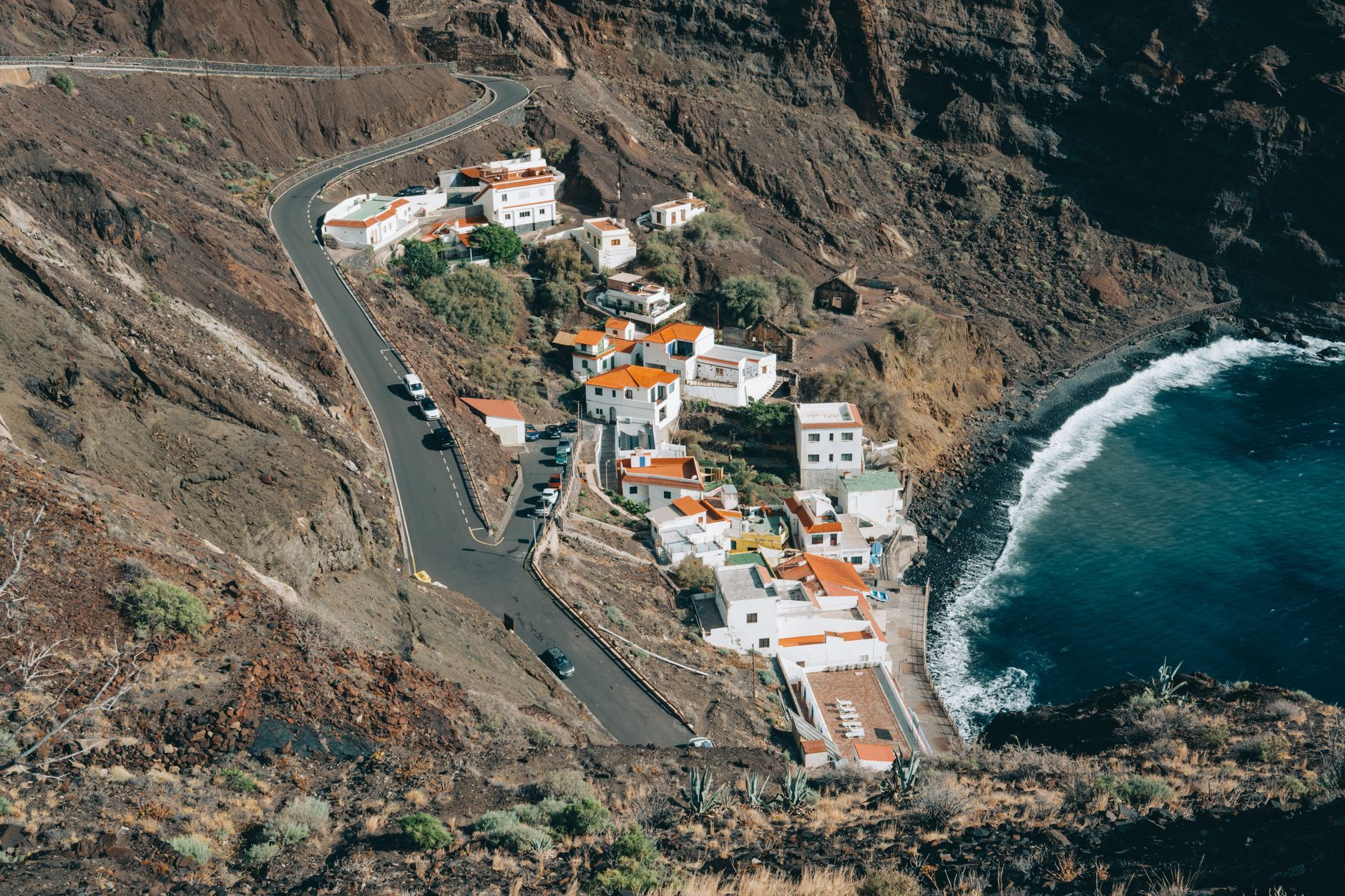
Pause in Fontainhas for a refreshing fresh fruit juice at a cliffside tavern before continuing along the path as it hugs vertical sea precipices through the isolated settlements of Corvo and Formiguinhas. At Formiguinhas, enjoy a hearty lunch of freshly stewed fish and rice at a family-run terrace overlooking the foaming ocean below. The final stretch of the five-hour hike skirts black sand beaches and rugged headlands before arriving in Cruzinha, where your pre-arranged aluguer awaits to drive you back along the coastal road.
Day 6: The Arid Western Gorges of Ribeira das Patas
On day six, explore the dramatic geological contrasts of Santo Antão’s southwestern interior. Hire a private aluguer driver for a day excursion into Ribeira das Patas and the vast volcanic cirque of Curral das Gatas.
Unlike the lush, moisture-trapping valleys of the north, the southwestern slopes are arid, stark, and monumental. Gigantic vertical basalt dykes, formed by ancient magma intrusions, bisect the canyon walls like prehistoric ramparts. Walk along the dramatic stone trails of Bordeira de Tubarão, a mountain staircase scaling the massive vertical cliff wall that separates the valley from the high plateau of Norte.
Continue to the remote agricultural valley of Alto Mira, where local communities have engineered ingenious terrace systems to cultivate vegetables against sheer canyon rock faces. Enjoy lunch at a rural mountain guesthouse, tasting local roasted goat with manioc and sweet potatoes, before returning through Porto Novo to prepare for your ferry return.
Day 7: Ferry Return to Mindelo and Sunset at Laginha Beach
Spend your final morning on Santo Antão visiting the open-air artisanal market in Porto Novo. Local craftswomen sell woven palm baskets, jars of raw mountain honey, artisanal goat cheese cured in grogue leaves, and bags of single-origin Santo Antão coffee beans.
Board the early afternoon CV Interilhas ferry back across the channel to São Vicente. Arriving back in Mindelo, check into your hotel and head directly to Praia da Laginha, the city’s pristine public white-sand beach. Join local families swimming in the calm, transparent turquoise waters, floating while gazing across the bay at the distinctive silhouette of Monte Cara, whose natural rock profile resembles a sleeping giant’s face. Celebrate your final evening in Mindelo with a seafood feast of grilled Atlantic lobster and fresh octopus salad at a waterfront restaurant along the marina.
Day 8: Mindelo’s Maritime Sights and Airport Departure
Spend your concluding morning exploring Mindelo’s bustling municipal markets. Start at the replica of Lisbon’s Torre de Belém on the waterfront, built in 1921 to honor Portuguese navigators. Adjacent to the tower, the bustling Mercado de Peixe (Fish Market) showcases the morning’s ocean harvest: swordfish, wahoo, yellowfin tuna, and red snapper skillfully gutted by local fishmongers.
Visit the modest but moving Museu Cesária Évora, housed in the singer’s former residence in the Lombo neighborhood, displaying her stage costumes, awards, and recordings. After a farewell lunch of traditional *cachupa rica*—the hearty national stew of slow-cooked hominy corn, beans, pork, chorizo, and cabbage—take a taxi to Cesária Évora Airport for your homeward flight.
Mobile Connectivity and Digital Logistics in Cape Verde
Maintaining reliable mobile internet while exploring Cape Verde is critical for checking ferry sailing notices on CV Interilhas, verifying aluguer departure locations, coordinating trail pickups in remote valleys, and navigating offline maps. Mobile telecommunications across the archipelago are operated by Alou (CVMóvel), providing reliable 4G LTE coverage across Mindelo, Porto Novo, Ribeira Grande, and Ponta do Sol.
Rather than dealing with physical SIM card registration queues or language barriers in Portuguese at local stores, activate an eSIM before arrival. The NXTL Cape Verde eSIM connects directly to Alou 4G LTE as soon as you touch down at VXE Airport. Operating on a transparent pay-as-you-go rate of $12.57 per gigabyte, NXTL eliminates the waste of expiring prepaid bundles. Because your balance never expires, any unused data credits remain in your account for future international travel across 180+ countries.
Travel Scams and Regional Logistics Pitfalls to Avoid
Cape Verde is one of Africa’s most politically stable and peaceful democracies. However, independent travellers should remain mindful of several specific travel pitfalls:
- The Multi-Island Domestic Flight Domino: Trying to visit four or five islands during a short one- to two-week trip creates severe logistical vulnerability. Internal flights operated by regional carriers are frequently delayed or canceled due to high winds or dust storms (*bruma seca*). Basing your trip on the reliable São Vicente-Santo Antão ferry eliminates flight cancellation risks entirely.
- The 1:100 Euro Currency Penalty: Many tourist shops and taxis in Mindelo will accept Euros, but they calculate exchange at 1 EUR = 100 CVE instead of the official fixed rate of 110.265 CVE. This adds an automatic ten percent surcharge to every transaction. Withdraw Escudos from local Multibanco ATMs and pay in local currency.
- Cruzinha Trailhead Transport Extortion: Hikers finishing the five-hour cliff trail from Ponta do Sol to Cruzinha without pre-arranged transport often find only one or two private drivers waiting at the road head, demanding four to five times the standard aluguer fare. Always arrange a confirmed return pickup with your Ponta do Sol guesthouse or aluguer driver before starting your hike.
- Unofficial Mindelo Marina Guides: Around the waterfront and municipal market in Mindelo, persuasive street hustlers often approach arriving travellers claiming to be official tourism ambassadors or relatives of famous musicians, offering unsolicited walking tours before demanding large cash payments. Politely decline and arrange certified cultural guides through your hotel.
- Adulterated Industrial Grogue: Commercial bootleggers occasionally produce cheap, unrefined liquor (*grogue de calda*) made from imported refined sugar rather than pure distilled sugarcane juice, causing severe headaches and stomach distress. When buying grogue as a souvenir, purchase certified bottles from recognized artisanal trapiches in Vale do Paul or licensed specialty shops.
By pairing the cultural richness of Mindelo with the alpine grandeur of Santo Antão, travelling with the reliable rhythm of the ferry, and keeping mobile data active for mountain logistics, your Cape Verdean journey will deliver an unforgettable Atlantic island experience.