Ecuador concentrates extraordinary ecological, volcanic, and cultural diversity into a compact equatorial landmass. Yet many first-time travelers treat mainland Ecuador merely as an inconvenient 24-hour transit stop on the way to the Galápagos Islands. In doing so, they miss one of South America’s most rewarding overland journeys: the Avenue of the Volcanoes, stretching along the high spine of the Andes between dramatic snowcapped cones, indigenous textile markets, and lush subtropical cloud forests.
The definitive mainland route is an 8-day Andean highland loop based from Quito. You explore the best-preserved colonial center in South America, browse the bustling indigenous artisan stalls of Otavalo, hike along high-altitude glacial lagoons beneath Cotopaxi, marvel at the emerald crater waters of Quilotoa, and descend into the rushing waterfalls of Baños. The Galápagos Islands are a magnificent natural wonder, but they require a dedicated, advance-booked cruise or land-based expedition. The mainland deserves to be explored on its own merits.
The 8-Day Ecuador Andean Itinerary at a Glance
| Day / Stage | Overnight Base | Key Highlights | Transit & Route Logistics | Essential Advance Bookings | What to Cut / Save |
|---|---|---|---|---|---|
| Days 1–2: Equatorial Colonial Heart | Quito (Centro Histórico or La Floresta) | Plaza Grande, gilded interior of Iglesia de la Compañía de Jesús, San Francisco monastery, Panecillo viewpoint, Teleférico cable car | Quito Airport (UIO) to city center via official taxi (45 min, fixed $25) or Aeroservicios express bus ($8); city via Uber | Compañía de Jesús admission pass; schedule high-altitude Teleférico for Day 2 after initial rest | Skip unmetered street taxis at night; book official rides through Uber or have your hotel call registered radio cabs |
| Day 3: Indigenous Textile Traditions | Otavalo or Quito | Day trip north across the Equator: Otavalo Plaza de Ponchos artisan market, Cuicocha volcanic caldera crater lake hike | Quito Carcelén bus terminal to Otavalo (2 hr, $3.50); local taxi to Cuicocha lake ($10) | Otavalo market visits are best on Saturdays (peak market day) or Wednesdays; pack small US dollar bills | Skip organized mega-bus commercial tours; public express buses from Carcelén depart every 15 minutes and save over $60 per person |
| Days 4–5: Avenue of the Volcanoes | Lasso or Cotopaxi Foothills (Hacienda) | Cotopaxi National Park, hiking around Limpiopungo Lagoon (3,890m), ascent to José Rivas Refuge (4,860m), historic Andean hacienda stay | Quito to Cotopaxi via Pan-American Highway South (1 hr 30 min, 70 km); licensed 4×4 park guide required at national park gate | Cotopaxi certified 4×4 guide; overnight reservation at a traditional historic hacienda (Hacienda San Agustín or La Cienega) | Skip attempting to drive a compact rental car up to the refuge car park; rough washboard volcanic tracks require high-clearance 4WD |
| Days 6–7: Crater Lakes & Waterfalls | Baños de Agua Santa | Emerald waters of Quilotoa crater lake, Pailón del Diablo (Devil’s Cauldron) waterfall gorge, thermal baths, cloud forest trails | Cotopaxi to Quilotoa Loop (2 hr) via Zumbahua; continue to Baños via Ambato (2 hr 30 min) | Pailón del Diablo waterfall trail pass ($2); chiva waterfall route ticket in Baños | Skip hiking back up the steep Quilotoa crater wall on foot if feeling altitude fatigue; local mule rides cost just $10 |
| Day 8: Cloud Forest Return & Departure | Quito / Departure | Scenic drive back up the Andean corridor to Quito, afternoon artisan chocolate tasting in La Floresta, transfer to Quito Airport | Baños to Quito Quitumbe bus terminal (3 hr 30 min, $5); taxi to Quito Airport (UIO) (50 min, $25–$30) | Schedule international departure flight after 18:00 to accommodate highway driving times | Skip buying cheap industrial chocolate bars; taste single-origin Ecuadorian dark chocolate (Pacari, Republica del Cacao) |
Following this highland itinerary lets you acclimatize gradually to high elevations while discovering how dramatically Ecuador’s landscape shifts within just two or three hours of driving.
Quito Colonial Core: Baroque Gold & Volcanic Panoramas (Days 1–2)
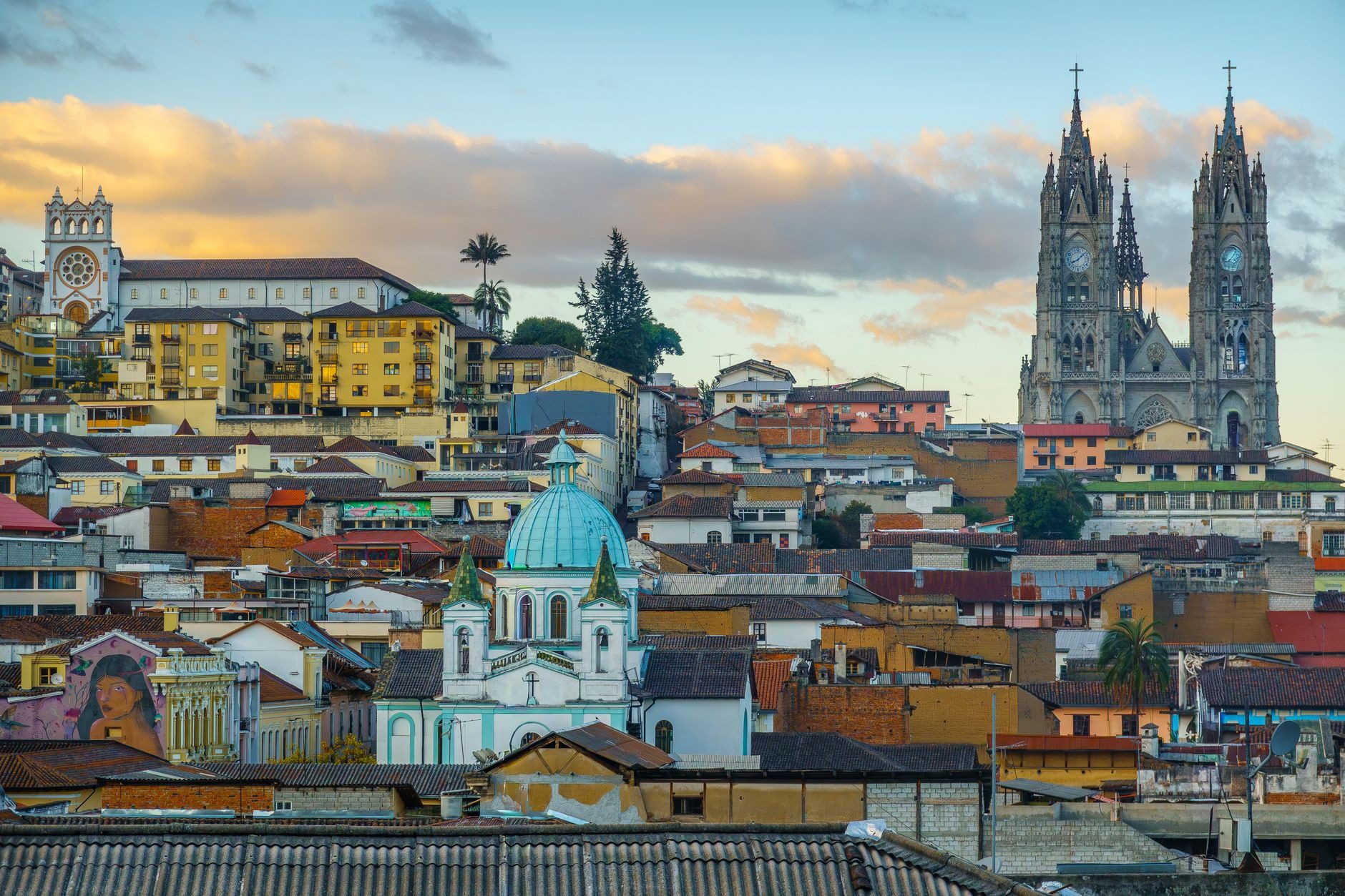
Your journey begins in Quito, nestled in a high Andean basin at 2,850 meters beneath the active Pichincha volcano. Founded on the ruins of an ancient Inca administrative center, Quito’s Centro Histórico is celebrated as the first UNESCO World Cultural Heritage site alongside Kraków.
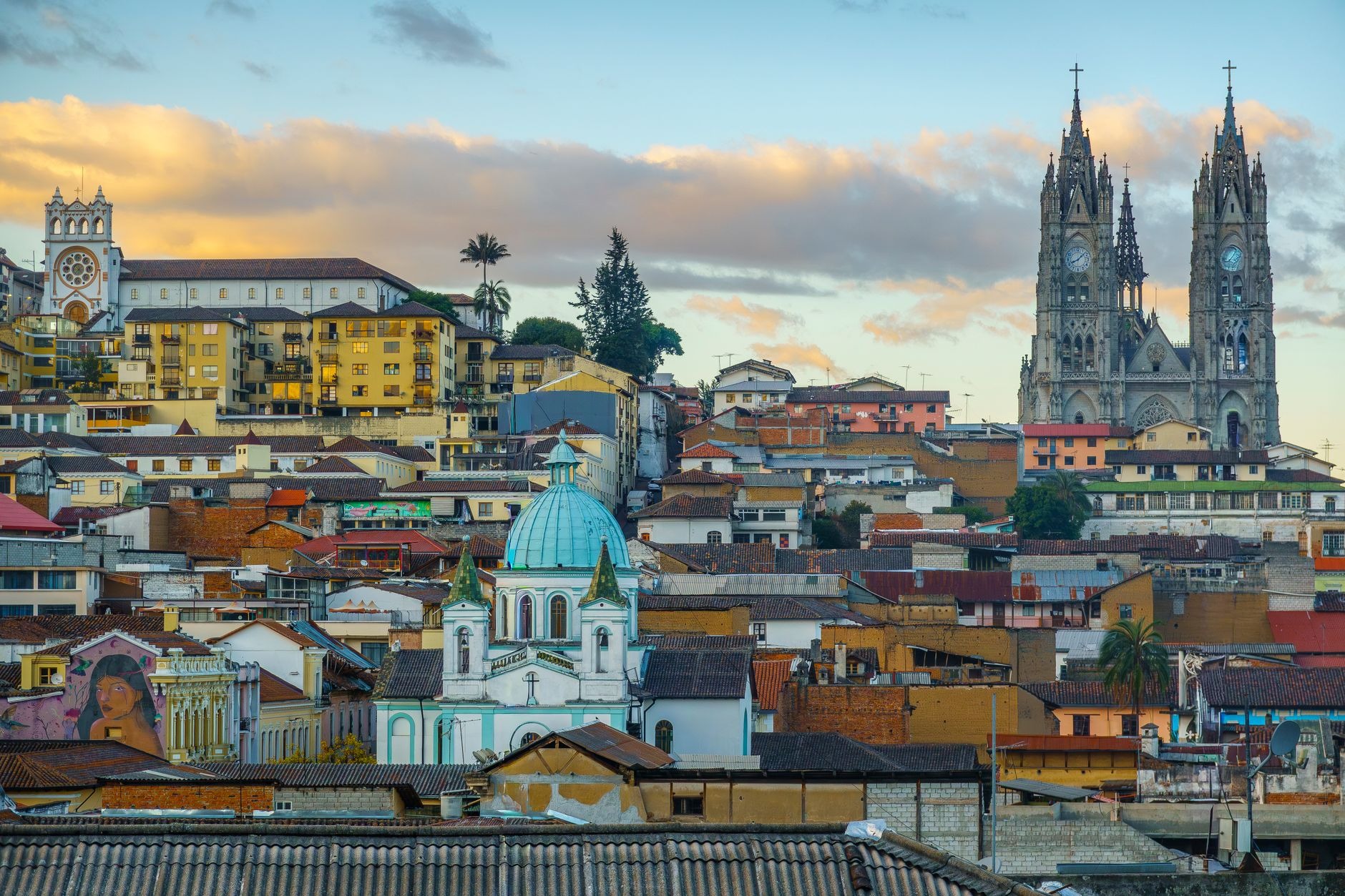
Start in Plaza Grande (Plaza de la Independencia), watching daily life unfold around the Carondelet Presidential Palace and Metropolitan Cathedral. Walk two blocks south to the Iglesia de la Compañía de Jesús, widely regarded as the crowning triumph of the Quito Baroque school. Construction began in 1605 and took 160 years to complete.
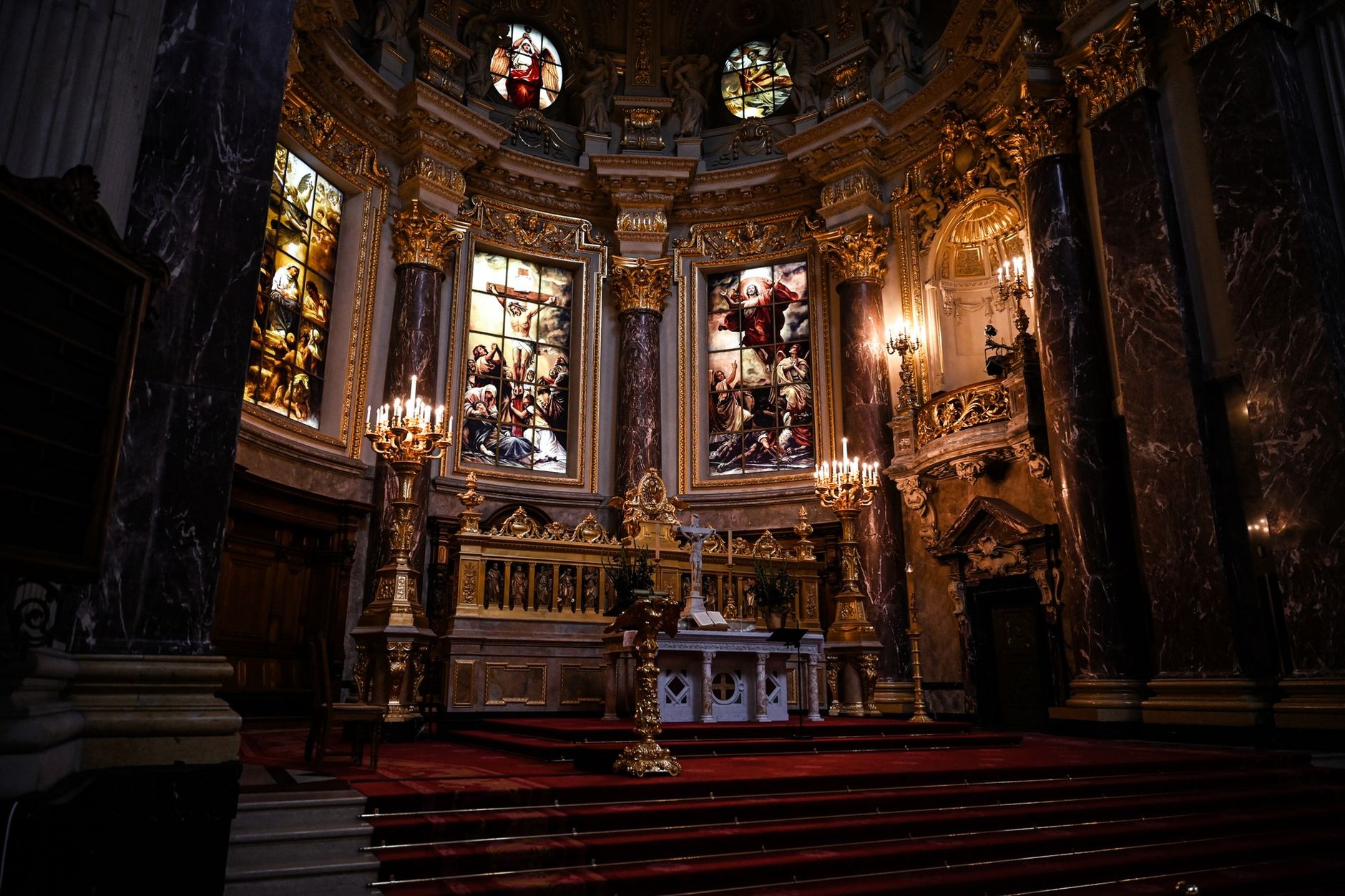
The interior is lined with more than seven tons of shimmering 23-karat gold leaf, yet its true artistic genius lies in indigenous syncretism. Jesuit missionaries permitted indigenous Caranqui and Inca master craftsmen to carve Andean motifs directly into the altars: golden sun-god symbols (Inti) conceal the Christian Holy Spirit, cherubs display indigenous facial features, and altarpieces feature native Andean passionflowers and chirimoya fruit alongside traditional European saints.
While exploring Quito, visit an artisan millinery workshop to discover one of fashion’s classic misnomers: the Panama hat. Woven exclusively in Ecuador from fine toquilla palm straw (Carludovica palmata) in Montecristi and Cuenca, these UNESCO-inscribed hats earned their moniker during the California Gold Rush when travelers bought them crossing the Isthmus of Panama. Superfine Montecristi weaves take months to craft and can pass through a wedding ring.
On Day 2, ride the Teleférico cable car ascending the eastern flank of Pichincha volcano to Cruz Loma (4,050 meters). On clear mornings, you can gaze across the central valley to see a ring of snow-draped volcanic peaks, including Cotopaxi, Cayambe, and Antisana.
Northern Highlands: Otavalo Textiles & Cuicocha Crater Lake (Day 3)
Day 3 takes you north across the Equator into the verdant valleys of Imbabura province to Otavalo. The indigenous Kichwa Otavaleño people have preserved their weaving traditions since pre-Inca times, creating a globally renowned textile market in the Plaza de Ponchos.
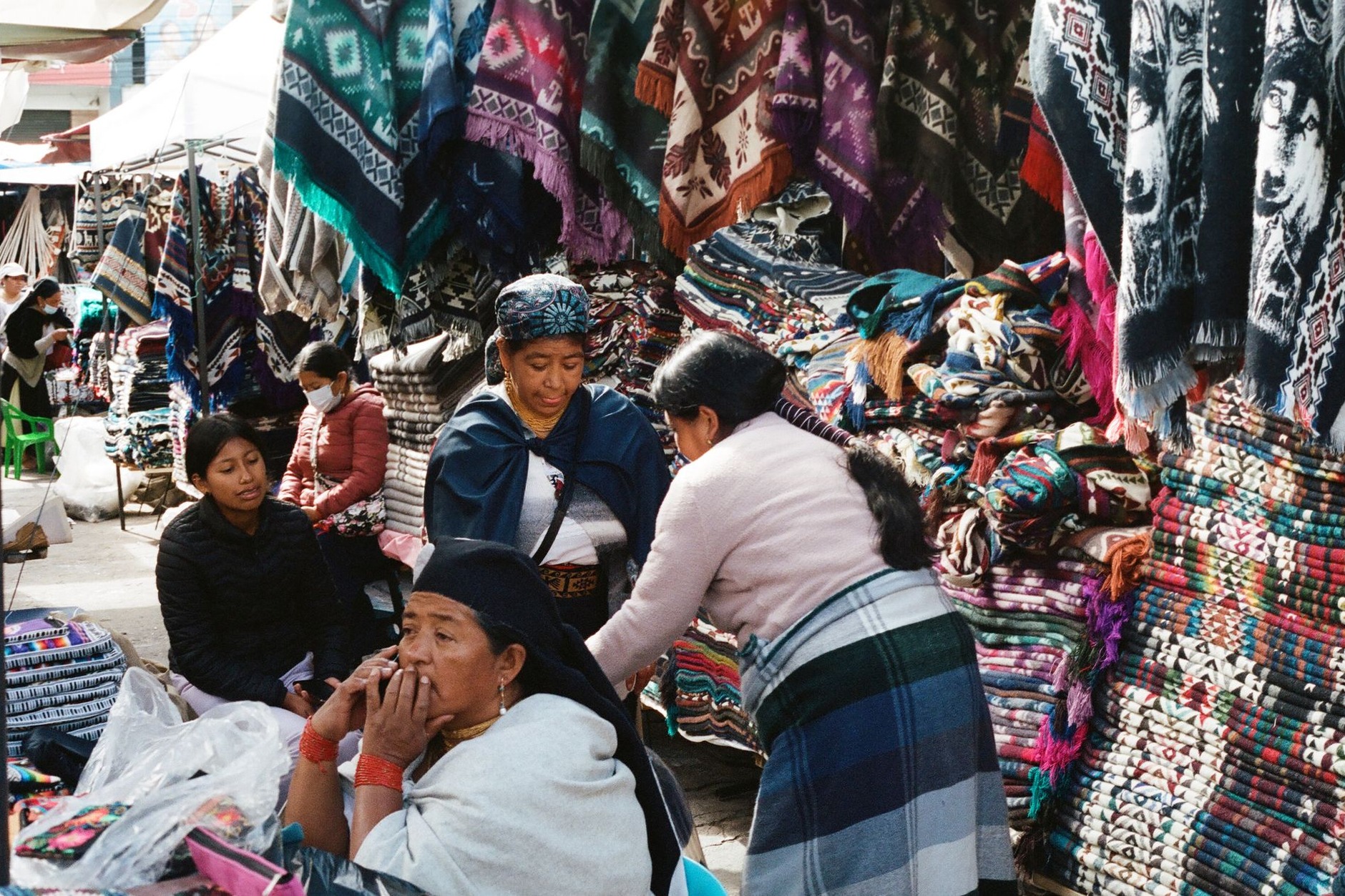
Wander through rows of colorful hand-woven woolen blankets, alpaca scarves, embroidered blouses, and hand-carved tagua nut jewelry. The atmosphere is dignified and welcoming, with local artisans dressed in traditional navy blue ponchos, white trousers, and gold beaded necklaces.
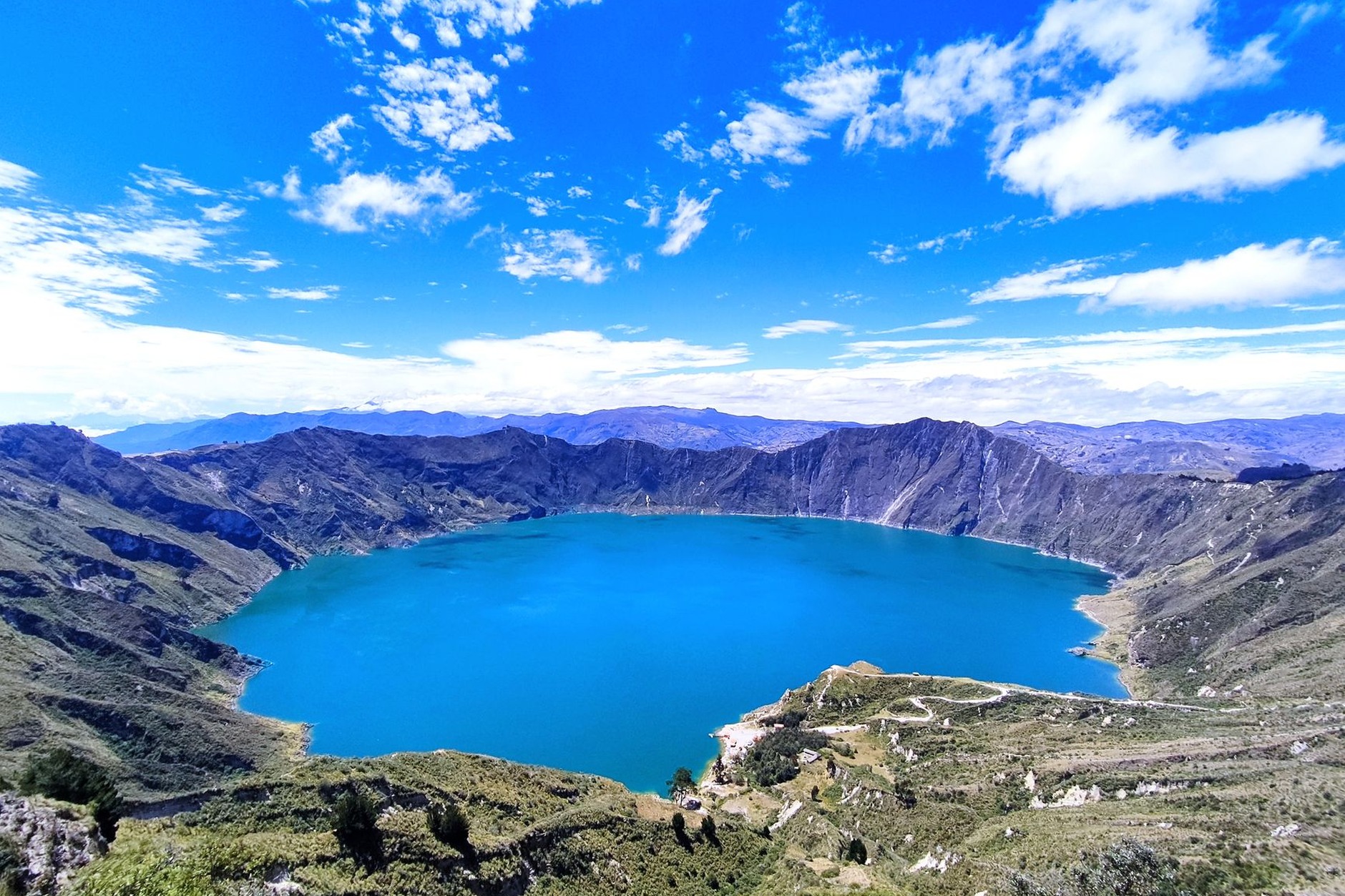
A short taxi ride west brings you to Laguna Cuicocha (Lake of the Guinea Pigs), a deep, three-kilometer-wide crater lake resting at 3,240 meters inside the caldera of the Cotacachi volcano. Walk along the rim trail through blooming wild orchids, looking down on the two forested lava islands rising from the deep blue waters.
Avenue of the Volcanoes: Cotopaxi National Park & Páramo Trails (Days 4–5)
On Day 4, travel south along the Pan-American Highway into the Avenue of the Volcanoes, a corridor named by Prussian naturalist Alexander von Humboldt in 1802. Ascending Chimborazo and Cotopaxi, Humboldt developed his groundbreaking *Tableau Physique des Andes*, establishing modern ecology by mapping global altitude and vegetation zones.
A fascinating planetary fact defines this spine: due to the Earth’s equatorial bulge from centrifugal rotation, the summit of Mount Chimborazo (6,263m) is the closest terrestrial point to the Sun and farthest from Earth’s core—standing over two kilometers further from the center than Mount Everest.
Enter Cotopaxi National Park, home to one of the world’s highest active volcanoes (5,897 meters), celebrated for its symmetrical snow-capped cone. Hike along the flat, scenic perimeter trail around Limpiopungo Lagoon (3,890 meters). The wind-swept high-altitude grasslands (páramo) are home to wild Andean horses, caracara falcons, and Andean gulls.
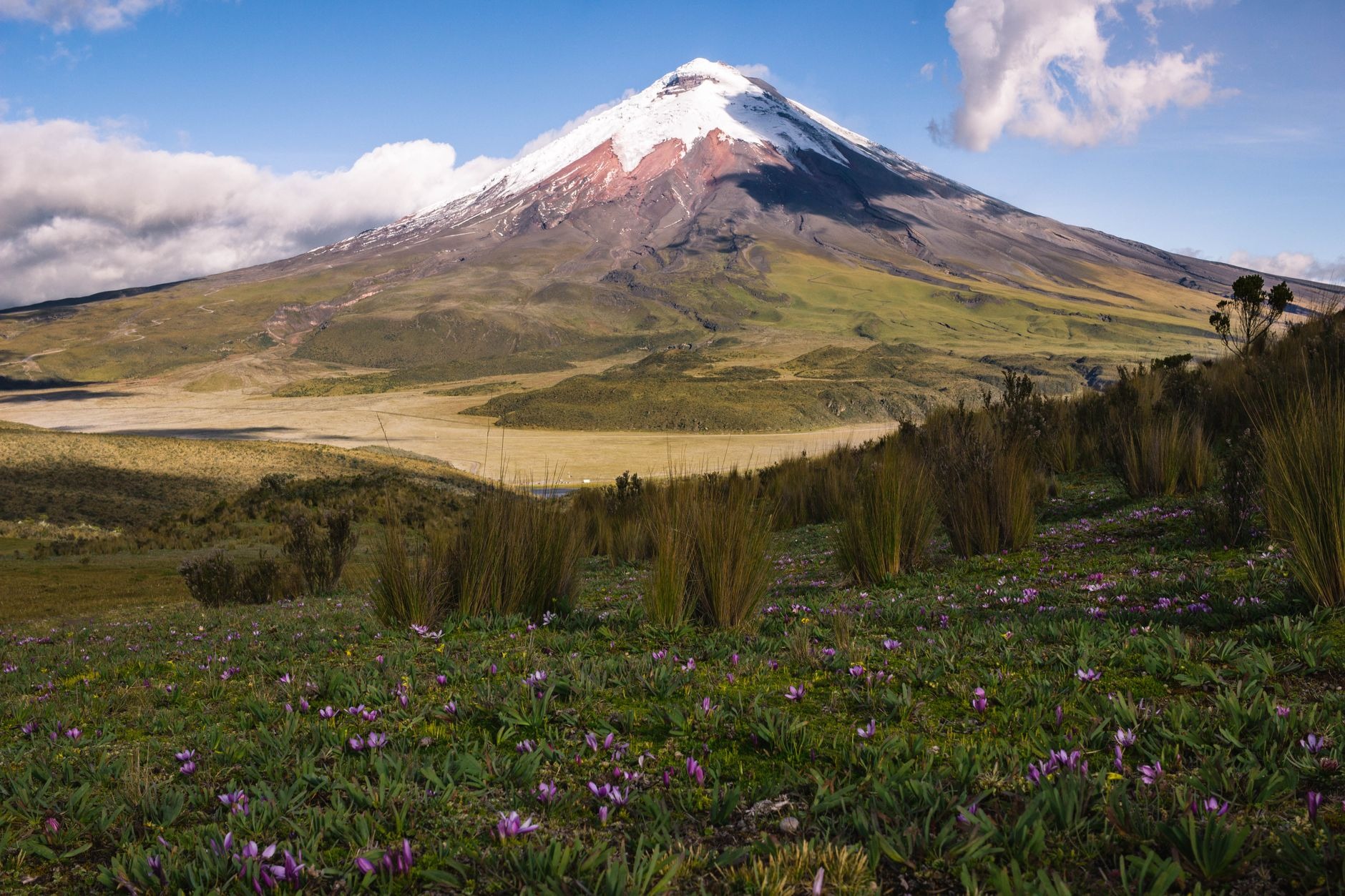
If you feel well-acclimatized, make the challenging hike up loose volcanic scree to the José Rivas Refuge at 4,860 meters. Spend the night at a historic 300-year-old stone hacienda, relaxing by open log fireplaces beneath beamed ceilings.
Quilotoa Crater Loop to Baños Cloud Forests & Waterfalls (Days 6–7)
Day 6 leads westward along the dramatic mountain switchbacks of the Quilotoa Loop to Laguna Quilotoa, an 800-year-old collapsed volcanic caldera holding a magnificent mineral-rich crater lake.
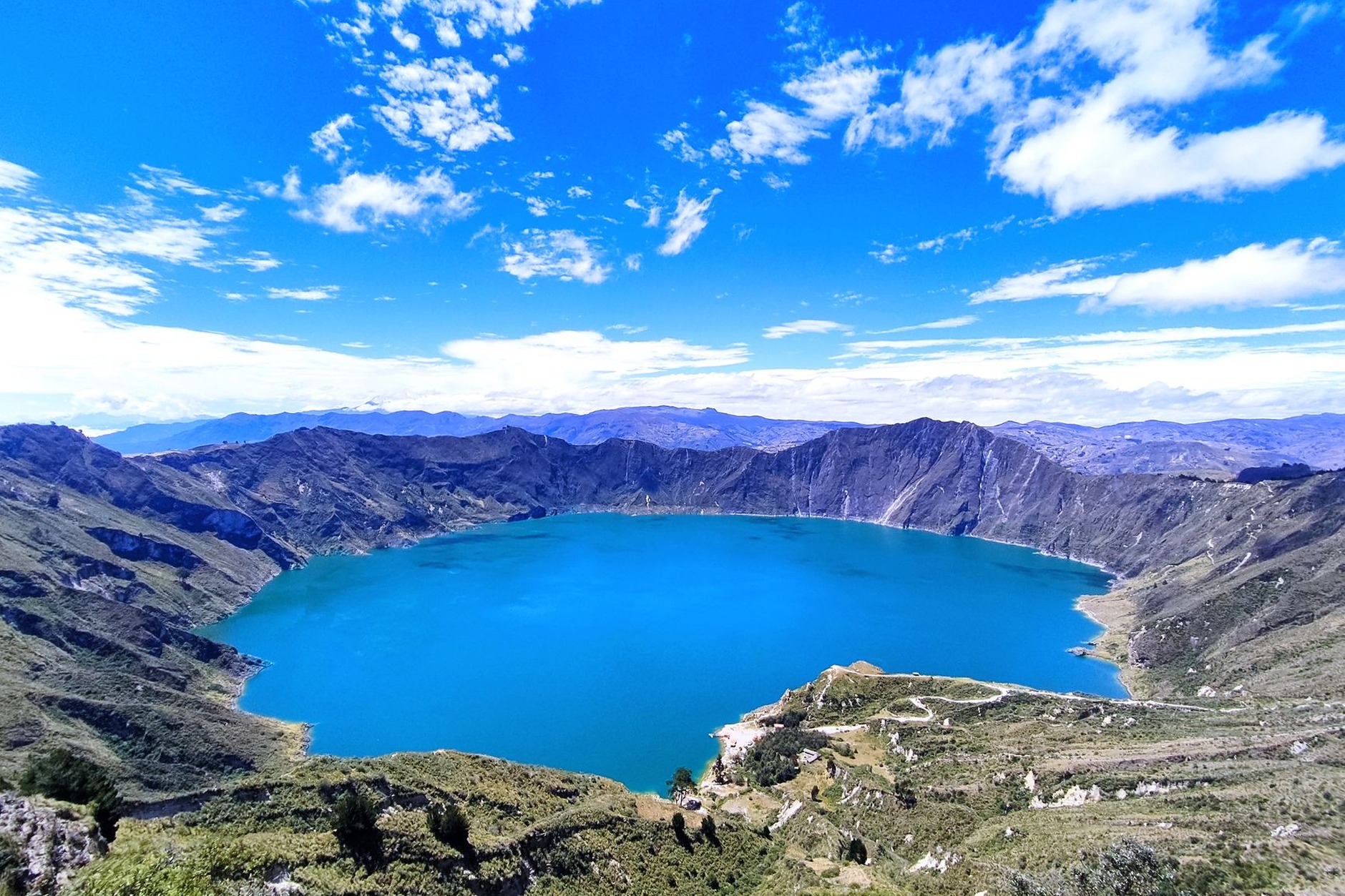
Stand on the wooden viewpoint at 3,914 meters to admire the lake, whose waters shift from deep turquoise to shimmering emerald depending on the angle of the sun. Continue down through the dramatic Pastaza River canyon to Baños de Agua Santa, an adventure town nestled in the lush cloud forests where the Andes drop into the Amazon basin.
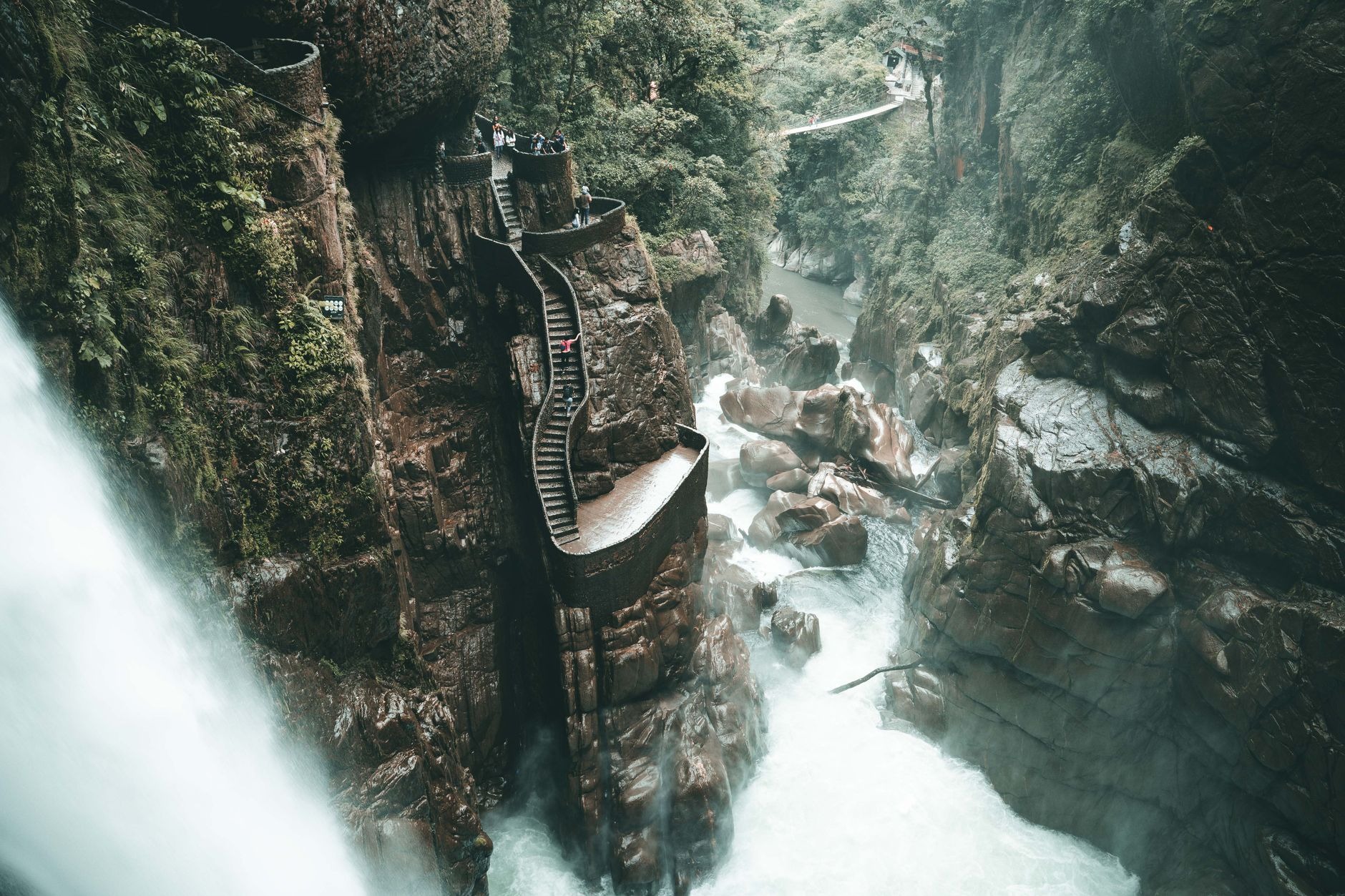
On Day 7, travel along the Waterfall Highway (Ruta de las Cascadas) to visit Pailón del Diablo (Devil’s Cauldron). Follow stone stairways carved directly into the canyon rock face to stand behind the deafening roar of the 80-meter cascade, feeling the cool mountain spray.
Highland Gastronomy: Locro de Papa, Heirloom Cacao & Andean Produce
Ecuadorian cuisine is comforting, hearty, and centered on native Andean root crops, fresh mountain cheeses, and exceptional tropical produce. The definitive comfort dish of the highlands is Locro de Papa, a rich potato and cheese soup simmered with creamy native potatoes, seasoned with annatto and garlic, and served with sliced ripe avocado and fresh crumbling queso fresco.
Ecuador is also the genetic homeland of chocolate. Recent excavations confirmed that the Mayo-Chinchipe people domesticated cacao over 5,300 years ago—predating Mesoamerican chocolate by more than a millennium. Today, Ecuador’s heirloom Arriba Nacional cacao is celebrated globally for its floral and fruit notes.
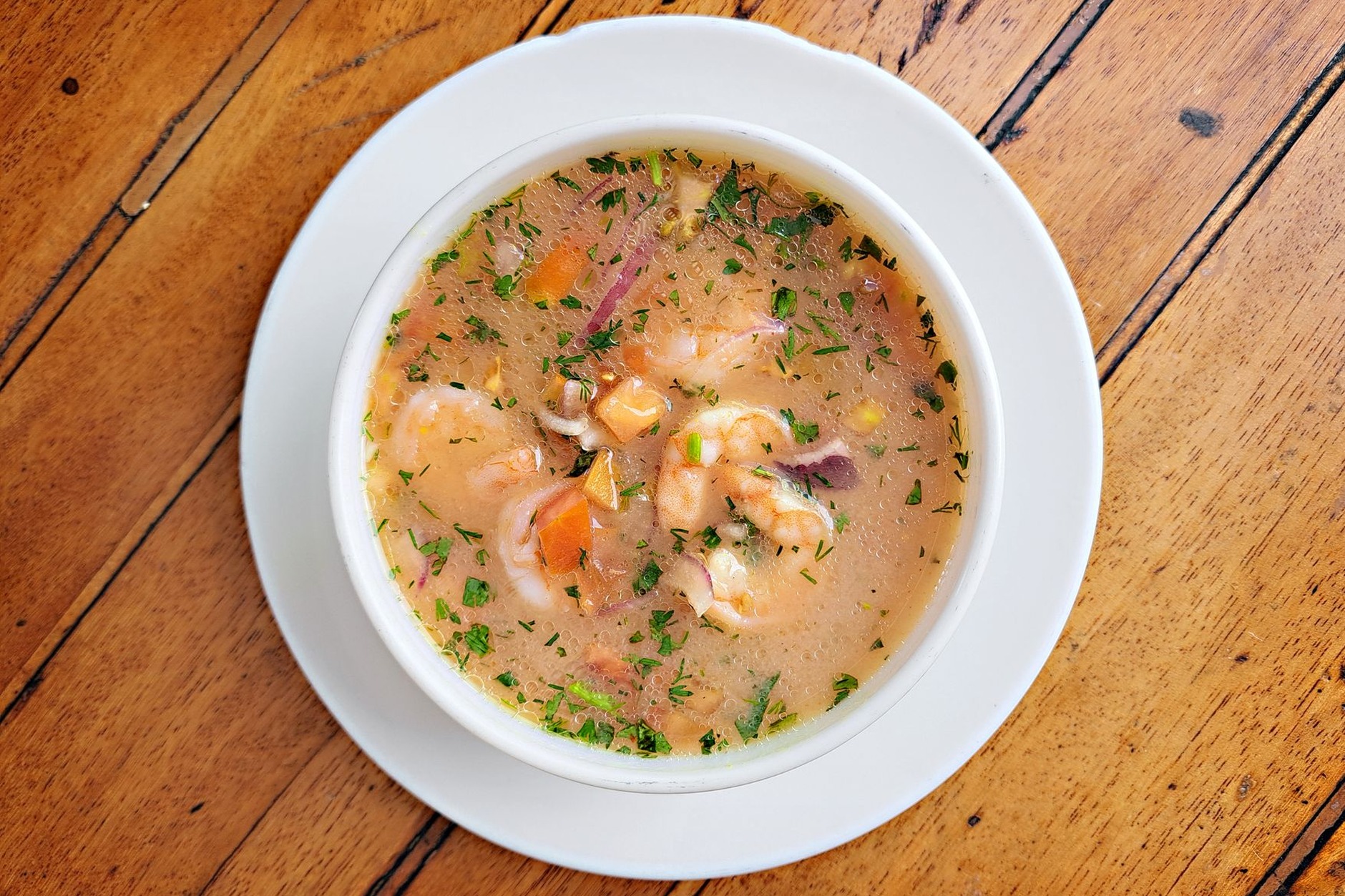
In Baños and Otavalo, sample street-side llapingachos (pan-fried potato patties stuffed with cheese, served with peanut sauce and fried chorizo). Also try authentic Ecuadorian ceviche, which differs from Peruvian styles: coastal shrimp is gently poached in citrus and passionfruit juices with red onions and cilantro, served with crunchy toasted corn kernels (tostado) and fried green plantain chips (chifles).
Street Smarts: Unmetered Taxis, Counterfeit Bills & Altitude Pitfalls in Ecuador
Ecuador is a welcoming country, but high elevations, currency nuances, and localized street hustles in large cities require clear precautions. Keep these verified street smarts in mind:
- The Mustard / Liquid Spill Distraction Scam: In crowded plazas in central Quito (such as San Francisco or the Santo Domingo bus terminal), someone may surreptitiously squirt mustard, sauce, or water onto your shoulder or daypack. A friendly passerby immediately offers napkins and helps “clean” your jacket, while an accomplice quietly slips your wallet or smartphone from your pocket. Defense: If anything spills on you on the street, firmly say “No” and keep moving. Step inside a hotel lobby, bank branch, or cafe before checking your clothes or bag.
- Unmetered “Pirate” Yellow Taxis & Express Kidnappings: While yellow taxis in Quito are required to use electronic meters (taxímetro), rogue drivers refuse to turn them on or operate without official municipal permits. In rare cases at night, illegal cabs pick up accomplices to force passengers to empty their bank cards at various ATMs. Defense: Never hail random taxis on the street after dark. Insist that daytime drivers turn on the meter (“Use el taxímetro, por favor”), or use verified ride-hail apps like Uber and Cabify, which are affordable and track your route via GPS.
- Counterfeit US Dollar Currency & The Twenty-Dollar Bill Problem: Ecuador adopted the US Dollar (USD) as its official currency in 2000. However, counterfeit twenty-dollar bills are common. Small market stalls, taxi drivers, and neighborhood shops frequently refuse twenty-dollar bills, and virtually no one will accept fifty- or hundred-dollar notes. Furthermore, you will frequently receive golden Sacagawea one-dollar coins in change. Defense: Carry small denominations (one-, five-, and ten-dollar bills). Inspect twenty-dollar bills for watermarks and color-shifting ink, and use crisp bills without tears or excessive wear.
- Acute Mountain Altitude Sickness (Soroche) in Quito: Quito sits at 2,850 meters, and trips to Cotopaxi (3,890m–4,860m) or Quilotoa (3,914m) push into very thin air. Travelers who jump into strenuous hiking on Day 1 frequently experience severe headaches, nausea, and shortness of breath. Defense: Take Day 1 slowly, drink plenty of water or traditional coca leaf tea (mate de coca), avoid heavy alcohol, and save high-elevation treks for Days 4 and 5 after your body acclimatizes.
- Quito Historic Center Evening Desertion: While Quito’s Centro Histórico is heavily policed and safe during daylight hours, the streets empty rapidly after 19:00 as shops close. Walking down dark, narrow alleys alone after dark increases the risk of mugging. Defense: Stay in well-lit areas near Plaza Grande or take an Uber directly to dining hubs in modern neighborhoods like La Floresta or Plaza Foch.
- Counterfeit Tour Vouchers & Unofficial Galápagos Agents: In tourist areas like Quito’s Mariscal Sucre, pushy street agencies advertise “last-minute 70% off Galápagos cruises” or Cotopaxi treks. Some collect non-refundable cash deposits and disappear or book travelers onto substandard, uncertified boats. Defense: Book Galápagos extensions and Cotopaxi expeditions only with tour operators certified by the Ministry of Tourism of Ecuador (MINTUR).
Following these practical safeguards ensures your journey through Ecuador’s Andean highlands is filled with memorable cultural encounters and spectacular volcanic vistas.
Andean Highway Navigation & Mobile Connectivity with NXTL
Navigating Ecuador’s highland Pan-American Highway, verifying rental car GPS routes across the Quilotoa Loop, messaging hacienda hosts via WhatsApp, and checking weather updates on Cotopaxi all require reliable cellular internet. Having dependable mobile data lets you hail verified rides via Uber in Quito and translate local menus on the go.
Ecuador’s telecommunications infrastructure is anchored by primary national operators Claro and Movistar. Claro offers comprehensive 4G/LTE coverage across the central Andean valley, the Pan-American Highway corridor, and through major towns like Otavalo and Baños. With an NXTL Ecuador travel eSIM, your smartphone connects directly to these tier-one networks at transparent prepaid rates starting from just $2.95 per gigabyte. There is no physical SIM card swap, no identity registration paperwork, and no expiring monthly contracts.
| Traveler Usage Profile | Daily Online Activities | 8-Day Total Bandwidth | Estimated Data Cost (@ $2.95/GB) |
|---|---|---|---|
| Light Navigator (Maps & messaging) |
Uber ride hailing in Quito, Google Maps highway navigation, WhatsApp lodging communication, weather checks | 2 GB – 4 GB | $5.90 – $11.80 |
| Balanced Road Tripper (Social sharing & research) |
All navigation, mountain landscape photo uploads, restaurant research, audio streaming during Andean drives | 5 GB – 8 GB | $14.74 – $23.59 |
| Heavy Digital Nomad (Remote work & tethering) |
Laptop tethering at mountain haciendas, high-definition video calls, cloud photo backups, media streaming | 10 GB – 15 GB | $29.49 – $44.23 |
What sets NXTL apart is its reusable global data eSIM model. Instead of buying a disposable local SIM card that only works within Ecuador and expires after your holiday, NXTL operates across 180+ supported countries and 460+ carrier networks. You purchase the eSIM profile once for just $11.99, which includes $10.00 in preloaded travel balance ready for immediate use. Your balance never expires as long as your account remains active.
If your South American journey continues into Peru, Colombia, or onward across the Americas, the exact same eSIM profile connects automatically the moment you arrive. You never have to re-register or buy another data bundle. Full mobile hotspot tethering is permitted across all destinations, and dual-SIM functionality allows your primary home SIM to stay active for bank two-factor SMS alerts with zero unexpected roaming fees.
Install your NXTL eSIM profile on your phone before departing for Ecuador. When your plane touches down at Quito Mariscal Sucre Airport, turn on your data roaming line to order your verified ride into the historic center, confirm your hotel directions, and explore the Avenue of the Volcanoes with total peace of mind.