Georgia occupies a dramatic mountain threshold where Eastern Europe meets Western Asia, enclosed by the glaciated ramparts of the Greater and Lesser Caucasus. In recent years, this ancient crossroads has surged in global popularity, yet many first-time travellers structure chaotic itineraries that attempt to sprint from the Black Sea coast of Batumi through high Svaneti watchtowers down to desert monasteries in a single week. Squeezing a mountainous country with winding terrain into an impossible transit marathon leads to acute fatigue, missed connections, and superficial sightseeing.
A truly rewarding seven-day introductory journey focuses on the country’s historic core, establishing two strategic overnight bases: four nights in Tbilisi to absorb its carved wooden balconies, sulfur bath traditions, and easy access to the Kakheti wine valleys, followed by two nights in Stepantsminda (Kazbegi) amidst the five-thousand-metre peaks of the Greater Caucasus. Traversing the historic Georgian Military Highway links the urban refinement of the Mtkvari River with the sacred alpine solitude of Gergeti Trinity Church, creating a balanced, memorable introduction to Georgian civilization.
| Day / Stage | Overnight Base | Key Highlights | Transit & Route Logistics | Essential Advance Bookings | What to Cut / Save |
|---|---|---|---|---|---|
| Days 1–2: Tbilisi’s Old Town & Thermal Springs | Tbilisi (Old Town / Sololaki) | Narikala Fortress, Abanotubani sulfur baths, carved wooden balconies, Dry Bridge flea market, Holy Trinity Cathedral | Tbilisi Metro and walking; Rike Park cable car; Bolt rideshare for cross-town trips | Advance private room reservation at an Abanotubani bathhouse (Chreli Abano or Gulo) | Skip hop-on tourist buses; explore Old Tbilisi’s winding hillside alleys on foot |
| Day 3: Kakheti Wine Cradle & Hilltop Sighnaghi | Tbilisi | Day trip to Kakheti: 8,000-year Qvevri wine tasting in an authentic marani, fortified Sighnaghi walls, Bodbe Monastery | Private driver via GoTrip.ge or shared minivan from Samgori station (2 hr each way) | Winery tasting tour reservation at a family-run organic Qvevri estate | Cut commercial industrial wineries; seek traditional boutique producers |
| Day 4: Georgian Military Highway to Kazbegi | Stepantsminda (Kazbegi) | Ananuri Fortress, Zhinvali Reservoir, Russia-Georgia Friendship Monument, crossing Jvari Pass (2,379m) | Pre-arranged private 4×4 vehicle via GoTrip.ge along the Georgian Military Highway (3.5 hr) | Private driver booking with planned photo stops along the mountain pass | Avoid crowded Didube marshrutkas; private transit allows stops at viewpoints |
| Days 5–6: Sacred Alpine Peaks & Wild Gorges | Stepantsminda | Gergeti Trinity Church beneath Mount Kazbek, Truso Valley travertine springs, Dariali Gorge border monastery | Hiking on marked mountain trails or local 4×4 taxi for rough valley tracks | Local 4×4 transport for unpaved Truso Valley trailheads; mountain guesthouse dinner | Save technical summit ascents of Mount Kazbek for mountaineering expeditions |
| Day 7: Ancient Capital Mtskheta & Departure | Departure (TBS) | UNESCO Jvari Monastery overlooking river confluence, Svetitskhoveli Cathedral, transfer to Tbilisi Airport | Southbound highway drive via Mtskheta (2.5 hr); direct airport highway connection | Luggage storage in transit; afternoon airport arrival buffer for security | Skip backtracking through central Tbilisi traffic on the way to the airport |
Days 1–3: Tbilisi & Kakheti — Thermal Springs, Balconies & 8,000-Year Wine Lore
Tbilisi takes its identity from the subterranean thermal waters that bubble beneath its historic foundations. According to 5th-century founding lore, King Vakhtang Gorgasali was hunting in the dense forest along the Mtkvari River when his royal falcon caught a pheasant; both birds tumbled into a natural hot sulfuric spring and were parboiled. Astonished by the mineral waters, the king ordered the forest cleared and established his new capital, naming it Tbilisi from the Old Georgian word *tbili*, meaning ‘warm’.
Today, those thermal springs feed the brick-domed bathhouses of Abanotubani, located beneath the crags of Narikala Fortress. Alexandre Dumas and Alexander Pushkin both bathed here, with Pushkin declaring that he had never encountered anything more luxurious than a Tiflis bath. Stepping inside private vaulted chambers tiled in mosaic ceramics, bathers soak in hot mineral water before receiving an invigorating scrub (*kisa*) from an attendant with a coarse horsehair mitt, rinsing away fatigue before exploring the historic quarter.
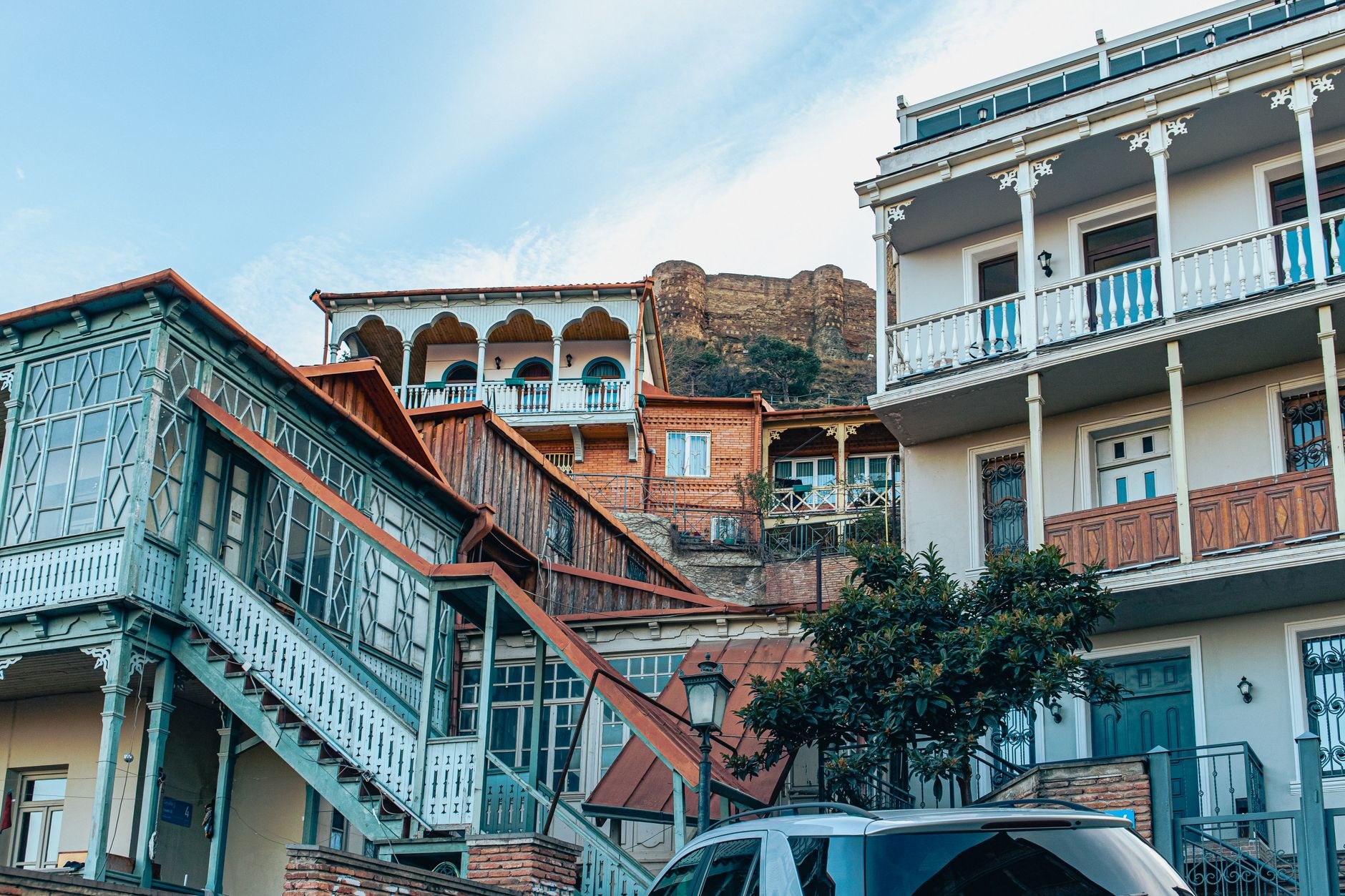
Walking uphill into Old Tbilisi reveals an architectural signature found nowhere else: expansive, cantilevered wooden balconies (*shushabandi*) painted in turquoise, ochre, and ivory. These ornate fretwork verandas wrap around residential townhouses, functioning as open-air living rooms where neighbors share tea, play backgammon, and watch life unfold along the cobbled lanes. Taking the aerial cable car from Rike Park up to Narikala Fortress offers views across the city, contrasting 4th-century stone bastions with the modern glass pedestrian Bridge of Peace spanning the Mtkvari River.
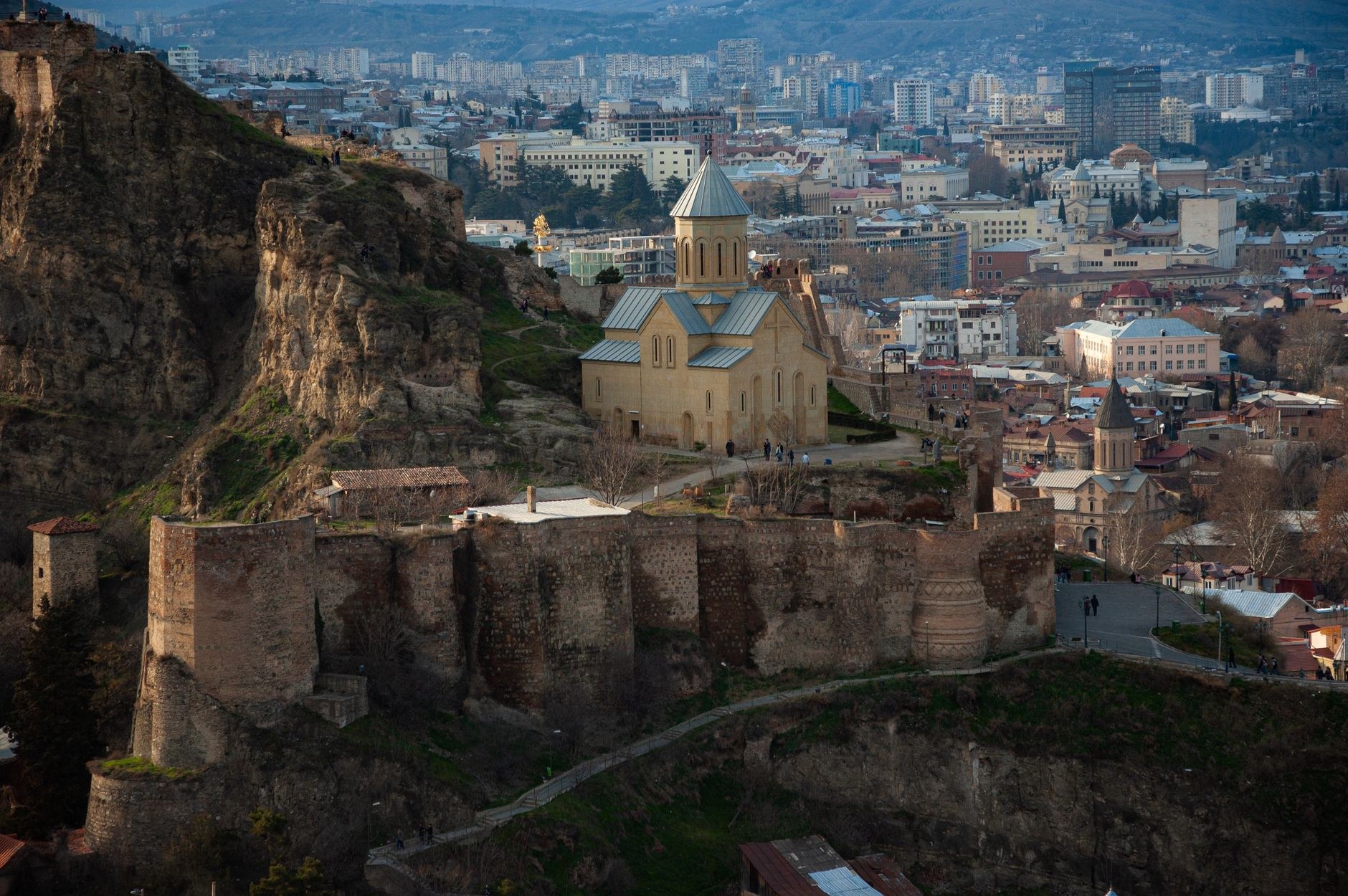
Beneath Narikala Fortress, the ancient bathhouse district spreads across the river basin, reminding visitors of Tbilisi’s historic role as a trading sanctuary along the Silk Road between Persia, the Ottoman Empire, and Imperial Russia.
No day in Tbilisi is complete without encountering Georgian dining culture. At traditional taverns in Sololaki or Vera, dinner begins with hot *khachapuri*—yeast bread filled with bubbling, salted Sulguni cheese—and a steaming platter of *khinkali*, the iconic Georgian spiced meat dumplings. Originating in the high mountain valleys of Tusheti and Khevsureti, khinkali are governed by strict dining etiquette.
They are eaten strictly by hand, never with a knife and fork. Using a fork pierces the delicate dough pocket, spilling the aromatic, spiced broth onto the plate. Instead, grasp the dumpling by its thick, pleated dough stem called the *kudi* (‘hat’), flip it upside down, take a careful bite from the side, sip the hot spiced meat broth, and consume the dumpling. The hard dough handle is left on the rim of your plate, allowing diners to jokingly tally how many dumplings they managed to consume.

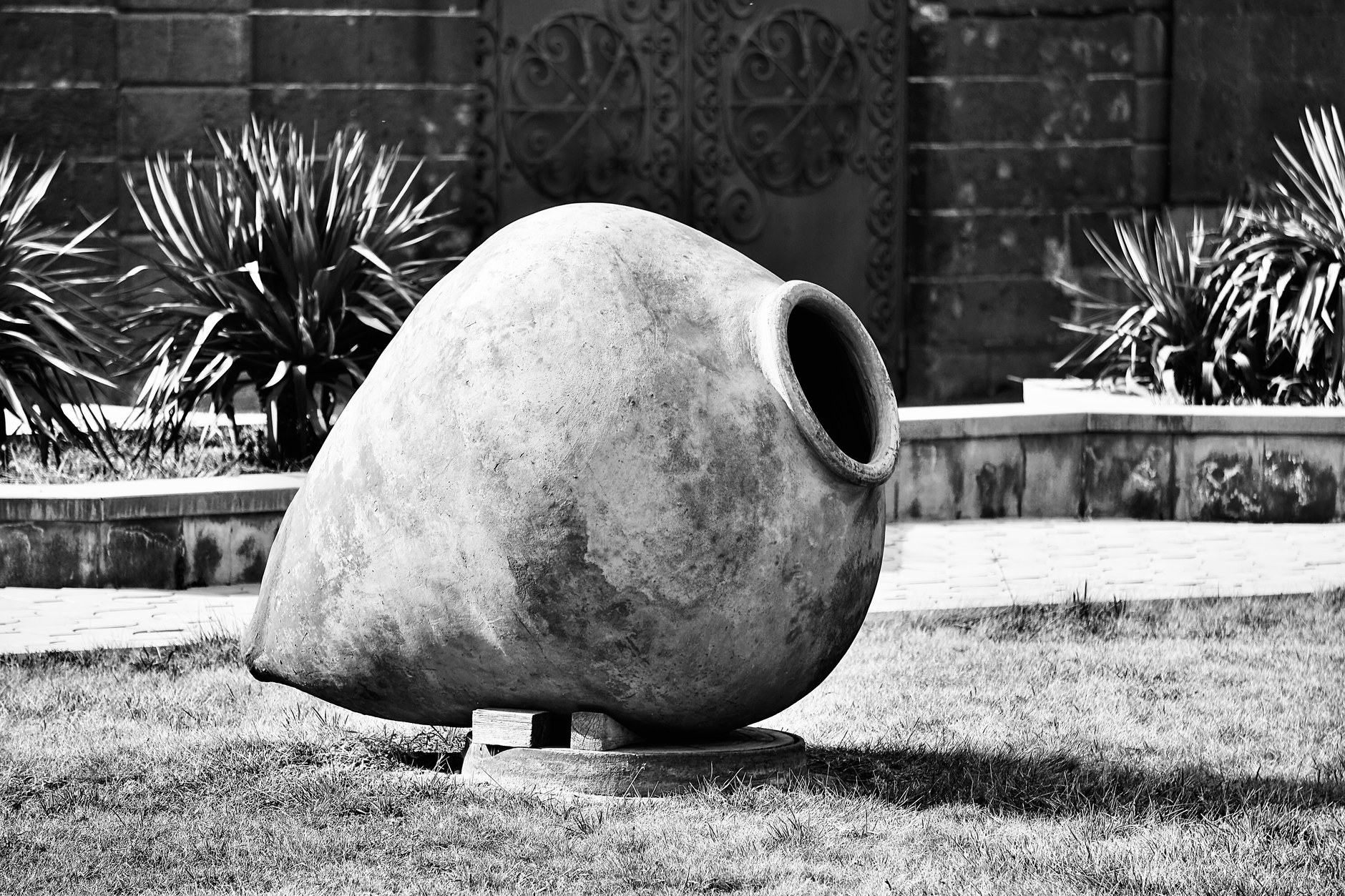
On your third day, journey east into Kakheti, Georgia’s premier winemaking province. Archaeological excavations at Shulaveri-Gora revealed pottery shards containing tartaric acid crystals dating back 8,000 years, establishing Georgia as the birthplace of viticulture. Traditional Georgian winemaking uses subterranean clay amphorae called *qvevri*, recognized by UNESCO as Intangible Cultural Heritage.
Unlike Western barrel aging, whole crushed grapes—juice, skins, seeds, and stems (*chacha*)—are poured directly into massive beeswax-lined ceramic vessels buried into the earthen floor of a stone cellar (*marani*). Sealed with stone lids and river clay, the wine ferments naturally underground at constant temperatures for six months. The resulting amber wines (traditionally made from Rkatsiteli or Kisi grapes) possess deep tannic structure, notes of dried apricot and walnut, and distinct amber complexity.
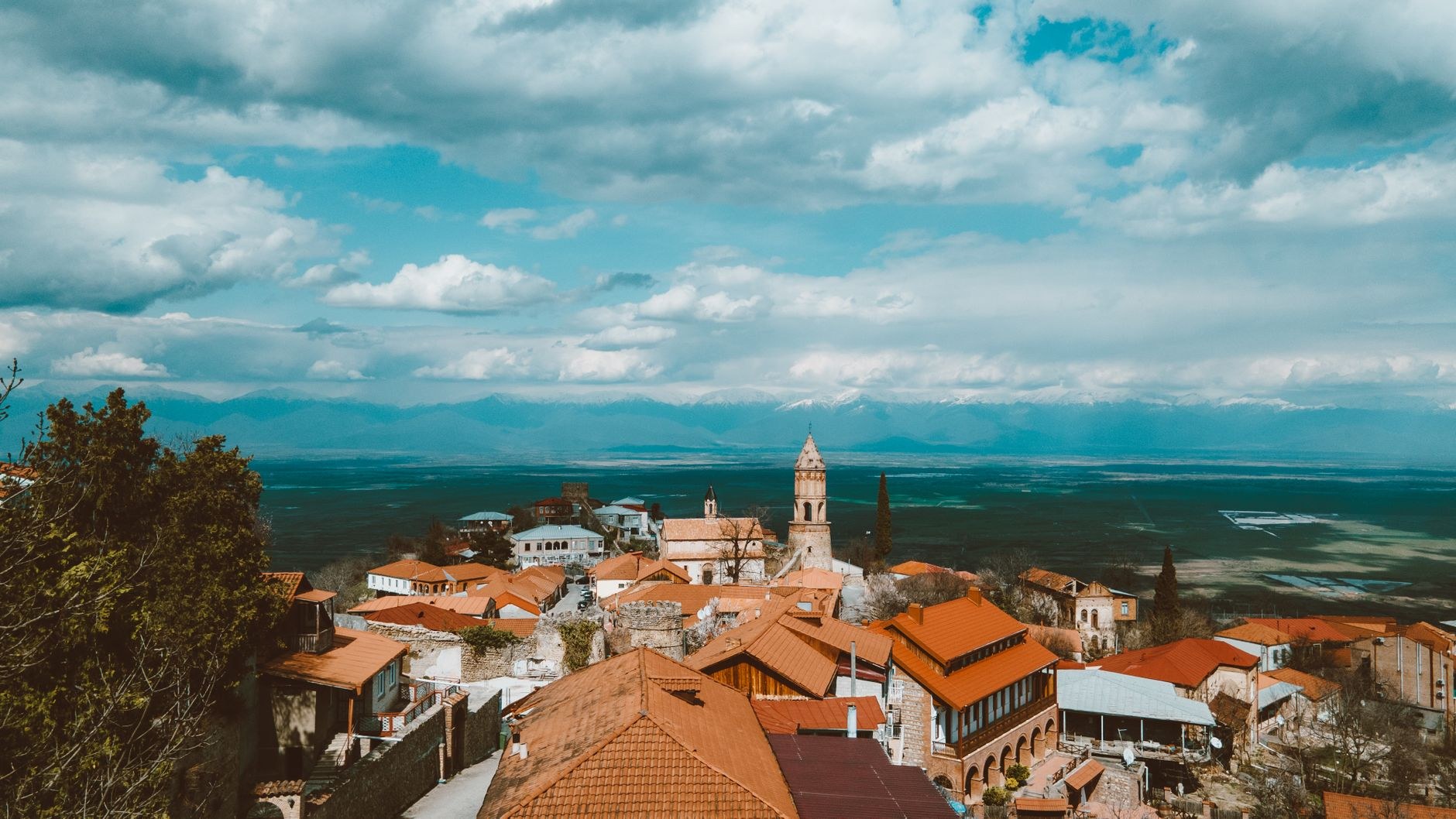
In Kakheti, visit Sighnaghi, an 18th-century fortified hilltop town perched on a ridge overlooking the fertile Alazani Valley. Enclosed by 4.5 kilometres of stone defensive walls and twenty-three watchtowers built by King Erekle II, Sighnaghi offers panoramic views across endless vineyard plains toward the snow-capped crest of the Greater Caucasus on the horizon.
After sampling amber wines and fresh walnut candy (*churchkhela*) in Sighnaghi’s cobblestone squares, return west toward Tbilisi to prepare for the alpine ascent into the mountains.
Day 4: The Georgian Military Highway — Fortresses & Mountain Passes
Departing Tbilisi on morning four, drive northward onto the legendary Georgian Military Highway. Tracing an ancient trade and invasion route used by Greeks, Romans, and Persians through the Caucasus, the highway was upgraded into an engineered military artery by the Russian Empire in the early 19th century. The route climbs through river gorges into the high alpine divide.
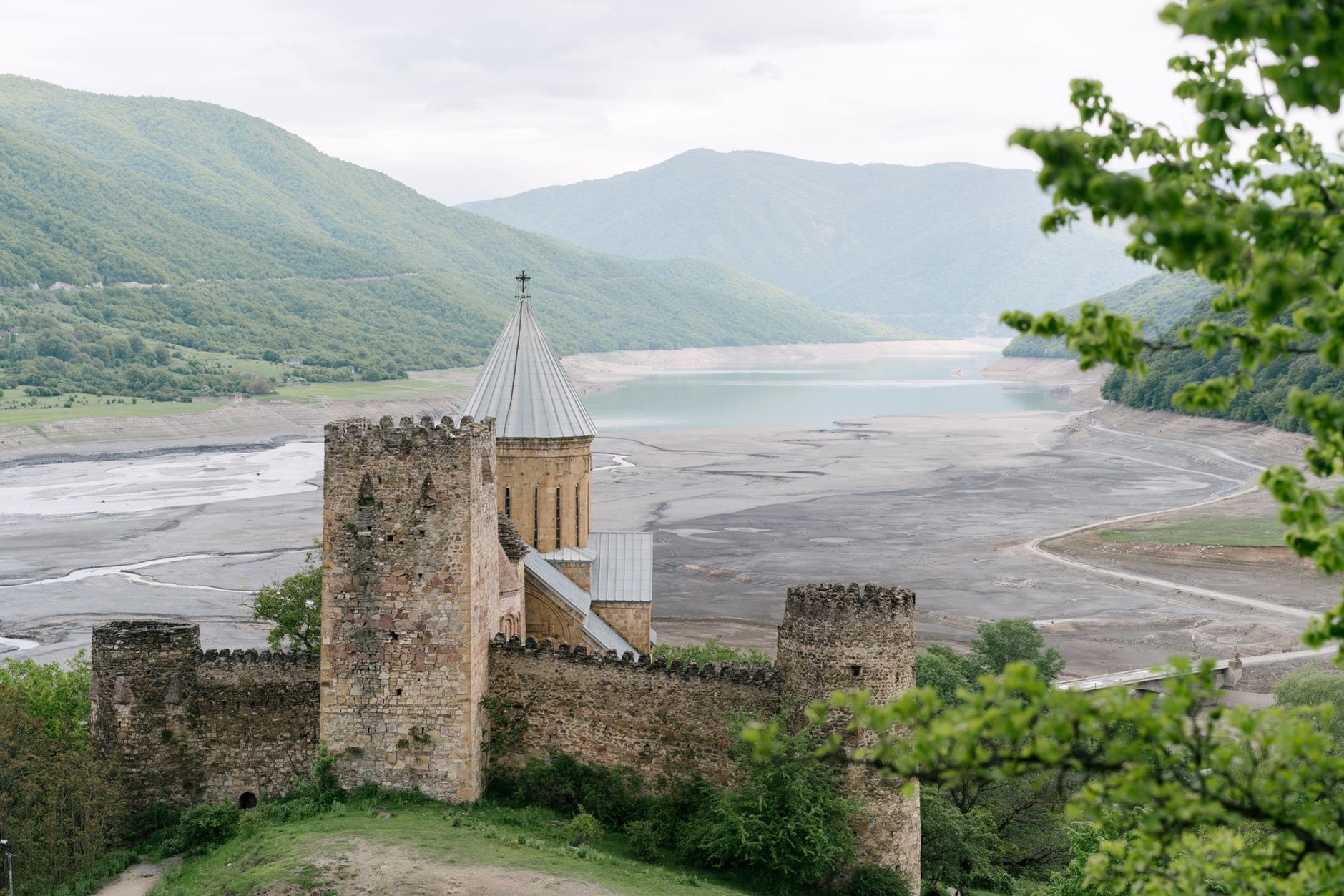
An hour north of Tbilisi, the road rounds the turquoise waters of the Zhinvali Reservoir to reveal Ananuri Fortress. Dating to the 17th century, Ananuri was the fortified feudal castle of the Aragvi Dukes (*eristavis*). Its crenellated stone watchtowers and carved stone churches overlook the water. Carved onto the south facade of the Church of the Assumption are intricate early Christian stone reliefs depicting the Tree of Life guarded by stone angels, reflecting Georgia’s deep Orthodox heritage.
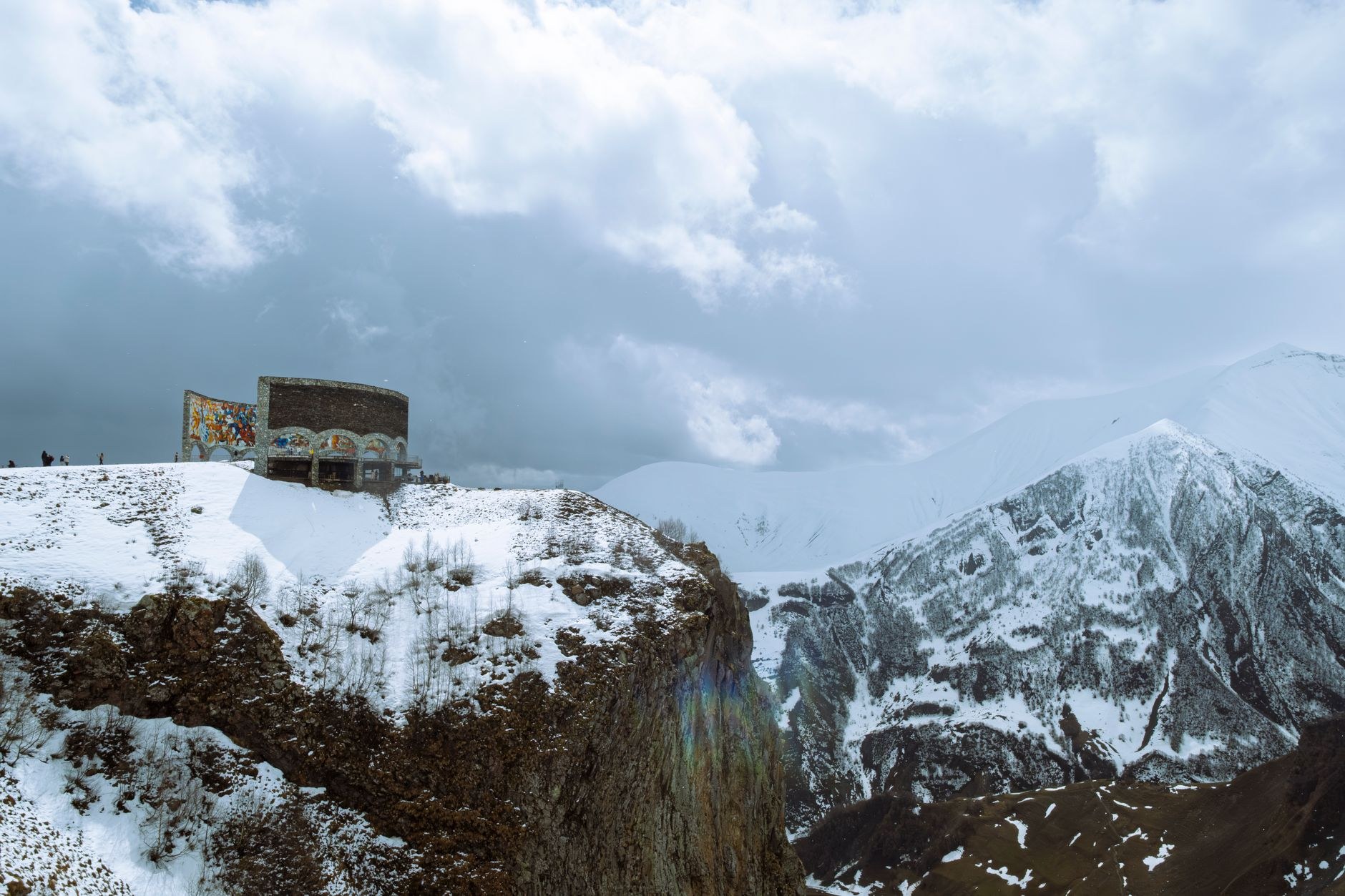
Continuing north past the ski village of Gudauri, the highway climbs through the dramatic Jvari Pass (2,379m). Near the pass stands the monumental Russia-Georgia Friendship Monument, an open circular concrete pavilion erected in 1983 perched directly above the vertical drop of Devil’s Valley. As you cross the continental divide into the Terek River basin, the jagged, tree-less volcanic peaks of the Khevi province rise into view, leading to Stepantsminda.
Stepantsminda (formerly Kazbegi) serves as your mountain base, resting in the shadow of Mount Kazbek’s glaciated pyramid.
Days 5–6: Stepantsminda & Mount Kazbek — Sacred Heights & Wild Gorges
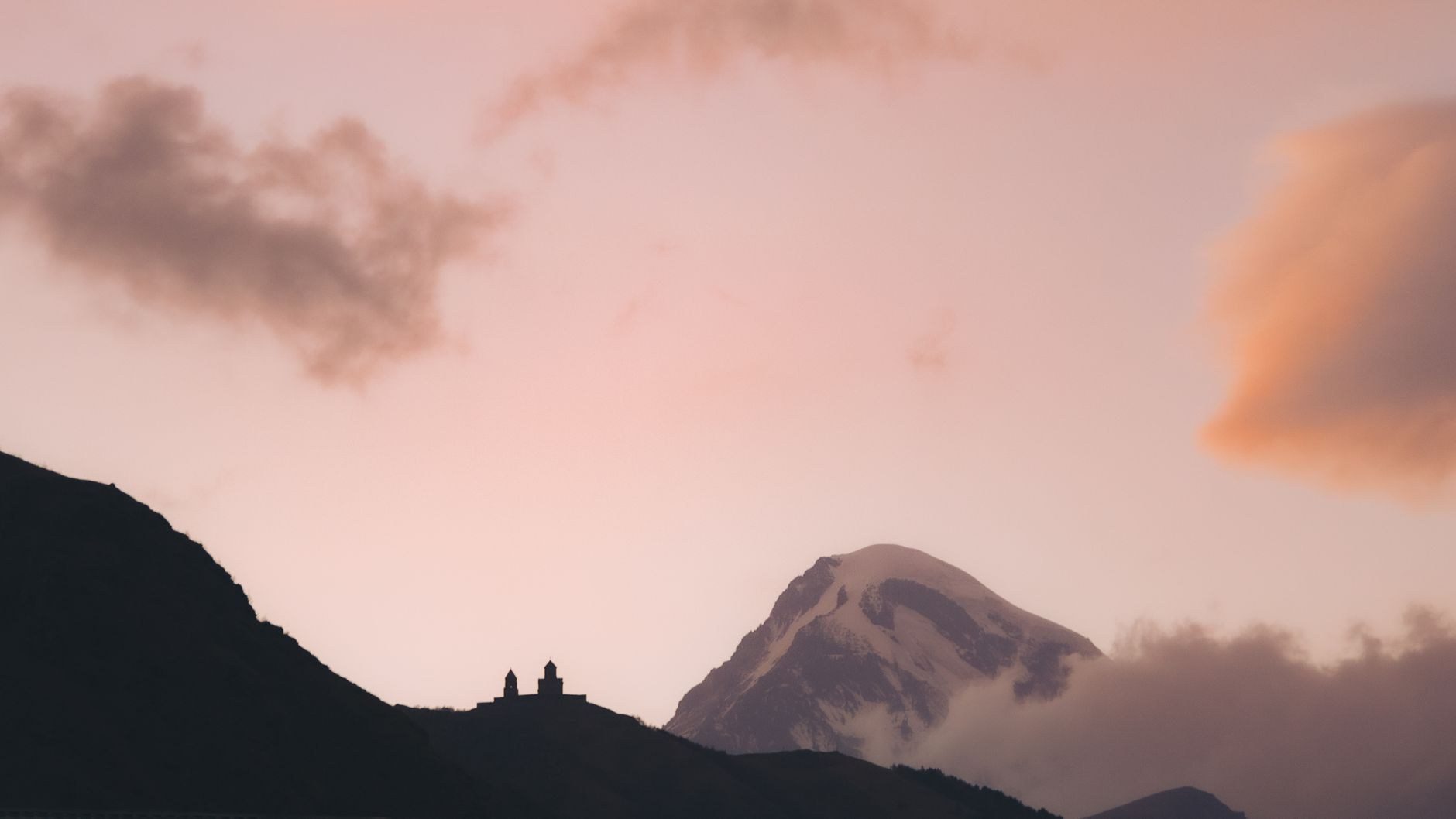
The visual signature of Georgia is Gergeti Trinity Church (Gergetis Tsminda Sameba), perched on an isolated mountain knoll at 2,170 metres above Stepantsminda. Built in the 14th century, this cross-cupola stone sanctuary stands against the towering backdrop of Mount Kazbek (5,054m), an extinct stratovolcano known in Georgian as *Mkinvartsveri* (‘glacier peak’). According to classical mythology, this was the mountain where Prometheus was chained to the rock by Zeus for gifting fire to humankind.
During foreign invasions in Persian and Ottoman wars, sacred national treasures from Mtskheta and Tbilisi were transported up this mountain pass to be hidden within Gergeti’s stone walls. While local taxi drivers once navigated a rutted dirt trail, a paved road completed in 2018 allows easy access, though walking the steep mountain footpath through pine woods in ninety minutes remains the most rewarding approach.
On day six, explore the remote Truso Valley to the south. Hiking along the rushing Terek River reveals an alpine wonderland of orange-red mineral travertine terraces, abandoned stone tower villages, and mineral spring pools where carbonated water bubbles naturally from the earth. The valley borders South Ossetia and requires carrying your passport for routine military border checkpoints, offering an encounter with raw Caucasus geology.
Day 7: Ancient Mtskheta & Departure Logistics
On your return south toward Tbilisi, stop in ancient Mtskheta, the spiritual heart of Georgia located at the confluence of the Mtkvari and Aragvi rivers. Mtskheta served as the capital of the early Georgian Kingdom of Iberia from the 3rd century BC to the 5th century AD. Here, Saint Nino introduced Christianity in 327 AD, making Georgia the world’s second nation to adopt Christianity as its state religion.
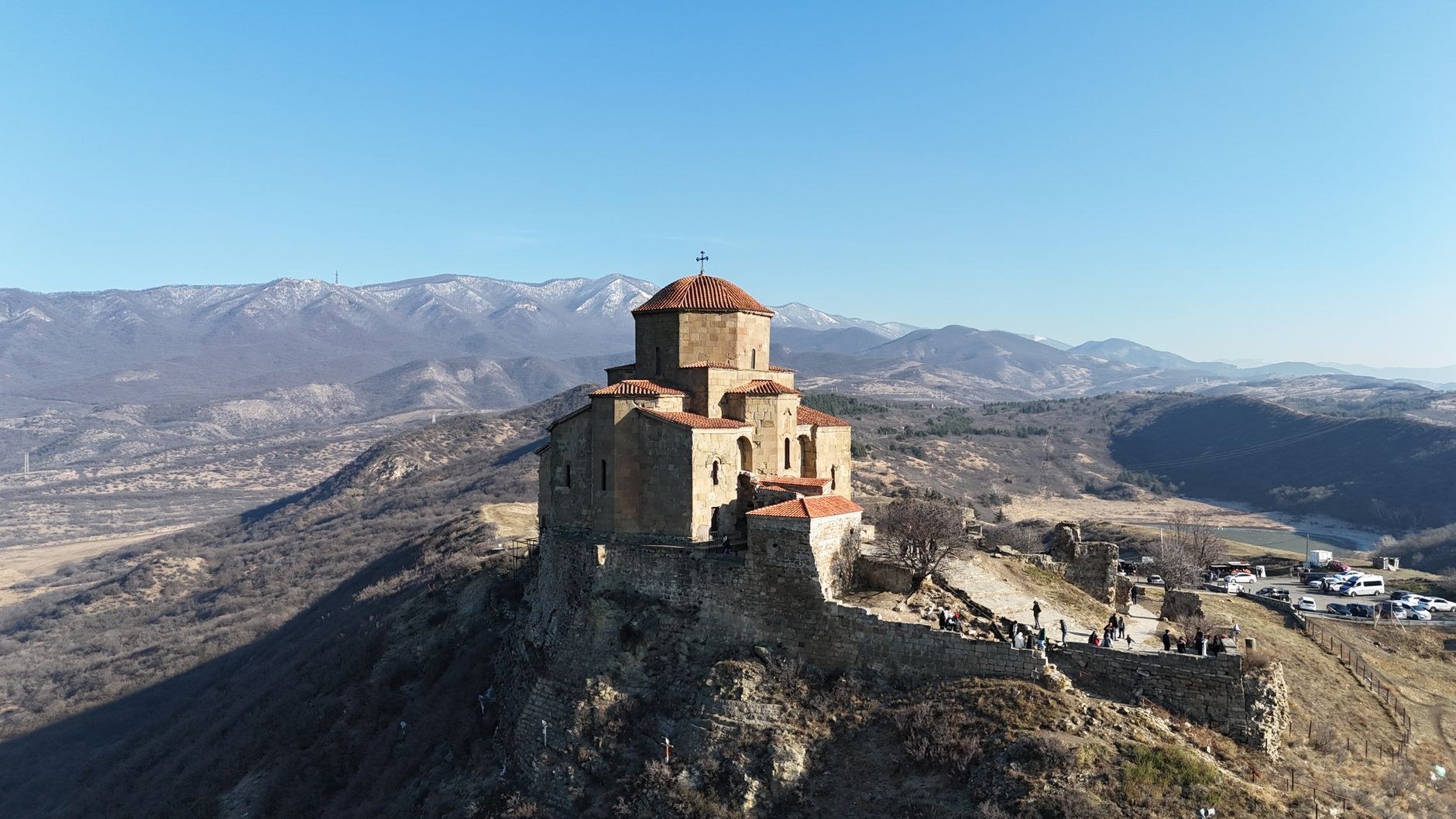
Perched high on a cliff above the town stands Jvari Monastery, constructed between 586 and 605 AD. Its classical tetraconch stone architecture has survived fourteen centuries of earthquakes and conflict. From the cliff edge outside the stone chapel, you look down at the two rivers meeting in contrasting ribbons of turquoise and clay.
Down in Mtskheta center stands Svetitskhoveli Cathedral, built in the 11th century by architect Arsukisdze. Tradition holds that Christ’s sacred woven burial tunic is buried beneath the cathedral’s stone foundations. After admiring the cathedral’s monumental frescoes, the highway connects directly to Tbilisi International Airport in under forty minutes, providing a smooth departure.
Street Smarts: Tourist Scams, Overpriced Traps & Transit Hazards in Georgia
Georgia is renowned for heartfelt hospitality, where guests are traditionally regarded as ‘gifts from God.’ Violent street crime is exceptionally low. However, navigating transport hubs, private drivers, and tourist pricing requires practical savvy to avoid unnecessary costs and road safety risks.
- Didube Station Aggressive Touts & Marshrutka Panic: Didube bus station in northern Tbilisi is the transport gateway to Kazbegi. Arriving tourists are routinely swarmed by aggressive freelance drivers claiming the last scheduled minibus (*marshrutka*) has departed, urging them into overpriced private cars charging a high private fare. In reality, scheduled marshrutkas run hourly until late afternoon for about $5.65. Walk directly past touts to the central ticket kiosk, or pre-book a private car via GoTrip.ge.
- Reckless Mountain Marshrutka Driving: Budget marshrutkas on the Georgian Military Highway frequently overtake blind on two-lane mountain passes at high speeds. For travellers prioritizing safety and panoramic stops at Ananuri and Jvari Pass, hiring a vetted private driver through GoTrip.ge costs about $62.14 for an entire vehicle, offering modern seatbelts, cautious driving, and personalized photo stops.
- Sulfur Bathhouse Billing & Scrub Surcharges: At the Abanotubani sulfur bathhouses, foreign visitors booking private rooms are occasionally met with surprise add-on charges for towels, tea, or aggressive exfoliation scrubs (*kisa*). An unverified service can add a surprise fee per person unexpectedly. Always inspect the posted service menu in the reception lobby and confirm all room and treatment rates in writing before undressing.
- Gergeti Trinity Church 4×4 Off-Road Scams: In Stepantsminda town square, freelance Delica 4×4 drivers approach visitors claiming the mountain road up to Gergeti Trinity Church is impassable for standard vehicles, demanding a cash fare for a short ride. Since 2018, the access road has been fully paved and widened. Standard sedans can drive up safely, and hiking the scenic trail takes ninety minutes on foot for free.
- Roadside “Homemade” Wine & Chacha Traps: Roadside souvenir stalls outside Sighnaghi and along the Military Highway frequently sell wine and grape moonshine (*chacha*) in repurposed plastic Coca-Cola bottles. Much of this roadside alcohol is adulterated with added sugar, water, and artificial flavoring. Purchase authentic Qvevri wine exclusively from certified family cellars (*marani*) offering estate-bottled vintages.
- Caucasian Shepherd Dogs on Mountain Trails: While hiking in Truso Valley, Juta, or around Mount Kazbek, hikers frequently encounter working Caucasian shepherd dogs (*nagazi*). These massive livestock guardians are bred to defend sheep flocks from wolves and can be aggressive if you approach herds. Never run, throw stones, or make direct eye contact; stop walking, keep your trekking poles between you and the dog, and slowly back away until the shepherd calls the dog off.
Keeping these practical safety tips in mind ensures you navigate Georgia smoothly, allowing you to enjoy the country’s legendary hospitality and mountain heritage without complications.
Caucasian Mountain Transit & Mobile Connectivity with NXTL
Navigating Georgia’s dramatic landscapes requires reliable digital connectivity. Offline GPS mapping and live updates are critical when driving through the Jvari Pass or navigating high-altitude hiking trails in the Khevi region. Mobile data is equally essential for coordinating private drivers on GoTrip.ge, hailing Bolt rideshares in Tbilisi, and using translation tools in rural Kakheti villages.
Because Georgia is outside the European Union, standard EU roaming packages do not apply, and using a domestic home SIM can result in roaming fees exceeding 10 EUR per megabyte. Equipping your smartphone with an authentic NXTL Georgia travel eSIM prevents surprise bills while delivering high-speed, dependable data across the country. Operating on primary tier-one carrier networks MagtiCom and Silknet 4G/LTE, NXTL provides reliable data from central Tbilisi to the alpine peaks of Kazbegi.
| Travel Profile | Primary Daily Mobile Usage | Estimated 7-Day Data | Cost at $1.23/GB |
|---|---|---|---|
| Light Navigator | Google Maps GPS driving, GoTrip driver coordination, messaging, translation | 1.5 GB | $1.85 |
| Balanced Explorer | Mountain trail GPS tracking, photo uploads, restaurant research, Bolt rideshare | 4.5 GB | $5.55 |
| Heavy Digital Nomad | Continuous 4G/LTE laptop tethering, remote work video calls, streaming, cloud backups | 10.0 GB | $12.31 |
The NXTL travel connectivity model provides unmatched flexibility for international explorers. Operating across 180+ supported countries and 460+ carrier networks, your single NXTL eSIM remains reusable across international borders without tedious reinstallation. An initial purchase of $11.99 includes $10.00 in preloaded data credit, which never expires as long as your account remains active. Because data is billed strictly on a pay-as-you-go basis, you only pay for the precise megabytes you consume, eliminating wasteful expiring daily bundles.
Furthermore, mobile hotspot and tethering are fully permitted across Georgia, allowing you to connect your laptop or tablet in mountain guesthouses effortlessly. With dual-SIM capability, your physical home carrier SIM stays active in your phone for essential two-factor banking SMS and emergency voice calls, while NXTL handles all data traffic at local rates starting from just $1.23/GB. Setting up takes minutes via a simple QR code scan before you depart, ensuring that as soon as your aircraft touches down at Tbilisi Airport, your phone connects to the local LTE grid automatically.

From the thermal bathhouse domes of Abanotubani and the ancient clay Qvevri cellars of Kakheti to the sacred mountain solitude of Gergeti Trinity Church, Georgia rewards those who travel with curiosity, respect, and an appetite for adventure. Pack a sturdy pair of hiking boots, raise a horn of amber wine, and immerse yourself in one of the world’s most enduring cultures.