Ghana stands as West Africa’s most welcoming gateway, where centuries of royal Ashanti ceremonial heritage meet the poignant coastal fortresses of the transatlantic trade, and dense tropical rainforest canopies echo with birdsong. Yet first-time travelers frequently encounter serious logistical friction by attempting an overly ambitious itinerary that tries to cram the entire country—from the coastal surf beaches to the distant savanna elephant reserves of Mole National Park in the far north—into a single week. Experiencing Ghana’s warmth, complex historical layers, and musical energy requires choosing a compact, culturally rich route.
The most manageable, rewarding first journey anchors itself in the southern golden triangle: linking the cosmopolitan capital of Accra, the historic coastal slave castles of Cape Coast and Elmina, and the royal cultural heartland of the Ashanti Kingdom in Kumasi. By utilizing reliable, air-conditioned intercity coaches and domestic ride-hailing rather than relying exclusively on crowded local trotros, you navigate regional distances smoothly while preserving ample energy for meaningful historical immersion and traditional culinary discoveries.
Strategic Route Architecture: Accra, Cape Coast & Kumasi
Navigating Ghana requires an honest understanding of transport conditions. While the distance between Accra and Cape Coast is only 150 kilometers, traffic congestion along the single-lane coastal highway can stretch the drive past four hours during peak periods. Similarly, traveling between Kumasi and Accra involves navigating heavy commercial transport corridors. Attempting to add northern savannas into an eight-day itinerary guarantees spending more than half your trip sitting in traffic exhaust. A focused three-base circuit makes travel realistic and deeply engaging.
Your itinerary begins with three nights in Accra, introducing you to modern Ghanaian urban life, pan-African history, and the historic Ga fishing quarter of Jamestown. Transferring westward along the Atlantic coastline brings you to Cape Coast for three nights, providing an unhurried base for exploring UNESCO World Heritage castles, rainforest canopy walkways at Kakum National Park, and quiet coastal fishing harbors. You then turn inland for two nights in Kumasi, the storied capital of the Ashanti Kingdom, exploring the Manhyia Palace Museum and traditional Kente weaving craft villages before catching an air-conditioned intercity bus or a forty-minute domestic flight back to Accra for your international flight.
| Day | Base | Key Stops & Cultural Sightseeing | Transit Mode | Transit Time | Advance Bookings Required |
|---|---|---|---|---|---|
| Day 1 | Accra | Arrive Kotoka International Airport (ACC), transfer to Osu, Oxford Street dinner | Airport taxi / Uber | 20 minutes | Airport pickup transfer |
| Day 2 | Accra | Kwame Nkrumah Memorial Park, Black Star Gate, Makola Market textile tour, Jamestown | Yango / Bolt / driver | 30 minutes | Kwame Nkrumah Park entry |
| Day 3 | Cape Coast | Morning departure along coastal highway, check-in, Cape Coast Castle emotional tour | STC Coach or private car | 3.5 hours | STC coach ticket reservation |
| Day 4 | Cape Coast / Elmina | Elmina Castle (São Jorge da Mina), historical fishing harbor, Fort Saint Jago viewpoint | Local taxi / shared car | 20 minutes | Official castle guide slot |
| Day 5 | Kakum National Park | Early morning Kakum canopy walkway, medicinal forest nature hike, stingless bee sanctuary | Private driver / taxi | 45 minutes | Kakum canopy walk ticket |
| Day 6 | Kumasi | Inland scenic transit through cocoa groves, Kumasi arrival, Kejetia Market overview | VIP / STC coach | 4 hours | Intercity bus seat booking |
| Day 7 | Kumasi | Manhyia Palace Museum, Prempeh II Jubilee Museum, Bonwire royal Kente craft village | Private taxi / tour | 40 minutes | Manhyia Palace entry ticket |
| Day 8 | Accra | Morning return flight or express coach to Accra, Arts Centre souvenirs, departure | PassionAir flight or bus | 45m flight / 4h bus | Domestic flight check-in |
This balanced circuit guarantees you absorb the major pillars of Ghanaian identity: the pan-African optimism of the capital, the solemn coastal monuments of the transatlantic slave trade, and the living royal traditions of the Ashanti Empire.
Accra: Pan-African Ambition, Markets & Jamestown
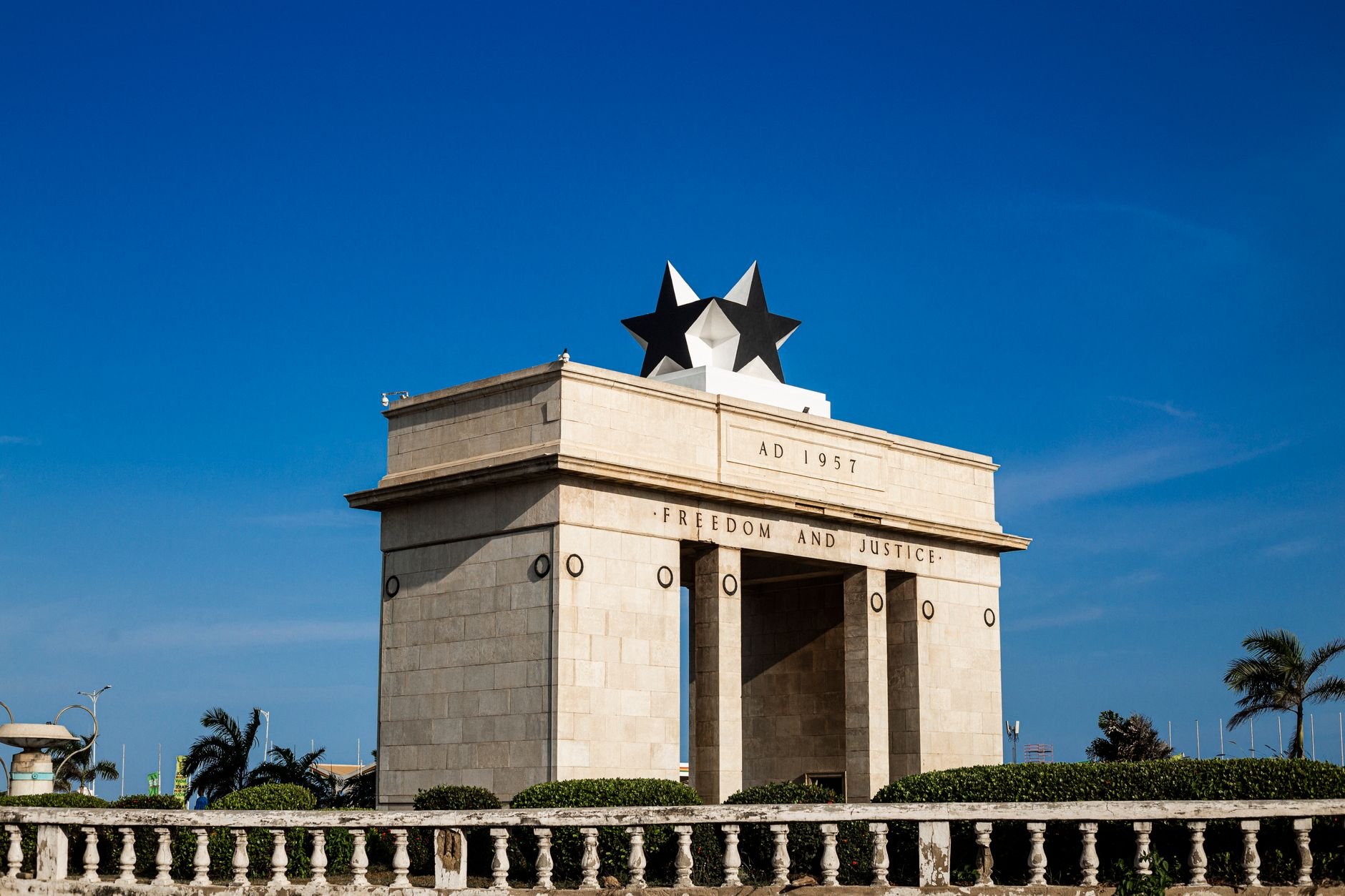
Accra is an energetic coastal metropolis where British, Dutch, and Danish colonial relics share skyline space with sleek glass bank headquarters and open-air street markets. At Independence Square (also known as Black Star Square), monumental Soviet-influenced parade stands frame the Black Star Gate, built in 1961 by founding president Kwame Nkrumah to celebrate Ghana’s status as the first sub-Saharan African nation to achieve independence from European colonial rule in 1957.
Nearby stands the newly renovated Kwame Nkrumah Memorial Park and Mausoleum, where the father of pan-Africanism lies interred. Surrounded by bronze fountains shaped like traditional Akan horns and lush tropical gardens, the on-site museum displays Nkrumah’s personal effects, speeches, and diplomatic gifts from world leaders of the non-aligned movement.
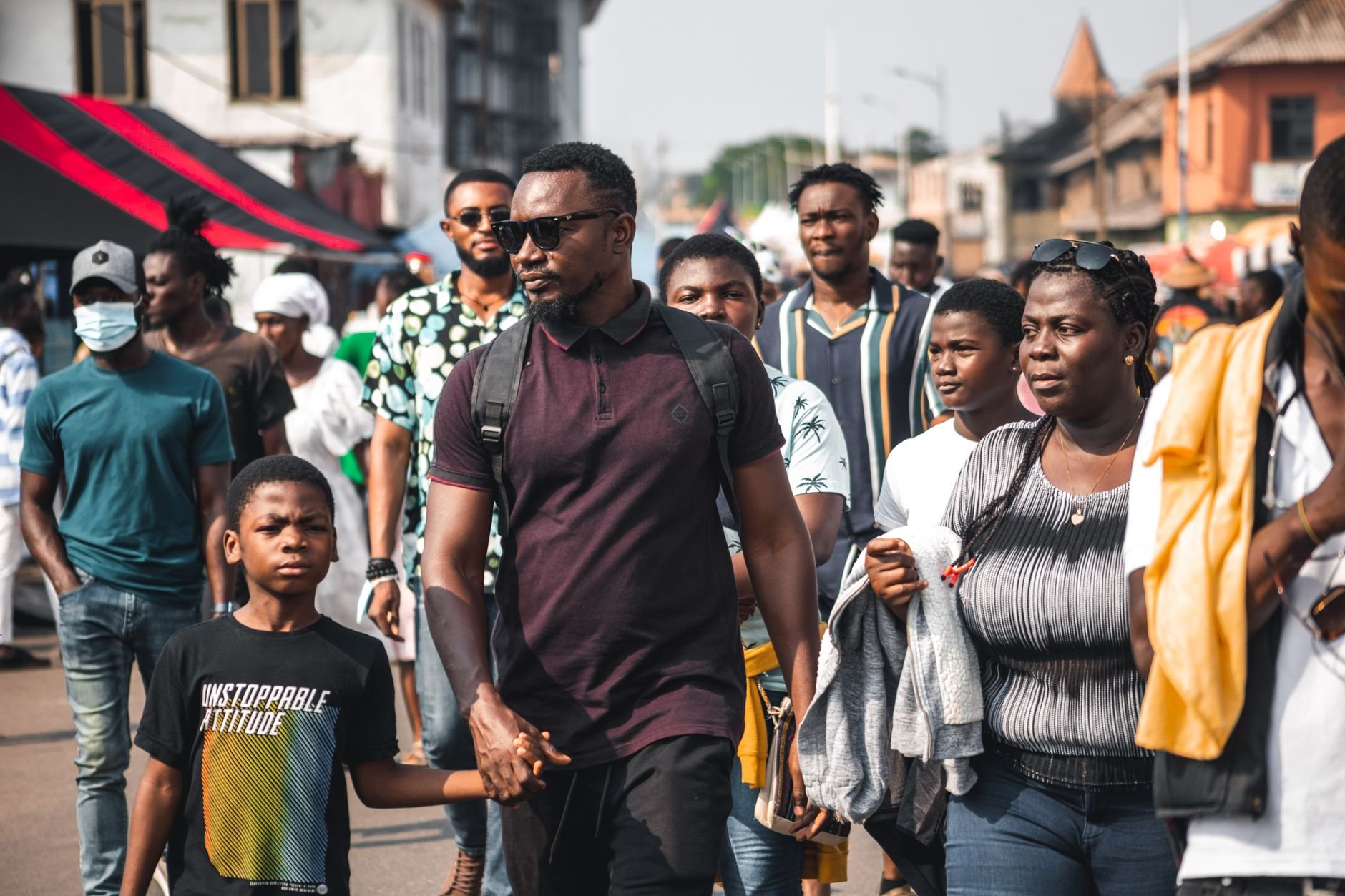
For an overwhelming sensory immersion, head into Makola Market, the sprawling commercial epicenter of Accra. Dominated by formidable female market traders known as the “Makola Market Queens,” the multi-block market is a labyrinth of stalls overflowing with towering stacks of colorful African wax print fabrics (Vlisco, GTP, and Woodin), dried smoked barracuda, shea butter, and ground spices. Navigating Makola requires patience, comfortable footwear, and a keen eye on your daypack.
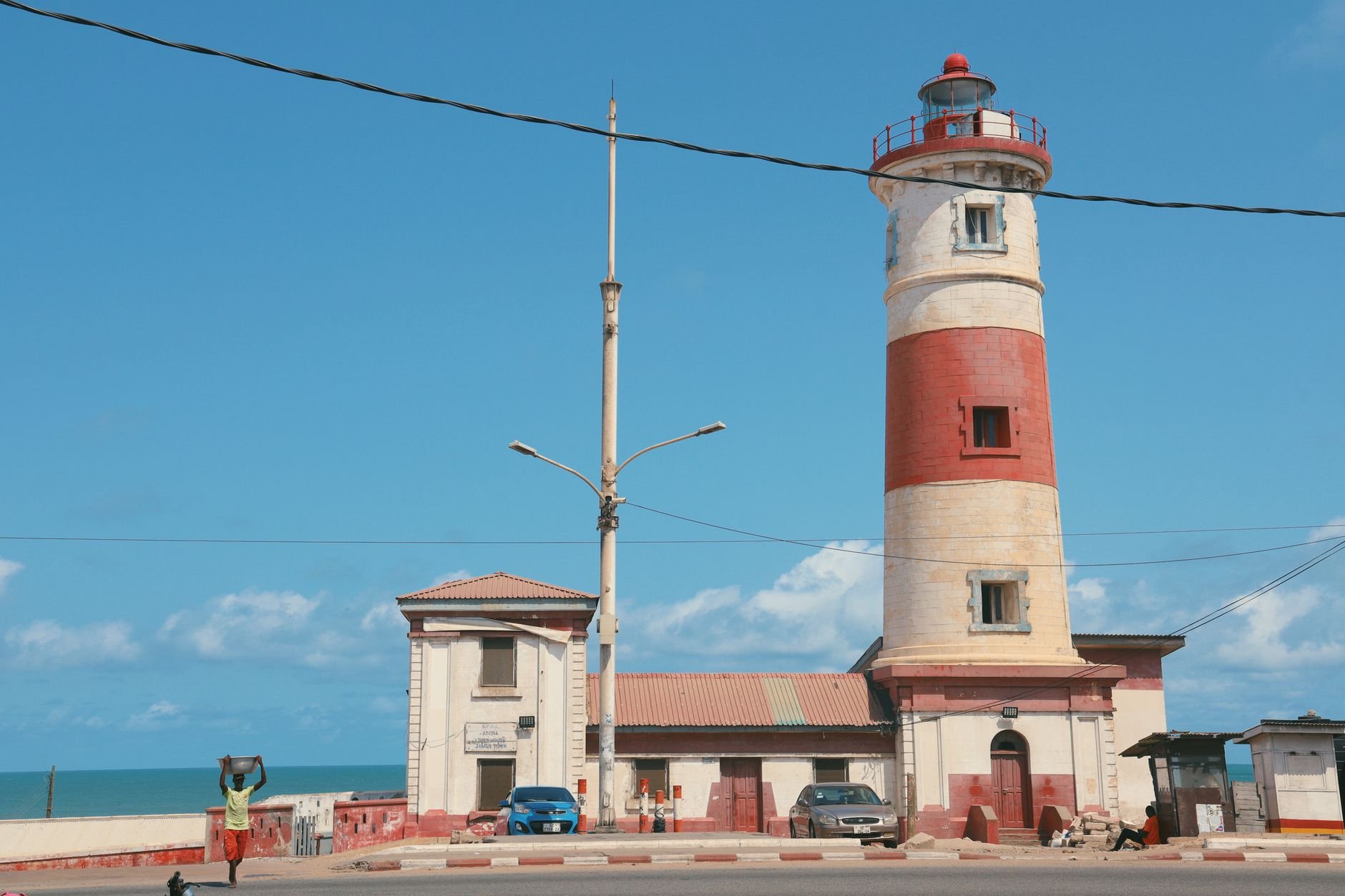
Southwest along the coast lies Jamestown, one of the oldest neighborhoods in the city and the historical heart of the Ga people. Dominated by the red-and-white Jamestown Lighthouse erected in the 1930s, the quarter features British colonial administrative buildings, boxing gyms that have produced multiple world champion pugilists, and a crowded ocean cove where hundreds of brightly painted wooden fishing canoes land their daily catches through crashing ocean surf.
The Central Coast: Slave Castles and Rainforest Canopies
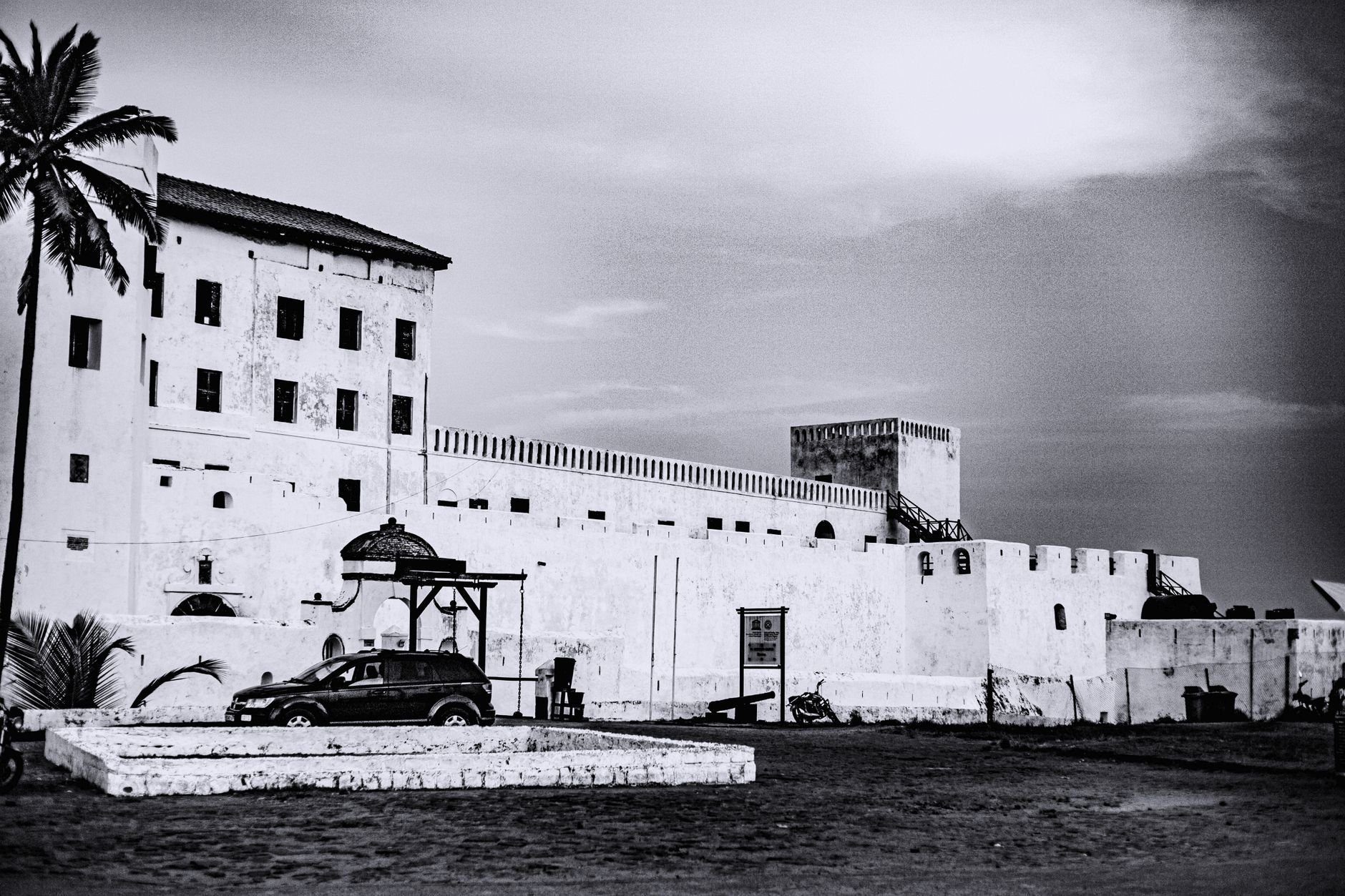
Leaving Accra and traveling west along the Gulf of Guinea brings you into the Central Region, an evocative coastline anchored by two of the most emotionally profound historical monuments in sub-Saharan Africa. Recognized together as a UNESCO World Heritage site, Cape Coast Castle and Elmina Castle stand as grim, enduring memorials to the transatlantic slave trade that forcibly shipped millions of captured Africans across the ocean between the sixteenth and nineteenth centuries.
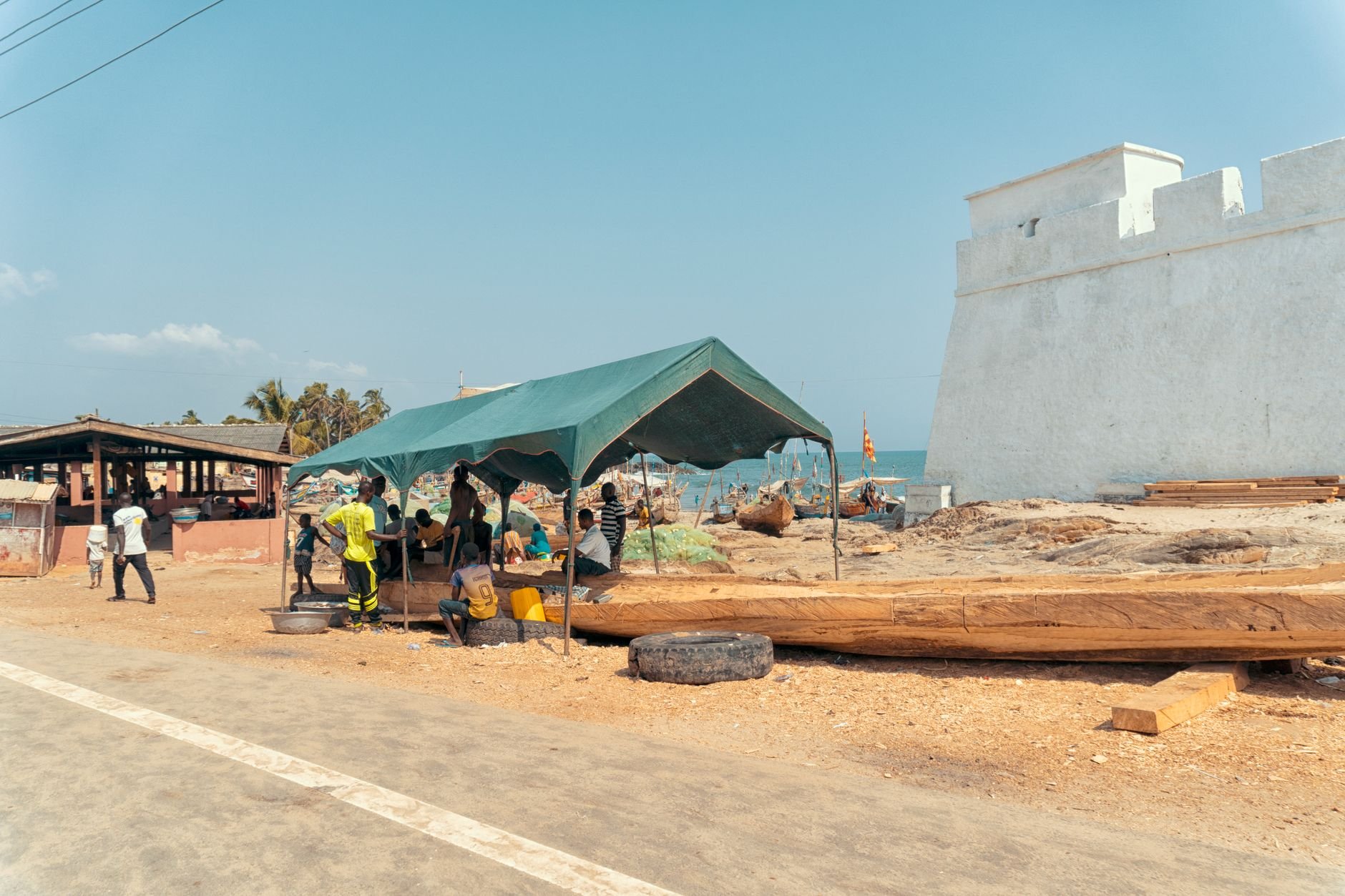
At Elmina, São Jorge da Mina was originally established by Portuguese traders in 1482 to protect gold trade routes, before being captured by the Dutch West India Company in 1637 and expanded into a heavily fortified slave depot. Walking through the stark, suffocating underground male and female dungeons—where hundreds of enslaved human beings were chained in darkness and filth for months beneath the governor’s airy, sunlit chapel—is a sobering, essential historical encounter.
Ten kilometers east stands Cape Coast Castle, built by Swedish traders in 1653 and later taken by the British. Standing before the famous “Door of No Return,” a narrow portal in the seaward rampart through which enslaved Africans took their final steps onto slave ships, is an unforgettable emotional threshold. Above the stone battlements, rows of heavy iron cannons still point silently toward the rolling Atlantic surf.
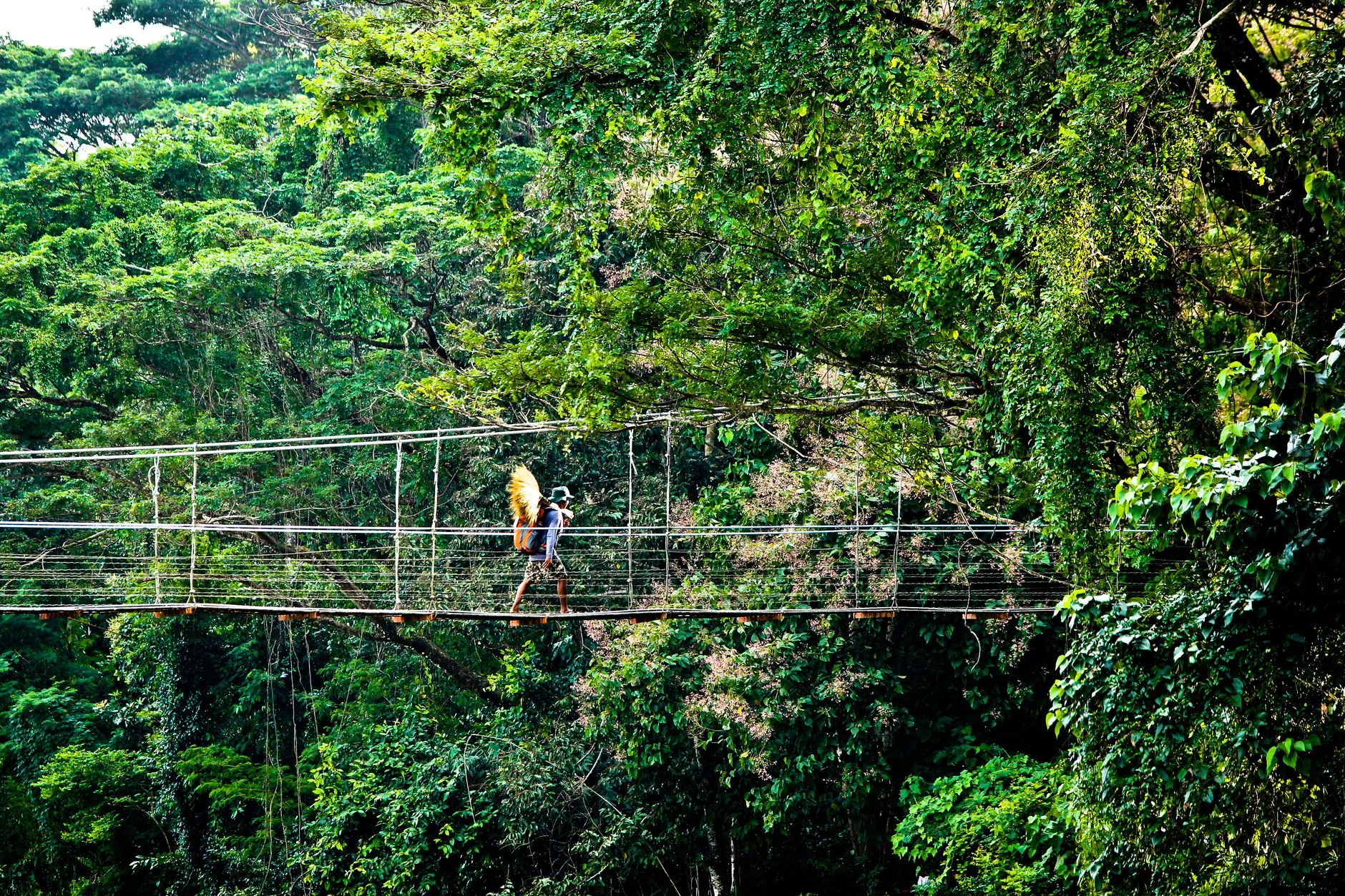
To experience the region’s virgin biodiversity, travel thirty kilometers inland into the moist evergreen rainforest of Kakum National Park. The park’s main highlight is its 350-meter-long canopy walkway, consisting of seven suspension bridges crafted from wire rope, safety netting, and wooden planks suspended forty meters above the forest floor. Walking among the crowns of giant emergent hardwood trees gives visitors an aerial view of tropical orchids, colorful hornbills, and rare Diana monkeys swinging through the canopy.
Kumasi: Royal Heritage of the Ashanti Kingdom
Traveling inland from the coast leads into the rolling, forested hills of the Ashanti Region to Kumasi, the historical capital of the mighty Ashanti (Asante) Empire. Established in the late seventeenth century under King Osei Tutu I, the Ashanti Kingdom resisted British colonial encroachment through multiple wars, guided by the legendary Golden Stool (Sika Dwa Kofi), believed to embody the soul of the entire Asante nation.
At the Manhyia Palace Museum, visitors tour the original 1925 residence of King Prempeh II. The museum houses an extraordinary collection of royal regalia, ceremonial gold jewelry, life-sized wax effigies of past Asantehenes (kings), and historical documentation of the 1900 War of the Golden Stool, led by the fearless warrior queen mother Yaa Asantewaa.
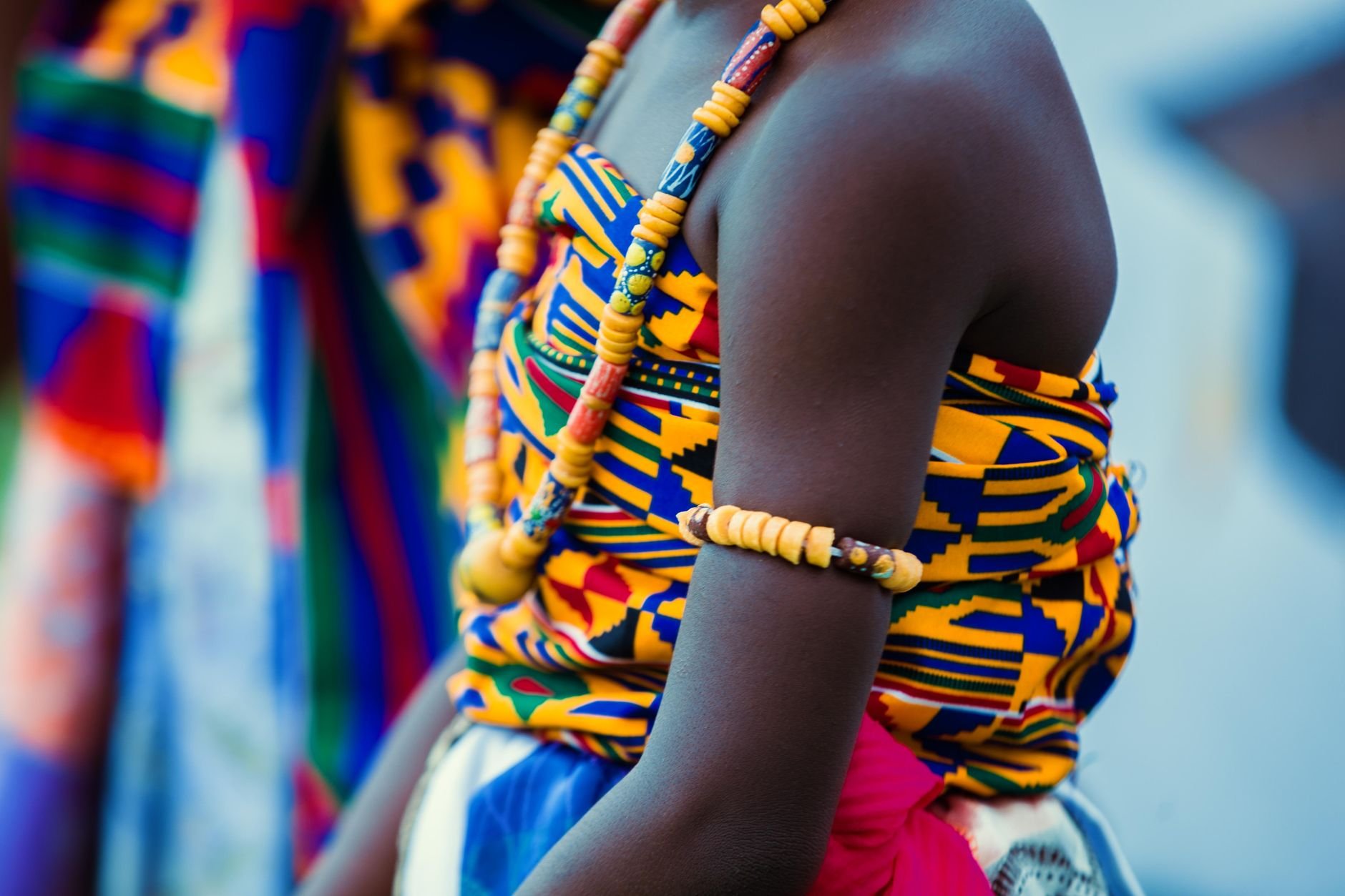
Just outside Kumasi lie historic artisanal craft villages that have preserved royal textile traditions for centuries. In Bonwire, master weavers operate narrow-strip wooden looms using hands and feet simultaneously, weaving richly dyed silk and cotton threads into royal Kente cloth. Each geometric pattern and color combination carries deep symbolic meaning, historically worn exclusively by royalty for state ceremonies. In nearby Ntonso, artisans produce traditional Adinkra cloth, carving calabash gourds into philosophical symbols and stamping them onto fabric using dark natural dye prepared from the boiled bark of the badie tree.
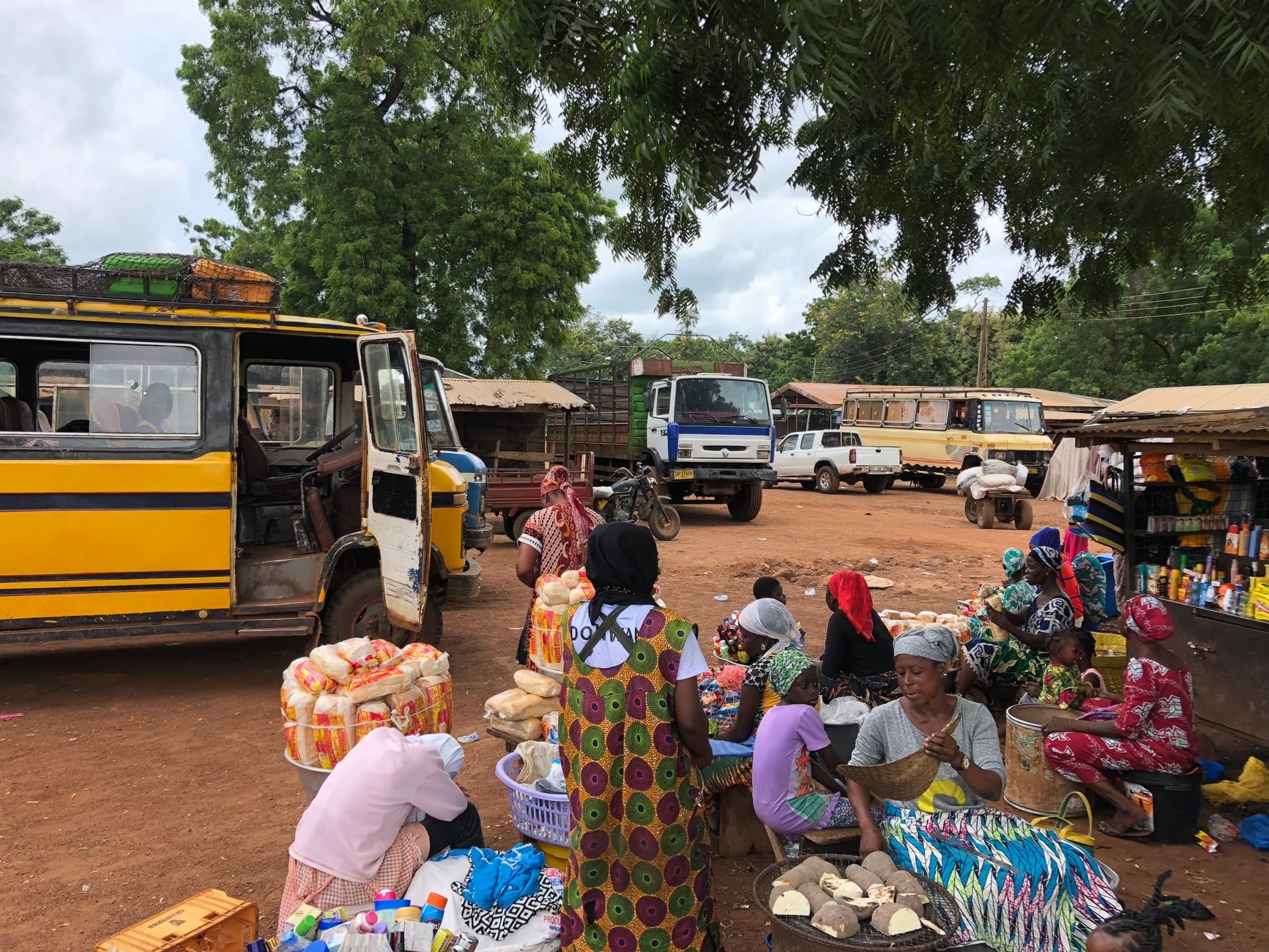
Before departing Kumasi, explore the sprawling Kejetia Market, widely considered one of the largest open-air commercial trading centers in all of West Africa, with tens of thousands of stalls selling medicinal herbs, brass gold-weights, handwoven baskets, and local produce.
Culinary Culture & Street Dining Traditions
Ghanaian cuisine is bold, deeply flavorful, and built around starch-rich staples accompanied by slow-simmered, spicy stews and fresh Atlantic seafood. At the center of national culinary pride is Ghanaian Jollof rice, a fragrant dish that inspires passionate, friendly rivalries across West Africa.
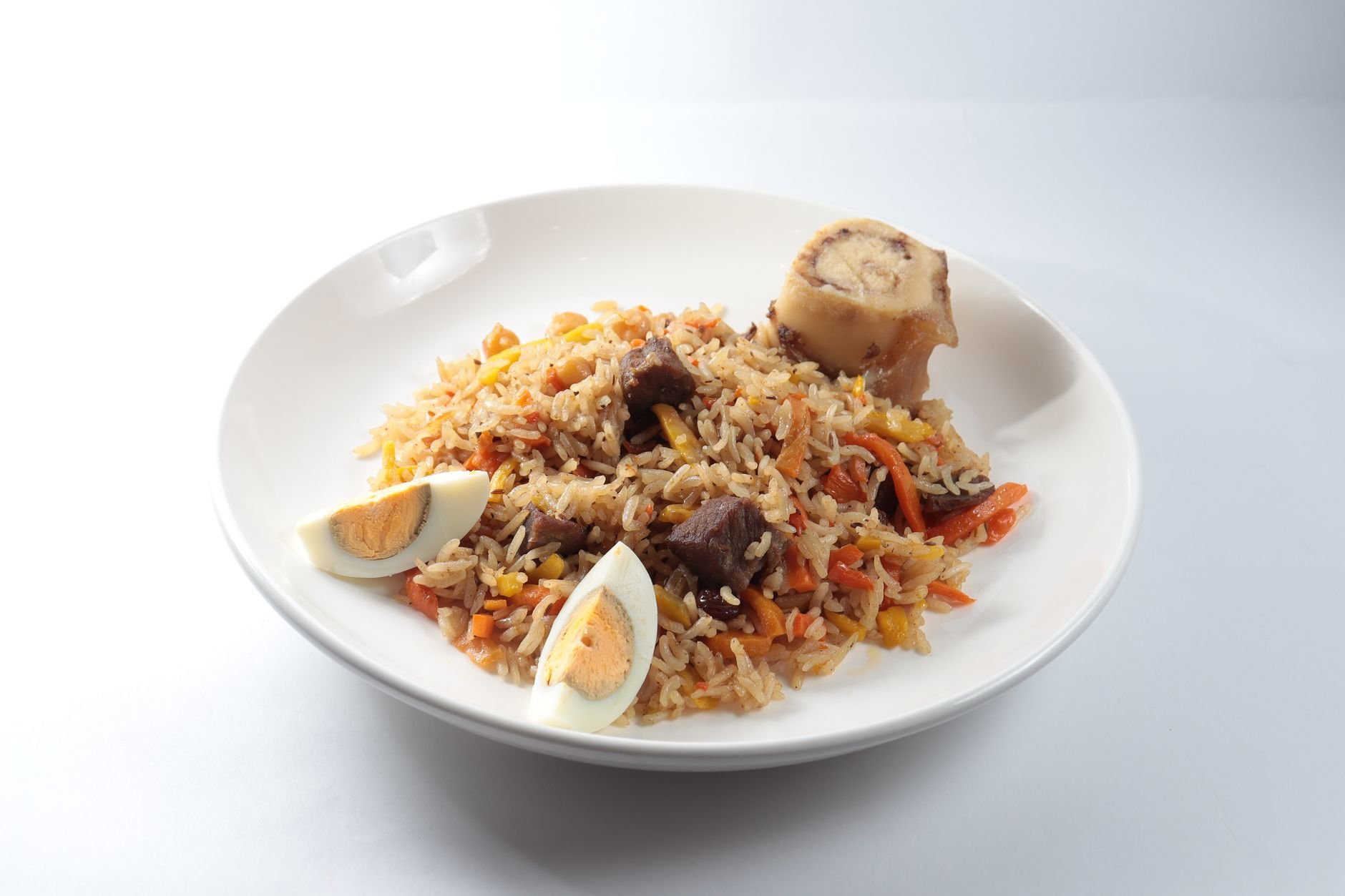
Prepared by simmering long-grain aromatic rice directly in a rich, reduced reduction of tomatoes, onions, garlic, ginger, and fiery scotch bonnet peppers (kpakpo shito), authentic Ghanaian jollof achieves a distinct smoky flavor from being cooked over wood charcoal fires. It is served with succulent roasted chicken, fried fish, and golden caramelized slices of fried ripe plantain (dodo), accompanied by a dollop of shito, an intensely savory black pepper condiment prepared from dried shrimp, fish powder, ginger, and chili oil.
Other essential dishes to sample across your journey include waakye (pronounced waa-chey), a beloved breakfast staple of rice and black-eyed peas cooked with dried sorghum leaf sheaths that dye the grains a deep reddish-brown hue. It is heaped with spaghetti, stewed gari (cassava flour), boiled eggs, and shito. In traditional chop bars, sample fufu, a smooth, elastic dough pounded from boiled cassava and green plantains, served submerged in a bowl of aromatic light goat soup or rich groundnut (peanut) soup.
For street snacks, nothing rivals kelewele—ripe plantain cubes tossed in crushed ginger, chili powder, and cloves, deep-fried until caramelized and sold hot in paper packets by roadside vendors after dark. Wash it down with fresh chilled coconut water, hacked open with a machete at street stalls across Accra.
Practical Transport Logistics: Trotros, Coaches & Ride-Hailing
Mastering transit in Ghana requires choosing the right mode for each leg. Within major cities like Accra and Kumasi, app-based ride-hailing services like Uber, Bolt, and Yango provide modern, air-conditioned transport with transparent upfront pricing, completely eliminating the need to haggle with street taxi drivers over unmetered fares.
For budget travelers, the ubiquitous trotro (privately operated minibuses seating fourteen to eighteen passengers) offers cheap travel and colorful street culture. However, trotros lack air conditioning, feature zero luggage holds, operate without fixed timetables, and require knowing local hand signals and shouted route names. For intercity travel with luggage, trotros are cramped and exhausting.
For travel between Accra, Cape Coast, and Kumasi, the gold standard is the state-run STC (State Transport Company) or established private coach operators like VIP Jeoun. These large, modern coaches feature air conditioning, undercarriage luggage storage, and fixed departure schedules from designated terminals. For side excursions like Kakum National Park or the craft villages around Kumasi, negotiating a day rate with a private taxi driver through your hotel or via ride-hailing is affordable and vastly more efficient.
Travel Safety & Common Scams to Avoid
Ghana is widely recognized as one of the politically stable and safest countries in Africa. Ghanaians take immense pride in their national reputation for peaceful coexistence and hospitality (Akwaaba). Violent crime against visitors is rare, but opportunistic theft, airport touts, and market schemes require vigilance.
- Kotoka Airport Baggage “Helpers” & Fake Coordinators: Outside baggage claim at Kotoka International Airport in Accra, aggressive men in casual clothing attempt to grab suitcases from luggage trolleys or escort travelers to vehicles, claiming to be official airport staff. Once outside, they aggressively demand a cash payment. Politely but firmly refuse all unsolicited assistance and walk directly to your pre-booked ride or ride-hailing pickup area.
- Jamestown Aggressive “Photo Fee” Touts: When walking through Jamestown in Accra, self-appointed youth groups approach foreign travelers carrying cameras, claiming that taking photos of the lighthouse, harbor, or murals requires an official “community photography permit” costing a cash fee. While polite street etiquette requires asking permission before photographing individuals, public street photography permits do not exist. Hiring an accredited local guide from the Jamestown Cafe avoids harassment.
- Makola & Kejetia Market Distraction Pickpockets: In the densely packed aisles of Makola Market in Accra or Kejetia Market in Kumasi, pickpocket teams operate using distraction techniques. One person bumps into you or drops items near your feet while an accomplice unzips backpacks or dips into pockets. Wear daypacks strapped across your chest and keep money concealed.
- Imitation Machine-Printed “Kente” Cloth: Souvenir shops and street hawkers frequently sell mass-produced printed cotton fabrics imported from overseas, falsely claiming they are authentic handwoven royal Ashanti Kente. Genuine Kente consists of narrow, thick strips of handwoven silk or cotton stitched together edge-to-edge with raised, tactile textures. Purchase directly from weavers in Bonwire.
- Unofficial Castle & Nature Reserve Guides: Outside Cape Coast Castle, Elmina Castle, and Kakum National Park, aggressive touts intercept tourists in parking lots claiming official site guides are unavailable, attempting to collect inflated private guide fees. Entrance tickets purchased at the official government ticket desks include professional site guides; never pay informal individuals outside.
- Black Market Currency Exchange Traps: Money changers lingering near Kwame Nkrumah Circle or bus terminals offer rates significantly above commercial banks. They use rapid counting sleight-of-hand to shortchange travelers or slip counterfeit Ghanaian Cedi bills into the stack. Exchange money exclusively inside authorized banks, Forex bureaus, or via bank ATMs.
Maintaining awareness in crowded markets, confirming taxi fares before entering unmetered vehicles, and carrying small Cedi denominations for street food and tips will ensure a smooth, rewarding journey.
Mobile Connectivity & eSIM Intelligence for Ghana
Dependable mobile internet is crucial when traveling through Ghana. Whether ordering Bolt rides in Accra traffic, navigating GPS maps along the Cape Coast highway, or using mobile money transfers, continuous cellular data ensures smooth daily logistics.
Purchasing a physical SIM card upon landing at Kotoka International Airport can be tedious. Ghanaian telecommunications regulations mandate strict biometric registration, requiring physical passport scans, fingerprinting, and facial photographs at carrier stores. Airport telecom kiosks frequently suffer long lines and push short-term tourist packages with high markups and rigid expiration dates.
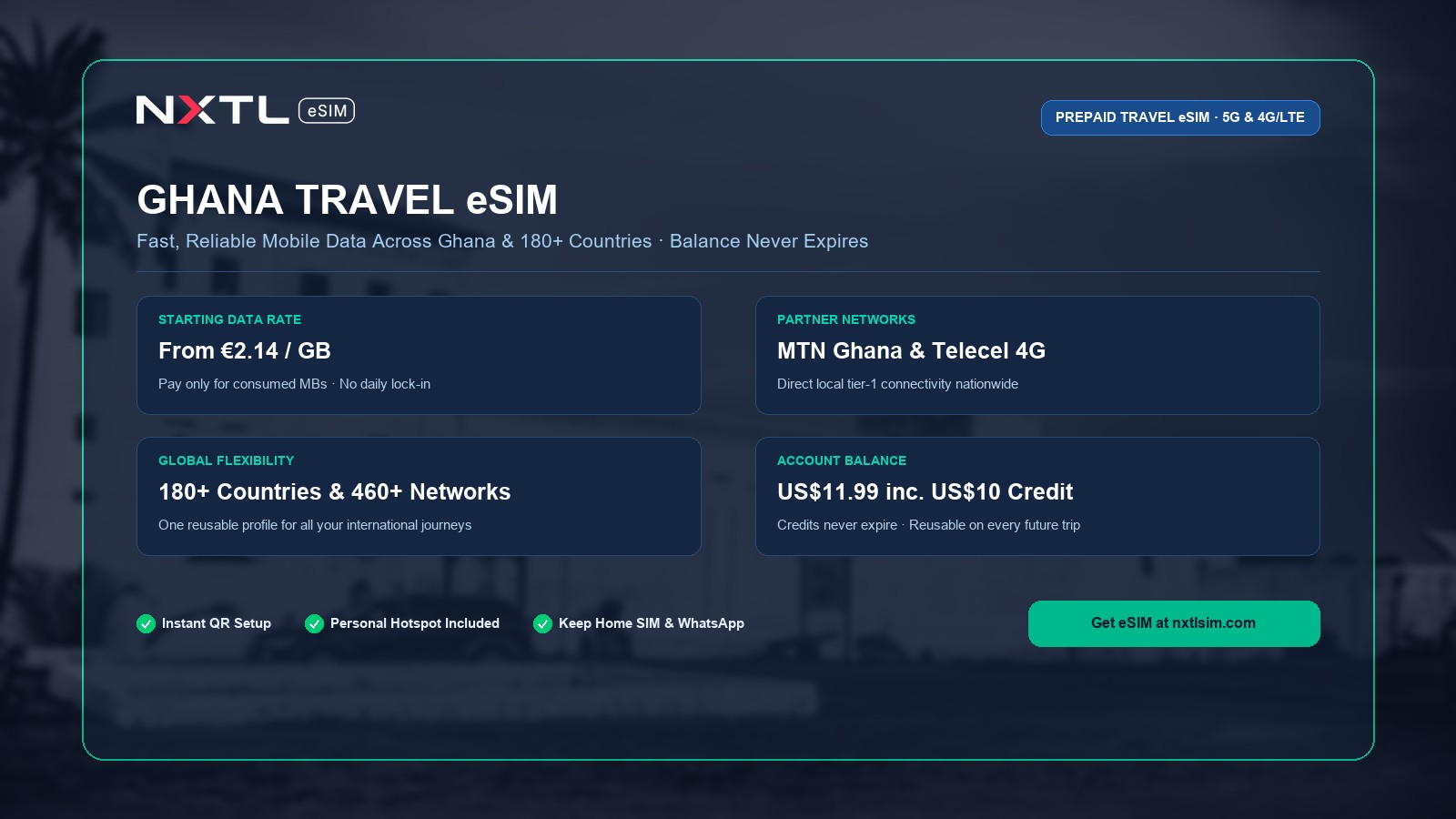
A digital global eSIM offers a far superior, instantaneous alternative. With NXTL, you connect directly to top Ghanaian cellular networks the moment your flight lands in Accra, without swapping plastic SIM cards or queuing at airport telecom desks. Operating on a transparent pay-as-you-go balance model, NXTL delivers cellular data in Ghana starting at an affordable rate of just EUR 2.14 per gigabyte.
Crucially, NXTL provides multi-carrier failover across Ghana’s leading nationwide network operators: MTN Ghana and Telecel (formerly Vodafone Ghana). MTN operates the country’s most extensive high-speed 4G footprint across rural highways and provincial towns, while Telecel provides robust urban connectivity in Accra and Kumasi. NXTL automatically hooks into whichever carrier tower delivers the strongest signal as you travel between the coast and the Ashanti interior. Full personal hotspot and tethering functionality is enabled, allowing you to share data with companion devices.
Getting started is straightforward. For $11.99, you receive your universal eSIM profile with $10 in preloaded account balance. Because your balance never expires and covers 180+ countries and 460+ carrier networks worldwide, any credit remaining after your Ghanaian journey stays active and ready for your ongoing travels across Africa and around the globe.