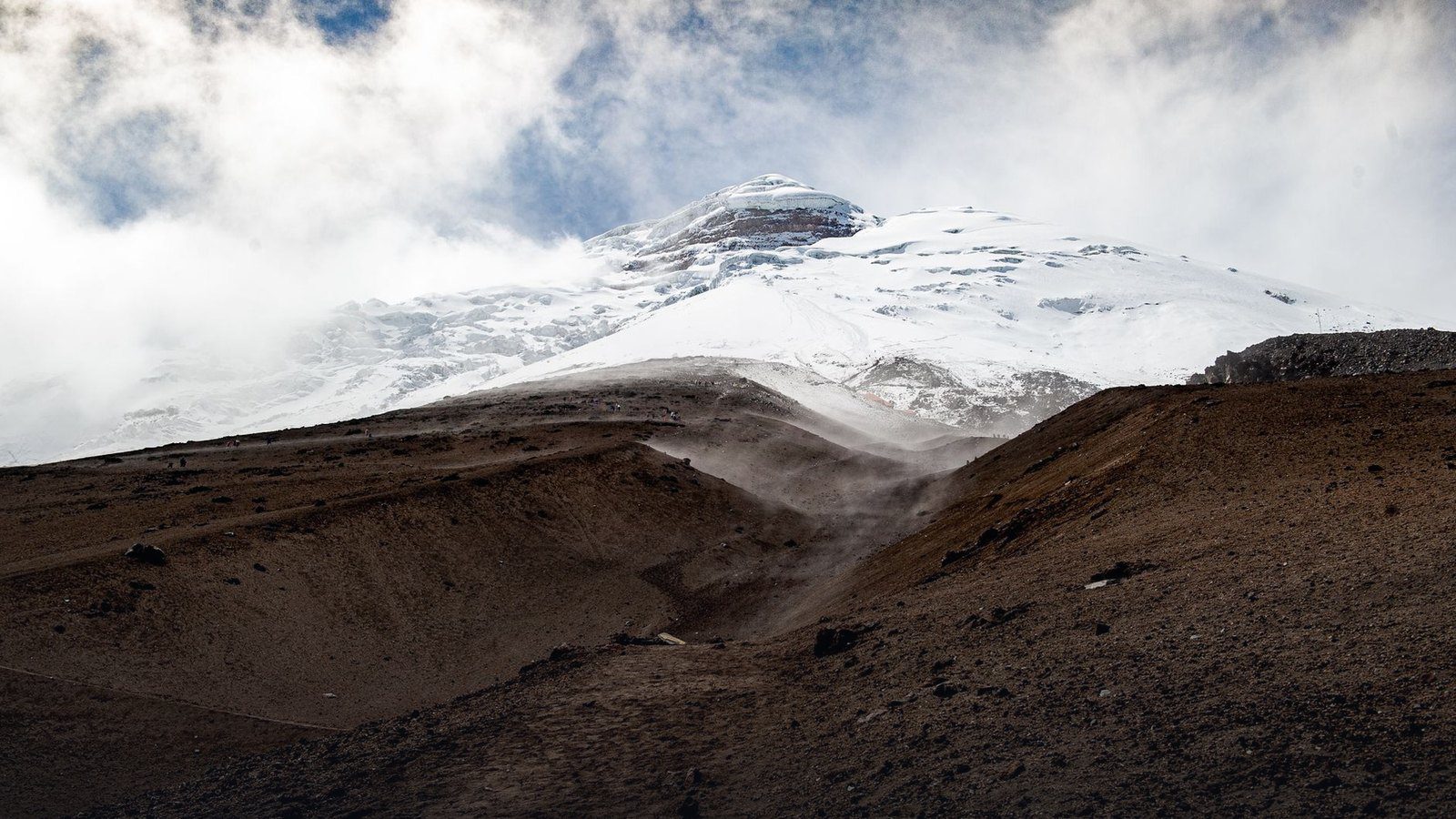
Standing on the equator in Quito, admiring the snow-capped peak of Cotopaxi Volcano, or exploring coastal wildlife in the Galápagos Islands requires a thoughtful mobile data plan. Knowing your cellular needs ensures dependable connectivity from the Andes to the Pacific.
For most travellers visiting Ecuador, a standard 7-day itinerary consumes between 2.5 GB and 4.5 GB of mobile data when using turn-by-turn navigation, messaging apps, digital transit ticketing, and web lookups. Lighter users who prioritize hotel Wi-Fi generally require under 1.5 GB, while heavy data users and remote professionals can easily use 8 GB to 10 GB or more over a multi-week stay.
NXTL provides direct pay-as-you-go cellular connectivity across Ecuador via Movistar Ecuador (4G LTE) at an exact rate of $2.95/GB ($0.0029/MB). Every megabyte consumed is deducted in fine-grained 1 KB increments from your prepaid balance, completely eliminating expiring daily bundles and forced package upgrades.

How Much Mobile Data Do You Need in Ecuador?
Your actual bandwidth consumption in Ecuador depends on your daily travel habits, reliance on real-time GPS navigation, and how frequently you connect to accommodation Wi-Fi. Below are three representative traveler profiles:
Essential messaging on WhatsApp or Signal, light map navigation, occasional ride-hailing, and emergency communication across Quito.
Continuous GPS navigation, frequent restaurant and attraction research, transit timetable checking on Quito Metro Line 1 subterranean system, and regular social sharing.
Daily high-definition video calls, streaming audio while on intercity transit, cloud photo sync over cellular, and remote work tethering.
Typical Travel Activity Data Burn
Mobile applications consume vastly different amounts of cellular data depending on whether they transfer raw text, vector map geometry, or compressed media streams. Sizing your data allowance properly keeps your connectivity reliable throughout your stay in Ecuador:
| Travel Activity | Hourly / Unit Consumption | 7-Day Estimated Total | Key Data-Saving Precaution |
|---|---|---|---|
| Google Maps / Apple Maps Navigation | 15 – 30 MB / hour | 350 – 600 MB | Download offline vector map areas for Quito, Guayaquil, Cuenca, Baños de Agua Santa, Otavalo, Puerto Ayora (Galápagos) before arriving. |
| Messaging & VoIP (WhatsApp, Telegram) | 2 – 5 MB / hour (Text & Voice) | 150 – 300 MB | Disable automatic media download for incoming video clips. |
| Transit & Ride-Hailing Apps | 10 – 20 MB / session | 200 – 400 MB | Pre-save digital passes and route timetables in wallet apps. |
| Web Browsing & Translation | 30 – 60 MB / hour | 400 – 700 MB | Download offline translation dictionaries for the local language. |
| Social Media Browsing (Instagram, TikTok) | 120 – 300 MB / hour | 1.2 – 2.5 GB | Restrict background video autoplay in app privacy settings. |
| Audio Streaming (Spotify, Apple Music) | 50 – 100 MB / hour | 500 MB – 1.0 GB | Download travel playlists and podcasts over accommodation Wi-Fi. |
| Cloud Photo / Video Auto-Sync | 100 – 500 MB / day | 700 MB – 3.5 GB | Set cloud backups (Google Photos, iCloud) to trigger only on Wi-Fi. |
Cellular Infrastructure & Network Realities in Ecuador
Cellular connectivity in Ecuador is delivered by Movistar Ecuador (OTECEL), supporting 4G LTE mobile data across Quito, Guayaquil, Cuenca, Manta, and populated urban town centers on the Galápagos Islands.
However, real-world cellular propagation is subject to environmental and structural factors. In Ecuador, you may encounter localized signal variations in the following specific environments:
- Historic Architecture & Masonry: Historic colonial churches of Old Town Quito (San Francisco, La Compañía), thick adobe walls in Cuenca, and concrete high-rises in Guayaquil’s Malecón 2000 district.. High-frequency LTE and 5G radio waves attenuate significantly when penetrating historic stone foundations and underground vaults.
- Transit Corridors & Topography: Metro de Quito subterranean rapid transit Line 1, Trolebús electric bus corridors, and interprovincial buses traveling along the high-altitude Pan-American Highway.. Rapid movement between base stations and physical topography can cause temporary cellular handovers.
- Regional & Outdoor Landscapes: High-altitude Andean paramos (around Cotopaxi and Chimborazo volcanoes), Amazonian rainforest lodges in Napo/Pastaza, and uninhabited islets and open marine channels in the Galápagos Marine Reserve.. Outside major urban centers, terrain features reduce direct signal density.
Practical Offline Precaution: Download offline maps for Quito, Guayaquil, Cuenca, and the Galápagos Islands (Puerto Ayora / Puerto Baquerizo Moreno) before traveling..
International Cellular Roaming Context
Ecuador operates outside the European Union roaming regulation zone. Travelers using domestic mobile subscriptions from abroad face standard international roaming tariffs unless using a local connectivity solution. Utilizing a prepaid NXTL eSIM provides access to Movistar Ecuador (4G LTE) at an exact pay-as-you-go rate of $2.95/GB, ensuring transparent cost control without contracts or bill shocks.
NXTL Pay-As-You-Go Rates & Top-Up Planning for Ecuador
With NXTL, your mobile data balance never expires. You pay an exact rate of $2.95/GB ($0.0029/MB). Every standard starter package ($11.99 checkout) includes $10.00 in usable data credit, and self-service top-ups are available in denominations of $2.26, $5.65, $11.30, and $22.60.
| Data Allowance | Exact Data Cost | Starter Credit Status | Recommended Top-Up Action |
|---|---|---|---|
| 1 GB | $2.95 | Covered by Starter | None (Covered by $10.00 starter credit with $7.05 balance remaining) |
| 2 GB | $5.91 | Covered by Starter | None (Covered by $10.00 starter credit with $4.09 balance remaining) |
| 3 GB | $8.86 | Covered by Starter | None (Covered by $10.00 starter credit with $1.14 balance remaining) |
| 5 GB | $14.77 | + $4.77 Extra | Single $5.65 reload (covers $4.77 shortfall) |
| 10 GB | $29.52 | + $19.52 Extra | Single $22.60 reload (covers $19.52 shortfall) |
| 20 GB | $59.04 | + $49.04 Extra | 3x $22.60 reloads ($67.79 total) to cover $49.04 shortfall |
Note: All session traffic is billed in discrete 1 KB increments. Credit balances carry over indefinitely across all 182+ supported NXTL destinations.
5 Practical Data-Saving Strategies for Ecuador
- Pre-Load Offline Navigation: Download offline map areas for Quito, Guayaquil, Cuenca, Baños de Agua Santa, Otavalo, Puerto Ayora (Galápagos) in Google Maps or Organic Maps before landing. Turn-by-turn GPS location works offline via satellite without consuming cellular megabytes.
- Enable Low Data Mode: Turn on “Low Data Mode” (iOS) or “Data Saver” (Android) under Cellular Settings. This suspends automatic background app refresh, unmetered app updates, and background cloud sync.
- Download Audio and Media on Wi-Fi: Pre-cache your music, podcast episodes, and offline guidebook chapters over hotel Wi-Fi rather than streaming over cellular during intercity trips.
- Disable Cellular Cloud Photo Backups: Ensure iCloud Photos and Google Photos are set to backup exclusively when connected to Wi-Fi and charging.
- Leverage Accommodation Wi-Fi for Heavy Tasks: Reserve video conferencing, OS updates, and file synchronization for evening Wi-Fi at your lodging.
Frequently Asked Questions: Mobile Data in Ecuador
What network will my device connect to in Ecuador?
Your NXTL eSIM connects to Movistar Ecuador with partner roaming across Movistar Ecuador (4G LTE), Claro Ecuador (4G LTE), CNT Mobile (4G LTE) supporting 4G LTE mobile data.
How does NXTL data billing work compared to fixed gigabyte plans?
Unlike traditional travel SIMs that sell rigid 10 GB or 20 GB packages that expire after 15 or 30 days, NXTL operates on pure pay-as-you-go balance metering. In Ecuador, data is billed at exactly $2.95/GB in discrete 1 KB increments. Unused balance never expires and remains available for future international travel.
Is cellular coverage available on public transit and travel routes in Ecuador?
Quito Metro Line 1 features station cellular coverage and Cuenta Ciudad digital QR ticketing. On intercity buses along the Pan-American Highway through the Avenue of the Volcanoes, 4G coverage is consistent in Andean valley basins, with brief signal dips when crossing high mountain passes. In the Galápagos Islands, coverage is strictly confined to populated port towns; marine boat tours operate offline. Pre-downloading national park passes is essential.
What emergency numbers should I know in Ecuador?
The standard emergency number in Ecuador is 911 (Integrated Security Service ECU 911 across Ecuador). Emergency calls can be placed from any mobile handset even if data credit is fully exhausted.
Can I top up my balance if I need more data while in Ecuador?
Yes. You can instantly reload your balance at any time through the self-service portal in denominations of $2.26, $5.65, $11.30, or $22.60. Reloads apply immediately to your active eSIM profile.
Research Methodology & Source Verification
Data consumption guidelines, infrastructure assessments, and tariff structures for Ecuador are verified through official regulatory reports published by Agency for Regulation and Control of Telecommunications (ARCOTEL Ecuador), technical network deployment metrics from local operators, and live production pricing snapshots from NXTL’s online charging system (OCS) as of October 2026. Data costs reflect pure pay-as-you-go metering at 1,024 MB per gigabyte.