Known as the ‘Warm Heart of Africa,’ Malawi features reliable cellular coverage throughout Lilongwe, Blantyre, and primary tourist hubs along Lake Malawi. At $5.95 per GB ($0.0058/MB) via TNM / Airtel (LTE), NXTL offers transparent pay-as-you-go data. While lakeside resorts and main highways maintain stable links, travelers heading to remote safari reserves should pre-cache maps and logistics documents.
- 3-Day Stopover: 0.8 – 1.6 GB · Estimated usage cost ~$7.14 (Check checkout credit)
- 7-Day Standard Tour (Recommended): 2.0 – 3.2 GB · Estimated usage cost ~$14.88 (Check checkout credit)
- 14-Day Regional Stay: 3.8 – 6.2 GB · Estimated usage cost ~$29.76 (Check checkout credit)
Estimates reflect standalone smartphone cellular usage assuming streaming video, system backups, and bulk cloud sync are deferred to accommodation Wi-Fi. Rates reflect NXTL retail pricing at $5.95/GB ($0.0058/MB) on Airtel (LTE).

Trip Duration & Data Volume Breakdown
Mobile data consumption in Malawi depends on your reliance on live satellite navigation, regular messaging with local drivers or colleagues, and how consistently you connect to reliable accommodation Wi-Fi networks in the evening. The matrix below outlines realistic data allocations across common travel durations and usage tiers.
| Trip Duration | Light Use (Frugal) | Typical Use (Recommended) | Heavy Use (Unconstrained) |
|---|---|---|---|
| 3 Days (Weekend / Stopover) | 0.7 GB (~$4.28) | 1.2 GB (~$7.14) | 1.9 GB (~$11.43) |
| 7 Days (Standard Week) | 1.5 GB (~$8.93) | 2.5 GB (~$14.88) | 4.0 GB (~$23.81) |
| 14 Days (Extended Journey) | 3.0 GB (~$17.85) | 5.0 GB (~$29.76) | 7.5 GB (~$44.64) |
Light use covers offline-cached GPS maps, essential text messaging, and emergency logistics. Typical use incorporates daily road navigation, translation tools, local service searches, and curated photo sharing. Heavy use includes frequent VoIP voice calls, work email attachments, and light personal hotspotting. The larger email and document allocations in the scenarios assume work use. Leisure readers who stay with maps, messaging, and occasional photos should use the light range.

Realistic Travel Scenarios in Malawi
To help you budget your mobile balance accurately, we have modelled three plausible travel itineraries reflecting authentic regional routes and daily connectivity requirements in Malawi.
Lilongwe Capital & Old Town Markets
Budget Target: 1229 MB (1.20 GB)
Exploring Lilongwe Old Town, visiting craft markets and the Wildlife Trust, and coordinating private taxi transfers across the capital.
- Airport transit & city navigation: 160 MB
- City taxi coordination & routing: 220 MB
- WhatsApp communications & voice calls: 250 MB
- Local dining & market lookups: 210 MB
- Work email & attachment review (~150 emails, 8 PDF documents & banking MFA): 389 MB
Lake Malawi & Cape Maclear Lakeside Tour
Budget Target: 2560 MB (2.50 GB)
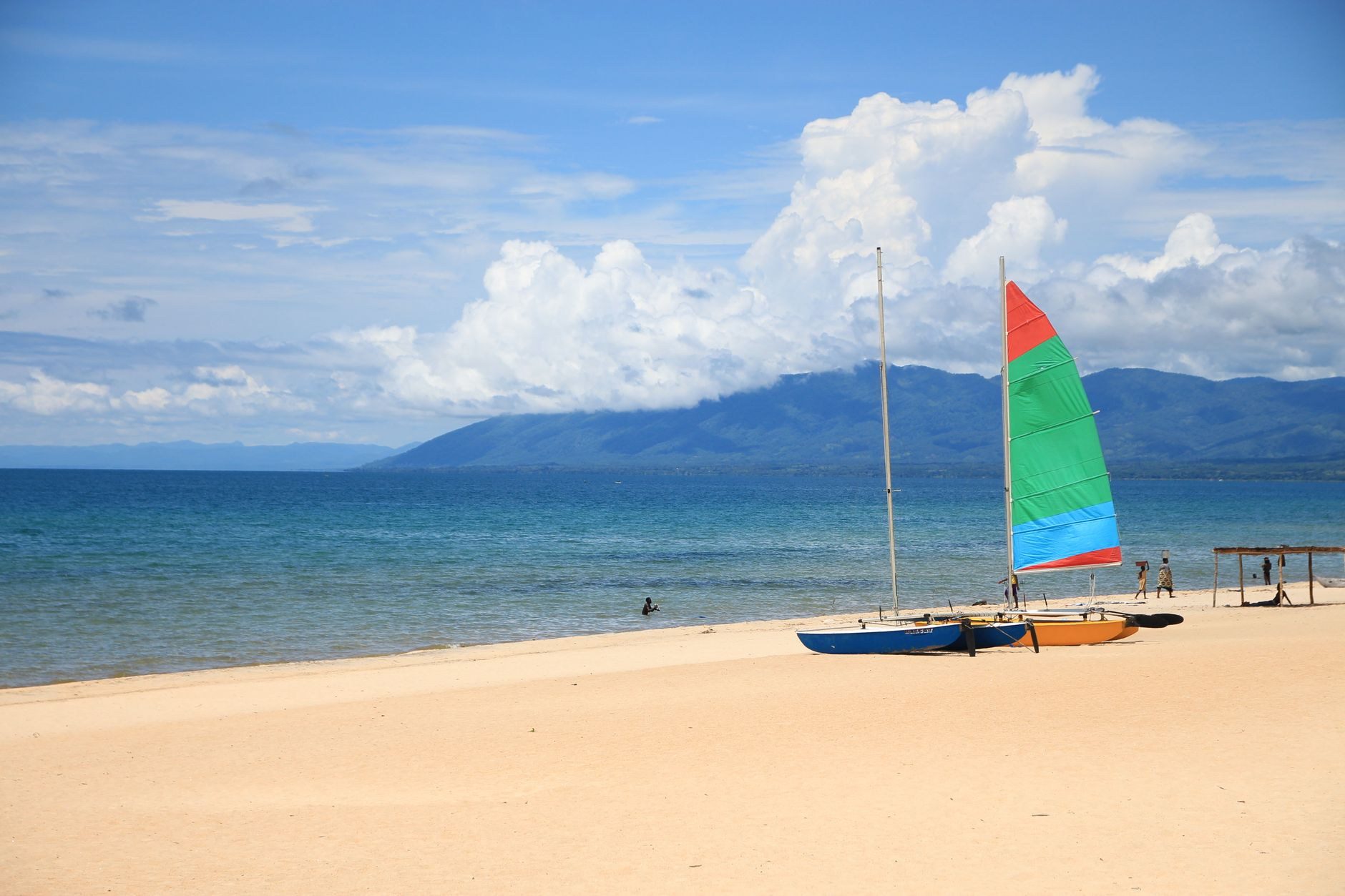
A standard week driving south to Cape Maclear in Lake Malawi National Park, booking boat trips to Thumbi Island, and managing lodge communications.
- M1 and M5 lake highway navigation: 380 MB
- Boat transfer coordination & dive bookings: 280 MB
- Messaging & regular voice updates: 450 MB
- Social photo sharing of lake sunsets: 620 MB
- Corporate email sync & document review (~350 emails, 20 PDF attachments & cloud briefs): 830 MB
Mount Mulanje & Liwonde Safari Expedition
Budget Target: 5120 MB (5.00 GB)
Two weeks combining southern tea plantations in Thyolo, hiking Mount Mulanje, and river safari drives in Liwonde National Park.
- Overland highway route navigation: 850 MB
- Safari lodge coordination & guide updates: 580 MB
- VoIP voice check-ins & family messaging: 1050 MB
- Wildlife photo uploads & social sharing: 1350 MB
- Corporate email sync, project document access (~750 emails, 45 PDF attachments & cloud sync): 1290 MB
Worked 7-Day Activity Budget & Arithmetic Reconciliation
To ensure complete budget transparency, the table below itemizes standard cellular activities across a 7-day travel itinerary, reconciling each allocation directly to total data volume and usage costs without misleading daily rounding.
| Planned Activity / Data Allocation | 7-Day Target | Usage Scope & Practical Context |
|---|---|---|
| Turn-by-turn road and city navigation | 315 MB | Turn-by-turn route guidance, active GPS waypoint caching, and localized road updates |
| Instant messaging & text communication | 140 MB | Text messaging, logistics coordination, and travel group communication via WhatsApp or Telegram |
| VoIP voice check-ins & dispatch | 175 MB | Brief VoIP voice check-ins with accommodation, local tour guides, and family |
| Web browsing, translation & local services | 455 MB | Mobile web searches, operating hours, local safety bulletins, and currency lookups |
| Social feeds & curated photo sharing | 595 MB | Curated photo sharing, travel updates, and selective social feed browsing |
| Local transport coordination & lake maps | 245 MB | Local transit coordination, rideshare dispatch, ticket retrieval, and flight status checks |
| Corporate email sync & document review (~350 emails, 20 PDF/Office attachments @ 15–20 MB, cloud briefs & banking MFA) | 635 MB | Daily corporate email polling (~50 emails/day), downloading approx. 20 essential contract, itinerary, and booking attachments (~15 MB average), reviewing cloud drive documents, and running mobile banking authentication. |
| Total 7-Day Consumption (MB) | 2,560 MB | Itemized weekly allowance across all active travel tools |
| Total in Gigabytes (2,560 MB ÷ 1,024 MB/GB) | 2.5000 GB (~2.50 GB) | Standard binary telecommunications conversion (1,024 MB = 1 GB) |
| Estimated Data Usage Cost (2.5000 GB × $5.95/GB) | ~$14.88 | Billed purely on consumption; compare against credit shown at checkout |
Arithmetic Reconciliation & Tariff Breakdown
Using the official telecommunications binary conversion standard of 1,024 MB per gigabyte, your total weekly data volume calculates exactly as follows:
- Weekly Data Volume: 2,560 MB ÷ 1,024 MB/GB = 2.5000 GB (budgeted as 2560 MB / 2.50 GB).
- Data Usage Expenditure: 2.5000 GB × $5.95/GB = $14.88.
- Commercial Handoff Note: Estimated data usage costs reflect consumption at NXTL’s verified retail rate of $5.95/GB ($0.0058/MB) via Airtel (LTE). Compare this estimated usage cost with the included credit displayed in your live checkout at time of purchase. Any remaining balance does not expire and remains available for future travel across all NXTL-supported destinations.
Flexible Pay-As-You-Go Planning in Malawi
At NXTL’s pay-as-you-go rate of $5.95 per GB ($0.0058 per MB) via Airtel (LTE), data consumption is deducted transparently per megabyte from your balance without expiring daily bundles or artificial speed throttles. You only pay for the exact volume your device consumes.
For a standard 7-day tour, an allocation of 2.50 GB (2,560 MB) provides comfortable headroom for road navigation, messaging, translation, and curated photo sharing, costing approximately $14.88 in usage. Compare this estimated usage cost with the included credit displayed in your live checkout at time of purchase.
When to Consider a Local SIM: For short trips and standard travel (1–10 GB), NXTL delivers superior convenience without local registration queues. For extended visits exceeding 3–4 weeks or heavy remote workers requiring 20+ GB, purchasing a local physical SIM from local network shops in town can provide bulk volume savings.
Local Network Realities & Terrain Cautions in Malawi
Solid 4G LTE covers Lilongwe, Blantyre, Zomba, and lakeside resort towns like Cape Maclear and Nkhata Bay. Mountainous plateaus (Zomba, Nyika) and rural wildlife reserves experience significant cellular signal fading.
The Great Rift Valley escarpment and high mountain massifs (Mount Mulanje) cause natural radio frequency shadowing. Pre-downloading offline GPS maps prevents navigation dropouts along the M1 and M5 lake roads.
Local transport and navigation depend on authentic infrastructure: Local transport operates via shared matola minibuses, private taxi hires, and the historic MV Ilala passenger ferry across Lake Malawi.
Regional Network Registration & Device Configuration
When landing in Malawi, your smartphone automatically initiates a network handshake with Airtel (LTE). To avoid initial connectivity hiccups, verify prior to departure that data roaming is enabled on your NXTL eSIM line while remaining switched off on your domestic voice SIM. While carrying a device compatible with standard regional LTE frequency bands helps your modem acquire host cell towers, actual network coverage and inter-cell handover vary widely depending on tower density, local terrain obstructions, and carrier roaming agreements. If your handset is slow to register after touching down at the airport, toggling Airplane Mode for ten seconds triggers a fresh network search to latch onto the strongest available local signal.
Data-Saving Best Practices for Malawi
- Pre-Download Offline Navigation Maps: Download regional map sectors before departing your hotel Wi-Fi. Navigation apps like Google Maps and Maps.me run purely on passive GPS satellite signals without consuming cellular megabytes for map tile rendering.
- Store Local Translation Dictionaries: Download offline language packs for English and Chichewa where supported by your translation app. This enables instant camera translation for street signs and restaurant menus, as well as offline speech interpretation, with zero cellular data draw.
- Defer Cloud Backups and Video Streaming: Disable cellular data access for photo libraries (such as iCloud Photos or Google Photos) and disable background video autoplay on social media feeds to prevent rapid balance exhaustion.
- Enable Operating System Low Data Mode: Activating Low Data Mode in your iOS or Android settings automatically restricts background data usage, halts background app refresh, and defers automatic app store updates to hotel Wi-Fi connections.
- Manage In-App Messaging Media Downloads: Configure messaging applications like WhatsApp and Telegram to download images, voice notes, and video files only when connected to Wi-Fi. Voice messages and photos sent over cellular should be initiated intentionally to preserve your travel data budget.
Frequently Asked Questions
How much data do I need for a week in Malawi?
For a standard 7-day trip, most travellers require between 2.0 GB and 3.2 GB of cellular data. At NXTL’s pay-as-you-go rate of $5.95/GB, this usage amounts to approximately ~$14.88. Compare this usage cost with the included credit shown at checkout.
Which cellular network does NXTL use in Malawi?
NXTL connects to Airtel (LTE). Your device registers automatically with the host partner upon arrival, providing immediate mobile connectivity without local registration queues.
Does my prepaid credit expire if I do not use it all?
No. Unused balance on your NXTL account does not expire at the end of your trip. Your balance remains active and rolls over automatically for future travel across any of NXTL’s 180+ global destinations.
Should I buy a local SIM card instead of using NXTL?
NXTL offers transparent pay-as-you-go pricing without requiring local passport registration or queueing at airport kiosks. For multi-week stays exceeding 15–20 GB, comparing with a local physical SIM is sensible, but for typical holiday and business travel, NXTL provides superior flexibility.
Can I share my cellular connection via personal hotspot?
Yes. Personal hotspot and USB tethering are fully supported on NXTL in Malawi at standard pay-as-you-go rates. However, connected laptops and tablets often initiate automatic background cloud syncing and operating system updates. We strongly recommend configuring tethered devices as ‘Metered Connections’ in their network settings to prevent unexpected background consumption.
What should I do if my phone does not connect automatically upon landing?
If your handset does not latch onto Airtel (LTE) automatically, navigate to your phone’s cellular settings, open Network Selection, switch from Automatic to Manual, and select the partner carrier from the list of available operators. Also confirm that your APN (Access Point Name) is set to ‘globaldata’ with data roaming toggled to active.
Planning Methodology & Source Attestation
This planning guide provides illustrative mobile data estimates designed to help travelers budget cellular usage before departure. All megabyte allocations represent practical benchmarks based on typical smartphone travel activity—such as map navigation, messaging, and web searches—rather than guaranteed consumption figures. Real-world data draw varies considerably based on your phone’s operating system, background cloud synchronization settings, screen resolution, app updates, and local signal conditions.
National regulatory frameworks and licensed mobile network operators were cross-referenced against public records published by MACRA (Malawi Communications Regulatory Authority) (MACRA (Malawi Communications Regulatory Authority)), with primary international arrival logistics verified through Kamuzu International Airport (LLW) (Kamuzu International Airport (LLW)). Cellular roaming rates reflect NXTL’s pay-as-you-go tariff schedule observed on 14 October 2026. Because exchange rates, retail tariffs, and device compatibility requirements can evolve, always verify current pricing and handset compatibility on our NXTL Malawi eSIM destination storefront prior to departure.