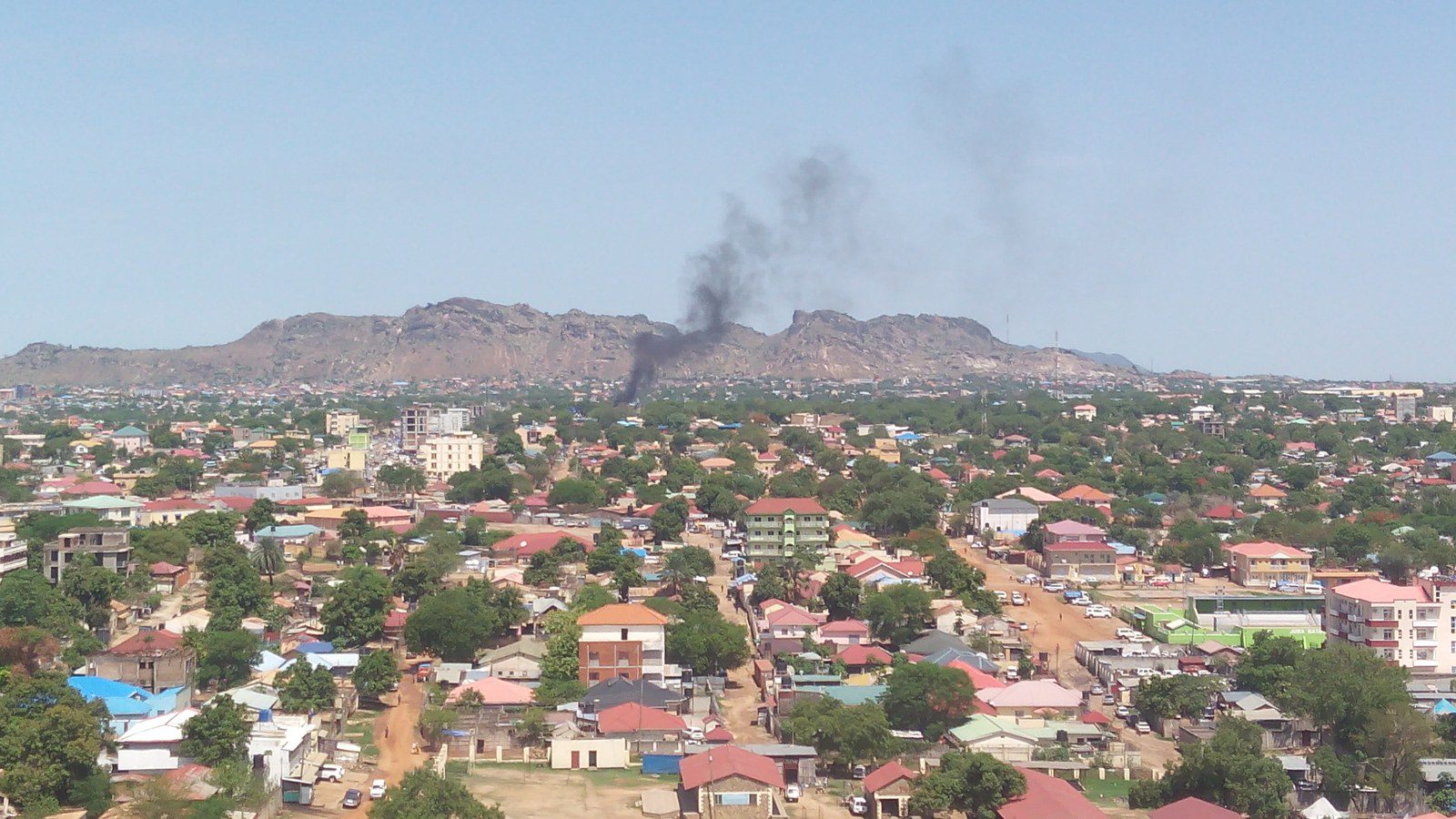
South Sudan represents one of the most challenging telecommunications environments in East Africa, where infrastructure is heavily concentrated in the capital of Juba amidst active conflict warnings. Wholesale roaming tariffs reflect an unrounded rate of $150.59 per GB ($0.15/MB) via Zain / MTN (LTE). Travelers must treat NXTL strictly as a Low-Data Arrival & Emergency Bridge (40–80 MB) for airport arrival logistics, security check-ins, and NGO or humanitarian mission coordination, relying on compound Wi-Fi or acquiring a local SIM for heavier requirements.
⚠️ Official Government Travel Advisory Notice
International governments advise against all travel to South Sudan due to armed conflict, intercommunal violence, and high rates of violent crime. The low-data arrival bridge modeled below is intended strictly for accredited humanitarian aid organizations, UN peacekeeping personnel, and diplomatic missions operating in Juba. Always verify official government advice for your nationality.
Official sources: UK FCDO Travel Advice for South Sudan · US State Department Travel Advisory
- 3-Day Necessary Transit Window: 24 – 46 MB · Estimated usage cost ~$5.14 (Check checkout credit)
- 7-Day Necessary Travel Arrival Bridge: 48 – 75 MB · Estimated usage cost ~$8.83 (Check checkout credit)
- 14-Day Necessary Mission Transit: 90 – 156 MB · Estimated usage cost ~$17.65 (Check checkout credit)
Estimates reflect standalone smartphone cellular usage assuming streaming video, system backups, and bulk cloud sync are deferred to accommodation Wi-Fi. Rates reflect NXTL retail pricing at $150.59/GB ($0.15/MB) on MTN (LTE).

Trip Duration & Data Volume Breakdown
Mobile data consumption in South Sudan depends on your reliance on live satellite navigation, regular messaging with local drivers or colleagues, and how consistently you connect to reliable accommodation Wi-Fi networks in the evening. The matrix below outlines realistic data allocations across common travel durations and usage tiers.
| Trip Duration | Light Use (Frugal) | Typical Use (Necessary Travel Baseline) | Heavy Use (Unconstrained) |
|---|---|---|---|
| 3 Days (Weekend / Stopover) | 18 – 26 MB (~$3.09) | 35 MB (~$5.14) | 49 – 63 MB (~$8.24) |
| 7 Days (Standard Week) | 30 – 45 MB (~$5.30) | 60 MB (~$8.83) | 78 – 108 MB (~$13.23) |
| 14 Days (Extended Journey) | 60 – 90 MB (~$10.59) | 120 MB (~$17.65) | 156 – 216 MB (~$26.47) |
Light use covers essential arrival logistics and emergency text messaging. Typical use incorporates taxi dispatch, border/hotel check-ins, and two-factor authentication tokens. Heavy use includes multiple navigation requests and urgent work communication.

Realistic Travel Scenarios in South Sudan
To help you budget your mobile balance accurately, we have modelled three plausible travel itineraries reflecting authentic regional routes and daily connectivity requirements in South Sudan.
Juba Humanitarian Compound & Agency Arrival Bridge
Budget Target: 35 MB (0.03 GB)
Arrival at Juba International Airport (JIA), retrieving digital visa and security clearance paperwork, dispatching agency compound transit, and messaging mission heads.
- Airport arrival & security paperwork retrieval: 9 MB
- Agency compound shuttle dispatch & GPS pin: 10 MB
- Encrypted WhatsApp text logistics with base coordinators: 8 MB
- Secure compound check-in confirmation & map verification: 5 MB
- Essential push tokens & security authentication: 3 MB
Juba Logistics & Central Equatoria Program Liaison
Budget Target: 60 MB (0.06 GB)
A disciplined 7-day low-data arrival bridge covering agency meetings in Juba and logistics coordination along Airport Road, relying on compound Wi-Fi for bulk reporting.
- Juba urban road navigation & security checkpoints: 17 MB
- Encrypted WhatsApp text communication (no media auto-download): 15 MB
- Agency shuttle dispatch & driver coordination: 12 MB
- Emergency web searches & flight manifest check-in: 9 MB
- Essential two-factor SMS/push tokens & security alerts: 7 MB
Regional Aid Operations & Field Mission Support
Budget Target: 120 MB (0.12 GB)
Two weeks maintaining a low-data emergency connection across Juba and field airstrip transit, pairing with a passport-registered local physical SIM for heavy data needs.
- Field airstrip navigation & offline map verification: 32 MB
- Two-week text messaging check-ins & security roll calls: 30 MB
- Banking verification & domestic flight status lookups: 26 MB
- Emergency contacts & logistics guide coordination: 19 MB
- Essential push security alerts & two-factor authentication: 13 MB
Worked 7-Day Activity Budget & Arithmetic Reconciliation
To ensure complete budget transparency, the table below itemizes standard cellular activities across a 7-day travel itinerary, reconciling each allocation directly to total data volume and usage costs without misleading daily rounding.
| Planned Activity / Data Allocation | 7-Day Target | Usage Scope & Practical Context |
|---|---|---|
| Turn-by-turn navigation & GPS checkpoints | 16 MB | Airport-to-accommodation navigation and critical road waypoint verification |
| WhatsApp text communication (no video) | 15 MB | Text-only WhatsApp coordination with local hosts, drivers, and colleagues (no media auto-download) |
| Private driver coordination & logistics | 12 MB | Airport terminal taxi dispatch, ride-hailing requests, and initial transit coordination |
| Airline portals & urgent web lookups | 9 MB | Immigration QR retrieval, airline boarding pass verification, and hotel check-in confirmation |
| Essential two-factor SMS/push alerts & security tokens | 8 MB | Low-data multi-factor authentication SMS codes, bank verification push alerts, and travel notification tokens. |
| Total 7-Day Consumption (MB) | 60 MB | Itemized weekly allowance across all active travel tools |
| Total in Gigabytes (60 MB ÷ 1,024 MB/GB) | 0.0586 GB (~0.06 GB) | Standard binary telecommunications conversion (1,024 MB = 1 GB) |
| Estimated Data Usage Cost (0.0586 GB × $150.59/GB) | ~$8.83 | Billed purely on consumption; compare against credit shown at checkout |
Arithmetic Reconciliation & Tariff Breakdown
Using the official telecommunications binary conversion standard of 1,024 MB per gigabyte, your total weekly data volume calculates exactly as follows:
- Weekly Data Volume: 60 MB ÷ 1,024 MB/GB = 0.0586 GB (budgeted as 60 MB / 0.06 GB).
- Data Usage Expenditure: 0.0586 GB × $150.59/GB = $8.83.
- Commercial Handoff Note: Estimated data usage costs reflect consumption at NXTL’s verified retail rate of $150.59/GB ($0.15/MB) via MTN (LTE). Compare this estimated usage cost with the included credit displayed in your live checkout at time of purchase. Any remaining balance does not expire and remains available for future travel across all NXTL-supported destinations.
Realistic Data Options & When to Buy a Local SIM in South Sudan
Why Heavy Roaming Is Cost-Prohibitive: At wholesale roaming tariffs of $150.59 per GB ($0.15 per MB) on MTN (LTE), standard unconstrained smartphone consumption (such as 3–5 GB over a week for Instagram, YouTube, video calls, and cloud backups) would incur $336.15 to $728.32+ in cellular charges. For this reason, NXTL does not recommend using international roaming for heavy multimedia streaming in South Sudan.
The Practical Two-Tier Connectivity Strategy:
- Tier 1 — The NXTL Arrival & Emergency Bridge (60 MB, ~$8.83): Activate your NXTL eSIM before departure. Upon landing, your handset registers immediately with MTN (LTE), providing immediate data to clear customs/health QR forms, message your accommodation, book or dispatch terminal transport, and navigate safely to your hotel without hunting for an airport SIM kiosk.
- Tier 2 — Local Physical SIM for High-Volume Data: Once settled in town, visit an official carrier retail center (Zain South Sudan or MTN customer service outlets along Airport Road or in the Hai Malakal commercial quarter of Juba (strict passport and visa documentation required)). A local prepaid tourist SIM typically costs approximately $10–$20 USD and provides 5 GB to 15 GB of high-speed local data for video calls and remote work.
Dual-SIM Best Practice: Keep your NXTL eSIM active as your secondary line while using the local physical SIM as your primary data connection. This dual-SIM configuration gives you affordable high-volume data locally, while preserving your unexpiring NXTL balance as a reliable emergency backup and a convenient transit connection when crossing regional borders.
Local Network Realities & Terrain Cautions in South Sudan
MTN provides 4G LTE across urban Juba (Ministries complex, Hai Cinema, Tongping, and airport road). Outside Juba, terrestrial cellular infrastructure is severely limited across the Sudd wetlands and rural state capitals.
Severe infrastructure constraints, extensive wetland terrain, and lack of paved intercity roads mean cellular towers are confined strictly to urban centers. Extremely high wholesale tariffs make roaming data suited purely as an arrival bridge.
Local transport and navigation depend on authentic infrastructure: Private pre-arranged 4×4 vehicles and humanitarian agency shuttles provide transport; boda-boda motorcycles operate locally within Juba. App-based ride-hailing is not available.
Regional Network Registration & Device Configuration
When landing in South Sudan, your smartphone automatically initiates a network handshake with MTN (LTE). To avoid initial connectivity hiccups, verify prior to departure that data roaming is enabled on your NXTL eSIM line while remaining switched off on your domestic voice SIM. While carrying a device compatible with standard regional LTE frequency bands helps your modem acquire host cell towers, actual network coverage and inter-cell handover vary widely depending on tower density, local terrain obstructions, and carrier roaming agreements. If your handset is slow to register after touching down at the airport, toggling Airplane Mode for ten seconds triggers a fresh network search to latch onto the strongest available local signal.
Data-Saving Best Practices for South Sudan
- Pre-Download Offline Navigation Maps: Download regional map sectors before departing your hotel Wi-Fi. Navigation apps like Google Maps and Maps.me run purely on passive GPS satellite signals without consuming cellular megabytes for map tile rendering.
- Store Local Translation Dictionaries: Download offline language packs for English (official) and Juba Arabic where supported by your translation app. This enables instant camera translation for street signs and restaurant menus, as well as offline speech interpretation, with zero cellular data draw.
- Defer Cloud Backups and Video Streaming: Disable cellular data access for photo libraries (such as iCloud Photos or Google Photos) and disable background video autoplay on social media feeds to prevent rapid balance exhaustion.
- Enable Operating System Low Data Mode: Activating Low Data Mode in your iOS or Android settings automatically restricts background data usage, halts background app refresh, and defers automatic app store updates to hotel Wi-Fi connections.
- Manage In-App Messaging Media Downloads: Configure messaging applications like WhatsApp and Telegram to download images, voice notes, and video files only when connected to Wi-Fi. Voice messages and photos sent over cellular should be initiated intentionally to preserve your travel data budget.
Frequently Asked Questions
How much data do I need for a week in South Sudan?
For a standard 7-day trip, most travellers require between 48 MB and 75 MB of cellular data. At NXTL’s pay-as-you-go rate of $150.59/GB, this usage amounts to approximately ~$8.83. Compare this usage cost with the included credit shown at checkout.
Which cellular network does NXTL use in South Sudan?
NXTL connects to MTN (LTE). Your device registers automatically with the host partner upon arrival, providing immediate mobile connectivity without local registration queues.
Does my prepaid credit expire if I do not use it all?
No. Unused balance on your NXTL account does not expire at the end of your trip. Your balance remains active and rolls over automatically for future travel across any of NXTL’s 180+ global destinations.
Should I buy a local SIM card instead of using NXTL?
Because wholesale roaming rates are high in South Sudan, using NXTL as an immediate arrival bridge (50–100 MB) to navigate from the airport and message contacts is ideal. If you require multi-gigabyte data for high-definition streaming or remote work, purchasing a local registered physical SIM in town is more economical.
Can I share my cellular connection via personal hotspot?
Yes. Personal hotspot and USB tethering are fully supported on NXTL in South Sudan at standard pay-as-you-go rates. However, connected laptops and tablets often initiate automatic background cloud syncing and operating system updates. We strongly recommend configuring tethered devices as ‘Metered Connections’ in their network settings to prevent unexpected background consumption.
What should I do if my phone does not connect automatically upon landing?
If your handset does not latch onto MTN (LTE) automatically, navigate to your phone’s cellular settings, open Network Selection, switch from Automatic to Manual, and select the partner carrier from the list of available operators. Also confirm that your APN (Access Point Name) is set to ‘globaldata’ with data roaming toggled to active.
Planning Methodology & Source Attestation
This planning guide provides illustrative mobile data estimates designed to help travelers budget cellular usage before departure. All megabyte allocations represent practical benchmarks based on typical smartphone travel activity—such as map navigation, messaging, and web searches—rather than guaranteed consumption figures. Real-world data draw varies considerably based on your phone’s operating system, background cloud synchronization settings, screen resolution, app updates, and local signal conditions.
National regulatory frameworks and licensed mobile network operators were cross-referenced against public records published by NCA (National Communication Authority of South Sudan) (NCA (National Communication Authority of South Sudan)), with primary international arrival logistics verified through Juba International Airport (JUB) / South Sudan Civil Aviation (Juba International Airport (JUB) / South Sudan Civil Aviation). Cellular roaming rates reflect NXTL’s pay-as-you-go tariff schedule observed on 14 October 2026. Because exchange rates, retail tariffs, and device compatibility requirements can evolve, always verify current pricing and handset compatibility on our NXTL South Sudan eSIM destination storefront prior to departure.