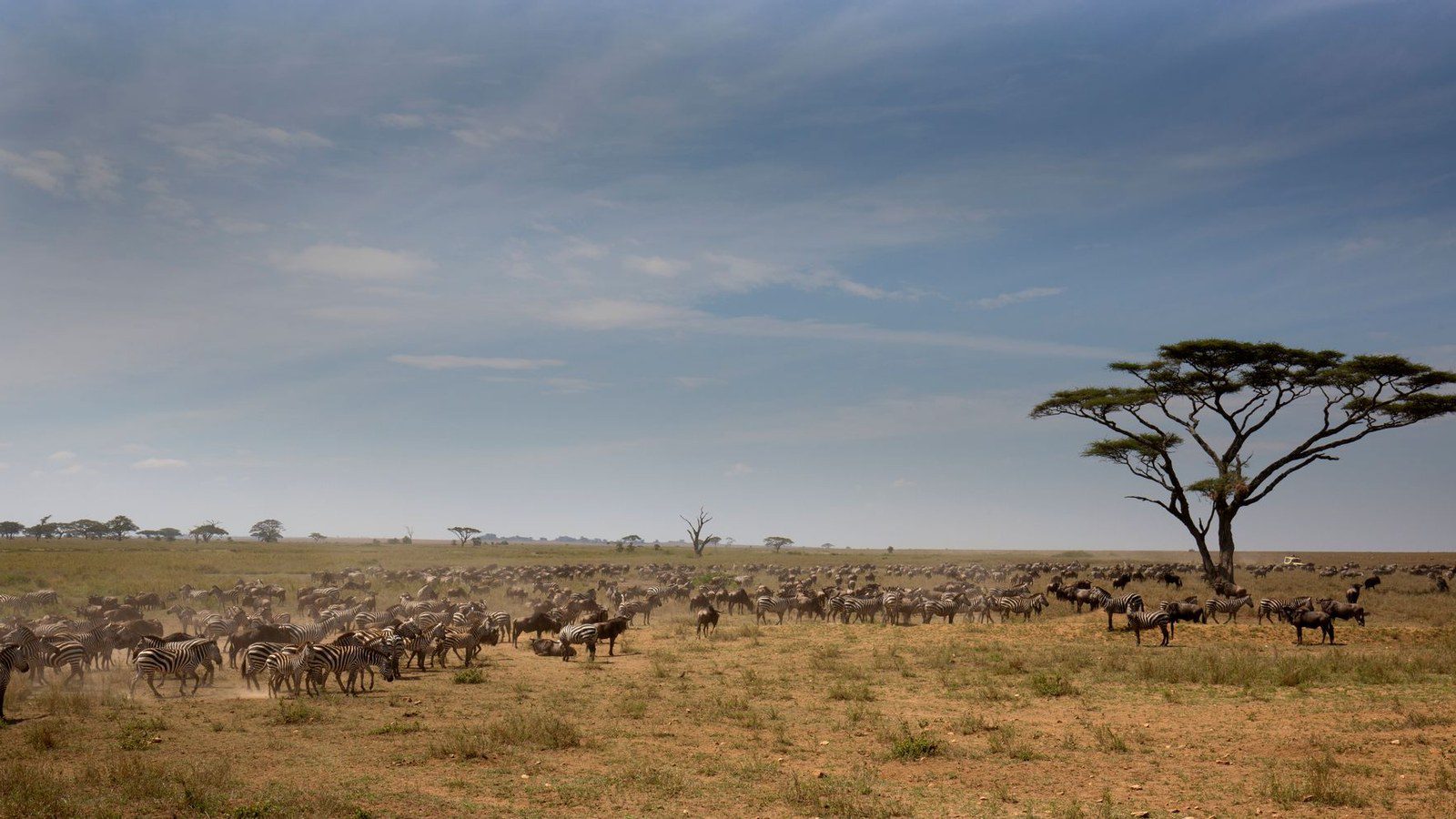
From the Great Migration across the endless plains of the Serengeti to the turquoise waters of Zanzibar and the snow-capped peak of Kilimanjaro, travelling in Tanzania is an extraordinary adventure that requires smart data planning.
Tanzania’s mobile telecommunications sector is led by Airtel Tanzania, offering expanding 5G coverage in Dar es Salaam, Arusha, and Zanzibar. Active cellular data allows you to manage ferry tickets, check park bookings, and share wildlife encounters.
Tanzania Mobile Data Estimates for 3, 7 and 14 Days
These planning ranges represent modelled travel styles. Background cloud synchronisation, video resolution choices, and accommodation Wi-Fi habits will shift your actual consumption within these brackets.
| Trip Length | Light Use (Navigation, Chat, Tickets) | Typical Use (+ Social, Music, Browsing) | Heavy Use (+ Video, Hotspot, Work) |
|---|---|---|---|
| 3 Days (City Break) | 0.5 – 1.0 GB | 1.0 – 2.0 GB | 3.0 – 5.0+ GB |
| 7 Days (One Week) | 1.0 – 3.0 GB | 3.0 – 5.0 GB | 6.0 – 10.0+ GB |
| 14 Days (Two Weeks) | 2.0 – 5.0 GB | 5.0 – 10.0 GB | 12.0 – 25.0+ GB |
Light Use
A light data profile treats the smartphone primarily as an on-the-go utility:
- Walking directions and public transport schedules on Google Maps or Apple Maps.
- Transit routing and station departure checks on official apps (Azam Marine Ferries (Zanzibar), Tanzania Railways Corporation (TRC SGR), Bolt Tanzania / Uber Dar es Salaam).
- Text messaging over WhatsApp, iMessage, or Signal.
- Scanning digital attraction passes, museum tickets, and boarding QR codes.
- Occasional restaurant lookups, opening hours checks, and menu translations.
A light traveller who downloads offline maps and reserves video streaming for accommodation Wi-Fi rarely exceeds 300–400 MB daily. A 1–2 GB allowance easily covers a 3- to 4-day city break.
Typical Use
Typical use represents standard holiday behaviour. In addition to navigation and tickets, this includes:
- Daily social media browsing (Instagram, Facebook) and sharing photos with friends.
- Looking up restaurant reviews, booking dining tables, and hailing local rides.
- Streaming background music, podcasts, or audio walking tours during city strolls.
- Checking web guides, museum audio tours, and local weather forecasts.
For a seven-day holiday, 3–5 GB provides a comfortable planning allowance without paying for an oversized bundle that expires unused.
Heavy Use
Heavy use involves high-bandwidth activities that consume data rapidly:
- Scrolling TikTok, Instagram Reels, or YouTube Shorts away from Wi-Fi.
- Streaming high-definition video during intercity transit.
- Automated background photo and 4K video synchronisation to iCloud or Google Photos.
- Video calls over FaceTime, Zoom, or WhatsApp.
- Hotspot tethering for a laptop or tablet without Low Data Mode enabled.
Under heavy use, 10 GB can disappear in days—particularly if a connected laptop downloads background operating system updates. Heavy users should monitor usage daily and restrict cloud synchronisation to Wi-Fi.
What Uses the Most Data While Travelling in Tanzania?
The primary source of unexpected data drain is rarely Google Maps or messaging. The true drivers of rapid consumption are video pre-buffering, unmetered laptop tethering, and automated cloud backups.
| Activity | Typical Data Consumption | Practical Impact on a 7-Day Trip |
|---|---|---|
| Google Maps / Apple Maps Navigation | 15–30 MB per hour | Very low. 2–3 hours of daily routing uses only 300–600 MB across an entire week. Pre-downloading offline maps reduces this further. |
| Messaging & Voice Notes (WhatsApp/Signal) | 5–15 MB per day | Negligible. Text messages and compressed voice notes consume minimal bandwidth. Video calls should be reserved for Wi-Fi. |
| Transit & Ride-Hailing Apps | 10–25 MB per day | Minimal. Booking tickets and hailing rides consumes very little data once the app’s interface is cached. |
| Web Browsing & Travel Research | 40–80 MB per hour | Moderate. Mobile-optimised websites are efficient, but image-heavy blogs and booking platforms accumulate over time. |
| Audio Streaming (Spotify, Podcasts) | 40–120 MB per hour | Moderate. Standard quality uses ~50 MB/hour; downloading playlists offline eliminates mobile cellular usage entirely. |
| Social Media Scrolling (Instagram/TikTok) | 100–250 MB per 20 mins | High. Autoplaying video feeds pre-buffer high-definition media, consuming 300–700 MB in an hour of casual browsing. |
| Cloud Photo & Video Backup | 200 MB – 2+ GB per day | Very High. Syncing 50 photos and several 4K clips can quietly consume multiple gigabytes in the background. |
| Laptop / Tablet Hotspot Tethering | 500 MB – 2+ GB per hour | Critical. Laptops treat mobile hotspots as unmetered Wi-Fi unless configured with data-saving safeguards. |

*Planning estimates based on typical travel usage (navigation, chat, ride-hailing & light browsing). Actual consumption varies based on background synchronization, video streaming resolution, and accommodation Wi-Fi habits.
3 Practical Travel Scenarios in Tanzania
Scenario 1: 3-Day Zanzibar Stone Town & Beach Break
Travel Profile: Exploring Stone Town spices, dhow sailing excursions, restaurant lookups in Nungwi, and WhatsApp messaging.
Modelled Usage: ~400 MB / day | Recommended Allowance: 1.0 – 1.5 GB
Connectivity Realities: Strong 5G across Stone Town and along the main resort beaches of northern Unguja.
Scenario 2: 7-Day Serengeti & Ngorongoro Safari Adventure
Travel Profile: 4×4 game drive navigation, wildlife photo uploads from safari lodges, park ticket verification, and family updates.
Modelled Usage: ~500 MB / day | Recommended Allowance: 3.5 – 4.5 GB
Connectivity Realities: Fast 5G in Arusha; coverage concentrated near safari lodge camps in national parks.
Scenario 3: 14-Day Kilimanjaro Trek & Zanzibar Vacation
Travel Profile: Mount Kilimanjaro trekking check-ins, domestic flights, tropical beach relaxation, video calls, and hotspotting.
Modelled Usage: ~700 MB / day | Recommended Allowance: 8.0 – 10.0 GB
Connectivity Realities: Intermittent coverage on mountain trails; solid 4G LTE across coastal Zanzibar.
Worked Example: A 7-Day Vacation Data Budget
Here is a transparent breakdown of a standard 7-day trip (A 7-Day Northern Safari & Zanzibar Itinerary):
- Google Maps Navigation & Safari Route Tracking (2 hrs/day): ~50 MB/day
- WhatsApp Messaging, Voice Notes & Family Check-ins: ~30 MB/day
- Park QR Tickets, Azam Ferry Bookings & Dining Lookups: ~40 MB/day
- Social Media Browsing & Wildlife Photo Uploads: ~210 MB/day
- Web Browsing, Travel Research & News Updates: ~70 MB/day
Daily Subtotal: ~400 MB per day
7-Day Subtotal: 400 MB × 7 days = 2800 MB (~2.8 GB)
10% Safety Buffer: +280 MB
Total Planned Consumption: 3080 MB (~3.1 GB) — Recommended allowance: 3.5 – 4.5 GB
Verified NXTL Usage Costs in Tanzania
NXTL operates on a transparent pay-as-you-go model. When you purchase an NXTL Global eSIM starter package in EUR, checkout is $11.99 and includes $10.00 in usable prepaid balance (the effective profile access component is $1.99). You are charged strictly for the data you consume at the destination’s published per-gigabyte rate, with unused balance remaining on your account for subsequent international travel.
Published starting rate in Tanzania: $5.68 / GB ($5.68/GB) on Airtel / Zain Tanzania (5G).
| Data Consumed | Calculated Cost | Balance Accounting from $10.00 Credit |
|---|---|---|
| 1 GB | $5.68 | Covered by starting credit; leaves $4.32 remaining balance |
| 2 GB | $11.35 | Requires $1.36 additional credit (top-up $2.26 suggested) |
| 3 GB | $17.04 | Requires $7.04 additional credit (top-up $9.04 suggested) |
| 5 GB | $28.39 | Requires $18.39 additional credit (top-up $20.34 suggested) |
| 10 GB | $56.80 | Requires $46.80 additional credit (top-up $47.45 suggested) |
| 20 GB | $113.59 | Requires $103.59 additional credit (top-up $103.94 suggested) |
Note: Starter purchase includes $10.00 usable data credit. Self-service balance top-ups start from $2.26. Unused balance remains active while the account is in service and transfers automatically to any of NXTL’s 180+ supported destinations.
Local Connectivity Realities in Tanzania
Official Regulatory Landscape
Telecommunications in Tanzania are overseen by Tanzania Communications Regulatory Authority (TCRA), ensuring high standards of spectrum allocation and network resilience. National operators (Airtel / Zain Tanzania (5G), Vodacom Tanzania, Tigo Tanzania) provide cellular coverage across urban areas and major transport corridors.
Safari 4×4 Vehicles, Zanzibar Ferries & SGR Rail
Transit in Tanzania is shaped by 4×4 safari vehicles traversing rugged national park tracks, Azam Marine high-speed ferries connecting Dar es Salaam to Zanzibar, the newly opened Standard Gauge Railway (SGR), and Bolt ride-hailing in urban centres. While major cities and Zanzibar resort coasts maintain 5G and 4G coverage, national park game reserves (Serengeti, Ngorongoro Crater, Tarangire) have isolated towers clustered only around park entrance gates and safari lodges.
Building Attenuation & Architectural Realities
In the historic coral-stone corridors of Stone Town (Zanzibar), narrow alleys and thick 19th-century coral rag walls attenuate cellular reception inside ground-floor boutique hotels.
Geographical Terrain & Rural Signal Variations
Out on the open savannah plains of the Serengeti and high on Mount Kilimanjaro (above 3,500m), cellular towers are sparse. Signal is available at key vantage points like Machame Camp, but fades on higher alpine trails.
Recommended Offline Precautions
Download offline Google Maps for Arusha, Dar es Salaam, and Zanzibar before departing. On safari game drives, save wildlife identification guides and itinerary documents offline.
Roaming Eligibility: Do You Actually Need an eSIM?
Before buying an international data package, check your home mobile plan:
Tanzania is placed in expensive Tier 3 international roaming zones by most global carriers ($10–$15/day). An NXTL prepaid travel eSIM provides direct access to Airtel Tanzania 5G at $5.68/GB on pay-as-you-go billing.
If your home provider imposes high roaming surcharges, a travel eSIM provides an affordable, instant, and transparent alternative without changing your physical SIM card.
8 Practical Tips to Reduce Mobile Data Consumption
- Download Offline Maps: Pre-cache city and regional maps on Google Maps or Apple Maps before departing your hotel. Note that Google Maps offline mode provides driving directions and cached map viewing only; walking directions, live transit routing, and live traffic require active cellular data.
- Enable Low Data Mode: Turn on Low Data Mode in your iPhone (Settings > Cellular > Cellular Data Options) or Data Saver on Android (Settings > Network & internet).
- Disable Cloud Backup Over Cellular: Set Google Photos, iCloud Photos, and Dropbox to backup only over Wi-Fi.
- Download Media Offline: Pre-download Spotify playlists, podcast episodes, and streaming video over hotel Wi-Fi.
- Switch Off Video Autoplay: In Instagram, TikTok, and Facebook, configure video autoplay to Wi-Fi only.
- Toggle Off Unnecessary Cellular App Access: Restrict cellular permissions for background apps that don’t need real-time connectivity.
- Configure Hotspots Carefully: If tethering a laptop, mark the connection as a metered network and pause background software updates.
- Monitor Daily Usage: Check your device’s built-in cellular data counter at the end of each day to catch unexpected background drains early.
10-Step Departure Checklist
- Confirm your smartphone is carrier-unlocked and eSIM-compatible (Check compatible devices).
- Purchase your NXTL eSIM starter balance for Tanzania.
- Install the eSIM profile before departure using the QR code or manual activation code (View setup guide).
- Pre-download offline Google Maps for your destinations.
- Download transit and ticketing apps (Azam Marine Ferries (Zanzibar), Tanzania Railways Corporation (TRC SGR), Bolt Tanzania / Uber Dar es Salaam).
- Save digital boarding passes, train e-tickets, and hotel confirmations to Apple Wallet or Google Wallet.
- Turn off automated cellular photo and video cloud syncing.
- Download travel playlists, audio guides, and podcasts over home Wi-Fi.
- Set your primary home SIM to avoid expensive roaming surcharges if necessary.
- Enable the NXTL eSIM data line upon arrival and ensure Data Roaming is toggled ON for the eSIM profile.
Frequently Asked Questions
What mobile network does NXTL use in Tanzania?
NXTL connects directly to Airtel Tanzania with 5G and 4G LTE network performance at $5.68/GB (display: $5.68/GB), providing reliable service across urban hubs and transit routes.
Will I have cell coverage during Serengeti and Ngorongoro game drives?
Coverage is available near park entrance gates, visitor centres, and major safari lodges. In the middle of the open savannah during game drives, expect intermittent signal drops. Lodges provide Wi-Fi in lounge areas.
Does mobile data work on Mount Kilimanjaro?
Yes. Tanzania has installed cellular coverage on Mount Kilimanjaro with signal available at several key camps (including Horombo and Machame). Higher alpine zones experience localized blind spots.
How far does the $10.00 starting balance go in Tanzania?
At $5.68/GB, your $10.00 starter credit covers approximately 1.76 GB of high-speed data. 1 GB costs $5.68 (leaving $4.32 balance), while 3 GB costs $17.04 (shortfall of $7.04, covered by an $9.04 top-up).
Practical Recommendation: Choosing Your Starting Balance
For a 7-day safari and beach vacation, budget approximately 3.5–4.5 GB. At $5.68/GB on Airtel Tanzania 5G, your $10.00 initial credit covers your first 1.7 GB comfortably, with flexible top-ups available.
Review live network rates and calculate your custom data budget before departure on the Tanzania eSIM destination page or check worldwide rates in the NXTL global pricing directory.
Public Methodology & Source Note
This data planning guide is produced using authoritative telecommunications data, official transport authority documentation, and verifiable rate snapshots.
- Pricing Reference Date: 2 October 2026.
- NXTL Catalog Snapshot: Verified via https://nxtlsim.com/esim/tanzania/. Starter purchase: $11.99 including $10.00 usable prepaid balance; Tanzania starting rate from $5.68 / GB on Airtel / Zain Tanzania (5G). Global pricing hub: https://nxtlsim.com/pricing/.
- Telecom Authority: Tanzania Communications Regulatory Authority (TCRA).
- Transit Documentation: Direct references from Azam Marine Ferries (Zanzibar), Tanzania Railways Corporation (TRC SGR), Bolt Tanzania / Uber Dar es Salaam.
- Activity Modelling: Daily bandwidth budgets represent labelled editorial modelling assumptions based on typical smartphone travel behavior. Actual consumption depends on individual device settings and Wi-Fi habits.