Perched at the northwestern tip of the Arabian Gulf, the State of Kuwait is frequently categorized by global travellers as an oil-wealthy corporate waystation or a brief airline transit layover between Europe and Southeast Asia. Yet beneath the glittering contemporary skyscrapers of downtown Kuwait City lies one of the Gulf’s deepest maritime histories: a centuries-old trading seafaring society that flourished through pearl diving, wooden *dhow* shipbuilding, and trans-oceanic spice commerce with India and Zanzibar long before oil was discovered in the desert sands in 1938.
For independent visitors planning a three- to four-day stopover, Kuwait offers a uniquely unhurried, hospitable Arabian experience. Unlike the hyper-commercial tourist theme parks of Dubai or the transit crowds of Doha, Kuwait City rewards travellers who delve into authentic cultural institutions: exploring the shaded spice alleys of Souq Al-Mubarakiya, admiring the architectural brilliance of the Sheikh Jaber Al-Ahmad Cultural Centre, cruising across Kuwait Bay to the Bronze Age ruins of Failaka Island, and dining on traditional spiced *machboos*. Here is your definitive operational stopover guide covering climate scheduling, currency math, ride-hailing logistics, and cultural etiquette.
Trip Planning Blueprint: Desert Heat, The Kuwaiti Dinar, and Transport
A rewarding, well-organized stopover in Kuwait hinges on managing three essential operational factors:
Extreme Seasonality and Daily Scheduling: Kuwait experiences an arid desert climate with intense summer temperatures. From June through September, daytime temperatures frequently surpass forty-eight degrees Celsius, accompanied by humid coastal winds that make outdoor daytime walking virtually impossible. The ideal travel window spans from November through March, when mild, sunny days hover between eighteen and twenty-four degrees Celsius and crisp desert evenings require a light jacket. If visiting during warmer months, adopt the local rhythm: schedule outdoor visits (dhow harbors, Souq Al-Mubarakiya, Corniche walks) during early morning or after sunset, reserving the midday hours for air-conditioned cultural sanctuaries like the Grand Mosque, Tareq Rajab Museum, and the futuristic pavilions of JACC.
The High-Value Kuwaiti Dinar (KWD): The Kuwaiti Dinar (KWD) is the single highest-valued currency unit in the world, pegged against an undisclosed weighted basket of currencies and typically trading around 3.25 US Dollars or 3.00 Euros per one Dinar. Because the unit value is so high, price perception can easily confuse arriving tourists. A casual museum entry fee or coffee priced at 3 KWD is roughly ten US dollars. The Dinar is subdivided into 1,000 *fils* (rather than 100 cents), with coins issued in 5, 10, 20, 50, and 100 fils, and banknotes in quarter, half, one, five, ten, and twenty Dinars. Credit cards and Apple Pay are universally accepted across restaurants, museums, and supermarkets, but carrying a few low-denomination banknotes (one, five, and ten KWD) is useful for small souq purchases.
Urban Transit and Ride-Hailing: Kuwait City is a sprawling, car-centric metropolis linked by modern multi-lane ring roads. Public buses operated by KPTC and CityBus cover the city, but routes can be convoluted for short-stay visitors. The most efficient way to navigate the city is using ride-hailing apps—primarily Careem (the regional subsidiary of Uber) and standard Uber. Fares are remarkably affordable, vehicles are immaculately air-conditioned, and pickup times in central districts average under five minutes, eliminating the friction of negotiating unmetered street taxi fares.
| Day / Stage | Base | Highlights | Transport Mode | Transit Time | Advance Booking Requirement |
|---|---|---|---|---|---|
| Day 1 | Kuwait City | Arrival at KWI Airport, Souq Al-Mubarakiya spice market, Sheikh Jaber Cultural Centre sunset | Careem / Airport Taxi | 20 mins airport transfer | Careem ride app setup |
| Day 2 | Kuwait City | Grand Mosque guided tour, Dhow Harbor maritime shipyard, Kuwait Towers panoramic sphere | Careem / Coastal Walking | 15 mins city transit | Grand Mosque tour booking |
| Day 3 | Failaka Island | Ferry across Kuwait Bay to Failaka Island: Bronze Age Dilmun ruins, Gulf War historical relics | Passenger Ferry & 4WD | 1 hr ferry crossing each way | KPTC Failaka ferry ticket |
| Day 4 | Salmiya / Departure | Tareq Rajab Museum Islamic arts, Sadu House bedouin textiles, Arabian Gulf Corniche, flight out | Careem / Taxi | 20 mins airport transfer | Outbound flight check-in |
Day 1: Arrival, The Heritage Alleys of Souq Al-Mubarakiya, and JACC
Arrive at Kuwait International Airport (KWI), located sixteen kilometers south of downtown. After passing through streamlined e-Gates or immigration counters, hail a Careem ride directly to your hotel in central Sharq, Mirqab, or Salmiya along the waterfront. Spend your first afternoon stepping into the historic soul of Kuwait City at Souq Al-Mubarakiya.
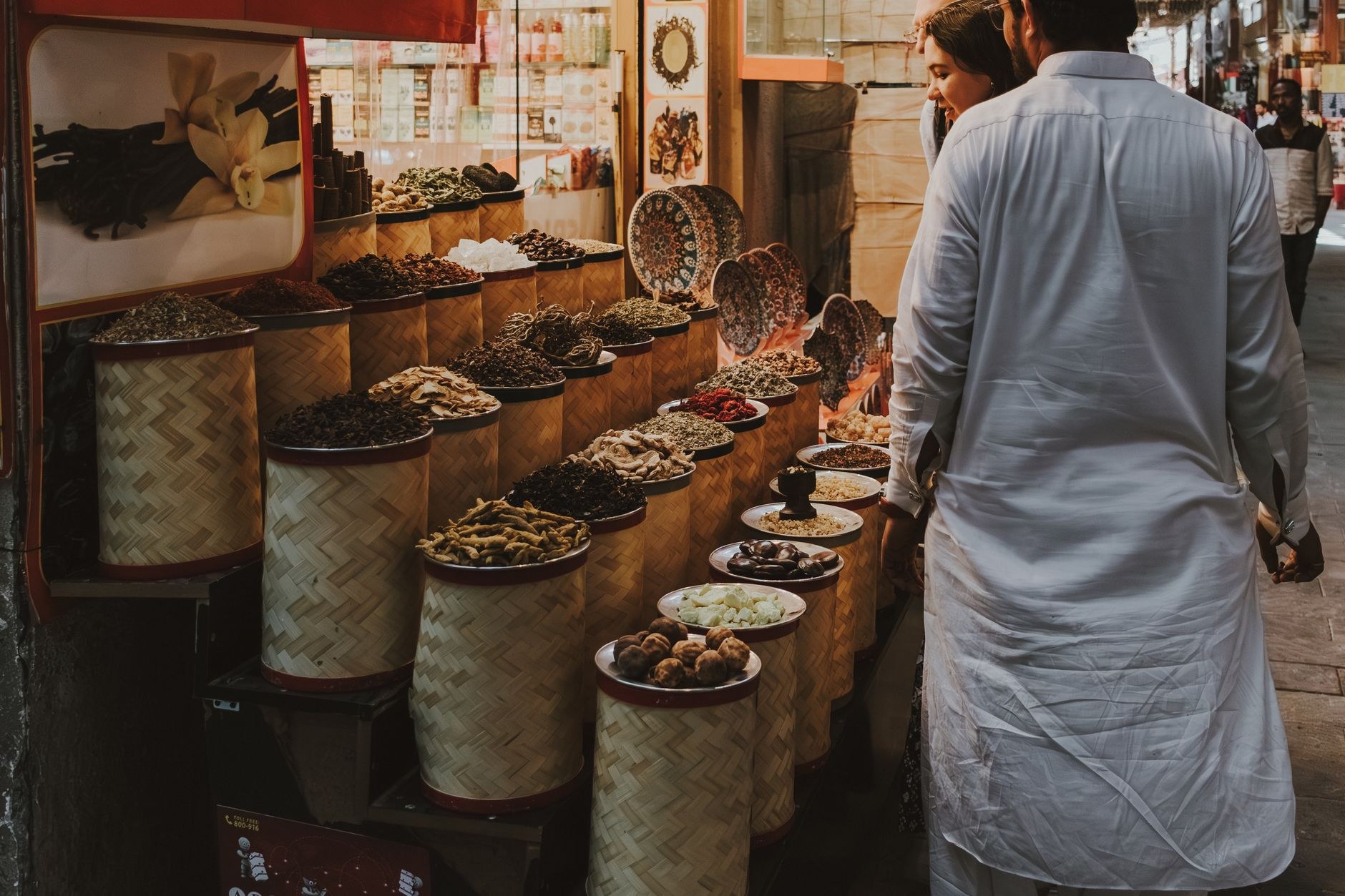
Dating back over two centuries to the reign of Sheikh Mubarak Al-Sabah, Souq Al-Mubarakiya is an atmospheric pedestrian labyrinth of shaded wooden beam roofs, whitewashed adobe pillars, and brick-paved lanes. Breathe in the rich sensory aromas of green cardamom, Iranian saffron threads, dried black Persian limes (*loomi*), and frankincense resins. Browse through open-front stalls selling plump Medjool dates, natural honey from Yemen, antique silver Bedouin jewelry, and traditional *oud* perfume oils distilled from agarwood. Venture into the historic gold souq section (*Souq Al-Dahab*), where master goldsmiths craft intricate 21-karat bridal jewelry, and pause at the open-air tea stalls for hot sweet black tea infused with fresh mint leaves.
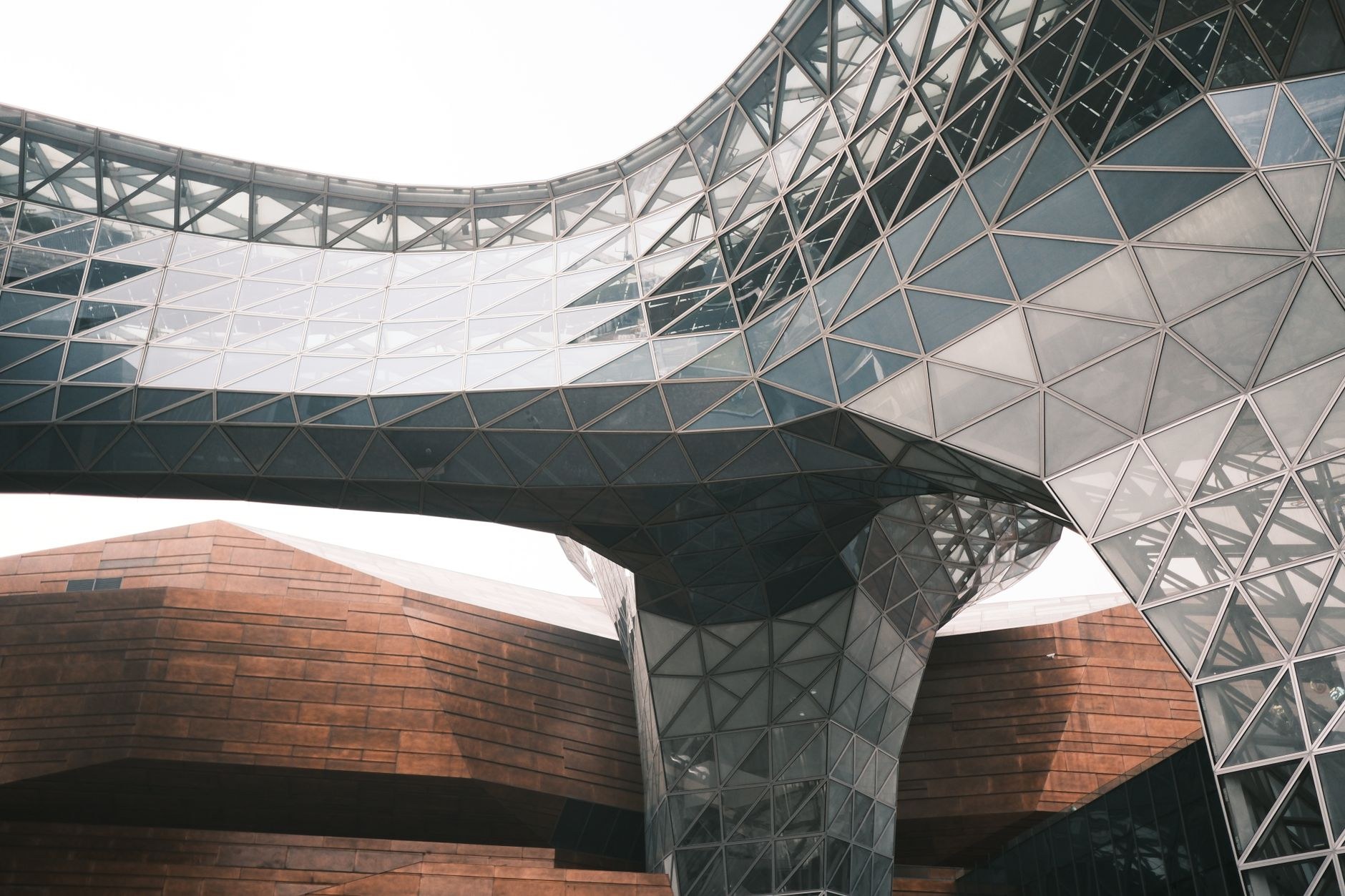
In the late afternoon, take a short ride westward along Arabian Gulf Street to the Sheikh Jaber Al-Ahmad Cultural Centre (JACC). Spanning an immense seaside esplanade, this architectural tour de force consists of four dramatic geometric jewel-like pavilions clad in titanium and glass, inspired by the intricate geometric patterns of Islamic geometry. The complex houses a world-class opera house, symphonic concert halls, conference centers, and historical archives. Stroll around the choreographic musical fountains and public plazas as the golden sunset reflects off the faceted titanium cladding, before dining at one of the center’s sophisticated courtyard bistros.
Day 2: The Grand Mosque, Dhow Shipyards, and Kuwait Towers
Begin day two with a pre-booked guided morning tour of the Grand Mosque of Kuwait (Al-Masjid Al-Kabir). Inaugurated in 1986, this monumental sanctuary covers forty-five thousand square meters, ranking as the eighth-largest mosque complex in the world. Modest dress is provided for foreign visitors at the cultural center entrance.
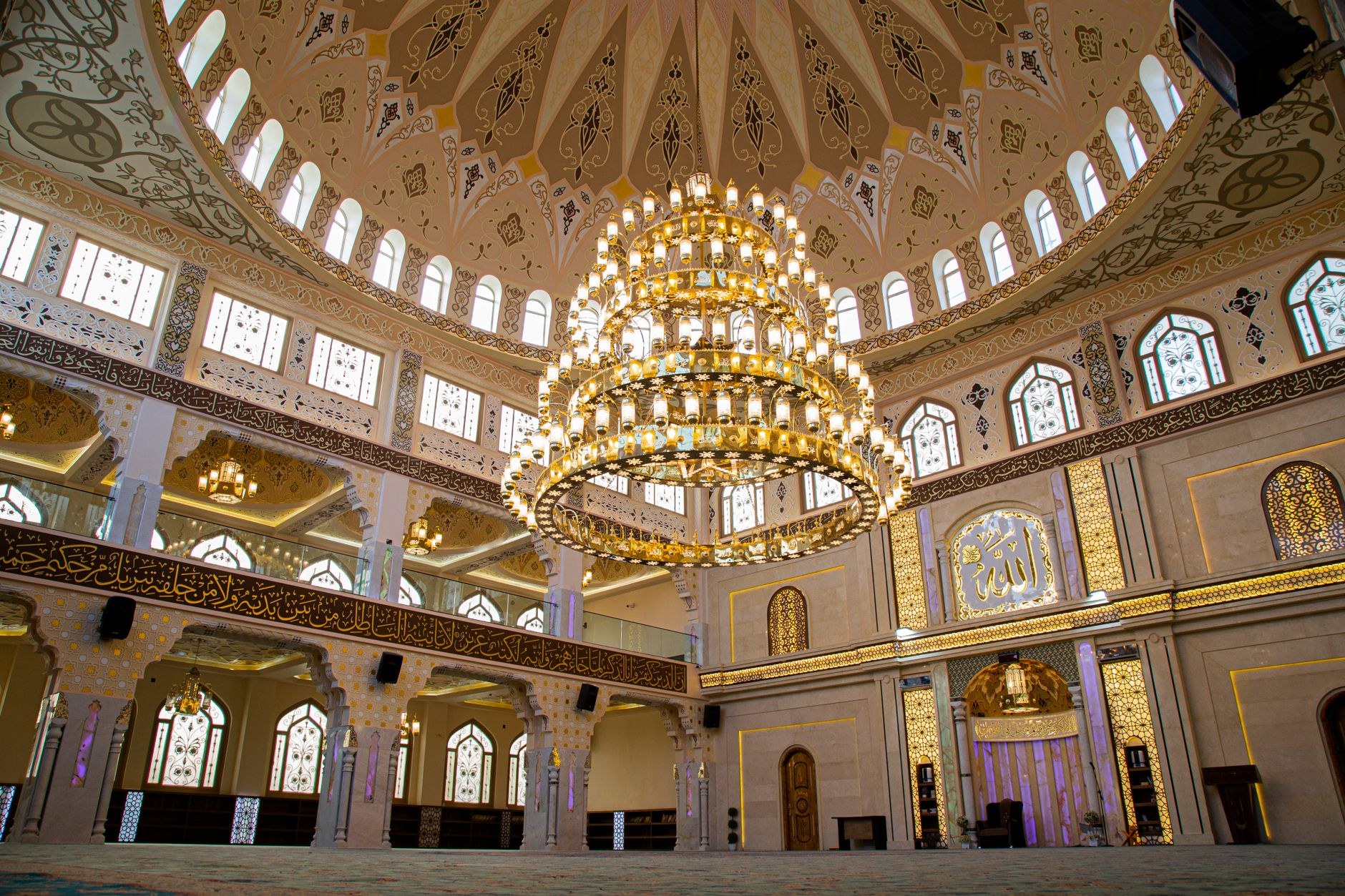
Step barefoot onto plush turquoise carpets inside the main prayer hall, which accommodates over ten thousand worshippers beneath a soaring twenty-six-meter central dome. The interior is a masterclass in Islamic artisanship: Andalusian-patterned blue and gold ceramic mosaics, soaring teak doors carved in Morocco, stained-glass windows bathing the hall in ethereal light, and calligraphic friezes of the Ninety-Nine Names of God written in classical Thuluth script. Knowledgeable docents explain Islamic architectural symbolism and Kuwaiti spiritual heritage with open warmth.
After your mosque visit, walk five minutes down to the historic Dhow Harbor in Sharq. Long before petroleum, Kuwait possessed the most respected maritime fleet in the Persian Gulf, building heavy wooden *boom* cargo dhows and *baghlah* pearling vessels from imported Indian teak.
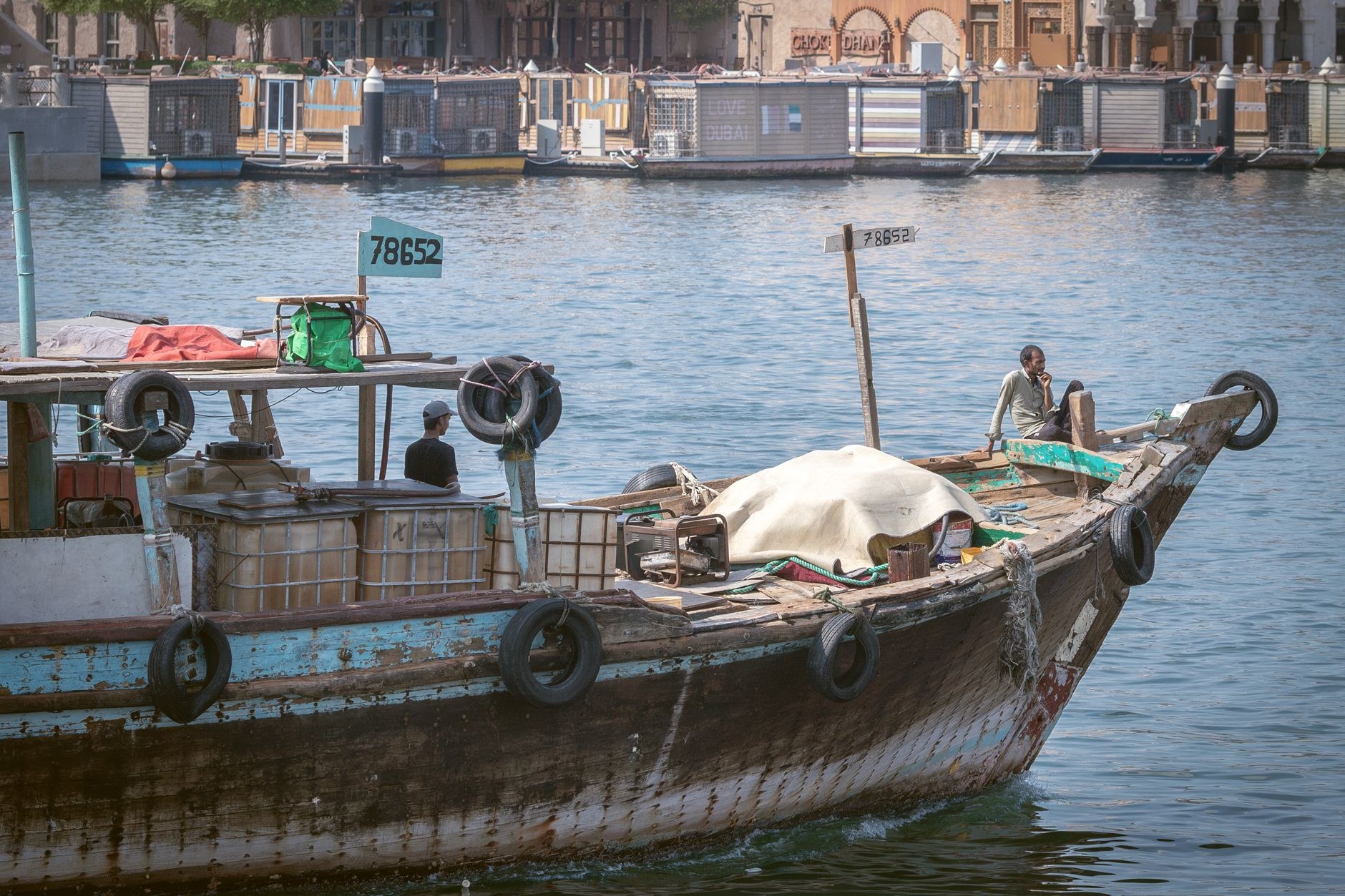
Walk among massive traditional wooden dhows moored along the stone docks, inspecting the heavy curved prows, thick hemp ropes, and brass compasses. Adjacent to the harbor stands the Kuwait Maritime Museum, which showcases historic diving gear—including turtle-shell nose clips, stone sinkers, and oyster-shell opening knives—used by brave Kuwaiti pearl divers who plunged into the Gulf waters without breathing apparatus for generations.
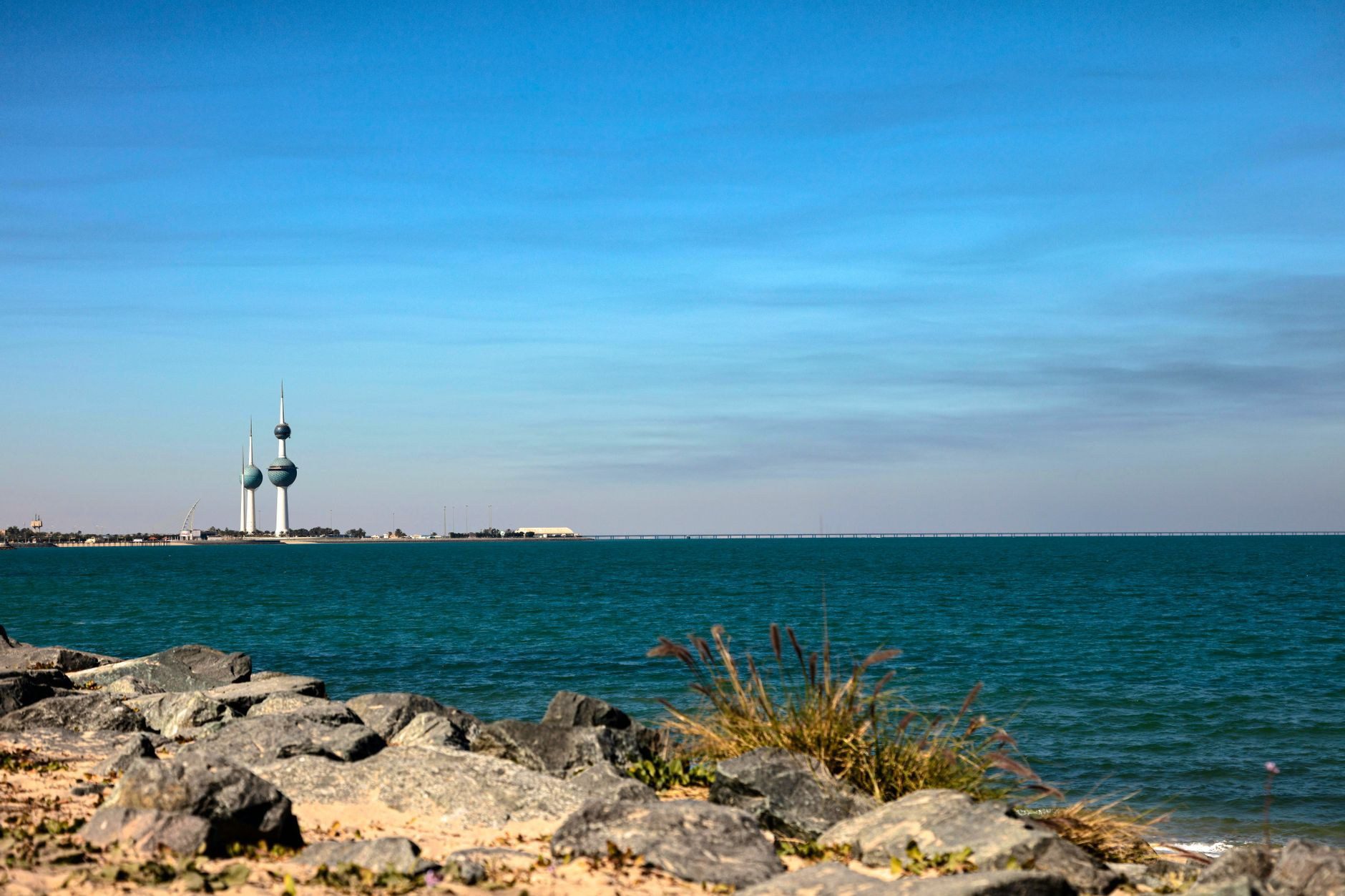
In the late afternoon, proceed to Kuwait City’s most iconic landmark: the Kuwait Towers (Abraj Al-Kuwait), inaugurated in 1979 and designed by Swedish architects Malene Bjørn and Sune Lindström. Rising 187 meters above a rocky promontory jutting into the Arabian Gulf, the three slender concrete spires are clad with fifty-five thousand enameled steel discs in shades of blue, green, and grey, echoing the tiled domes of historic mosques. Ride the high-speed elevator to the revolving observation sphere at 123 meters for sweeping 360-degree views of the Persian Gulf and the city skyline.
Day 3: Failaka Island: Bronze Age Dilmun and Gulf War History
Day three ventures beyond the modern mainland on an unforgettable full-day maritime excursion to Failaka Island. Located twenty kilometers east of Kuwait City in the northern Gulf, Failaka has been continuously inhabited for over four thousand years, serving as a critical trading emporium connecting ancient Mesopotamia with the Indus Valley civilization.
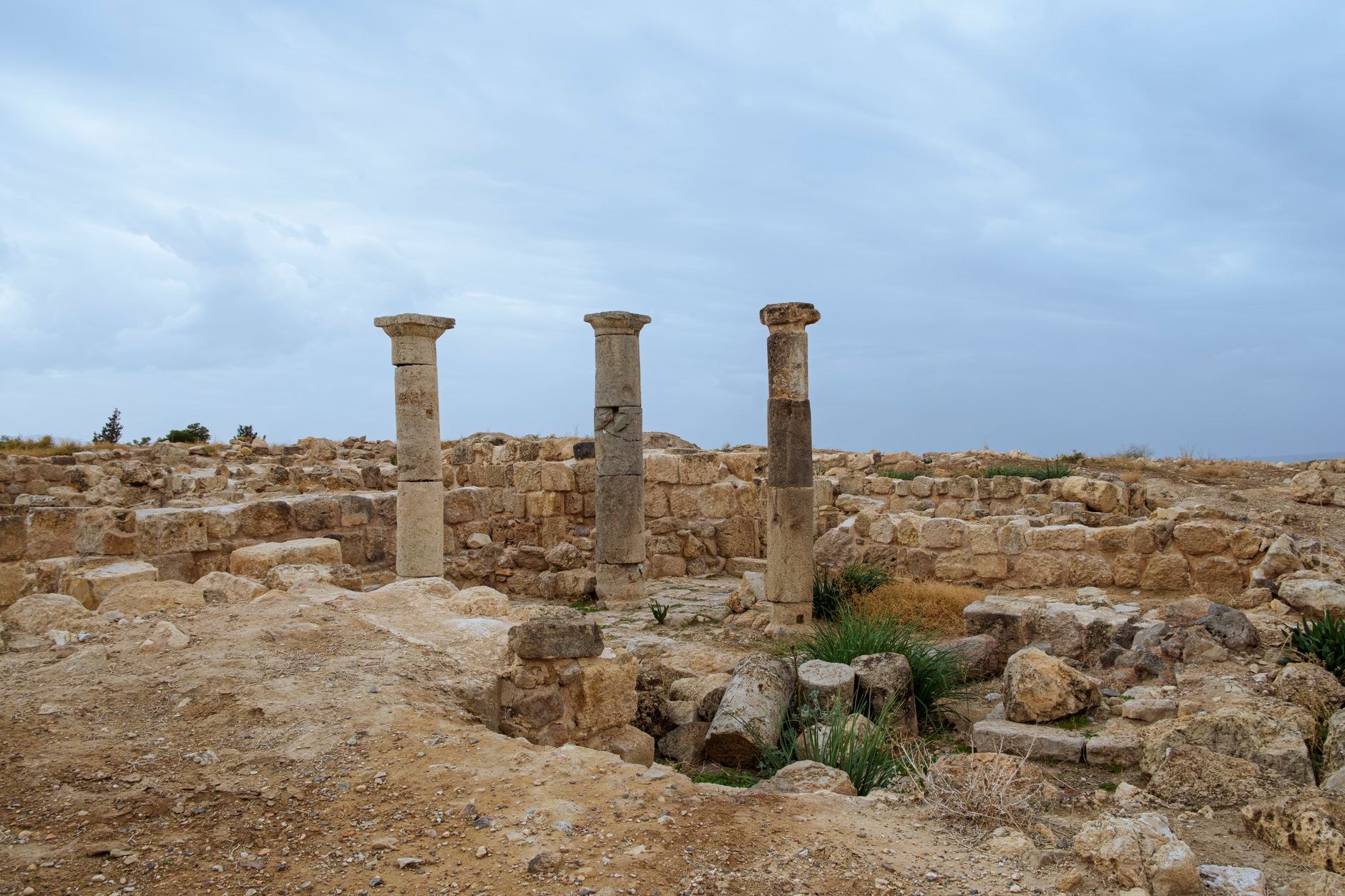
Board the scheduled KPTC passenger ferry from the Ras Salmiya marina for the sixty-minute crossing across Kuwait Bay. Upon arrival at Failaka harbor, hire a local island driver or join an archaeological tour. Your first exploration centers on the Bronze Age Dilmun settlements dating from 2000 BC, where archaeologists excavated stone houses, cylinder seals, and stamp seals that proved thriving trading links with ancient Sumer and Ur.
Nearby, explore the ruins of ancient Ikaros, a Hellenistic fortress and sanctuary founded in the 4th century BC by the troops of Alexander the Great. Walk among the stone foundations of the Temple of Artemis and inspect Greek inscriptions carved into limestone blocks that document ancient naval garrisons. Failaka also preserves a poignant modern layer: following the 1990 Iraqi invasion, the island’s civilian population was evacuated, and its residential village remains preserved as an open-air museum of mortar-blasted villas, schoolhouses, and rusted military vehicles left undisturbed after liberation in 1991.
Day 4: Sadu Bedouin Weaving, Islamic Masterpieces, and Salmiya Corniche
Spend your final day celebrating Kuwait’s indigenous art and private collections. Begin your morning at Beit Al Sadu (Sadu House), a historic coral-stone merchant home situated beside the National Museum. Dedicated to preserving the traditional Bedouin art of *Sadu* weaving, inscribed on UNESCO’s Intangible Cultural Heritage list in 2020, the museum displays geometric wool and camel-hair carpets, camel saddlebags, and tent dividers hand-woven on ground looms by master female Bedouin artisans.
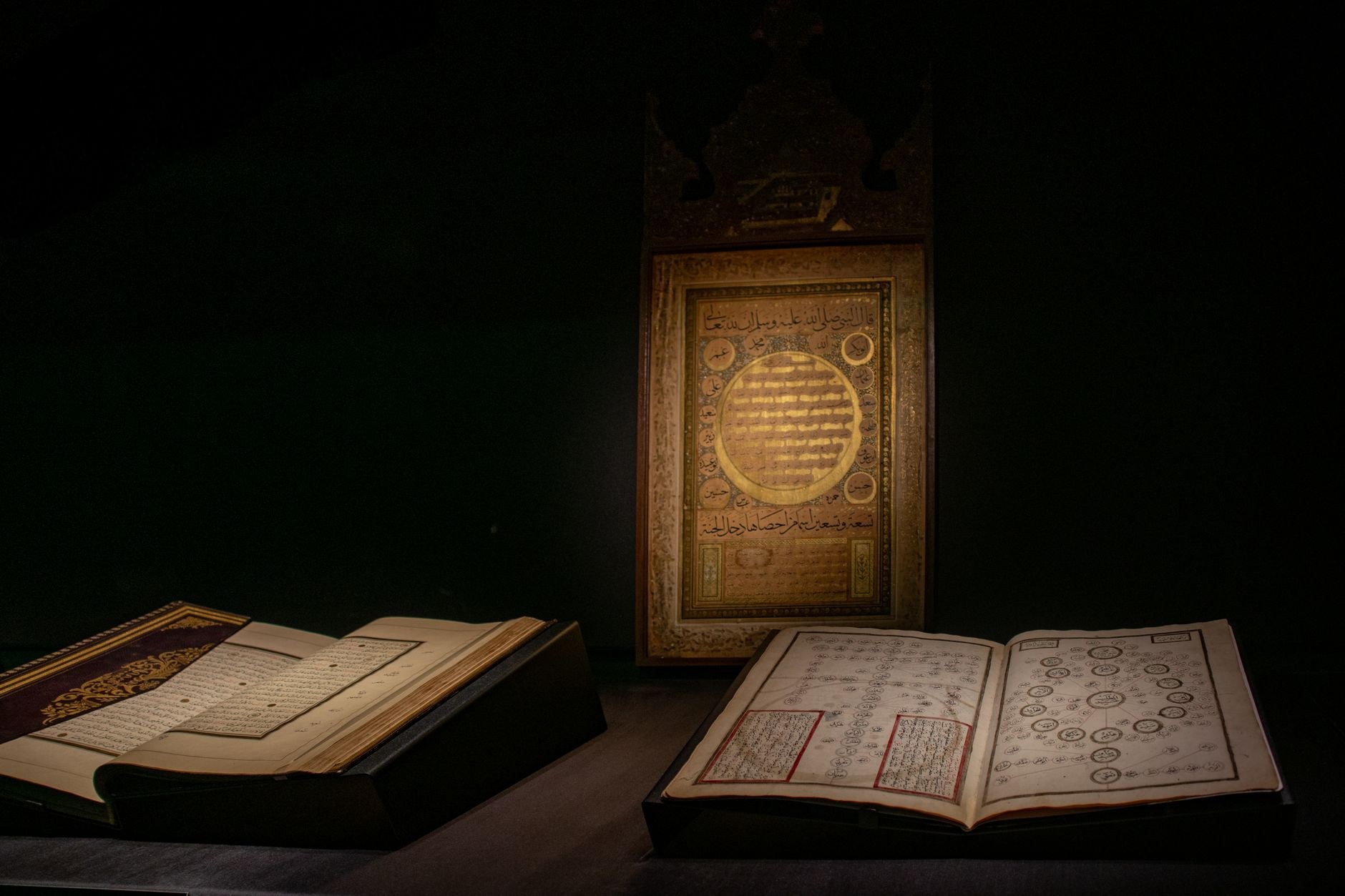
In the afternoon, travel to the peaceful residential suburb of Jabriya to discover the Tareq Rajab Museum. Assembled over fifty years by Kuwait’s former director of antiquities and his British wife, this private museum houses one of the finest Islamic art collections in the world. Wander through intimate, air-conditioned galleries displaying exquisite antique silver Bedouin and Omani jewelry, gold-embroidered royal costumes from the Ottoman and Mughal courts, 14th-century Syrian enameled glass, and priceless illuminated Quranic manuscripts dating to the 7th century.
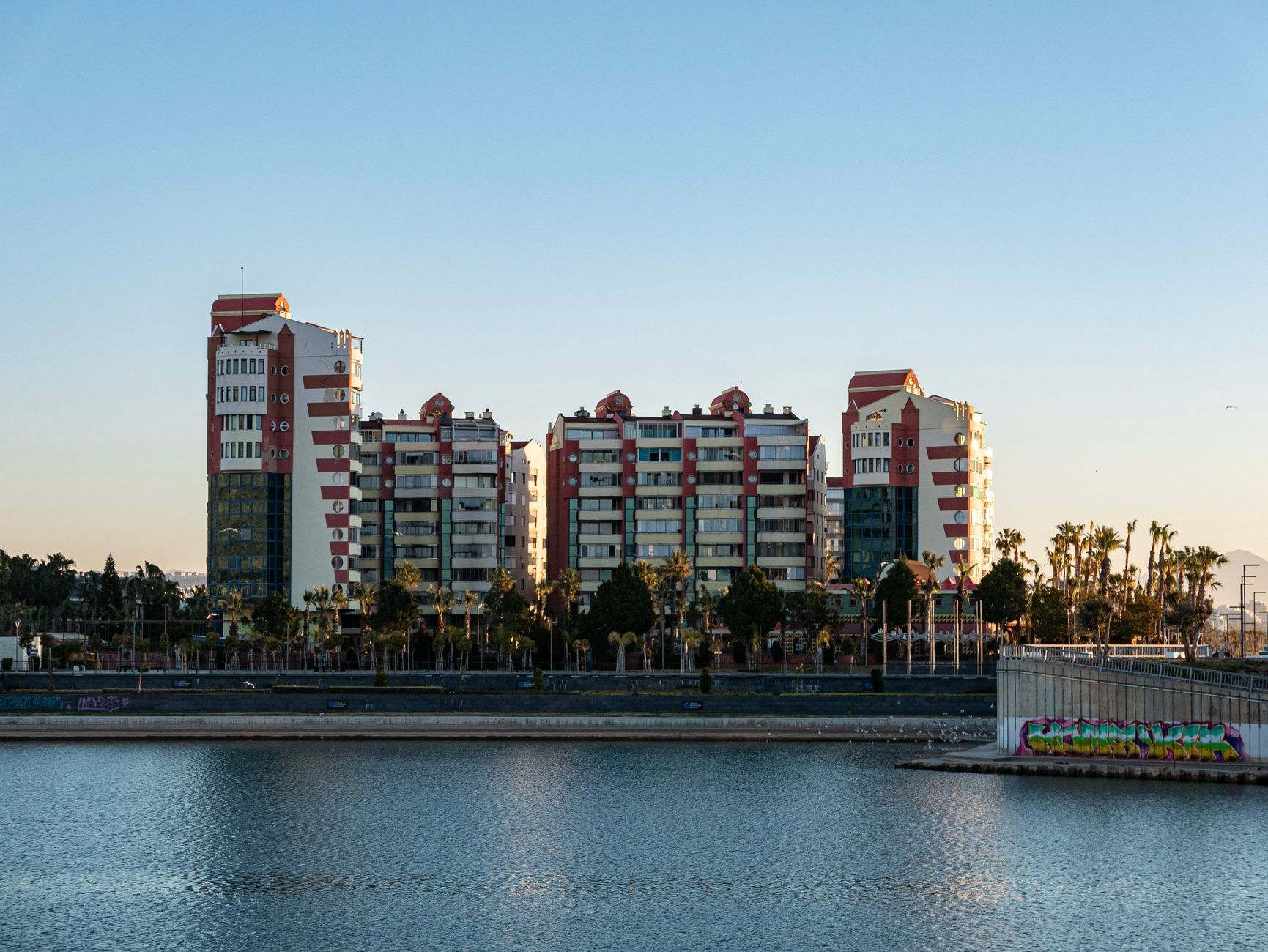
Conclude your stopover along the landscaped palm-lined Corniche of Arabian Gulf Street in Salmiya. Walk along the shoreline as local families gather on lawns for evening tea, breathing in the salty sea air of the Arabian Gulf before catching your ride to the airport for your outbound flight.
Culinary Traditions: The Feast of Kuwaiti Machboos
Kuwaiti cuisine is an intensely aromatic culinary synthesis shaped by centuries of spice merchant voyages. Long-grain Indian basmati rice, Persian saffron, Zanzibar cloves, and Gulf seafood come together in hearty communal platters.
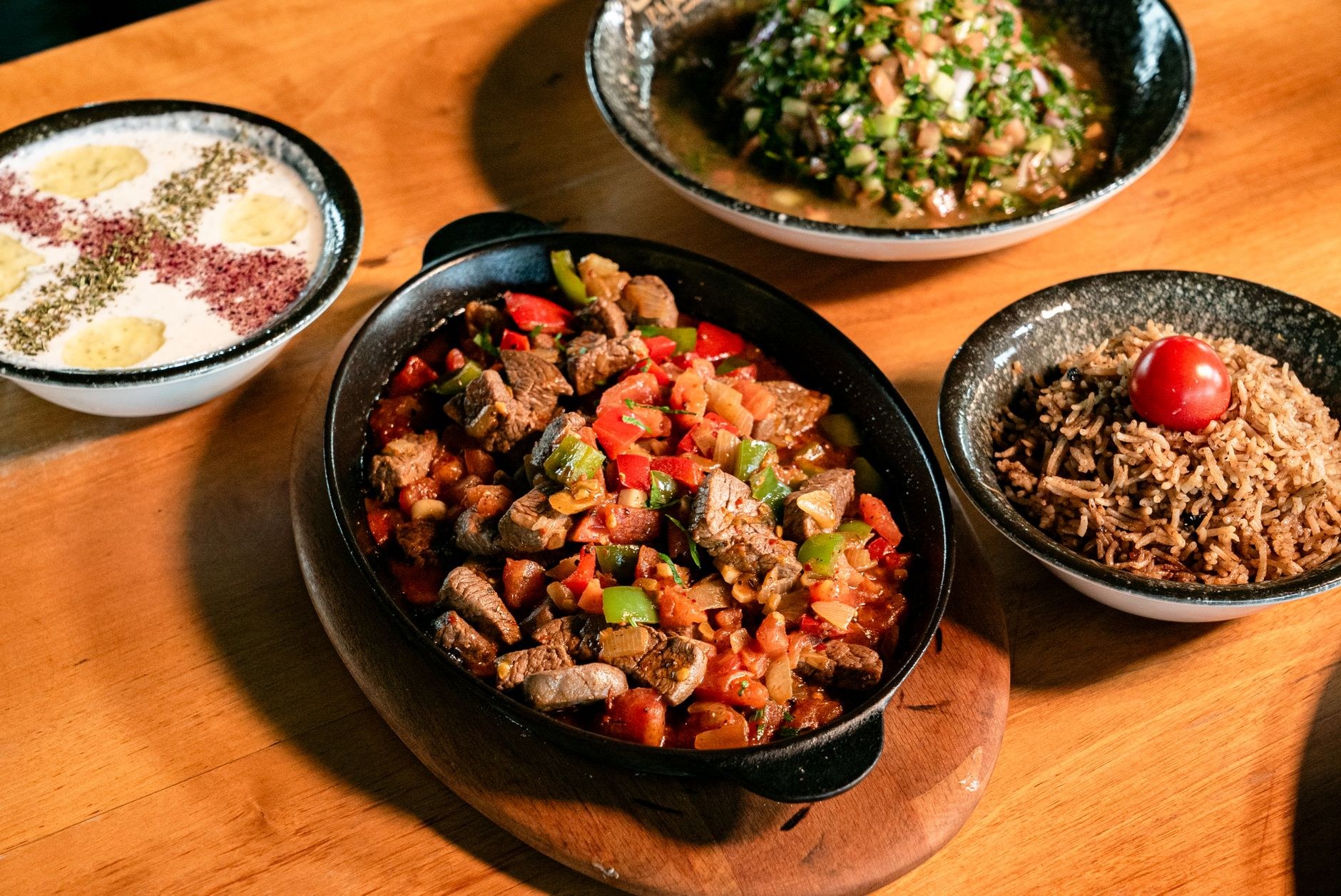
The undisputed national dish is *machboos* (particularly *machboos laham* made with lamb). Tender chunks of milk-fed lamb or bone-in chicken are slow-braised in a rich stock infused with *bezar* spice blend, cinnamon sticks, cardamom pods, turmeric, and pierced dried black limes (*loomi aswad*). The meat is removed and roasted until crisp, while fragrant basmati rice absorbs the concentrated broth. Served on vast platters topped with *hashu* (a sweet-savory garnish of fried split chickpeas, raisins, and caramelized onions), the dish is always paired with *daqqoos*, a warm, garlicky tomato sauce with fresh chili.
Seafood lovers must order *mutabbaq samak*, featuring fresh local silver pomfret (*zubaidi*—Kuwait’s most prized native fish) coated in turmeric and ground coriander, fried until golden and served over spiced fish-stock rice. Conclude meals with traditional *gahwa* (lightly roasted Arabic coffee scented with crushed cardamom and saffron) poured from a brass *dallah* into handleless porcelain cups (*finjan*), accompanied by sweet dates stuffed with roasted almonds.
Mobile Connectivity and Digital Logistics in Kuwait
Dependable mobile connectivity is essential in Kuwait for ordering Careem rides, tracking ferry schedules to Failaka Island, using camera optical translation in markets, and verifying museum opening hours. Kuwait boasts world-leading digital telecommunications, with blistering-fast 5G mobile coverage blanketing the entire country from urban downtown to coastal beaches, operated by stc, Zain, and Ooredoo.
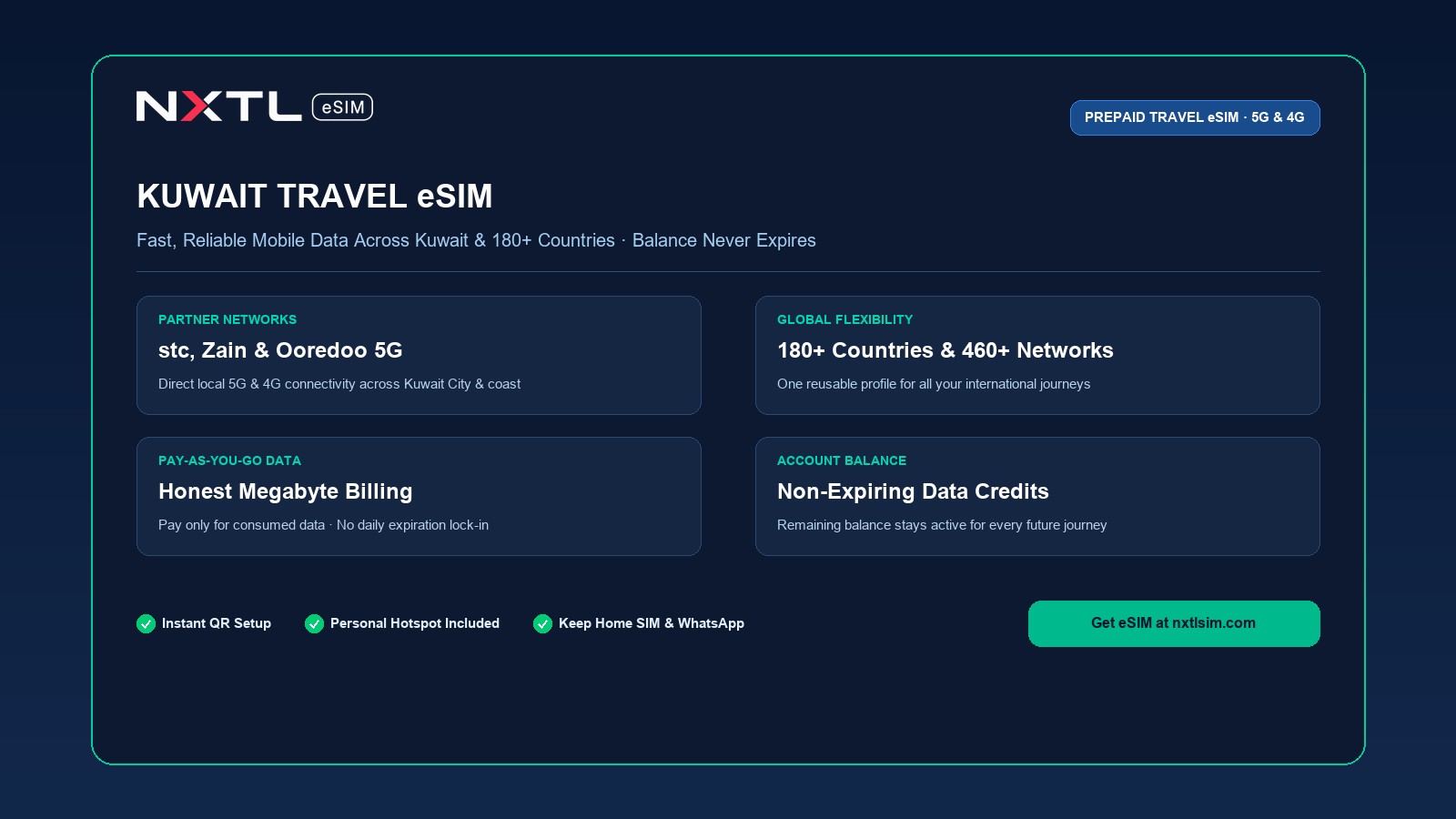
Rather than queuing at airport telecom kiosks upon arrival or dealing with civil ID registration paperwork, set up an eSIM prior to departure. The NXTL Kuwait eSIM connects directly to tier-1 domestic networks—stc, Zain, and Ooredoo—delivering ultra-fast 5G data across Kuwait City. At an economical rate of just $1.99 per gigabyte, NXTL operates on an honest pay-as-you-go model with no daily data caps. Your balance never expires, meaning remaining data credits remain stored securely in your digital account for future travels across 180+ countries.
Travel Scams and Regional Logistics Pitfalls to Avoid
Kuwait is one of the safest travel destinations in the Middle East, with violent street crime virtually unheard of. However, visitors should remain mindful of several common financial and logistical traps:
- Unmetered Airport Taxi Overcharging: Freelance taxi drivers outside Kuwait Airport arrivals often claim their taximeters are broken and quote fifteen to twenty KWD for a ten-minute transfer. A standard metered ride or Careem fare into downtown costs between 5 and 7 KWD. Insist on the meter or book via the Careem app from the designated pickup zone.
- The High-Value Currency Spending Trap: Because 1 Kuwaiti Dinar equals roughly a cash sum, visitors frequently treat prices as if they were single dollars, casually ordering coffees, appetizers, or souvenirs that cost three to four times more than expected. Always mentally multiply Dinar figures by three to gauge real expenditure accurately.
- Machine-Made “Bedouin Sadu” Imitations: Souvenir shops in commercial malls occasionally sell synthetic, machine-manufactured polyester runners labeled as “authentic handmade Bedouin Sadu weaving” for inflated prices. Genuine Sadu hand-woven pieces carry official certification from Beit Al Sadu (Sadu House) and feature natural sheep wool or camel hair textures.
- Failaka Island Wind and Tide Cancellations: Ferry services to Failaka Island are occasionally suspended without notice when strong shamal winds generate rough sea swells across Kuwait Bay. Always check the weather forecast and confirm morning sailing operations directly with KPTC ferry dispatch before travelling to the marina.
- Strict Decorum and Photography Laws: In Kuwait, photographing government ministries, military installations, oil refineries, and diplomatic residences is strictly illegal and subject to police questioning. Always ask respectful permission before taking photos of local Kuwaiti residents, particularly women and families.
By scheduling your days around the desert climate, respecting local traditions, and maintaining reliable digital connectivity, your stopover in Kuwait will reveal a cultured, hospitable, and deeply fascinating Arabian gateway.