Mongolia presents the last great nomadic frontier on earth, a boundless expanse of undulating grassland steppe, high granite crags, and sweeping Gobi sand dunes where nomadic families still move with the seasons. Yet first-time travelers frequently encounter two severe planning pitfalls: attempting to cover the entire country in a single week by trying to combine the northern taiga of Lake Khövsgöl with the southern Gobi, or underestimating the immense challenges of overland transport across trackless terrain. Experiencing Mongolia’s immense silence and hospitality requires choosing a focused route and securing the right overland support.
Outside the capital of Ulaanbaatar, paved highways quickly give way to unmarked dirt ruts that branch across the grasslands without signposts or streetlights. Attempting to self-drive a rental car without extensive desert navigation skills and Russian mechanical experience is dangerous. By pairing a dedicated local driver-mechanic with a well-paced eight-day route that links Ulaanbaatar, the alpine valleys of Gorkhi-Terelj National Park, and the premier geological wonders of the South Gobi, you can immerse yourself in nomadic life while maintaining reliable travel safety.
Strategic Route Architecture: Ulaanbaatar, Terelj & the South Gobi
Mongolia spans over 1.5 million square kilometers, making it the world’s most sparsely populated sovereign nation. Covering significant distances requires either domestic flights or long days aboard rugged four-wheel-drive vehicles like the iconic Russian UAZ-452 furgon or Toyota Land Cruiser. Squeezing both northern Mongolia and the southern desert into a single week results in spending twelve hours a day bouncing over washboard dirt tracks. An intelligent first-time itinerary focuses exclusively on the central-southern corridor.
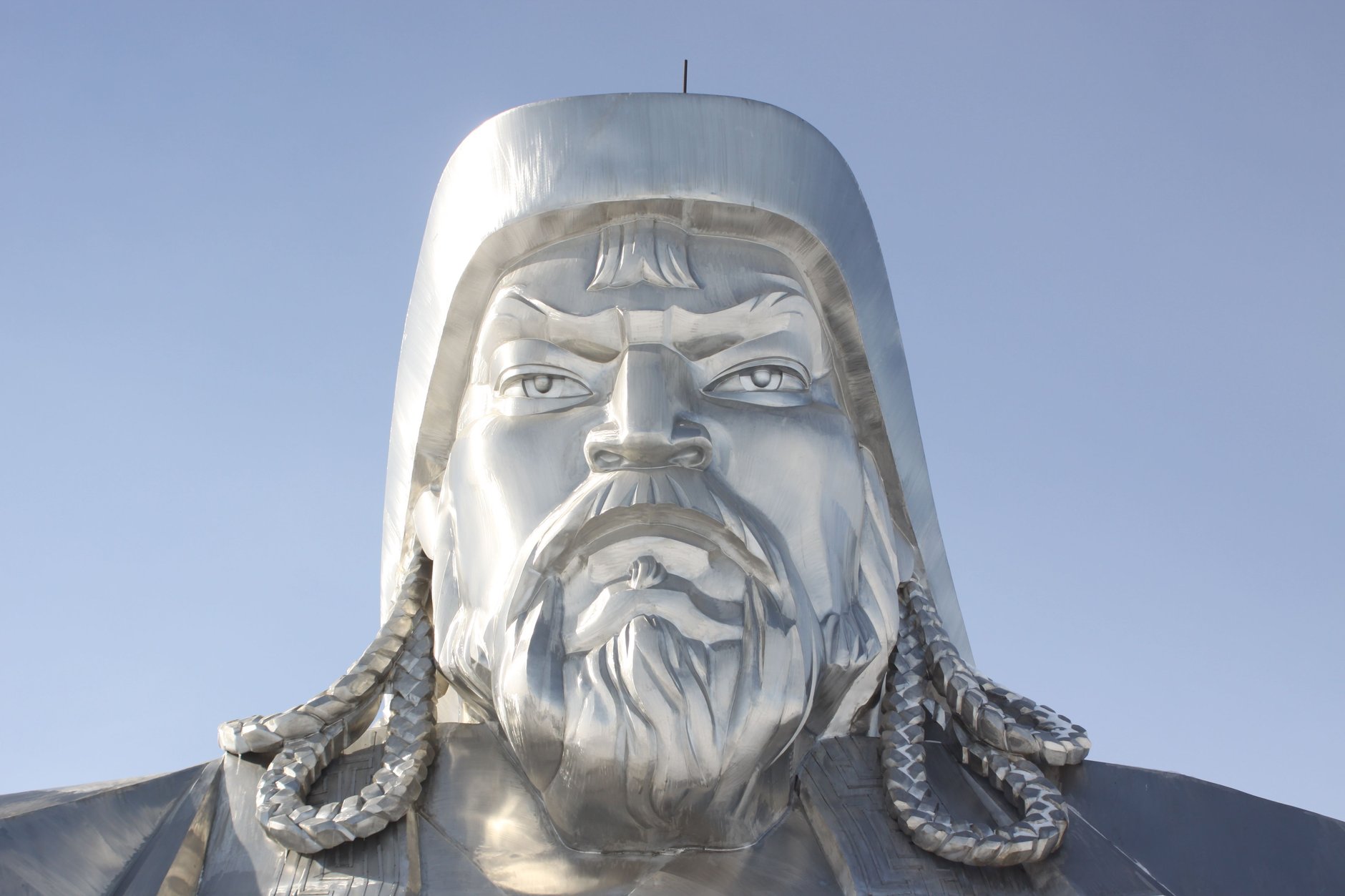
Your journey begins with two nights in Ulaanbaatar, absorbing nomadic history at the national museums and adjusting to the time zone. You then head east for an overnight stay in Gorkhi-Terelj National Park, stopping at the monumental Genghis Khan equestrian statue at Tsonjin Boldog. From Terelj, a domestic flight from Ulaanbaatar to Dalanzadgad (the provincial capital of Ömnögovi) cuts out sixteen hours of grueling overland driving, placing you directly into the South Gobi for a four-night desert expedition exploring Yolyn Am ice canyon, the singing dunes of Khongoryn Els, and the Flaming Cliffs of Bayanzag before flying back to the capital.
| Day | Base | Key Stops & Cultural Sightseeing | Transit Mode | Transit Time | Advance Bookings Required |
|---|---|---|---|---|---|
| Day 1 | Ulaanbaatar | Arrive UBN airport, Sükhbaatar Square, National Museum of Mongolia, Gandan Monastery | Airport shuttle (50km) | 1 hour | None |
| Day 2 | Ulaanbaatar | Chinggis Khaan Museum, Choijin Lama Temple, State Department Store, folk concert | Walk / city taxi | None (walkable) | Tumen Ekh throat singing tickets |
| Day 3 | Terelj National Park | Genghis Khan statue complex at Tsonjin Boldog, Turtle Rock, Aryapala meditation temple | 4WD / van transfer | 2 hours | Ger camp accommodation |
| Day 4 | South Gobi / Yolyn Am | Return to UB, domestic flight to Dalanzadgad, Yolyn Am Vulture Gorge hike, glacier stream | Flight + 4WD vehicle | 1h flight + 1.5h drive | Hunnu Air domestic flight ticket |
| Day 5 | Khongoryn Els | Overland drive across Alag Teeg plain, Khongoryn Els singing sand dunes, camel trekking | 4WD expedition vehicle | 4.5 hours off-road | Bactrian camel rental booking |
| Day 6 | Bayanzag | Morning dune ascent, drive to Bayanzag (Flaming Cliffs), sunset walk among dinosaur beds | 4WD expedition vehicle | 4 hours off-road | Gobi Oasis eco-camp |
| Day 7 | Dalanzadgad | Saxaul forest walk, Khavtsgait petroglyphs, transfer to Dalanzadgad regional base | 4WD expedition vehicle | 2.5 hours | Local provincial hotel / ger |
| Day 8 | Ulaanbaatar | Morning flight Dalanzadgad to Ulaanbaatar, Naran Tuul market, farewell dinner | Flight + city transfer | 1h flight + 45m drive | Return domestic flight |
This hybrid transit approach blends the efficiency of domestic aviation with the thrill of true off-road overland exploration. You spend your precious days walking across desert ridges and sipping tea with herders rather than enduring multi-day highway transfers.
Ulaanbaatar: Contrasts of Tradition and Modernity
Ulaanbaatar (UB) is a city of startling contrasts where Soviet-era apartment blocks, modern glass skyscrapers, and sprawling ger districts cover the surrounding hills along the Tuul River. Home to nearly half of Mongolia’s 3.4 million citizens, the capital serves as the cultural and political nerve center of the republic. At the physical heart of the city lies Sükhbaatar Square, named after the 1921 revolutionary hero Damdin Sükhbaatar whose bronze equestrian monument commands the plaza.
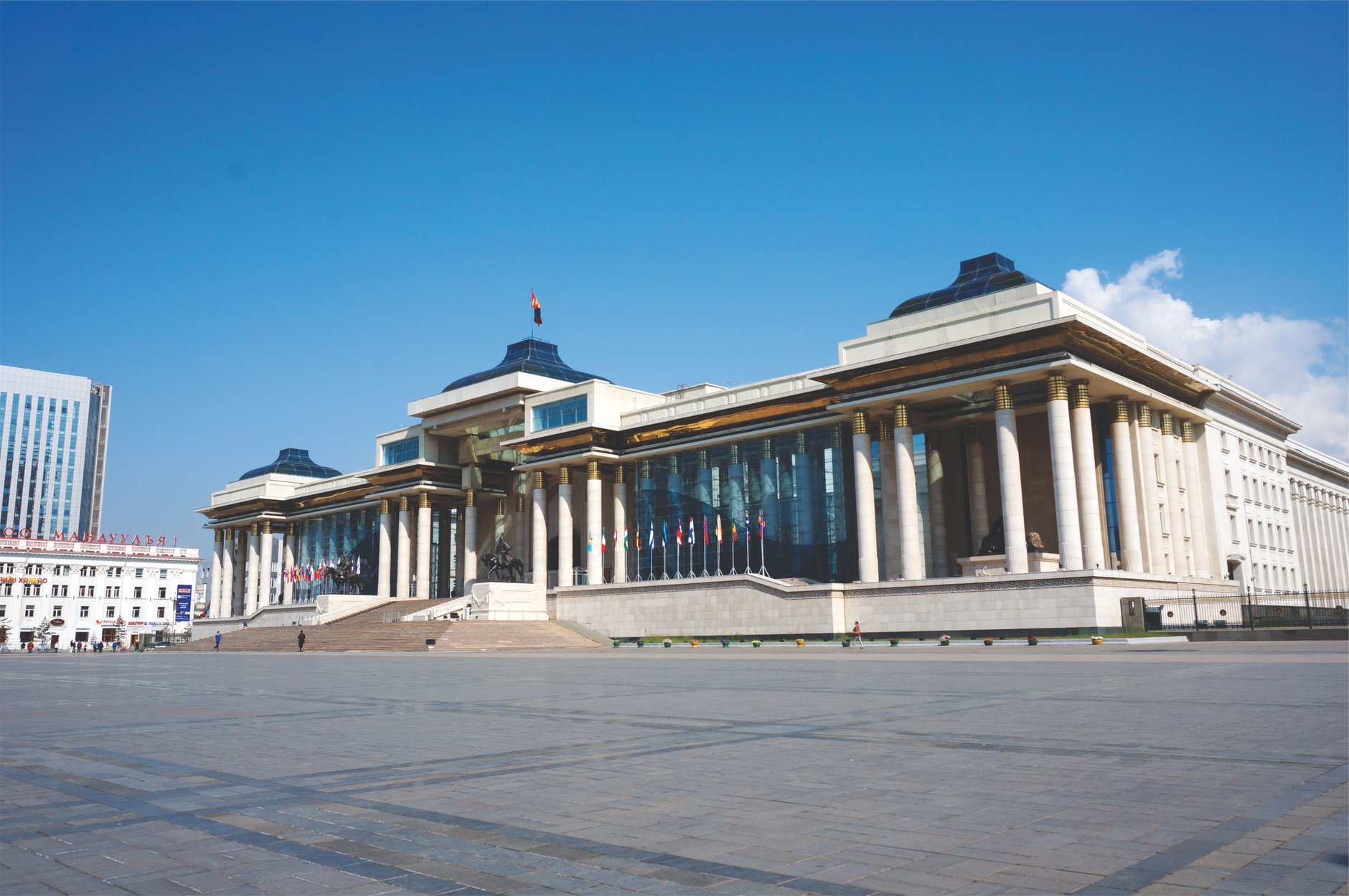
Flanking the northern side of the square stands the colonnaded Government Palace, centered by an enormous seated bronze statue of Genghis Khan flanked by his third son Ögedei and grandson Kublai Khan. A short walk eastward brings you to the newly opened Chinggis Khaan National Museum, an exceptional nine-story cultural institution housing over ten thousand artifacts detailing the rise of the Mongol Empire, nomadic statehood, and the daily lives of ancient steppe peoples.
Religious resilience is anchored across town at Gandantegchinlen Monastery (Gandan), one of the few Buddhist monasteries that escaped total destruction during the Communist purges of the late 1930s. The temple’s focal point is the Migjid Janraisig temple, which houses a monumental 26.5-meter gilded statue of the Bodhisattva of Compassion, decorated with thousands of precious stones and standing as a symbol of Mongolia’s post-Soviet Buddhist revival.
In the evenings, attend a traditional performance by the Tumen Ekh Ensemble. The artists showcase khöömii (throat singing), a technique where a vocalist produces two distinct musical pitches simultaneously, accompanied by the haunting melodies of the morin khuur (horsehead fiddle) and acrobatic contortionists.
Gorkhi-Terelj & Tsonjin Boldog: Alpine Foothills
Traveling fifty-four kilometers east of Ulaanbaatar along the Tuul River leads to Tsonjin Boldog, the historic site where legend holds that young Temüjin (the future Genghis Khan) found a golden riding whip. Rising dramatically from the steppe stands the Genghis Khan Statue Complex, a forty-meter-tall equestrian monument sheathed in 250 tons of polished stainless steel. Visitors can take an elevator inside the horse’s body and walk out onto the stallion’s head, standing face-to-face with the conqueror while taking in sweeping panoramic vistas of the surrounding grasslands.
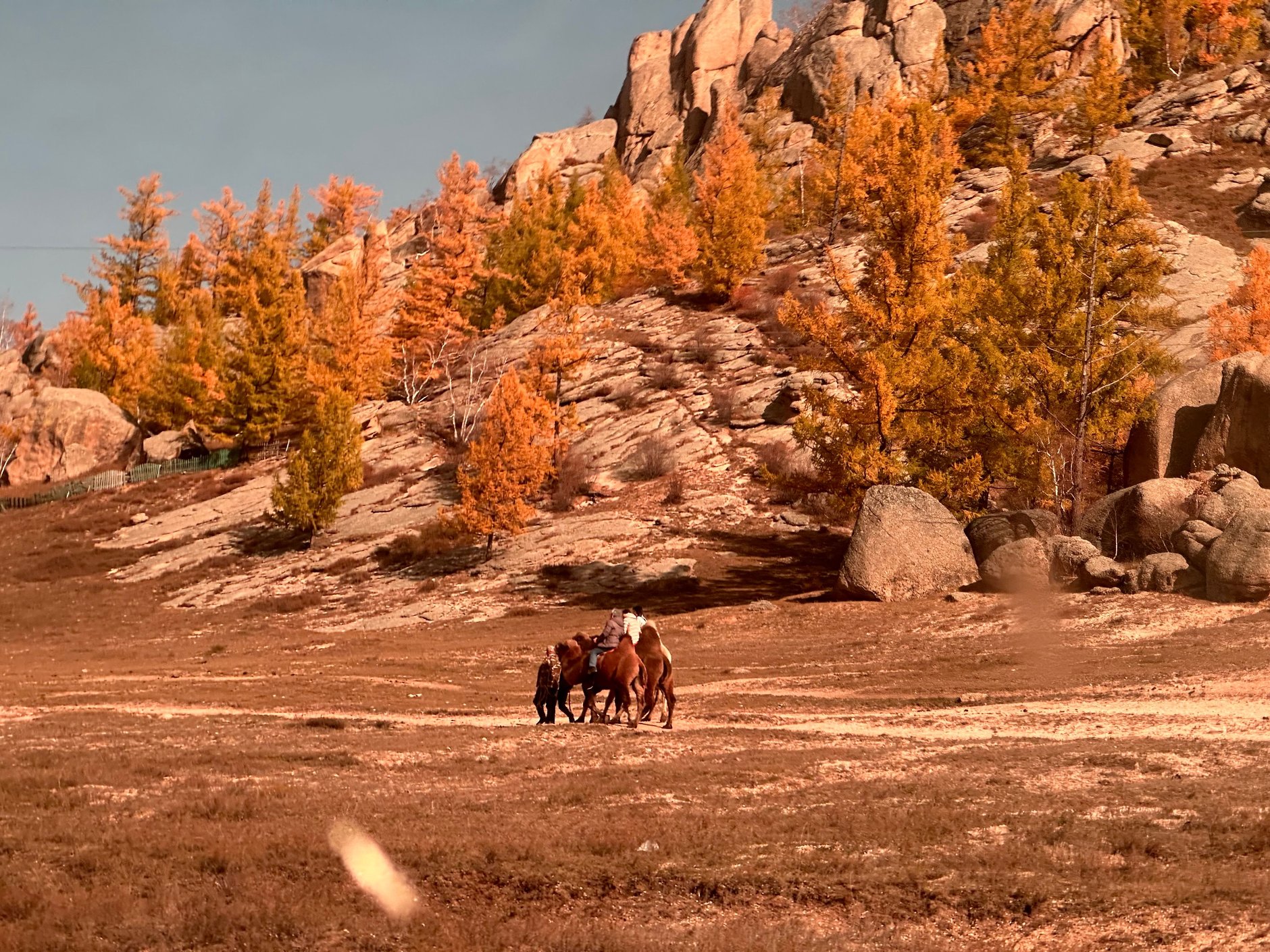
Continuing north brings you into Gorkhi-Terelj National Park, a protected alpine landscape of pine-clad granite mountains, wildflower meadows, and rushing mountain streams. Terelj provides an accessible introduction to traditional nomadic dwelling culture. The park is renowned for weathered granite formations, most notably Melkhii Khad (Turtle Rock), a towering twenty-four-meter natural outcrop that resembles a giant tortoise resting on the hillside.
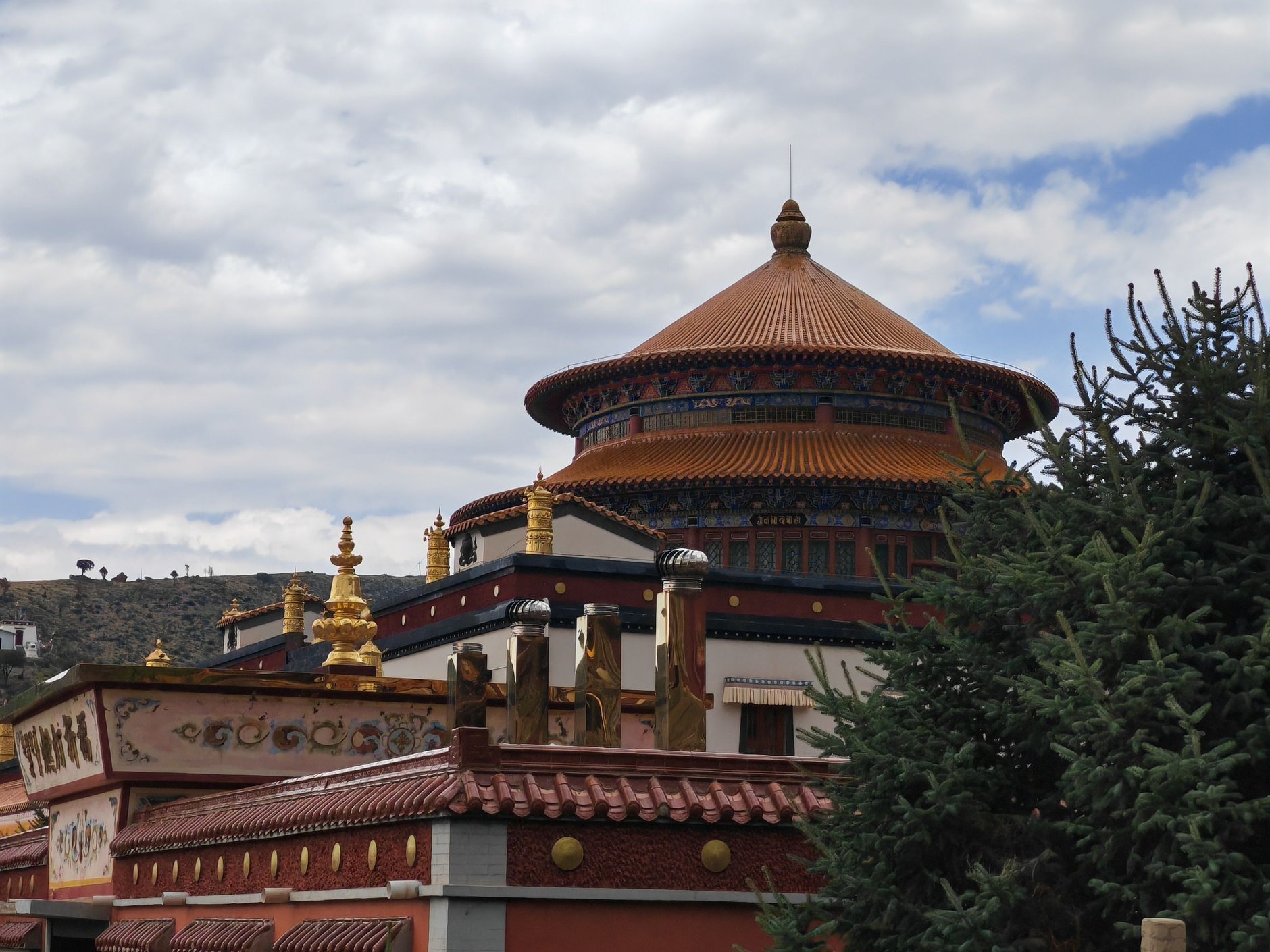
Nearby, climb the wooden switchback steps to Aryapala Meditation Temple, perched high on a cliffside overlooking the alpine valley. Lined with Buddhist proverbs and prayer wheels, the sanctuary offers tranquil contemplation before spending your first night inside a traditional felt ger, kept warm by a crackling wood-burning iron stove fed with larch logs.
The South Gobi: Dunes, Ice Canyons and Dinosaurs
Flying south to Dalanzadgad transports you into the rugged heart of the South Gobi (Ömnögovi), an arid wonderland that shatters the misconception of deserts as monotonous sand wastes. The Gobi is primarily a gravel and stone desert framed by rugged mountain ranges, home to wild ibex, argali mountain sheep, and nomadic camel herders.
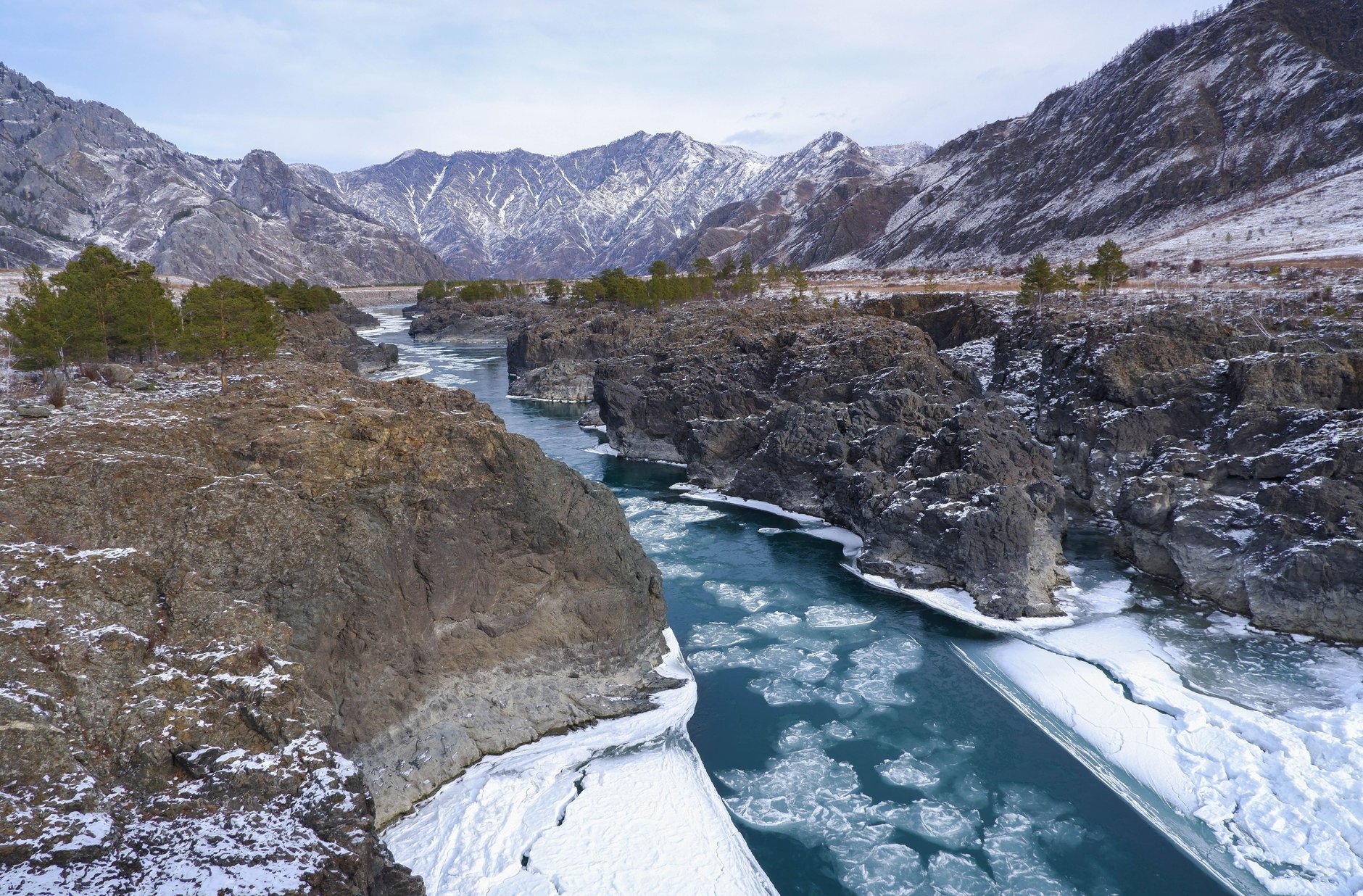
Your desert exploration begins in the Gurvan Saikhan National Park at Yolyn Am (Vulture Gorge). This dramatic, narrow canyon cuts deep through the volcanic mountains. Because the sheer canyon walls block the blazing summer sun, the river at the canyon floor freezes several meters thick during winter, creating an incredible alpine glacier that often persists well into July. Walking along the rocky stream while bearded vultures (lammergeiers) circle on thermal updrafts overhead creates a startling contrast with the surrounding desert heat.
Driving west across vast gravel plains brings you to Khongoryn Els, often called the Singing Sands. Stretching for over one hundred kilometers, this massive dune complex reaches heights of three hundred meters. The dunes earned their moniker from the low, resonant humming sound produced when wind shifts loose surface sand across the ridges.
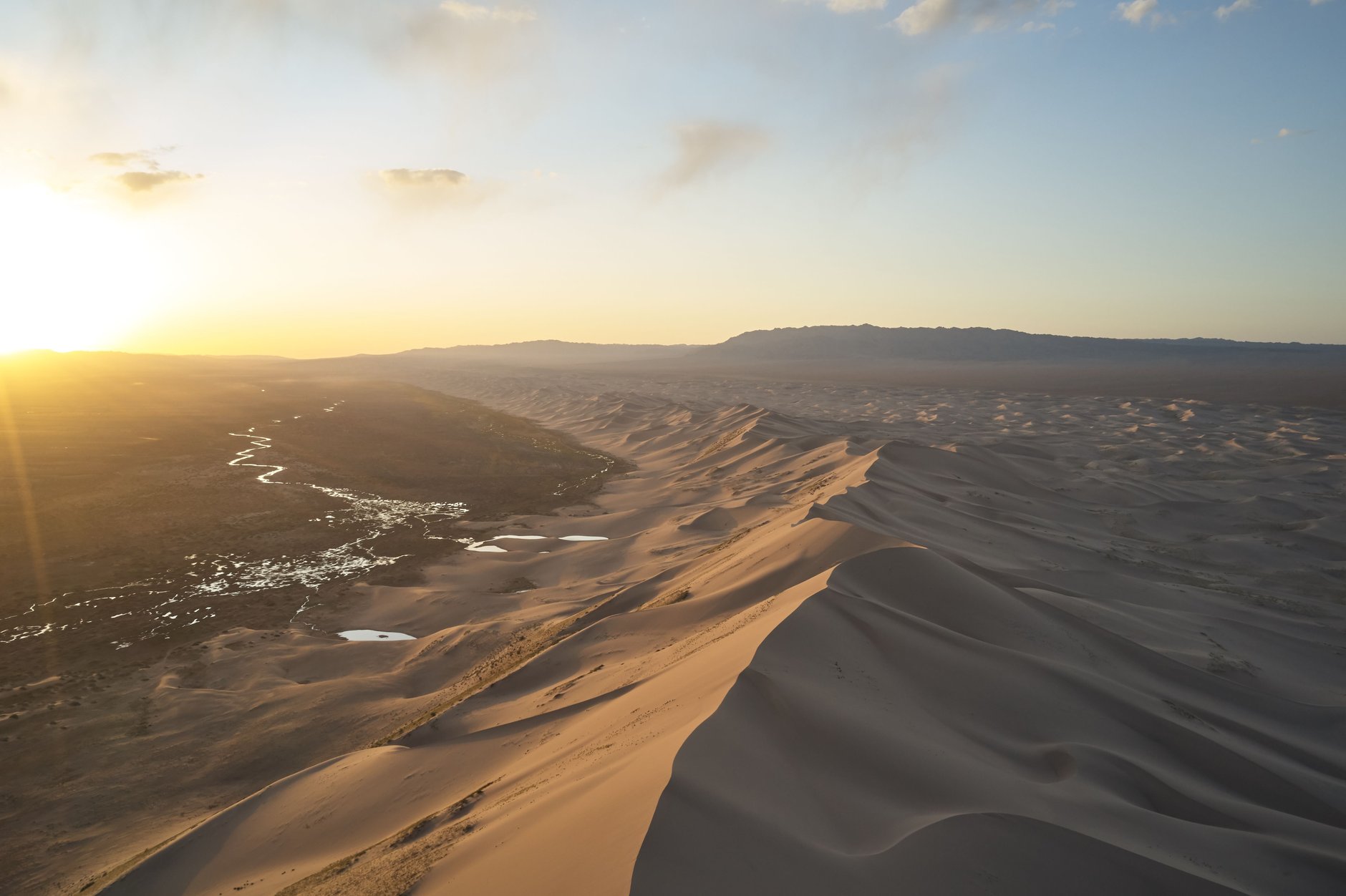
Climbing to the crest of Khongoryn Els is an intense aerobic challenge, with feet sliding two steps back for every step forward in the soft sand. The reward at the knife-edge summit is an extraordinary panorama: golden sand sea to the south, green oasis pastures watered by underground springs at the base, and rugged purple peaks to the north. At the foot of the dunes, nomadic herders offer rides on two-humped Bactrian camels, whose woolly coats and gentle gait make them perfectly adapted to desert terrain.
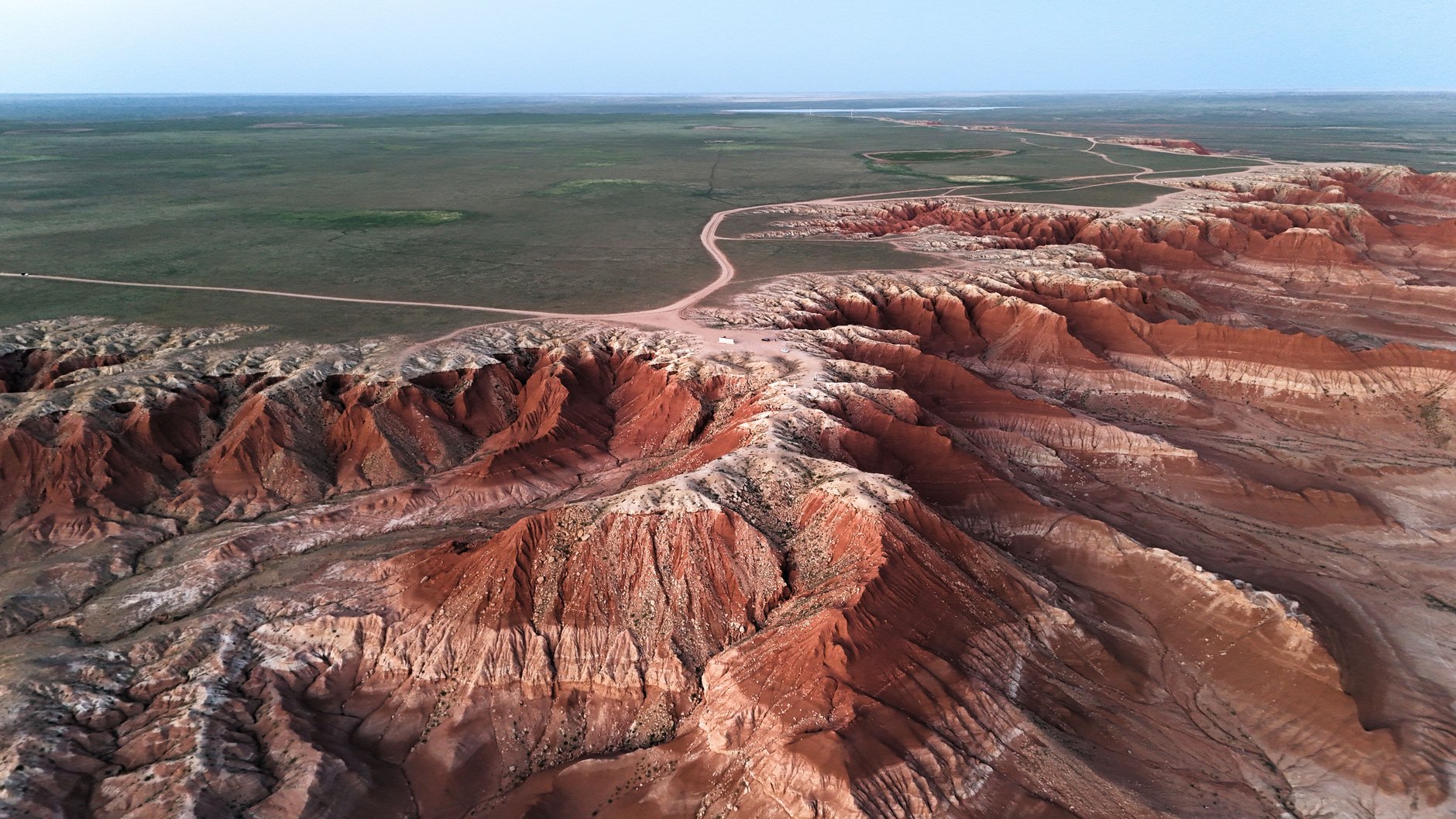
Heading northeast brings you to Bayanzag, celebrated internationally as the Flaming Cliffs. The area owes its name to American paleontologist Roy Chapman Andrews, who led the American Museum of Natural History expeditions here in the 1920s. Andrews and his team discovered the first fossilized dinosaur nests and eggs ever recorded, proving that dinosaurs reproduced by laying eggs. When late afternoon sunlight strikes the eroded red clay and sandstone cliffs, the escarpment glows with an intense fiery crimson radiance.
Nomadic Ger Life & Traditional Steppe Cuisine
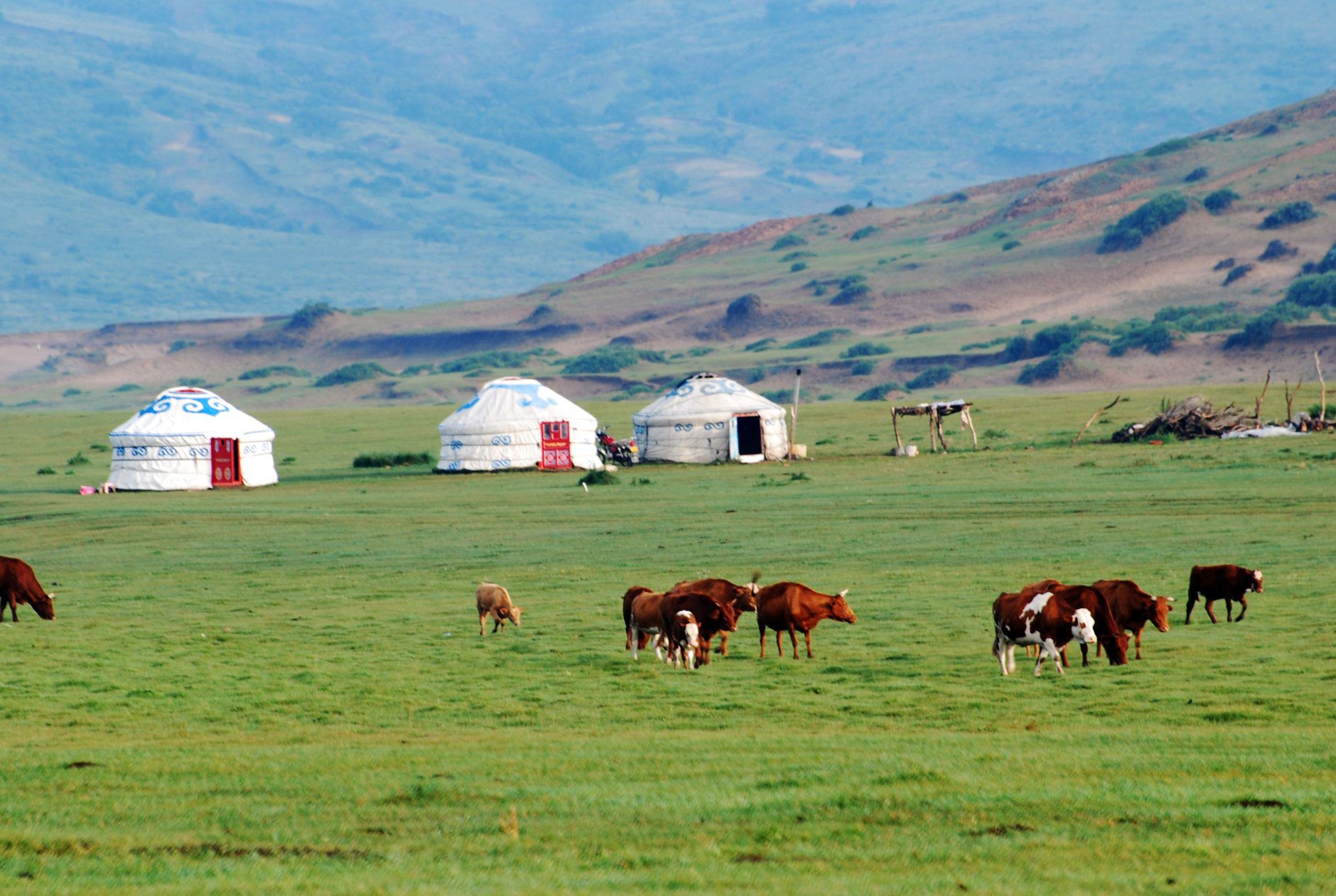
Accommodation throughout rural Mongolia centers on the ger (known elsewhere as a yurt). Perfected over millennia, this circular felt-and-lattice tent represents a marvel of nomadic design. Supported by collapsible wooden walls (khana), a central crown (toono), and two upright wooden poles, the entire structure is wrapped in thick sheep’s wool felt and can be disassembled and loaded onto camels or trucks within two hours.
Entering a ger comes with sacred nomadic etiquette: never step on the wooden threshold (considered an insult to the host), walk around the interior in a clockwise direction, and never whistle inside. Ger camps provide comfortable beds, wood stoves for cool desert nights, and hot water facilities powered by solar panels.

Nomadic cuisine is practical, energy-dense, and shaped by extreme climate conditions. The diet revolves around meat (ulaan idee or “red food”) and dairy (tsagaan idee or “white food”). The national culinary staple is buuz, plump steamed dumplings stuffed with minced mutton, onions, garlic, and savory broth. During festive gatherings, hosts prepare khuushuur, crispy deep-fried meat pockets, and tsuivan, hand-rolled noodles stir-fried in a wok with mutton, carrots, and wild steppe onions.
When visiting a nomadic family, you will be warmly offered suutei tsai, a hot salted milk tea prepared with brick green tea, sheep or horse milk, and a pinch of salt. In summer, you may be invited to sip airag, fermented mare’s milk containing a slight alcoholic effervescence and tangy acidity, rich in vitamins and celebrated as a natural elixir across the steppe.
Transport Realities: Why an Organized Driver Is Essential
The question of whether to rent a vehicle and drive yourself across Mongolia has a definitive answer: independent self-driving outside Ulaanbaatar is strongly discouraged for first-time visitors. Mongolia’s rural road network consists of thousands of unmarked, braided dirt tracks cutting across featureless plains. There are no road signs, no directional markers, and no English-language navigation data for tracks that change after seasonal flash floods.
Furthermore, standard rental vehicles are inadequate for deep desert travel. Navigating dry riverbeds (sayrs), soft sand drifts, and rocky mountain passes requires heavy four-wheel-drive capability and specialized sand driving techniques. Local drivers are not merely navigators; they are skilled field mechanics capable of repairing carburetors, replacing snapped leaf springs, and fixing punctured tires using basic hand tools in the middle of nowhere.
Securing a tour with a reputable agency that provides a professional driver, a Russian UAZ-452 furgon or Toyota 4WD, and an English-speaking guide ensures you navigate safely, gain authentic access to nomadic families, and avoid the catastrophic consequences of getting lost or stranded in desert valleys without water or cellular coverage.
Travel Safety & Common Scams to Avoid
Mongolia is a welcoming destination with genuine respect for guests. Violent crime against visitors is rare. However, petty theft in urban transit centers and unregulated tour operators present real challenges.
- Naran Tuul Market Pickpocket Teams: The expansive Naran Tuul “Black Market” in eastern Ulaanbaatar is notorious for organized pickpocket syndicates. Gangs work in coordinated groups of three to four, bumping into tourists in crowded clothing or carpet aisles while razor-slitting daypacks from behind. Keep passports and cash in a concealed money belt beneath clothing, and carry daypacks on your chest.
- Unlicensed Freelance Gobi Tour Touts: Unregistered individuals frequent budget guesthouses in Ulaanbaatar, offering heavily discounted Gobi tours using private domestic cars or poorly maintained vans. These operators lack emergency spare parts, satellite phones, or first-aid training. Every year, budget tourists find themselves stranded for days in the desert when engines fail. Book only through licensed, established tour operators.
- Chinggis Khaan Airport Fake Taxi Extortion: At the new international airport in Sergelen (fifty kilometers south of UB), informal taxi drivers aggressively quote a high cash fare for the drive into town. The official Airport Express bus costs far less, while authorized airport taxis have fixed transparent rates. Book via official counters inside the arrival hall.
- Horse & Camel Trekking Midway Surcharges: At tourist spots in Terelj or near Khongoryn Els, independent herders offer very cheap hourly rates for horse or camel rides. Once several kilometers out in the steppe, the guide demands a substantial cash “tip” or service fee before returning to camp. Always agree on the total price, duration, and return journey beforehand with your primary guide present.
- Counterfeit Cashmere Garments: Shops and street stalls along Peace Avenue in Ulaanbaatar sell sweaters and scarves labeled “100% Mongolian Cashmere” at unrealistically low prices. Many are cheap synthetic acrylic or sheep wool blends imported from across the border. Purchase authentic, certified cashmere only from recognized factory outlets like Gobi Cashmere or Goyol.
- Bar & Lounge Bill Padding in Central UB: Certain late-night lounges near the State Department Store employ promoters who strike up conversations with solo foreign travelers and invite them for drinks. When the bill arrives, basic beer and vodka are billed at astronomical luxury rates enforced by aggressive security guards. Avoid following casual acquaintances into second-floor bars.
Staying watchful in crowded urban spaces and traveling with vetted overland operators will ensure an extraordinary, safe expedition across the steppe.
Mobile Connectivity & eSIM Intelligence for Mongolia
Traversing hundreds of kilometers of roadless desert makes dependable mobile data an indispensable navigation and safety asset. While modern hotels in Ulaanbaatar provide standard broadband, cellular access in the countryside depends entirely on cellular towers erected near provincial towns (aimags) and village settlements (soums).

Buying a local plastic SIM card in Ulaanbaatar requires standing in line at carrier offices (such as Unitel or Mobicom), completing physical passport registration forms in Cyrillic, and dealing with activation delays. Airport counters frequently run out of tourist SIM packages, leaving travelers disconnected right when they need to coordinate airport transfers.
A digital global eSIM offers a far superior, instantaneous alternative. With NXTL, you connect directly to top Mongolian mobile networks the moment you land at Chinggis Khaan International Airport, without handling physical SIM trays or queuing in telecom shops. Operating on a transparent pay-as-you-go balance model, NXTL delivers cellular data in Mongolia starting at EUR 5.86 per gigabyte.
Across Mongolia’s immense geography, this rate reflects the real-world infrastructure cost of maintaining solar-powered high-altitude cellular towers and satellite relays across remote steppe territory. Rather than viewing mobile data as a casual commodity, NXTL serves as a mission-critical expedition tool, billing strictly for the exact megabytes consumed. When you are off-grid for three days between sand dunes, your data balance does not tick down on an arbitrary weekly countdown timer.
Crucially, NXTL features multi-carrier failover across Mongolia’s leading nationwide network operators: Unitel and Mobicom. Mobicom provides extensive urban and highway coverage, while Unitel operates the strongest regional 4G/LTE network across isolated provincial soums and desert outposts. When your convoy approaches a remote settlement, NXTL automatically hooks into whichever carrier tower is active. Full personal hotspot and tethering functionality is enabled, allowing you to share high-speed 4G data with laptops, tablets, and companion devices.
Getting started is straightforward. For $11.99, you receive your universal eSIM profile with $10 in preloaded account balance. Because your balance never expires and covers 180+ countries and 460+ carrier networks worldwide, any remaining balance stays available for future travels across Asia and around the globe.