The Sultanate of Oman is the Arabian Peninsula’s crowning outdoor adventure destination, but first-time visitors frequently approach it with the wrong mindset. Many assume that Oman can be navigated via public buses or organized day tours from Dubai, or they rent an inexpensive two-wheel-drive economy hatchback and find themselves legally turned back by the Royal Oman Police at mountain checkpoints leading to Jebel Akhdar, or hopelessly bogged down in the soft desert sands of Wahiba.
The authentic, profoundly rewarding way to experience Oman is an independent 8-day self-drive route aboard a proper four-wheel-drive (4WD) vehicle. This realistic loop connects the whitewashed coastal capital of Muscat with the 3,000-metre limestone heights of the Hajar Mountains, the ancient fortified oasis of Nizwa, the towering golden dunes of Wahiba Sands, and the crystal-clear turquoise swimming pools of coastal river canyons like Wadi Shab and Wadi Bani Khalid. With modern dual-carriageway highways, pristine mountain switchbacks, and unmatched Bedouin hospitality, Oman delivers an unforgettable overland expedition when planned with genuine logistical precision.
| Day / Stage | Overnight Base | Key Highlights | Transit & Driving Time | Essential Advance Bookings | What to Skip / Save |
|---|---|---|---|---|---|
| Days 1–2: Stage 1 | Muscat (Qurum or Mutrah) | Sultan Qaboos Grand Mosque, Royal Opera House, Mutrah Corniche, historic Mutrah Souq frankincense alleys | Muscat International Airport (MCT) to Qurum: 20 min; city transit via rented 4WD or Otaxi app | Rental 4WD SUV with true low-range transfer case (Toyota Prado or Land Cruiser); Royal Opera House performance ticket | Skip street taxis without meters; use the official Oman Otaxi app for transparent, fixed digital pricing |
| Days 3–4: Stage 2 | Nizwa or Jebel Akhdar | Nizwa Fort 17th-century circular cannon tower, Friday goat market, Jebel Akhdar pomegranate terraces, Diana’s Point canyon view | Muscat to Nizwa: 1 hr 45 min (165 km on Route 15); Nizwa to Jebel Akhdar summit: 45 min steep 4WD climb | Jebel Akhdar mountain resort; Nizwa Fort entrance pass; 4WD vehicle documents for police checkpoint | Skip attempting Jebel Akhdar in a 2WD sedan; Royal Oman Police checkpoint will physically deny you entry |
| Day 5: Stage 3 | Wahiba Sands (Sharqiya Sands) | Dune driving in 100-meter golden sands, Bedouin camp sunset over desert ridges, stargazing under zero light pollution | Nizwa to Al Wasil / Bidiyah: 2 hr (180 km); Bidiyah to desert camp: 35 min deep sand driving | Desert luxury tent camp reservation (Desert Nights Camp or 1000 Nights); tyre deflation service in Al Wasil | Skip driving into the desert after dark or without deflating tyres to 14–16 PSI; soft sand traps vehicles instantly |
| Days 6–7: Stage 4 | Sur or Ras Al Jinz | Wadi Bani Khalid emerald swimming pools, Sur traditional wooden dhow shipyards, Ras Al Jinz green turtle nesting sanctuary, Wadi Shab hike | Wahiba to Wadi Bani Khalid: 1 hr; Wadi to Sur: 1 hr 30 min; Sur to Wadi Shab: 40 min; Wadi Shab to Muscat: 1 hr 45 min | Ras Al Jinz turtle reserve night viewing permit; boatman crossing at Wadi Shab entrance (1 OMR cash) | Skip swimming in wadis during heavy rain clouds; sudden flash floods (wadi runoff) can sweep vehicles away |
| Day 8: Departure | Muscat (MCT Airport) | Bimmah Sinkhole turquoise limestone pool, coastal highway drive, departure flight from Muscat International | Sur to Muscat via Route 17 coastal dual-carriageway: 2 hr 15 min (200 km) | Muscat Airport departure flight scheduled in the late afternoon or evening | Skip rush-hour coastal driving without GPS offline maps; keep your mobile data active for real-time traffic updates |
Audience, Seasonality, and 4WD Vehicle Strategy
This 8-day self-drive route is designed for adventurous road trippers, nature enthusiasts, and independent couples who appreciate dramatic desert landscapes, deep canyon swimming, and ancient Islamic architecture. The essential travel window is November through March, when Oman enjoys its winter season: warm, sunny days (24°C to 28°C), cool mountain nights (10°C to 14°C on Jebel Akhdar), and comfortable desert evenings. Summer (May to September) is intensely hot, with daytime desert temperatures exceeding 45°C (113°F), rendering outdoor hiking and desert camping dangerous.
Your single most critical logistical decision is vehicle rental. You must secure a proper four-wheel-drive SUV equipped with a low-range transfer case (such as a Toyota Land Cruiser, Toyota Prado, or Nissan Patrol). While major highways between Muscat, Nizwa, and Sur are immaculate asphalt dual-carriageways, access to Jebel Akhdar (the Green Mountain) is strictly regulated: the Royal Oman Police (ROP) maintain an active checkpoint at the base of the mountain road, checking vehicle registrations and turning away any car that is not a certified 4WD. Furthermore, driving into desert camps across Wahiba Sands requires deflating tyre pressure to 14–16 PSI and engaging 4WD mode to glide across soft sand without getting stuck.
Stage 1: Muscat’s Maritime Culture and Gilded Heritage (Days 1–2)
Arriving at Muscat International Airport (MCT), collect your rental 4WD directly from the terminal car rental counters. Point your vehicle east along Sultan Qaboos Highway toward the central, upscale neighborhood of Qurum or the historic waterfront district of Mutrah. Muscat is an extraordinarily graceful, low-rise capital where modern zoning laws mandate traditional Arabian architectural motifs, gleaming white facades, and ornate arabesque balconies, entirely eschewing the glassy skyscrapers of neighboring Gulf capitals.
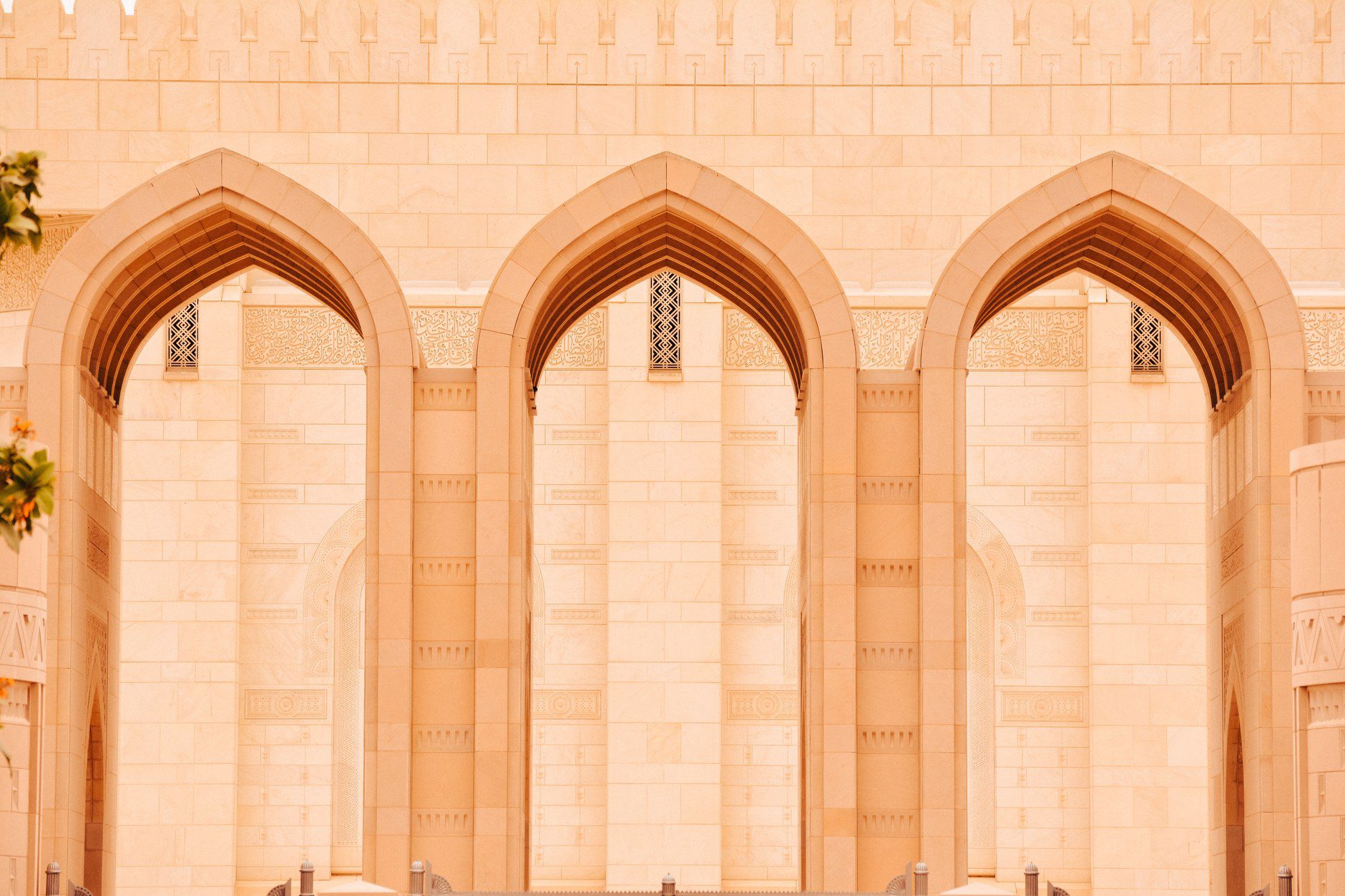
Begin Day 2 early at the monumental Sultan Qaboos Grand Mosque (open to non-Muslim visitors Saturday to Thursday, 08:00 to 11:00). Constructed from 300,000 tons of Indian sandstone, the prayer hall features a colossal 50-metre central dome, a 14-metre-tall Swarovski crystal chandelier containing 1,122 bulbs, and a hand-woven Persian carpet measuring 4,343 square meters that took 600 artisans four years to weave. (Dress code is strictly enforced: men must wear long trousers; women must cover wrists, ankles, and wear an opaque headscarf covering all hair).
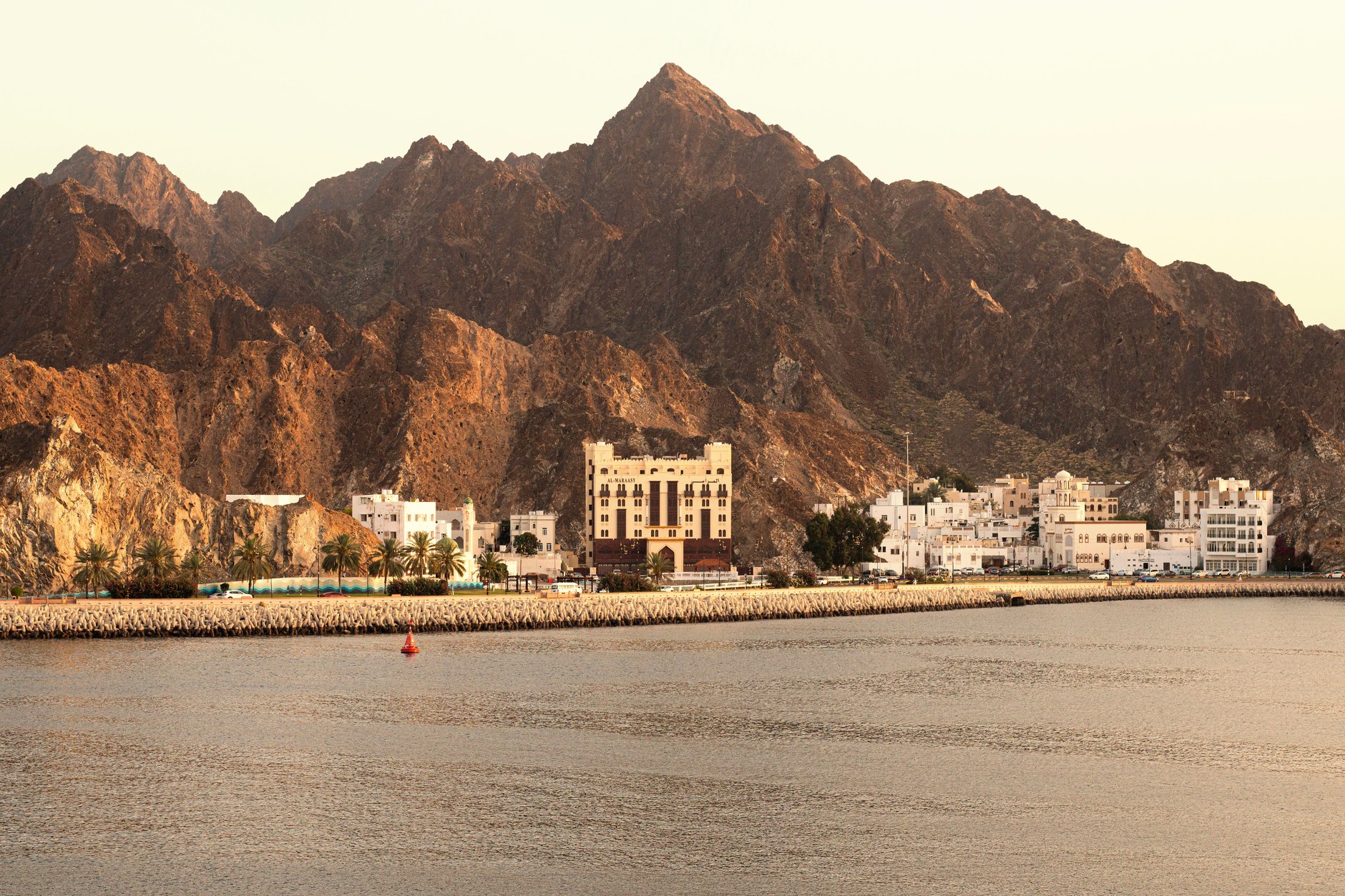
In the late afternoon, stroll along the curved pedestrian promenade of the Mutrah Corniche, watching traditional wooden dhows cruise past the royal yacht basin. Step into the labyrinthine alleys of Mutrah Souq, one of the oldest traditional marketplaces in the Arab world. The air is rich with the resinous, woody aroma of burning luban (Dhofari frankincense). Browse silver Bedouin jewelry, curved ceremonial daggers (khanjars), and fragrant Arabian perfumes before dining on fresh grilled kingfish and spiced saffron rice at a seaside terrace.
Spend Day 2 visiting the magnificent Royal Opera House Muscat, an architectural masterpiece of desert rose limestone and carved Burmese teak, before packing your vehicle for the mountain ascent.
Stage 2: The Historic Heartland of Nizwa & Jebel Akhdar (Days 3–4)
On Day 3, leave Muscat behind and drive southwest along Route 15, watching the coastal plains give way to the rugged, saw-toothed limestone ridges of the Western Hajar Mountains. In 90 minutes, you arrive in Nizwa, the historic seat of the Omani Imamate and the country’s religious and intellectual capital during the 6th and 7th centuries.
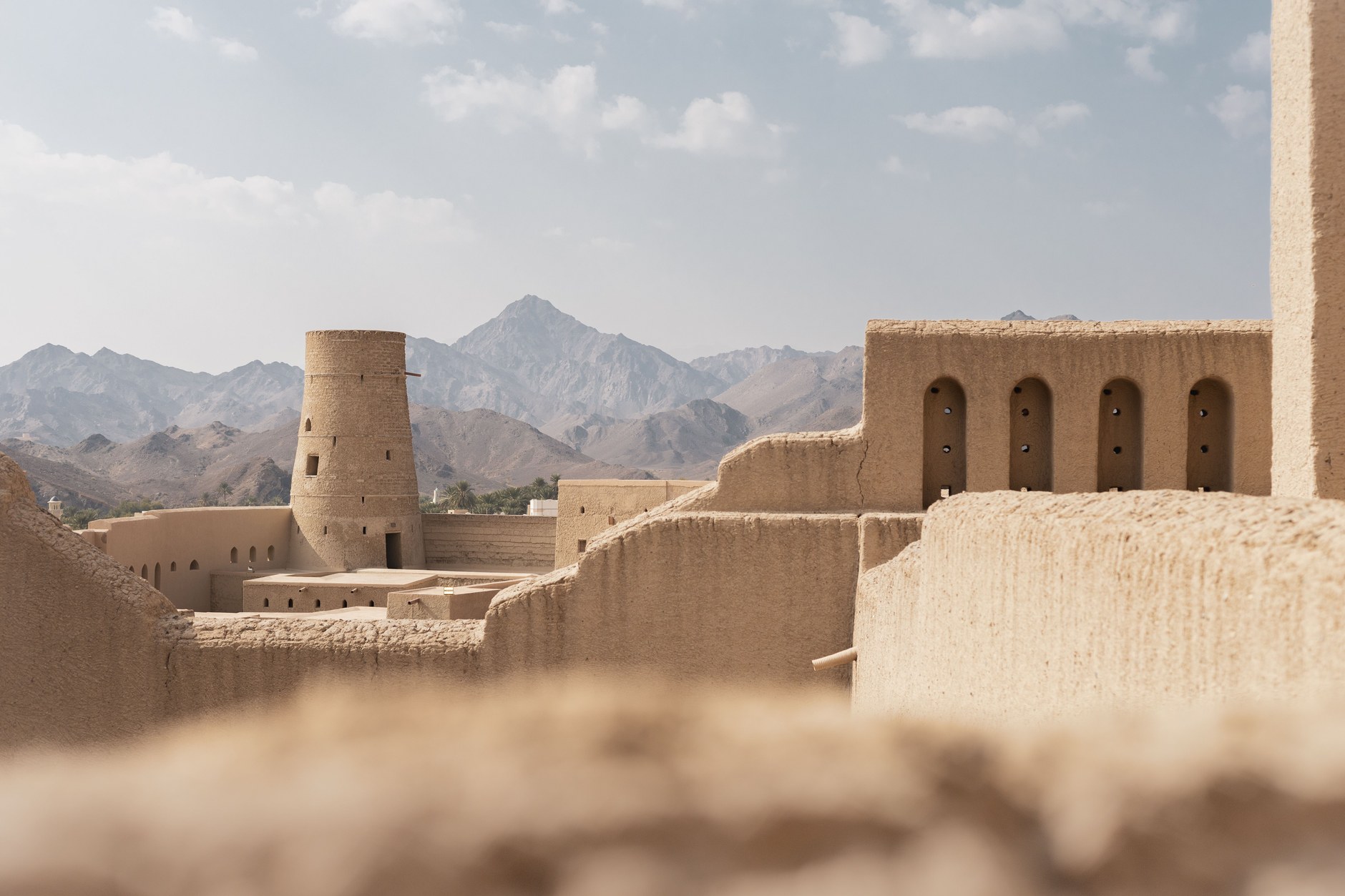
Explore Nizwa Fort, completed in 1668 by Imam Sultan bin Saif Al Ya’rubi. Its defining architectural marvel is its colossal circular cannon tower, measuring 36 meters in diameter and 30 meters in height, designed to withstand heavy artillery fire. Climb to the gun platform for sweeping panoramas across Nizwa’s vast date palm oases and the towering backdrop of Jebel Akhdar. Explore the adjacent Nizwa Souq, particularly vibrant on Friday mornings when Bedouins from the interior gather for the lively livestock and goat auction.
On Day 4, drive 20 minutes to the base of Jebel Akhdar (The Green Mountain), passing through the police inspection checkpoint to begin the steep, dramatic 4WD climb up the paved mountain pass. Perched at an altitude of 2,000 meters on the Saiq Plateau, the climate is crisp and temperate, supporting stepped agricultural terraces irrigated by 1,500-year-old UNESCO-listed falaj channels. Stroll along the clifftop “Four Villages Walk,” gazing down into sheer 1,000-metre canyon abysses and walking through orchards of Damask roses, pomegranates, walnuts, and apricots.
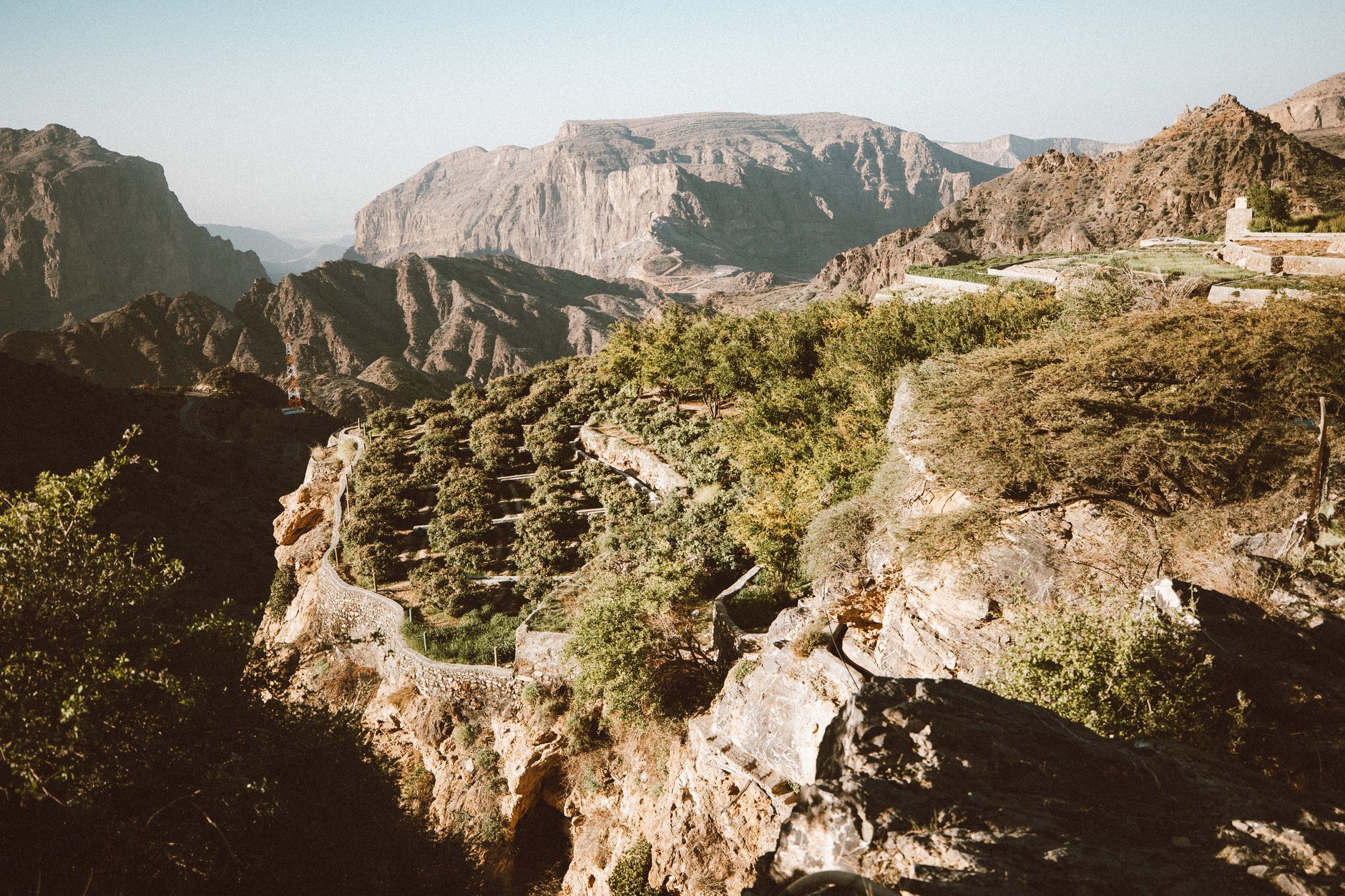
Watch the sunset from Diana’s Point—named after Princess Diana’s 1986 visit—as the canyon walls glow in deep amber and purple hues, before descending the mountain in low gear to prepare for your desert expedition.
Stage 3: The Golden Dunes of Wahiba Sands (Day 5)
On Day 5, head southeast along Route 27 toward the gateway village of Al Wasil / Bidiyah, where the rocky scrubland abruptly ends and the towering copper-colored dunes of Wahiba Sands (Sharqiya Sands) begin. Wahiba Sands is a classic sand sea covering 12,500 square kilometers, with longitudinal sand dunes soaring over 100 meters high.
Stop at a local petrol station in Al Wasil to deflate your vehicle tyres from 35 PSI down to 14–16 PSI (local mechanics will do this for 1 OMR). Deflating the tyres widens their surface contact area, allowing your 4WD to float over soft sand rather than digging in. Shift your transmission into 4WD High and navigate the sand tracks to your desert camp (such as Desert Nights Camp or Arabian Oryx Camp).
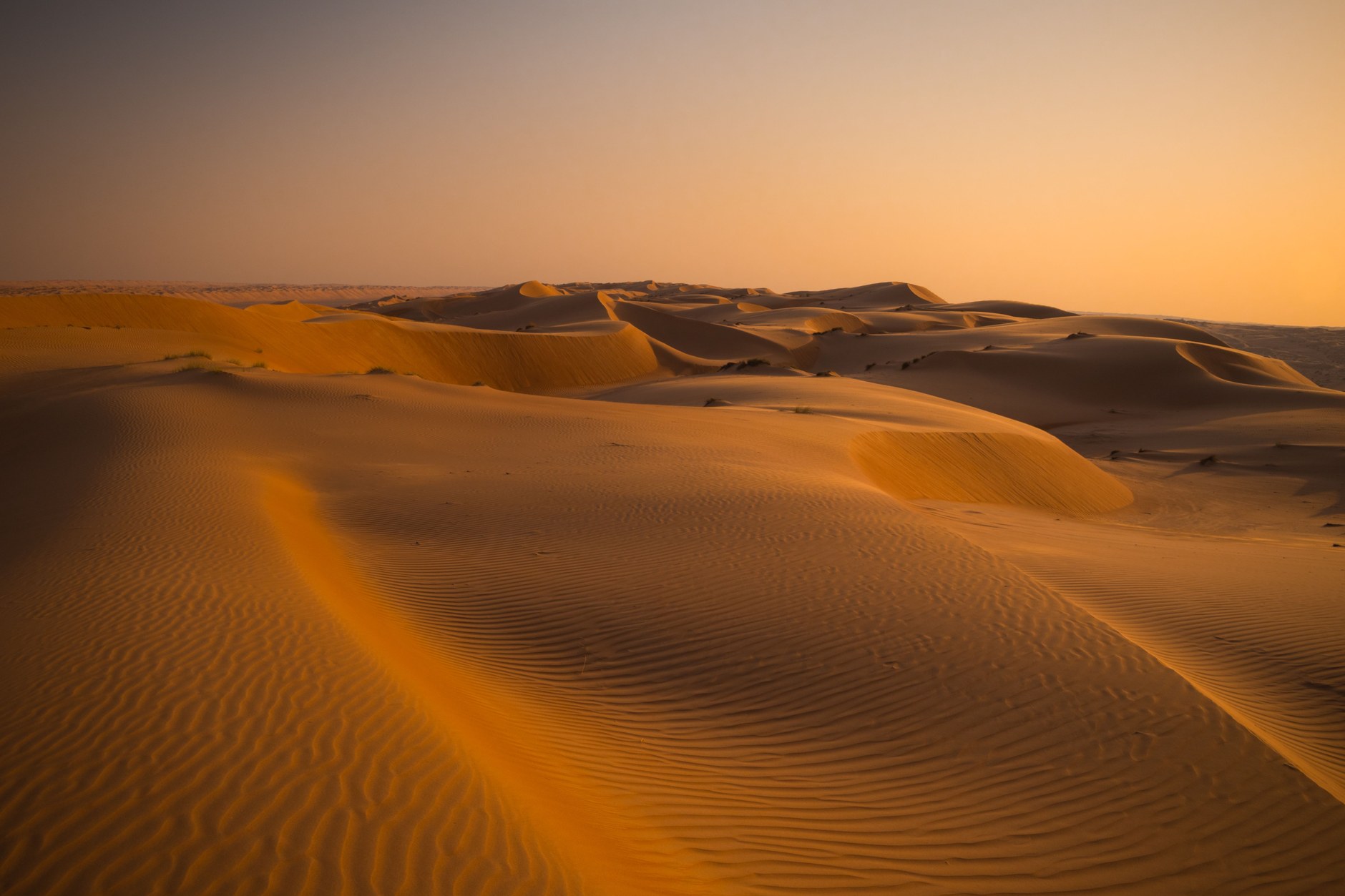
In the late afternoon, climb the crest of a 100-meter dune to sit on the cool sand ridge, watching the desert light shift from brilliant gold to deep rust as the sun dips below the horizon. Enjoy a traditional Bedouin dinner of tender slow-roasted goat (shuwa) cooked in subterranean sand ovens, followed by unforgettable stargazing under pitch-black desert skies with zero light pollution.
Stage 4: Coastal Oases, Dhow Shipyards & Wadis (Days 6–8)
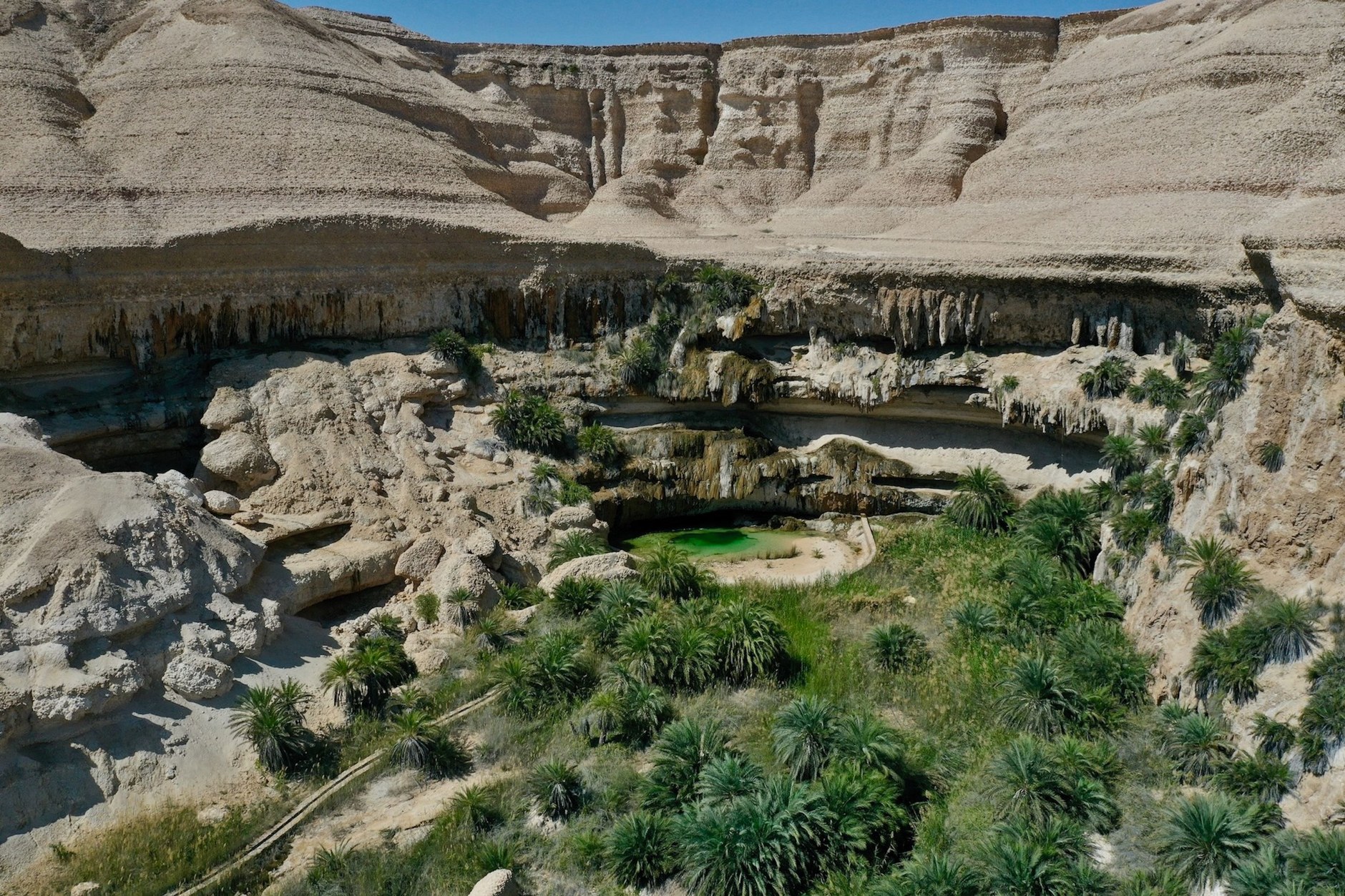
On Day 6, exit the desert tracks, reinflate your tyres at the Bidiyah tyre shop, and head north into Wadi Bani Khalid, one of Oman’s most spectacular natural river oases. Walk past traditional stone falaj irrigation canals into a dramatic limestone gorge, emerging onto a series of vast, deep emerald-green freshwater pools bordered by towering date palms and sheer white cliffs. Swim in the crystal-clear thermal waters, sharing the pool with tiny Garra rufa fish that gently nibble dry skin.
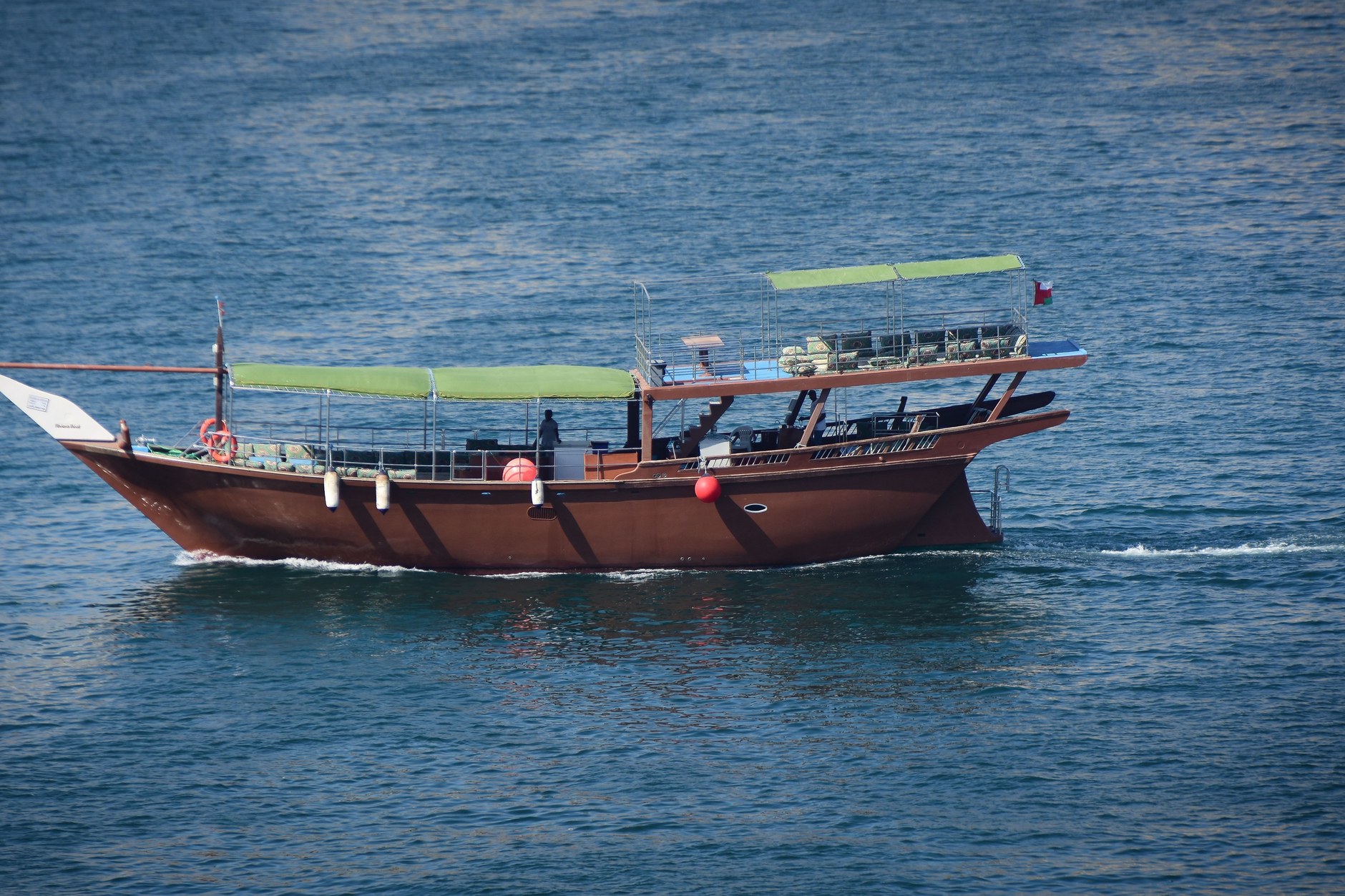
Continue east to the coastal maritime port of Sur on the Gulf of Oman. Sur has been a famed shipbuilding center for over a millennium. Tour the open-air dhow shipyards, where skilled Indian and Omani shipwrights still construct massive wooden trading vessels by hand using traditional teak timbers and hand-driven brass spikes, without modern blueprints. In the evening, drive 40 minutes south to the protected green turtle sanctuary of Ras Al Jinz, taking a guided night tour to observe massive female green sea turtles dragging themselves ashore to dig nesting pits in the sand.
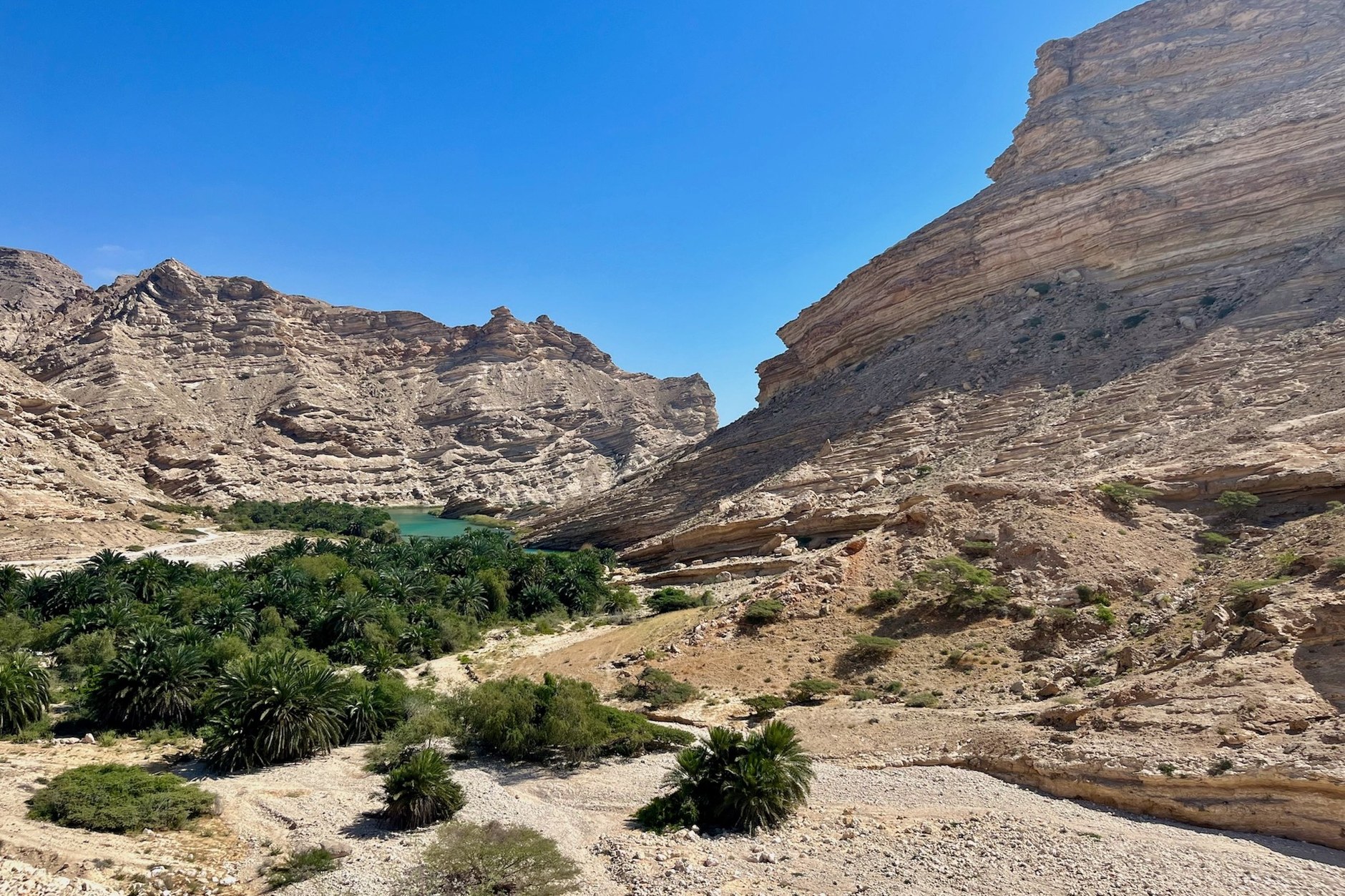
On Day 7, drive north along the coastal highway Route 17 to the trailhead of Wadi Shab. Pay a local boatman 1 OMR to ferry you across the river lagoon, then embark on an exhilarating 45-minute hike through a dramatic limestone canyon filled with lush banana groves and boulder-strewn streams. Arriving at the inner river pools, swim through three crystal-clear turquoise freshwater lagoons until you reach a narrow rock fissure just wide enough for your head; swim through the keyhole crack to enter an astonishing submerged cavern containing a hidden waterfall streaming down through an overhead sunlight shaft.
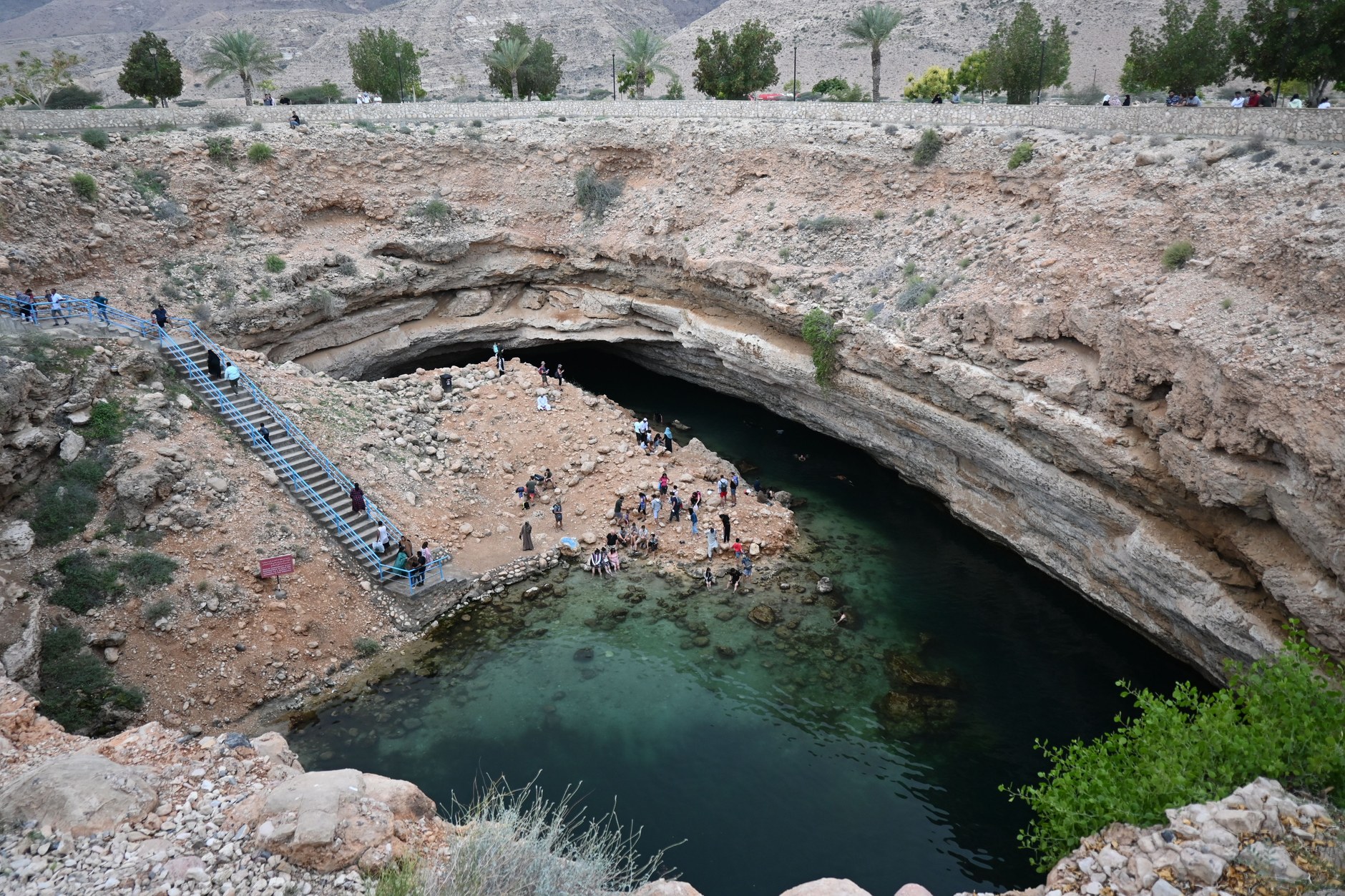
On Day 8, make a final swimming stop at the Bimmah Sinkhole (Hawiyat Najm), an extraordinary 50-metre-wide limestone depression filled with luminous turquoise sea water linked underground to the nearby ocean, before taking the scenic 90-minute coastal dual-carriageway back to Muscat International Airport for your evening flight home.
Before returning your rental 4WD at the airport, stop at an automated car wash in Muscat to spray off desert dust and mud. Returning an excessively dirty 4WD vehicle can trigger a cleaning surcharge from local rental companies.
Road Realities: 4WD Desert Traps, Flash Floods & Cultural Fines in Oman
Oman is exceptionally safe, peaceful, and hospitable, with violent crime almost entirely absent. However, severe desert and mountain driving hazards, sudden flash floods in limestone wadis, and conservative Islamic legal norms require strict vigilance. Keep these verified road realities and safety rules at the front of your itinerary:
- The 2WD Vehicle Checkpoint Ban (Jebel Akhdar Police Turnaround): The mountain road climbing to Jebel Akhdar is a modern, steep asphalt switchback highway. However, the Royal Oman Police (ROP) maintain a permanent checkpoint at the mountain base. Police officers visually inspect vehicle registrations and gearboxes; if you arrive in a two-wheel-drive sedan or an all-wheel-drive crossover without true low-range 4WD, you will be physically turned back on the spot. If turned back, you will be forced to pay a cash sum to hire a local 4WD taxi to shuttle you up the mountain.
- Sudden Deadly Wadi Flash Floods (Wadi Runoff Hazards): When rain falls in the Hajar Mountains, the impervious limestone rock cannot absorb water. Runoff collects into roaring flash floods that tear through dry wadi riverbeds within minutes, even under sunny skies at your swimming location. In Oman, flash floods routinely sweep parked cars and wading tourists downriver with fatal results. Defense: Never camp or park your vehicle in a dry wadi riverbed. If dark clouds form over upstream mountain ridges or wadi water turns murky brown, exit the river canyon immediately.
- Rental Undercarriage Damage & Desert Towing Charges: Standard rental car Collision Damage Waivers (CDW) in Oman strictly exclude underbody damage, suspension wear, and tyre blowouts caused by driving off asphalt roads. If you get bogged down in deep sand dunes in Wahiba Sands without proper tyre deflation, local Bedouins will charge cash for a tractor rescue. Always inspect your 4WD’s spare tyre, jack, and lug wrench before leaving Muscat, and deflate tyres before sand entry.
- Speed Radar Traps & Automated Traffic Fines: Oman’s highways feature sophisticated fixed speed cameras placed every two to three kilometers along major routes (especially Sultan Qaboos Highway in Muscat and Route 15 to Nizwa). Unlike other countries, there are no flashing radar warnings; speeding fines of a cash sum are registered automatically and charged directly to your credit card by your rental car agency, along with a 20% to 30% administrative fee per citation. Obey posted limits strictly (120 km/h on dual carriageways, 100 km/h on rural roads).
- Strict Religious Dress Code Denials at Sultan Qaboos Grand Mosque: Entrance to the Grand Mosque is free, but security guards enforce Islamic modesty rules with zero compromise. Men must wear long trousers covering ankles and shirts covering shoulders. Women must have ankles completely covered, long sleeves covering wrists, and a non-see-through headscarf covering all hair. Transparent leggings, tight yoga pants, and ripped jeans are rejected; tourists are forced to buy polyester abayas for a cash sum at the entrance shop or denied entry.
- Nighttime Camel Collisions on Rural Desert Highways: Outside major cities, roads cutting through desert corridors between Nizwa, Bidiyah, and Sur are largely unfenced and unlit. Camels wander across highway asphalt at night seeking thermal heat retained by the road. Because camels have dark coats and their high center of gravity causes car windshields to take the direct impact in a crash, camel collisions are frequently fatal. Defense: Avoid driving long highway distances across the interior after sunset. If you must drive at night, keep your speed well below 80 km/h and scan the road shoulders with high beams.
Adhering to local driving conventions, carrying plenty of drinking water in your 4WD, and greeting Omani hosts with respect will ensure that your Arabian road trip is safe, smooth, and deeply memorable.
Data Connectivity Across Muscat, Mountains, and Wahiba Sands
Continuous mobile internet connectivity is a genuine safety requirement when undertaking an overland self-drive expedition in Oman. Real-time GPS recalculations through mountain passes, monitoring meteorological rainfall advisories on the Oman Met office radar, calling emergency services or desert camp managers, and requesting Otaxi rides in Muscat all require a dependable high-speed cellular connection.
Oman’s telecommunications infrastructure is anchored by primary national network operators: Vodafone Oman, Omantel, and Ooredoo Oman. Vodafone Oman delivers blazing 5G speeds across metropolitan Muscat and Nizwa, alongside reliable 4G/LTE coverage along the entire coastal Route 17 corridor and throughout populated mountain towns. While purchasing a physical plastic SIM card upon landing at Muscat International Airport requires waiting in line at telecom kiosks and registering official passport details, an instant digital travel eSIM connects your smartphone the moment your aircraft touches down.
The modern, convenient choice is an NXTL Oman travel eSIM. You connect directly to tier-one Vodafone Oman networks at transparent prepaid rates starting from just $1.99 per gigabyte. There is no physical SIM card swap, no contracts, and your balance never expires: you pay only for the exact bandwidth you consume. Here is an estimated data usage breakdown for an 8-day Oman road trip:
| Travel Style & Usage Profile | Daily Online Activities | 8-Day Total Bandwidth | Estimated Data Cost (@ $1.99/GB) |
|---|---|---|---|
| Light Navigator (GPS & weather radar) |
Google Maps GPS navigation, Oman Met flood advisories, Otaxi ride booking, WhatsApp messaging | 3 GB – 5 GB | $5.97 – $9.94 |
| Balanced Road Tripper (Sharing & research) |
All navigation, Instagram sunset photo uploads, wadi trail research, camp coordination, web browsing | 6 GB – 9 GB | $11.93 – $17.90 |
| Heavy Digital Nomad (Remote work & tethering) |
Laptop tethering from mountain resorts, high-definition video calls, cloud photo backups, video streaming | 12 GB – 16 GB | $23.86 – $31.82 |
Install your NXTL eSIM profile on your phone prior to boarding your flight to the Gulf. When your plane touches down at Muscat International Airport, activate your data line to open Google Maps and navigate directly to your 4WD rental pickup before you even leave the arrivals terminal.
Trip Variations: Adjusting for Time and Interests
If You Have Only 5 or 6 Days
If you have less than a week, focus on an abbreviated triangular route: spend two nights in Muscat exploring the Grand Mosque and Mutrah Corniche, one night in Nizwa to tour the historic fort and mountain oases, and one night in a desert tent camp in Wahiba Sands before returning to Muscat via Wadi Bani Khalid. Skip the coastal driving loop through Sur and Ras Al Jinz to keep driving hours manageable.
If You Have 12 to 14 Days
With an extra five to six days, you can expand this itinerary into a grand overland expedition across the Sultanate. From Muscat, take a 90-minute domestic flight south to Salalah in the southern Dhofar region. Visit between July and September during the summer monsoon (Khareef) when mist-shrouded green mountains, blooming frankincense trees, and tropical banana plantations transform Dhofar into an emerald oasis, or explore the ruins of the ancient frankincense port of Sumhuram along the Arabian Sea.
Best Times to Visit
Winter (November to February) is the undisputed peak travel window, offering bright blue skies, crisp desert nights, and comfortable daytime temperatures (22°C to 28°C) that make wadi swimming and mountain hiking pure pleasure. Shoulder months (October and April) are warmer (30°C to 35°C) but pleasant for early morning exploration. Summer (May to September) is scorching hot across northern Oman, with temperatures frequently exceeding 45°C; during these months, travel should be restricted exclusively to the cooler monsoon microclimate of Salalah.