Qatar has evolved far beyond its traditional identity as a brief transit lounge between continents. While millions of international travelers know Hamad International Airport solely for its indoor tropical gardens and duty-free concourses, stepping beyond the terminal reveals a compact, culturally ambitious Gulf peninsula where Pritzker Prize-winning architecture rises beside ancient pearling harbors, and tidal desert dunes tumble directly into the Arabian Gulf. Yet first-time visitors frequently compromise their stay by failing to account for extreme seasonal temperatures or attempting daytime desert walks during punishing summer afternoons.
Making a Doha stopover or short vacation genuinely worthwhile requires mastering the rhythm of the desert climate. By structuring your days around an “indoor cultural daylight, outdoor evening promenade” schedule, you explore world-class air-conditioned museums during midday heat and reserve atmospheric waterfronts, souqs, and desert dunes for late afternoons and illuminated Arabian nights. Supported by the driverless Doha Metro transit network, this strategic four-day itinerary unlocks the nation’s rich heritage without the strain of heat exhaustion.
Thermal Strategy & Route Architecture: 4-Day Doha & Desert Loop
The Persian Gulf climate presents extreme meteorological conditions from May through October, with daytime temperatures regularly climbing above 42°C (108°F) paired with heavy maritime humidity. Attempting outdoor sightseeing between eleven in the morning and four in the afternoon during these months is physically grueling. A successful itinerary divides each day into two distinct operational shifts: indoor cultural immersion during peak daylight, followed by outdoor exploration once the sun dips below the horizon.
Basing yourself in central Doha—either around the historic alleyways of Souq Waqif or the waterfront towers of West Bay—places you within immediate reach of major transit lines. A four-day stopover balances architectural landmarks, modern creative districts, and an afternoon four-wheel-drive desert expedition to the southern border.
| Day | Base | Key Stops & Cultural Sightseeing | Transit Mode | Transit Time | Advance Bookings Required |
|---|---|---|---|---|---|
| Day 1 | Doha (Souq Waqif) | Arrive HIA, Metro to Souq Waqif, National Museum of Qatar, evening souq spice alleys | Metro Gold Line | 15 minutes | National Museum timed ticket |
| Day 2 | Doha (Corniche) | Museum of Islamic Art, MIA Park dhow harbor, evening Corniche walk, West Bay skyline | Metro / foot transit | 10 minutes | MIA museum entry booking |
| Day 3 | Doha (Katara / Pearl) | Katara Cultural Village galleries & amphitheater, The Pearl-Qatar marina, sunset dhow cruise | Metro Red Line + taxi | 20 minutes | Dhow boat charter slot |
| Day 4 | Khor Al Adaid & Departure | Morning relaxation, afternoon 4WD dune bashing expedition to Inland Sea, airport return | 4WD Land Cruiser | 1 hour to dunes | Desert safari expedition booking |
This four-day framework ensures that midday heat is spent inside architecturally celebrated, climate-controlled galleries, while cooler twilight hours are dedicated to atmospheric strolls along dhow harbors and dinner under lantern-lit colonnades.
Architectural Triumphs: Museum of Islamic Art & NMoQ
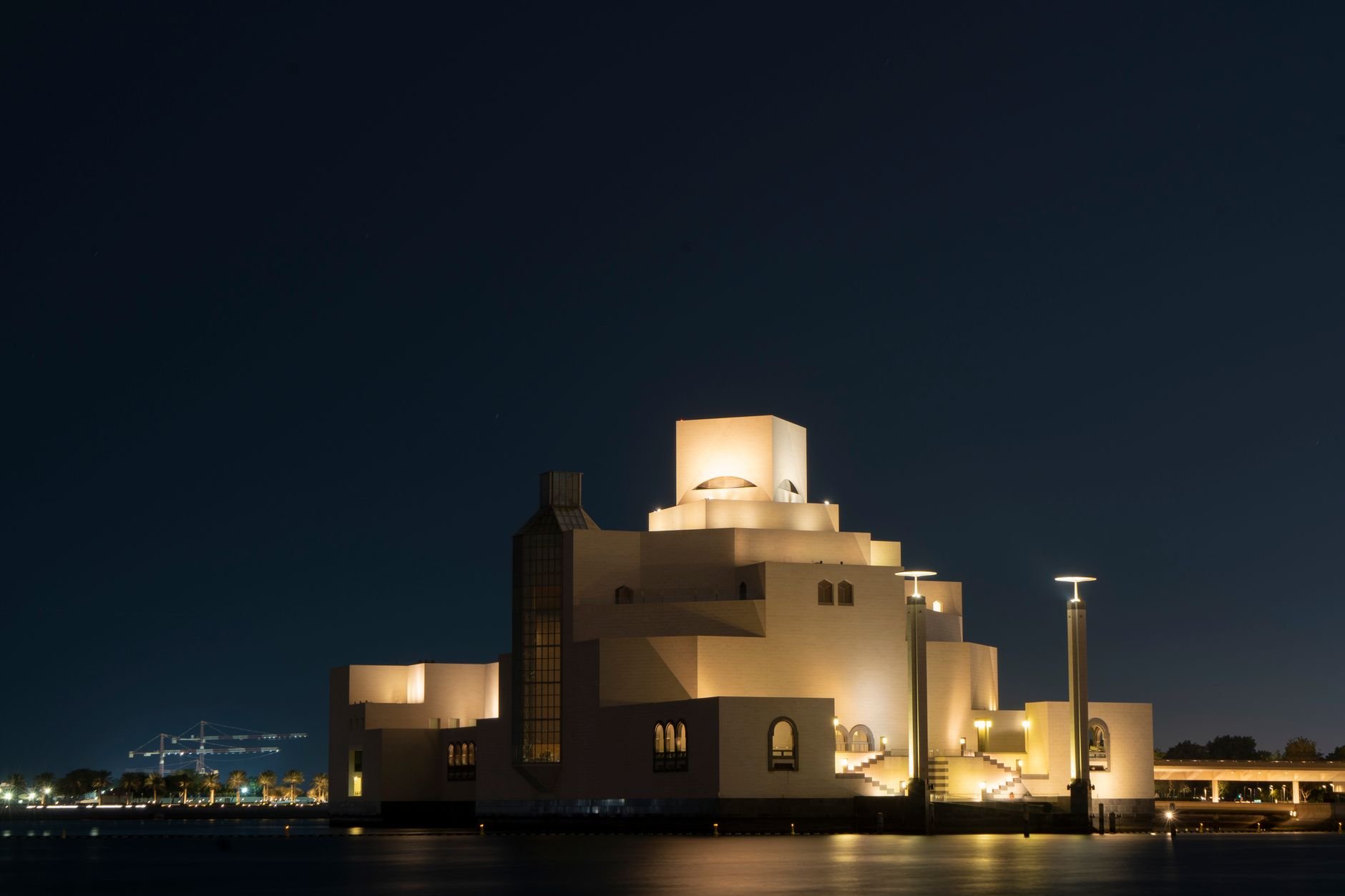
Doha’s waterfront showcases two of the modern world’s most extraordinary cultural institutions, each engineered to reflect regional heritage through cutting-edge structural design. Jutting into Doha Bay on an artificial peninsula stands the Museum of Islamic Art (MIA). Designed by legendary architect I.M. Pei at the age of ninety-one, the building is an austere, cubist masterpiece of cream-colored French limestone that reflects subtle shadow shifts throughout the day, drawing aesthetic inspiration from the thirteenth-century ablution fountain of the Mosque of Ahmad Ibn Tulun in Cairo.
Inside, an immense five-story circular atrium rises beneath a central dome that captures daylight through patterned oculi. The museum’s galleries house three floors of masterworks spanning fourteen centuries of Islamic craftsmanship across three continents, including intricately patterned Syrian glassware, ninth-century Iraqi ceramics, Andalusian astrolabes, and the magnificent seventeenth-century Shah Jahan jade cup.
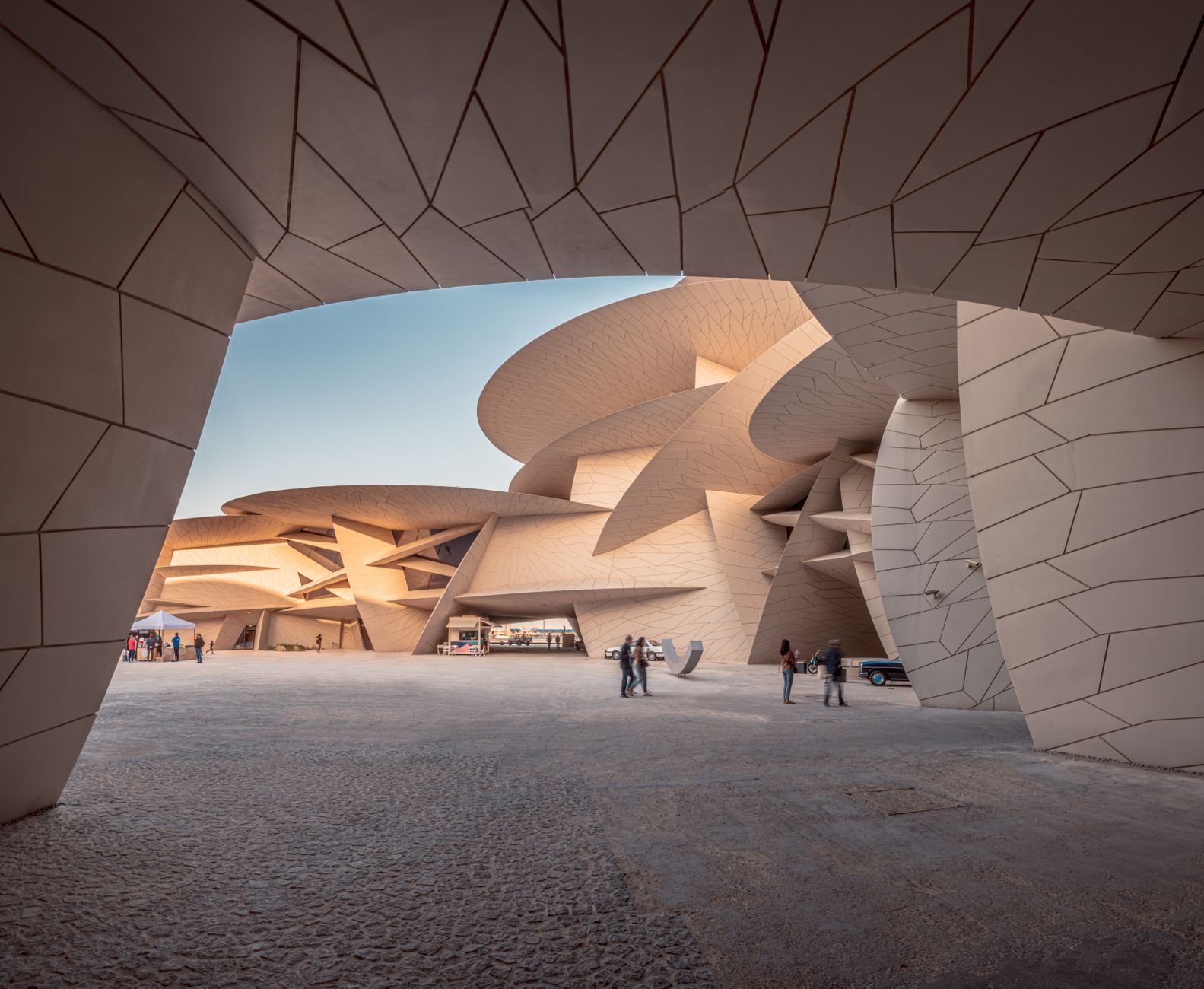
A short metro ride southward brings you to the National Museum of Qatar (NMoQ), conceived by French architect Jean Nouvel. The museum’s exterior is an engineering marvel composed of 539 interlocking fiberglass-reinforced concrete discs of varying diameters, tilted at organic angles to emulate the delicate mineral formations of the desert rose—a gypsum crystal that crystallizes naturally in Qatar’s arid coastal sands.
The interior gallery journey spans 1.5 kilometers through eleven connected chapters, tracing the peninsula’s history from primordial geological formations and prehistoric desert fauna through the centuries of Bedouin seasonal migration, pearling traditions, and the rapid modernization catalyzed by natural gas discovery. The route gracefully envelops the restored original palace of Sheikh Abdullah bin Jassim Al Thani, the former seat of government and heart of national identity.
Souq Waqif: Heritage Alleys, Falcons & Arabian Nights
In contrast to the sleek glass towers across the bay, Souq Waqif stands as the enduring cultural heart of Doha. Operating as a trading market for over a century where Bedouins exchanged wool, pearls, and spices, the souq underwent a meticulous historical restoration in 2006. Modern concrete and corrugated metal were stripped away and replaced with traditional mud-rendered stone walls, exposed mangrove beam ceilings, and heavy iron-studded wooden doors.
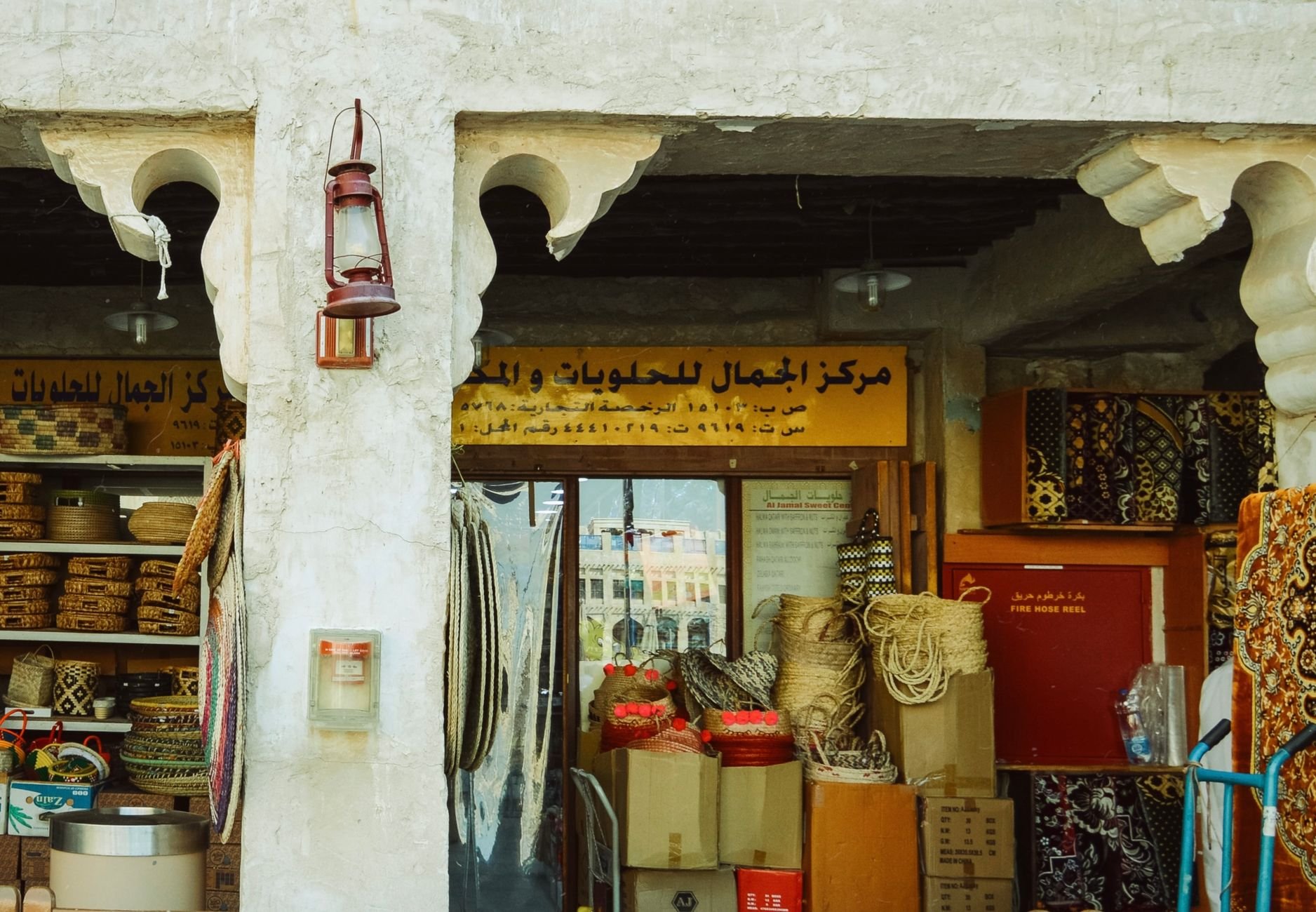
The souq comes alive after sunset. Cool evening breezes draw families, antique collectors, and travelers into a labyrinth of specialized trading quarters. Follow the intoxicating aroma of cardamom, frankincense, and dried black limes (loomi) into the Spice Souq, where open sacks of saffron, Persian sumac, and crushed chili line narrow corridors. Nearby, textile merchants display bolts of shimmering silk, ceremonial black-and-gold bisht cloaks, and hand-embroidered cushions.
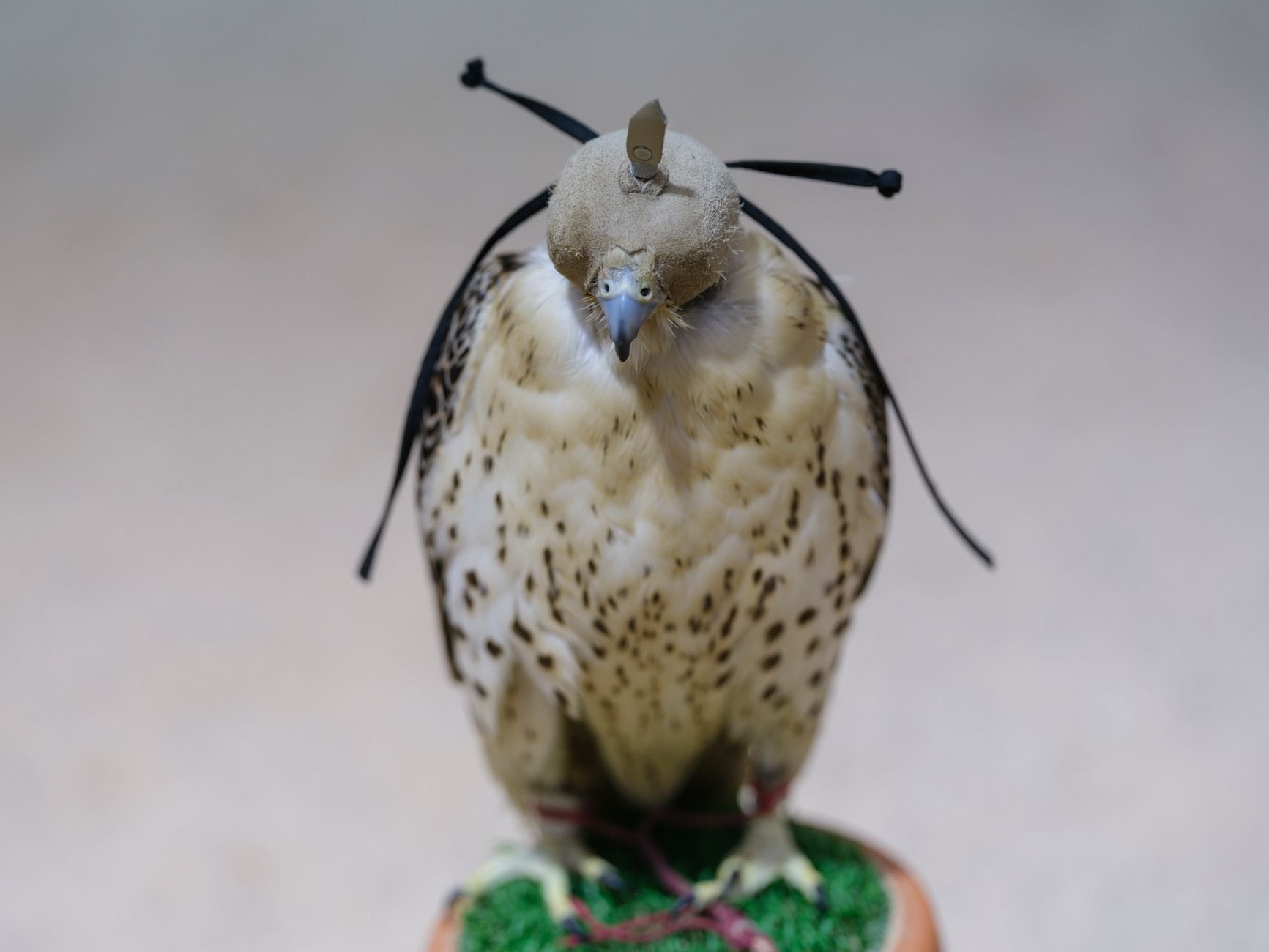
An essential stop is the specialized Falcon Souq, located in the market’s northeastern corner. Falconry is an ancient, revered Bedouin hunting tradition recognized by UNESCO as Intangible Cultural Heritage. In air-conditioned showrooms, hooded hunting falcons—prized sakers and peregrines valued from thousands to hundreds of thousands of dollars—rest quietly on sand-padded perches. Adjacent sits the Souq Waqif Falcon Hospital, an advanced medical facility equipped with digital X-rays and surgical suites dedicated entirely to avian wellness.
Just steps away are the royal stables, housing magnificent Arabian horses and camels used in ceremonial police patrols. In the central pedestrian square, outdoor cafes fill with patrons sipping spiced tea and playing backgammon until past midnight.
Doha Waterfront & Katara Cultural Village
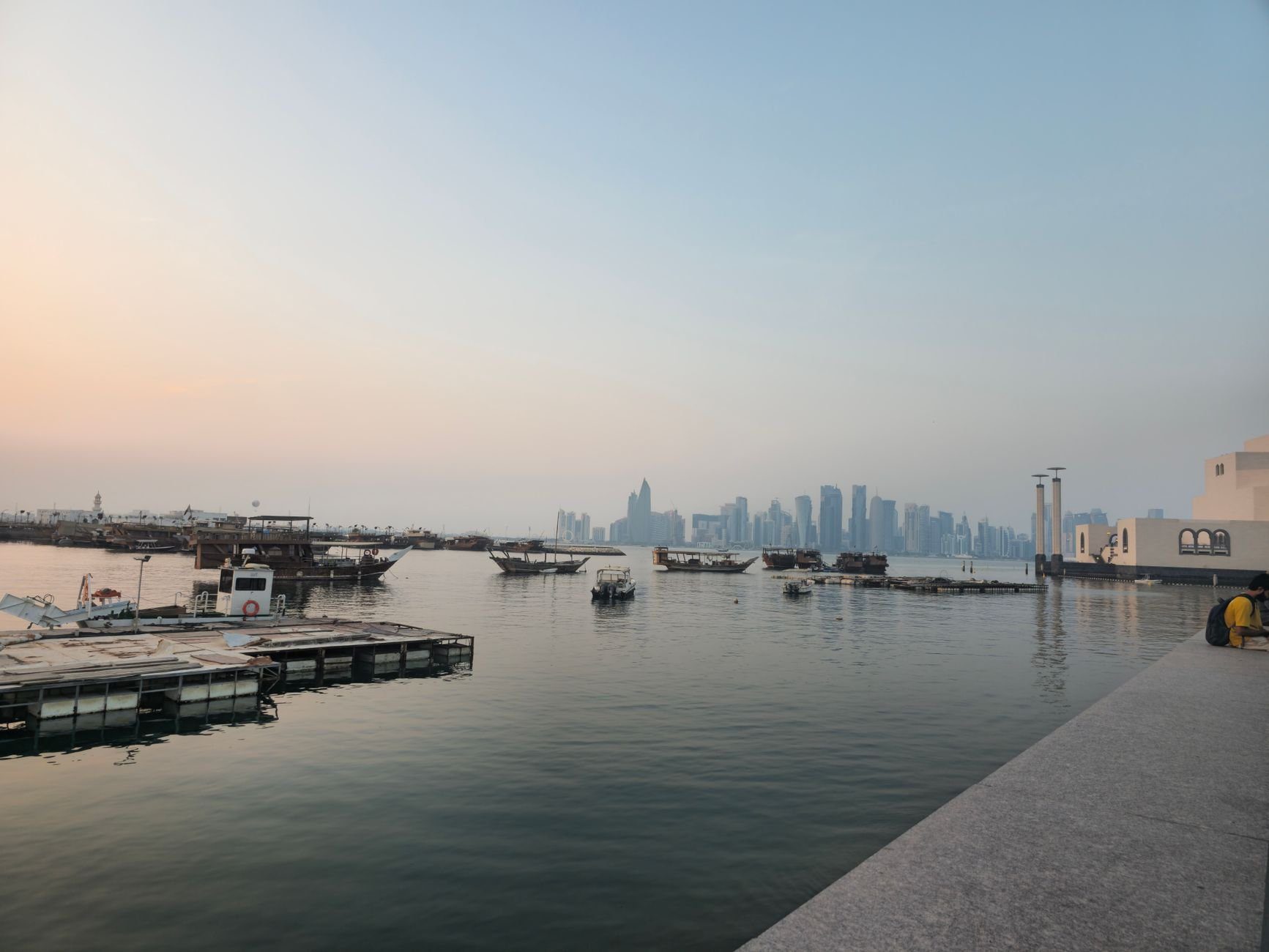
Doha’s waterfront narrative unfolds along the Corniche, a seven-kilometer curved promenade that skirts the deep blue waters of Doha Bay. Walking the Corniche in late afternoon provides an unmatched perspective on Qatar’s transformation, connecting traditional wooden dhow docks with the illuminated skyscraper cluster of West Bay.
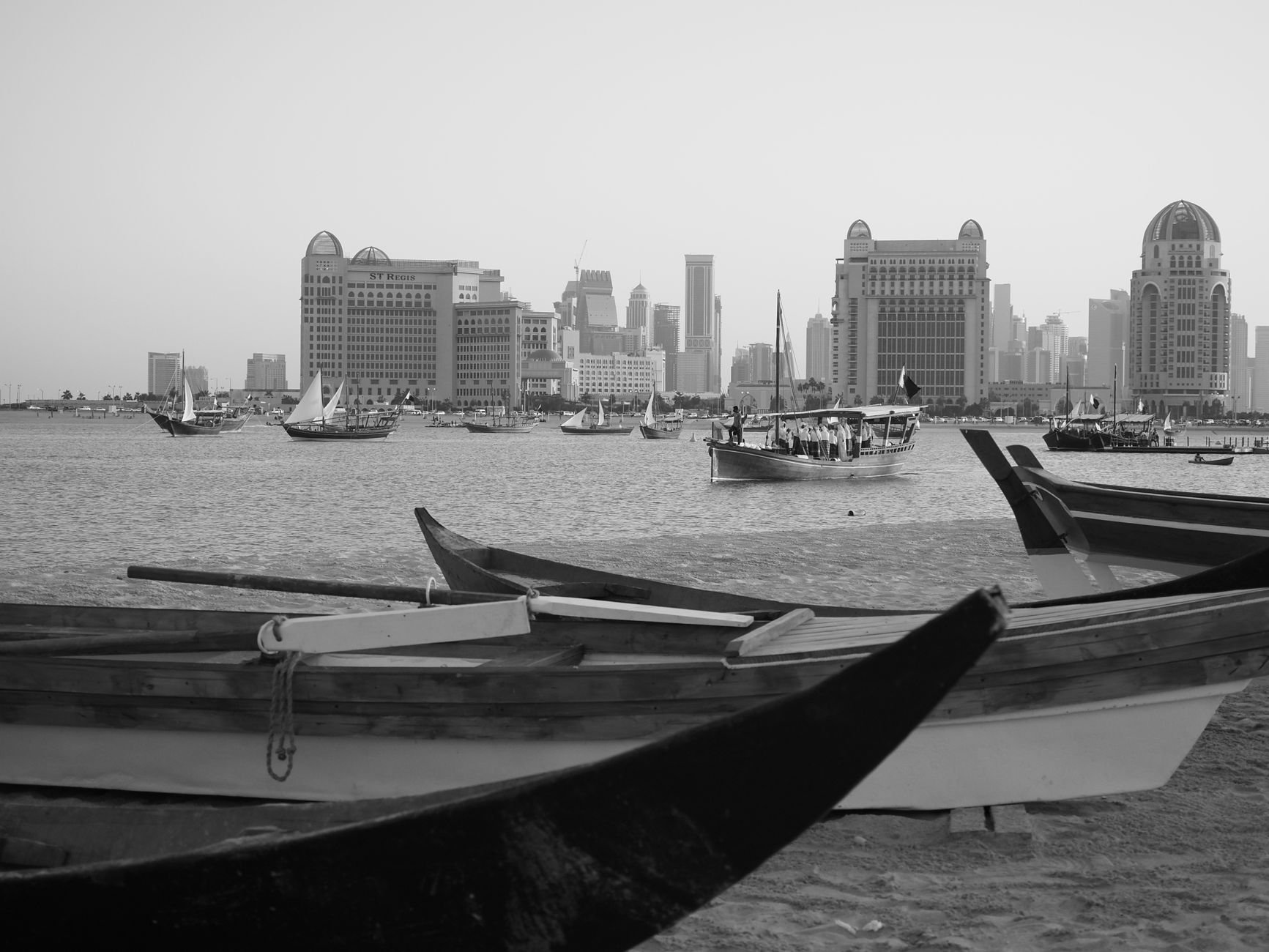
Before petroleum and natural gas dominated the economy, pearling was Qatar’s lifeblood, employing nearly half the male population during four-month summer diving seasons aboard wooden dhows. Today, restored dhows with polished teak hulls moor along the harbor, offering sunset cruises that sail into the open bay as the city skyline lights up in brilliant neon patterns.
Continuing north via the metro brings you to Katara Cultural Village, an expansive cultural district positioned between West Bay and The Pearl-Qatar. Designed to foster international artistic exchange, Katara features visual art galleries, opera houses, artisan craft workshops, and two architecturally striking mosques: the Persian-tiled Katara Mosque and the Gold Mosque, clad in thousands of shimmering gilded tiles.
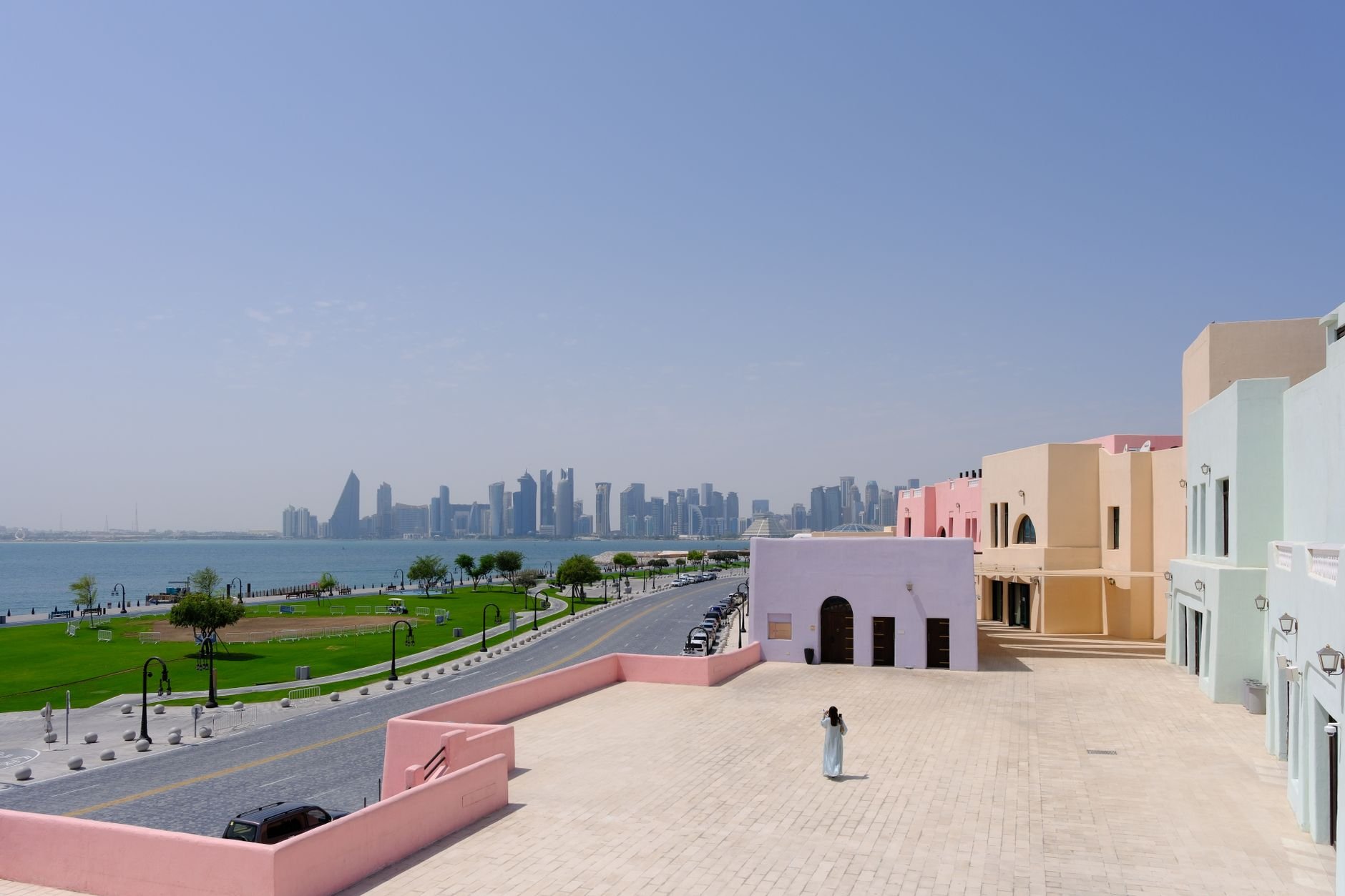
The centerpiece of Katara is its monumental outdoor amphitheater, constructed from pristine white marble in a classical Greco-Roman style with subtle Islamic architectural inflections. Seating five thousand spectators and facing directly onto the tranquil waters of the Gulf, the venue hosts open-air film festivals and international musical concerts during mild winter evenings.
The Inland Sea: Khor Al Adaid Desert Safari
No trip to Qatar is complete without leaving urban Doha to venture into the southern desert. Located seventy-eight kilometers south of the capital near the Saudi border lies Khor Al Adaid (the Inland Sea), one of only three places in the world where towering desert sand dunes plunge directly into a marine lagoon ecosystem.
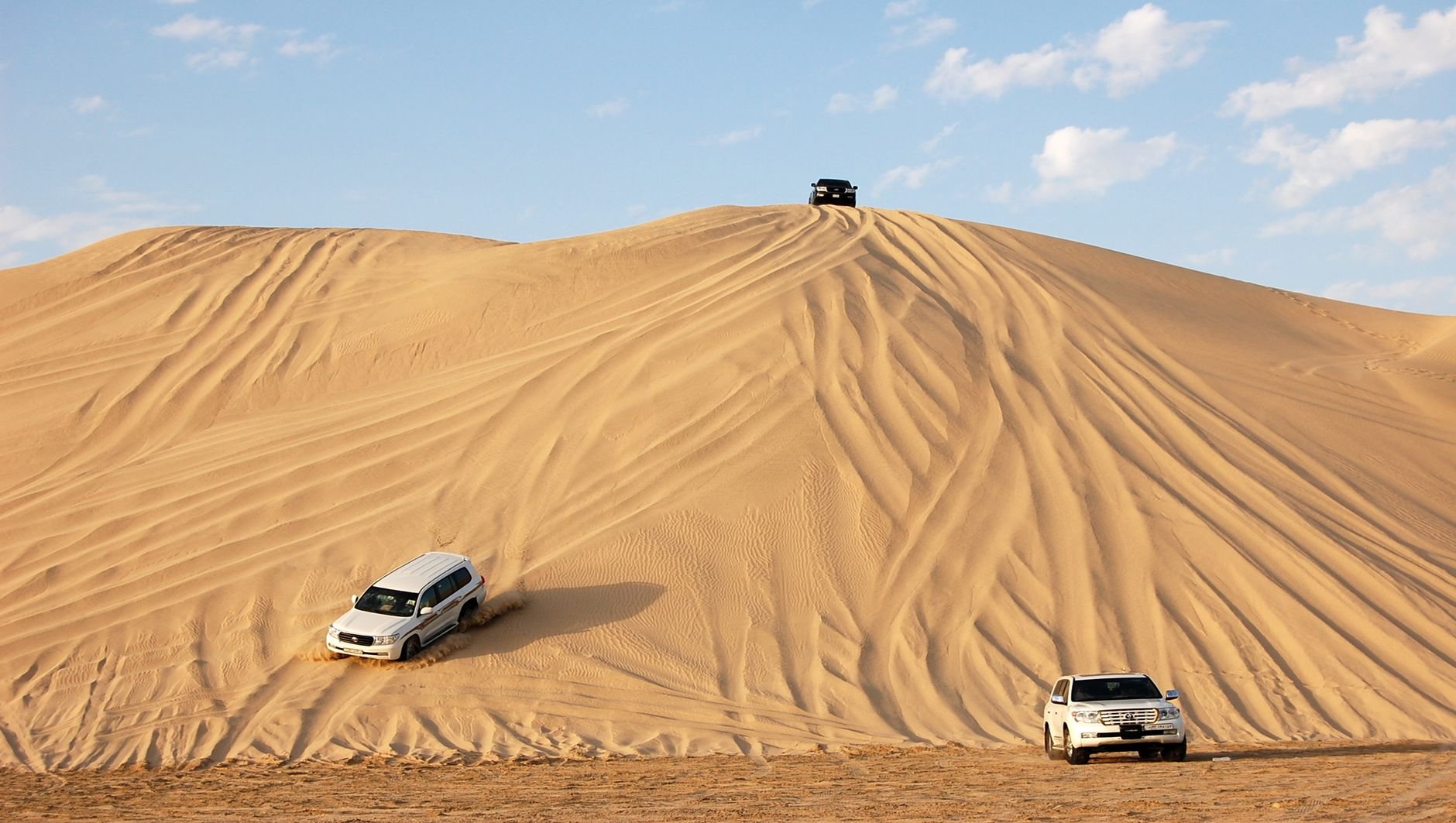
Reaching Khor Al Adaid requires an organized four-wheel-drive expedition led by an experienced desert driver. At the staging settlement of Sealine, drivers deflate tire pressures to roughly fifteen pounds per square inch to gain traction on soft sand. What follows is a thrilling roller-coaster ride of “dune bashing,” carving across knife-edge sand crests and sliding down sixty-degree sand slip-faces before arriving at the serene waters of the inland sea.
The lagoon is fed by a narrow, winding channel connected to the Arabian Gulf, creating a unique biological haven where rare Arabian oryx, gazelles, and migratory flamingos feed along saline tidal flats, while ospreys hunt fish in the shallow blue water. Watching the sun set from the crest of a massive sand dune, with the orange dunes casting long purple shadows over the calm tidal waters, is one of the Arabian Peninsula’s most memorable natural spectacles.
Qatari Gastronomy & Karak Culture
Qatari culinary traditions reflect centuries of maritime trade, blending rich Arabian flavors with Indian spice routes and Persian cooking techniques. The undisputed national dish is machboos (also called kabsa), an aromatic feast of long-grain basmati rice cooked slowly in rich meat broth seasoned with black dried lime, cardamom, cloves, cinnamon, and bay leaves, topped with roasted chicken, tender lamb, or freshly caught Gulf kingfish.
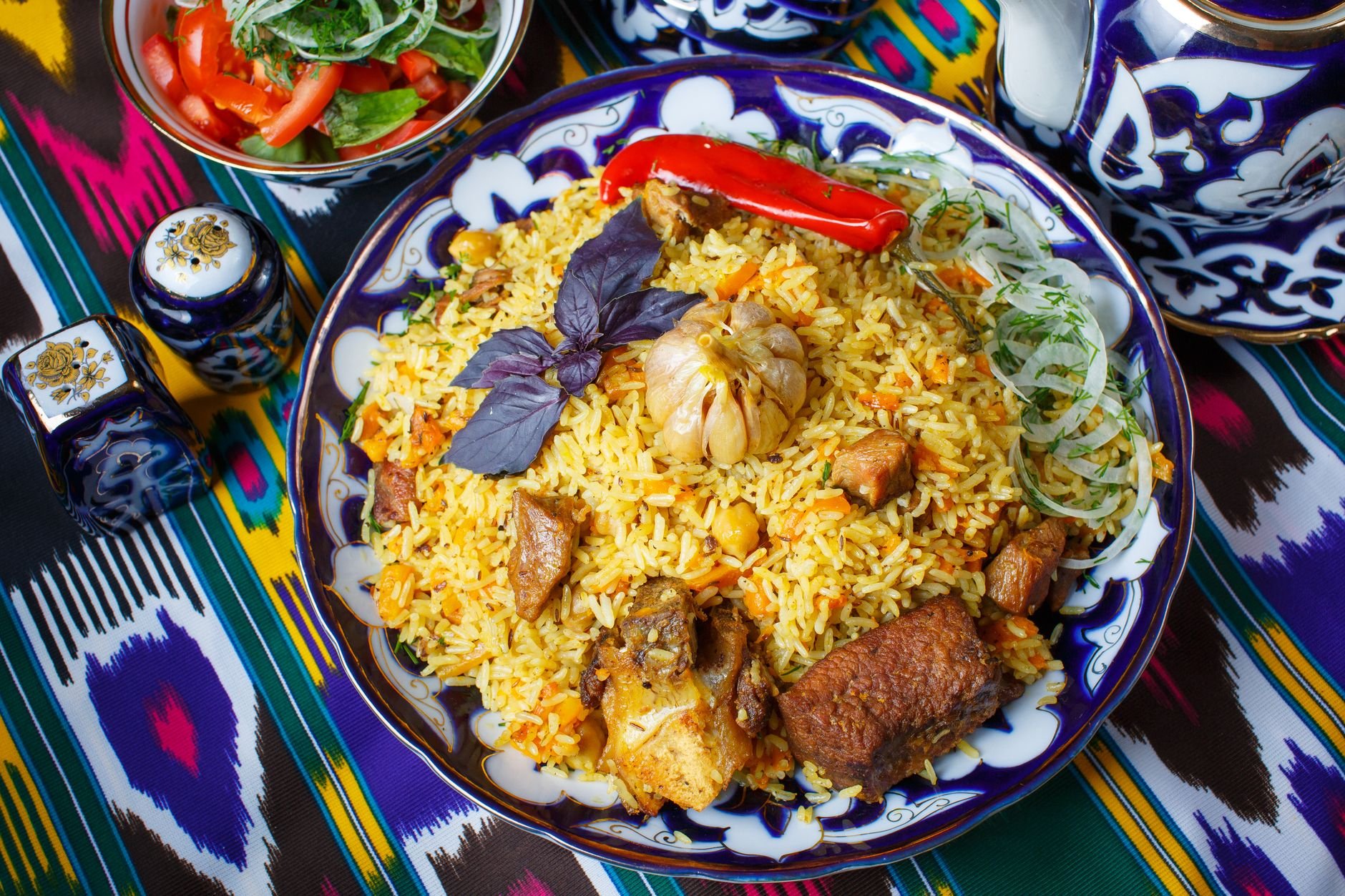
Another classic comfort dish is madrouba, a savory porridge prepared from cracked wheat, tender shredded chicken, tomatoes, and aromatic spices cooked for hours until meltingly smooth and creamy. For vegetable lovers, saloona offers a hearty stew of roasted aubergines, courgettes, potatoes, and tomatoes braised in a flavorful spiced gravy.
Daily social life in Qatar runs on karak chai—strong black tea simmered with evaporated milk, sugar, and crushed green cardamom pods. Originating from Indian traders and embraced as a national passion, hot paper cups of karak are purchased for just two QAR at street-side tea stalls like Chapati & Karak in Katara. Pair your tea with freshly fried luqaimat, bite-sized golden dough dumplings drizzled with rich date syrup and sprinkled with toasted sesame seeds.
Practical Transit: The Automated Doha Metro
Navigating Doha is remarkably easy, clean, and inexpensive thanks to the Doha Metro, which opened ahead of the 2022 FIFA World Cup. Comprising three operational lines (Red, Green, and Gold), this 76-kilometer fully automated, driverless system is one of the most advanced urban transit networks in the world.
Trains feature climate-controlled cabins with three seating classes: Standard, Family, and Gold Club (featuring plush leather captain’s chairs). Metro Line Red connects Hamad International Airport directly to central Msheireb Downtown and Katara in twenty to thirty minutes. A single Standard fare costs just 2 QAR (approx. 0.55 USD), with daily fare capping at 6 QAR (1.65 USD), making transit infinitely more economical and faster than navigating street traffic.
For destinations beyond metro walking distance, ride-hailing apps like Uber and Careem operate ubiquitously with transparent upfront pricing. Official turquoise Karwa taxis are metered and reputable, providing reliable service from airport ranks and shopping centers.
Travel Safety & Common Scams to Avoid
Qatar consistently ranks among the safest nations on earth, with negligible violent crime and strict legal enforcement. Visitors can walk through any neighborhood at three in the morning with total peace of mind. Nonetheless, subtle tourist overcharging and market deceptions can occur.
- Airport Informal “Limousine” Touts: Outside customs at Hamad International, unlicensed private drivers approach arriving passengers offering “executive VIP transfers,” claiming official Karwa taxis are unavailable. They quote a high cash fare for trips that legitimately cost far less on the official meter. Ignore terminal touts and follow signs to the official taxi rank or ride the Metro.
- Adulterated Saffron at Souq Waqif: Dishonest spice vendors occasionally sell dyed corn silk or yellow safflower strands packaged as authentic “Grade-A Iranian or Kashmiri Saffron” at premium prices. Genuine saffron has an unmistakable sweet floral aroma with a slightly bitter taste and colors water deep golden-yellow rather than synthetic red.
- Unsolicited Falcon Photo Fees: In the Falcon Souq, opportunistic handlers may abruptly place a hooded hunting falcon onto your arm or shoulder for a photograph without asking, then aggressively demand a cash fee. Always ask permission and agree on photo fees beforehand if you wish to hold a falcon.
- Dhow Cruise Price Inflation at the Corniche: Independent dhow boat captains along the waterfront often quote ambiguous per-person rates on the jetty, then insist after docking that the agreed price was “per minute” or that private fuel surcharges apply. Always establish the total charter price, exact sailing duration, and group count clearly before boarding.
- Uncertified Pearl Market Imitations: In specialized gift shops, vendors occasionally pass off cheap cultured freshwater pearls or synthetic glass beads as rare, wild Arabian Gulf natural saltwater pearls. Authentic wild Gulf pearls command thousands of dollars and always come with recognized gemological certification.
- Desert Safari Hidden Surcharges: Budget desert tour operators occasionally quote artificially low base rates online, only to demand compulsory cash add-ons for tire deflation, dune stops, camel photography, or sandboarding once out in the desert. Book only through vetted, reputable tour agencies with comprehensive all-inclusive inclusions.
Exercising standard consumer caution, respecting local cultural dress codes in conservative public spaces (covering shoulders and knees in administrative buildings), and clarifying pricing will ensure a flawless, luxurious stopover.
Mobile Connectivity & eSIM Intelligence for Qatar
High-speed cellular connectivity is vital during a Doha stopover. Whether ordering Uber pickups outside metro stations, checking digital museum tickets at the National Museum, or broadcasting live videos from the dunes of Khor Al Adaid, having instant internet access eliminates travel friction.
Purchasing a physical tourist SIM card upon landing at Hamad International Airport requires waiting in long queues at telecom booths, submitting physical passport scans, and navigating temporary visitor packages that expire after seven days. Unused data is completely wasted once your stopover concludes.
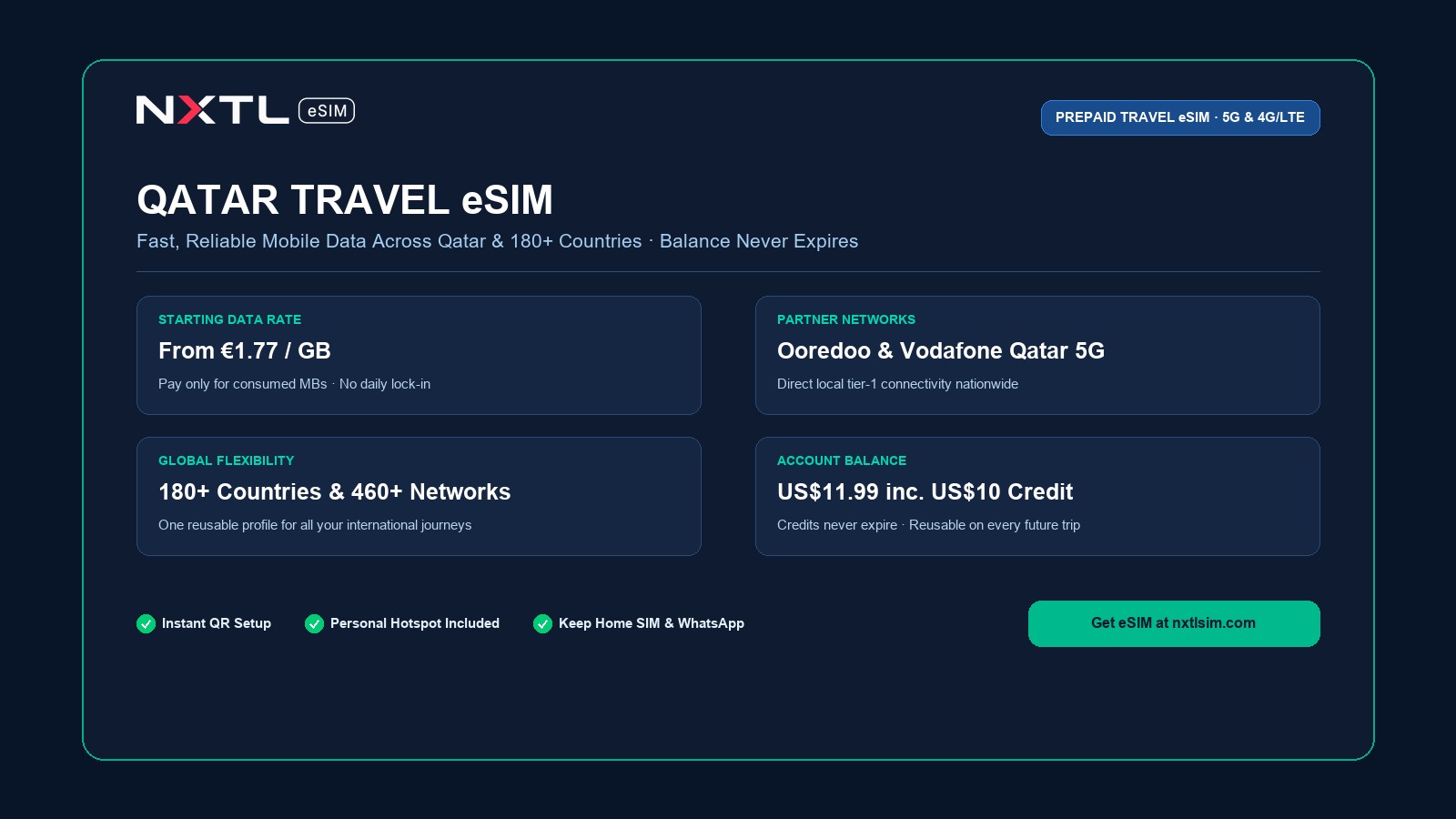
A digital global eSIM offers a vastly superior solution. With NXTL, you connect directly to Qatar’s premier cellular networks the instant your flight touches down, without swapping plastic cards or waiting in line. NXTL operates on a transparent pay-as-you-go balance model, providing ultra-fast 5G data in Qatar starting at just EUR 1.77 per gigabyte.
Crucially, NXTL features multi-carrier failover across Qatar’s two leading nationwide telecom giants: Ooredoo Qatar and Vodafone Qatar. Both operators provide blistering gigabit 5G speeds across metropolitan Doha, Lusail, and along the southern highway to the desert. If you travel into remote sand dunes where one network’s signal fades, NXTL automatically switches your device to the alternate carrier tower. Full personal hotspot and tethering functionality is permitted, enabling you to share 5G data with laptops and tablets.
Getting started is simple. For $11.99, you receive your universal eSIM profile with $10 in preloaded account balance. Because your balance never expires and covers 180+ countries and 460+ carrier networks worldwide, any credit remaining after your Doha stopover remains active and ready for your ongoing destination in Asia, Africa, or Europe.