Travel to the Russian Federation presents a profound contrast between extraordinary cultural heritage and unprecedented operational complexity. Spanning eleven time zones from the Baltic Sea to the Pacific Ocean, Russia possesses centuries of imperial architecture, world-renowned performing arts, and foundational literary and scientific legacies. The classic cultural corridor connecting Moscow and Saint Petersburg remains one of the world’s most magnificent urban journeys, showcasing the architectural zenith of Tsarist autocracy and Soviet grandiosity.
Yet prospective visitors must approach travel to Russia with acute awareness of current geopolitical conditions. Following the outbreak of the war in Ukraine and subsequent international sanctions, diplomatic ministries across Western nations—including the British Foreign, Commonwealth & Development Office and the United States Department of State—advise unequivocally against all travel to the Russian Federation. Western advisories highlight the risk of arbitrary enforcement of local laws, potential harassment or detention of foreign citizens, severed direct air corridors, and severely limited consular assistance. Dual nationals holding Russian and foreign citizenship face particular risks, as Russian law treats them exclusively as Russian citizens subject to military mobilization mandates.
For independent cultural researchers, visiting diaspora families, authorized business professionals, and international travelers from non-aligned nations whose legal standing permits travel, navigating Russia today demands meticulous preparation. Every practical system—from entry visas and border inspections to total banking isolation and state internet censorship—has been fundamentally restructured. This guide provides objective, verified operational intelligence for navigating the primary cultural corridor between Moscow and Saint Petersburg safely and effectively.
Before booking any flights or rail tickets, travelers must master the precise visa and entry regulations currently governing foreign arrivals. Border formalities are rigorous, and administrative compliance is non-negotiable.
Entry Regulations: The Unified E-Visa, Consular Visas & Border Scrutiny
Entry into Russia requires advance government authorization. In August 2023, the Russian Ministry of Foreign Affairs launched the Unified Electronic Visa (e-Visa), open to citizens of fifty-five countries, including all European Union member states, China, India, Turkey, Saudi Arabia, Japan, and several others. The e-Visa permits a single stay of up to sixteen calendar days within a sixty-day validity window for tourism, business, or humanitarian purposes. Applicants submit personal data, passport scans, and a digital photograph via the official MFA portal (`evisa.kdmid.ru`) at least four calendar days prior to travel, paying an administrative processing fee.
Citizens of nations not eligible for the e-Visa—including the United States, United Kingdom, Canada, and Australia—must apply for a traditional consular paper visa through authorized Russian visa centers. This traditional process requires an official tourist voucher and confirmation letter (*podtverzhdeniye*) issued by a licensed Russian travel agency or hotel, biometric fingerprinting, and extended processing periods.
Border control inspections at international airports (such as Moscow Sheremetyevo, Domodedovo, Vnukovo, and Saint Petersburg Pulkovo) have become significantly more stringent. Immigration and FSB border officers frequently conduct secondary interviews of arriving Western travelers. Electronic devices—including smartphones and laptops—may be inspected for social media posts, messaging histories, and media related to the conflict in Ukraine. Travelers should maintain strict digital hygiene: ensure devices are free of controversial political commentary, sensitive military discussions, or unverified digital files before arriving at the border gate.
Upon clearing immigration, visitors receive a white paper Migration Card (*migratsionnaya karta*). You must safeguard this slip inside your passport until departure, as hotels require it for registration and border officers will inspect it when you exit the country.
Financial Logistics: Total Sanctions Disconnection & Payment Workarounds
The single greatest operational challenge for travelers in Russia is the complete severance of the domestic financial system from international payment networks. Due to extensive financial sanctions, foreign-issued Visa, Mastercard, American Express, Maestro, JCB, and UnionPay cards do not function anywhere in Russia. Foreign credit and debit cards cannot be used to pay for hotel rooms, meals, rail tickets, or museum entries, nor will they operate in Russian automated teller machines (ATMs). Western digital payment wallets, including Apple Pay and Google Pay, are completely disabled.
To operate financially, travelers have two practical pathways. The first is carrying physical cash. Foreigners must bring sufficient physical cash in Euros (EUR) or US Dollars (USD) to fund their entire stay, including emergency contingencies. Currency banknotes must be in pristine condition: uncreased, untorn, unmarked, and free of stamps or folds. US Dollars must be modern series printed after 2013 (“blue” hundred-dollar bills); older green series banknotes are routinely rejected or discounted at exchange desks. Cash can be exchanged for Russian Rubles (RUB) at commercial bank branches (such as Sberbank, VTB, or Bank Saint Petersburg) and licensed exchange bureaus across Moscow and Saint Petersburg.
The second, highly recommended solution is acquiring a local Russian payment card upon arrival. Russia operates an ultra-modern domestic payment network powered by the Mir national card system and the Fast Payment System (SBP). Foreign visitors can visit a retail branch of Sberbank, VTB, or Tinkoff Bank in central Moscow or Saint Petersburg with their passport, migration card, and hotel registration to open a basic debit account and receive an instant-issue Mir card. Alternatively, foreign travelers can pre-register for a virtual YuMoney tourist card online and pick up a physical card at airport counters. Once loaded with cash Rubles, a Mir card allows convenient tap-to-pay transactions across shops, restaurants, Moscow Metro turnstiles, and ride-hailing apps.
By securing a local Mir debit card or maintaining disciplined cash Ruble reserves, travelers eliminate the anxiety of card rejections in a society that has become largely cashless.
The Two Capitals: Navigating Moscow & Saint Petersburg
The cultural core of Russia is anchored by its two historic capitals: Moscow, the political and commercial heart, and Saint Petersburg, the imperial cultural jewel founded by Peter the Great.
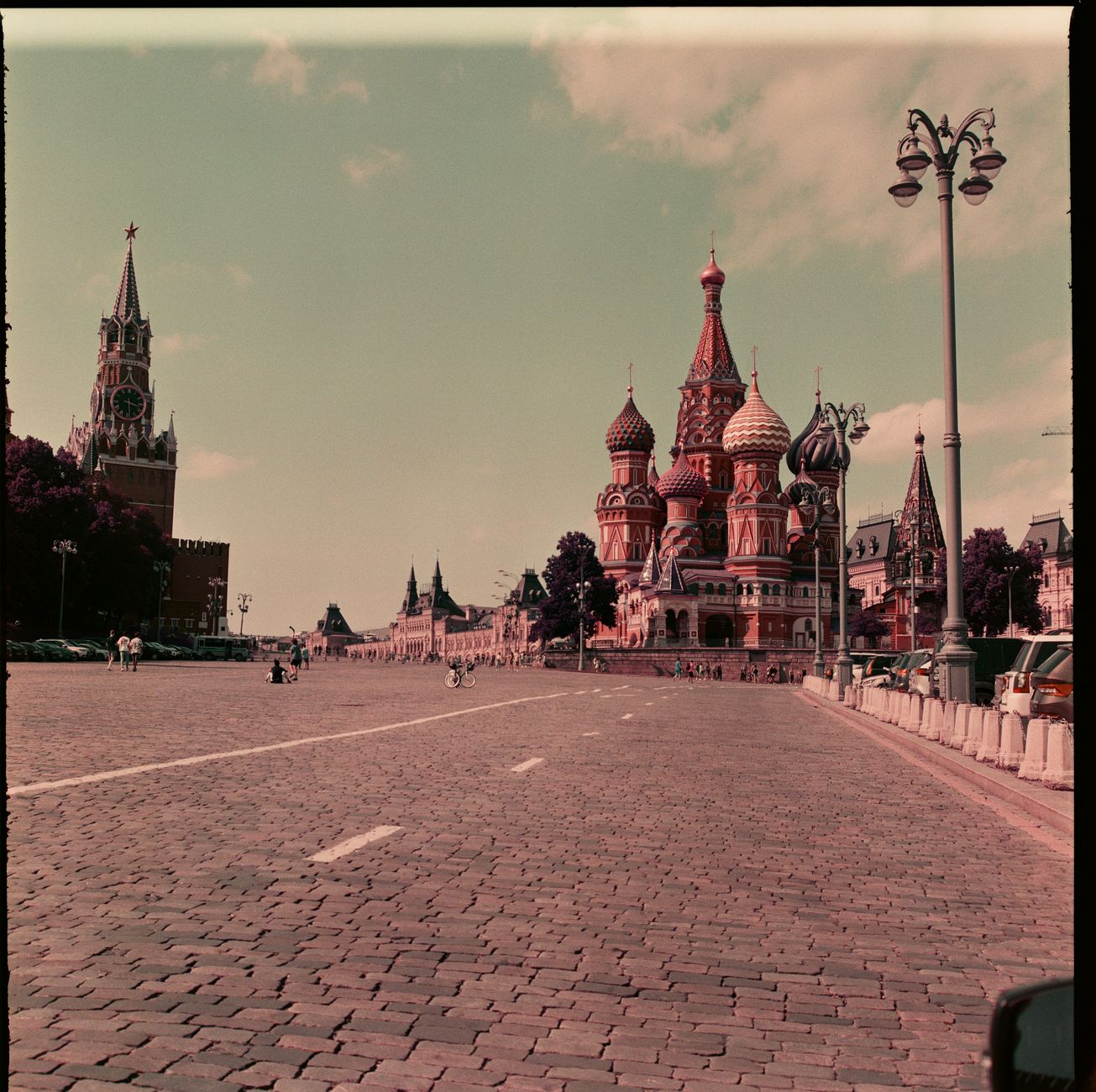
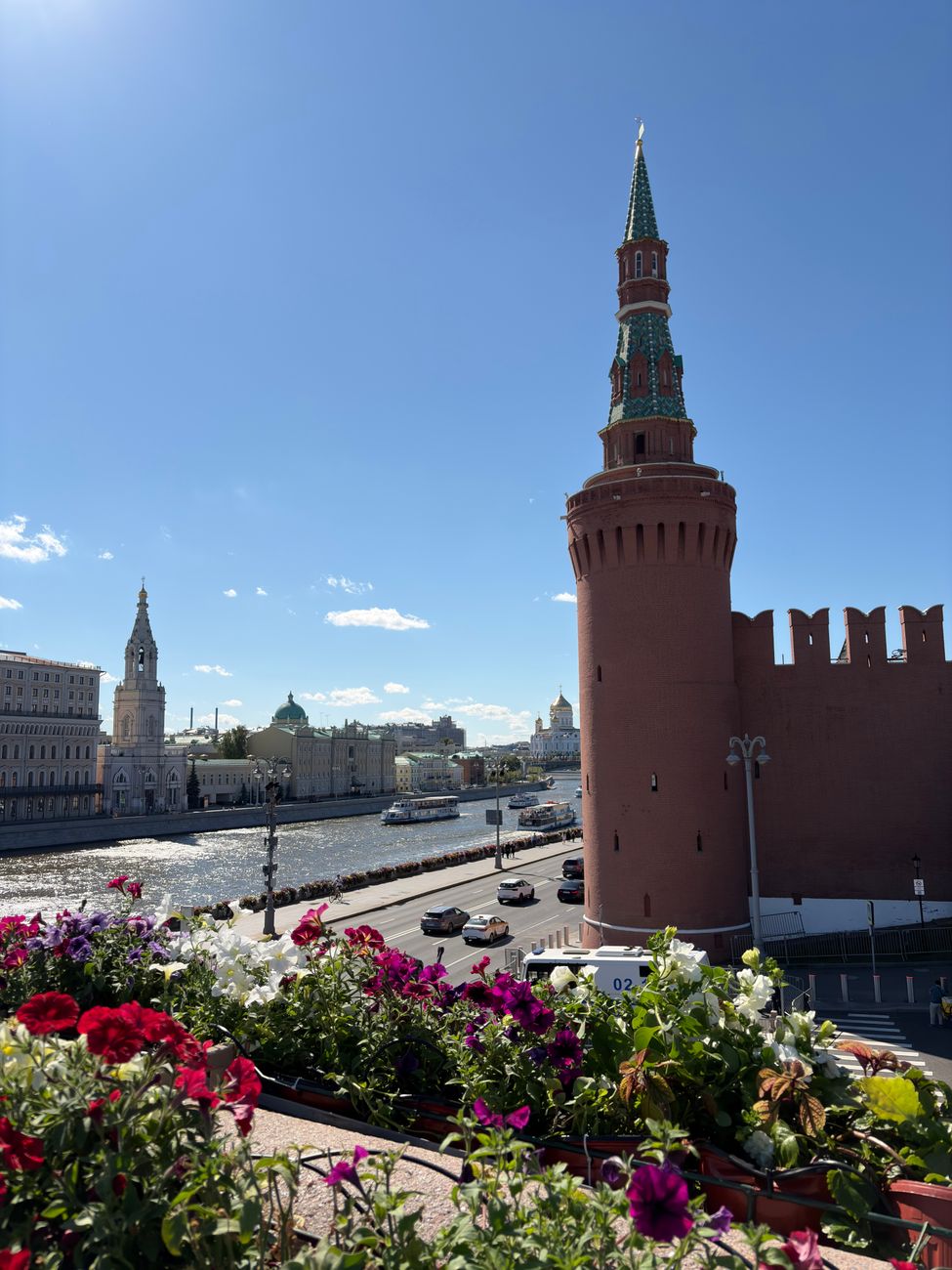
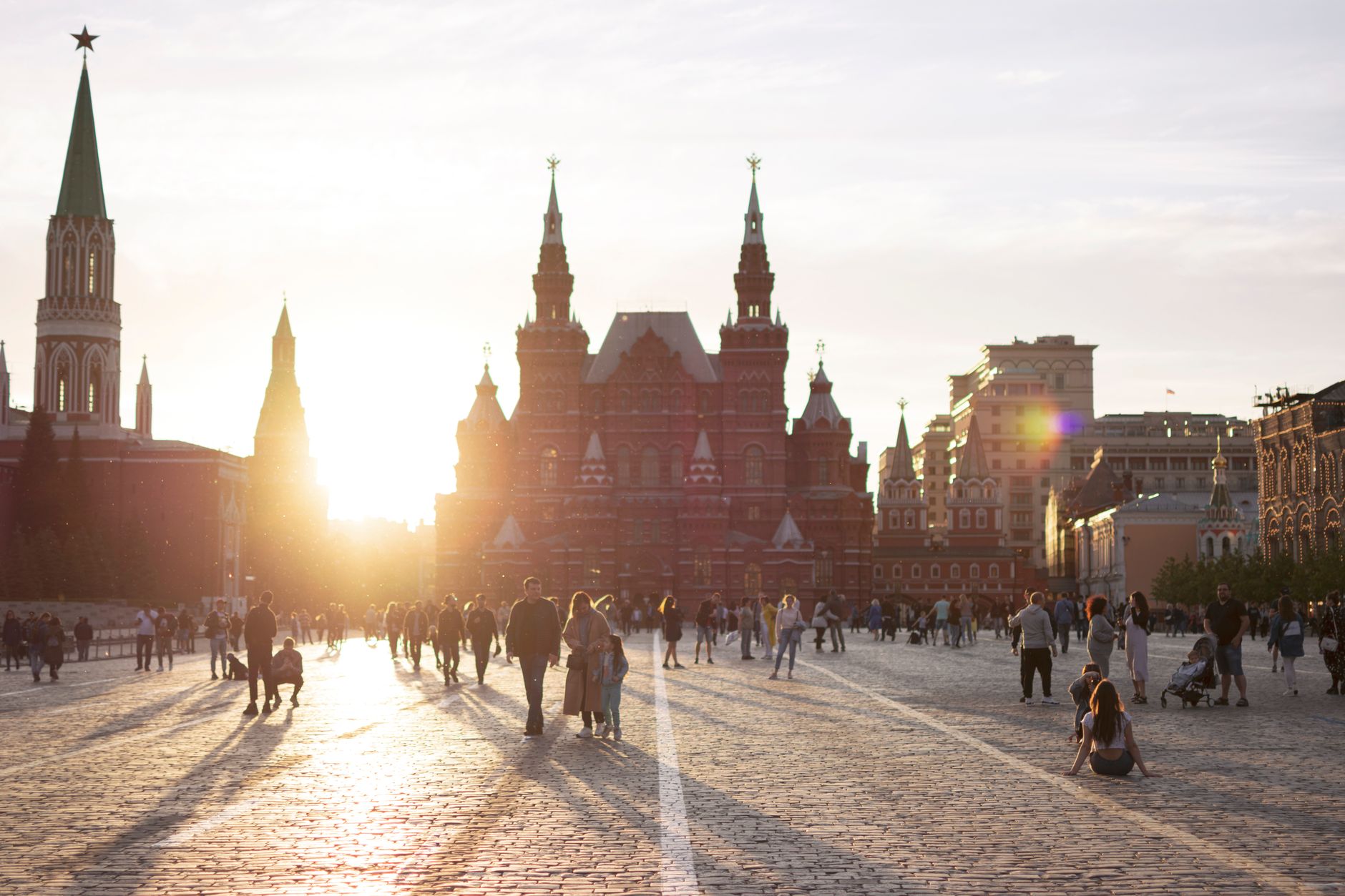
Moscow is a colossal metropolis of thirteen million people, combining medieval fortresses, neoclassical avenues, and towering Stalinist skyscrapers (“Seven Sisters”). Orientation revolves around Red Square and the fortified citadel of the Kremlin. Within the Kremlin walls lie fifteenth-century cathedrals (Assumption, Annunciation, Archangel) where Russian tsars were crowned and buried, alongside the Armory Chamber, home to imperial carriages, coronation gowns, and Fabergé eggs. Outside the Kremlin stands the multicolored wonder of Saint Basil’s Cathedral, the State Historical Museum, and the undulating landscaped terraces of Zaryadye Park overlooking the Moskva River.
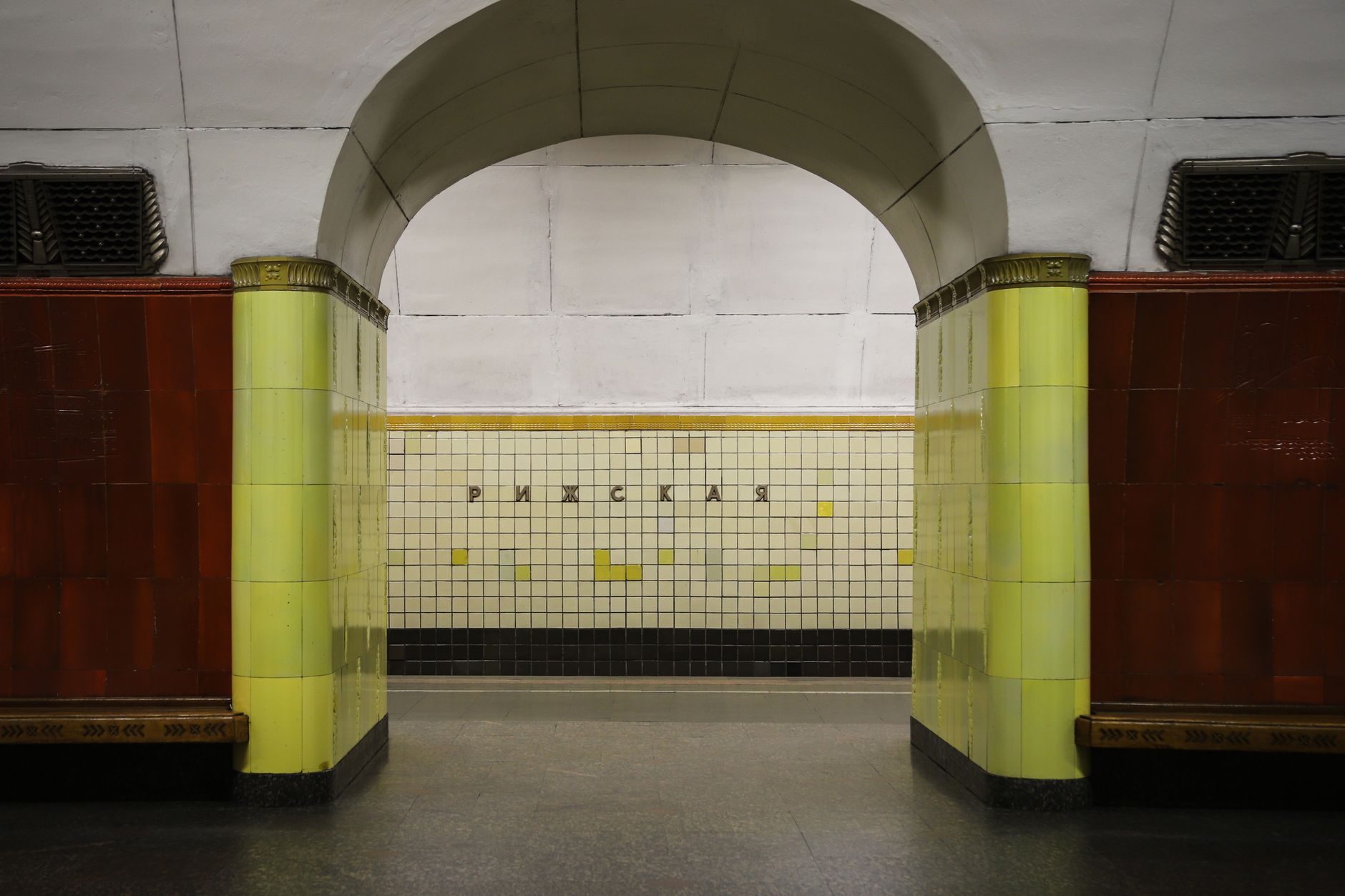
Navigating Moscow is an aesthetic experience in itself via the Moscow Metro. Beyond being an exceptionally efficient transit network with trains arriving every ninety seconds, the system’s central stations represent underground palaces. Stations such as *Komsomolskaya* (baroque yellow ceilings with crystal chandeliers), *Mayakovskaya* (art deco stainless steel arches and aviation mosaics), *Kiyevskaya* (frescoed historic murals), and *Ploshchad Revolyutsii* (seventy-six bronze sculptures depicting Soviet citizens) demand dedicated architectural exploration.
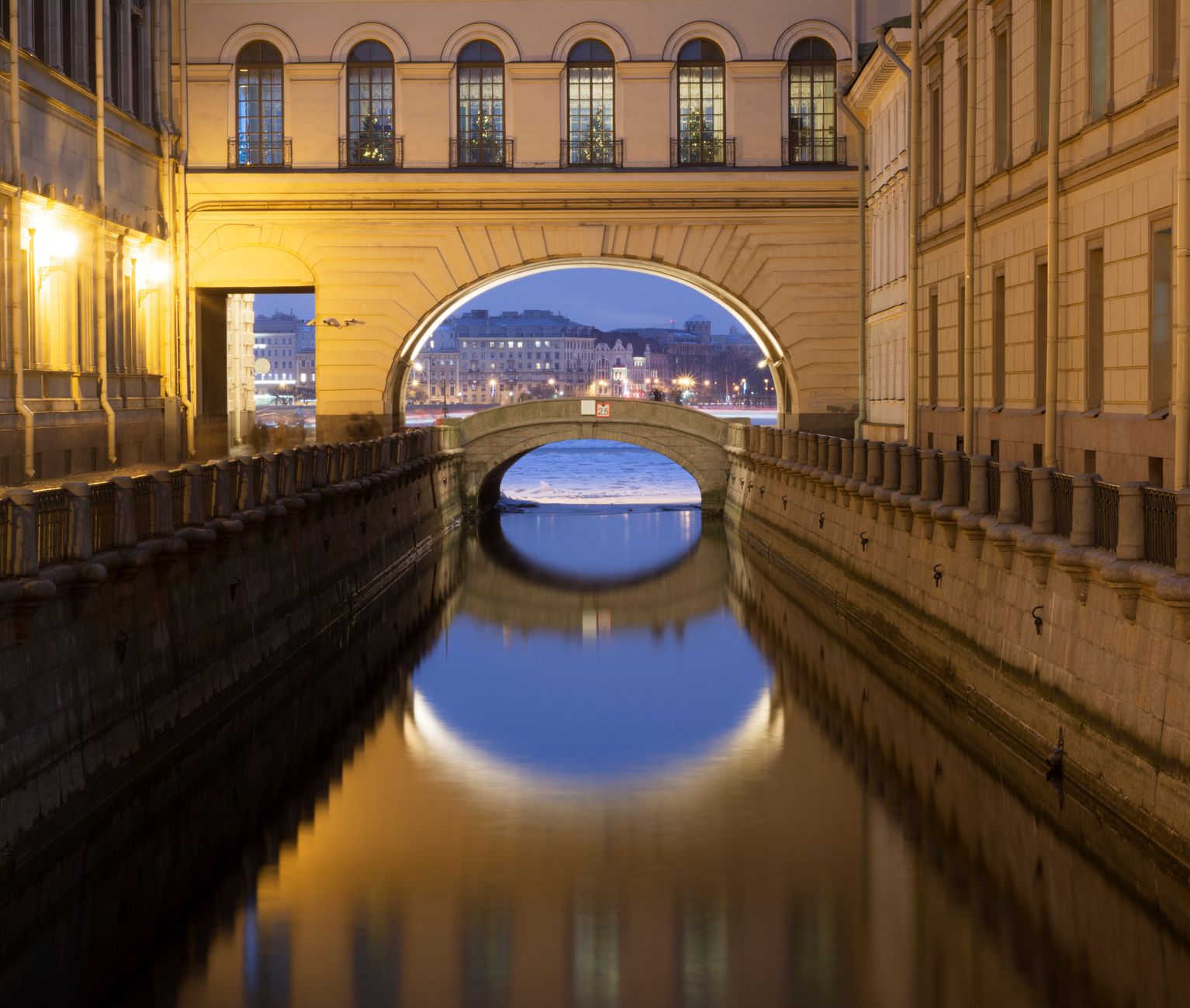
Saint Petersburg, located six hundred and fifty kilometers northwest along the Gulf of Finland, represents Russia’s architectural window to Western Europe. Built across dozens of islands interconnected by canals and stone bridges, the city is a masterpiece of eighteenth- and nineteenth-century baroque and neoclassical design.
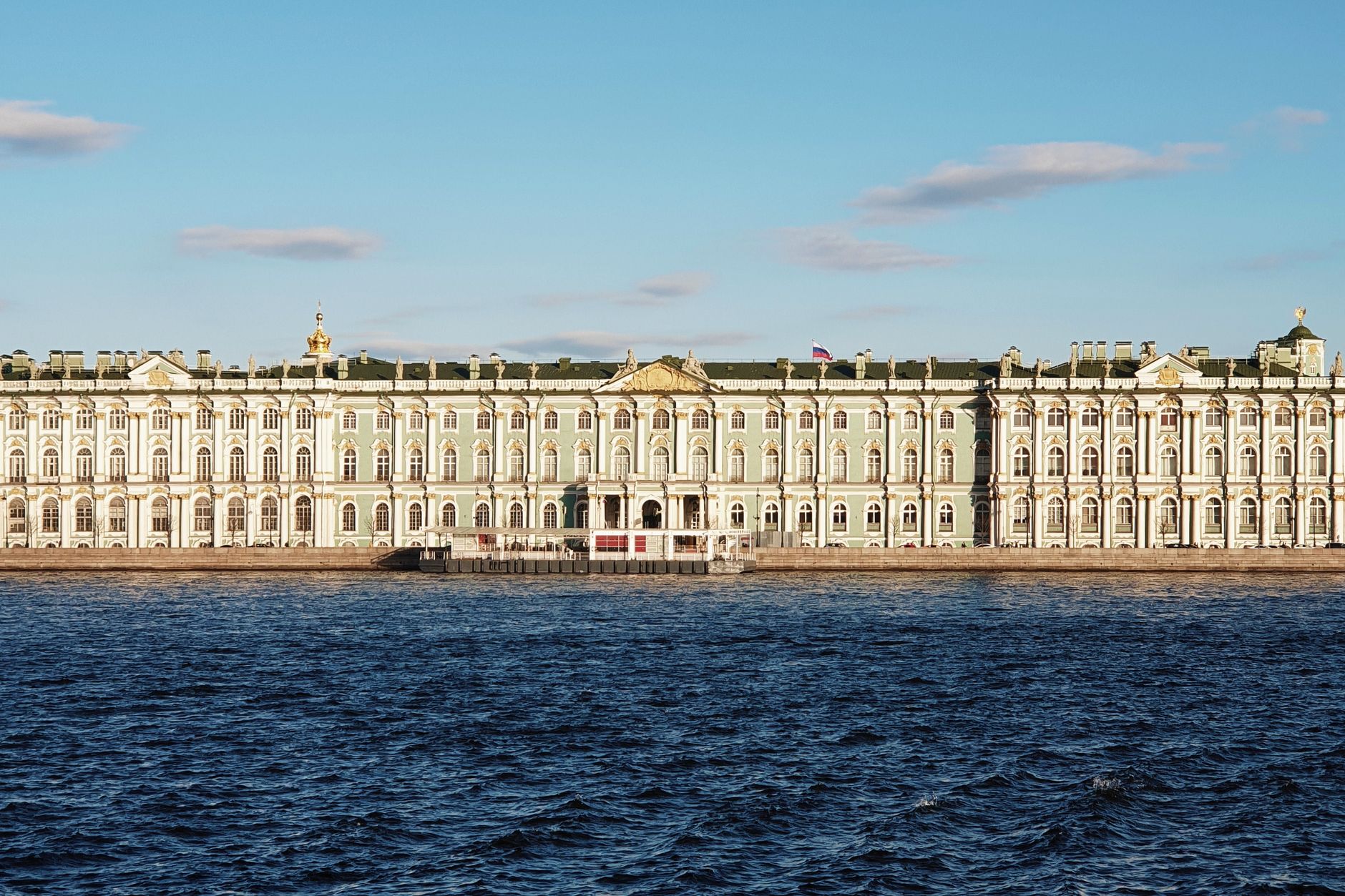
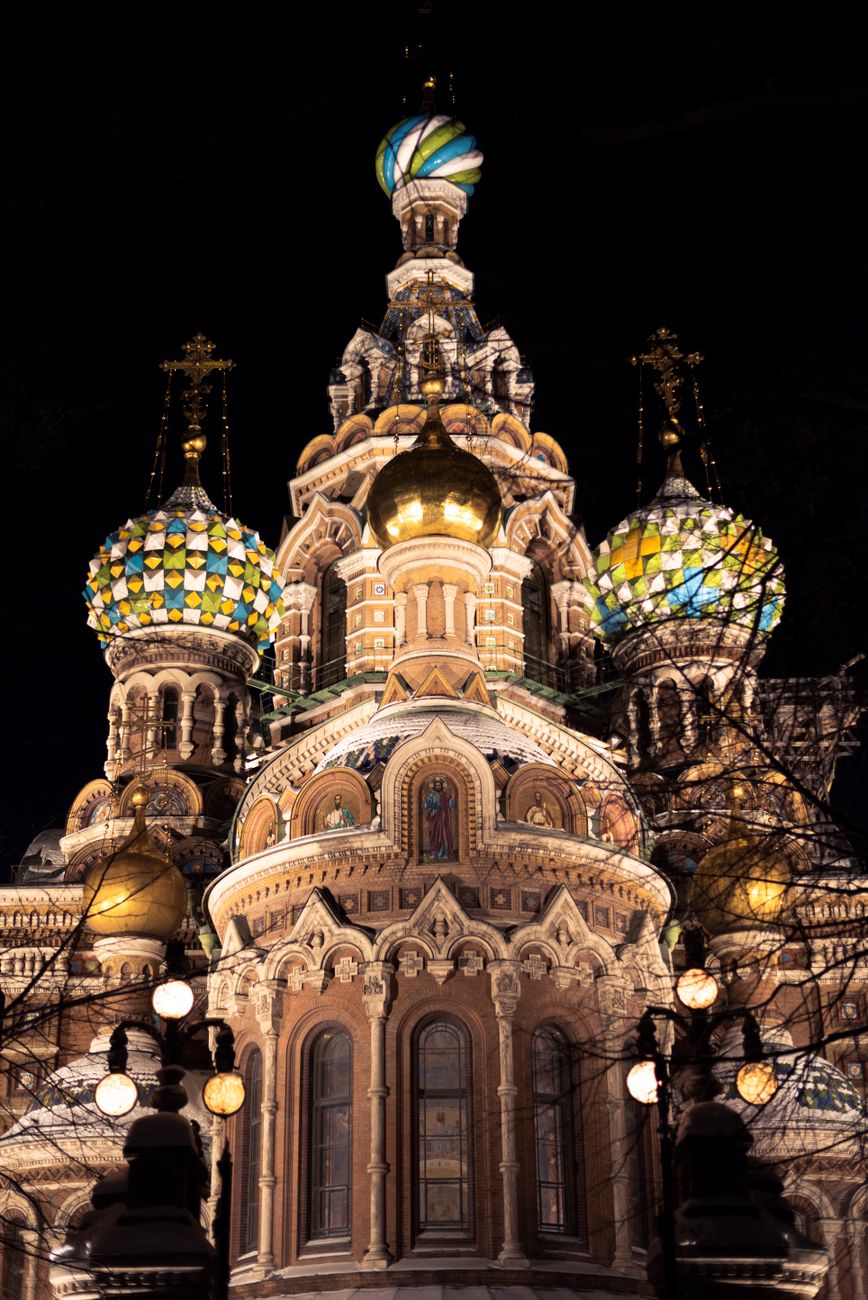
The crown jewel is the State Hermitage Museum, housed within the opulent green-and-white Winter Palace and adjoining imperial buildings. The Hermitage holds over three million works of art, spanning classical antiquities, Renaissance masters (Leonardo da Vinci, Raphael, Rembrandt), and French impressionists. Other essential landmarks include the multi-domed Church of the Savior on Spilled Blood, constructed on the site of Tsar Alexander II’s assassination, Saint Isaac’s Cathedral with its massive golden dome offering panoramic city views, and the Peter and Paul Fortress, the birthplace of the city.
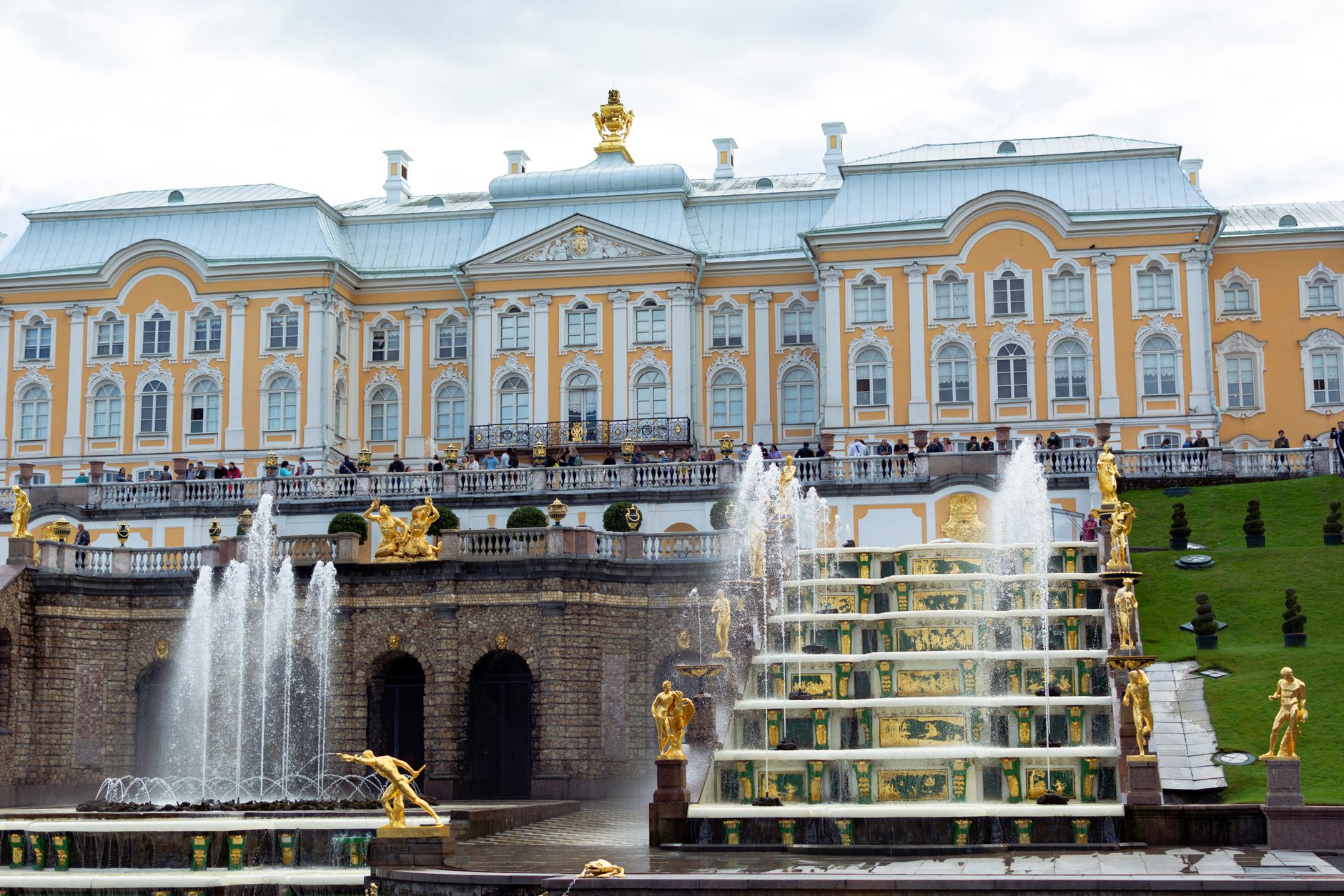
Day excursions from Saint Petersburg lead to spectacular imperial suburban estates: Peterhof, Peter the Great’s summer residence famed for its Grand Cascade of sixty-four fountains and golden statues, and Tsarskoye Selo (Pushkin), home to Catherine Palace and the reconstructed Amber Room.
Intercity Rail Logistics: The High-Speed Sapsan & Sleeper Trains
Connecting Moscow and Saint Petersburg is executed most smoothly via Russia’s premier railway network, operated by Russian Railways (RZD). Flying between the two cities is unnecessary, as city-center railway connections are faster, more reliable, and far more comfortable.
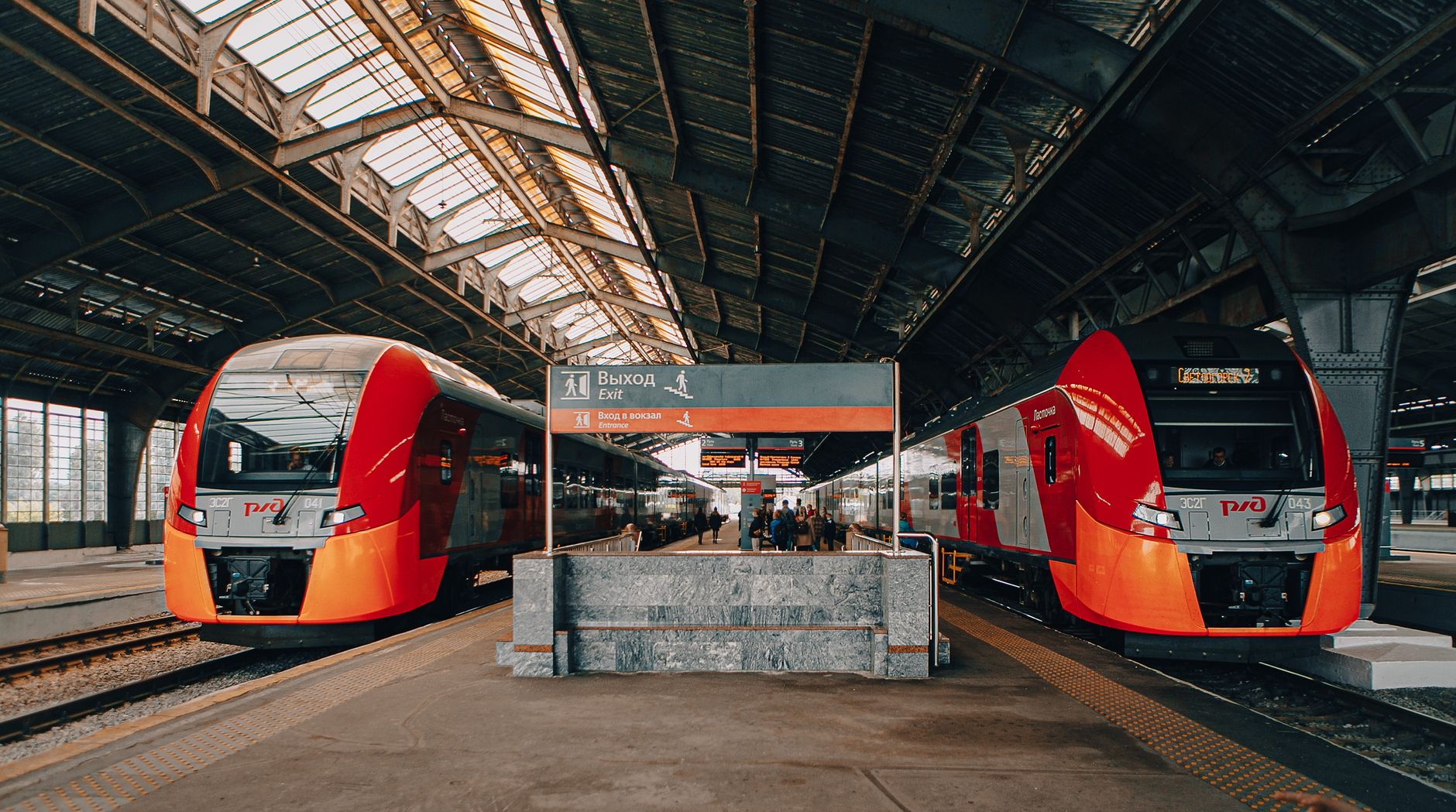
The gold standard for daytime transit is the Sapsan high-speed train. Engineered by Siemens, the Sapsan operates multiple times daily between Moscow’s Leningradsky Station and Saint Petersburg’s Moskovsky Station. Gliding smoothly across the forested Russian plains at speeds up to two hundred and fifty kilometers per hour, the journey requires exactly three hours and forty-five minutes. Sapsan trains feature spacious ergonomic seating, individual power outlets, dining cars, and high cleanliness standards. Tickets should be purchased weeks in advance, as fares rise closer to departure.
For a romantic cultural tradition, travelers can opt for the historic overnight sleeper express, most notably the Krasnaya Strela (Red Arrow). Operating continuously since 1931, the Red Arrow departs both capitals at precisely 23:55 and arrives at 07:55 the following morning. Passengers travel in comfortable two-berth (*SV*) or four-berth (*Kupe*) compartments, served hot black tea in traditional silver filigree glass holders (*podstakannik*) by attentive carriage attendants (*provodnik*).
Within cities, urban ride-hailing is dominated by Yandex Go. Western apps like Uber or Bolt do not function in Russia. Yandex Go allows users to summon vehicles across multiple service tiers (Economy, Comfort+, Business) with transparent upfront pricing. Rides can be paid via your linked local Mir debit card or in cash directly to the driver.
Structured Eight-Day Corridor Blueprint: Moscow & Saint Petersburg
This eight-day itinerary provides a balanced, culturally immersive route linking Russia’s two great cultural capitals, aligned with 16-day e-Visa limits.
| Itinerary Stage | Overnight Base | Cultural & Imperial Focus | Primary Transport Mode | Realistic Transit Time | Advance Booking Protocol |
|---|---|---|---|---|---|
| Days 1–2: Capital Citadel | Moscow Central (Tverskaya) | Red Square, Saint Basil’s, Kremlin cathedrals, Armory Chamber, Zaryadye Park | Moscow Metro / Yandex Go | 15–20 min urban transfers | Pre-book Kremlin Armory tickets online; register passport at hotel |
| Days 3–4: Art & Architecture | Moscow Central | State Tretyakov Gallery, palatial metro tour, Bolshoi Theatre performance, Arbat Street | Metro / Walking | 10–15 min station hops | Purchase Bolshoi tickets 4–6 weeks ahead on official site |
| Day 5: High-Speed Rail Corridor | Saint Petersburg (Nevsky Prospekt) | Sapsan high-speed rail transit, Nevsky Prospekt orientation, canal boat cruise | Sapsan High-Speed Rail | 3h 45m city-center to city-center | Book Sapsan seats 30–45 days ahead via RZD portal |
| Days 6–7: Imperial Venice of the North | Saint Petersburg Central | State Hermitage Museum, Winter Palace, Church on Spilled Blood, Saint Isaac’s colonnade | Metro / Canal walking | 15–25 min city strolls | Book Hermitage entry time slot in advance to avoid queues |
| Day 8: Tsarist Suburbs & Departure | Saint Petersburg or Moscow Base | Peterhof Grand Cascade fountains, Gulf of Finland hydrofoil, departure via LED/SVO | Meteor Hydrofoil / Aeroexpress | 45 min hydrofoil transit | Reconfirm international flight; arrive at airport 3.5h prior |
Every rail leg between Moscow and Saint Petersburg should be booked well in advance. During peak summer White Nights (June–July), Sapsan trains and premier hotels sell out weeks ahead.
Internet Censorship, VPN Requirements & Digital Realities
The digital environment in Russia is heavily restricted by state telecommunications regulator Roskomnadzor (RKN). Access to global social media platforms, communication services, and news outlets is strictly filtered.
Major Western services—including Instagram, Facebook, X (Twitter), LinkedIn, and prominent international news websites (such as BBC, Deutsche Welle, and Radio Free Europe)—are blocked nationwide. Messaging app WhatsApp functions for text messaging, but voice calls and file transfers may be throttled. Telegram is the universal communications and information platform throughout Russia, utilized by businesses, government agencies, restaurants, and individuals for daily correspondence.
Standard commercial VPN services (such as ExpressVPN, NordVPN, and ProtonVPN) are actively blocked by Russian deep packet inspection (DPI) technology targeting OpenVPN and WireGuard protocols. To maintain access to home banking, personal email, and Western services, travelers must install circumvention tools utilizing advanced obfuscated protocols (such as V2Ray, Shadowsocks, Outline, or Trojan) on all devices prior to departure. Attempting to download VPN applications from within Russia is difficult, as international app stores frequently restrict circumvention tools.
Field Connectivity: Tele2 & Beeline 5G/LTE Performance
Despite geopolitical tensions, Russia’s cellular infrastructure is among the most technologically advanced and cost-effective in the world. High-speed 5G and LTE networks blanket metropolitan areas and rail corridors.
The Russian cellular market is anchored by four major operators: MTS, MegaFon, Beeline, and Tele2 Russia. Tele2 and Beeline operate extensive LTE and 5G networks delivering lightning-fast data speeds, deep underground coverage across the Moscow and Saint Petersburg metro systems, and continuous coverage along the high-speed Sapsan railway corridor.
However, recent Russian telecommunications regulations have made purchasing a local physical SIM card significantly more bureaucratic for foreign nationals. Under updated laws, foreigners buying a local physical SIM card at carrier retail salons must submit to mandatory biometric registration (fingerprinting and facial photography), present official notarized Russian translations of their passports, and undergo verification through the Unified Biometric System. This process can consume hours of valuable travel time.
Activating a digital Tele2 5G/LTE eSIM for the Russian Federation through NXTL at $1.05 per gigabyte (or Beeline LTE at $1.20 per gigabyte) circumvents these biometric registration barriers entirely. Unused credit stays available for later trips across more than 180 countries. By provisioning a digital eSIM profile before crossing the border, your mobile device connects automatically to high-speed cellular networks the instant your flight touches down at Sheremetyevo or Pulkovo. This provides mobile data for ride-hailing on Yandex Go, metro navigation via Yandex Maps, and secure messaging without waiting at airport telecom desks.
Yandex Maps is an indispensable navigation tool in Russia. It provides real-time transit schedules, accurate metro transfer maps, building entrance locations, and offline map downloads that far exceed the performance of Western mapping applications inside Russian cities.
Five Critical Pitfalls and Security Realities to Navigate in Russia
Conducting travel within the Russian Federation requires strict adherence to legal statutes and security regulations. Avoid these five major pitfalls:
- Relying on Foreign Credit Cards or Western Bank ATMs: Foreign Visa, Mastercard, and American Express cards do not function anywhere in Russia due to international sanctions. Arriving without adequate physical Euro or US Dollar cash or a pre-arranged local payment card will leave you completely unable to pay for lodging, transport, or food.
- Carrying Sensitive Political Content on Smartphones at Border Control: Border security officers frequently inspect travelers’ phones, photo libraries, and social media accounts. Carrying pro-Ukrainian media, anti-war commentary, or controversial political messaging can lead to extended detention, aggressive interrogation, and immediate deportation.
- Losing Your White Paper Migration Card or Hotel Registration Slip: Failing to produce the white Migration Card slip received at airport immigration or your hotel registration paper will result in administrative fines, police questioning, and severe complications when attempting to board departure flights.
- Assuming Standard Commercial VPN Protocols Will Work: Standard OpenVPN and WireGuard protocols are systematically blocked by state deep packet inspection. Failing to configure obfuscated circumvention protocols (V2Ray, Shadowsocks, Outline) before arrival will cut you off from Western websites and email.
- Ignoring Dual-Citizenship Military Obligations and Consular Limitations: Travelers holding dual Russian and foreign passports are treated solely as Russian citizens under Russian law. Dual nationals are subject to Russian military service obligations and travel bans, with Western embassies having zero legal standing to provide consular assistance.
By securing verified entry visas, carrying pristine foreign cash for exchange, utilizing high-speed rail connections, maintaining disciplined digital security, and activating dependable digital eSIM data, travelers can safely witness the monumental architecture and enduring cultural grandeur of Russia’s two imperial capitals.