Saudi Arabia has emerged as one of the world’s most compelling cultural frontiers, welcoming international travelers with historic openness under Vision 2030. Yet first-time visitors frequently struggle with the sheer scale of the Arabian Peninsula. Spanning more than two million square kilometers—an area larger than Western Europe—the Kingdom cannot simply be traversed by road on a short holiday. Attempting to drive between Riyadh, the desert oasis of AlUla, and the coastal port of Jeddah involves 10-to-14-hour journeys across punishing desert highways subject to extreme midday heat, sandstorms, and unpredictable camel crossings.
The definitive strategy for an enriching first Saudi journey connects the country’s primary cultural pillars using swift domestic flights and state-of-the-art rail. By pairing domestic flights with the high-speed Haramain High-Speed Railway along the Red Sea coast, this carefully balanced 8-day journey from Riyadh to AlUla and Jeddah links the futuristic capital towers and historic clay citadels of Najd, the UNESCO-inscribed Nabataean rock tombs of Hegra, and the coral-stone Ottoman merchant alleys of Al-Balad—all while navigating local etiquette, dress codes, and prayer timings with complete confidence.
| Day / Stage | Overnight Base | Key Highlights | Flight & Ground Logistics | Essential Advance Bookings | What to Skip / Save |
|---|---|---|---|---|---|
| Days 1–3: The Cradle of the Kingdom | Riyadh (Al Olaya or Diriyah) | Kingdom Centre Sky Bridge (300 m panorama), National Museum of Saudi Arabia, Al Masmak mud-brick fortress, historic Souq Al Zal incense market, UNESCO At-Turaif citadel in Diriyah at dusk | King Khalid International Airport (RUH) to city center via Careem ride-hailing or official taxi (35 min, 90–120 SAR); city navigation via Riyadh Metro or Careem/Uber | At-Turaif & Bujairi Terrace evening pass via Diriyah.sa; Kingdom Centre Sky Bridge ticket | Skip hailing unlicensed pirate cabs outside airport baggage claim; use official airport dispatch desks or digital ride-hailing apps (Careem/Uber) for fixed GPS fares |
| Days 4–5: Nabataean Desert Oasis | AlUla (Ashar Valley or AlJadidah) | Fly Riyadh to AlUla (ULH), UNESCO Hegra (Madain Salih) rock-carved Nabataean tombs, Dadan ancient kingdom excavations, sunset at Elephant Rock (Jabal AlFil), Maraya mirrored hall | Riyadh (RUH) to AlUla (ULH): 1 hr 55 min direct flight on Saudia/Flynas; rent a compact SUV at AlUla airport or arrange official Royal Commission shuttles | Official Hegra Vintage Land Rover or Coach Tour via ExperienceAlUla.com (books out weeks ahead); Maraya dining reservation | Skip buying unauthorized third-party “private desert guide” passes; Hegra can legally only be accessed via official Royal Commission for AlUla (RCU) transport |
| Days 6–7: Red Sea Coral Gateway | Jeddah (Al-Balad or Corniche) | Fly AlUla to Jeddah (JED), historic Al-Balad UNESCO merchant houses with wooden rawasheen window lattices, Naseef House, sunset stroll along Jeddah Corniche, King Fahd’s Fountain | AlUla (ULH) to Jeddah (JED): 1 hr 20 min direct flight; King Abdulaziz Airport to Corniche (25 min, 70–95 SAR via Careem) | Al-Balad heritage guided walking tour; seaside seafood dinner table at Twina or Al-Nakheel | Skip visiting Al-Balad in the scorching midday sun when shops are shuttered; arrive after 17:00 when the coral-stone alleys come alive with lanterns, tea stalls, and sea breezes |
| Day 8: Red Sea Marine Life & Departure | King Abdulaziz Airport (JED) | Morning snorkeling or coastal boat excursion on the pristine coral reefs of the Red Sea, farewell lunch of fresh coral trout (najel), transfer to JED terminal for departure | Jeddah Corniche to King Abdulaziz International Airport (JED): 20 min via Careem; international departures require 3 hours advance check-in | Red Sea snorkeling boat charter; airport departure scheduled after 16:00 | Skip bringing duty-free alcohol or pork products into the country; customs enforces strict zero-tolerance inspections with baggage X-ray scanners |
Audience, Seasonality, and the Flight Route
Structuring your route around domestic flights eliminates exhausting road travel across the desert, allowing you to transition smoothly from futuristic urban luxury into silent, starlit sandstone canyons and breezy coastal promenades.
Days 1–3: The Cradle of the Kingdom
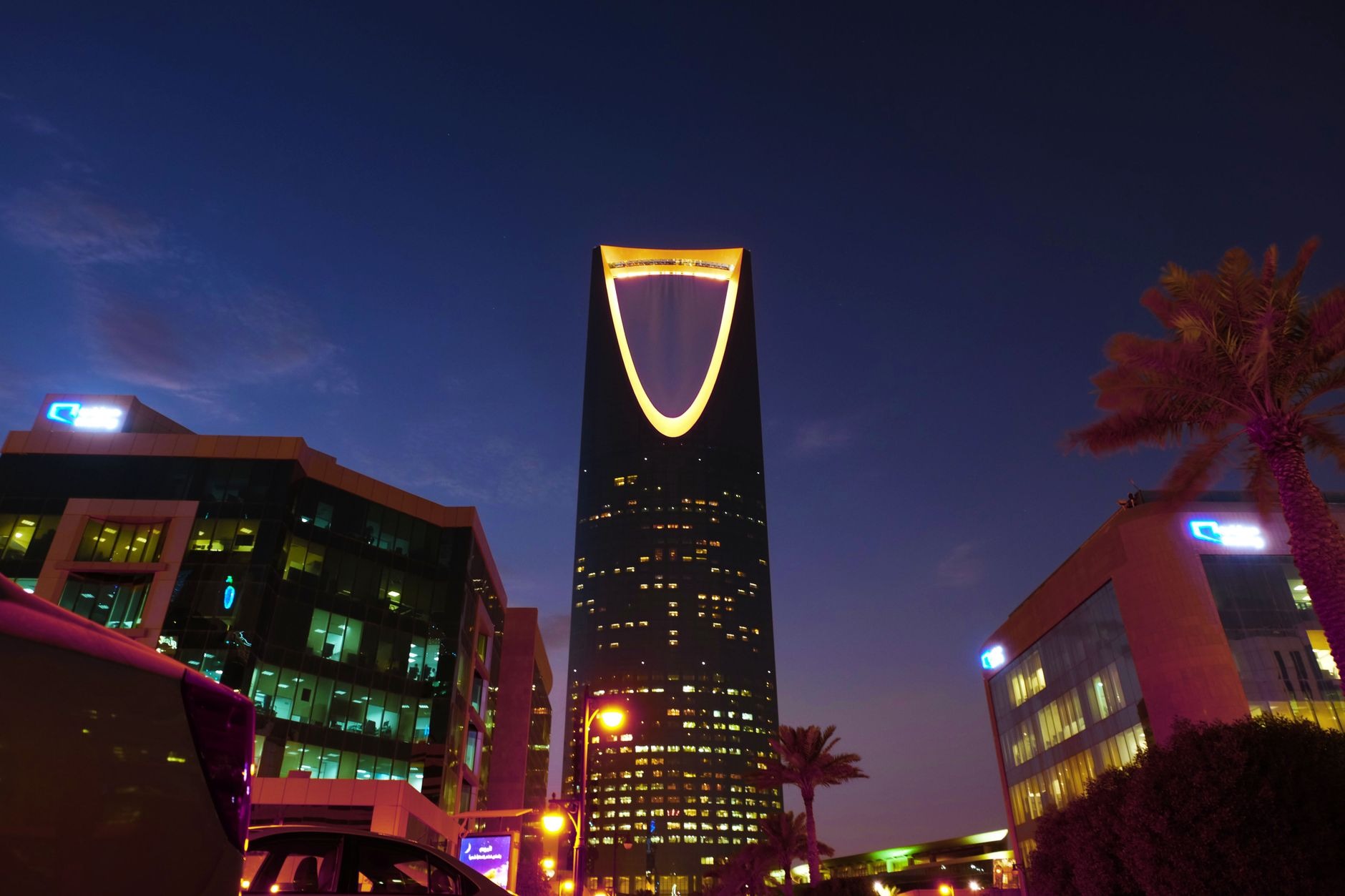
Your journey begins in Riyadh, the dynamic political and financial heart of Saudi Arabia. Rising dramatically from the desert plateau of the Nejd, Riyadh is a city of extraordinary architectural ambition. Start by ascending to the Sky Bridge at Kingdom Centre, a 65-meter curved glass-and-steel viewing corridor suspended 300 meters above the metropolis on the 99th floor. Looking out across the vast urban grid at sunset reveals thousands of illuminated glass towers stretching toward the desert horizon.
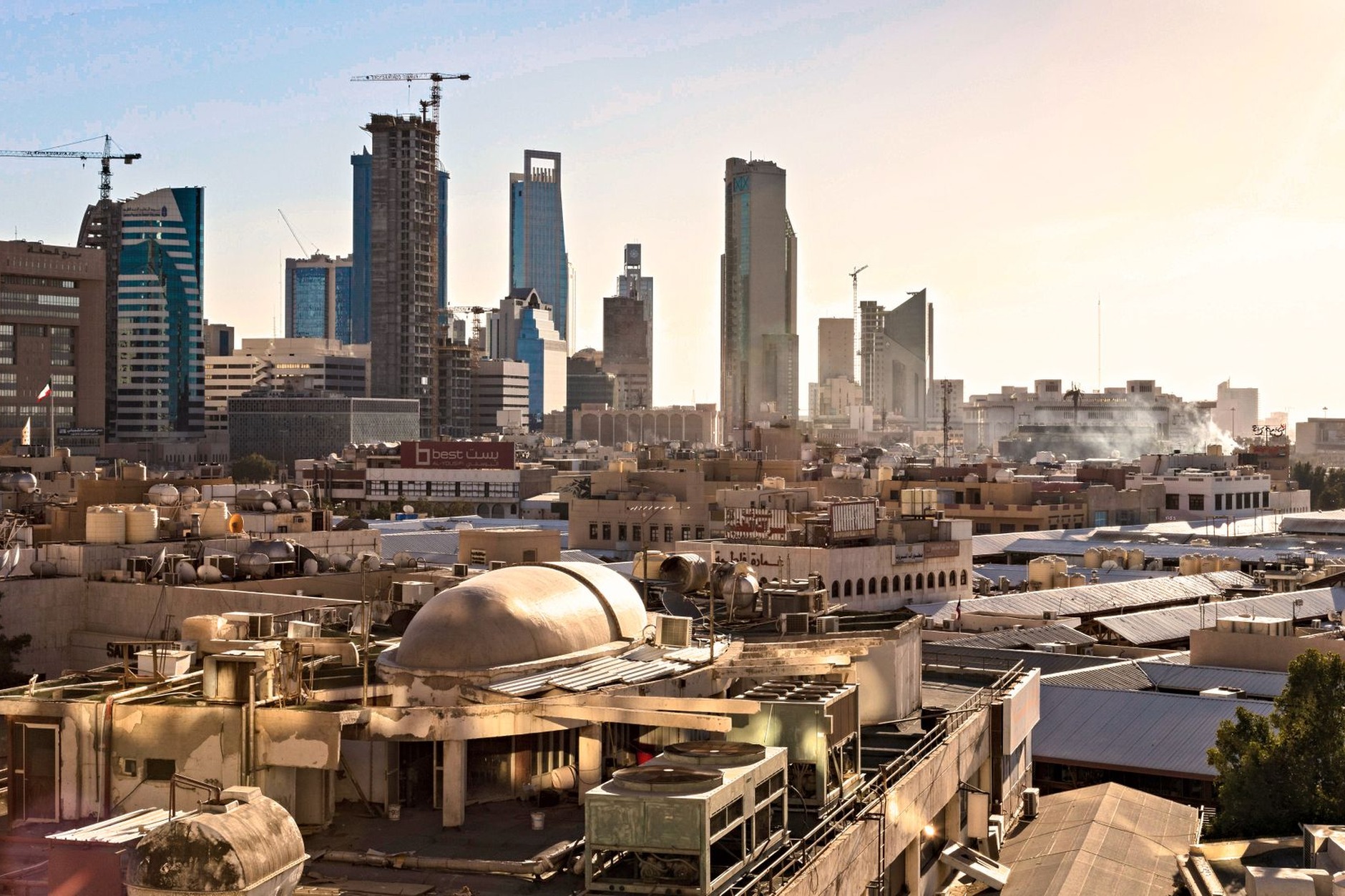
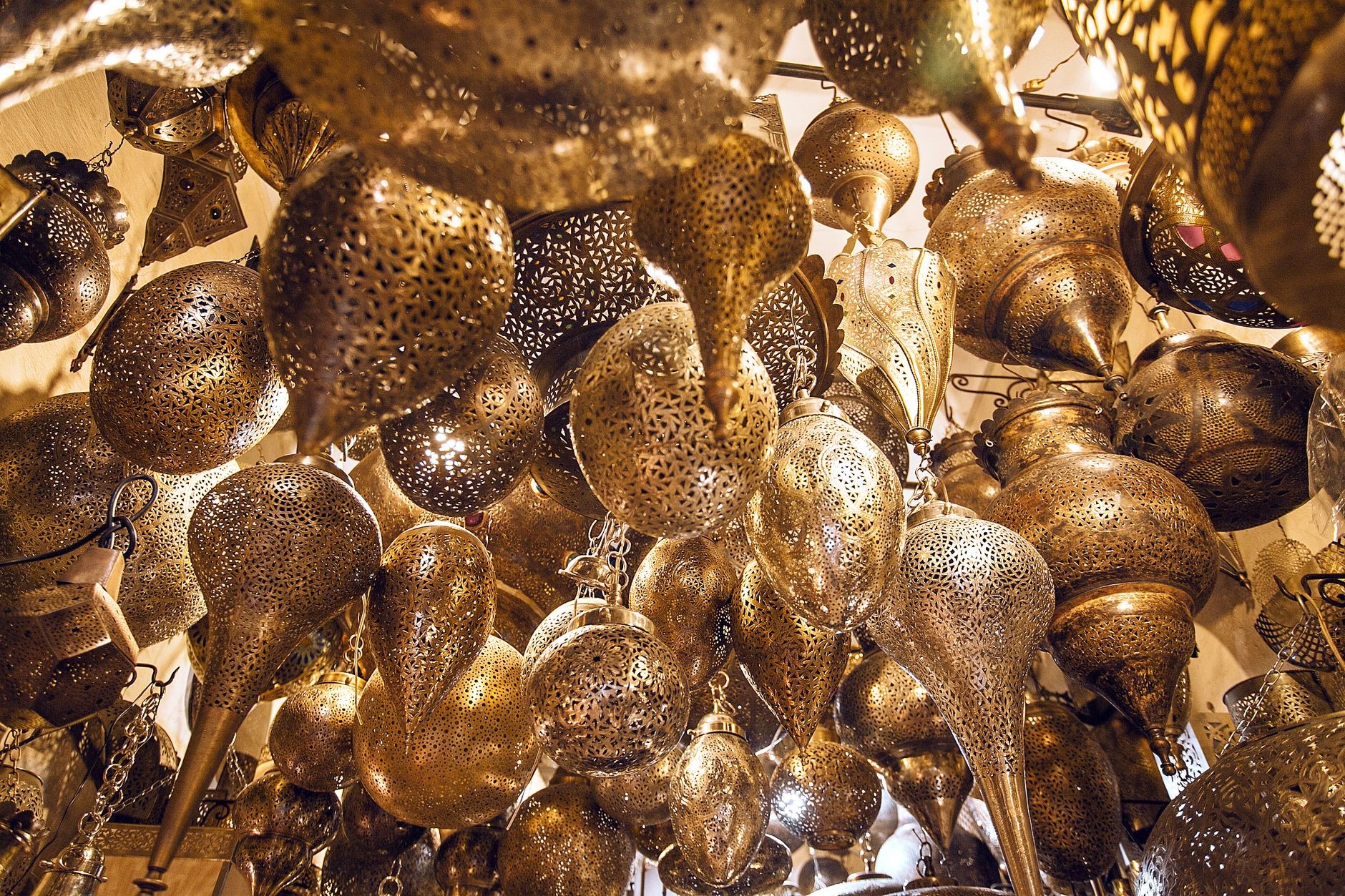
In the afternoon, discover the Kingdom’s dramatic unification history at Al Masmak Fortress, a thick-walled clay-and-mud-brick citadel built in 1865. It was here in 1902 that the young King Abdulaziz Al Saud led a daring dawn raid to recapture Riyadh, uniting the Arabian Peninsula into the modern state. Inspect the historic palm-wood gate, where the broken tip of a battle spear remains embedded in the timber. Just steps away lies Souq Al Zal, Riyadh’s oldest traditional bazaar, where the rich, intoxicating aromas of burning oud wood, frankincense, and freshly crushed cardamom drift past stalls laden with hand-knotted Bedouin wool carpets, antique brass dallah coffee pots, and ceremonial silver daggers (jambiyas).
On Day 2, travel 20 minutes northwest of central Riyadh to Diriyah, the ancestral birthplace of the First Saudi State founded in 1727. The centerpiece of this heritage district is the UNESCO World Heritage site of At-Turaif, a breathtaking mud-brick fortress complex perched above the date palms of Wadi Hanifa. Meticulously restored, At-Turaif showcases classical Najdi architectural brilliance: towering sun-dried mud walls, wooden doors carved from local tamarisk trees, and distinctive triangular ventilation perforations designed to funnel cooling desert breezes through multi-story royal reception palaces.
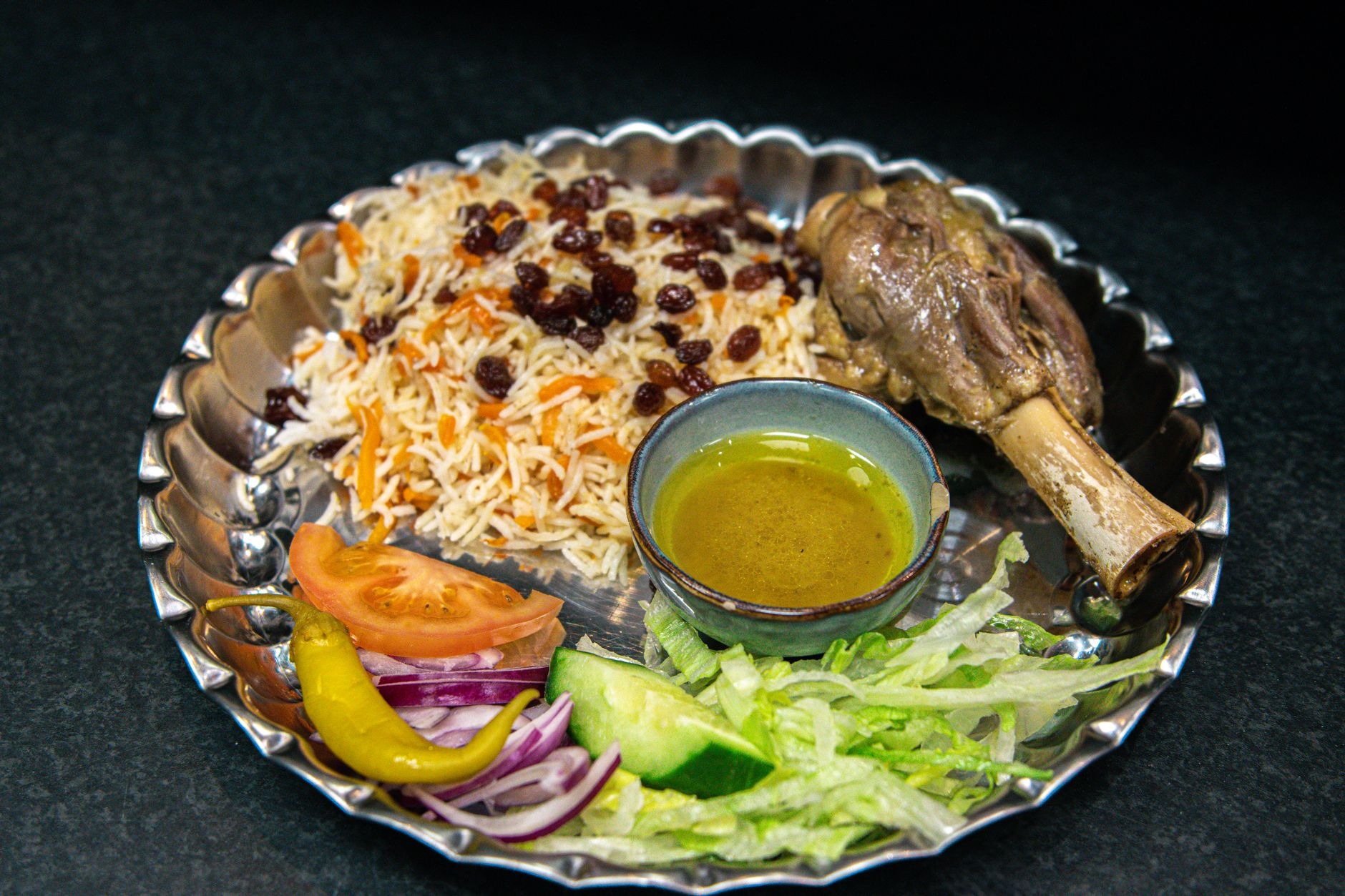
As evening falls, cross the wooden footbridge into adjacent Bujairi Terrace, a premier open-air dining promenade overlooking the illuminated mud-brick ramparts of At-Turaif. Here, Michelin-starred international restaurants and upscale Saudi bistros serve fragrant Arabian feasts beneath gentle palms. Savor slow-cooked spiced lamb shank served over saffron basmati rice, paired with chilled Saudi sparkling date drinks and mint tea, watching the clay palaces glow golden against the desert night.
Days 4–5: Nabataean Desert Oasis
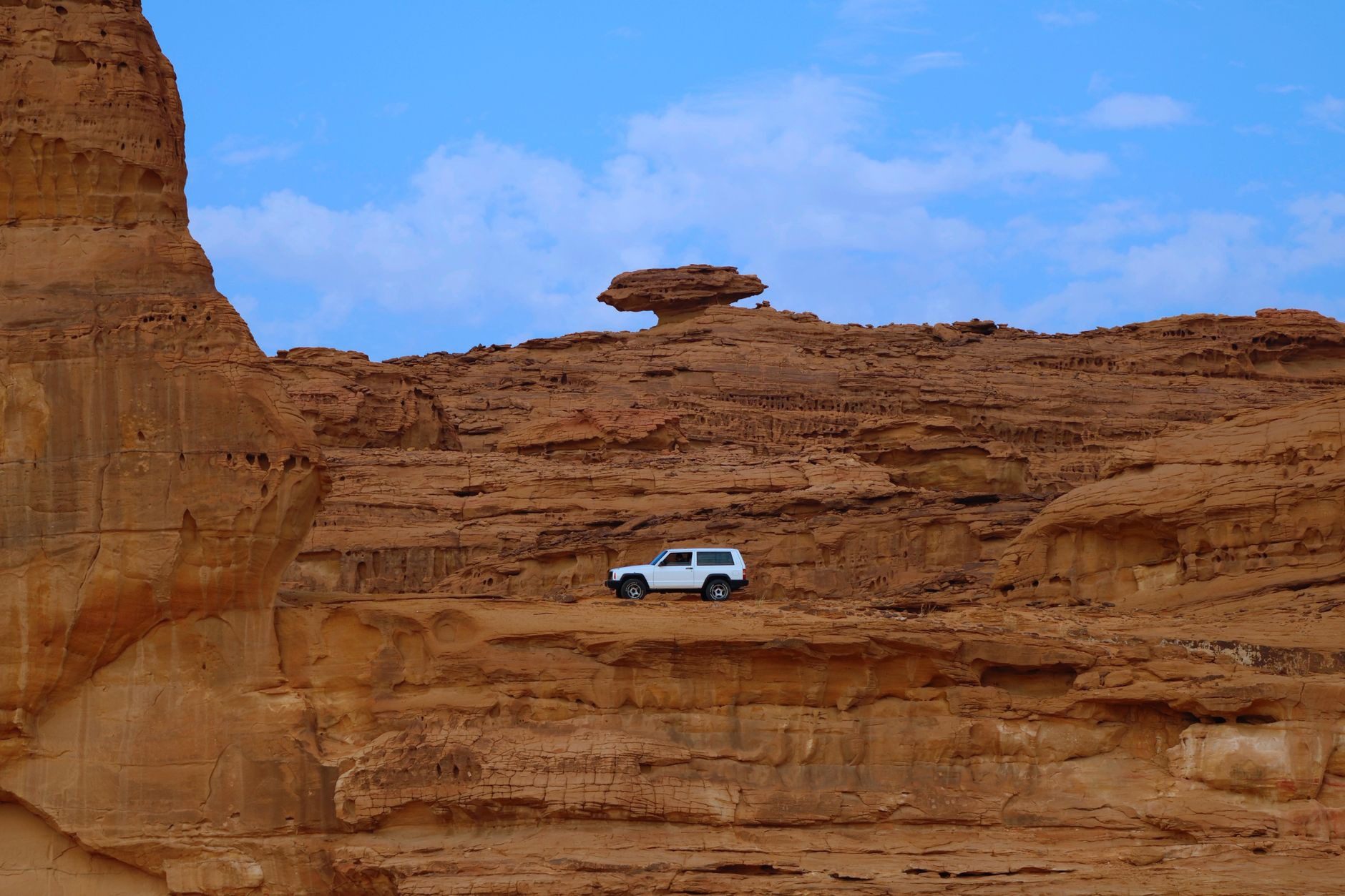
On Day 4, board a morning flight northwest to AlUla, an ancient desert oasis nestled in an amphitheater of colossal sandstone cliffs and lush date palm groves along the historic Incense Route. For millennia, caravan traders transporting frankincense, myrrh, and rare spices from southern Arabia to Egypt, Greece, and Rome rested in this fertile valley. Today, AlUla is one of the world’s most breathtaking open-air living museums.
The undisputed crown jewel of your visit is Hegra (Madain Salih), Saudi Arabia’s first UNESCO World Heritage site. Hegra was the principal southern settlement of the ancient Nabataean Kingdom, second in importance only to Petra in modern Jordan. Spread across 13 square kilometers of golden desert sands, more than 110 monumental tomb facades were carved directly into standalone sandstone rock monoliths between the 1st century BCE and the 1st century CE. Stand in front of Qasr al-Farid (The Lonely Castle), an enormous four-story tomb carved out of a single isolated rock tower, its classical Greco-Roman pediments, sculpted eagles, and mythical Medusa masks chiseled with astonishing precision into the desert stone.
Day 5 reveals AlUla’s extraordinary natural and modern landmarks. Visit Dadan, the ancient capital of the Dadanite and Lihyanite kingdoms dating to the 9th century BCE, and inspect the rock inscriptions at Jabal Ikmah, an open-air historical library containing hundreds of ancient Dadanitic, Safaitic, and early Arabic texts carved into canyon walls. In the afternoon, explore AlUla Old Town, a dense maze of over 900 mud-brick and stone houses inhabited continuously from the 12th century until the 1980s.
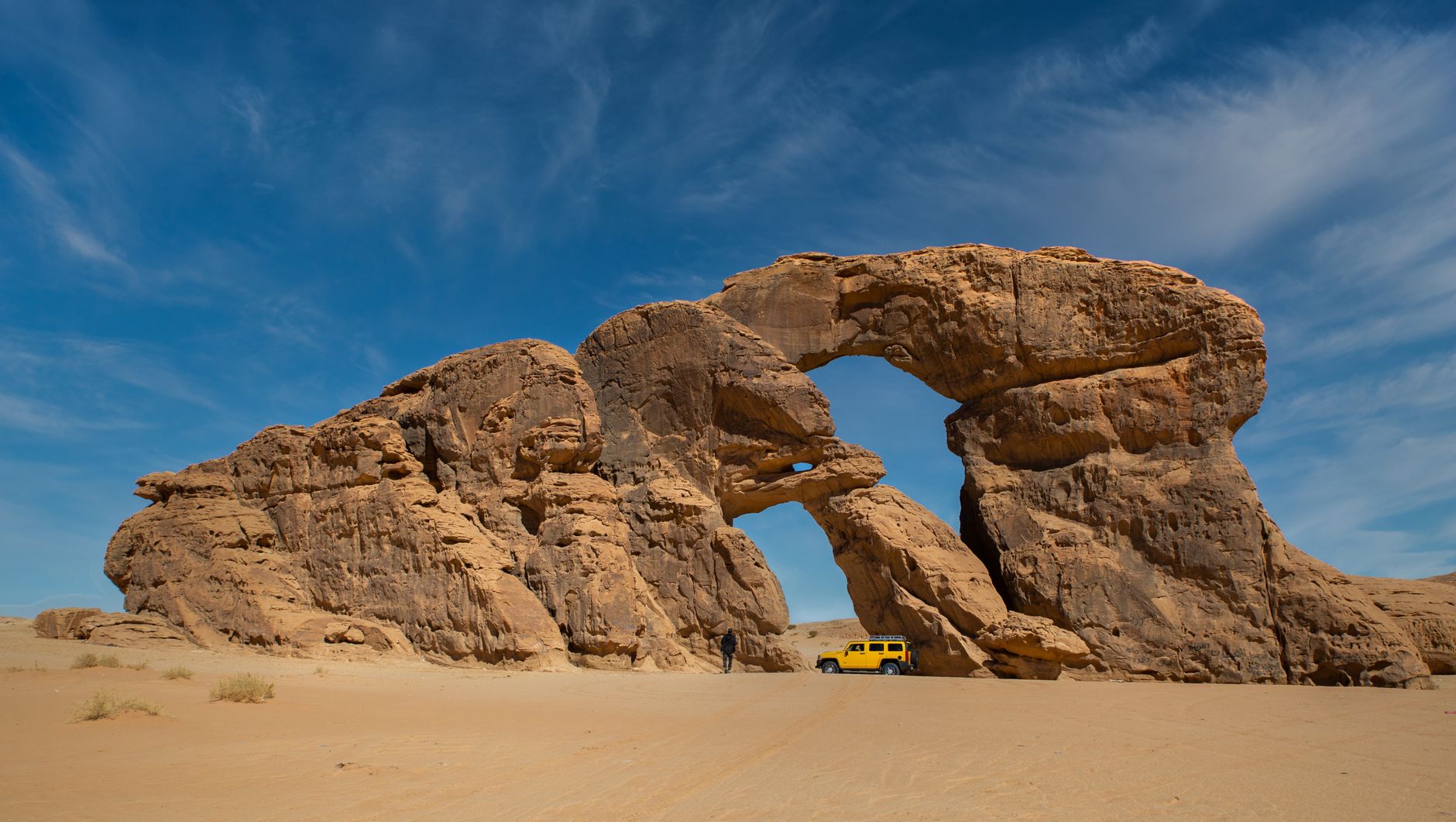
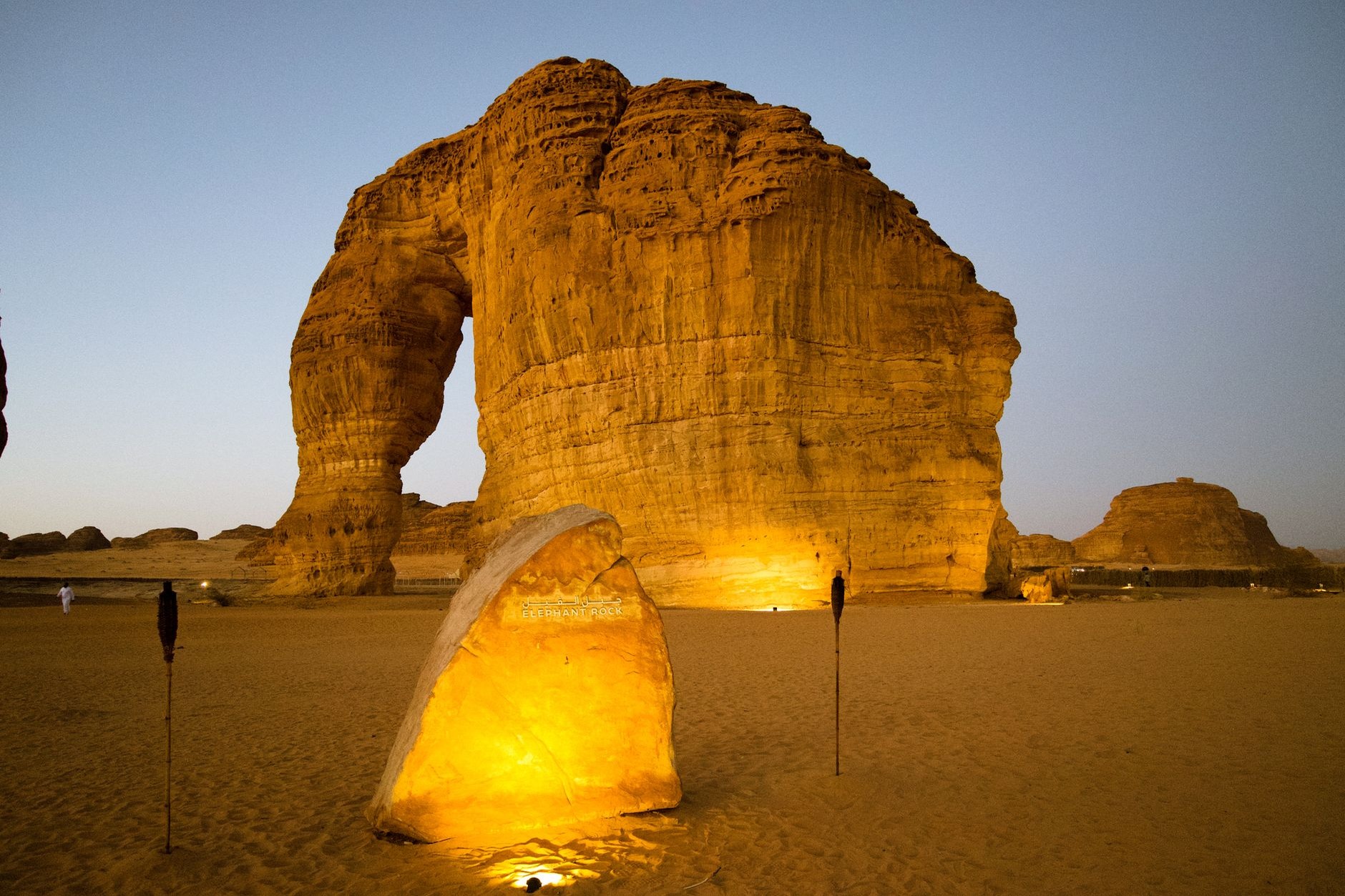
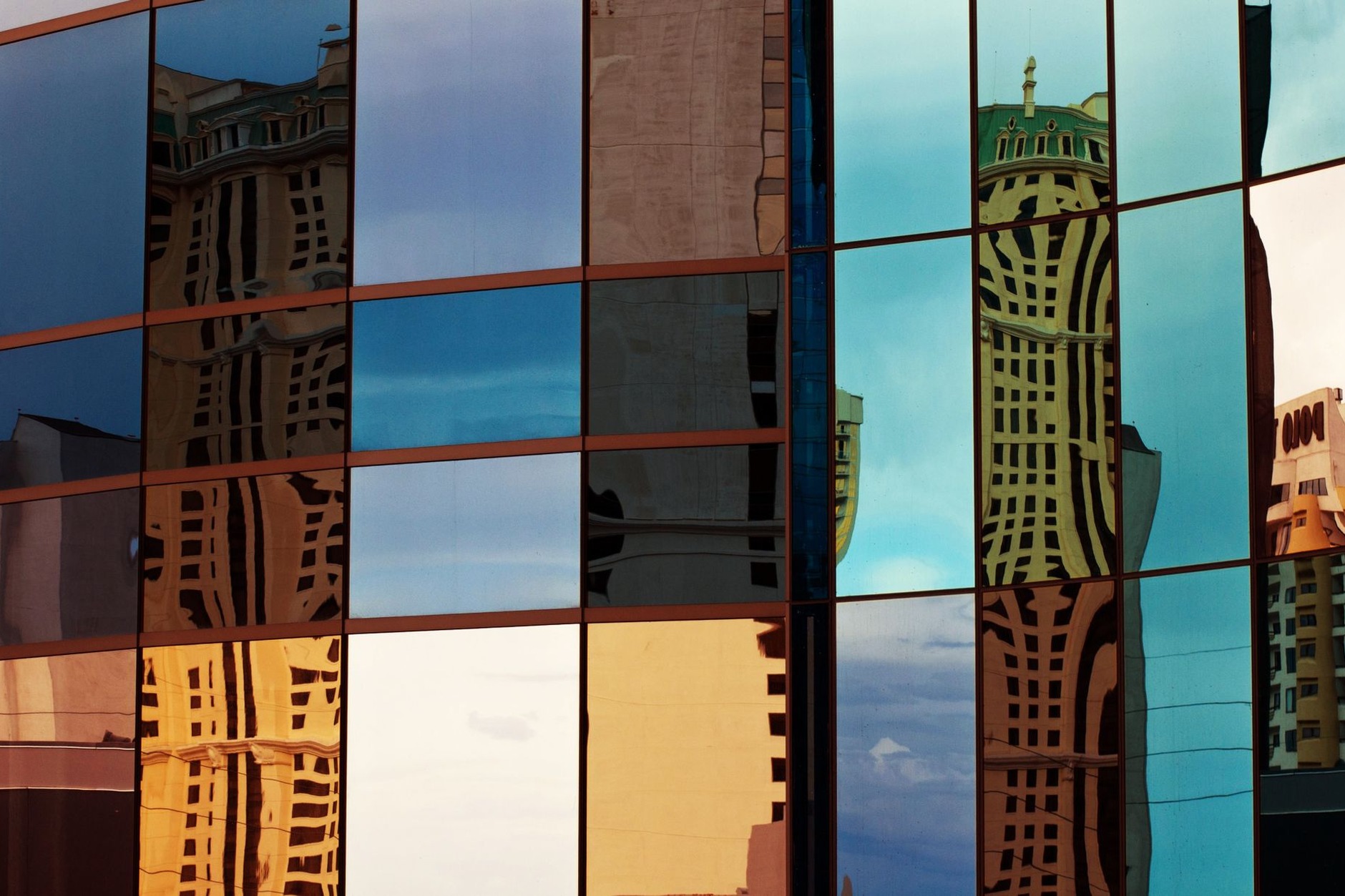
As sunset approaches, travel into the Ashar Valley to Jabal AlFil (Elephant Rock), a colossal 52-meter natural sandstone monolith sculpted by aeons of wind and sand erosion into the uncanny shape of an elephant resting its trunk on the desert floor. Settle into sunken circular seating lounges set directly into the cool sand, sipping hot spiced tea while listening to gentle ambient music as the rock turns deep violet under a canopy of desert stars. Nearby stands Maraya, the world’s largest mirror-clad building—a colossal concert cube covered in 9,740 square meters of reflective glass panels that blend seamlessly into the surrounding canyon walls.
Days 6–7: Red Sea Coral Gateway
On Day 6, take a swift 80-minute flight south to the Red Sea port city of Jeddah. For centuries, Jeddah served as the maritime gateway to the holy cities of Mecca and Medina, welcoming millions of Muslim pilgrims from Africa, the Ottoman Empire, and South Asia. This historic maritime crossroads fostered a cosmopolitan, open-minded culture distinct from the conservative interior of the Nejd.
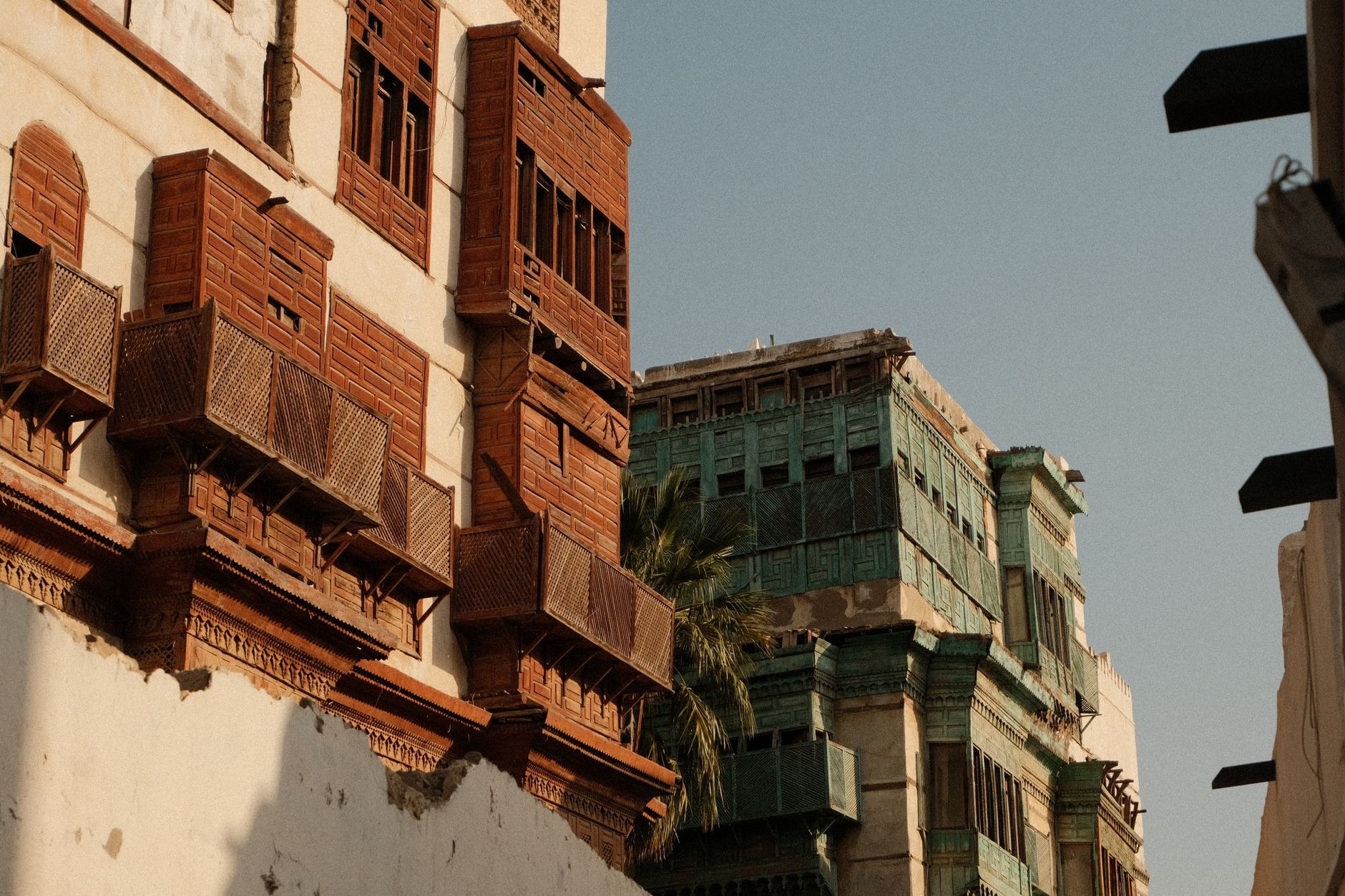
Immerse yourself in Al-Balad (Old Town), a UNESCO World Heritage site featuring some of the most extraordinary vernacular architecture in the Islamic world. Multi-story merchant houses built of porous sea coral stone and reinforced with teak beams are adorned with rawasheen—intricate, hand-carved wooden latticework window screens painted in pale turquoise, olive green, and natural wood tones. These ingenious screens allowed sea breezes to cool the interior rooms while preserving family privacy. Walk through narrow alleys past active carpenter workshops, spice merchants grinding fresh cardamom, and traditional bakeries pulling piping-hot flatbreads from clay ovens.
On Day 7, transition from antiquity to modern coastal leisure along the Jeddah Corniche. This 30-kilometer landscaped seaside promenade is dotted with open-air modern sculptures by Joan Miró, Henry Moore, and Alexander Calder. In the evening, gaze out across the Red Sea to witness King Fahd’s Fountain, the tallest saltwater fountain in the world, shooting a colossal plume of sea water 312 meters into the night sky, illuminated by hundreds of powerful spotlights.
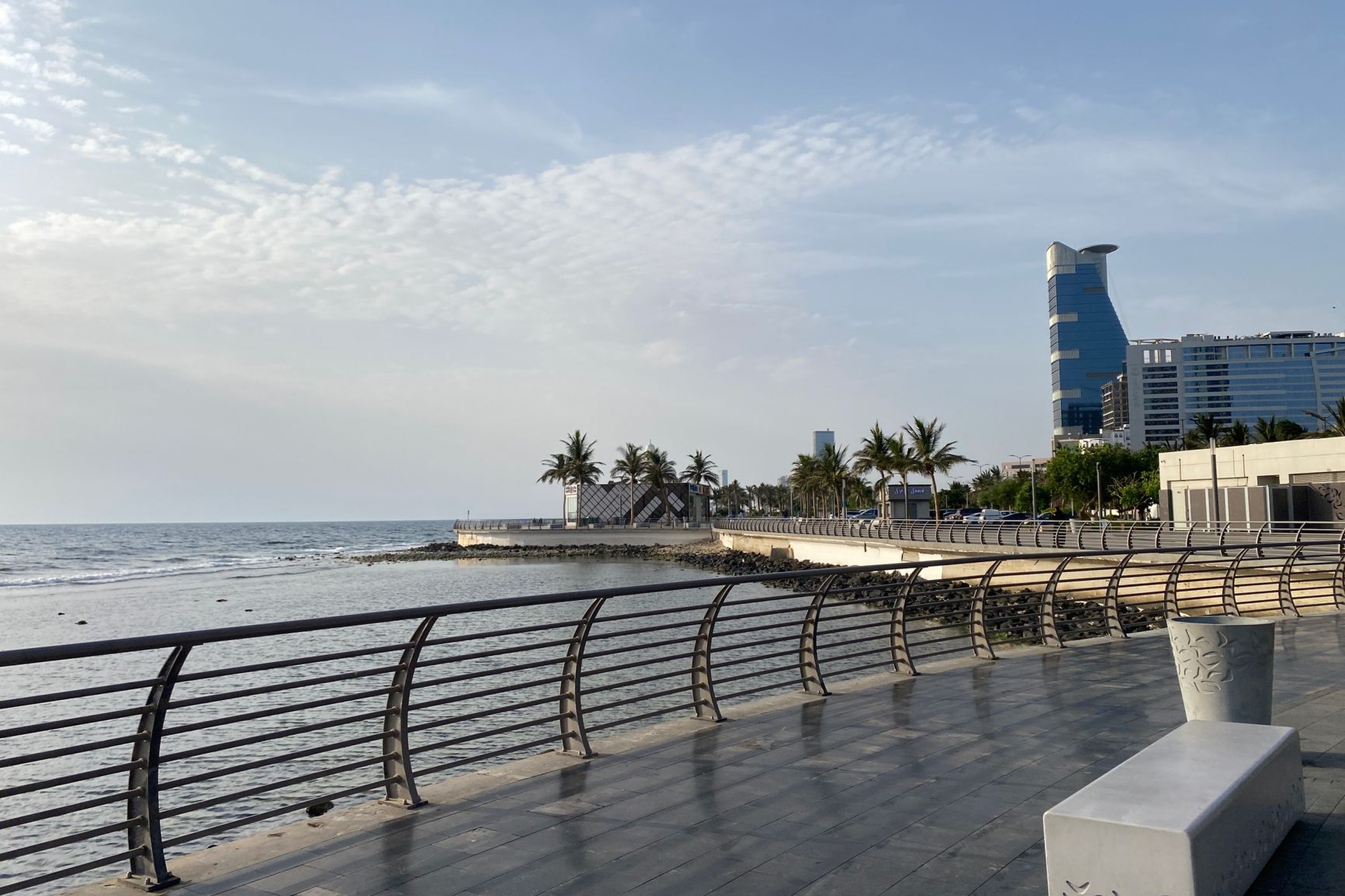
Walking along the Corniche as twilight descends provides a fascinating glimpse into contemporary Saudi social life. Families gather on landscaped lawns for picnics with insulated carafes of spiced tea, children ride bicycles along pedestrian paths, and local runners take advantage of the refreshing maritime breeze.
Day 8: Red Sea Marine Life & Departure
Conclude Day 8 with a Red Sea coastal culinary experience. Dine at open-air waterfront fish markets like Central Fish Market or seaside restaurants like Twina, where you select fresh-caught najel (coral trout), hamour (grouper), and jumbo prawns, seasoned with cumin, garlic, and lime and fried or grilled to order, served alongside fragrant spiced sayadieh rice.
Throughout your travels across Saudi Arabia, booking app-based rides, downloading mandatory monument entry QR codes, and navigating dynamic prayer schedules requires uninterrupted mobile data. Reliable high-speed connectivity ensures you explore the Kingdom with complete ease and peace of mind.
Street Smarts & Avoiding Costly Traps in Saudi Arabia
Saudi Arabia is extraordinarily safe, with virtually non-existent street crime or violent theft. However, the Kingdom’s unique cultural norms, newly implemented tourism regulations, and strict legal codes require specific awareness. Keep these six essential street-smart rules in mind:
- The Unofficial Hegra “Desert Tour Guide” Ticket Scam: In AlUla, unauthorized freelance drivers and hotel concierges frequently approach tourists claiming: “Official Hegra tickets are completely sold out for the next week—pay me a cash sum and I will drive you inside via secret desert tracks.” In reality, the Royal Commission for AlUla (RCU) heavily polices the perimeter with security checkpoints and electronic barriers. Unauthorized vehicles are turned away by armed guards, leaving victims stranded without recourse. Alternative: Hegra can ONLY be legally entered aboard official RCU air-conditioned tour coaches or licensed vintage Land Rovers. Always book your official timed entry pass directly at ExperienceAlUla.com well in advance for a small fare.
- Strict Alcohol & Contraband Zero-Tolerance Border Penalties: Unlike neighboring Dubai or Bahrain, alcoholic beverages of any kind are strictly illegal throughout the Kingdom of Saudi Arabia. Bringing duty-free liquor bottles, pork products, recreational cannabis, CBD oils, or vaping liquids into Saudi international airports triggers immediate detection via high-resolution baggage X-ray scanners. Violators face immediate confiscation, heavy statutory fines, interrogation, and potential deportation or entry bans. Alternative: Never attempt to pack alcohol, pork, or illicit wellness substances in checked or carry-on luggage. Savor Saudi Arabia’s rich non-alcoholic culinary traditions, including qahwa (cardamom-scented Arabic coffee), fresh fruit mocktails, and mint-infused laban.
- Airport & Station “Black Taxi” Touts Overcharging (RUH & JED): Walking through arrival halls at Riyadh (RUH) or Jeddah (JED), foreign travelers are repeatedly solicited by unlicensed drivers holding generic cardboard signs promising “Private luxury ride, good price.” These unregulated drivers frequently demand a cash payment for standard airport transfers that cost a cash sum on official meters. Alternative: Bypass terminal solicitations and proceed directly to the official taxi queue outside, or download the Careem app (the premier ride-hailing platform in the Middle East) or Uber. Fares are calculated electronically, drivers are licensed, and rides are billed transparently to your international credit card.
- Prayer Time (Salah) Commercial Pauses & Cultural Etiquette: Muslims in Saudi Arabia pray five times daily: Fajr (dawn), Dhuhr (midday), Asr (afternoon), Maghrib (sunset), and Isha (night). While modern mega-malls, international supermarkets, and hotel dining rooms now remain open continuously under recent regulatory reforms, traditional independent shops, local souq merchants, and pharmacy counters still close their doors for 15 to 25 minutes during prayer calls. Alternative: Plan your shopping, banking, and dining around prayer windows. When you hear the call to prayer (adhan) sounding from minarets, take the opportunity to pause, relax in a shaded cafe, and respect local spiritual rhythms.
- Fraudulent Saudi eVisa & Stopover Phishing Portals: When searching online for “Saudi Tourist Visa,” dozens of deceptive commercial copycat websites mimic official government portals, charging inflated fees of a cash sum for a visa that legally costs roughly a cash sum, or stealing sensitive passport and payment card details. Alternative: Strictly apply for your official tourist eVisa through the verified state portal at visa.visitsaudi.com or via the Ministry of Foreign Affairs (KSA Visa platform). The process takes less than 15 minutes, with digital visas typically approved and emailed within hours.
- Al-Balad “Antique Oud Oil & Incense” Valuation Traps: In the historic souqs of Jeddah’s Al-Balad, perfume vendors target tourists, presenting crystal vials of fragrant dark oil claiming it is “pure 100-year-old royal Cambodian agarwood (oud),” demanding a cash payment per tola (12ml). In reality, most street-market perfume oils are synthetic chemical blends diluted with carrier oils worth very little. Alternative: If you wish to purchase authentic, high-grade Arabian oud, frankincense, or Taif rose oil, visit established, certified national perfumery houses such as Arabian Oud, Abdul Samad Al Qurashi, or Ajmal, where products have laboratory quality seals and transparent fixed pricing.
Staying Connected Across the Kingdom
Saudi Arabia has invested billions of dollars into building one of the world’s most advanced digital telecommunications markets, boasting ubiquitous 5G high-speed cellular networks that cover vast metropolitan centers, desert transit routes, and Red Sea coastal roads. Having instant cellular access allows you to book Careem rides on demand, present mandatory digital QR vouchers for museum entry, navigate winding historic alleys via GPS, and translate Arabic street signage effortlessly.
Rather than waiting in long queues at airport telecom counters, dealing with mandatory fingerprint and biometric identity registration for local physical plastic SIM cards, or incurring punishing international roaming fees from home mobile providers, configuring an eSIM before departure guarantees instant connectivity the second your flight touches down in Riyadh.
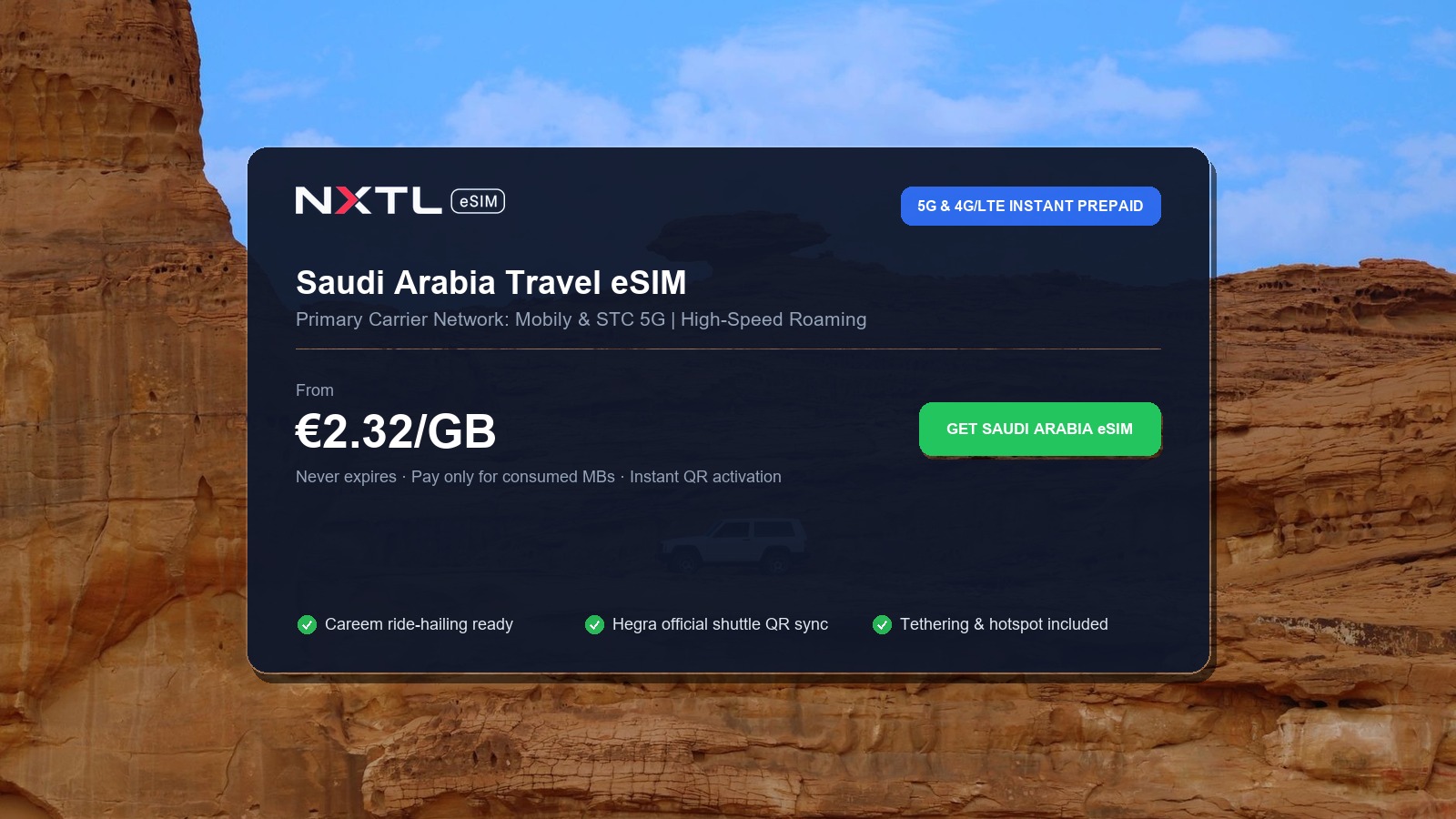
With an NXTL Saudi Arabia travel eSIM, travelers connect directly to the Kingdom’s premier telecommunications infrastructure, including Mobily and STC 5G networks. Starting from just $2.62 per gigabyte with no expiration dates, you enjoy ultra-fast 5G download speeds, full mobile hotspot tethering, and transparent pay-as-you-go pricing across all your mobile devices.
| Traveler Data Profile | Estimated Data Usage | Primary Trip Applications | Recommended NXTL Plan |
|---|---|---|---|
| City & Transit Navigator | 1 GB – 3 GB | Careem ride-hailing, Google Maps urban navigation, ExperienceAlUla booking QR display, WhatsApp messaging | 1 GB – 3 GB Pay-As-You-Go ($2.62/GB) |
| Active Desert Explorer | 5 GB – 10 GB | High-definition social media video sharing, photo uploads, live translation of historical markers, streaming music | 5 GB – 10 GB High-Speed Package |
| Remote Digital Professional | 15 GB – 20 GB+ | Hotspot tethering across luxury desert camps, remote video conferencing, cloud file syncing, evening 4K entertainment | 20 GB High-Volume Bundle |
By connecting your journey with swift domestic flights, securing official monument passes in advance, and maintaining continuous 5G cellular connectivity, your exploration of Saudi Arabia will be an extraordinary, deeply enriching immersion into one of the world’s most historic and captivating lands.