Traveling to Ukraine in late 2026 is an intense, purposeful experience that demands a complete departure from conventional leisure tourism planning. Operating under active martial law following the 2022 Russian invasion, the nation maintains completely closed civil airspace, relying entirely on an extraordinary overland rail network connecting European border hubs with Lviv and Kyiv. Legitimate travelers—including humanitarian workers, journalists, reconstruction specialists, diaspora families, and international delegations—must navigate air raid alert protocols, nighttime curfews, digital Hryvnia payments, and vital mobile communication lifelines on the KyivStar LTE and 5G networks.
A realistic assessment of the operating environment is non-negotiable before planning any journey. Ukraine is defending its sovereignty, and conditions across the country are profoundly bifurcated. The eastern and southern oblasts along the active front line (including Kharkiv, Zaporizhzhia, Kherson, Donetsk, and Luhansk) experience daily artillery shelling, guided bomb strikes, and active ground combat; these zones are strictly off-limits to civilian visitors. In contrast, western Ukraine (centered around Lviv) and the central capital corridor (Kyiv) maintain remarkably resilient daily civil life, supported by sophisticated air defense systems, municipal backup generators, and deep community solidarity.
This comprehensive guide details a practical eight-day logistics framework focused on the established overland corridor connecting Poland with Lviv and Kyiv. We outline the critical operational procedures: how to book cross-border international night trains, what actions to take during air raid sirens, how smartphone alert applications function, how municipal curfews operate, and why reliable mobile data on KyivStar at $0.64 per gigabyte is an indispensable safety asset. Unused credit stays available for later trips across more than 180 countries.
Who This Journey Suits and Legal Martial Law Realities
This guide is written for individuals undertaking purposeful travel: international volunteers, NGO coordinators, technical rebuilding consultants, investigative reporters, and diaspora citizens returning to visit loved ones. It is not intended for casual sightseeing holidays. Anyone entering Ukraine must do so with sobriety, comprehensive medical evacuation insurance covering war risks, high situational adaptability, and respect for a nation mobilizing its full societal resources for defense.
Under Ukrainian martial law, specific statutory regulations govern all daily activity. Nighttime curfews (komendantska hodyna) are strictly enforced in every municipality. In Kyiv and Lviv, curfews typically run from midnight to 05:00. During curfew hours, all civilian street movement, private vehicle driving, and public transportation halt completely; you must remain indoors inside your hotel or apartment unless moving directly to an underground bomb shelter during an air raid alert. Violating curfew without an official military-issued curfew pass (perepustka) leads to police detention.
Strict domestic laws strictly prohibit photographing or filming military personnel, army checkpoints, air defense missile batteries, radar installations, critical energy infrastructure, or the immediate aftermath of missile or drone strikes. Publishing geolocated images or footage of military assets carries severe criminal penalties under Article 114-2 of the Criminal Code of Ukraine. Security personnel and police routinely inspect smartphones and cameras at railway stations and highway checkpoints; always exercise extreme discretion when taking photos in urban public spaces.
Seasonality in Ukraine brings distinct weather challenges. Winters (November to March) are cold, with temperatures regularly dropping below minus ten degrees Celsius, requiring winter coats, thermal layers, and insulated footwear. When missile strikes target electrical transmission substations, winter travelers may face temporary heating and elevator disruptions, making power banks and headlamps essential gear. Summer (June to August) brings pleasant warm weather, outdoor cafe terraces, and long daylight hours.
Eight-Day Overland Ukraine Corridor: Poland to Kyiv
The following eight-day itinerary outlines the standard diplomatic and humanitarian overland rail route connecting the Polish transit hub of Przemyśl with Lviv and the national capital Kyiv.
| Day / Stage | Base | Highlights | Transport Mode | Transit Time | Advance Booking Requirement |
|---|---|---|---|---|---|
| Day 1 | Transit: Poland to Lviv | Overland border crossing via Przemyśl Główny, international express train, Lviv historic center check-in | Ukrzaliznytsia express train | 2.5 to 3.5 hours | Critical: purchase international train ticket 20 days ahead via official railway app |
| Days 2–3 | Lviv (Galician Hub) | UNESCO Rynok Square, Armenian Cathedral, Shevchenko Avenue, underground shelters, volunteer hubs | Historic tram / walking | 15 mins | Medium: reserve hotel with certified basement bomb shelter |
| Day 4 | Transit: Lviv to Kyiv | Scenic travel through central Ukrainian agricultural plains, crossing the Dnieper River bridges | Intercity+ high-speed Hyundai train | 5.5 to 6 hours | High: book Intercity+ seat 10 to 14 days in advance |
| Days 5–7 | Kyiv (The Capital) | Maidan Nezalezhnosti, Saint Sophia Cathedral, Kyiv Pechersk Lavra, Podil cultural quarter, civil resilience centers | Kyiv Metro / walking | 20 mins | High: select business hotel with independent generator power and Starlink |
| Day 8 | Night Train to Poland | Final procurement of humanitarian supplies, boarding overnight sleeper train to Warsaw or Chełm | International sleeper train (Kupe) | 12 to 14 hours | Critical: international night train tickets sell out within minutes of release |
This itinerary utilizes the dependable services of Ukrzaliznytsia (Ukrainian Railways), an extraordinary institution that has operated with over ninety percent on-time precision throughout the conflict despite targeted infrastructure attacks.

If your mission allows only four days, remain entirely in Lviv. Positioned just seventy kilometers from the Polish frontier, Lviv serves as the primary diplomatic and logistics hub in the west, allowing you to conduct meetings without the additional six-hour train journey east to Kyiv.
Overland Transit: Booking Ukrzaliznytsia Across Borders
With civil aviation grounded since February 24, 2022, Ukrainian Railways (Ukrzaliznytsia) functions as the country’s primary international transport lifeline. International passenger trains connect Ukraine directly with Poland, Slovakia, Hungary, Austria, and Moldova.
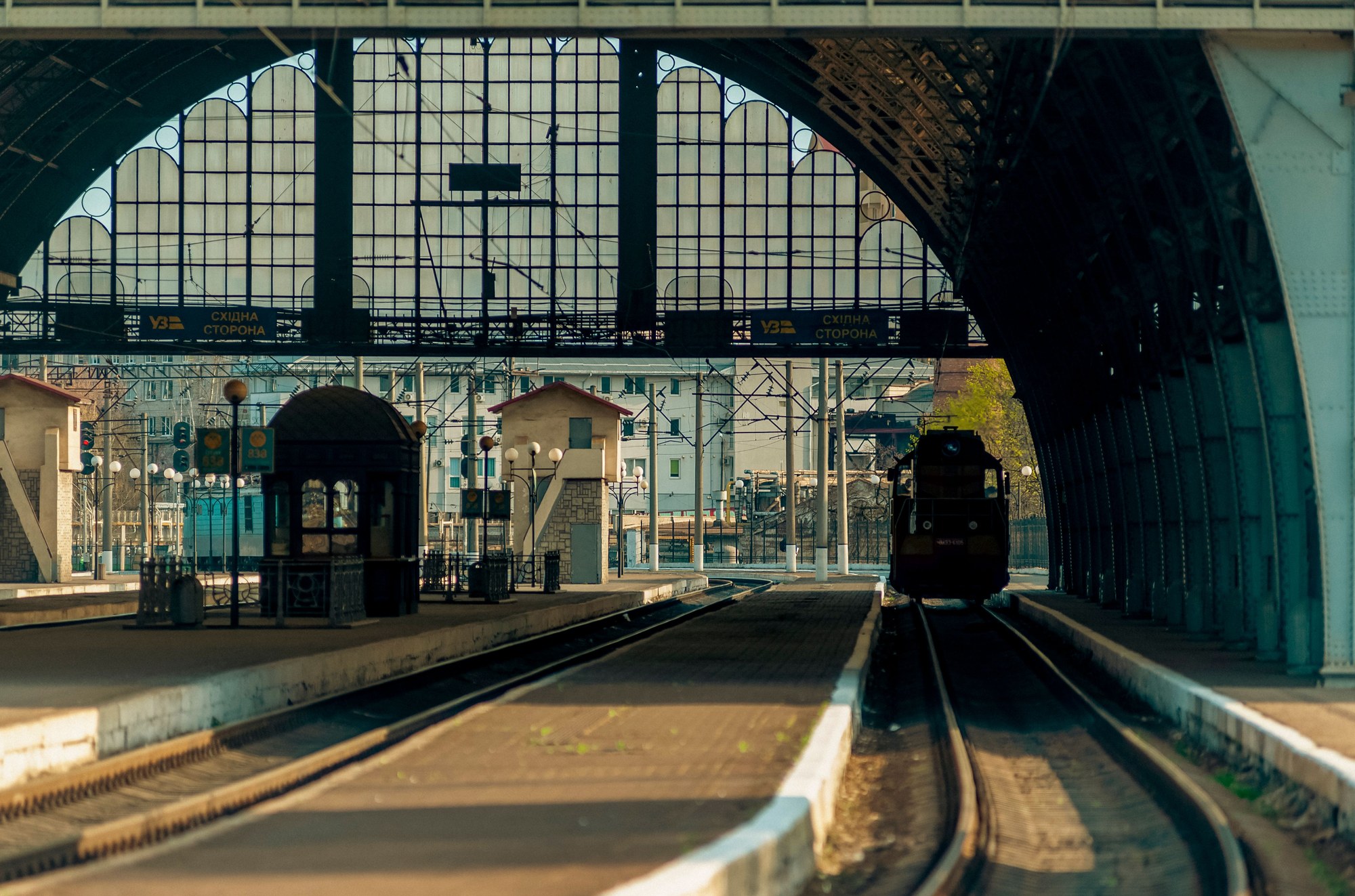
The most popular gateway is the Polish border city of Przemyśl, reachable by domestic Polish PKP Intercity trains from Krakow, Warsaw, or Rzeszów Airport (RZE). From Przemyśl Główny station, multiple daily Ukrzaliznytsia trains depart across the border. These include daytime Intercity+ high-speed trains to Lviv and Kyiv, as well as overnight sleeper trains to Kyiv, Odesa, and Kharkiv. Ukrainian customs and passport control are conducted efficiently on board while the train is in motion or during a scheduled platform halt at Mostyska.
Securing train tickets requires disciplined planning. Tickets for international routes (such as Kyiv-Warsaw, Kyiv-Chelm, and Kyiv-Przemyśl) open for sale exactly twenty days prior to departure at 09:00 Kyiv time exclusively through the official Ukrzaliznytsia mobile smartphone application. High-demand routes sell out within ten to fifteen minutes of release. Domestic trains between Lviv and Kyiv (Intercity+ Hyundai rotem trainsets or traditional overnight sleeper cars) open twenty days ahead and offer first-class, second-class, and four-berth kupe compartments.
Alternative overland entry is available via international long-distance coach buses (operated by FlixBus, Ecolines, or Autolux) departing from Warsaw, Krakow, or Lublin directly to Lviv and Kyiv. However, highway border crossings face unpredictable vehicular delays that can add six to twelve hours to your journey, making passenger rail the vastly superior transit choice.
Kyiv: Civil Resilience, Ancient Monasteries & Podil
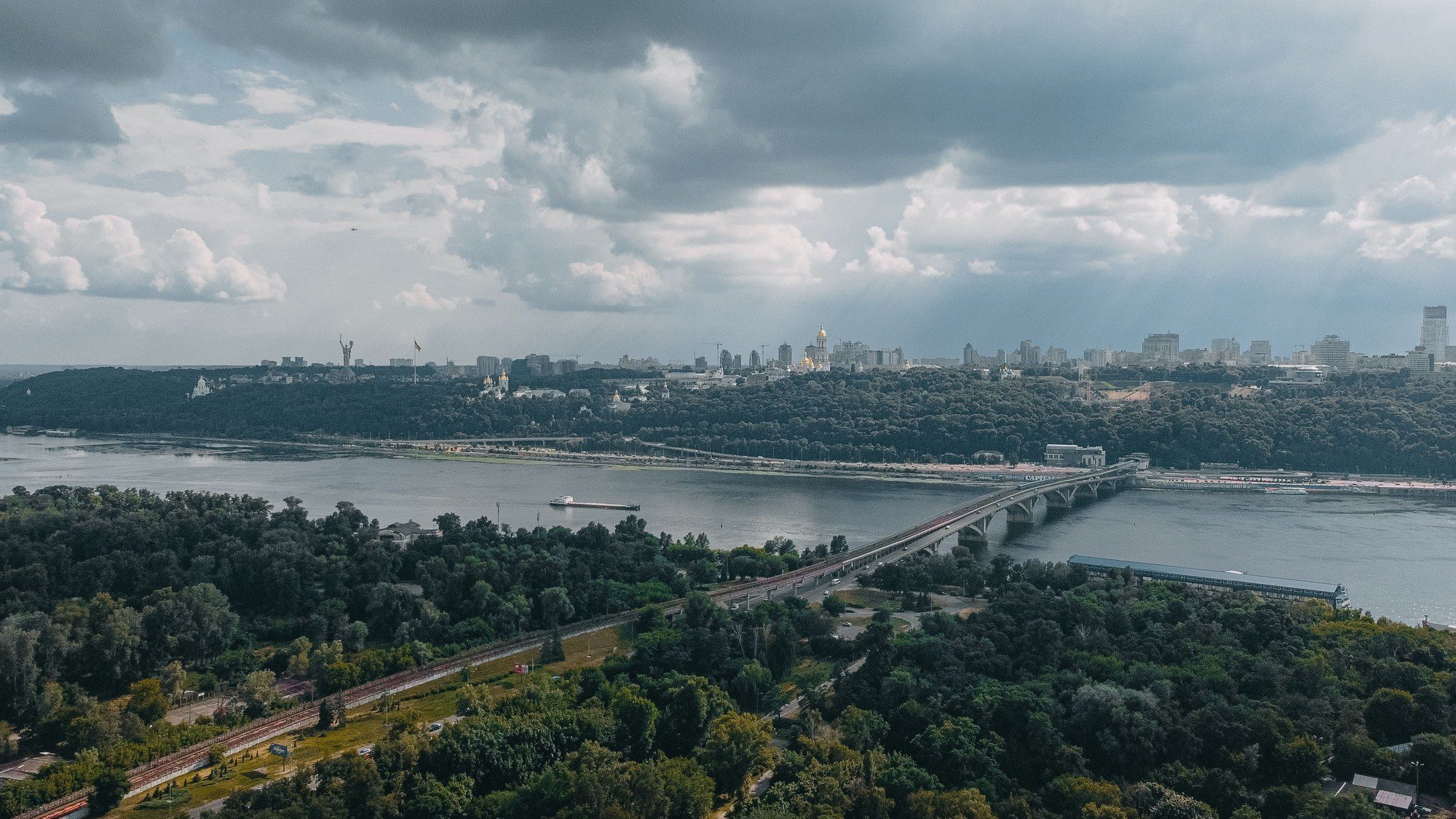
Kyiv, a historic European capital spanning both banks of the wide Dnieper River, has endured the crucible of modern conflict with profound institutional poise. The city’s public transit operates cleanly, restaurants and cafes are filled with purposeful patrons, and ancient golden-domed cathedrals stand undamaged beneath active air defense umbrella coverage.
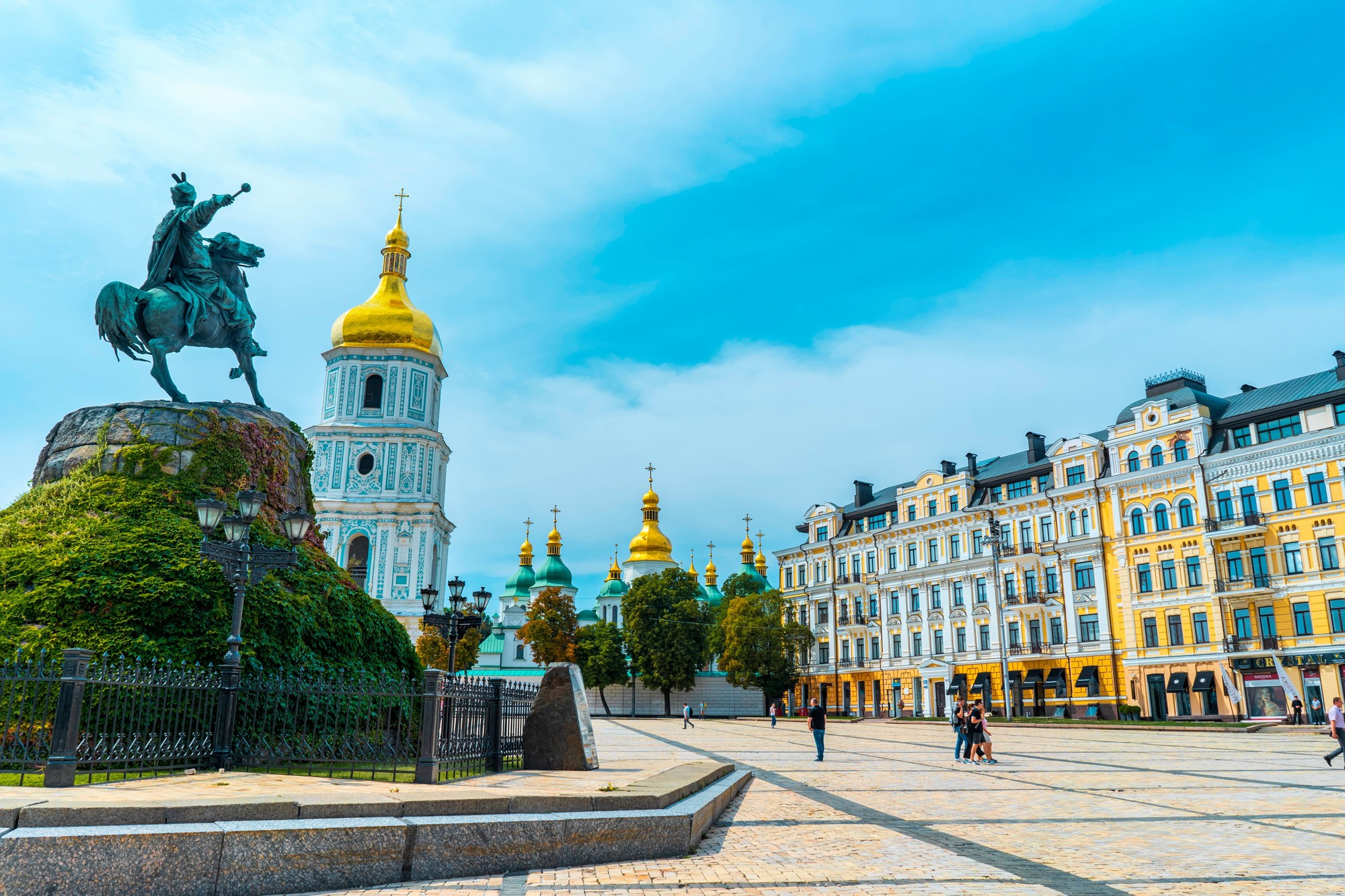
Begin your cultural orientation at Saint Sophia Cathedral, constructed in the 11th century during the reign of Prince Yaroslav the Wise. Inside, extraordinary Byzantine mosaics and frescoes survive, including the towering six-meter mosaic of the Virgin Orans (the “Indestructible Wall”), which Kyivans have revered for centuries as the protector of the city. A short stroll across Saint Sophia Square leads to Saint Michael’s Golden-Domed Monastery, with its sky-blue Baroque walls and shimmering gilded cupolas.
High above the Dnieper River rises the Kyiv Pechersk Lavra (Monastery of the Caves), a preeminent center of Eastern Orthodox Christianity founded in 1051. Explore the extensive network of underground limestone caves where mummified monks and saints rest in glass sarcophagi along candle-lit subterranean passages. In the historic Podil neighborhood along the river, pedestrian streets like Sahaidachnoho host independent coffee roasters, art galleries, and restaurants serving contemporary interpretations of traditional borscht, deruny potato cakes, and varenyky dumplings.

Throughout Kyiv, evidence of civil resilience is omnipresent. In response to winter energy infrastructure attacks, businesses and municipal authorities established thousands of “Points of Invincibility” (Punkty Nezlamnosti)—community centers, cafes, and fire stations equipped with diesel generators, Starlink satellite terminals, and heated spaces where citizens can charge electronic devices, access high-speed internet, and work during power cuts.
Air Raid Protocols: Alarms, Shelters, and the Metro
Experiencing an air raid alert (Povitryana Tryvoga) is an unavoidable part of daily life across Ukraine. Alarms are triggered by military radar when hostile missile launches, long-range drone swarms, or strategic bombers are detected by Ukrainian air defense monitoring networks.
Upon crossing the border into Ukraine, you must immediately install the official “Air Alert” (Povitryana Tryvoga) smartphone application, developed by Ajax Systems in partnership with the Ministry of Digital Transformation. Configure the app to your specific oblast (e.g., Kyiv City or Lviv Oblast). When an alert sounds, your phone emits an unmistakable high-volume siren alarm accompanied by an audible voice announcement detailing the threat. The application also delivers real-time notifications when the threat has passed (“Air raid alert cleared”).
When an air raid alarm sounds, follow established safety protocols. If you are outdoors or in public buildings, proceed directly to the nearest designated bomb shelter (bomboskhovyshche). In Kyiv, the underground metro system serves as an exceptional civil defense network. Stations like Arsenalna—the deepest metro station in the world at 105 meters underground—and Khreshchatyk remain open 24 hours a day as bomb shelters during alarms, providing secure underground seating, electrical charging points, and cellular Wi-Fi access while train service is adjusted.

If you are inside your hotel room during an alarm and cannot reach an underground shelter, adhere strictly to the “two-wall rule” (pravylo dvokh stin). Position yourself behind at least two solid structural walls—typically in an interior hallway or bathroom—away from exterior windows and glass, which can shatter from concussive blast waves if air defenses intercept aerial targets overhead.
Financial Realities: Cashless Dominance and the Hryvnia
Contrary to common misconceptions about conflict zones, Ukraine possesses one of Europe’s most technologically advanced, highly digitized financial payment ecosystems. The national currency is the Ukrainian Hryvnia (UAH), which circulates in banknotes ranging from 1 to 1,000 UAH.
Digital cashless transactions are ubiquitous. Virtually all commercial enterprises across Kyiv and Lviv—from upscale restaurants and major supermarkets to neighborhood corner bakeries, municipal transport ticket kiosks, and roadside coffee carts—accept contactless mobile payments via Apple Pay, Google Pay, and foreign Visa and Mastercard credit cards. Physical cash is rarely necessary for routine urban transactions, though keeping 1,000 to 2,000 UAH in small cash bills is advisable as a backup during localized electrical load-shedding when payment terminals may temporarily reboot.
Bank branches and currency exchange kiosks (obmin valyut) operate openly throughout major cities. Foreign currencies like Euros (EUR) and US Dollars (USD) can be exchanged at competitive rates regulated by the National Bank of Ukraine (NBU). Banknotes must be clean, crisp, and free of tears or markings. ATMs dispensing Hryvnia are widespread and accept international bank cards reliably, with most machines equipped with backup power systems.
Tipping is customary across Ukrainian restaurants and cafes. A gratuity of ten percent is standard for attentive service. Most modern payment terminals allow you to add a tip directly on the digital card reader before tapping your card or smartphone.
Field Connectivity: KyivStar LTE, 5G & Emergency Networks
In a country navigating wartime conditions, robust mobile connectivity is not merely a convenience—it is a critical safety tool. Real-time notifications of air raid alerts, ballistic missile warnings, shelter maps, and train rescheduling depend entirely on dependable cellular internet access.
Ukraine’s telecommunications infrastructure is anchored by three major operators: KyivStar, Vodafone Ukraine, and lifecell. KyivStar is the country’s largest network provider, renowned for extraordinary resilience. When missile attacks damage electrical grids, KyivStar engineers deploy mobile generator units and lithium storage batteries to maintain cell towers, while utilizing national roaming agreements that allow subscribers to automatically switch to competitor towers if their home carrier loses signal.
Travelers using digital roaming can connect to high-speed data on the KyivStar 5G and LTE network through NXTL at an exceptionally low rate of $0.64 per gigabyte. This low tariff ensures that you can run background alert applications continuously, maintain live GPS navigation on Google Maps, stream critical news updates via verified Ukrainian Telegram channels, and coordinate with local teams on WhatsApp and Signal without worrying about data caps or prohibitive roaming charges.

Having an active eSIM profile pre-configured on your smartphone before crossing the Polish-Ukrainian border ensures continuous connectivity the moment your train crosses into Ukrainian territory. This eliminates the need to search for physical SIM card kiosks during train transfers and guarantees that your Air Alert application is armed and operational from your first minute in the country.
Most hotels, cafes, and restaurants throughout Kyiv and Lviv provide complimentary Wi-Fi backed by Starlink satellite internet dishes, ensuring that even during municipal electrical blackouts, internet connectivity remains active and stable for remote work and communication.
Configuring dual SIM settings to prioritize low-latency local data while retaining your primary domestic number for SMS two-factor authentication provides the optimal communications setup for navigating both routine urban logistics and emergency notifications across Ukraine.
Five Critical Pitfalls and Safety Rules to Observe in Ukraine
Traveling in a nation under martial law requires unwavering adherence to military guidelines, safety procedures, and local laws. Observe these five vital rules at all times:
- Ignoring Air Raid Sirens and Alarm Notifications: Treating air raid alerts as background noise is a dangerous mistake. Intercepted missile fragments and drone debris cause severe structural damage. Always have the Air Alert app installed, identify the nearest underground bomb shelter or interior room, and adhere to the two-wall rule.
- Violating Municipal Nighttime Curfews: Being on public streets during curfew hours without an official military curfew pass leads to immediate detention by territorial defense patrols. Always return to your accommodation at least thirty minutes before curfew begins (typically midnight).
- Photographing Military Personnel, Defense Sites, or Strike Impacts: Photographing armed forces, checkpoints, air defense operations, or missile strike damage is strictly illegal under Ukrainian martial law. Security personnel will detain offenders, and convictions carry severe prison sentences.
- Attempting Travel into Frontline or Recently Liberated Zones: Traveling toward active combat zones in the east and south or venturing into unpaved rural areas without official military accreditation poses extreme risks from artillery, drone strikes, and unexploded landmines (UXO). Confine travel strictly to verified western and central corridors.
- Relying on Commercial Aviation for Entry: Civil airspace over Ukraine remains completely shut. Any service advertising flights into Ukrainian airports is fraudulent. Plan all arrivals and departures exclusively overland via international passenger rail through Poland, Slovakia, Hungary, or Moldova.
With serious preparation, strict respect for martial law protocols, and reliable mobile connectivity, traveling to Ukraine offers an unforgettable encounter with an extraordinarily courageous, technologically innovative, and deeply hospitable nation standing on the frontlines of European freedom.