Zambia is Southern Africa’s premier wilderness sanctuary: a territory carved by the Zambezi and Luangwa rivers, where unfenced parks shelter dense wildlife concentrations. Home to Victoria Falls and the walking safari, Zambia delivers an unvarnished bush atmosphere that neighboring circuits traded for asphalt tracks. Yet first-time visitors frequently make an exhausting planning mistake: attempting to drive overland between Livingstone in the south and South Luangwa National Park in the east. At over 1,000 kilometers across congested highways, police checkpoints, and corrugated gravel, driving between these hubs consumes two full days in transit.
A rewarding first trip pairs geological spectacle with predator tracking by utilizing domestic bush aviation. This eight-day itinerary anchors your journey around two wilderness hubs: three nights in historic Livingstone exploring Victoria Falls and walking with white rhinos along the Zambezi River, followed by a scheduled flight via Lusaka into Mfuwe for four nights in South Luangwa National Park. By replacing an arduous road journey with a two-hour flight, you maximize active safari hours and sleep in unfenced riverside camps.
Trip Planning Blueprint: Bases, Bush Flights, and Seasonal Timing
The operational key to this route is scheduled domestic air transit operated by Proflight Zambia. Connecting Livingstone Airport (LVI) to Mfuwe Airport (MFU) requires a connection through Lusaka (LUN). Total flight time spans roughly two and a half hours. Travelling by bush plane introduces one strict rule: baggage limits. Proflight Zambia and safari camp transfers enforce a fifteen-kilogram (thirty-three-pound) luggage limit per passenger in soft-sided duffel bags without rigid frames. Heavy suitcases cannot fit inside the narrow baggage pods of light turboprop aircraft.
Entry logistics are streamlined by the KAZA UniVisa, a joint tourist visa costing fifty US dollars that permits unlimited border crossings between Zambia and Zimbabwe for up to thirty days, including day visits across Victoria Falls Bridge. Citizens of over one hundred nations are exempt from standard visa fees, though border authorities collect statutory conservation charges. Always carry crisp US dollar banknotes printed in 2013 or later, as local banks, border posts, and park gates reject creased, torn, or older notes.
Seasonality dictates wildlife visibility and river water levels. The dry safari season runs from May through October, characterized by cloudless blue skies, crisp mornings, and warm daytime temperatures. As the dry season progresses toward October, inland water sources dry up completely, compelling massive herds of elephants, buffalo, and antelopes to congregate along the permanent waters of the Luangwa River. Conversely, flow over Victoria Falls peaks between March and May. Visiting between June and August offers impressive flow over the falls and dry-season game viewing in South Luangwa.
| Day / Stage | Base | Highlights | Transport Mode | Transit Time | Advance Booking Requirement |
|---|---|---|---|---|---|
| Day 1 | Livingstone | Arrival at Harry Mwaanga Nkumbula Airport, Livingstone Museum, sunset Zambezi river cruise | Airport Taxi & River Boat | 30 mins road transfer | Zambezi sundowner cruise reservation |
| Day 2 | Livingstone | Mosi-oa-Tunya National Park, Knife-Edge Bridge, Boiling Pot rainforest trail, craft market | Private Safari Minibus | 15 mins each way | National park entrance fee ($20) |
| Day 3 | Livingstone | Armed scout walking safari tracking white rhinos, historic Victoria Falls Bridge walking tour | Open 4WD Safari Vehicle | 45 mins park drive | Rhino tracking ranger permit |
| Day 4 | South Luangwa (Mfuwe) | Domestic morning flight via Lusaka to Mfuwe, open-vehicle transfer to river lodge, night game drive | Scheduled Flight & Open 4WD | 2.5 hrs flight + 1 hr drive | Proflight Zambia domestic flights |
| Day 5 | South Luangwa (Mfuwe) | Dawn game drive along oxbow lagoons, Thornicroft giraffe spotting, evening spotlight predator safari | Open 4WD Safari Vehicle | 4 hrs morning / 3 hrs evening | DNPW park conservation fee ($25/day) |
| Day 6 | South Luangwa (Central) | Guided morning walking safari with armed wildlife scout, tracking leopards and wild dogs | Foot Safari with Armed Scout | 3.5 hrs active bush walk | Safari camp walking activity slot |
| Day 7 | South Luangwa (Central) | All-day deep reserve game drive, Luangwa River elephant crossings, farewell bush dinner under stars | Open 4WD Safari Vehicle | 6 hrs game viewing | Camp bush dinner arrangement |
| Day 8 | Lusaka departure | Morning birdwatching from camp deck, transfer to Mfuwe Airstrip, flight to Lusaka for departures | Open 4WD & Domestic Flight | 1 hr drive + 1.2 hrs flight | Outbound international flight reconfirmation |
Days 1–3: The Roar of Mosi-oa-Tunya and the Upper Zambezi in Livingstone
Your Zambian expedition starts in Livingstone, situated ten kilometers north of Victoria Falls. After touching down at Harry Mwaanga Nkumbula International Airport (LVI), establish your base at a riverside lodge along the upper Zambezi. Spend your opening afternoon with a boat cruise along the calm waters of the upper Zambezi River above the cataract. As the sun sinks toward the horizon, herds of elephants emerge from the riverbanks to drink, while pods of hippos grunt in the deeper channels.
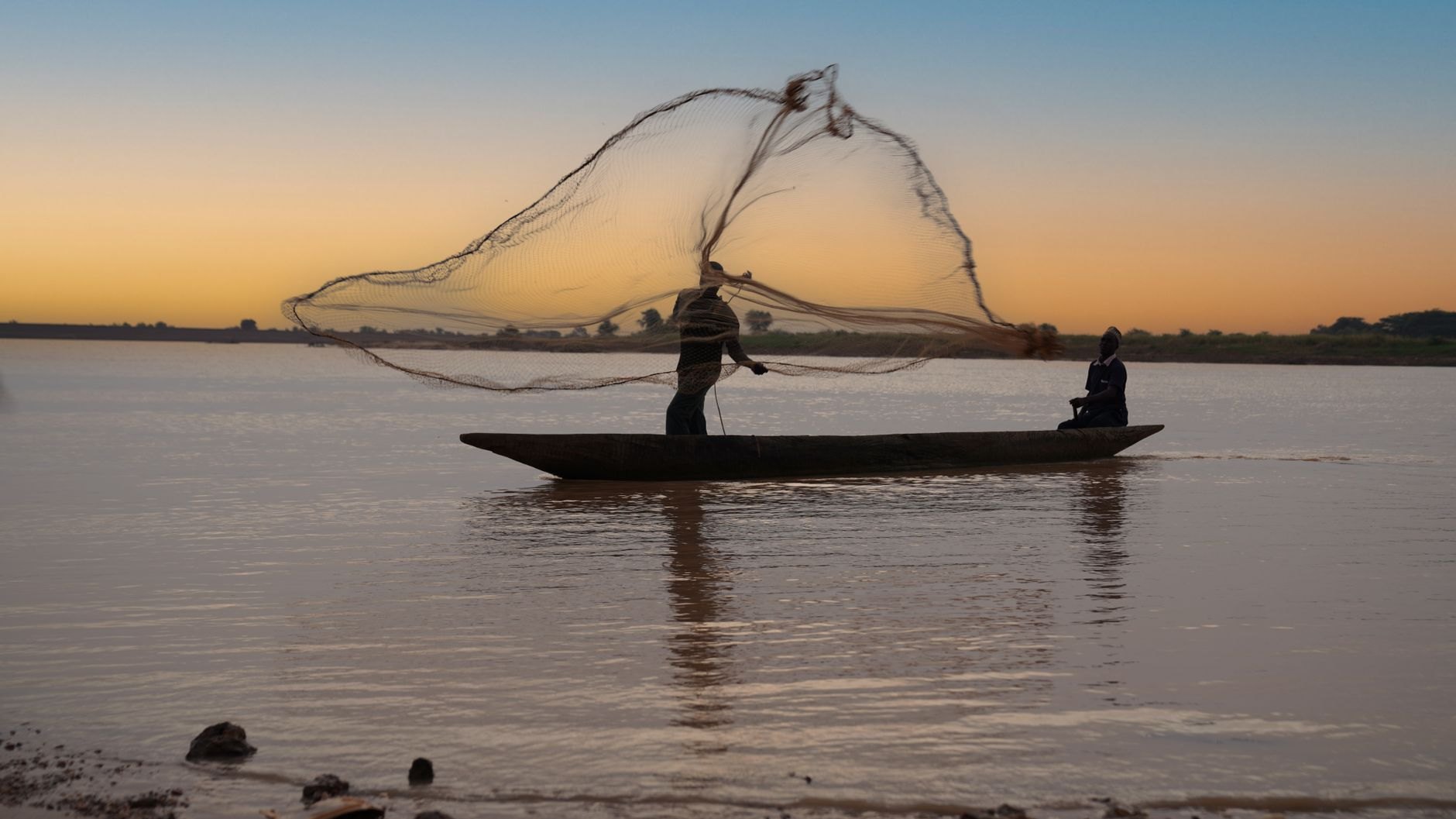
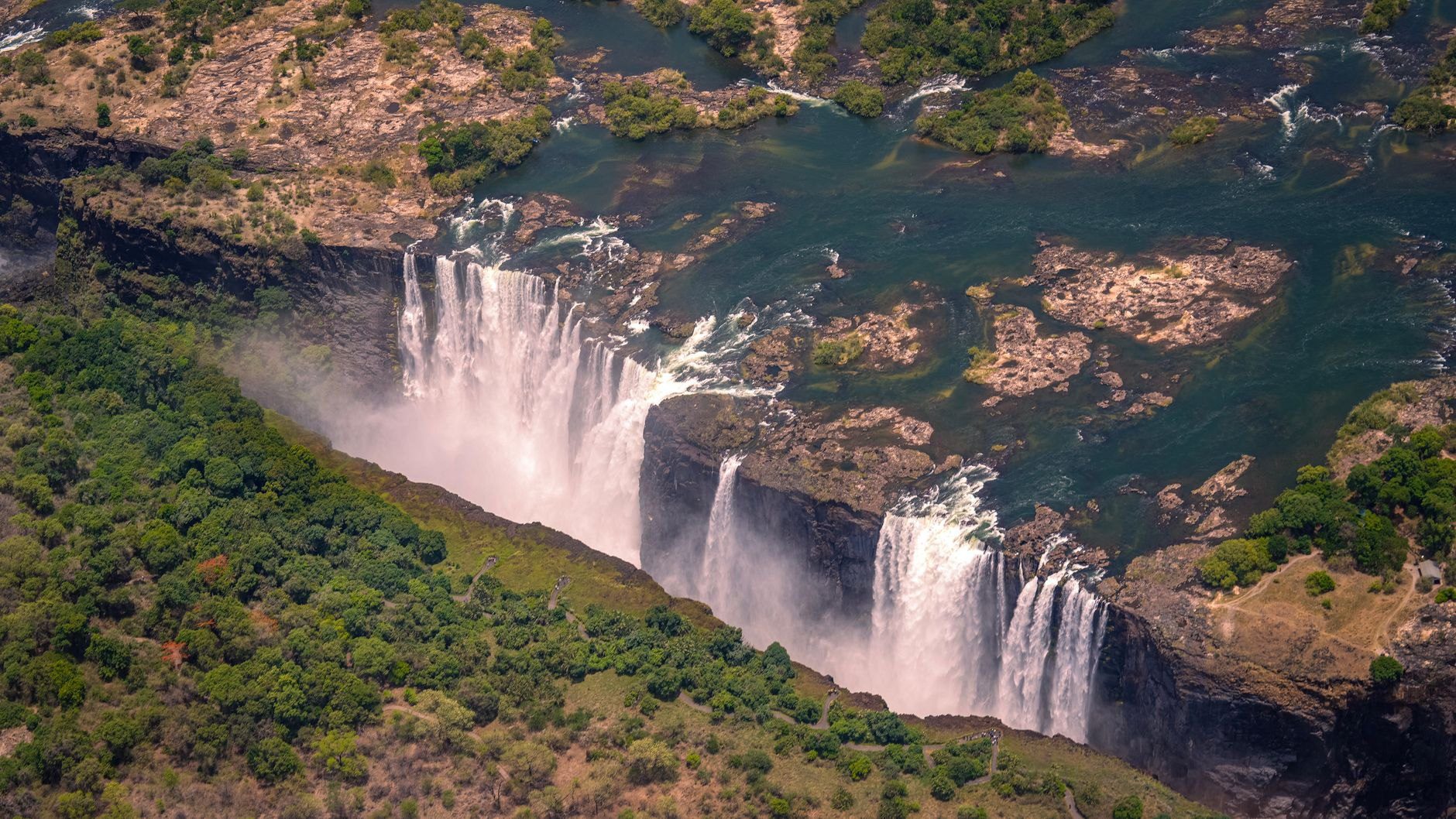
Day two is devoted to experiencing Mosi-oa-Tunya (“The Smoke That Thunders”), where the Zambezi River drops 108 meters down a sheer basalt chasm. Enter the park gate early before crowds arrive. Walk the paved footpaths through spray-drenched rainforest along the opposing clifftop. Crossing the Knife-Edge Bridge provides thrilling views as white water plummets into the gorge below, enveloping you in mist. Pack a waterproof dry bag for cameras, and rent a poncho if visiting between March and July.
After crossing the Knife-Edge, descend the rocky trail leading down to the Boiling Pot, a swirling whirlpool where churning waters exit the main fall. This return hike provides perspective on the geological forces that carved these chasms. In the afternoon, visit the Livingstone Museum, which preserves Dr. David Livingstone’s personal journals, navigation instruments, and archaeological records tracing Zambian heritage.
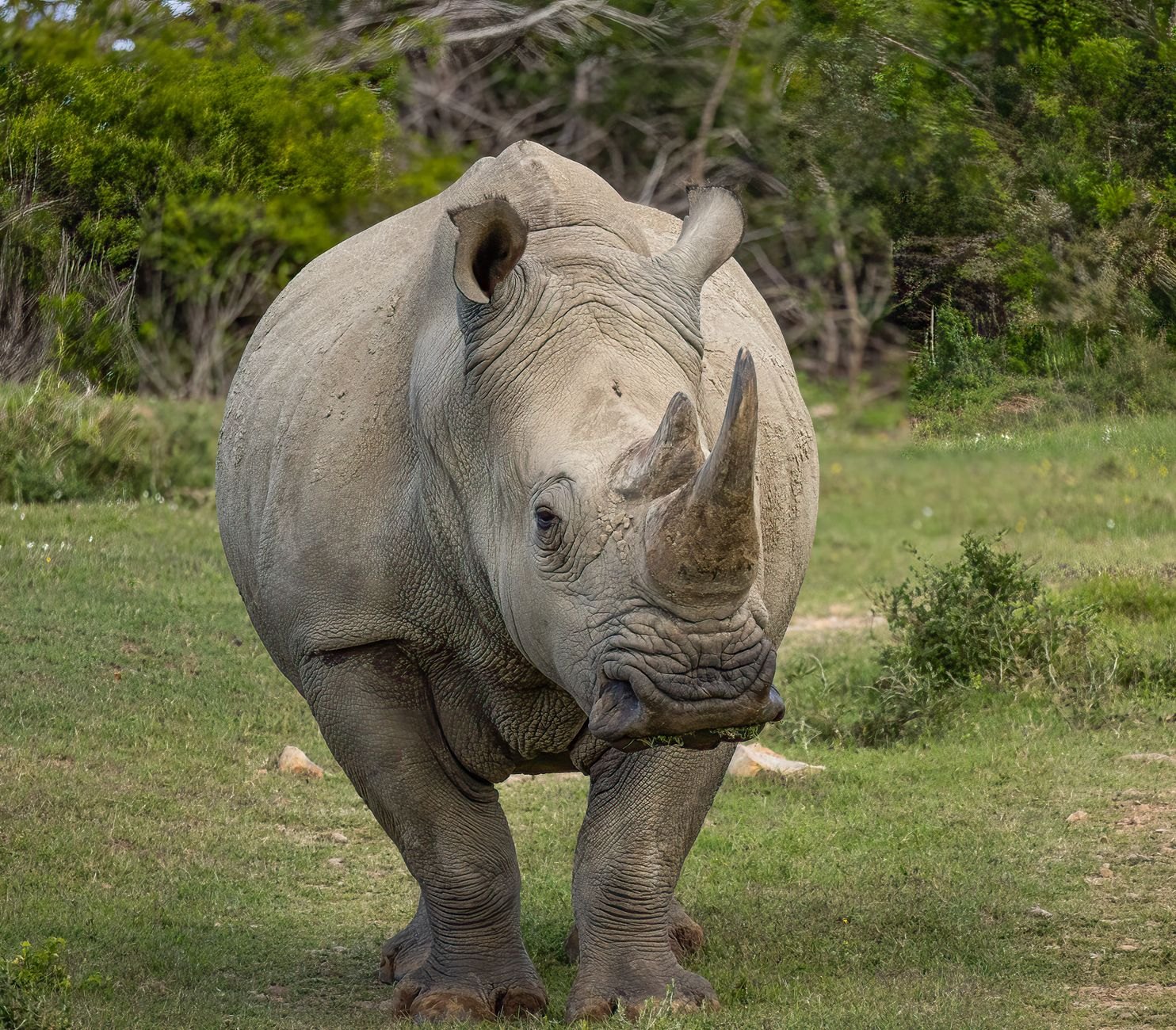
On your third morning, venture into Mosi-oa-Tunya National Park for an encounter with southern white rhinoceroses. Because rhinos were historically wiped out across Zambia by poachers, the population resident here is guarded around the clock by armed scouts from the Department of National Parks and Wildlife (DNPW). Accompanied by these scouts, you leave the vehicle and track the rhinos quietly on foot through mopane woodland.
Round off your third day by visiting the historic Victoria Falls Bridge, completed in 1905 to span the second gorge between Zambia and Zimbabwe. You can walk across the bridge from the Zambian border post by requesting a free bridge pass from immigration officers, watching bungee jumpers plunge 111 meters into the gorge.
Day 4: Bush Flight Realities: Connecting Livingstone to South Luangwa
Day four marks your transition from the southern border to the wilderness of eastern Zambia. Head to Livingstone Airport for your scheduled Proflight Zambia flight to Mfuwe via Lusaka. The journey takes you across the Batoka Plateau and through Kenneth Kaunda International Airport before boarding a twin-engine turboprop bound for the Luangwa Valley.
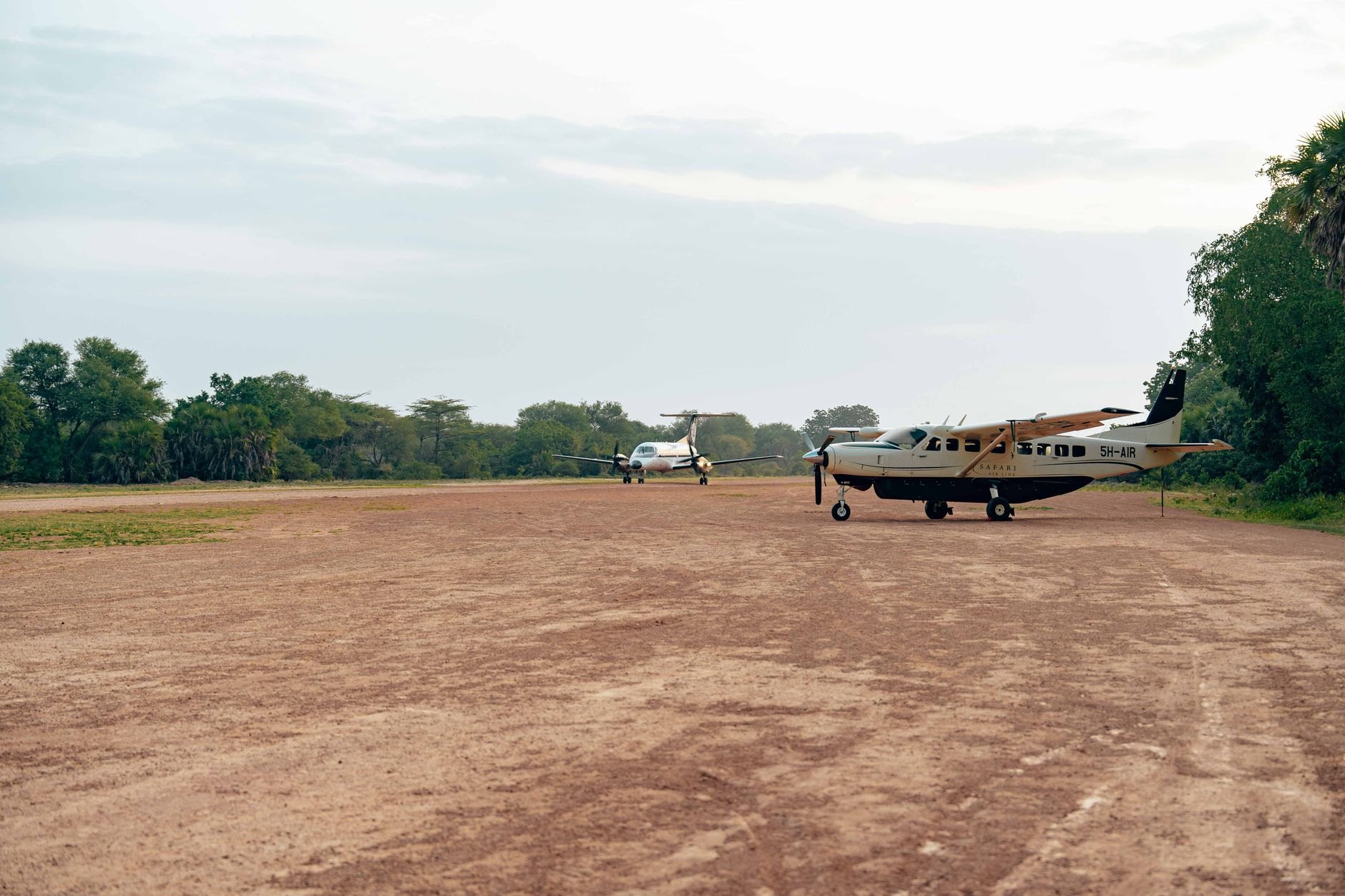
Landing at Mfuwe Airstrip is like stepping into an older Africa. The small terminal sits surrounded by wild scrub where baboons frequently lounge along the fence. Here, your safari camp guide greets you with an open four-wheel-drive vehicle featuring tiered seating. The drive from the airstrip to the park gate takes forty-five minutes, passing through rural settlements where local residents cultivate crops and craft textiles that fund anti-poaching units.
Arrive at your riverfront safari lodge in time for afternoon tea, settle into your chalet overlooking the Luangwa River, and embark on your inaugural late-afternoon game drive. In Zambia, afternoon safaris extend past sunset into darkness. As twilight deepens, your guide switches on a red-filtered spotlight, scanning riverbanks for nocturnal hunters: genets, civets, and leopards beginning their evening patrols.
Days 5–7: South Luangwa: The Valley of the Leopard and Walking Safaris
Centered on the winding Luangwa River, South Luangwa National Park encompasses 9,050 square kilometers. Its shifting channels form fertile oxbow lagoons that sustain wildlife throughout the dry months.
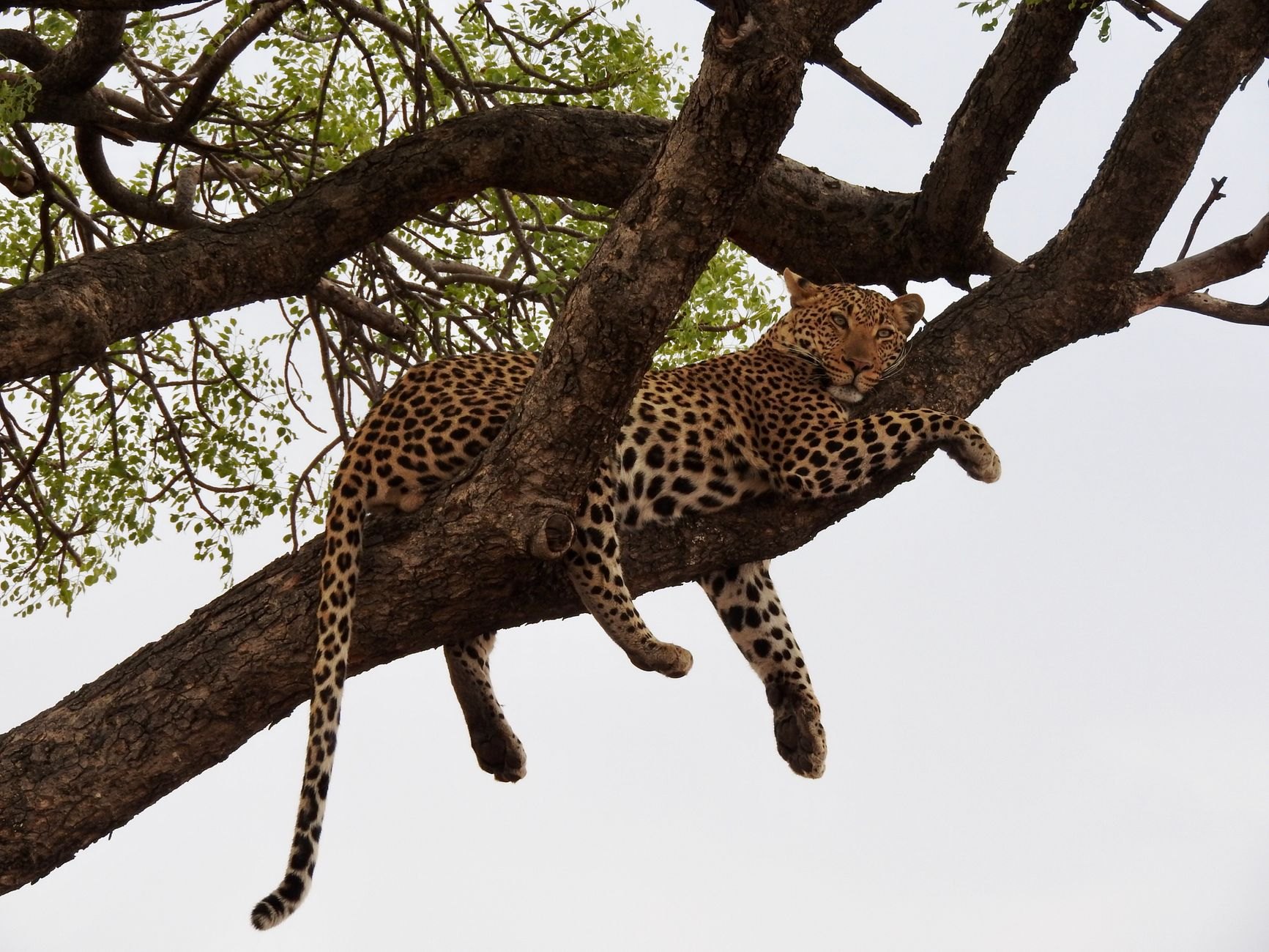
Begin day five with a morning game drive. Wake-up calls arrive at dawn with fresh coffee by the camp fire pit. Heading into the park at first light reveals the Luangwa Valley at its most active. South Luangwa boasts the highest natural density of leopards in Africa, and it is common to spot these solitary cats resting along horizontal leadwood branches with fresh kills cached above the reach of hyenas.
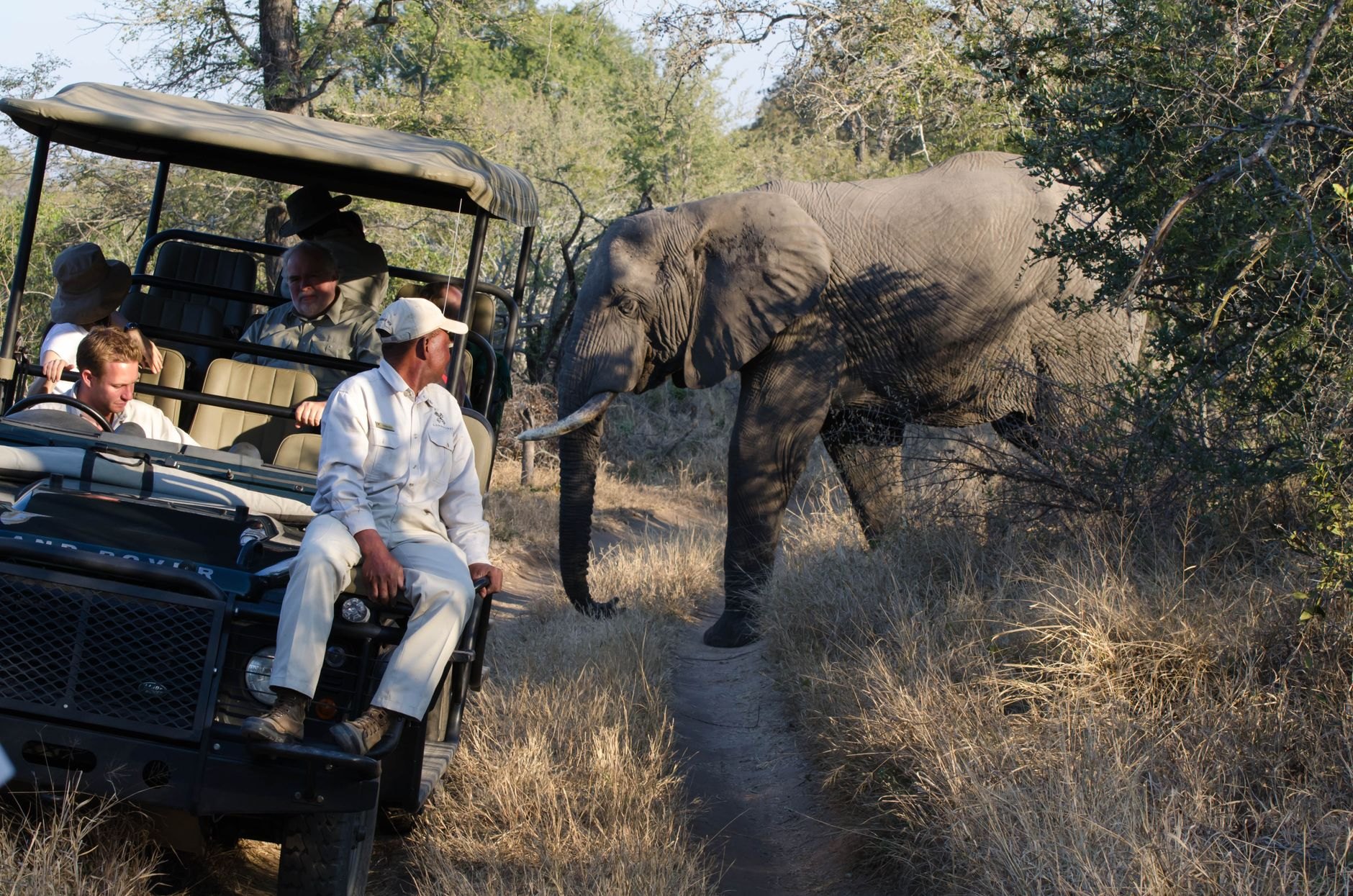
Licensed guides in South Luangwa may drive off-road to track significant predator activity while maintaining respectful viewing distances. Along the riverbanks, elephant herds move across sandy shallows, drinking deeply and spraying mineral-rich mud.
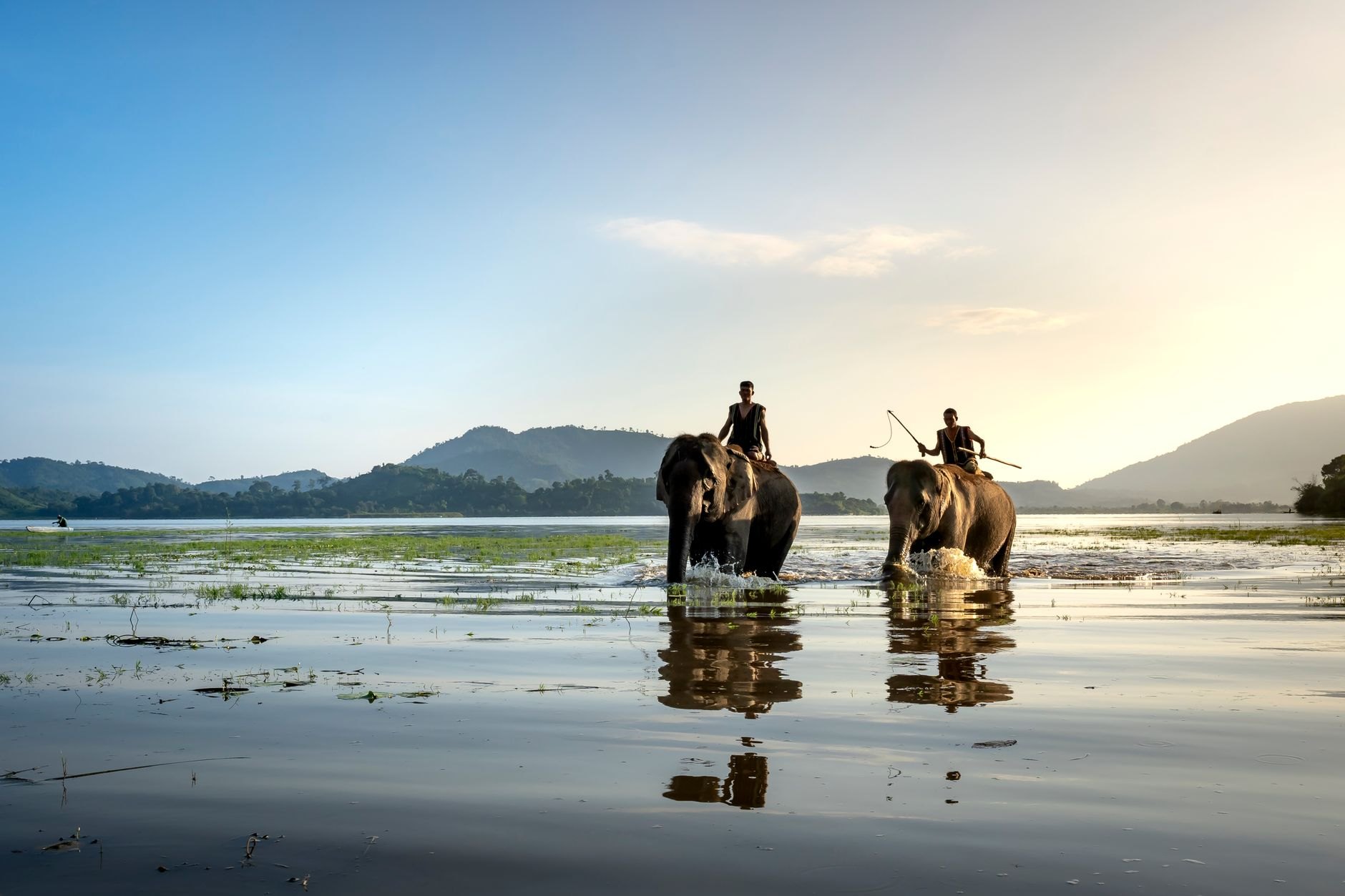
On morning six, trade vehicle seats for your hiking boots to experience the hallmark of Zambian safari culture: the guided walking safari. Pioneered in South Luangwa in the 1950s by conservationist Norman Carr, walking safaris immerse you completely in the bush. Accompanied by a senior guide and an armed wildlife scout, you walk in single file through the woodland.
On foot, the focus shifts to the subtle machinery of the bush: deciphering leopard pugmarks in dry sands, reading impala alarm calls, and learning the medicinal uses of fever-tree bark. Standing on foot among wild animals provides an unmatched connection to the landscape.
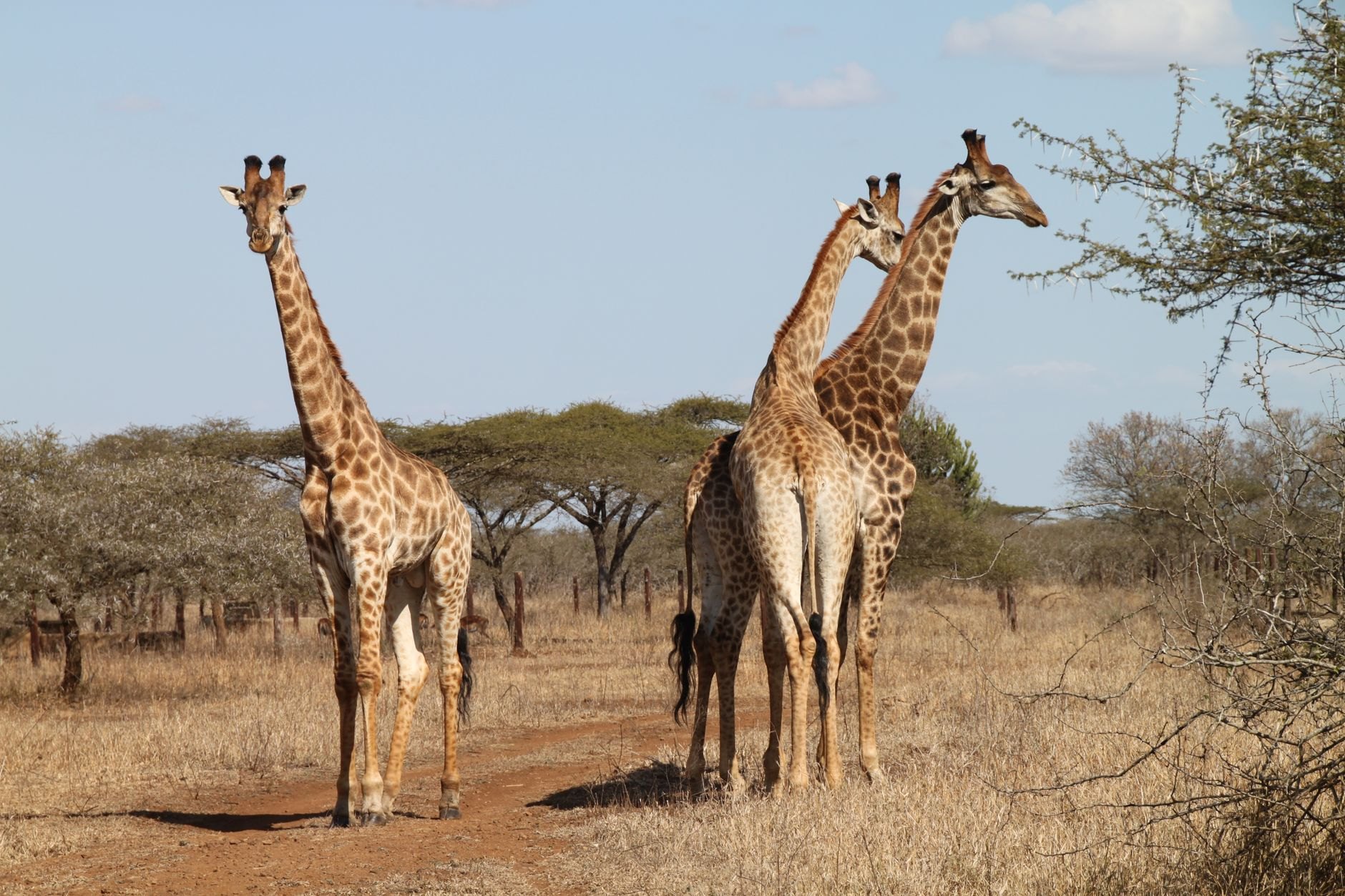
Afternoon drives offer opportunities to spot endemic Thornicroft’s giraffes, found exclusively in the Luangwa Valley. Watching these tall herbivores browse high acacia canopies against an orange sunset is unique to this ecosystem.
Spend your final evening around an open campfire beneath an ebony tree, listening to distant lion roars echoing across the river sandbanks.
Zambian Culinary Traditions: Campfire Fare and Staples
While safari camps serve international fare, authentic local food offers cultural insight. The staple of every traditional meal is nshima, a stiff porridge prepared by beating white maize flour (mealie meal) into boiling water until smooth.
Nshima is eaten by hand. Diners break off a small piece of warm dough with their right hand, roll it into a neat ball in the palm, press a slight hollow into the center with their thumb, and use it to scoop up accompanying relishes known as *ndiwo*. Classic relishes include slow-braised village chicken (*nkoko yabukaya*), tender beef stewed with tomatoes, or fresh river bream.
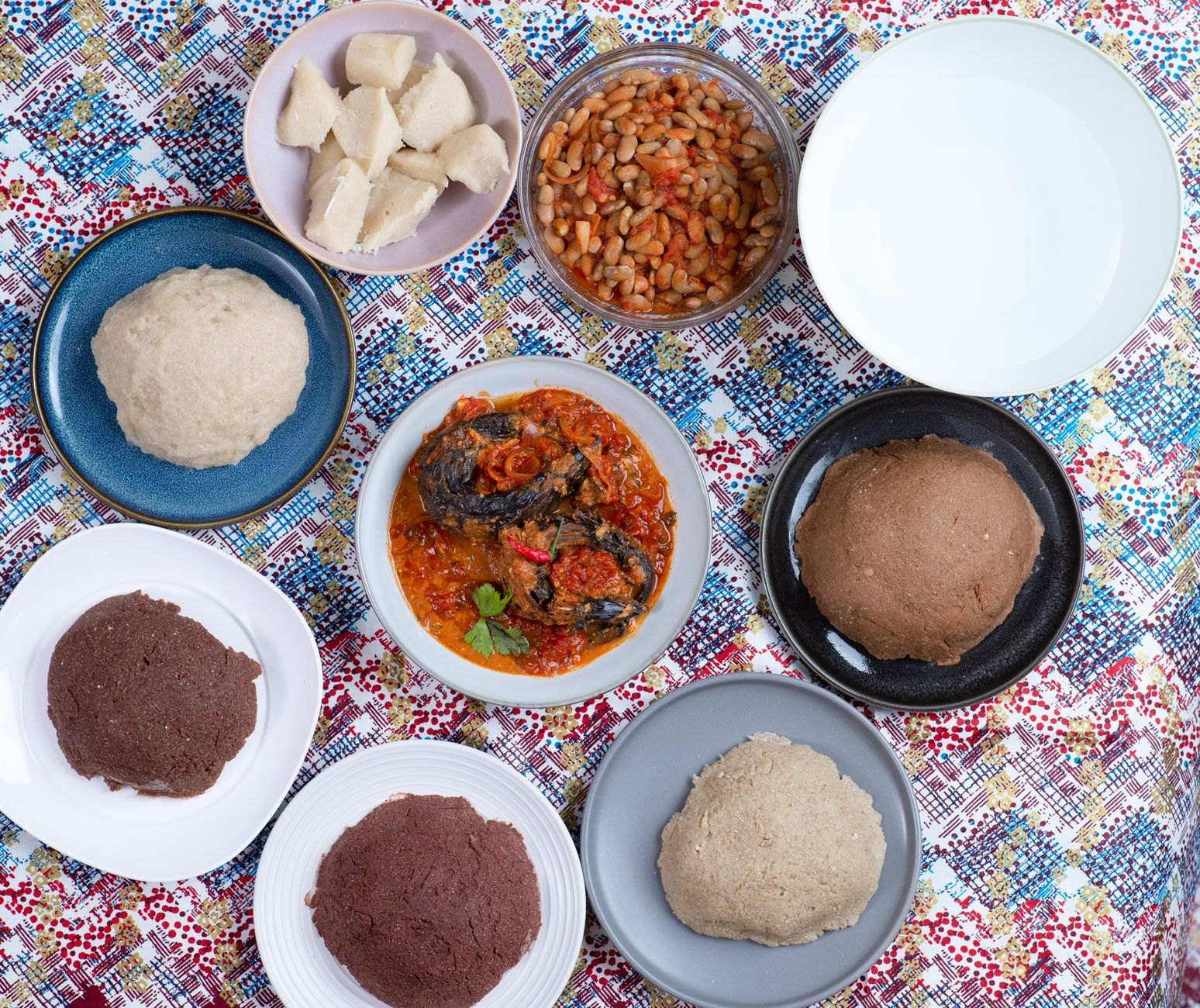
Complete the dish with *chibwabwa*—pumpkin leaves braised in pounded peanut sauce—and a cold Mosi Lager, Zambia’s homegrown beer named after the falls.
Route Adaptations: Express vs. Extended Itineraries
This eight-day blueprint represents the optimal balance, but it can be adapted depending on your schedule and wildlife focus:
The 5-Day Express Safari: If you only have five days, limit your itinerary to Livingstone and Victoria Falls for two nights, followed by a two-night fly-in safari to Lower Zambezi National Park rather than South Luangwa. Lower Zambezi sits closer to Lusaka, reducing flight costs while offering boat-based game viewing and canoe safaris along river channels.
The 11-Day Grand Wilderness Route: With eleven days, maintain the three nights in Livingstone and four nights in South Luangwa, but insert three nights in the Lower Zambezi or Kafue National Park. Kafue is Zambia’s oldest national park, spanning 22,400 square kilometers of pristine miombo woodland, vast plains, and granite kopjes sheltering cheetahs and wild dogs.
Essential Logistics: Visas, Health, Cash, and Road Realities
Planning for Zambia requires attention to specific practicalities:
Malaria Prevention: Both the Zambezi River basin in Livingstone and the Luangwa Valley in Mfuwe are malaria zones. Consult a travel medicine clinic well before departure to obtain prescription prophylactic medication (such as Malarone or Doxycycline). Apply mosquito repellent liberally during morning and evening safari hours, wear long-sleeved clothing, and sleep under treated mosquito netting.
Cash Currency and Payments: The official legal currency is the Zambian Kwacha (ZMW). By statutory law, retail purchases in shops and restaurants must be settled in Kwacha or via major credit cards (Visa is far more widely accepted than Mastercard). However, national park conservation fees, safari lodge extras, and domestic flight taxes are almost universally priced and payable in US dollars. Ensure US dollar notes are dated 2013 or newer, free of tears. ATMs are plentiful in Livingstone and Lusaka airport terminals, but absent inside national parks.
Self-Driving and Nocturnal Driving Hazards: While self-driving is possible in Zambia, it is ill-advised between major regions. Rural national roads suffer from deep potholes, wandering livestock, and unlit trucks. Night driving outside urban municipal boundaries is hazardous and should never be attempted. If renting a car in Livingstone, note that traffic drives on the left, and police checkpoints are frequent.
Mobile Connectivity and Digital Logistics in Zambia
Maintaining dependable cellular connectivity across Zambia is invaluable for tracking domestic flight schedules with Proflight, arranging airport transfers in Livingstone, managing digital currency payments, and staying connected with family during remote travels. While bush camps keep Wi-Fi confined to central decks, reliable 4G coverage extends across Livingstone, Victoria Falls viewpoints, Lusaka terminals, and Mfuwe.
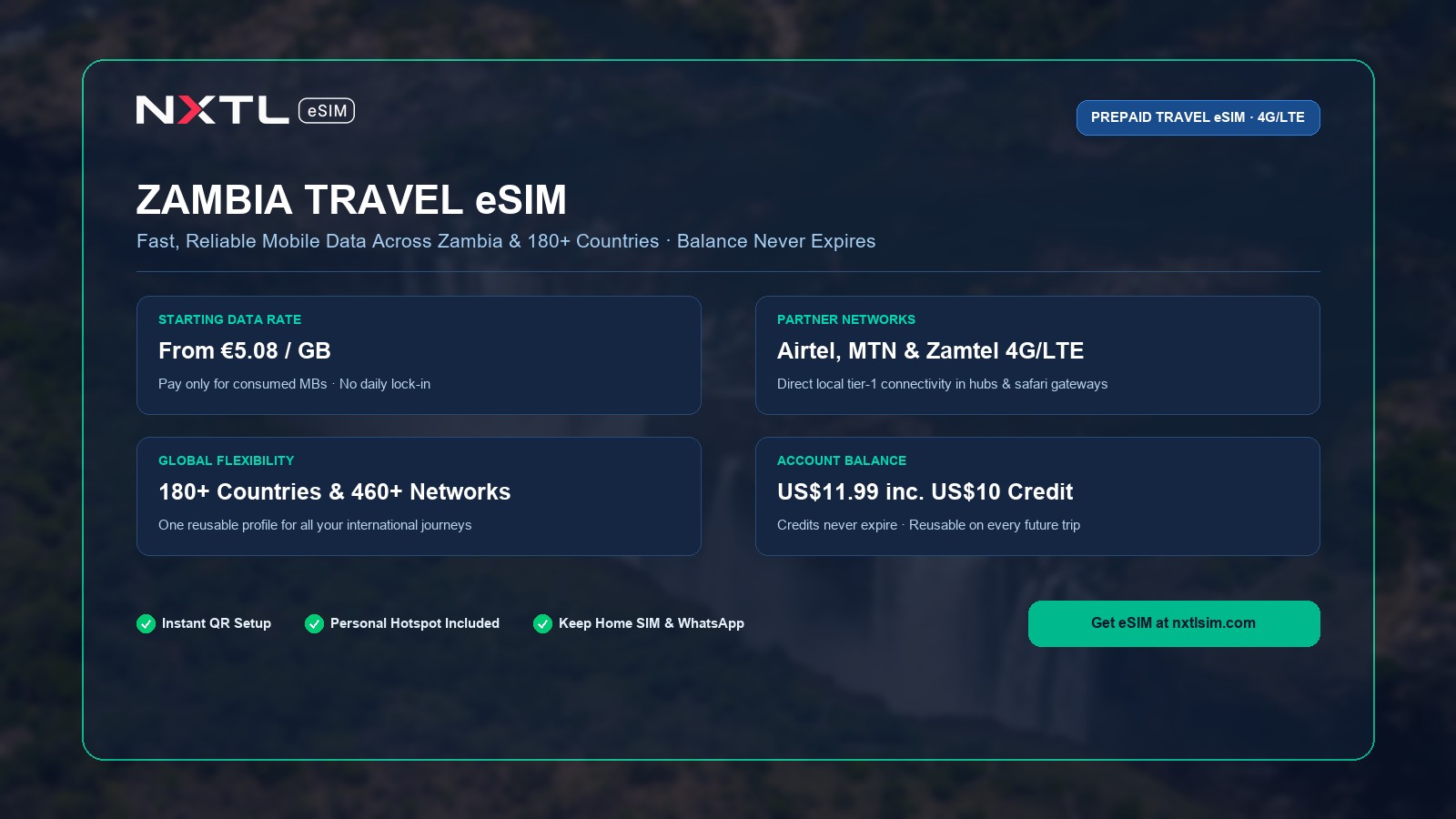
Rather than queuing at airport telecom kiosks upon arrival or dealing with mandatory passport biometric SIM registration, secure an eSIM before you board your flight. The NXTL Zambia eSIM provides high-speed 4G/LTE mobile connectivity powered directly by Zambia’s leading national telecommunications operators—including Airtel Zambia, MTN, and Zamtel. Starting from just $5.74 per gigabyte, NXTL utilizes a pay-as-you-go model where you only pay for the exact megabytes you consume. Unlike typical tourist SIM cards that expire after seven or fourteen days, NXTL data credits never expire. Any remaining balance remains stored securely in your digital account, ready to activate automatically across more than 180 countries on your next journey.
Travel Scams and Safety Realities to Avoid
Zambia is widely recognized as one of the most politically stable and peaceful countries in Africa, with welcoming local communities and low violent crime rates. Nonetheless, opportunistic scams and administrative traps exist in popular transit zones:
- The Copper Craft and Curio Aggressive Hustle: Around the entrance gates of Victoria Falls and the Curio Market in Livingstone, street vendors aggressively urge tourists to accept hand-carved wooden animals or copper bowls as “gifts,” only to demand exorbitant cash sums or pursue you through the streets. Politely decline initial approaches and purchase souvenirs inside established cooperatives like Mukuni Park Curio Market.
- Unofficial Falls Guides and Devil’s Pool Touts: Unlicensed touts loitering outside the Mosi-oa-Tunya park entrance will claim that the Knife-Edge Bridge is closed and offer to guide you to the dangerous edge of the falls or into Zimbabwe via unofficial gorge paths for a fee. Hire only guides carrying official DNPW badges, and book Devil’s Pool excursions exclusively through the licensed operator on Livingstone Island.
- Currency Exchange Street Scalpers: At the Victoria Falls border post and Livingstone town center, street touts waving thick wads of cash will offer enticing exchange rates between US dollars, British pounds, and Zambian Kwacha. Street operators frequently slip obsolete Kwacha notes into cash bundles. Always exchange currency inside official bank branches or airport bureaus.
- Bogus Roadside Police Checkpoint Fines: If you drive a rental car around Livingstone, rogue traffic officers occasionally stop foreign drivers at roadside checkpoints, inventing bogus traffic violations such as “failure to display reflective bumper tape” and demanding immediate cash bribes. Never pay cash on the road; request an official written notice of offense to pay at the nearest police station.
- Unauthorized Bush Safari Tour Operators: Online travel portals occasionally list cut-price South Luangwa safaris operated by unlicensed, uninsured intermediaries who subcontract game drives to substandard vehicles lacking communication radios or safety gear. Verify that your operator belongs to the Travel Agents Association of Zambia (TAAZ) or the Wildlife Conservation Society of Zambia.
By respecting the sheer scale of the Zambian landscape, relying on scheduled bush aviation rather than punishing overland drives, and choosing ethical safari operators who prioritize conservation, your journey through Victoria Falls and South Luangwa will remain one of the most rewarding wildlife adventures on earth.