Sudan occupies a monumental position in African antiquity and Saharan history. As the ancient cradle of the Kingdom of Kush and the Nubian civilizations, Sudan contains more than two hundred standing pyramids across the desert sands of Meroë, Karima, and Nuri—surpassing the total count found in neighboring Egypt. Along its eastern flank, the Red Sea coast harbors pristine marine ecosystems, including the UNESCO-listed coral atolls of Sanganeb and Dungonab Bay.
Yet prospective visitors must confront an uncompromising geopolitical reality: Sudan is experiencing a devastating civil conflict. In April 2023, heavy armed warfare erupted between the Sudanese Armed Forces (SAF) and the paramilitary Rapid Support Forces (RSF). The historic capital region of Greater Khartoum—encompassing Khartoum, Omdurman, and Bahri—has suffered catastrophic urban bombardment, widespread looting, and extensive infrastructure collapse. Khartoum International Airport lies in ruins and is permanently closed. Western diplomatic ministries, including the British Foreign, Commonwealth & Development Office and the United States Department of State, maintain strict advisories warning against all travel to Sudan due to active warfare, armed banditry, and severe humanitarian collapse.
Conventional leisure tourism is completely suspended across the interior. However, authorized diplomatic personnel, international humanitarian responders, energy contractors, and returning diaspora members continue to operate through the designated wartime administrative capital: Port Sudan (*Bur Sudan*). Situated on the Red Sea coast under firm SAF military and civil control, Port Sudan maintains operational government ministries, functioning seaports, consular missions, and scheduled international air links. This guide provides realistic operational intelligence for navigating Port Sudan and the Red Sea corridor safely.
Before initiating travel, visitors must recognize that conditions vary drastically between the active combat zones of the interior and the monitored coastal administrative enclave. Clear geographical limits dictate whether a mission is viable or perilous.
Geographic Realities: Port Sudan Administrative Enclave vs. Combat Zones
Sudan’s territory is sharply divided into zones of active conflict and controlled administrative sectors. Conflating these disparate environments is a catastrophic operational mistake.
The prohibited combat zone encompasses the entirety of Greater Khartoum, the five states of Darfur (North, South, West, Central, and East Darfur), the three states of Kordofan, and Gezira State. These regions face relentless artillery duels, drone strikes, armed militia checkpoints, and severe famine conditions. Ground transport through these provinces is completely impossible for civilians and should never be contemplated.
In contrast, the monitored operational perimeter is anchored along the Red Sea coast in Red Sea State (*Wilayat al-Bahr al-Ahmar*). Port Sudan functions as the de facto seat of the sovereign government, hosting the Sovereign Council, foreign diplomatic delegations, and United Nations coordination hubs. The city enjoys functioning municipal police, private security details, operational banks, and active commerce. While utility cuts and fuel rationing occur, the city remains insulated from direct frontline combat.
In the north, Northern State and River Nile State (including Dongola, Wadi Halfa, and Atbara) remain under SAF control and experience relative calm. However, travel along the Nile highway corridor requires multiple military travel clearances (*tasreeh*), while fuel shortages and checkpoints make intercity road journeys arduous.
By confining travel strictly to Port Sudan and authorized coastal corridors, essential travelers can execute official assignments while minimizing exposure to volatile inland military confrontations.
Entry Channels, Consular Visas & Mandatory Alien Registration
Entering Sudan during wartime requires navigating restricted transportation corridors and rigorous administrative controls.
The primary commercial gateway is Port Sudan New International Airport (airport code PZU), located twenty kilometers south of the city center. PZU is currently the only operational international civilian airport in Sudan. Scheduled international flights connect Port Sudan with regional hubs, principally Jeddah (Saudi Arabia), Cairo (Egypt), Dubai (UAE), and Addis Ababa (Ethiopia), operated by carriers such as Badr Airlines, Tarco Aviation, EgyptAir, and flydubai. Air schedules change frequently based on fuel availability and airspace clearances.
Alternative overland entry occurs from southern Egypt via the Arqin and Qustul border crossings across Lake Nasser into Wadi Halfa. However, these land border crossings experience severe cargo congestion, prolonged immigration processing, and unpredictable operational hours. Across the Red Sea, passenger ferries operate between the Saudi port of Jeddah and Port Sudan, primarily serving pilgrims, commercial merchants, and humanitarian personnel.
Entry visas must be obtained prior to travel through accredited Sudanese embassies or consulates abroad (such as in Cairo, Riyadh, Jeddah, or Doha) or via official security clearances (*muwafaqat amniya*) issued by the Ministry of Foreign Affairs in Port Sudan. Standard visas on arrival are not available for ordinary foreign travelers.
Within seventy-two hours of arriving in Port Sudan, all foreign nationals must complete Mandatory Alien Registration (*Tasjeel al-Ajanib*) at the Aliens Control Department office in central Port Sudan. Failure to register results in substantial fines, intense security questioning, and denial of departure boarding passes at PZU airport.
Port Sudan: The Red Sea Wartime Hub & Coastal Heritage
Founded by British colonial administrators in the early 1900s to replace the silted harbor of Suakin, Port Sudan has transformed into the beating commercial and administrative heart of the nation.
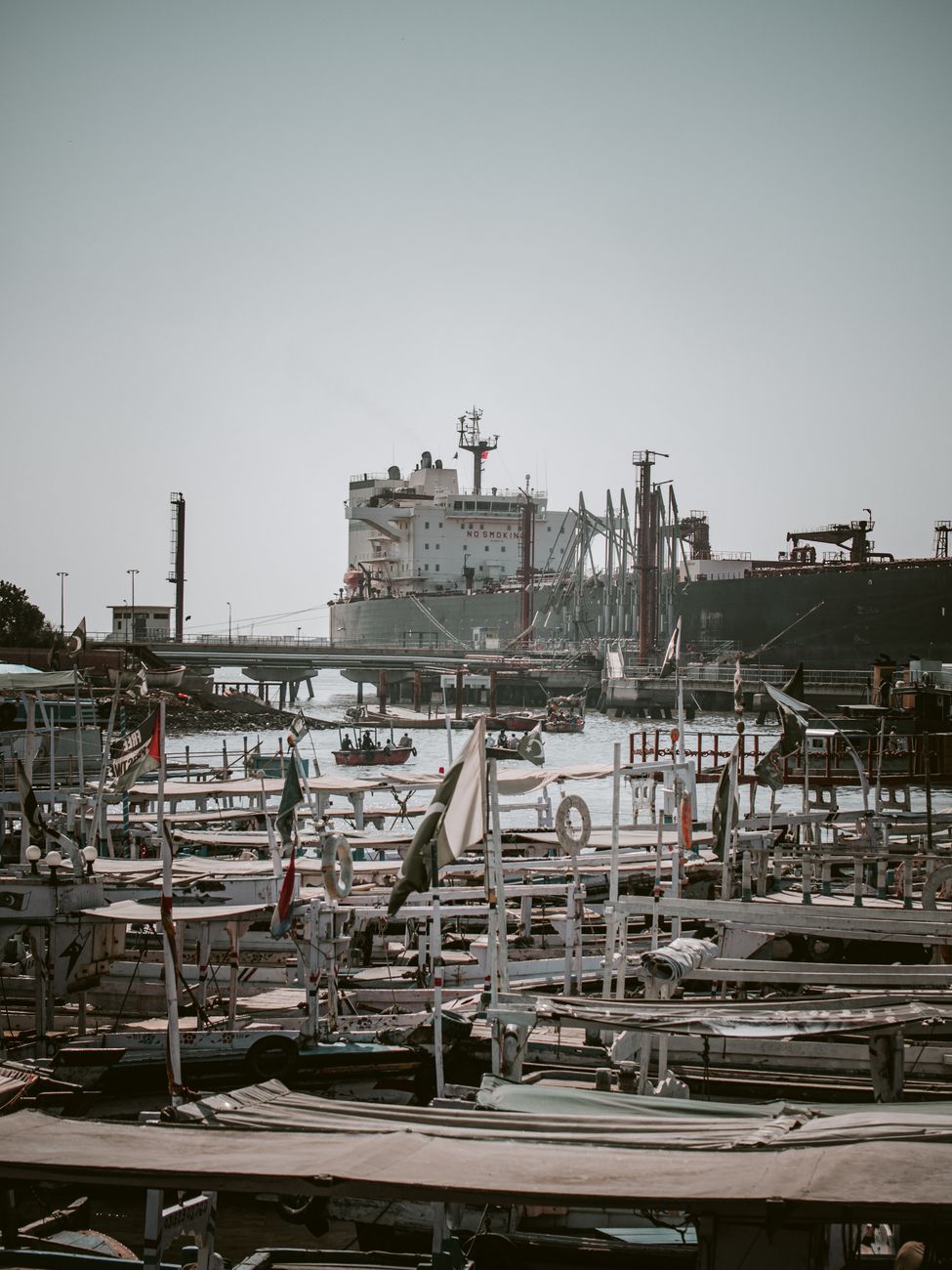
The city’s urban landscape blends colonial-era stone buildings, modern shipping container terminals, and expansive open-air souks. Key commercial life revolves around the central market (*Souk al-Kabir*), where merchants trade Sudanese cotton, gum arabic, frankincense, spices, and fresh fish from the Red Sea. Along the waterfront, the Corniche provides a gathering point where locals enjoy sweet spiced tea and strong ginger coffee (*jabana*) while watching merchant ships and tugboats navigate the harbor channel.
Accommodation options in Port Sudan are centered around several established hotels that host international diplomatic and humanitarian delegations, most notably the Coral Port Sudan Hotel and the Grand Holiday Villa Hotel. These properties feature backup diesel generators, private security perimeters, and satellite communication links.
Located sixty kilometers south along the coastal highway lies Old Suakin (*Sawakin*). Suakin was once a major Ottoman trading hub and the primary embarkation port for African Muslim pilgrims traveling to Mecca. Built entirely from hand-hewn coral stone masonry, the ruins of Suakin’s island city showcase ornate wooden balconies (*mashrabiya*) and Ottoman defensive fortifications, presenting an evocative historical contrast to Port Sudan’s modern industrial port.
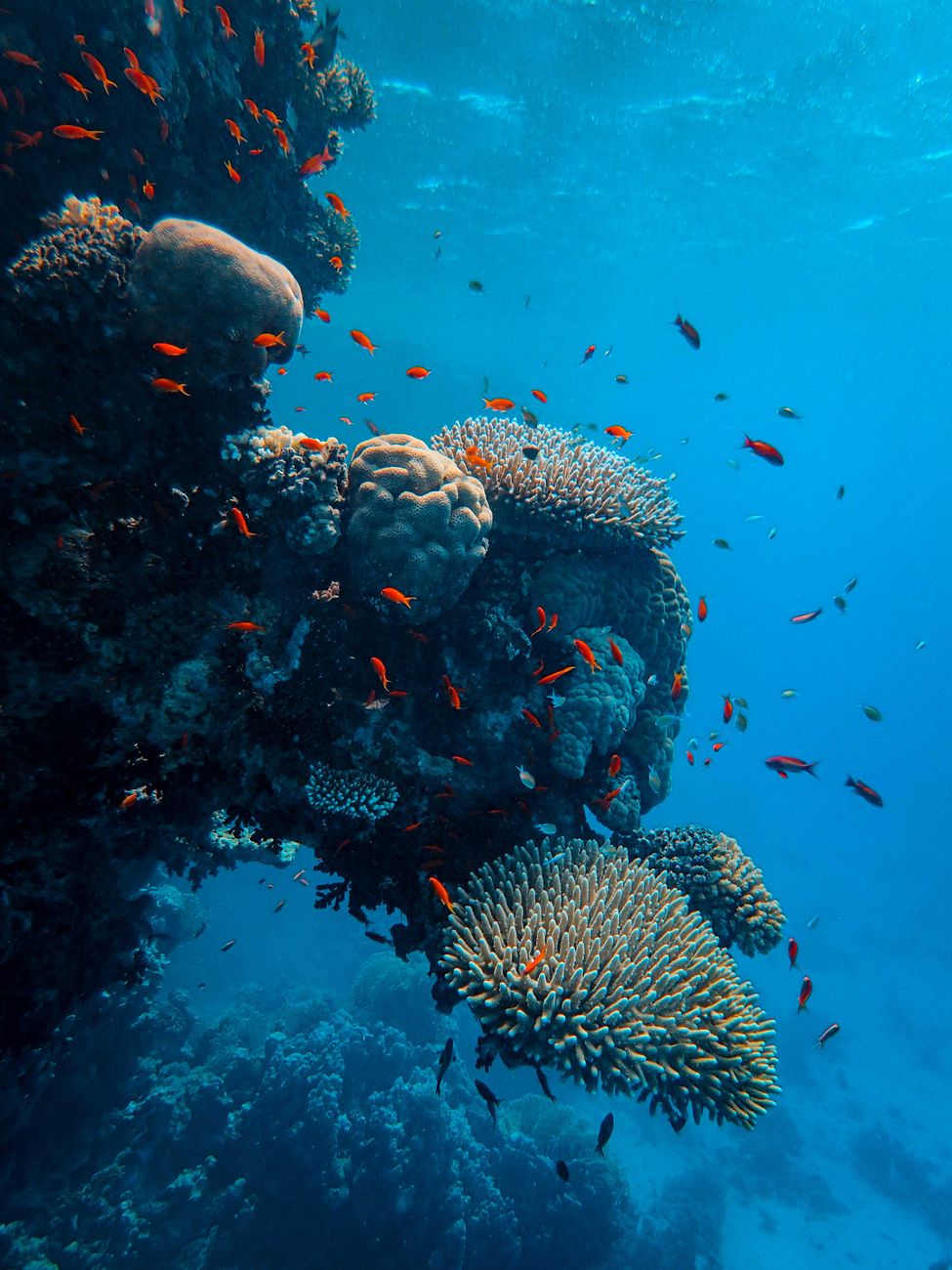
Offshore lie the world-renowned coral atolls of Sanganeb and Dungonab Bay. Celebrated for their sixty-meter underwater visibility, intact coral plateaus, and abundant hammerhead shark populations, these UNESCO-listed marine reserves represent extraordinary natural wealth, though diving charters are operating on a severely restricted basis.
Historical Heritage: The Kingdom of Kush in Perspective
While frontline security conditions prevent casual leisure travel to the Nile interior, understanding Sudan’s ancient heritage is essential for contextualizing the nation’s profound cultural identity.
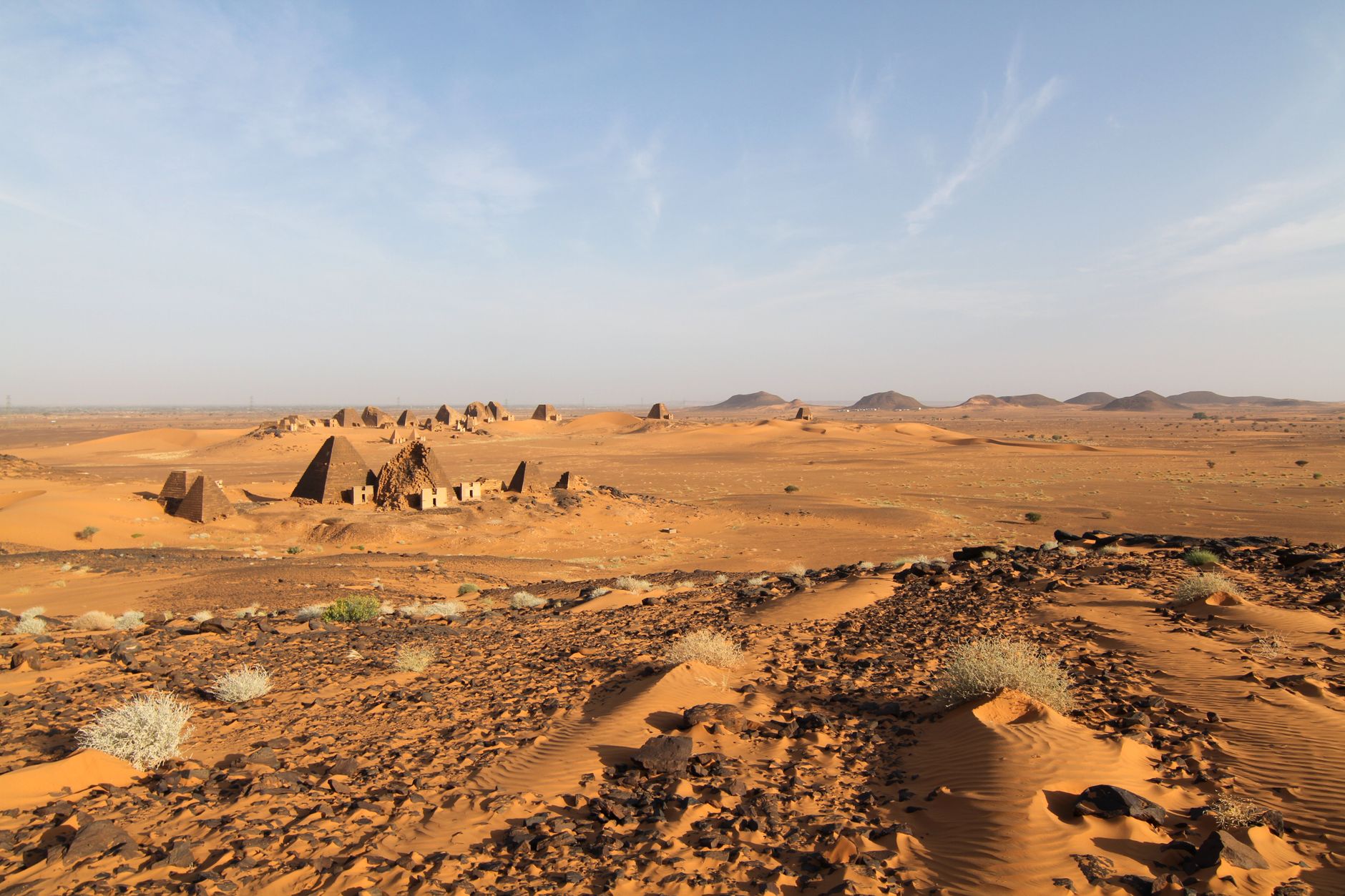
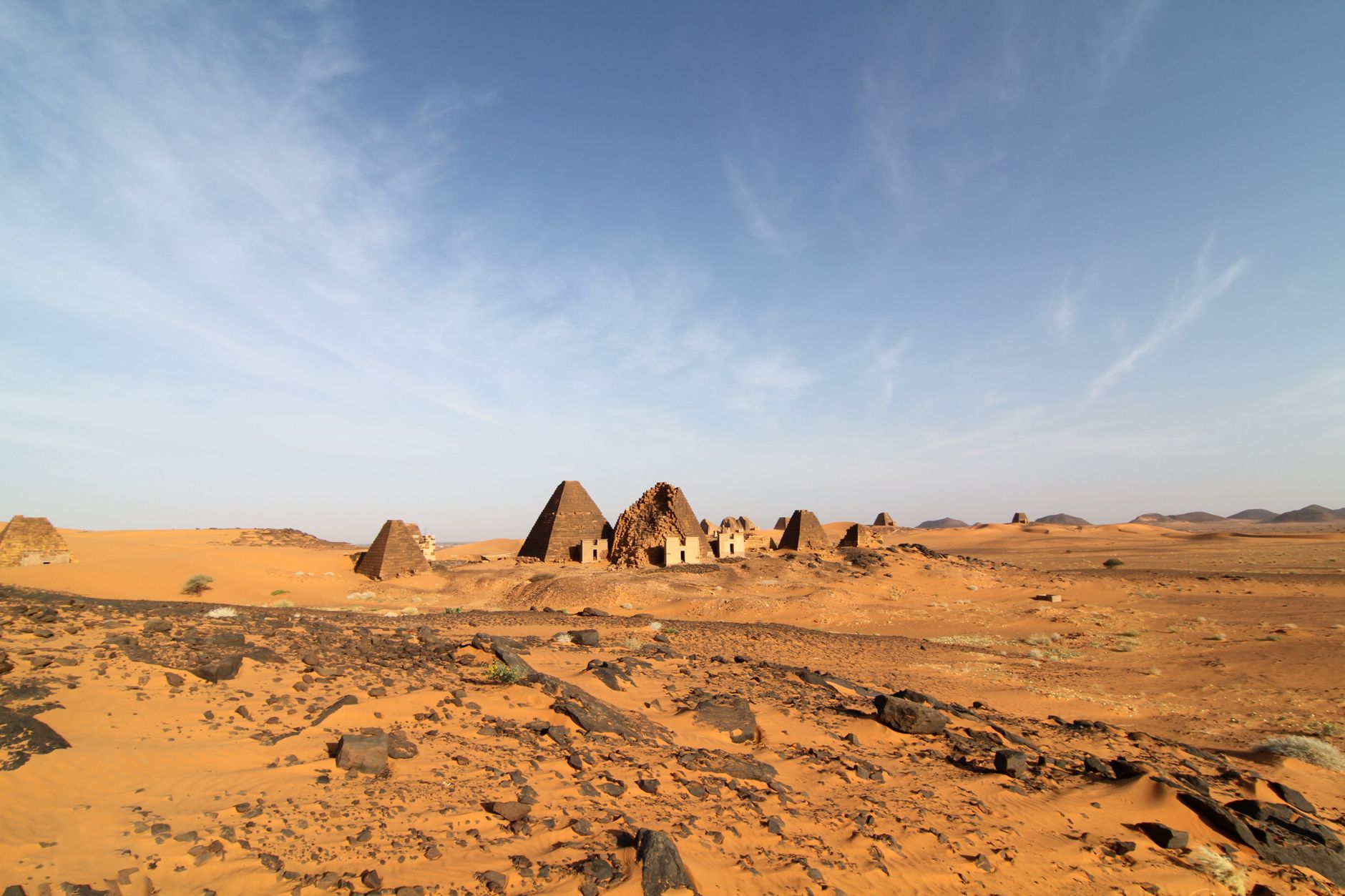
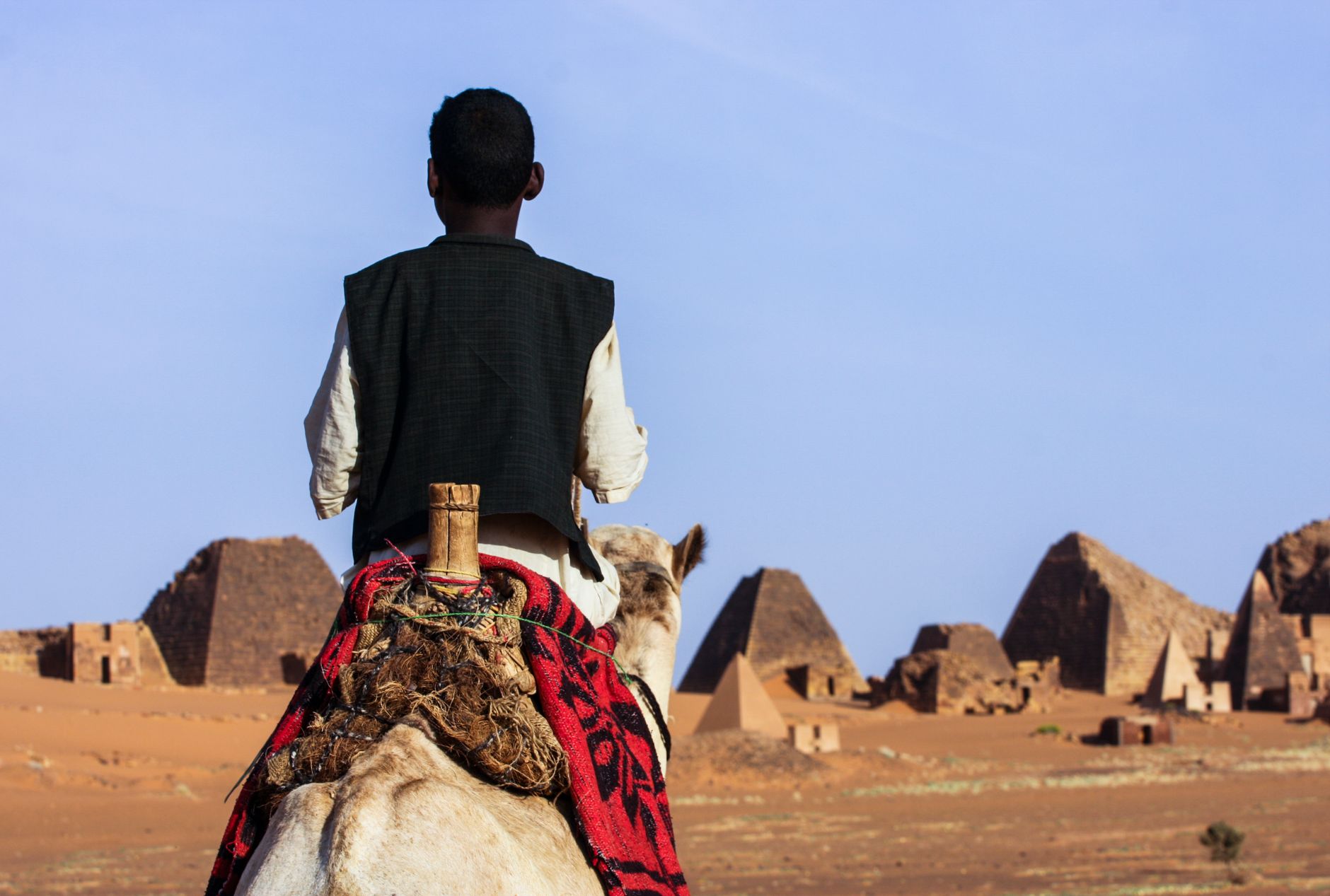
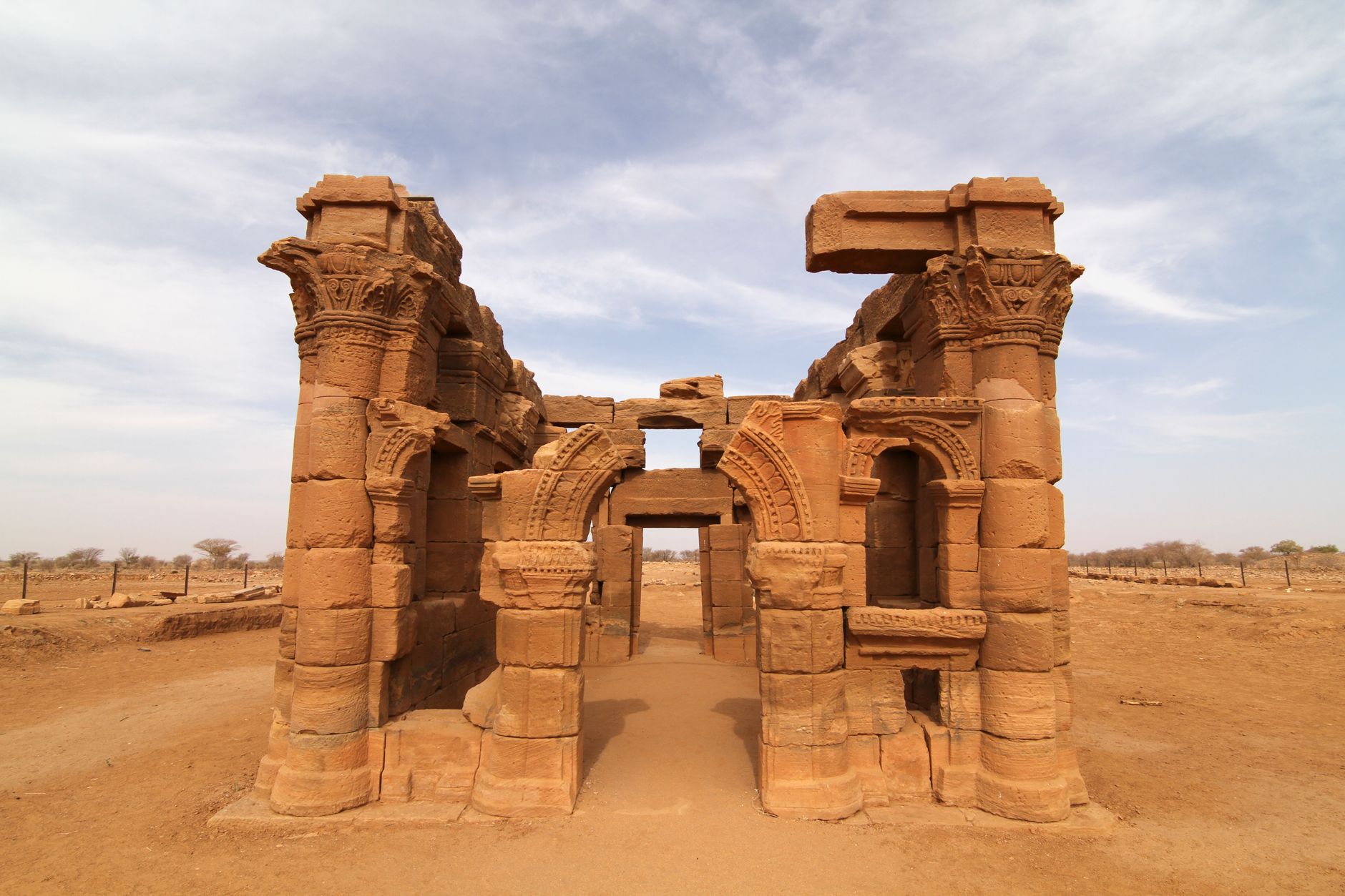
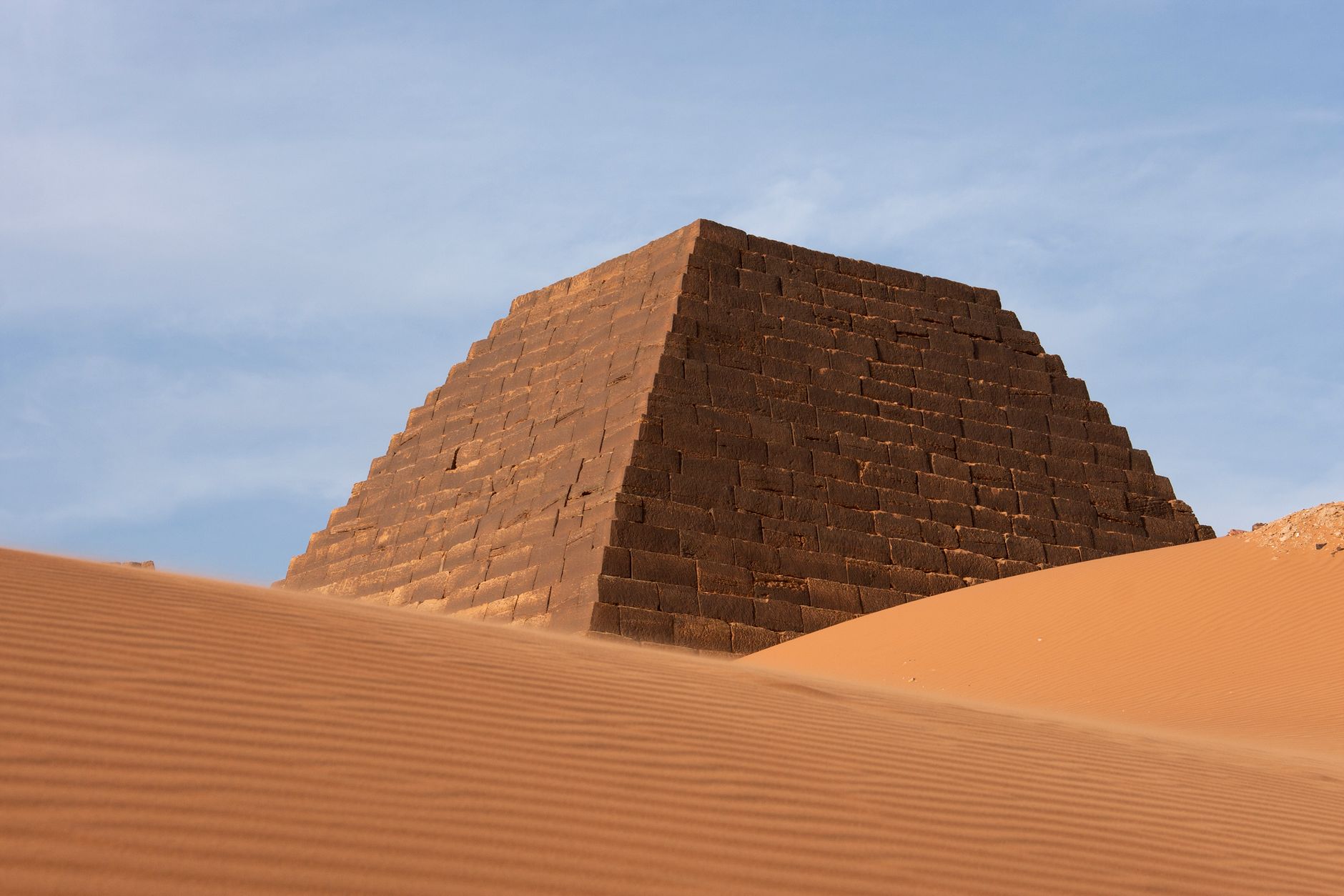
Two hundred kilometers northeast of Khartoum in River Nile State stands Meroë, the magnificent royal necropolis of the Kingdom of Kush. Flourishing from 300 BCE to 350 CE, Meroitic civilization was renowned for its iron-smelting prowess, unique cursive script, and fierce warrior queens known as *Kandakes*. The royal cemetery contains more than forty steep-sided sandstone pyramids rising dramatically from golden desert dunes. Nearby lie the sacred temple complexes of Naqa and Musawwarat es-Sufra, featuring magnificent bas-reliefs dedicated to the lion-headed god Apedemak and the Roman kiosk.
Further north along the great bend of the Nile at Karima lies Jebel Barkal, the sacred sandstone mountain revered by ancient Kushites and Egyptians as the home of the god Amun. At its base stand the colossal ruins of the Temple of Amun and the royal pyramid fields of Nuri and El-Kurru. While these UNESCO sites remain physically preserved, travel along the Nile highway corridor requires specialized military authorization and security coordination under current circumstances.
Structured Six-Day Operational Blueprint: Port Sudan & Coastal Hub
This structured six-day schedule balances administrative registrations, professional meetings, and secure coastal movement within the Port Sudan perimeter.
| Operational Stage | Overnight Base | Logistical & Cultural Focus | Primary Transport Mode | Realistic Transit Time | Permits & Security Protocol |
|---|---|---|---|---|---|
| Day 1: Port Sudan Arrival | Port Sudan (Corniche / Central) | PZU airport arrival, immigration clearance, hotel check-in, initial security briefing | Private chauffeured 4×4 | 30 min airport transfer | Initiate 72-hour Alien Registration with local sponsor |
| Day 2: Administrative Compliance | Port Sudan Central | Complete alien registration, commercial harbor orientation, Souk al-Kabir visit | Chauffeured vehicle | 10–15 min urban transfers | Carry stamped passport; do not photograph port facilities or police |
| Day 3: Ottoman Coastal Heritage | Port Sudan Base | Day excursion to Old Suakin coral-stone island, Ottoman fortifications, Red Sea coast | Chauffeured 4×4 via coastal road | 1 hour each way (60 km) | Verify coastal checkpoint clearances; daylight travel only |
| Day 4: Commercial & Relief Hub | Port Sudan Central | Agency debriefings, Red Sea shipping logistics, evening Corniche coffee gathering | Chauffeured vehicle | 15–20 min urban hops | Observe evening curfew regulations if enforced by authorities |
| Day 5: Coastal Marine Observation | Port Sudan Waterfront | Red Sea marine inspection, coastal mangrove observation, artisan craft sourcing | Authorized coastal boat | 30–45 min marine transit | Engage vetted boat captain; maritime authority clearance required |
| Day 6: Exit Debriefing & Departure | Port Sudan Airport Corridor | Verify alien registration exit endorsement, currency declarations, PZU departure | Private chauffeured transfer | 30 min airport transfer | Arrive at PZU 3.5 hours prior; reconfirm flight schedule 24h ahead |
Every road movement outside central Port Sudan must be executed strictly during daylight hours with trusted local drivers who understand local military checkpoints and security clearance procedures.
Financial Architecture: Currency Depreciation, Cash & Bankak
Navigating financial transactions in Sudan requires adapting to severe economic disruption and complete disconnection from international banking networks.
The official legal currency is the Sudanese Pound (currency code SDG). Since the outbreak of conflict in April 2023, the Sudanese Pound has experienced rapid depreciation and severe inflation. Due to comprehensive financial sanctions and wartime banking severance, foreign credit and debit cards (Visa, Mastercard, American Express) are totally inoperable across Sudan. Foreign ATMs do not exist, and international bank transfers through commercial accounts are unavailable.
Travelers must fund their entire itinerary with physical cash in hard currency. The preferred foreign currencies are US Dollars (USD) and Saudi Riyals (SAR). US Dollar banknotes must be in unblemished, pristine condition: perfectly clean, without tears, folds, stamps, or ink marks. Furthermore, exchange bureaus strictly require modern series banknotes printed after 2013 (“blue” hundred-dollar bills). Older series banknotes will be rejected outright or discounted heavily. Currency exchange should be conducted through commercial banks (such as Bank of Khartoum or Omdurman National Bank) or licensed exchange bureaus in central Port Sudan.
For domestic digital transactions, the primary electronic payment rail across Sudan is Bankak, a mobile banking application developed by the Bank of Khartoum. Many local merchants, restaurants, and drivers in Port Sudan prefer receiving payments via Bankak transfer over handling bulky stacks of depreciated paper currency. However, opening a Bankak account requires a local national identity number and bank account; foreign visitors must rely primarily on physical cash.
Cultural Customs, Social Etiquette & Photography Red Lines
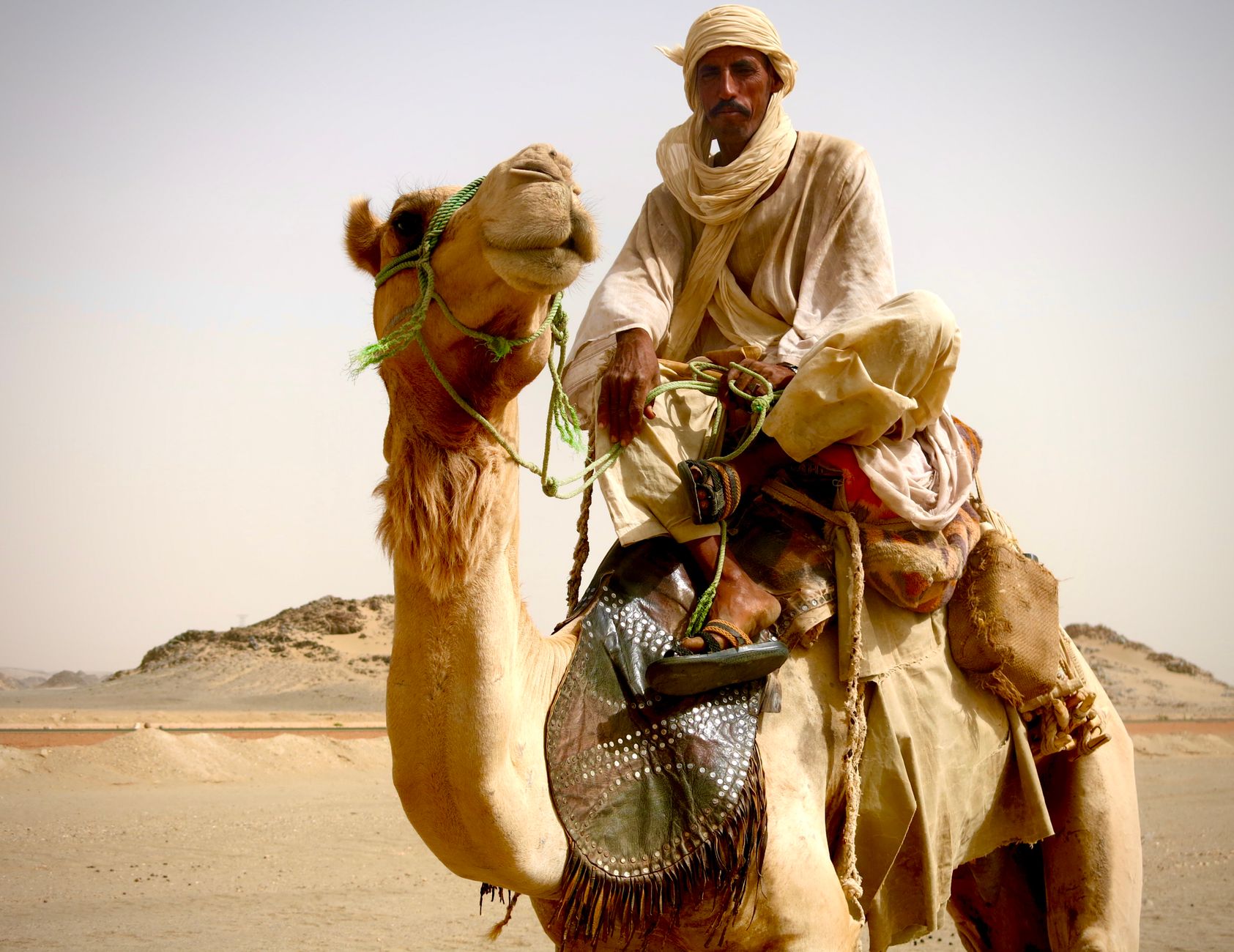
Sudanese culture is celebrated across the Arab and African worlds for its extraordinary generosity, dignity, and profound hospitality (*Karam*). Despite the severe hardships of conflict, visitors are received with genuine warmth and gracious courtesy.
Social interactions begin with formal, elaborate greetings. Inquire warmly about your host’s health and family: *”As-salamu alaykum”* (Peace be upon you), *”Kayf halak?”* (How are you?), and *”Al-hamdulillah”* (Praise be to God). When invited into an office or home, you will routinely be served sweet black tea flavored with fresh mint, cloves, or cardamom (*shai bil-na’na*), followed by spiced coffee brewed in a traditional clay pot (*jabana*). Accepting this refreshment is an important social norm that shows respect and establishes trust.
Sudan is a conservative Islamic society. Dress with modesty in all public settings. Both men and women should wear loose-fitting clothing that covers shoulders and extends past the knees; shorts are considered inappropriate for adult men in public. Women are advised to carry a light scarf to cover their hair when entering conservative quarters or administrative offices.
Photography is subject to extreme governmental sensitivity. Taking photographs or video recordings of military personnel, police checkpoints, government ministries, port facilities, fuel storage terminals, naval vessels, or bridges is strictly illegal. Security officers will immediately confiscate equipment and detain individuals suspected of unauthorized photography. Always obtain verbal consent before taking portraits of local residents in markets.
Field Connectivity: Zain Sudan LTE Performance & Digital Realities
Maintaining cellular connectivity is an indispensable operational requirement for security tracking, logistics, and emergency communication in Sudan. Reliable digital communication is essential for managing changing flight schedules and checkpoint conditions.
The telecommunications grid in Sudan is operated by three primary carriers: Zain Sudan, MTN Sudan, and Sudani (Sudatel). Zain Sudan is the undisputed market leader in network resilience, having restored critical cellular backbones, fiber-optic routes, and data centers in Port Sudan, River Nile State, and Northern State following nationwide wartime outages. Zain operates stable 4G/LTE mobile coverage throughout the Port Sudan urban area, across the port facilities, and along the coastal highway toward Suakin.
Purchasing a physical SIM card locally involves significant bureaucratic friction. Local carrier storefronts in Port Sudan are overwhelmed by displaced populations seeking network connectivity, resulting in long queues, frequent biometric system outages, and extensive passport verification delays.
Activating a digital Zain LTE eSIM for Sudan through NXTL at $17.00 per gigabyte (or MTN LTE at $116.41 per gigabyte) provides immediate mobile data connectivity the moment your flight lands at Port Sudan New International Airport. Unused credit stays available for later trips across more than 180 countries. Digital eSIM provisioning eliminates the need to visit crowded local telecom salons or surrender passport copies at street kiosks, ensuring uninterrupted communication for hotel transfers, maps, and flight coordination right from the runway.
WhatsApp is the universal operational communication tool across all administrative, diplomatic, and commercial sectors in Port Sudan. From hotel management and private driver coordination to embassy security updates, virtually all daily communications are handled via WhatsApp text and voice messaging.
Five Critical Pitfalls and Security Realities to Navigate in Sudan
Conducting travel within Sudan requires strict adherence to security protocols and legal regulations. Avoid these five major pitfalls:
- Attempting Civilian Travel Toward Greater Khartoum, Darfur, or Kordofan: Traveling into active combat zones in central, western, or southern Sudan is life-threatening. These regions face intense urban warfare, heavy artillery bombardment, armed banditry, and lawlessness that local authorities cannot control.
- Flying into Unverified Domestic Airports or Relying on Informal Charters: Khartoum International Airport is destroyed and inoperative. PZU in Port Sudan is the sole operational international civilian airport. Ensure all flight bookings are confirmed directly with licensed international carriers operating into Port Sudan.
- Photographing Military Personnel, Checkpoints, Port Facilities, or Bridges: Using a camera or smartphone to record security personnel, military installations, naval vessels, or critical transport infrastructure will result in immediate arrest, interrogation, and confiscation of equipment by state security forces.
- Relying on Foreign Credit Cards or Running Out of Physical Hard Currency: International credit cards, debit cards, and foreign ATMs do not function anywhere in Sudan. Arriving without adequate pristine US Dollar or Saudi Riyal cash will leave you completely unable to pay for lodging, food, or transport.
- Failing to Complete Mandatory Alien Registration Within 72 Hours in Port Sudan: Neglecting to register your passport at the Aliens Control Department office in Port Sudan within three days of arrival will result in administrative fines, police questioning, and denied departure boarding at PZU airport.
By securing verified entry visas, completing immigration registration, confining movement strictly to the monitored Red Sea coastal enclave, carrying pristine hard currency cash, and maintaining dependable digital cellular connectivity, authorized visitors can safely navigate Sudan’s challenging wartime environment and experience the enduring dignity of its people.